

Eine Kleine Kazoo Musik: 2-Part Choral Octavo
Music by Wolfgang Amadeus Mozart / arr. Tom Anderson
Item: 00-PO-0007434
$2.30
Minimum order quantity: 20 copies
Pickup currently not available
Related Items
Eine Kleine Kazoo Musik: SAB Choral Octavo |
$2.30
|
View | |
Eine Kleine Kazoo Musik: SoundTrax Digital Audio Download |
$29.99
|
View | |
Eine Kleine Kazoo Musik: SAB Choral Octavo |
$2.30
|
View | |
Eine Kleine Kazoo Musik: 2-Part Choral Octavo |
$2.30
|
View | |
Eine Kleine Kazoo Musik: Choral SoundTrax CD |
$29.99
|
View |
Description
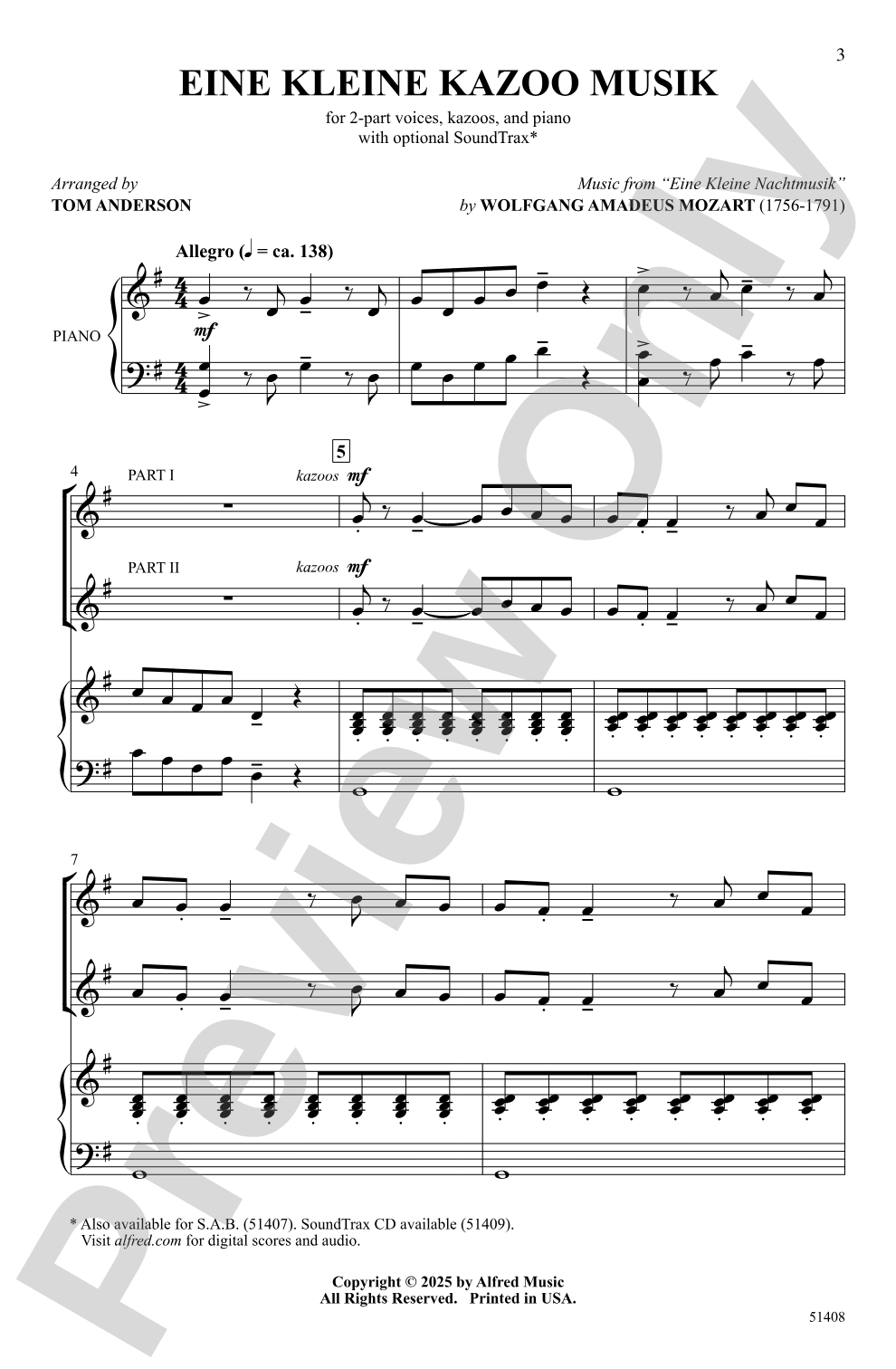
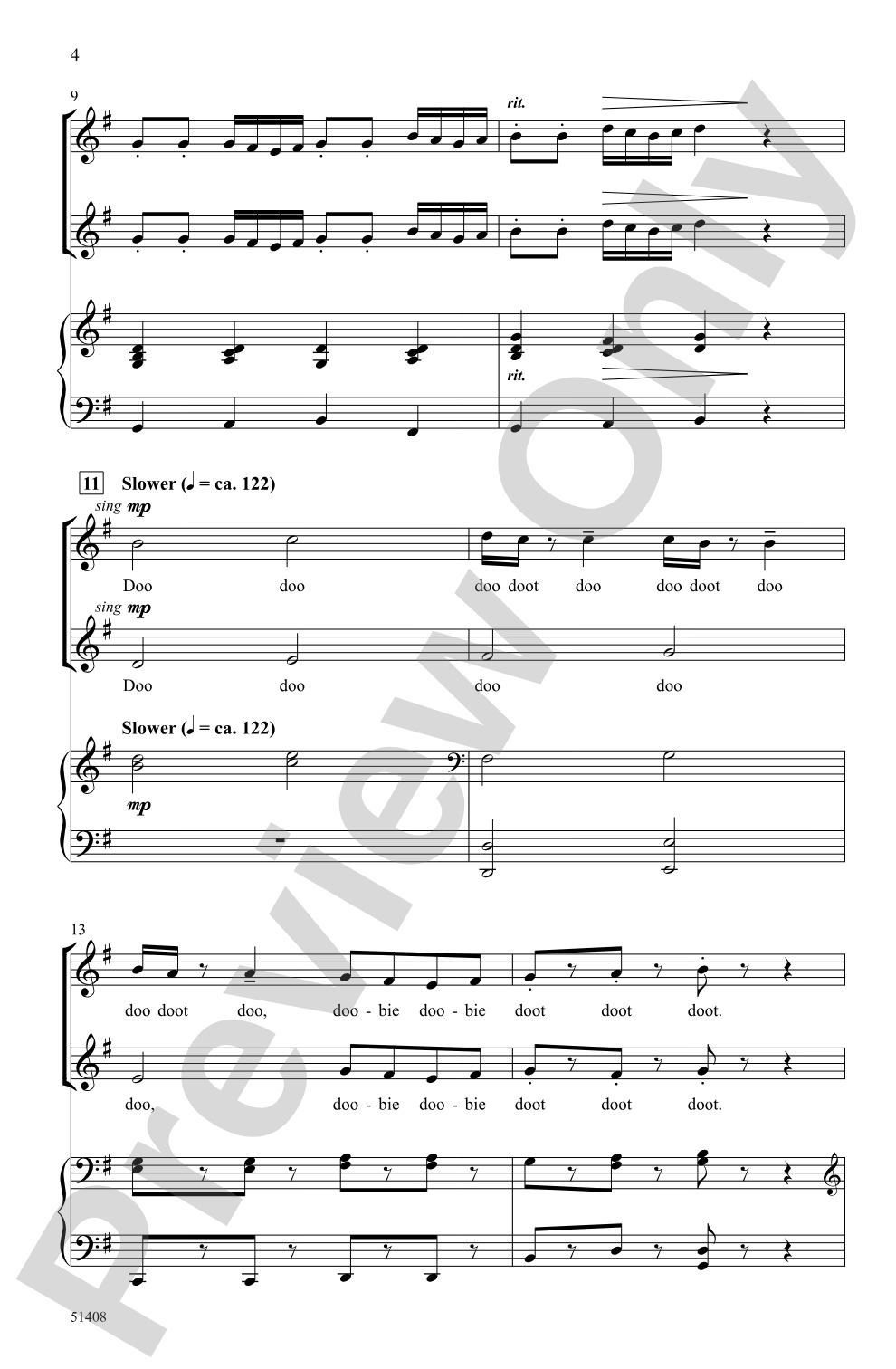
You've never heard Mozart like this before! "Eine Kleine Nachtmusik" is performed on neutral syllables with plenty of kazoo moments interspersed throughout. Get ready to switch back and forth between singing and kazoo-ing, but be sure to keep a straight face while performing the dramatic dynamic and tempo changes. It's guaranteed to be the most fun you'll ever have performing a masterwork!


Eine Kleine Kazoo Musik: 2-Part Choral Octavo isn't in MakeMusic Cloud just yet...but it could be. Let us know you'd like to see it, and you'll help shape what comes next. In the meantime, start a free trial and dive into thousands of interactive titles your students can play along with today.
Request This Title
Tell us you want it.
Start Your Free Trial
Explore everything that's ready to play right now.
Sample Audio
1
Audio File
--:--
0:00
0:00
Sample Video
Additional Details
Series:
Alfred Choral Designs
Publisher:
Alfred Music
Page Count:
12
SKU:
00-PO-0007434
Instrumentation:
Kazoos
More about this title
About the Composer: Wolfgang Amadeus Mozart
Wolfgang Amadeus Mozart (1756-1791) composed over 600 works across every major genre during his short life, establishing himself as one of the most influential composers in Western music. His mastery of melody, harmony, and form set the standard for Classical music and continues to anchor concert repertoires worldwide. For music educators, Mozart's works offer exceptional opportunities to teach clarity of structure, elegant phrasing, and the relationship between simplicity and sophistication.
Why we love this
Tom Anderson's arrangement transforms one of Mozart's most recognizable works into a genuine laugh-out-loud moment while keeping the integrity of the original intact. The constant switching between singing and kazoo playing forces your singers to stay engaged and present in a way that prevents the piece from becoming rote, and the comedic tension between Mozart's dramatic gestures and the absurdity of kazoo sounds lands reliably with audiences. This is the rare novelty arrangement that actually teaches something about the original while delivering pure entertainment.
What to expect
Expect your audience to be charmed and surprised. The piece starts with the familiar opening Mozart wrote, then gradually reveals its novelty through kazoo interjections and playful tempo games. There's real musicality underneath the humor; the arrangement respects Mozart's original while inviting your singers to inhabit a performance that feels spontaneous and joyful rather than overly polished.
Who it's for
This piece works best for choirs that can embrace comedy without losing musical integrity. Whether you're programming a pops concert, a holiday show, or a spring concert finale, singers need enough vocal maturity to manage the 2-part writing cleanly while also having the confidence to look silly on stage.
How to get the most out of it
- Commit fully to the dynamic and tempo shifts without breaking character. The humor depends on treating the kazoo moments with the same seriousness Mozart would have brought to the original.
- Rehearse the transitions between singing and kazoo-playing separately at first, so singers can execute the switches cleanly without fumbling for their instruments.
- Balance the kazoo parts so they enhance rather than overwhelm the vocal line. Kazoos are naturally piercing; light articulation goes further than full volume.
- Establish clear conducting cues for each switch. Your singers need to know exactly when they're singing and when they're playing, especially in faster sections.
How to use it
This arrangement shines as a concert-closing encore or as part of a themed program exploring classical music in new contexts. Pair it with a more serious Mozart piece earlier in the concert to set up the contrast, or use it to open a lighter second half after intermission. The novelty factor makes it memorable without overshadowing the rest of your programming.
Skills your students will build
- Switching between vocal and non-vocal sound production while maintaining musicality
- Responding to dynamic and tempo changes with precision and intention
- Balancing ensemble parts in a 2-part texture
- Performing with rhythmic accuracy while maintaining expressive character