Easy Jazz Conception: Piano Comping Cover Image

Easy Jazz Conception: Piano Comping: Keyboard/Piano Book & CD

$25.95 USD
Sale price  $25.95 USD Regular price 
Skip to product information
Easy Jazz Conception: Piano Comping Cover Image

Easy Jazz Conception: Piano Comping: Keyboard/Piano Book & CD

Transcribed Piano Comping, as Played by Dave Hazeltine

By Jim Snidero

Item: 01-ADV14767

$25.95
Shipped

One moment…

Description
An exciting and unique way for pianists to learn and practice how to play in a jazz rhythm section and how to accompany a jazz soloist. This set features 15 solo etudes based on blues and standard chord progressions, demonstrated by different soloists and a world-class rhythm section.

Titles include: Basie's Blues * Bird's Backyard * Bossa at Night * Caliente Blues * Duke's Convoy * Hot and Humid * Important Events * Love Is Easy * Mist and Grits * Morning Calm * Prince Charming * Rock On * Shufflin' in F * So Long Birdie * Us.

Easy Jazz Conception: Piano Comping: Keyboard/Piano Book & CD isn't in MakeMusic Cloud just yet...but it could be. Let us know you'd like to see it, and you'll help shape what comes next. In the meantime, start a free trial and dive into thousands of interactive titles your students can play along with today.

Sample Pages

Sample Audio

track a

0:00
0:00
Sample Video
Additional Details
Series: Advance Music: Easy Jazz Conception
Publisher: Advance Music
UPC: 805095147674
SKU: 01-ADV14767

More about this title

About the Author: Jim Snidero
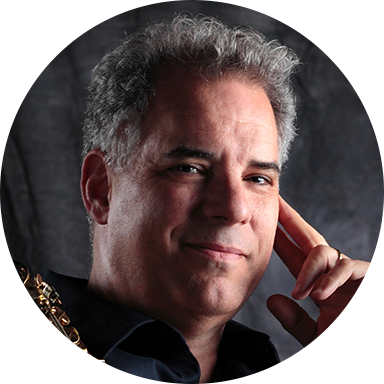
Jim Snidero

Jim Snidero stands among the most respected alto saxophonists and jazz educators working today. His three-decade career spans sideman work with the Mingus Big Band, the Toshiko Akiyoshi Jazz Orchestra, and appearances on Frank Sinatra's Duets II, alongside leadership roles on acclaimed recordings like Mixed Bag and Blue Afternoon. Downbeat Magazine has recognized him as both a "master musician" and "alto saxophone virtuoso," and he placed in the 2017 Downbeat Critic's Poll, affirming his continued relevance on the international jazz scene.

Snidero's path to this prominence began in Camp Springs, Maryland, where early mentorship from Phil Woods and Dave Liebman, combined with his time in the One O'Clock Lab Band at the University of North Texas, shaped his musical foundation. He arrived in New York in 1981 and quickly established himself through work with Brother Jack McDuff and other bandleaders. His two decades as a bandleader and composer have produced a body of work marked by both stylistic range and unwavering musical integrity, making him a natural voice for jazz education materials.

Why we love this

Snidero builds comping skills through active listening rather than abstract theory. The fifteen etudes place students alongside world-class soloists, forcing them to develop genuine interactive sensitivity, the kind you only learn by playing with musicians who demand it. The recorded rhythm section handles the hard harmonic lifting, so your students can focus on hearing and responding to what the soloist is doing in real time.

What to expect

The collection captures the casual authority of a working jazz band. Blues grooves sit alongside standards and a bossa nova, all played with the kind of easy professionalism that comes from musicians who've done this hundreds of times. The recorded soloists play with conversational flow, not clinical precision, giving your practice a living, breathing quality.

Who it's for

This book serves jazz pianists ready to move beyond chord-scale relationships into real ensemble interaction. It works for high school jazz band pianists, college students preparing for jam session culture, and any pianist who wants to understand how comping actually functions in a rhythm section rather than in isolation.

How to get the most out of it

  • Listen to the soloist's phrasing before you play. Notice where they breathe, where they sit behind the beat, where they push. Your comping responds to these choices, not to an autopilot pattern.
  • Plant chord voicings on the upbeats and offbeats rather than downbeats. This creates pocket space for the soloist and locks the rhythm section together.
  • Use the recorded accompaniment to build consistency across multiple takes of the same tune. You'll hear how professional pianists adjust their density and energy depending on the soloist's intensity level.
  • Experiment with sparse comping on the first chorus, then gradually add more texture as the solo develops. This mirrors how working bandleaders actually approach a gig.

How to use it

Assign these etudes as homework for pianists in your jazz ensemble who need to develop independence from the written chart. You can also use individual tunes as listening models before students tackle comping duties on your band's repertoire, or sequence them across a semester to build harmonic and rhythmic vocabulary in parallel with your main jazz curriculum.

Skills your students will build

  • Voicing chord extensions and alterations in a comping context
  • Reading and responding to soloist phrasing in real time
  • Playing within a groove while supporting harmonic movement
  • Balancing texture and space based on ensemble energy and soloist intensity
  • Internalizing blues and standard chord progressions through multiple musical contexts

You May Also Like