Easy Jazz Conception Guitar Cover Image

Easy Jazz Conception Guitar: Guitar Book & Online Audio

$25.95 USD
Sale price  $25.95 USD Regular price 
Skip to product information
Easy Jazz Conception Guitar Cover Image

Easy Jazz Conception Guitar: Guitar Book & Online Audio

15 Solo Etudes for Jazz Phrasing, Interpretation and Improvisation

By Jim Snidero

Level: Easy - Intermediate

Item: 01-ADV14766

$25.95
Shipped

One moment…

Description
For jazz phrasing, interpretation and improvisation.
A new and exciting way for guitar players to learn and practice basic jazz style.
This book/audio set features 15 solo etudes based on blues and standard chord progressions, demonstrated by Joe Cohn on guitar along with a world-class rhythm section: Mike LeDonne, piano; Peter Washington, bass; and Kenny Washington, drums.
The recording features two separate versions of each etude: one with the soloist and rhythm section and one with the rhythm section only. See and hear how the soloist phrases, play with or without the soloist and learn basic jazz style first-hand.

Easy Jazz Conception Guitar: Guitar Book & Online Audio isn't in MakeMusic Cloud just yet...but it could be. Let us know you'd like to see it, and you'll help shape what comes next. In the meantime, start a free trial and dive into thousands of interactive titles your students can play along with today.

Sample Pages

Sample Audio

track 1

0:00
0:00
Sample Video
Additional Details
Series: Advance Music: Easy Jazz Conception
Publisher: Advance Music
ISBN10: 3-892212-01-5
ISBN13: 978-3-892212-01-0
UPC: 805095147667
SKU: 01-ADV14766
Instrumentation: Guitar

More about this title

About the Author: Jim Snidero
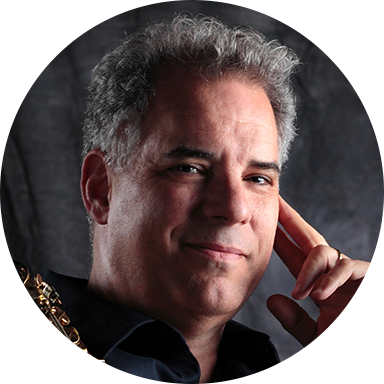
Jim Snidero

Jim Snidero has spent more than three decades establishing himself as a central figure in contemporary jazz. A saxophonist, composer, arranger, and bandleader, he earned recognition from Downbeat Magazine as both a "master musician" and "alto saxophone virtuoso," and placed in the 2017 Downbeat Critic's Poll, affirming his lasting influence on the global jazz community.

Snidero's foundation came early: raised near Washington, DC, he studied with Phil Woods as a teenager and later attended the University of North Texas, where he was part of the legendary One O'Clock Lab Band. Further mentorship from Dave Liebman shaped his artistic direction before he moved to New York in 1981. His career gained momentum quickly, recording albums with Brother Jack McDuff and later working with the Mingus Big Band, Toshiko Akiyoshi Jazz Orchestra, Eddie Palmieri, and Frank Sinatra. As a leader, Snidero has created a substantial discography marked by musical consistency and stylistic range, with albums like Mixed Bag (1987) and Blue Afternoon (1989) securing his place in jazz history.

Why we love this

Snidero's approach to teaching jazz phrasing bypasses abstractions entirely. By pairing clear, playable etudes with Joe Cohn's measured demonstrations and a superlative rhythm section (LeDonne, Washington, Washington), students hear exactly what jazz phrasing sounds like before attempting it themselves. The dual-track format lets guitarists isolate and internalize the language of jazz soloing at their own pace.

What to expect

Fresh and conversational, like sitting in a practice room with a patient player who shows you the phrase, then steps back and lets you find your own voice. The rhythm section swings with ease and never rushes, creating space for curious experimentation rather than performance pressure.

Who it's for

Guitar students who want to move beyond reading jazz charts and develop an ear for authentic jazz articulation and phrasing. This method works equally well for self-directed learners and those in group settings, since the audio demonstrations eliminate the need for a live mentor to model style.

How to get the most out of it

  • Start with the full-band version to absorb how Cohn phrases over the chord changes, then switch to the rhythm section only and try mirroring his approach phrase by phrase.
  • Pay attention to where the soloist lands on beat 1 and how rests are used to create space; this is often where jazz language differs most starkly from classical articulation.
  • Use the blues etudes to establish your comfort with swing feel and blues vocabulary before moving to standard progressions; the harmonic foundation is simpler, freeing your ear to focus on timing and phrasing.
  • Record yourself playing with the rhythm section and listen back for moments where your phrasing matches or diverges from Cohn's choices; the differences reveal your own interpretive instincts.

How to use it

Assign etudes individually to jazz ensemble members preparing for section or solo features, or use the collection as a bridge between big band reading and small combo experience. The blues etudes also fit naturally into rhythm section rehearsals for guitarists working on comping and timekeeping alongside bass and drums.

Skills your students will build

  • Jazz phrasing and articulation over blues and standard progressions
  • Swing feel and rhythmic interpretation
  • Listening and transcription by ear from recorded demonstrations
  • Improvisation strategies using basic jazz vocabulary
  • Interaction with rhythm section; comping and responding to changes
  • Translating written etudes into conversational, idiomatic jazz language

You May Also Like