

E Ala E: TBB, a cappella Choral Octavo
(Arise)
Words from a Hawaiian Chant by Pualani Kanake'ole Kanahele, music by Ruth Morris Gray
Item: 00-PO-0001360

$1.80
Minimum order quantity: 20 copies
Pickup currently not available
Description
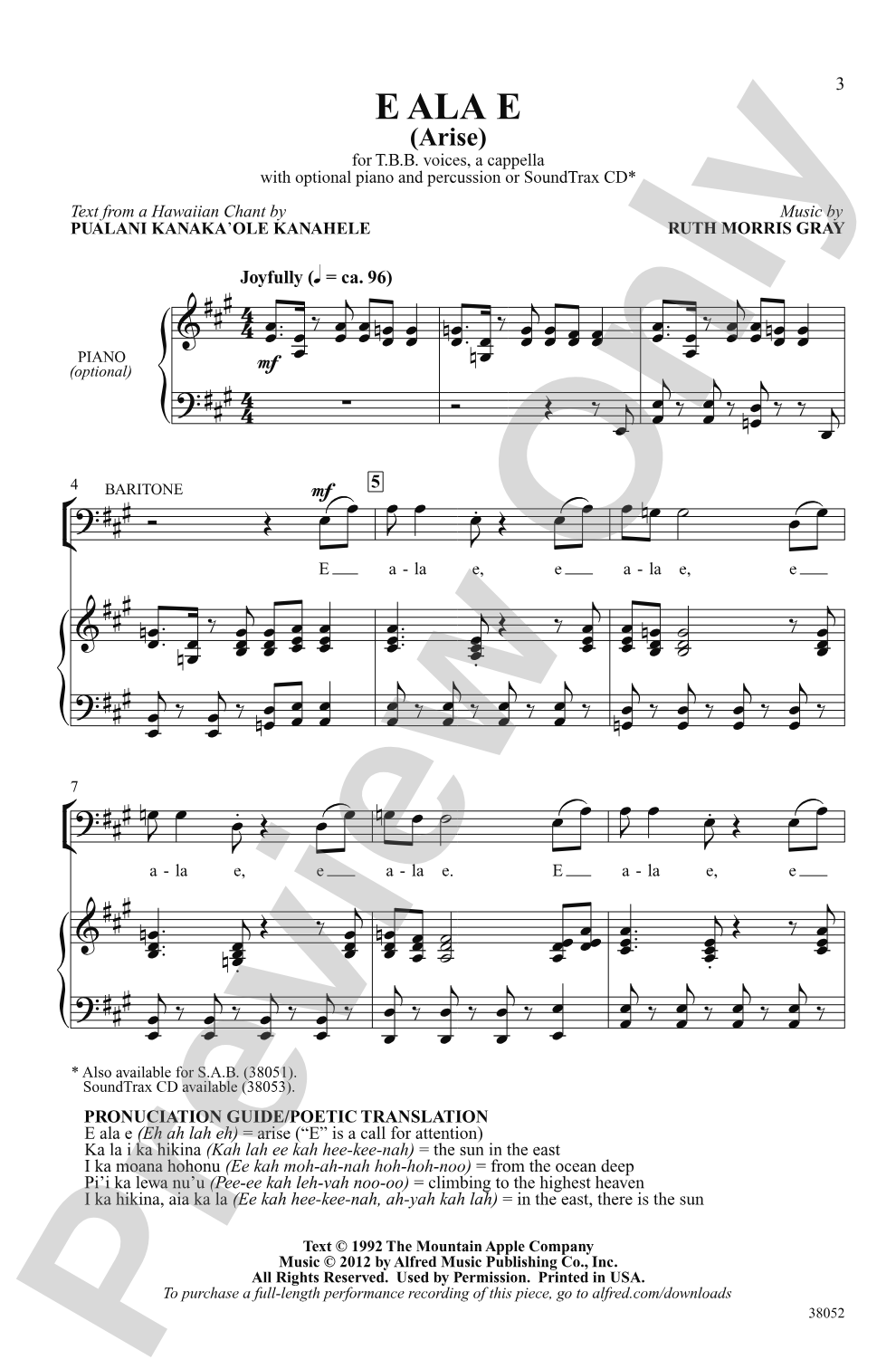
This nature-inspired poem celebrates our connection to the rising sun, incorporating equal parts English and Hawaiian text. Rhythmic and harmonic motives sound authentic throughout. Highly creative.


Don't just read it, hear it, play along with it, and watch your students grow with it. In MakeMusic Cloud, E Ala E: TBB, a cappella Choral Octavo comes alive with professional accompaniment, adjustable tempo, and built-in practice tools that turn solo practice into real progress.
Open in the Player
Jump straight in and assign it today.
Start Your Free Trial
Open this title and explore the full library in minutes.
Sample Audio
1
Audio File
--:--
0:00
0:00
Sample Video
No sample videos found.
Additional Details
Series:
Alfred Choral Designs
Publisher:
Alfred Music
Page Count:
12
SKU:
00-PO-0001360
Instrumentation:
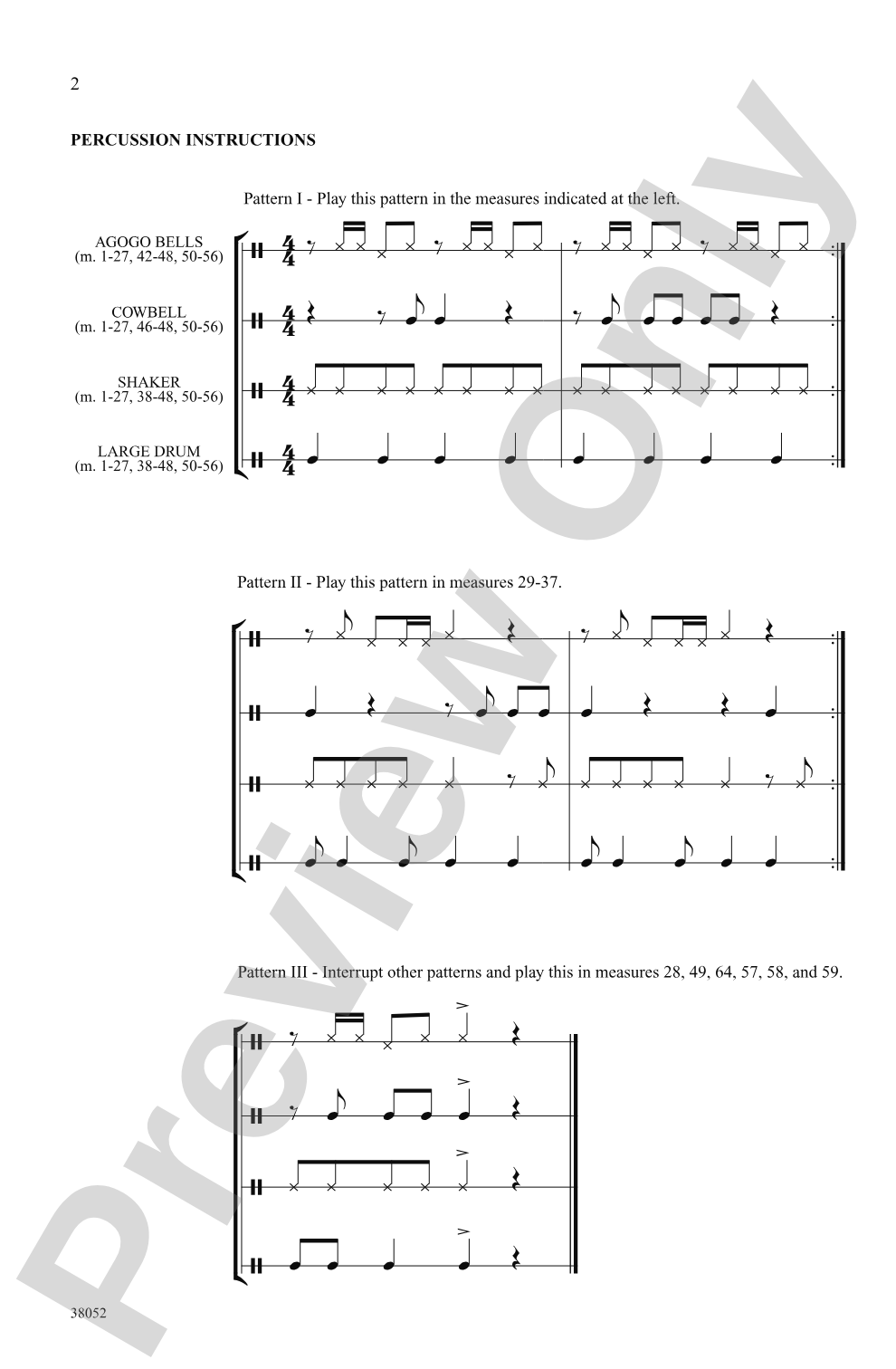
Opt. Percussion
More about this title
About the Composer: Ruth Morris Gray

Ruth Morris Gray brings two decades of classroom experience to her compositional work, having directed choirs at Rosemead High School since 2004 while maintaining an active piano studio. Her training spans performance and composition, with degrees from Biola University, UC Santa Barbara, and a California teaching credential from Cal State Northridge.
With over 100 published choral works to her name, Gray has established herself as a prolific voice in contemporary choral music. Her compositions reflect her deep engagement with both traditional and multicultural musical languages, informed by her years leading singers through diverse repertoire in a public school setting.
Why we love this
Gray's treatment of bilingual text feels natural rather than imposed; the Hawaiian and English phrases flow together through genuinely inventive harmonic and rhythmic gestures rather than superficial cultural reference. The a cappella writing sits beautifully for men's voices, with enough textural variety to hold interest across twelve pages while remaining accessible for festival and contest performance.
What to expect
The piece radiates warmth and movement, evoking both stillness and celebration as the sunrise theme unfolds. Harmonic colors shift gently throughout, creating moments of brightness and contemplation that feel grounded in genuine musical material rather than programmatic cliché.
Who it's for
TBB and mixed men's or near-equal voicing choirs ready to engage with contemporary multicultural repertoire. This works equally well for intermediate to advanced high school choirs, community ensembles, or college groups seeking festival or contest material with artistic substance.
How to get the most out of it
- Spend rehearsal time on the Hawaiian pronunciation before focusing on pitch, allowing singers to connect authentically with the text and understand how the language shapes the musical phrasing.
- Let the rhythmic motives emerge clearly during early rehearsals; Gray's patterns create forward momentum and help singers internalize longer passages more readily.
- If adding optional percussion, rehearse the ensemble independently first to establish the harmonic foundation, then layer in the percussion to avoid muddying the a cappella texture.
- The recorded accompaniment can serve as a learning tool during individual practice, but prioritize full ensemble a cappella rehearsal to develop the singers' interdependence and blend.
How to use it
Program this alongside other works celebrating natural imagery or cultural connection for a thematic concert set. At twelve pages and moderate difficulty, it anchors a mixed program without exhausting singers; its accessibility also makes it an excellent choice for festival competitions where artistic impact matters as much as technical display.
Skills your students will build
- Reading and pronouncing Hawaiian text with authentic vowel placement
- Singing unaccompanied harmony in contemporary harmonic language
- Balancing independent voice lines within an a cappella texture
- Interpreting rhythmic motives that vary across stanzas
- Sustaining musical narrative across an extended single work