

E Ala E: SAB, a cappella Choral Octavo
(Arise)
Words from a Hawaiian Chant by Pualani Kanake'ole Kanahele, music by Ruth Morris Gray
Item: 00-PO-0001359

$2.05
Minimum order quantity: 20 copies
Pickup currently not available
Description
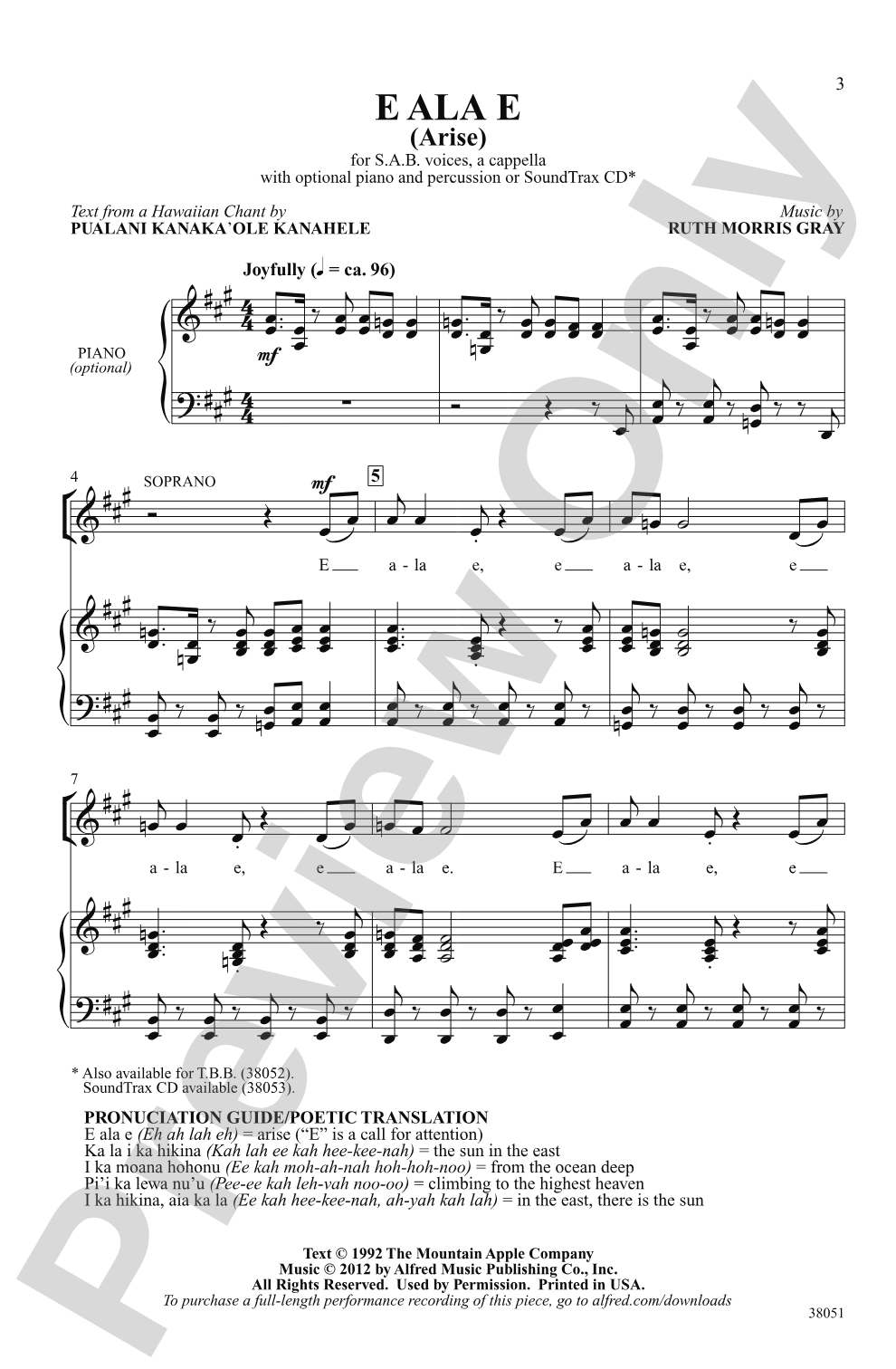
This nature-inspired poem celebrates our connection to the rising sun, incorporating equal parts English and Hawaiian text. Rhythmic and harmonic motives sound authentic throughout. Highly creative.


Don't just read it, hear it, play along with it, and watch your students grow with it. In MakeMusic Cloud, E Ala E: SAB, a cappella Choral Octavo comes alive with professional accompaniment, adjustable tempo, and built-in practice tools that turn solo practice into real progress.
Open in the Player
Jump straight in and assign it today.
Start Your Free Trial
Open this title and explore the full library in minutes.
Sample Audio
1
Audio File
--:--
0:00
0:00
Sample Video
Additional Details
Series:
Alfred Choral Designs
Publisher:
Alfred Music
Page Count:
12
SKU:
00-PO-0001359
Instrumentation:
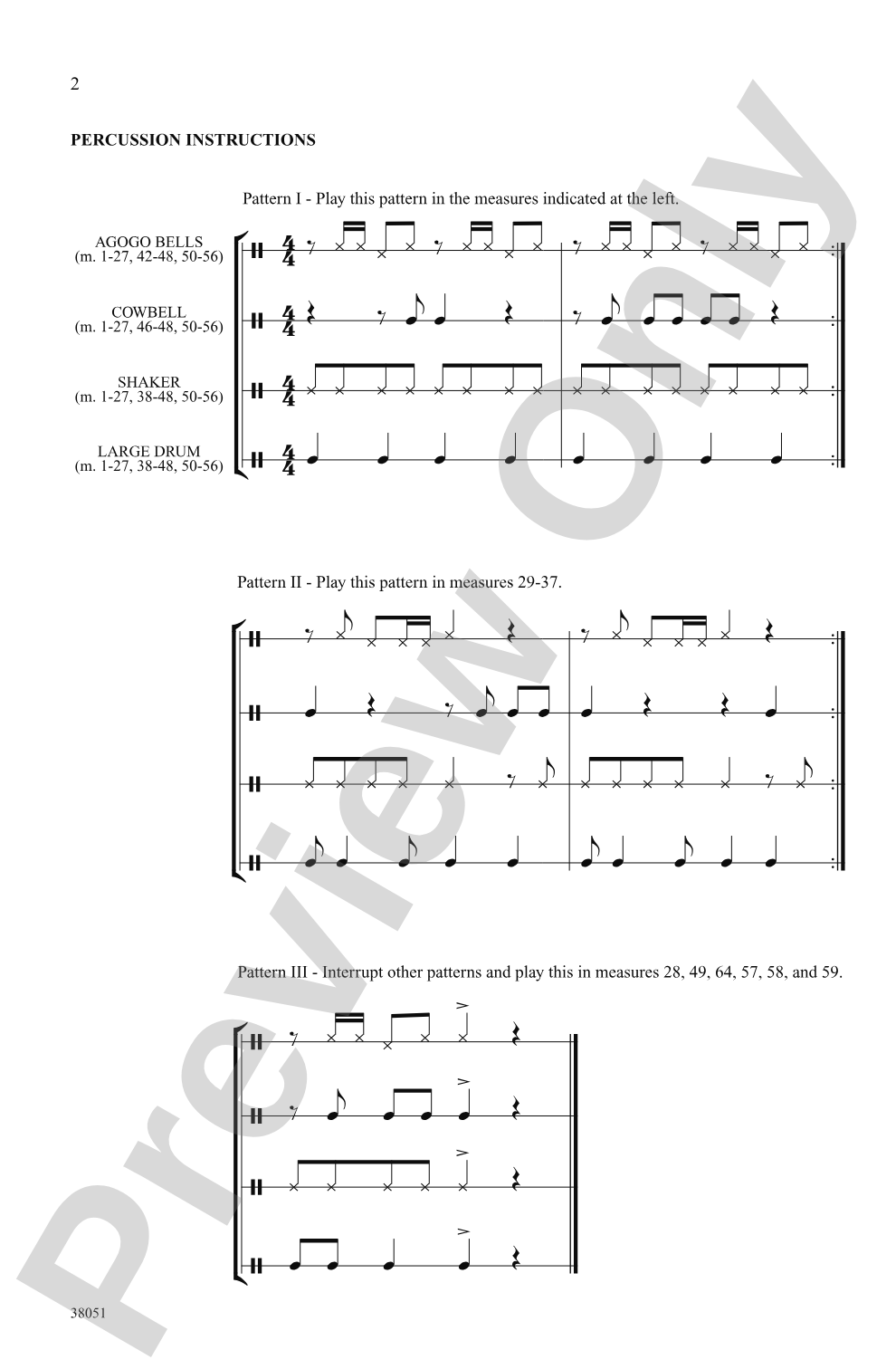
Opt. Percussion
More about this title
About the Composer: Ruth Morris Gray

Ruth Morris Gray holds the position of Director of Choirs at Rosemead High School in California, where she has led the choral program since 2004. She earned her Bachelor of Music degree in Piano Performance and Composition from Biola University and pursued advanced study at the University of California, Santa Barbara, where she completed a Master of Arts Degree in Music Composition. Gray also holds a California Single Subject Music Credential from California State University, Northridge.
With over 100 published choral compositions to her credit, Gray has established herself as a prolific voice in contemporary choral writing. Beyond her work in composition and directing, she is an active performer and educator who brings a multifaceted musical perspective to her teaching. Her interests outside music include travel, swimming, reading, and cycling.
Why we love this
Gray writes music that feels genuinely multicultural rather than decorative, and this piece proves it. The rhythmic and harmonic language authentically reflects Hawaiian musical traditions while remaining entirely accessible for SAB choirs at the contest and festival level. The bilingual text creates a natural entry point for conversations about cultural respect and musical diversity that your singers will actually care about.
What to expect
Sunrise imagery and bilingual text create an immediate sense of celebration and connection to nature. The rhythmic vitality keeps the piece moving forward with infectious energy, while the harmonic language grounds everything in authentic tradition rather than surface exoticism.
Who it's for
SAB choirs preparing for contest and festival seasons, or any group looking for repertoire that celebrates cultural music without tokenizing it. This works equally well for ensembles seeking a shorter, highly engaging piece and for directors building a program around multicultural themes.
How to get the most out of it
- Spend rehearsal time on the Hawaiian pronunciation and vowel shapes before tackling the rhythmic elements. Gray's harmonic language will feel more natural once the text sits comfortably in your singers' mouths.
- Treat the rhythmic motives as interlocking parts rather than straightforward homophony. The authenticity depends on precision across all three voices, so mark where each voice's rhythmic pattern begins and ends.
- If you use the recorded accompaniment as a rehearsal tool, pull it back once voices are secure. The a cappella texture is the point here, and it demands blend and balance that rehearsal tapes can mask.
How to use it
Consider pairing this with other nature-themed repertoire or building a concert around multicultural perspectives on light and renewal. At 12 pages, it's substantial enough to stand as a feature piece but brief enough to anchor a longer program without overshadowing smaller works.
Skills your students will build
- Reading and pronouncing Hawaiian text with authentic vowel sounds
- Identifying and executing rhythmic motives across three independent voice parts
- Balancing harmonic texture in a cappella writing
- Understanding cultural musical traditions through hands-on performance