
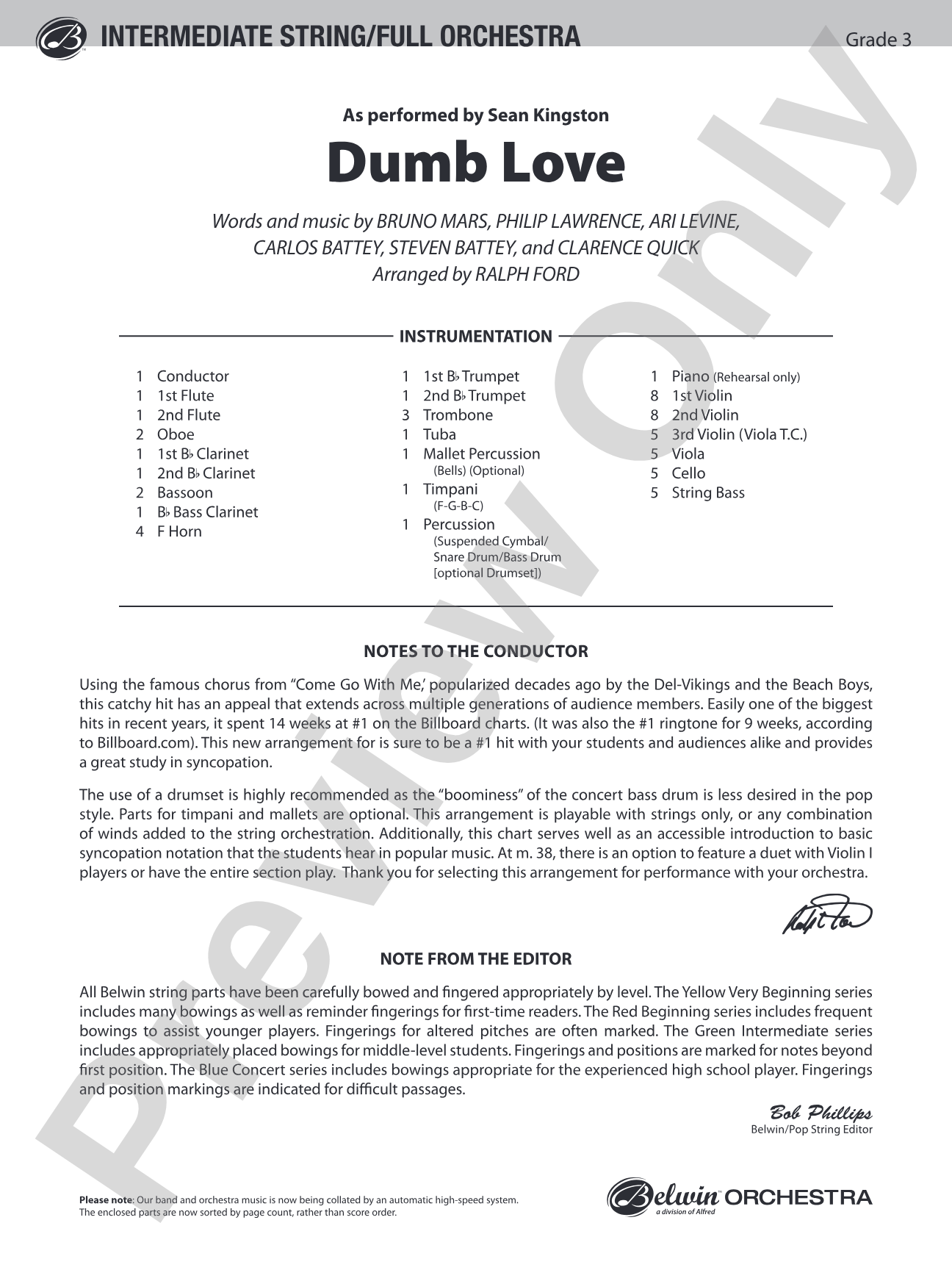
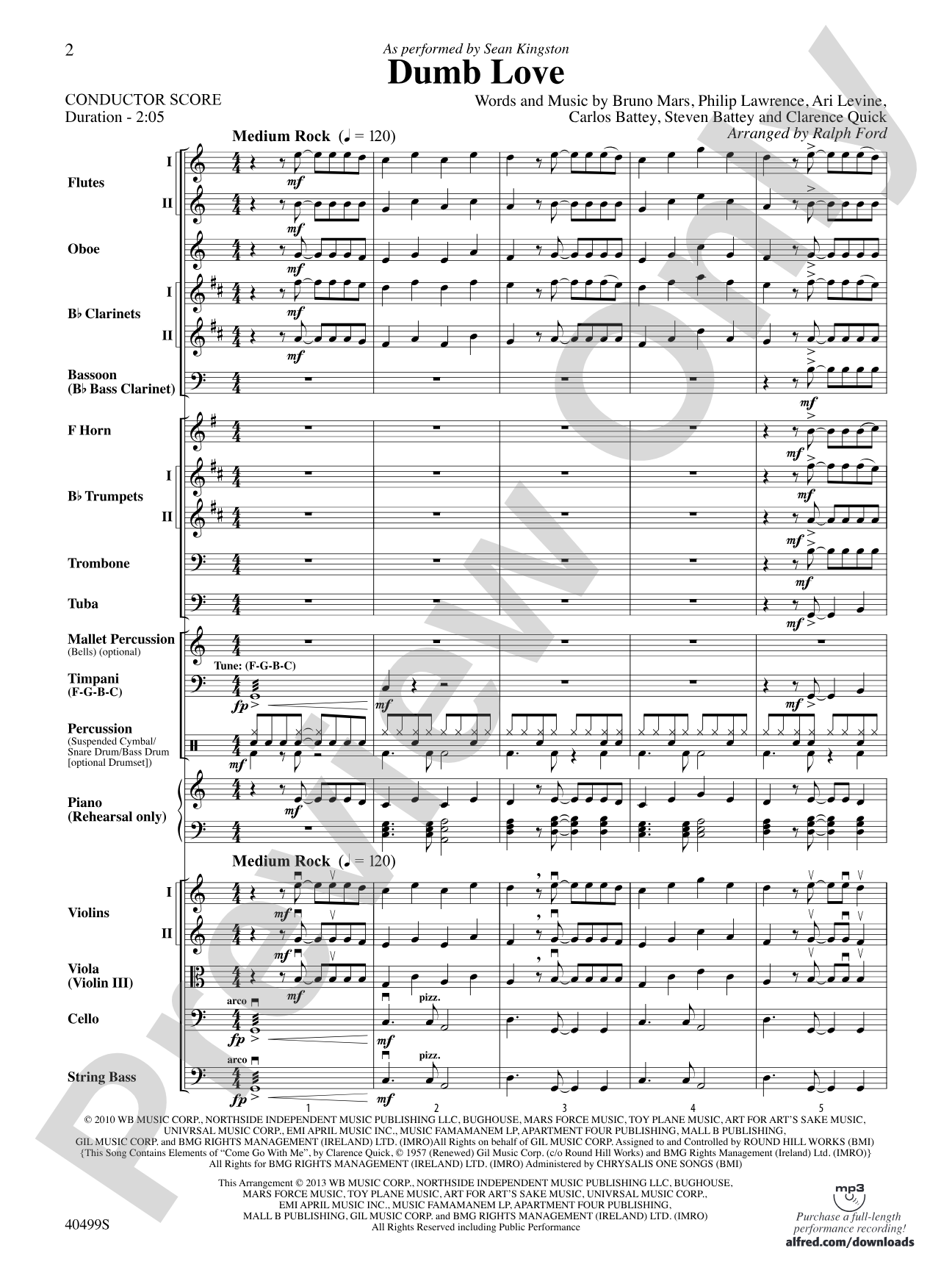
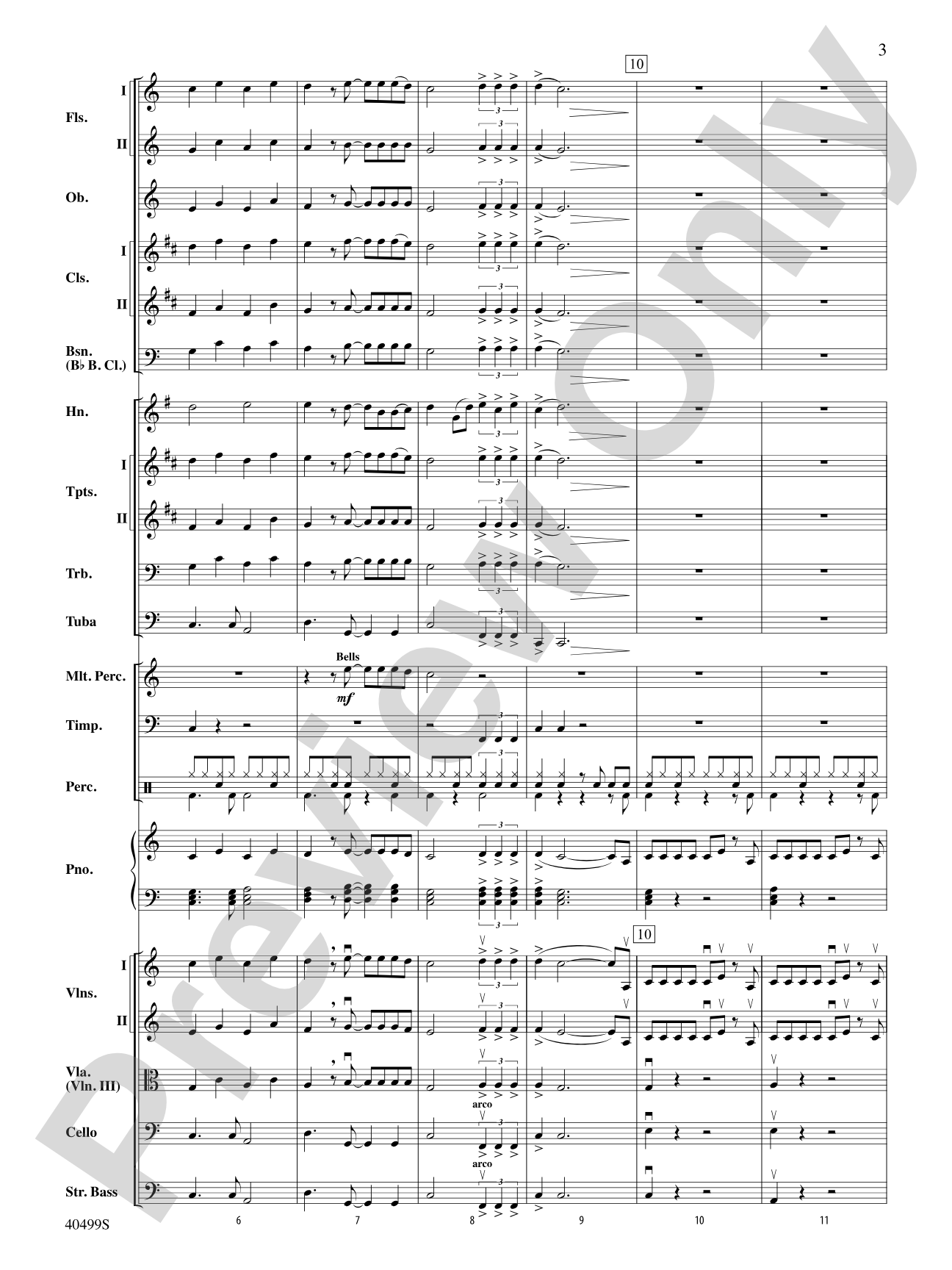
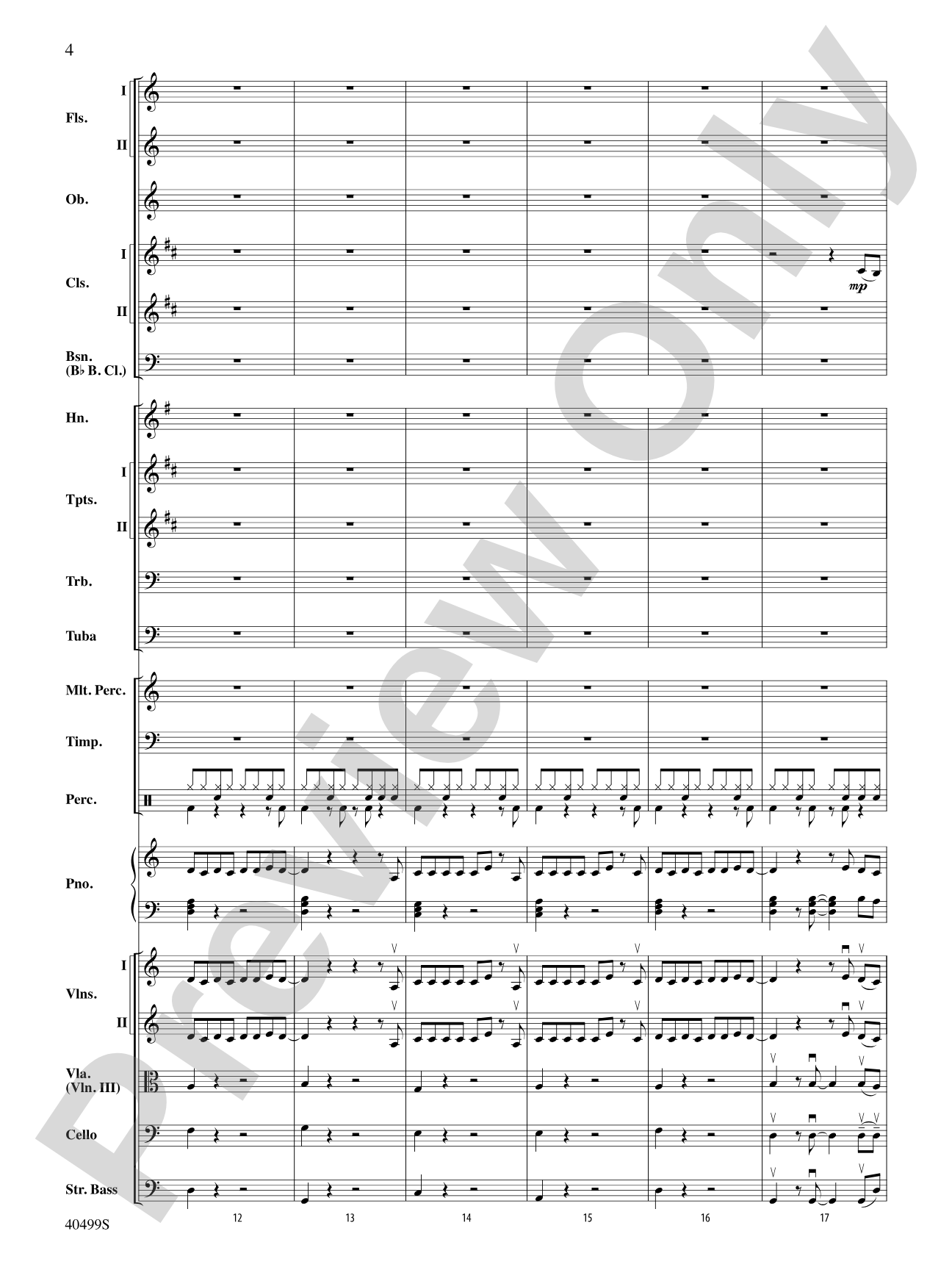
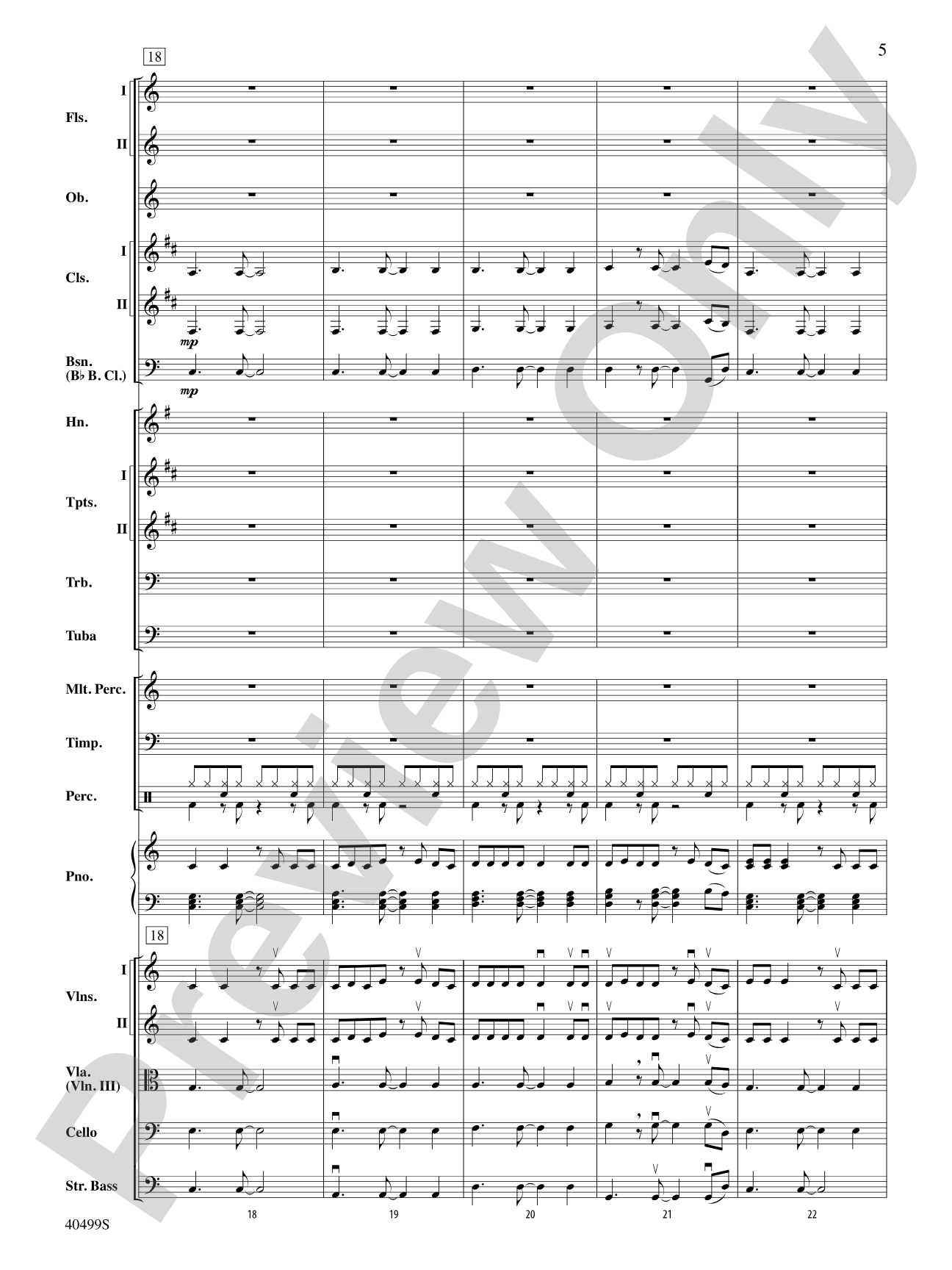
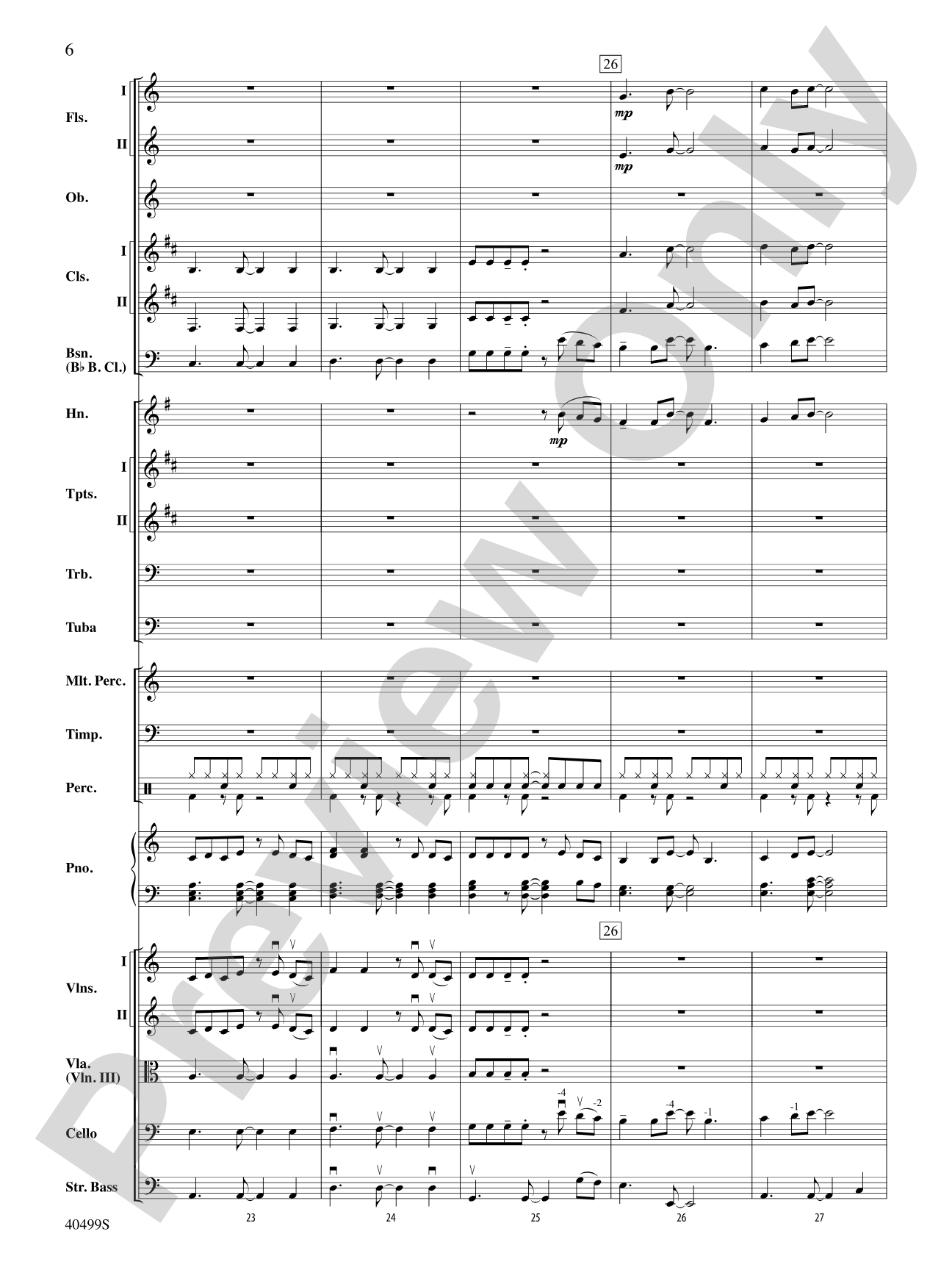
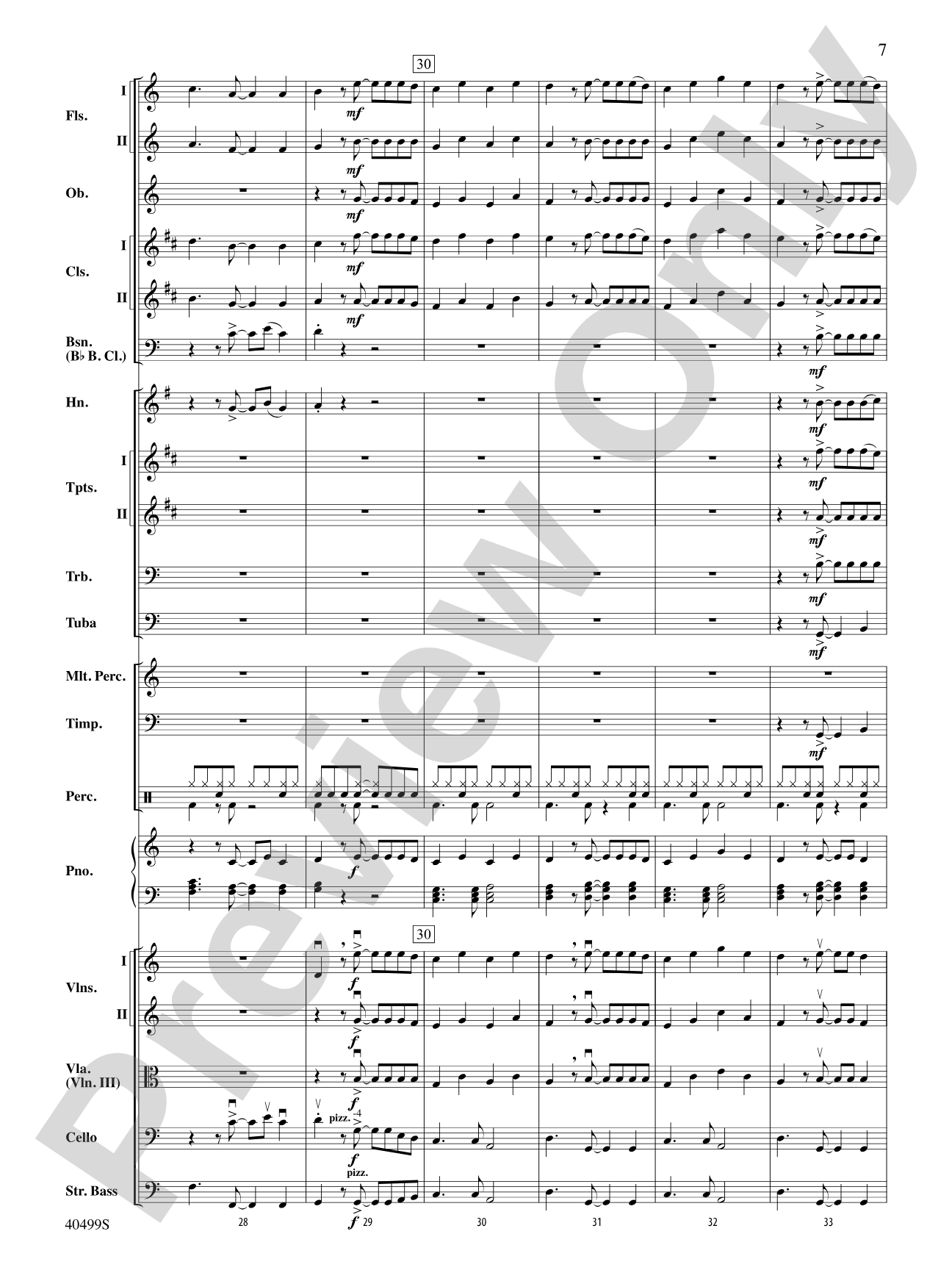
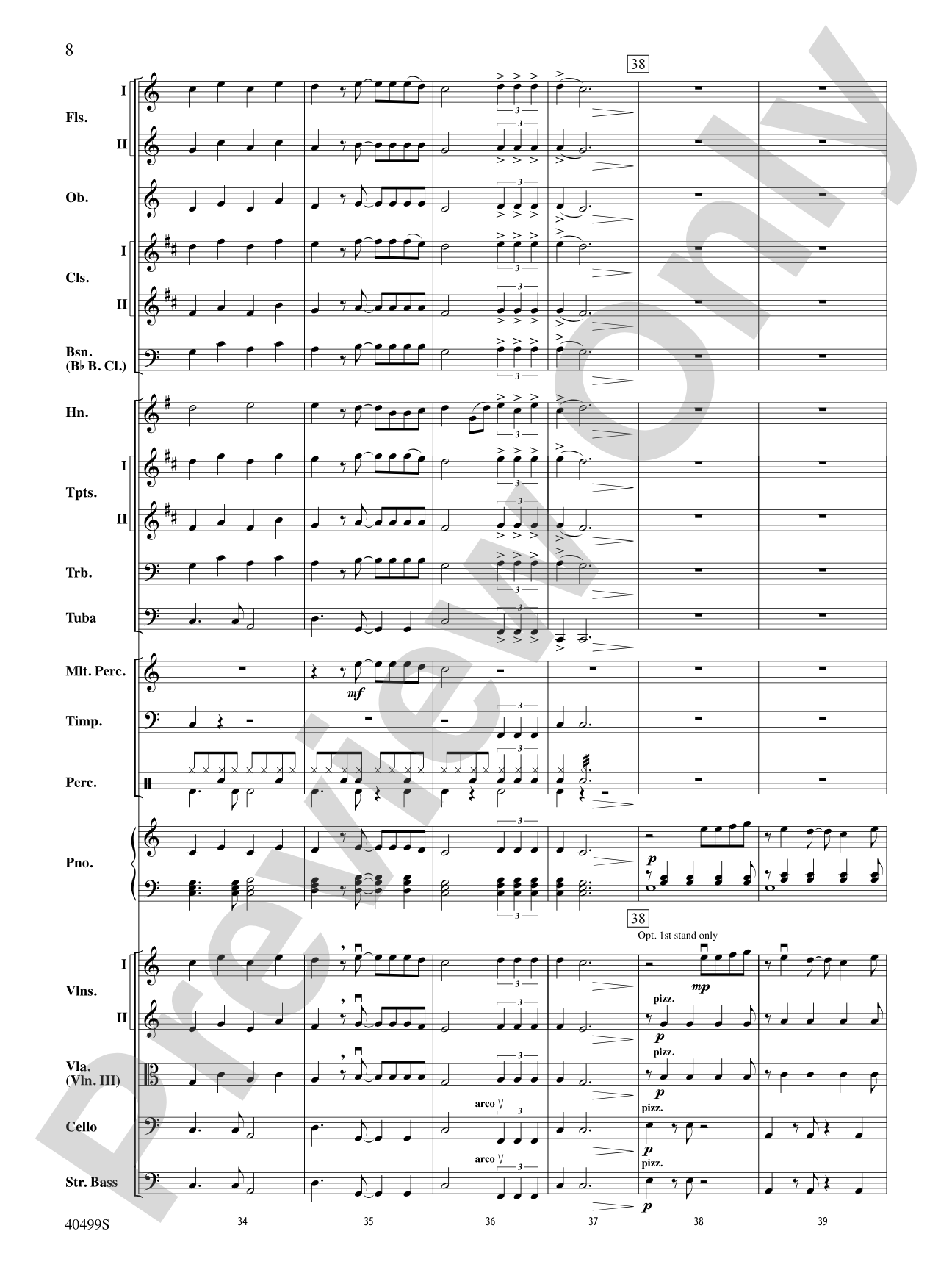
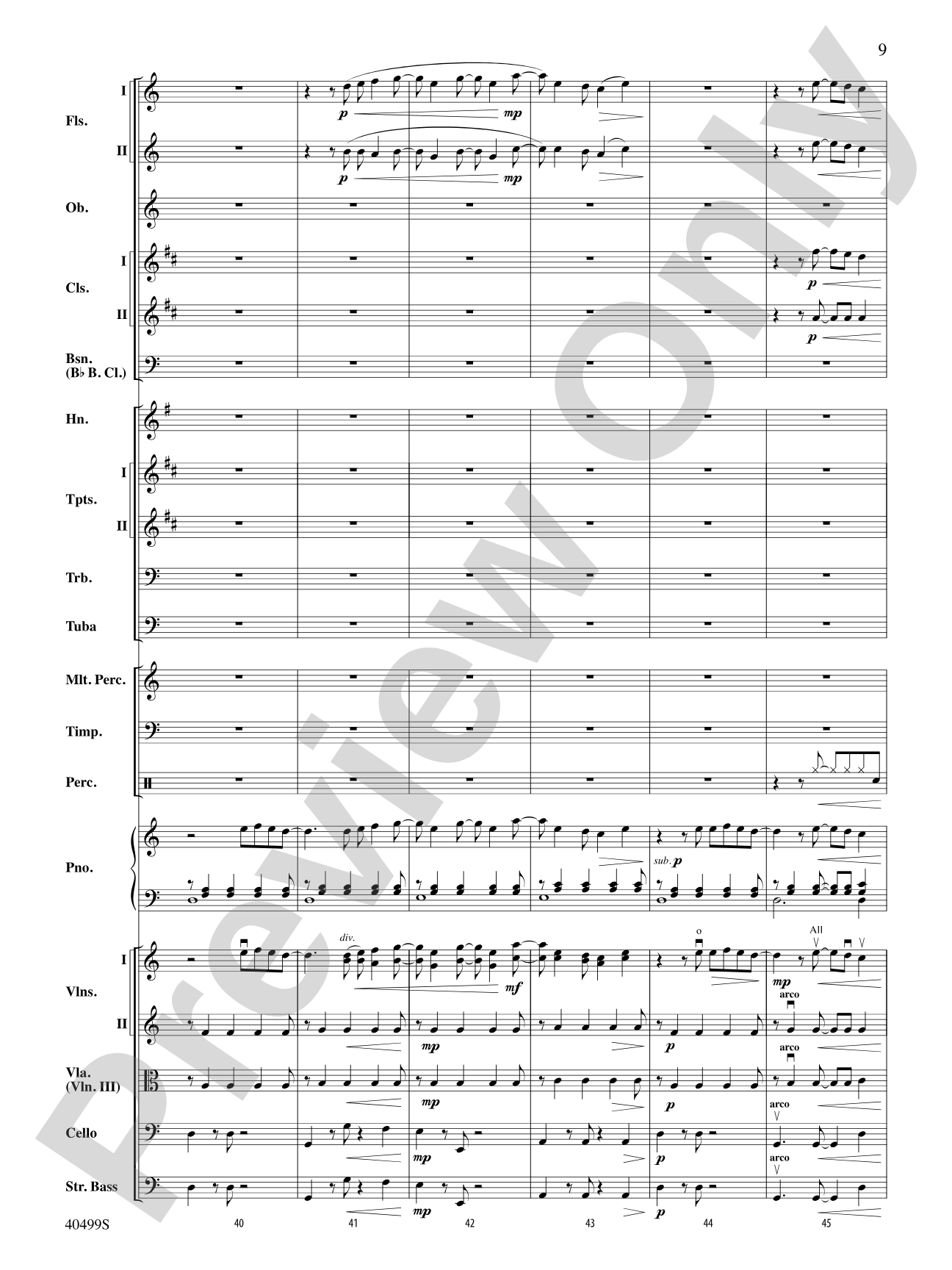
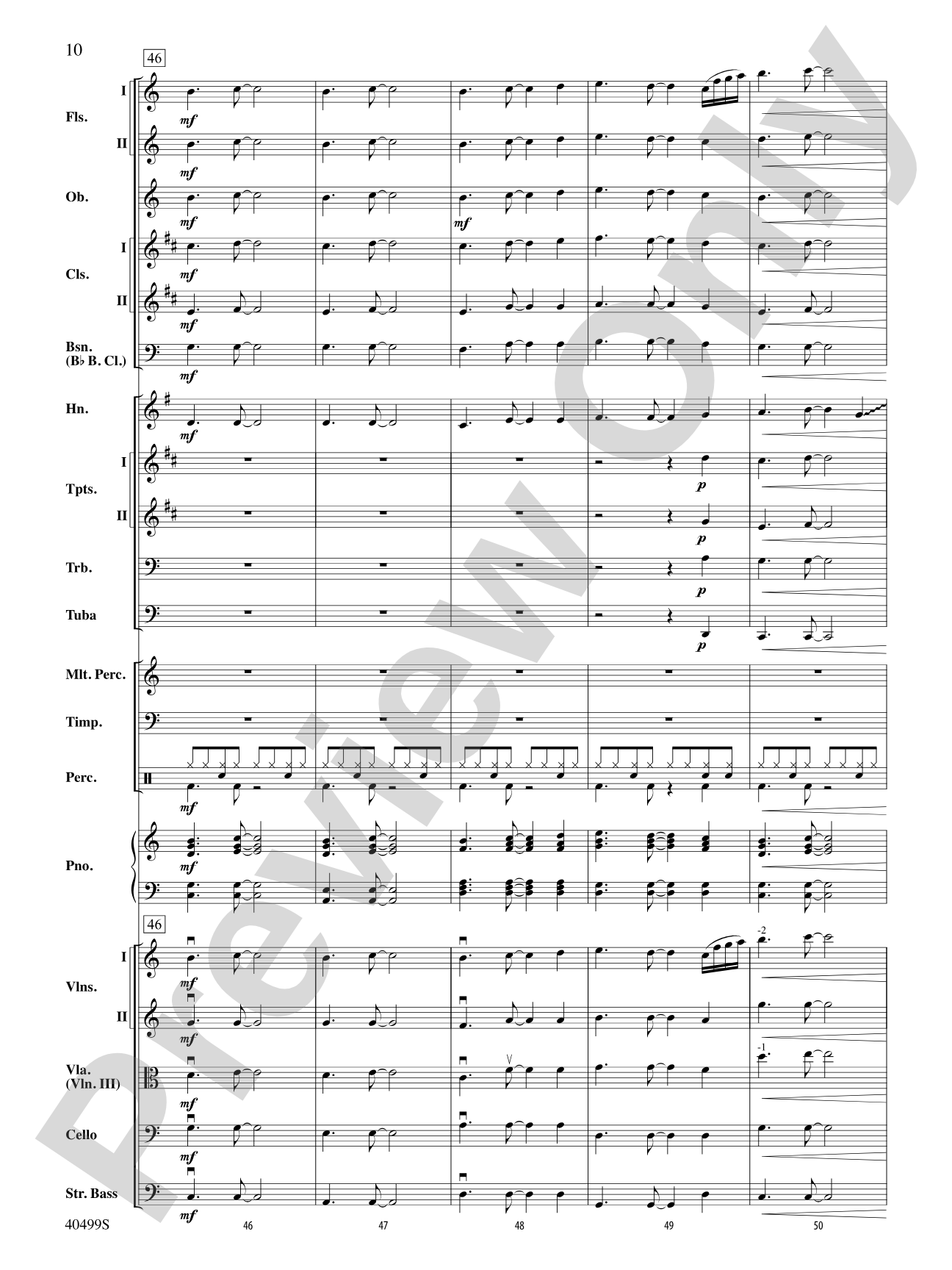
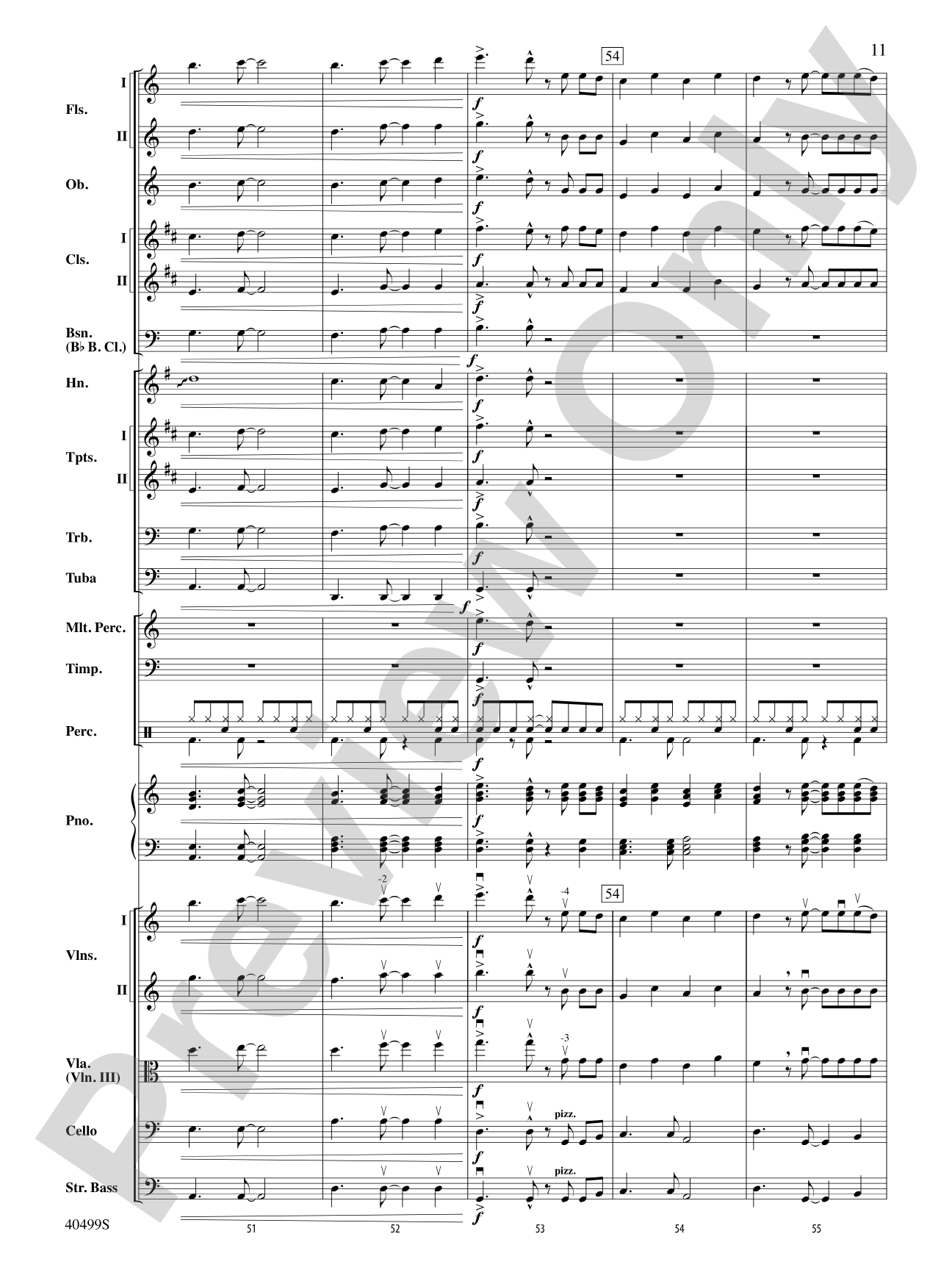
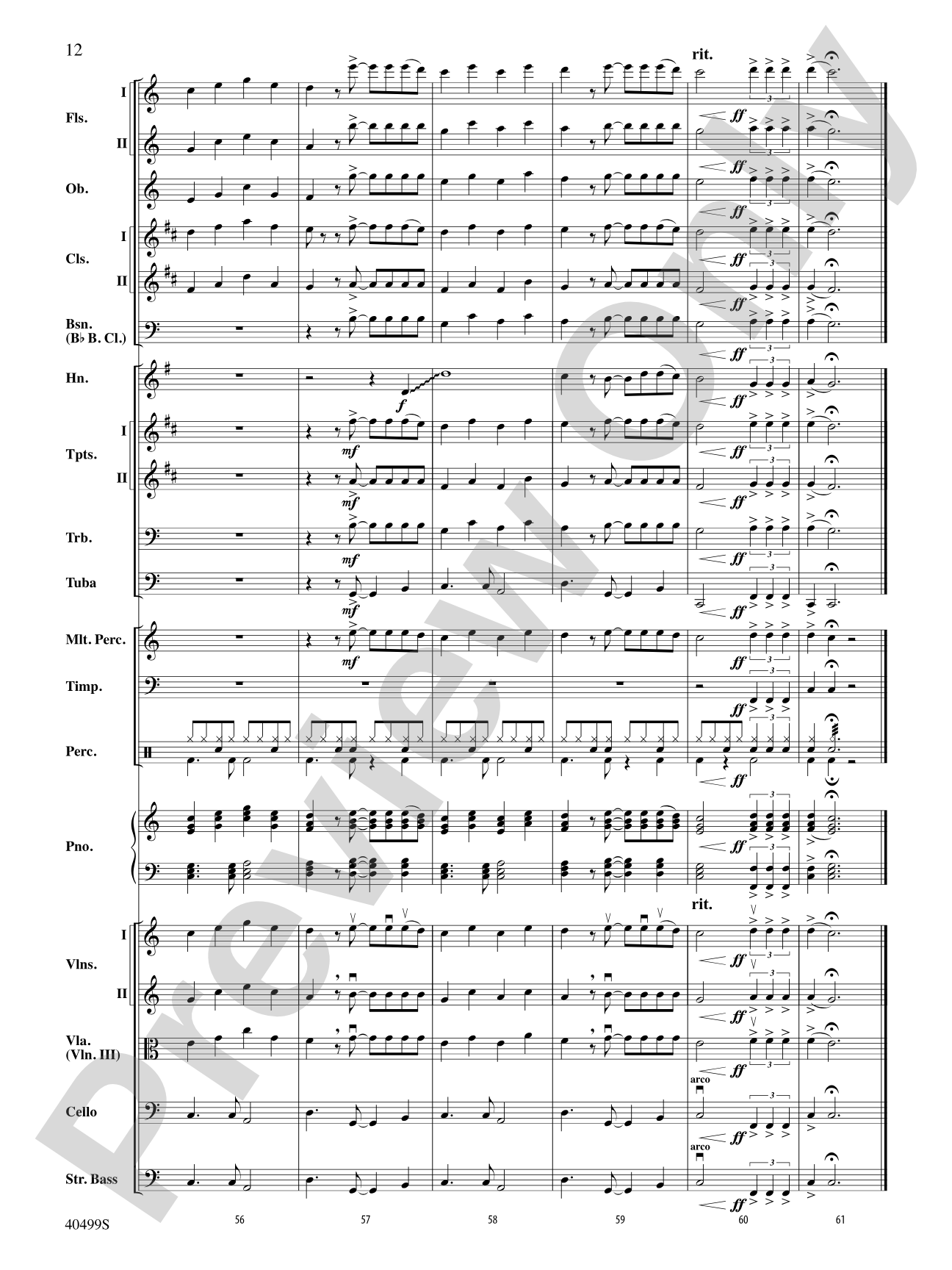

Dumb Love: Full Orchestra Conductor Score & Parts
As Performed by Sean Kingston
Words and music by Bruno Mars, Philip Lawrence, Ari Levine, Carlos Battey, Steven Battey, and Clarence Quick / arr. Ralph Ford
Grade: 3
Item: 00-PK-0005777

$58.00
One moment…
Description
Using the famous chorus from "Come Go With Me," this hit has an appeal that extends across generations. (2:05)


Don't just read it, hear it, play along with it, and watch your students grow with it. In MakeMusic Cloud, Dumb Love: Full Orchestra Conductor Score & Parts comes alive with professional accompaniment, adjustable tempo, and built-in practice tools that turn solo practice into real progress.
Open in the Player
Jump straight in and assign it today.
Start Your Free Trial
Open this title and explore the full library in minutes.
Sample Audio
1
Audio File
--:--
0:00
0:00
Sample Video
No sample videos found.
Additional Details
Series:
Pop Intermediate Full Orchestra
Publisher:
Alfred Music
Page Count:
120
SKU:
00-PK-0005777
More about this title
About the Composer: Bruno Mars
Bruno Mars emerged as a defining pop artist of the 2010s, known for crafting radio-friendly hits that blend retro soul, funk, and pop sensibilities with contemporary production. His work as a composer and performer demonstrates a keen understanding of melody, groove, and the architecture of songs built to connect with broad audiences. Mars has collaborated extensively with production partners Philip Lawrence and Ari Levine, whose collective contributions shaped some of the decade's most recognizable pop recordings.
Why we love this
This arrangement captures the infectious energy of a modern pop hit while remaining genuinely playable for young orchestras. The familiarity of the source material (built on the iconic chorus from "Come Go With Me") gives students immediate engagement, and the orchestration balances accessibility with real musical substance, allowing conductors to teach contemporary repertoire without sacrificing musical rigor.
What to expect
The piece radiates infectious optimism and groove, built on a foundation of strong rhythmic momentum and accessible melodic hooks. You'll hear familiar pop polish alongside the richness of full orchestral color, creating a sound that feels both modern and celebratory.
Who it's for
This score and parts set works for middle and early high school orchestras seeking contemporary repertoire that resonates with student musicians. Directors programming concerts that blend classical and popular music will find this arrangement opens conversation about genre, arranging, and what makes a song "work" across different instrumentation.
How to get the most out of it
- Lock the rhythmic foundation early in rehearsal by having the percussion section establish the groove before layering strings and winds; this piece relies on a solid rhythmic pocket to feel contemporary.
- Balance the melodic lines across sections rather than letting any single voice dominate; the arrangement works best when the pop sensibility comes from cohesive ensemble sound, not spotlight solos.
- Attend to the recorded accompaniment track if available to hear how the arrangement sits within the original recording's context and to calibrate tempo and feel accordingly.
- Keep articulations clean and unified, especially in the rhythmic figures that drive the piece; sloppy tonguing or bowing will undercut the polished pop aesthetic.
How to use it
Program this alongside classical or film music to show students how orchestration transforms a pop recording into concert repertoire. It works particularly well in pops concerts, family-friendly programs, or competitions where you want to demonstrate ensemble flexibility and contemporary relevance without stepping outside the concert music tradition.
Skills your students will build
- Maintaining steady groove and rhythmic precision in a pop/rock idiom
- Balancing ensemble parts to support a central melodic idea
- Reading and executing contemporary articulation and rhythmic figures
- Coordinating attacks and releases across multiple instrument families
- Understanding how orchestration adapts popular music for concert performance