

Dry Bones: SAB Choral Octavo
Traditional Spiritual / arr., with additional words and music, by Mark Hayes
Item: 00-PO-0005583

$2.00
Minimum order quantity: 20 copies
Pickup currently not available
Related Items
Dry Bones: SATB Choral Octavo |
$2.20
|
View | |
Dry Bones: TTBB Choral Octavo |
$2.95
|
View | |
Dry Bones: Choral SoundPax |
$35.00
|
View | |
Dry Bones: SATB Choral Octavo |
$2.60
|
View | |
Dry Bones: SAB Choral Octavo |
$2.00
|
View | |
Dry Bones: SSAA Choral Octavo |
$1.85
|
View | |
Dry Bones: TTBB Choral Octavo |
$2.95
|
View | |
Dry Bones: Choral Octavo SoundTrax CD |
$27.99
|
View | |
Dry Bones: Choral SoundPax |
$35.00
|
View |
Description
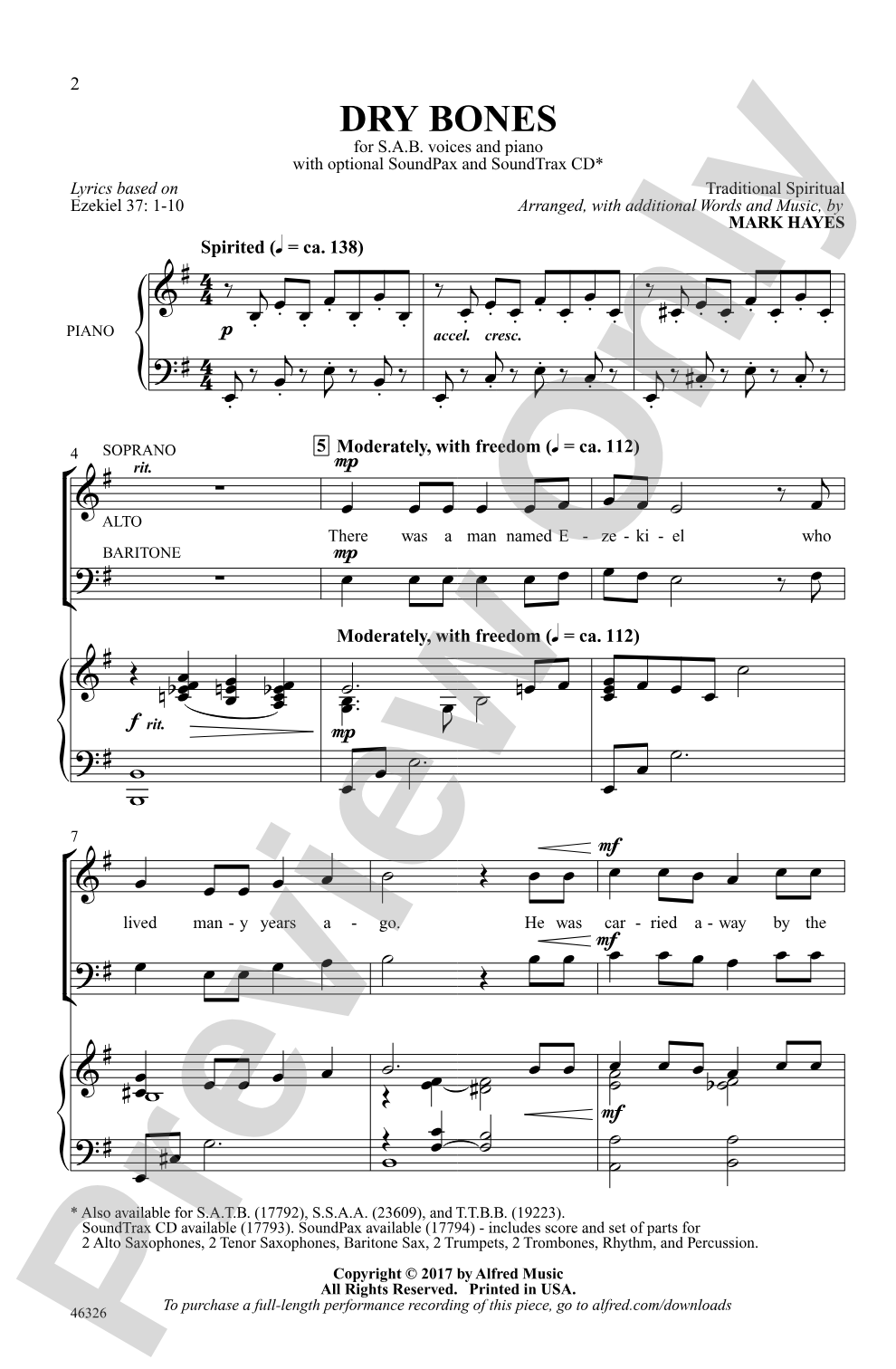
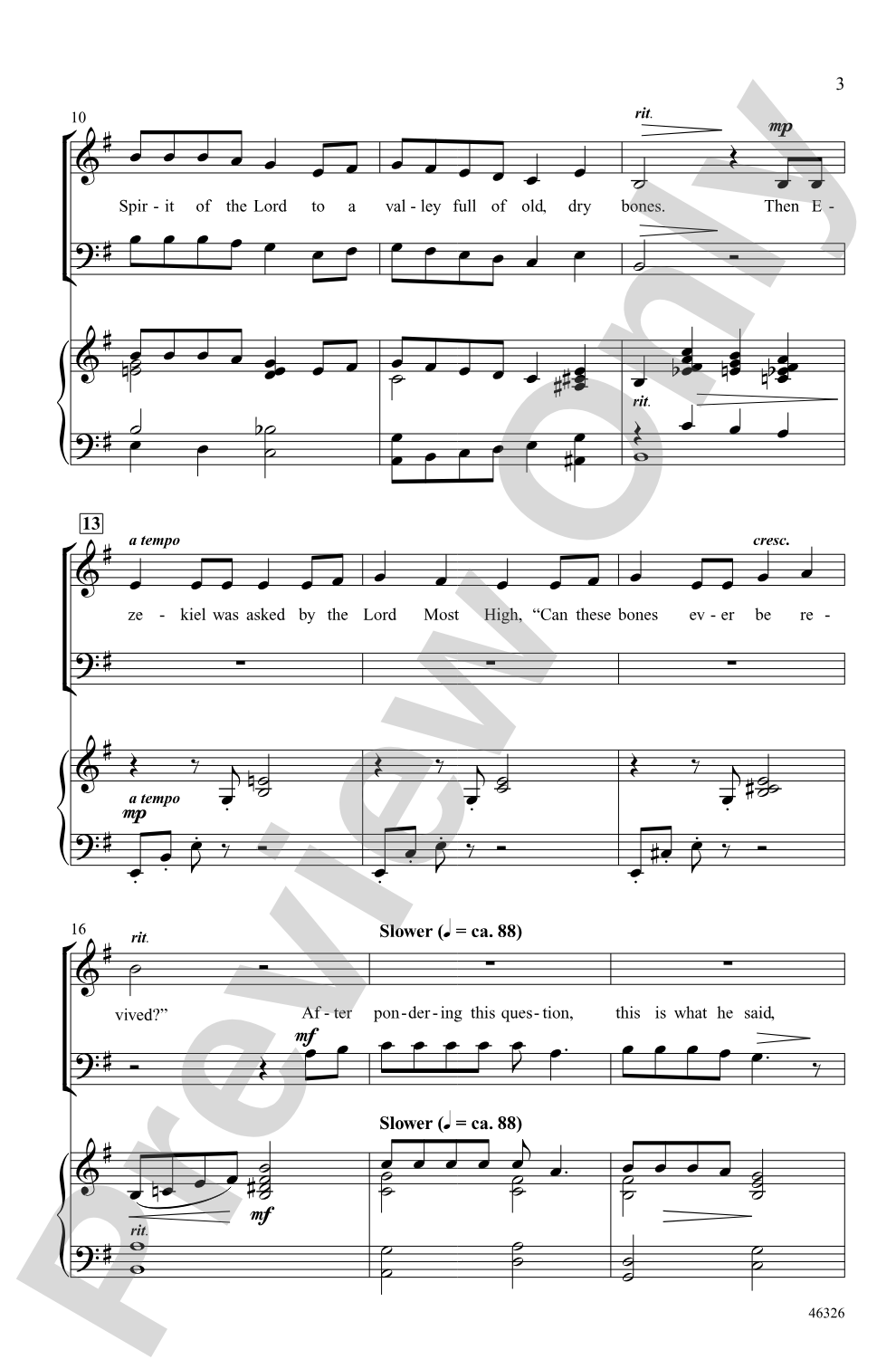
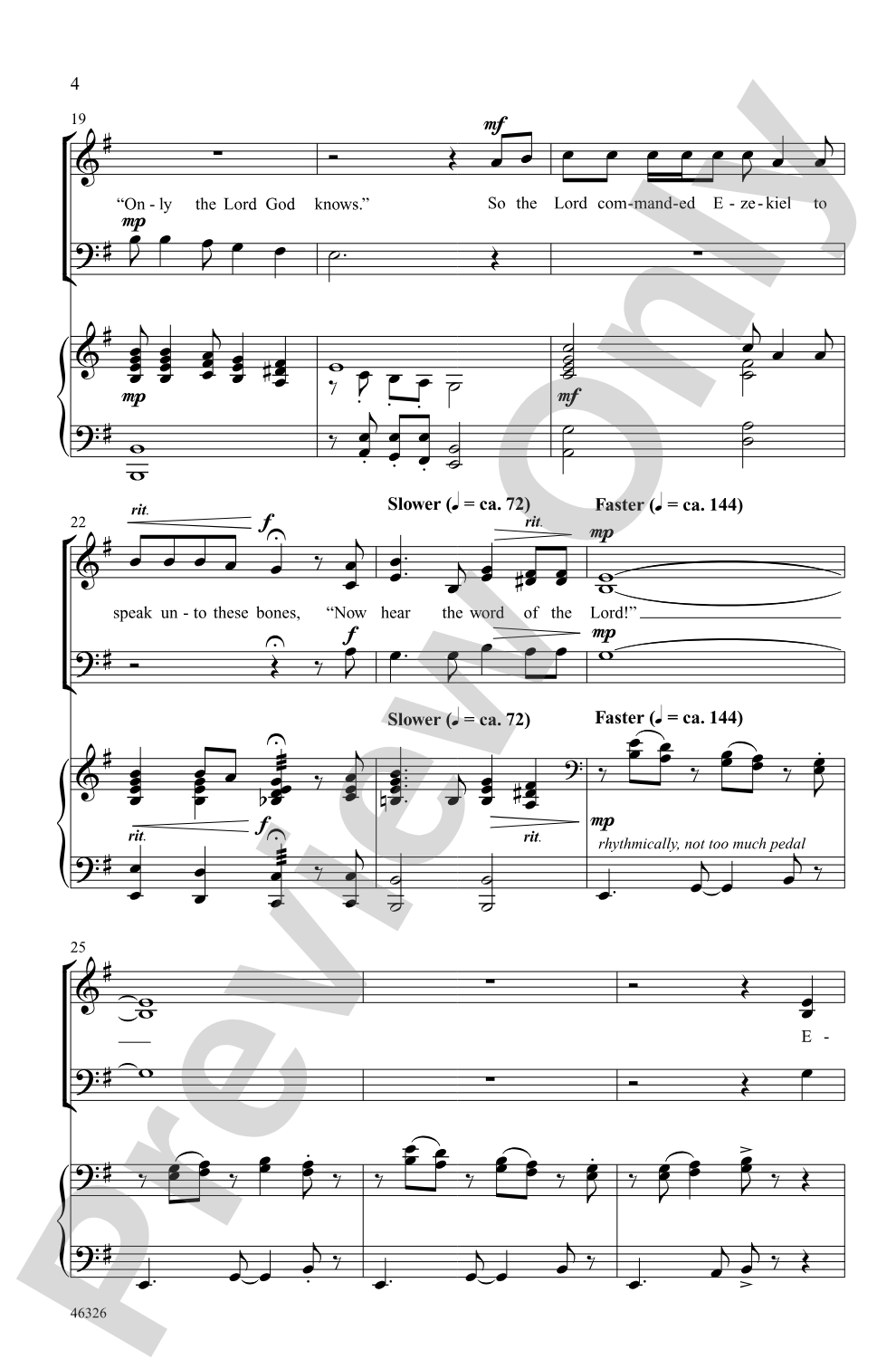
An Alfred Music best seller now available for SAB choirs! Each verse is freshly approached, adding more and more excitement to this popular spiritual about the prophet Ezekiel. Builds through a chromatically ascending "this bone connected to that bone" section, and ends with a big finish! Great for festival use.


Don't just read it, hear it, play along with it, and watch your students grow with it. In MakeMusic Cloud, Dry Bones: SAB Choral Octavo comes alive with professional accompaniment, adjustable tempo, and built-in practice tools that turn solo practice into real progress.
Open in the Player
Jump straight in and assign it today.
Start Your Free Trial
Open this title and explore the full library in minutes.
Sample Audio
1
Audio File
--:--
0:00
0:00
Sample Video
Additional Details
Series:
Alfred Choral Designs
Publisher:
Alfred Music
Page Count:
16
SKU:
00-PO-0005583
More about this title
About the Arranger: Mark Hayes
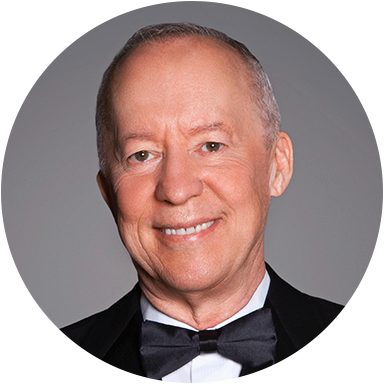
Mark Hayes brings three decades of prolific composition and arrangement to choral music, with over 1,750 published works across sacred, secular, orchestral, and solo piano repertoire. A summa cum laude graduate of Baylor University's Piano Performance program, Hayes has conducted at Lincoln Center, the National Cathedral, and Carnegie Hall, and received the 2010 Award for Exemplary Leadership in Christian Music from his alma mater.
Beyond the concert hall, Hayes has created music for theatre (Civil War Voices won six awards at the Midtown International Theatre Festival), orchestrated Broadway productions, and composed commissioned works for institutions worldwide. His arrangement philosophy centers on making music accessible without sacrificing musical substance, a quality evident in his choral designs that balance singability with sophistication.
Why we love this
Hayes structures this spiritual with genuine dramatic arc. Each verse builds intentionally, and the chromatic ascent through the "bone connected" section feels organic rather than gimmicky, giving your singers something concrete to track and audiences something tangible to follow. The SAB voicing opens this beloved spiritual to more ensembles while the recorded accompaniment option gives directors flexibility whether they want full accompaniment support or prefer to rehearse independently.
What to expect
A spiritual that earns its energy. The opening sits comfortably in each voice part, then Hayes gradually introduces harmonic color and directional momentum that carries singers and listeners toward the exuberant conclusion. The "bone connected" moment creates a moment of pure architectural clarity, where everyone hears exactly how the voices lock together.
Who it's for
SAB choirs looking for festival-ready spiritual arrangements that don't require octavo re-voicings or extensive parts reworking. This works equally well for church choirs, high school choirs, and community ensembles seeking accessible but musically substantive sacred literature.
How to get the most out of it
- Pay attention to the text painting in how Hayes stacks the verses. Let the harmonic movement mirror the spiritual's narrative rather than rushing through verses at the same dynamic level.
- The chromatic section needs clarity from your middle voices. Mark those ascending pitch shifts in rehearsal so singers hear exactly where their line travels.
- Bring out the energy of the final section without pushing into oversinging. Hayes gives you dynamic and harmonic tools to build excitement; let those do the work.
- If using the recorded accompaniment, rehearse without it first so your singers own the rhythm and phrasing before balancing with the track.
How to use it
Position this where you want a strong choral moment with immediate audience connection. It works beautifully as a festival submission, as a secondary piece on a concert alongside more austere spirituals, or as a finale that leaves audiences smiling. The 16-page length makes it substantial enough to anchor a set without consuming your entire rehearsal calendar.
Skills your students will build
- Singing through chromatic voice leading without losing pitch center
- Balancing three-part harmony with clear part independence
- Responding to dynamic and textural buildup across multiple verses
- Connecting spiritual tradition with contemporary arrangement techniques
- Ensemble blend when voices move in contrary motion