
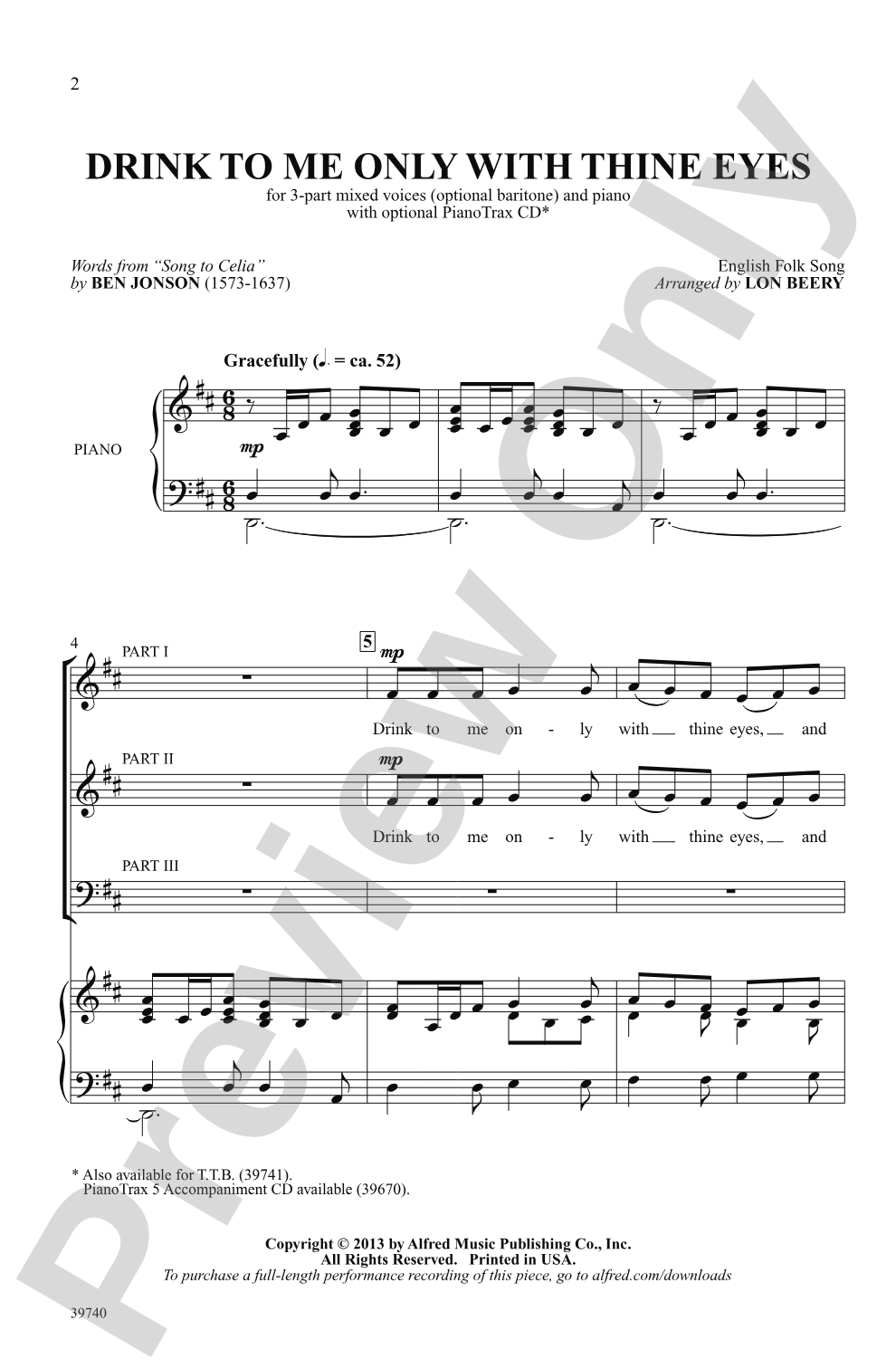

Drink to Me Only with Thine Eyes: 3-Part Mixed Choral Octavo
English Folk Song
Words from "Song to Celia" by Ben Jonson / arr. Lon Beery
Item: 00-PO-0001577
$1.85
Minimum order quantity: 20 copies
Pickup currently not available
Related Items
Drink to Me Only with Thine Eyes: PianoTrax Digital Download |
$9.99
|
View | |
Drink to Me Only with Thine Eyes: PianoTrax Digital Download |
$9.99
|
View | |
Drink to Me Only with Thine Eyes: TTB Choral Octavo |
$1.85
|
View | |
Drink to Me Only with Thine Eyes: 3-Part Mixed Choral Octavo |
$1.85
|
View | |
Drink to Me Only with Thine Eyes: TTB Choral Octavo |
$1.85
|
View |
Description
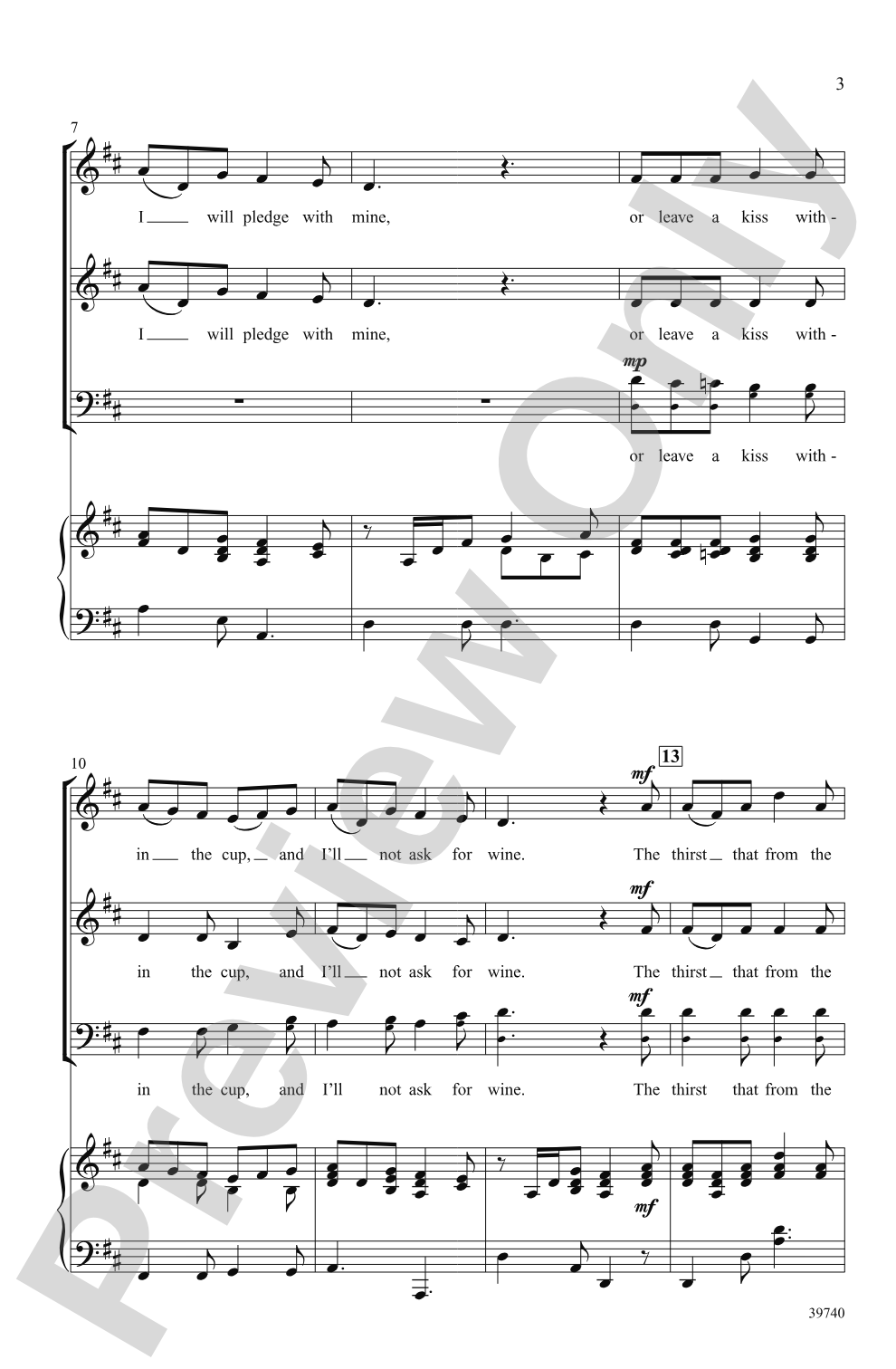
So many of us studied this song as students, and now our developing choirs can hone their skills with this educationally appropriate arrangement. Perfect voice leading in comfortable ranges, with a musical and supportive piano accompaniment.


Drink to Me Only with Thine Eyes: 3-Part Mixed Choral Octavo isn't in MakeMusic Cloud just yet...but it could be. Let us know you'd like to see it, and you'll help shape what comes next. In the meantime, start a free trial and dive into thousands of interactive titles your students can play along with today.
Request This Title
Tell us you want it.
Start Your Free Trial
Explore everything that's ready to play right now.
Sample Audio
1
Audio File
--:--
0:00
0:00
Sample Video
No sample videos found.
Additional Details
Series:
Alfred Choral Designs
Publisher:
Alfred Music
Page Count:
8
SKU:
00-PO-0001577
More about this title
About the Arranger: Lon Beery

Lon Beery directs six choruses at Spry Middle School in Webster, New York, working with approximately 500 students across multiple ensembles. His published catalog includes over 50 choral compositions and arrangements distributed through Alfred Music, BriLee, and other publishers, and his work has earned several ASCAP Standard Awards.
Beyond his classroom, Beery has contributed articles to the Choral Journal and Music Educators Journal, presented at state and regional conferences of ACDA and MENC, and served as Middle School Chair for New York ACDA. His TTBB composition "I Believe" was performed by the U.S. Army Chorus at President Ronald Reagan's internment service in California.
Why we love this
Beery understands what developing singers need: this arrangement sits in genuinely comfortable ranges for mixed voices, avoids the unnecessary complexity that can bog down rehearsals, and features voice leading that sounds musical without requiring advanced harmonic literacy. It's a song your students already know or will quickly grasp, which means you can focus on teaching them how to blend, balance, and listen to each other rather than decoding unfamiliar material.
What to expect
Warm, lyrical, and intimate. This arrangement honors the gentle sentiment of the text without sentimentality, letting the familiar melody shine while the supporting harmonies add depth and richness. Singers experience the satisfaction of creating something polished and beautiful from a song they connect with immediately.
Who it's for
Developing middle school and early high school choirs, as well as community and church ensembles working with singers of mixed ages and abilities. The SAB voicing and accessible ranges make this ideal for singers who are still building fundamental skills in part-singing and ensemble cohesion.
How to get the most out of it
- Balance the parts by having singers listen across their own voice line; the arrangement rewards blend when each voice sings with equal commitment.
- Use the piano accompaniment to establish the harmonic foundation during early rehearsals, then gradually pull back on the dynamic support as internal security grows.
- Shape the phrasing around the text rather than treating each section as a new beginning; this melody asks for graceful, connected lines.
- Keep the tempo steady and unhurried; this folk song gains its character from lyrical simplicity, not rhythmic momentum.
How to use it
Program this as a lighter moment in a concert of longer or more dramatic works; it provides textural contrast and gives your audience a chance to settle into something they may recognize. It also makes an excellent selection for informal performances, holiday programs, or ensemble showcases where you want to demonstrate musicianship without technical fireworks.
Skills your students will build
- Balancing three independent vocal lines in close harmony
- Sustaining legato phrasing across longer melodic lines
- Tuning chords through active listening within the ensemble
- Coordinating with piano accompaniment while maintaining independent part security
- Responding to text with appropriate dynamic and emotional shaping