

Dreams Were Made to Come True: 3-Part Mixed Choral Octavo
Words and music by Nathaniel Stine
Item: 00-PO-0007245
$2.30
Minimum order quantity: 20 copies
Pickup currently not available
Related Items
Dreams Were Made to Come True: 2-Part Choral Octavo |
$2.30
|
View | |
Dreams Were Made to Come True: SoundTrax Digital Audio Download |
$29.99
|
View | |
Dreams Were Made to Come True: 3-Part Mixed Choral Octavo |
$2.30
|
View | |
Dreams Were Made to Come True: 2-Part Choral Octavo |
$2.30
|
View | |
Dreams Were Made to Come True: Choral Octavo SoundTrax CD |
$29.99
|
View |
Description
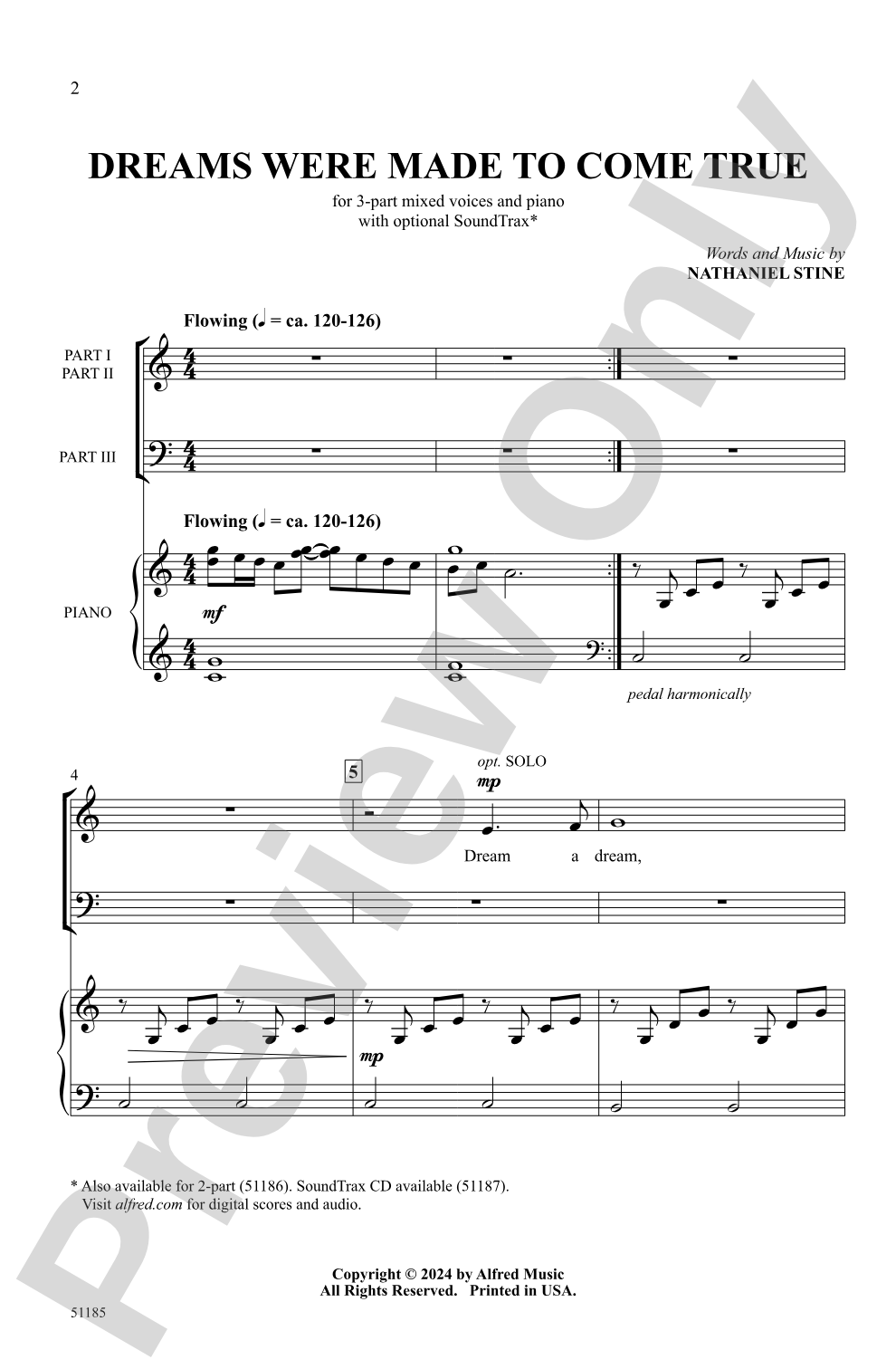
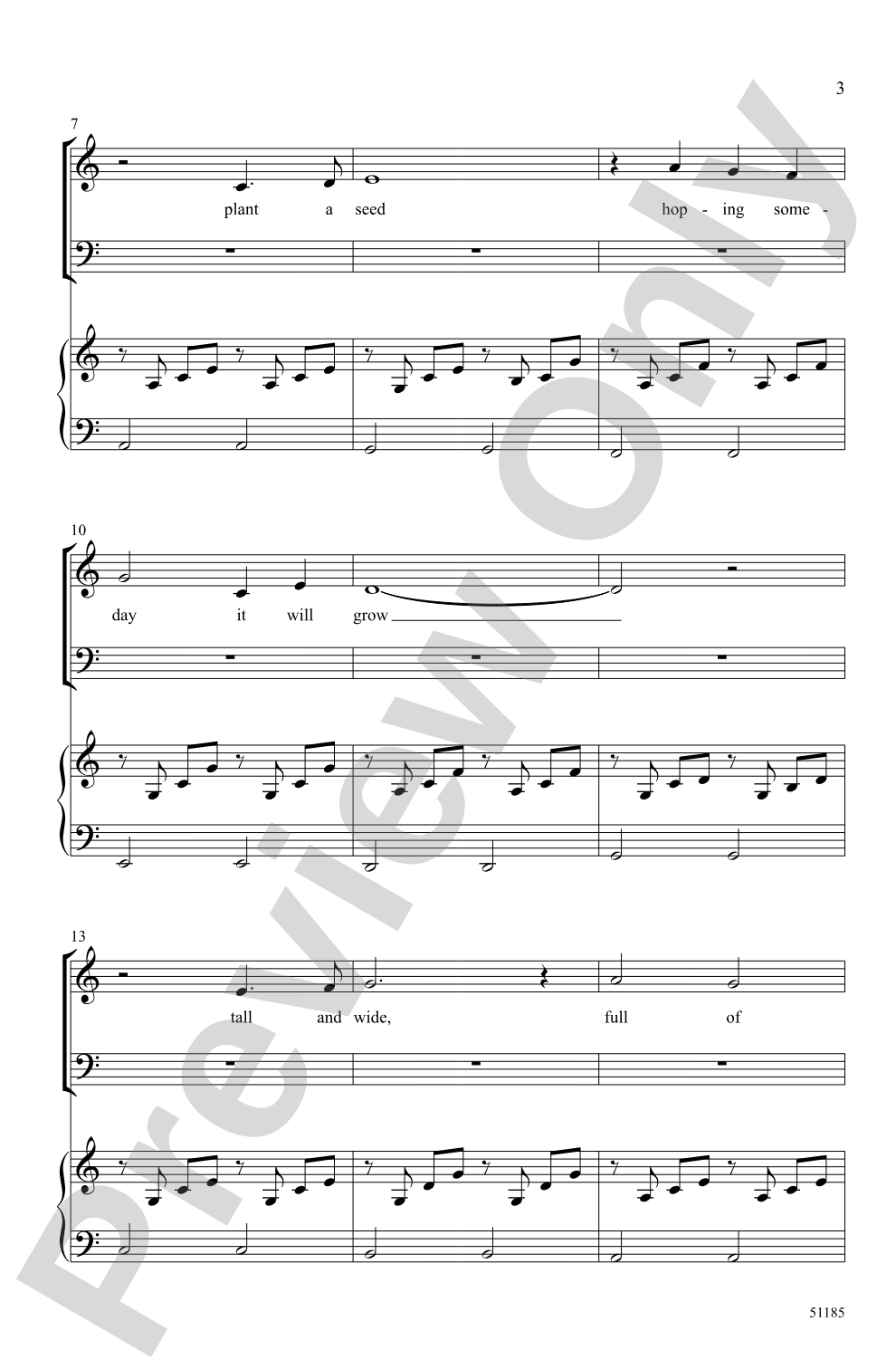
This inspiring anthem reminds us that dreams create endless possibilities. An arpeggiated accompaniment, conservative vocal ranges, and a pop-style melody make this easy to learn and a joy to sing. Opens with an optional solo---"Dream a dream, plant a seed, hoping someday it will grow."


Discover MakeMusic Cloud: thousands of interactive titles your students can play along with today.
Sample Audio
1
Audio File
--:--
0:00
0:00
Sample Video
Additional Details
Series:
Alfred Choral Designs
Publisher:
Alfred Music
Page Count:
12
SKU:
00-PO-0007245
More about this title
About the Composer: Nathaniel Stine

Nathaniel Stine grew up on Boston's North Shore and earned a Bachelor of Music in Vocal Performance from Gordon College before pursuing graduate studies in Choral Music at the University of Southern California. His career has taken him across the country as a performer, conductor, and arranger, with notable appearances at Carnegie Hall accompanying artists including Sarah McLachlan, James Galway, and Tori Kelly.
Since 2001, Stine has divided his time between church and school music leadership. He currently serves as Chorus and Orchestra Director at Rogers-Herr Middle School in Durham, North Carolina, and as Choir Director at Blacknall Presbyterian Church, also in Durham. A multi-instrumentalist proficient on piano, guitar, and saxophone, he brings deep musical versatility to both his compositions and his work with singers of all ages.
Why we love this
Stine has written a piece that works exactly as advertised: conservative ranges mean your singers can access it immediately, the pop-style melody sits naturally in voices, and that opening solo provides a moment of genuine vulnerability before the ensemble swells in. The arpeggiated accompaniment is elegant rather than fussy, giving your singers room to shine without losing harmonic support.
What to expect
Hopeful and grounded. The arpeggiated accompaniment creates a shimmering foundation while the pop-influenced melody feels contemporary and accessible. There's an intimacy in the opening solo that broadens into collective optimism as the three-part harmony enters, leaving singers and audience alike with a sense of possibility.
Who it's for
Any choir director seeking a graduation anthem that uplifts without requiring vocal gymnastics. This piece works equally well for middle school choirs, high school groups building confidence, and community ensembles looking for an inspirational finale.
How to get the most out of it
- Assign the solo to a confident singer who can deliver the opening four lines with restraint. This is a moment to dream, not to belt, so encourage introspection rather than projection.
- Balance the three parts carefully in rehearsal. SAB voicing can muddy if the soprano and alto lines don't maintain clarity; mark those moments where one part carries the melody and the others provide texture.
- Use the recorded accompaniment to lock in the pop-style rhythm, especially the placement of harmony changes within the arpeggiated figures. Your singers will hear exactly where harmonic pillars land.
- Let the piece breathe at phrase endings. Resist the urge to rush through the gentler sections; the arpeggiation will sustain harmonic motion without forcing tempo.
How to use it
Position this as your closing piece on a graduation concert to send students off with genuine warmth rather than grandeur. It also works beautifully as a spring concert finale, end-of-year assembly number, or showcase piece for a developing choir that needs a moment of pride.
Skills your students will build
- Singing in three-part SAB voicing while maintaining part independence
- Blending and balancing mixed voices across a full octave range
- Interpreting pop-style melodic phrasing with lyrical expression
- Following an arpeggiated harmonic progression
- Delivering a solo line with musical intimacy before joining an ensemble