
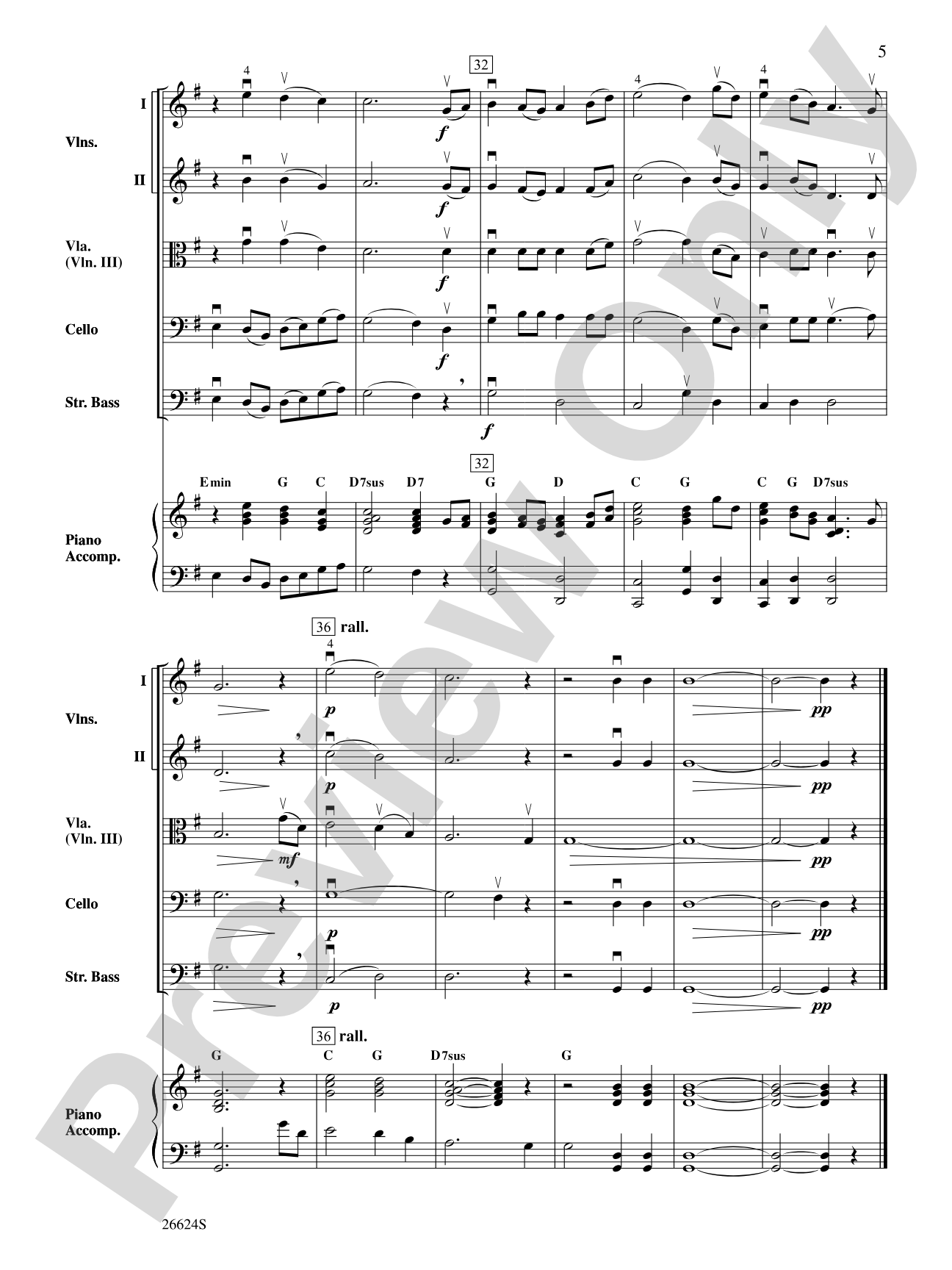




Down by the Salley Gardens: String Orchestra Conductor Score & Parts
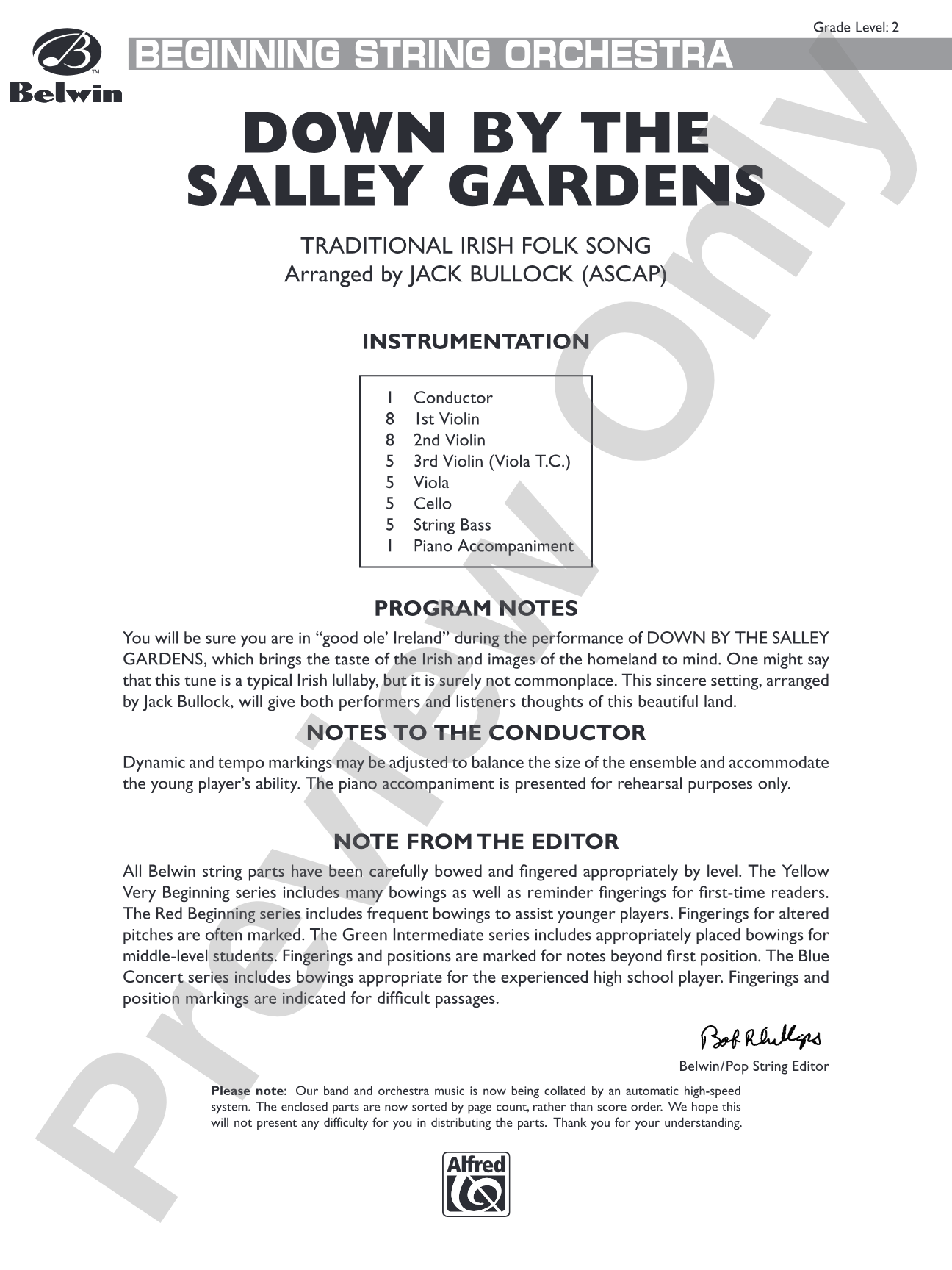
Traditional Irish Folk Song / arr. Jack Bullock
Grade: 2
Item: 00-PK-0001136

$46.00
Pickup currently not available
Buy Extra Parts (Digital PDF Download)
| Product | Price | Quantity |
|---|---|---|
| Down by the Salley Gardens: Score | $8.00 | |
| Down by the Salley Gardens: 1st Violin | $5.99 | |
| Down by the Salley Gardens: 2nd Violin | $5.99 | |
| Down by the Salley Gardens: 3rd Violin (Viola [TC]) | $5.99 | |
| Down by the Salley Gardens: Viola | $5.99 | |
| Down by the Salley Gardens: Cello | $5.99 | |
| Down by the Salley Gardens: String Bass | $5.99 | |
| Down by the Salley Gardens: Piano Accompaniment | $5.99 |
Parts Added to Cart!
Description
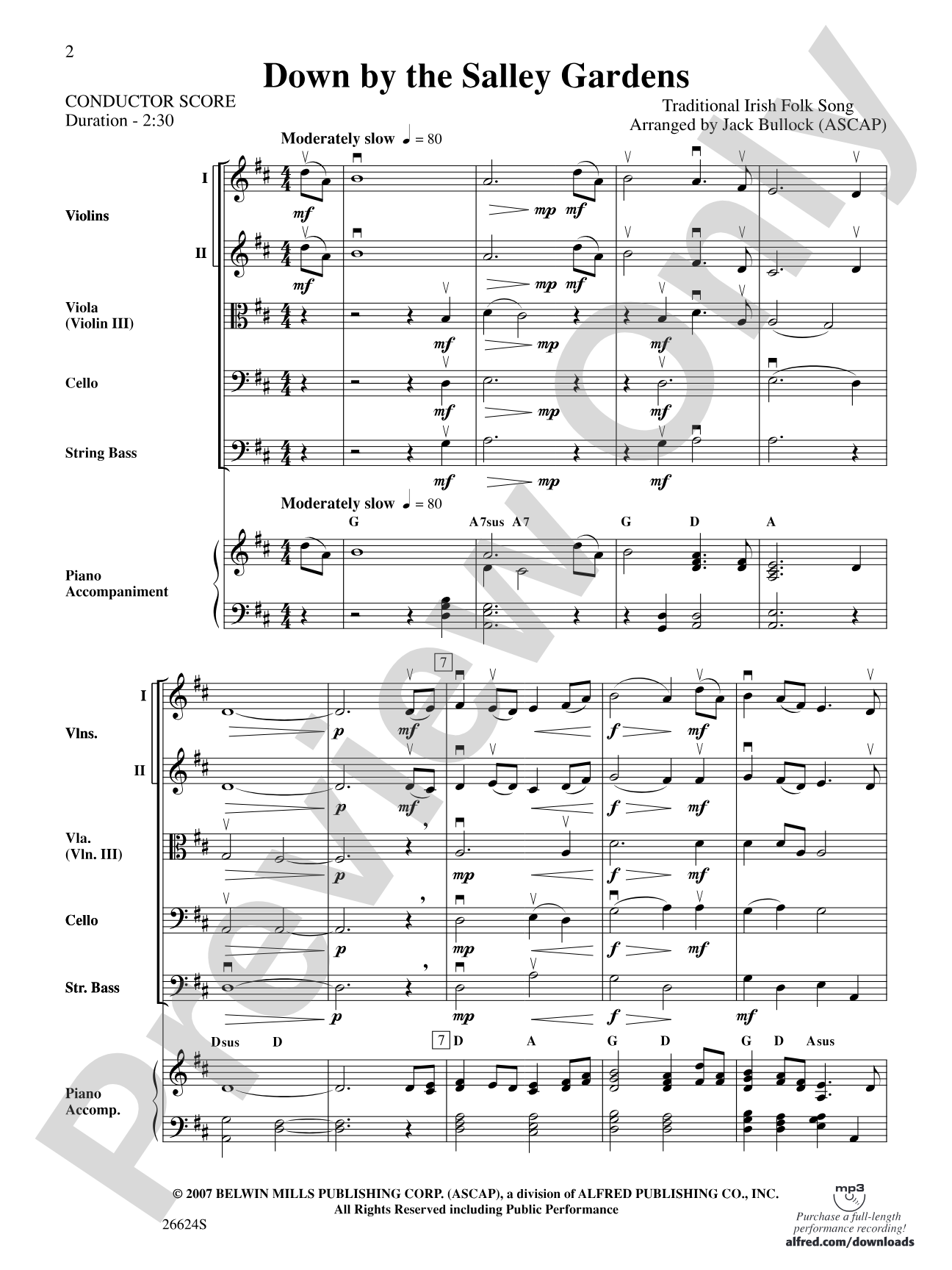
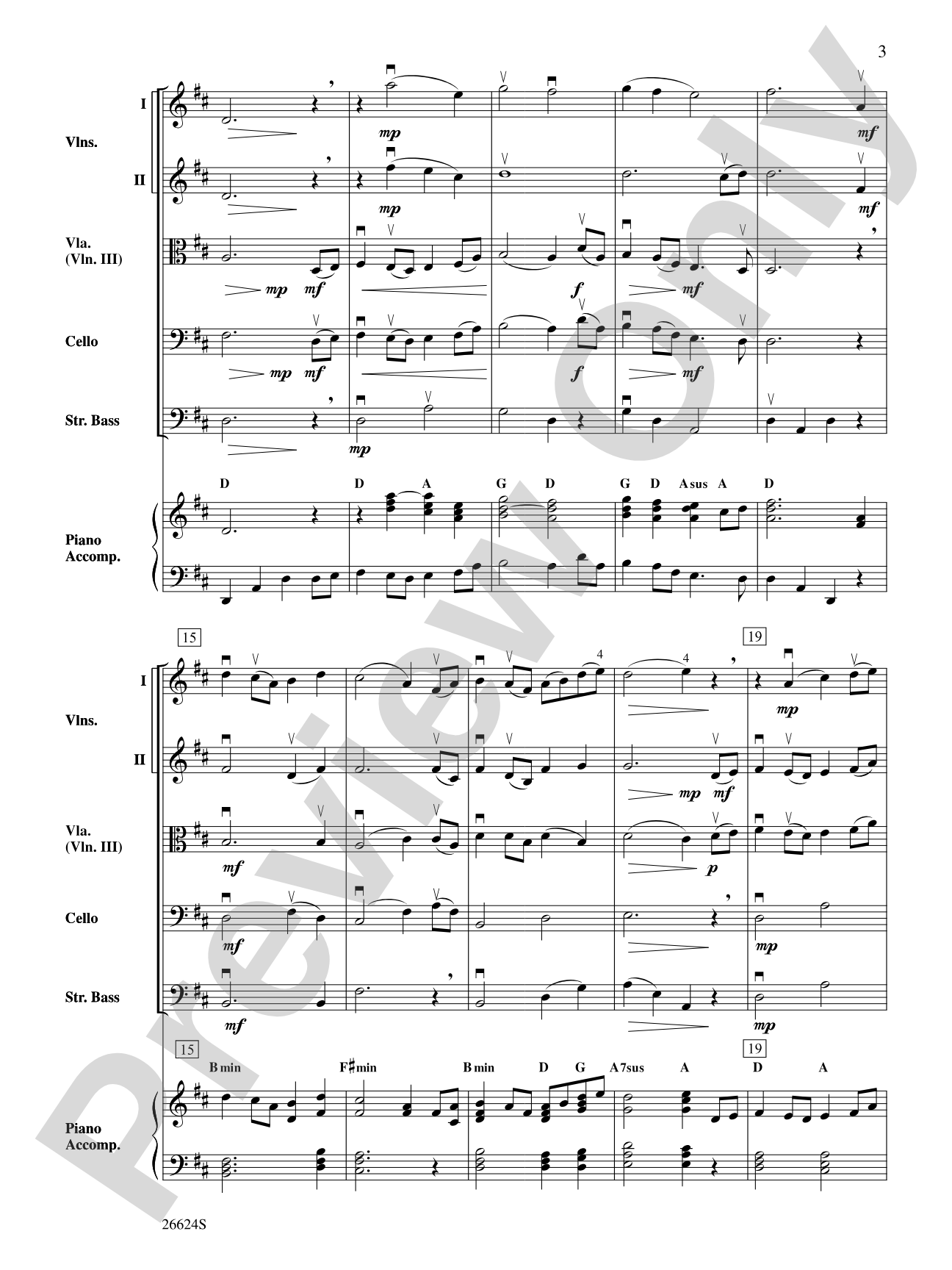
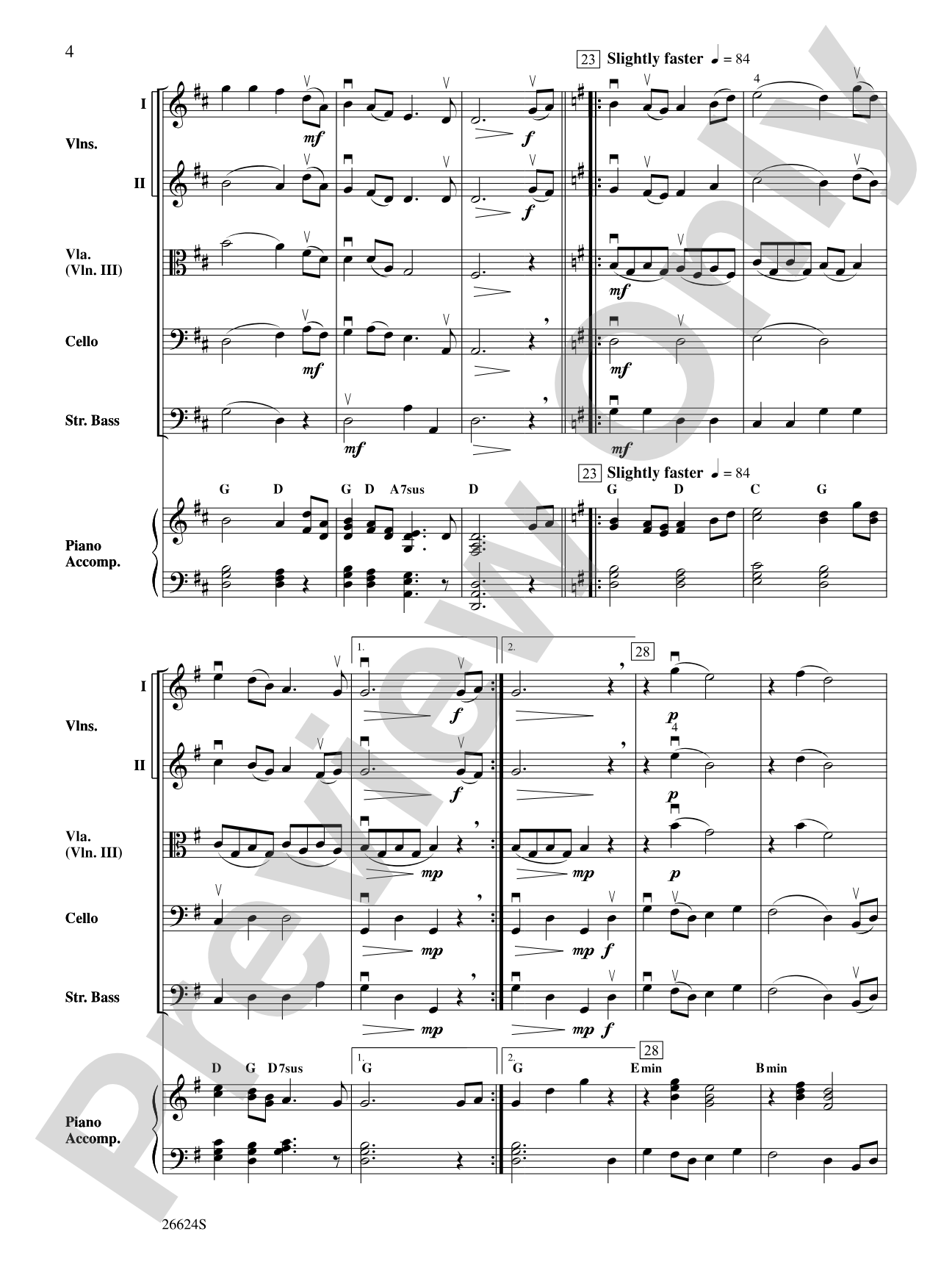
You'll think you're in "good ole' Ireland" with this simple Irish lullaby as the thoughts of the Irish homeland come to mind. The simplicity of the melody combined with an interesting harmonic structure provides wonderful material for use in developing beginning technique and a showpiece for the performance stage. Scored in the key of D major and closing in G major, it allows young players to explore key changes. This title is available in MakeMusic Cloud.


Don't just read it, hear it, play along with it, and watch your students grow with it. In MakeMusic Cloud, Down by the Salley Gardens: String Orchestra Conductor Score & Parts comes alive with professional accompaniment, adjustable tempo, and built-in practice tools that turn solo practice into real progress.
Open in the Player
Jump straight in and assign it today.
Start Your Free Trial
Open this title and explore the full library in minutes.
Sample Audio
1
Audio File
--:--
0:00
0:00
Sample Video
No sample videos found.
Additional Details
Series:
Belwin Beginning String Orchestra
Publisher:
Alfred Music
Page Count:
38
SKU:
00-PK-0001136
More about this title
About the Arranger: Jack Bullock

Jack Bullock brings three decades of performance and teaching experience to his work as a composer and arranger. A trumpet player who performed with the Miami Philharmonic Orchestra and Miami Opera Company, he holds degrees in music education through the doctoral level and taught instrumental music in the classroom for 20 years, including seven years as an assistant band director at the Ithaca College School of Music.
With more than 600 published works across concert band, orchestra, jazz ensemble, and marching band, Bullock has shaped music education through both his arrangements and his curricular contributions. He co-authored the Belwin 21st Century Band Method and served as a contributing arranger for Music Expressions, Alfred Music's comprehensive school music curriculum. His work has been recognized through ASCAP membership since 1980, and he has conducted clinics and workshops throughout the United States, Canada, and England.
Why we love this
Bullock's arrangement honors the melody's inherent beauty while crafting something pedagogically purposeful. The move from D major to G major gives young orchestras a concrete, musically rewarding way to experience key relationships, and the straightforward writing never sacrifices musical interest for accessibility.
What to expect
The melody carries the quiet longing of an Irish lullaby, gently evoking pastoral imagery and homesickness. Bullock's harmonic choices deepen that introspection, introducing unexpected color that makes the tune feel richer and more emotionally complex than it might appear on first glance.
Who it's for
Beginning string orchestras (Grade 2) benefit most from this arrangement, though the quality of the writing makes it equally valuable for slightly more advanced ensembles seeking accessible festival or concert repertoire. It works well for groups exploring how arrangement and harmony can develop musicianship without overwhelming technical demands.
How to get the most out of it
- Highlight the shift to G major as a fresh harmonic moment. Young players often hear key changes as a curiosity rather than a journey, so use sectional rehearsals to help them understand how the new tonality reshapes the familiar melody.
- Balance the melody across your string sections so that no single voice dominates. The lullaby's character depends on blended, unified phrasing rather than prominent solo lines.
- Shape phrases with gentle dynamic contours instead of holding static volumes. This Irish tune benefits from the subtle breathing room that swells and recedes give it.
How to use it
Program this arrangement when you want to balance technical studies with lyrical, character-driven repertoire. Its modest length and Grade 2 level make it an excellent second-half program opener or closer, and its contest/festival credentials support programming it for festival season.
Skills your students will build
- Recognizing and performing key changes (D major to G major)
- Sustaining long melodic phrases with consistent tone quality
- Balancing individual string voices within an ensemble texture
- Reading and responding to subtle dynamic shaping in lyrical music