Dorian Parade Cover Image

Dorian Parade: String Orchestra Conductor Score

$6.00 USD
Sale price  $6.00 USD Regular price 
Skip to product information
Dorian Parade Cover Image

Dorian Parade: String Orchestra Conductor Score

By Edmund J. Siennicki

Grade: 1.5

Item: 00-22298S

$6.00
Shipped

One moment…

Description
Although the key signature of two sharps suggests the key of D major, Dorian Parade begins with a six-measure introduction starting and ending on E-implying the Dorian mode. The piece spends a considerable amount of time between D major and E Dorian; coming to a rousing conclusion in the key of D major. Correlated to Strictly Strings, Book 1, page 34.

Dorian Parade: String Orchestra Conductor Score isn't in MakeMusic Cloud just yet...but it could be. Let us know you'd like to see it, and you'll help shape what comes next. In the meantime, start a free trial and dive into thousands of interactive titles your students can play along with today.

Sample Pages

Sample Audio
No sample audio found.
Sample Video
Additional Details
Series: Highland/Etling Strictly Strings
Publisher: Alfred Music
Page Count: 8
UPC: 038081230061
SKU: 00-22298S

More about this title

About the Composer: Edmund J. Siennicki
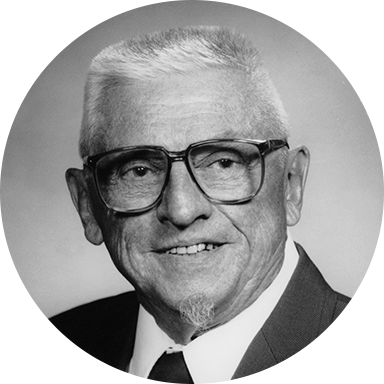
Edmund J. Siennicki

Edmund J. Siennicki grew up in Cleveland, Ohio, where at age 12 he had a formative encounter with the renowned pianist Ignacy Jan Paderewski that shaped his musical direction. He earned his Bachelor's degree from Kent State University, where he composed Fight on for KSU, a march still performed at the university's football games, and later received the Distinguished Alumnus Award from the School of Music in 1994.

Siennicki studied composition with Herbert Elwell and electronic music with Sergio Barroso, while consulting with the influential Vincent Persichetti. He earned his MA from Teachers College, Columbia University, and performed professionally as a bassoonist and pianist. His prolific output includes approximately 200 published compositions, many of which have won recognition in National School Orchestra composition contests. He served as composer in residence at the MacDowell Colony twice and taught at Cleveland junior high schools as well as Michigan and Kent State University. For the past two decades, his work has been honored with regular ASCAP awards, and he continues to compose, visit schools, and lead clinics.

Why we love this

Siennicki has crafted a piece that delivers exactly what a 1.5-grade string orchestra needs: accessible melodic writing with genuine musical substance. The interplay between D major and E Dorian gives young musicians exposure to modal thinking without overwhelming them, and the rousing final cadence in D major gives conductors a satisfying moment to build toward.

What to expect

The piece opens with a quiet, introspective quality as the strings establish the modal sound of E Dorian. As D major gradually asserts itself, the character brightens and builds momentum, leading to a vivid, triumphant finish that leaves the ensemble and audience satisfied.

Who it's for

Young string orchestras in their first or second year of ensemble playing will find this piece musically rewarding and technically manageable. It works equally well for intermediate students seeking repertoire that expands their harmonic vocabulary without complex fingering or rhythmic challenges.

How to get the most out of it

  • Shape the six-measure Dorian introduction with care; this section establishes the modal character of the piece and deserves clean intonation and balanced ensemble sound despite its relative simplicity.
  • Mark the harmonic shifts between D major and E Dorian in your parts so students can hear and feel the tonal center changes as the piece unfolds.
  • Allow the final D major section to bloom; this younger ensemble will respond well to the chance to play with energy and confidence as the piece drives toward its conclusion.
  • Use this piece as an opportunity to discuss key signatures versus tonal centers; the two sharps suggest D major, but the ear hears something different at the opening.

How to use it

This works beautifully on a festival or contest program where you want to showcase growth and musicianship at an early level; its modest length keeps pacing varied. Pair it with a baroque transcription or unison arrangement to highlight how Siennicki's harmonic awareness creates something fresh at grade 1.5.

Skills your students will build

  • Understanding modal versus major tonality (E Dorian and D major)
  • Maintaining ensemble intonation during tonal center shifts
  • Listening for and responding to harmonic changes in real time
  • Building dynamic shape and ensemble balance in a rousing finale

You May Also Like