

Doodlin' Around: String Orchestra Conductor Score & Parts
Arranged by Carrie Lane Gruselle
Grade: 1.5
Item: 98-DST6076
$40.00
Pickup currently not available
Buy Extra Parts (Digital PDF Download)
| Product | Price | Quantity |
|---|---|---|
| Doodlin' Around: Score | $5.00 | |
| Doodlin' Around: Violin 1 | $7.00 | |
| Doodlin' Around: Violin 2 (Viola T.C.) | $7.00 | |
| Doodlin' Around: Viola | $7.00 | |
| Doodlin' Around: Violoncello | $7.00 | |
| Doodlin' Around: Double Bass | $7.00 | |
| Doodlin' Around: Rehearsal Piano | $7.00 |
Parts Added to Cart!
Description
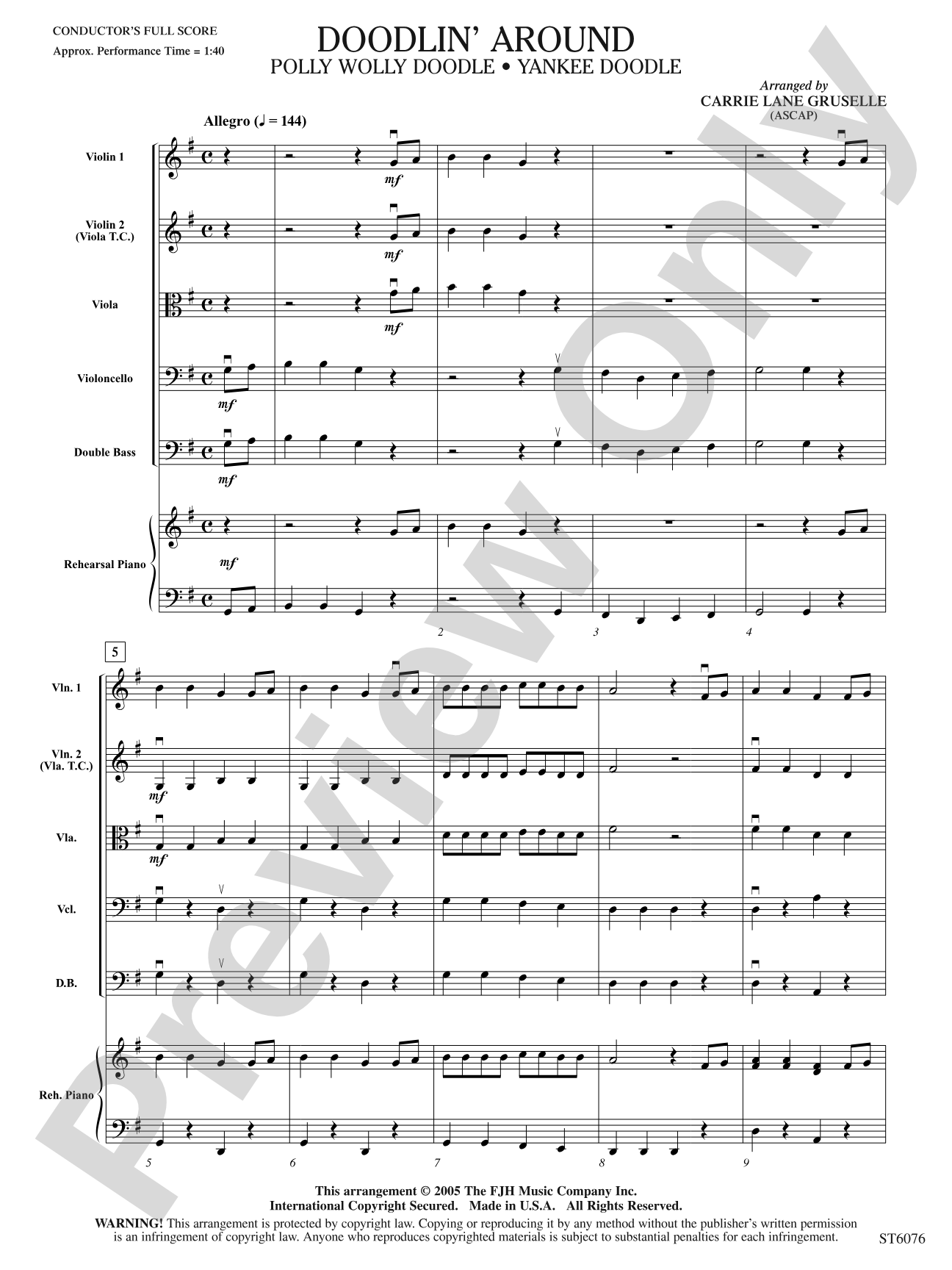
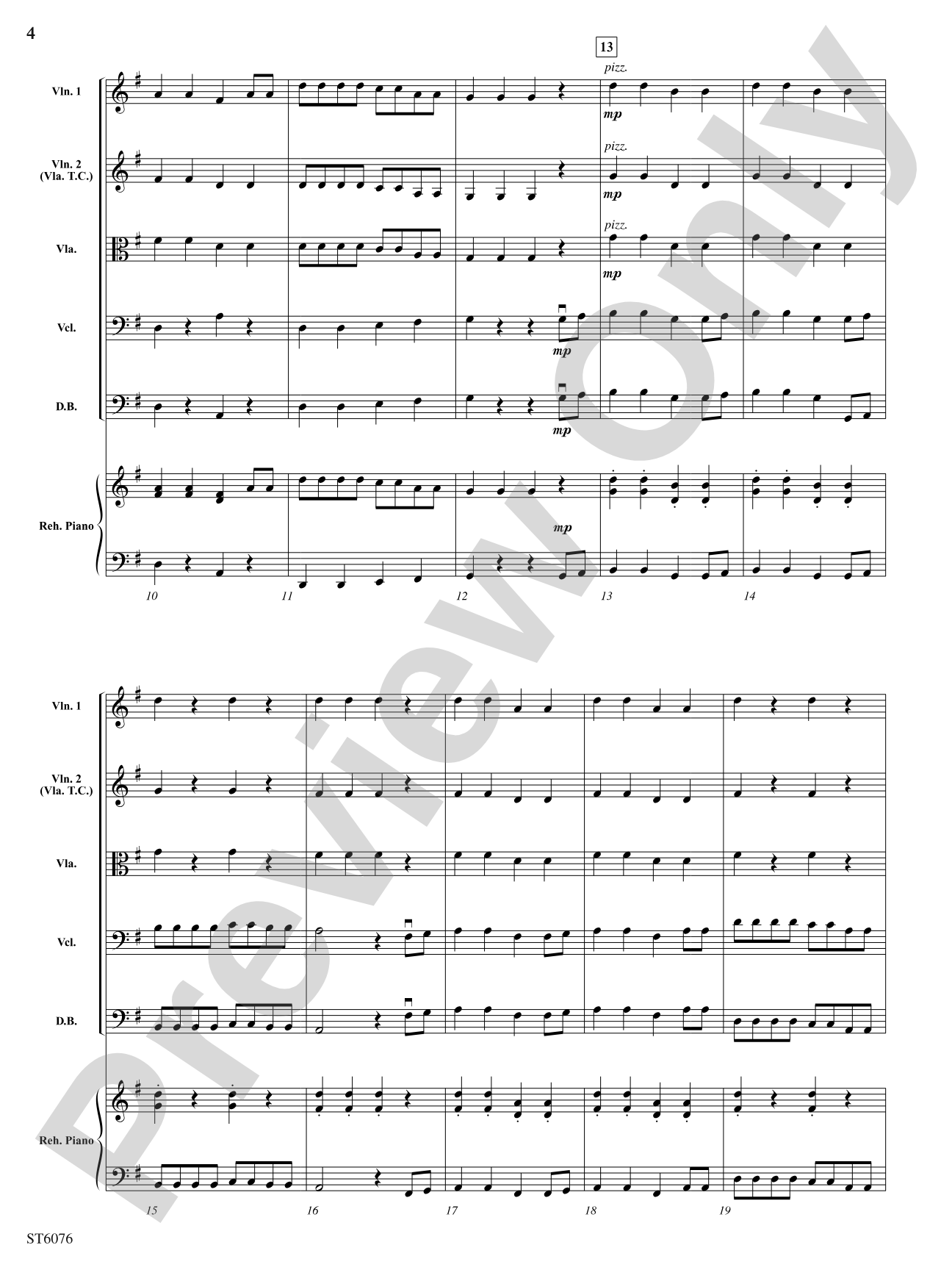
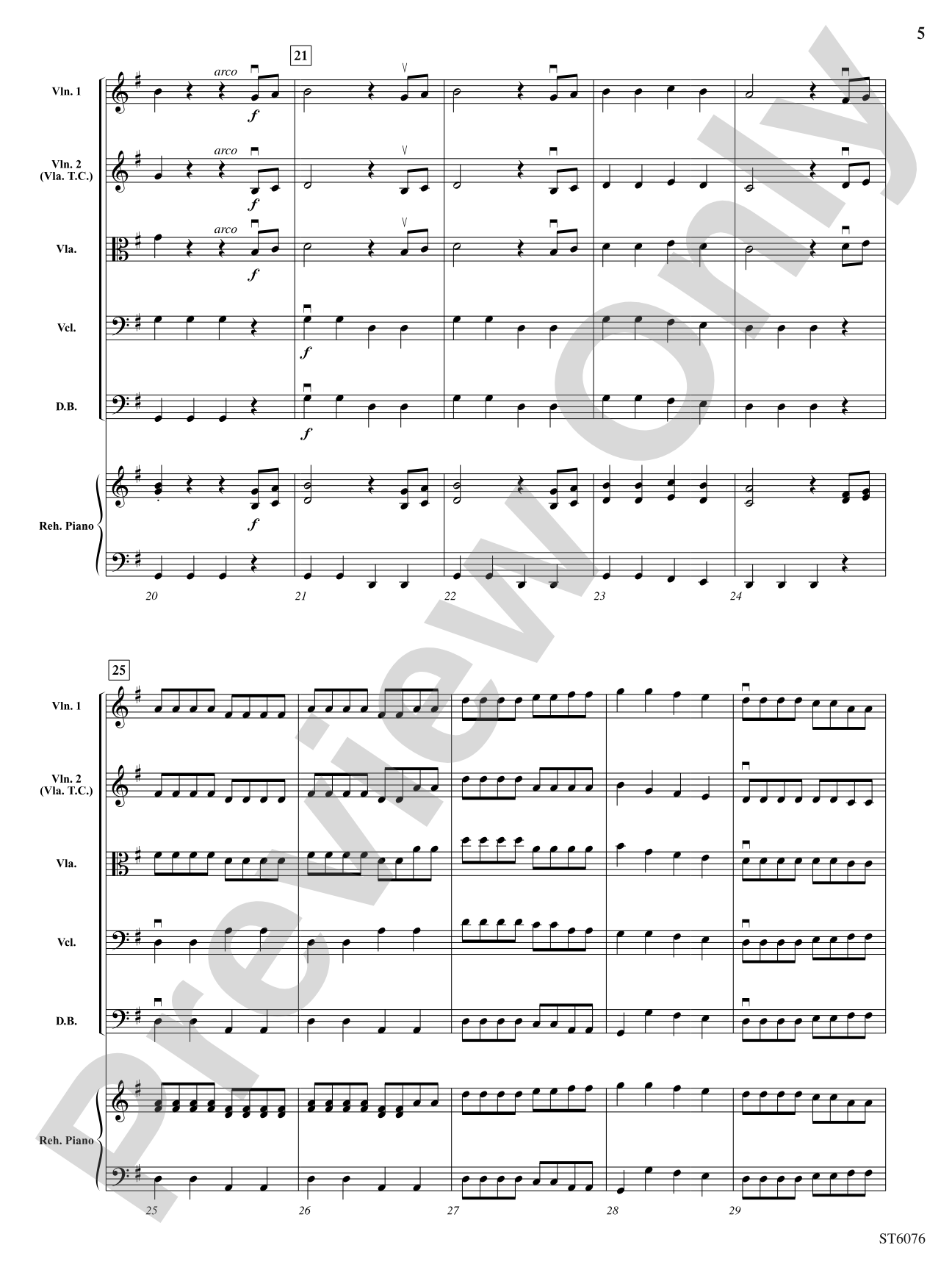
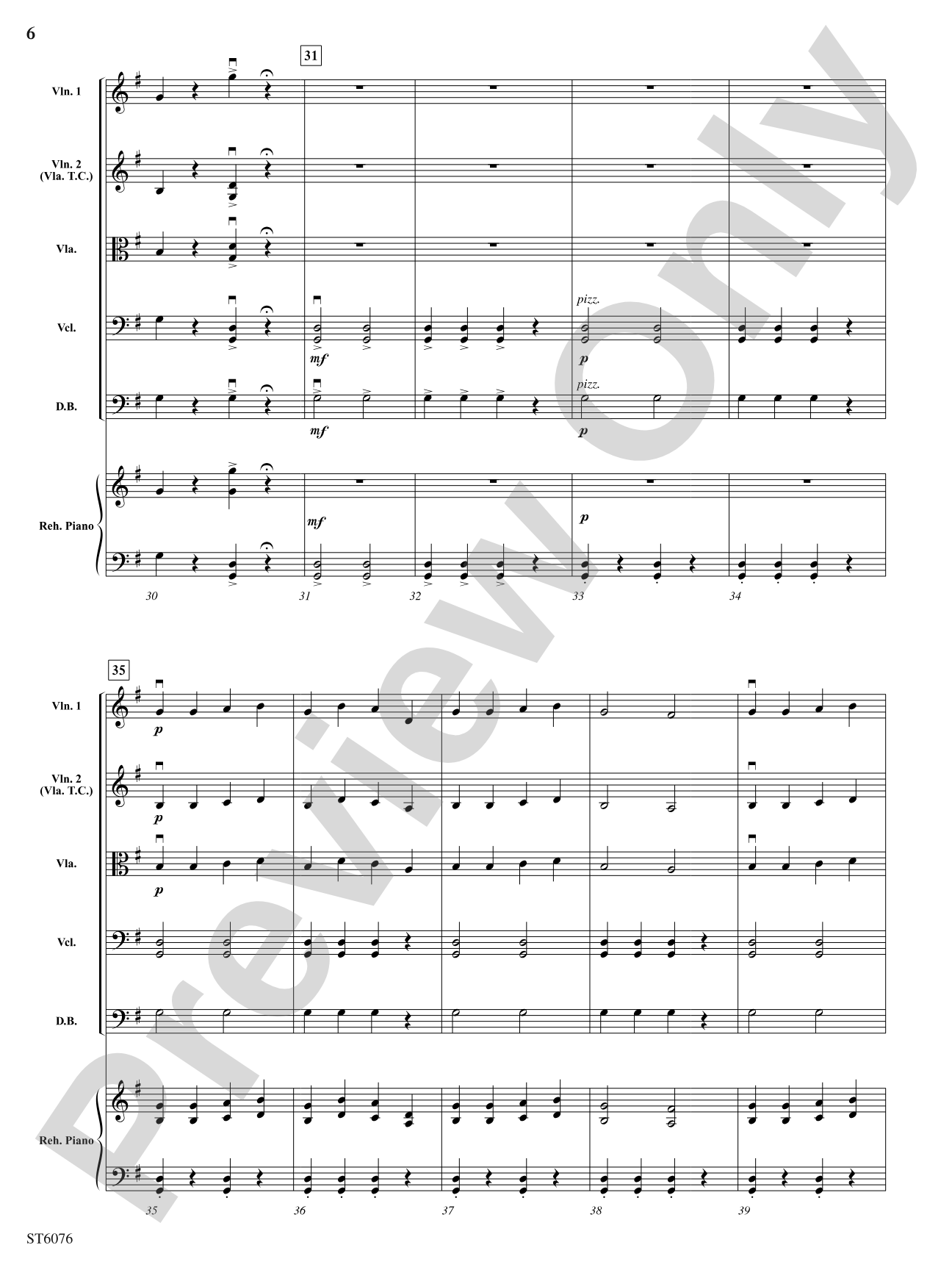
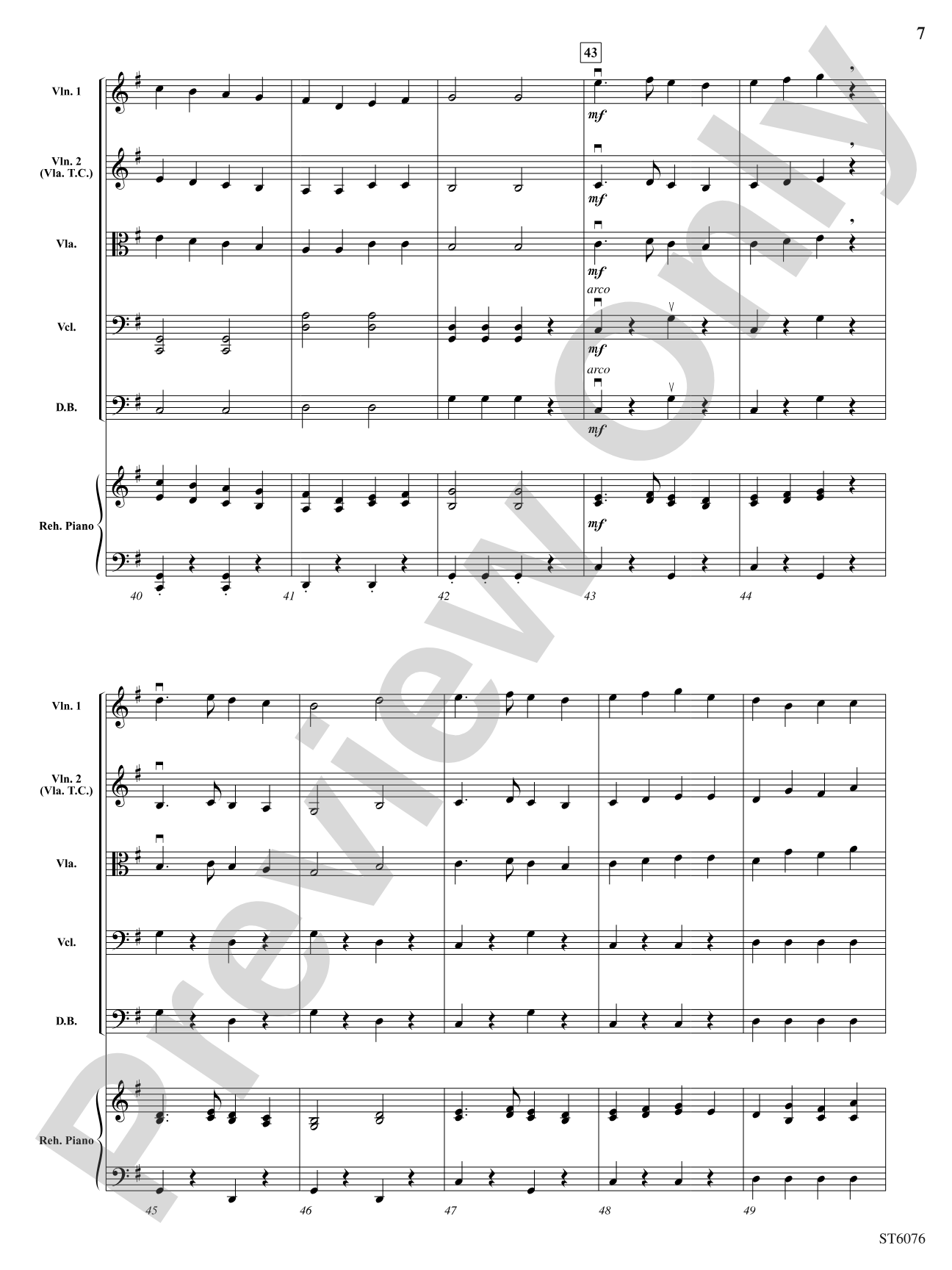
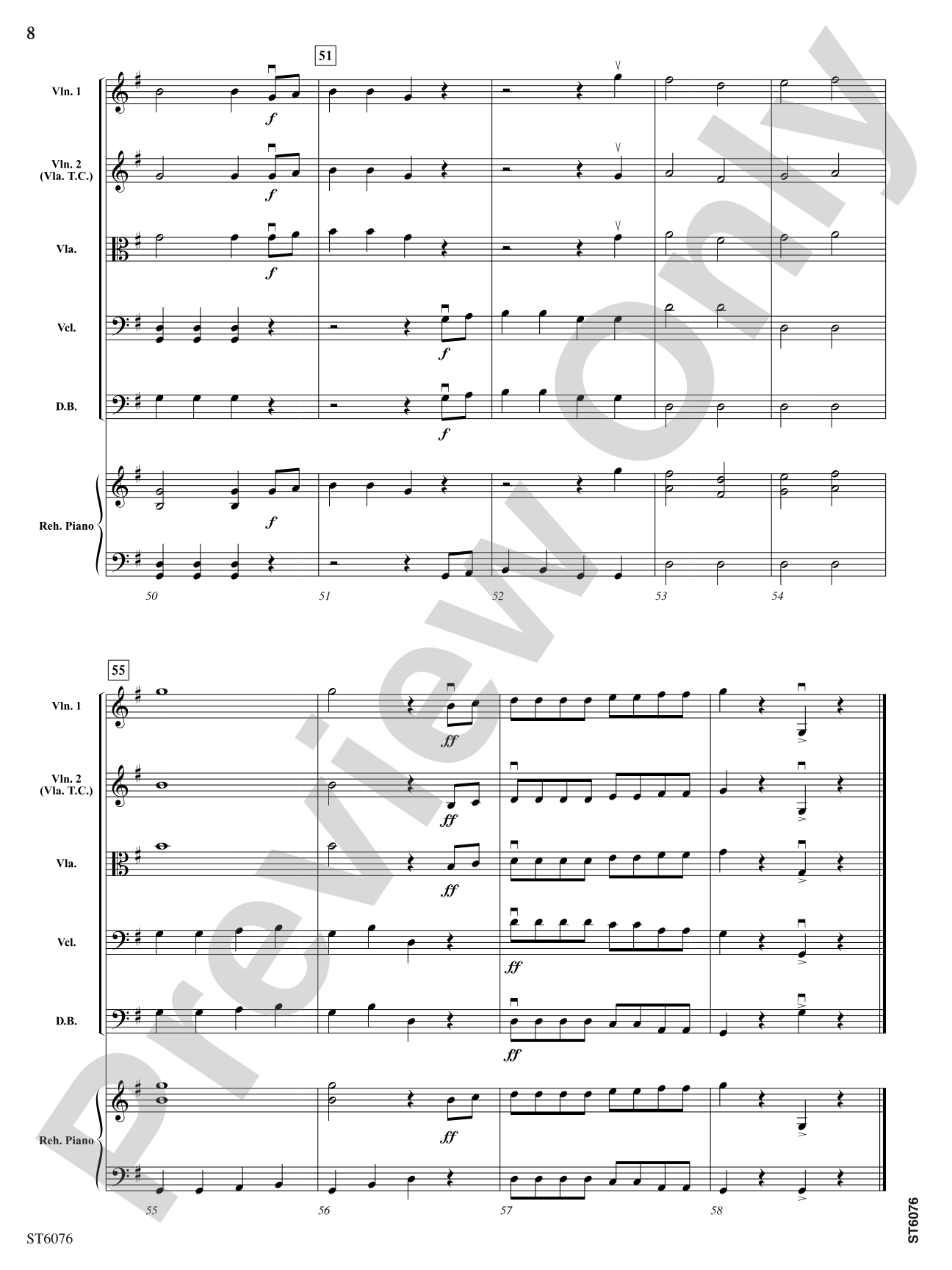
Two familiar tunes, Polly Wolly Doodle and Yankee Doodle, face off in this light-hearted adventure. Your students will develop confidence in their bow strokes and will refine accents, pizzicato, dynamics, and even some double stops while working with this crowd-pleasing medley by an excellent arranger and string educator. Highly entertaining and memorable!


Doodlin' Around: String Orchestra Conductor Score & Parts isn't in MakeMusic Cloud just yet...but it could be. Let us know you'd like to see it, and you'll help shape what comes next. In the meantime, start a free trial and dive into thousands of interactive titles your students can play along with today.
Request This Title
Tell us you want it.
Start Your Free Trial
Explore everything that's ready to play right now.
Sample Audio
1
Audio File
--:--
0:00
0:00
Sample Video
No sample videos found.
Additional Details
Series:
FJH Beginning Strings
Publisher:
The FJH Music Company, Inc.
SKU:
98-DST6076
More about this title
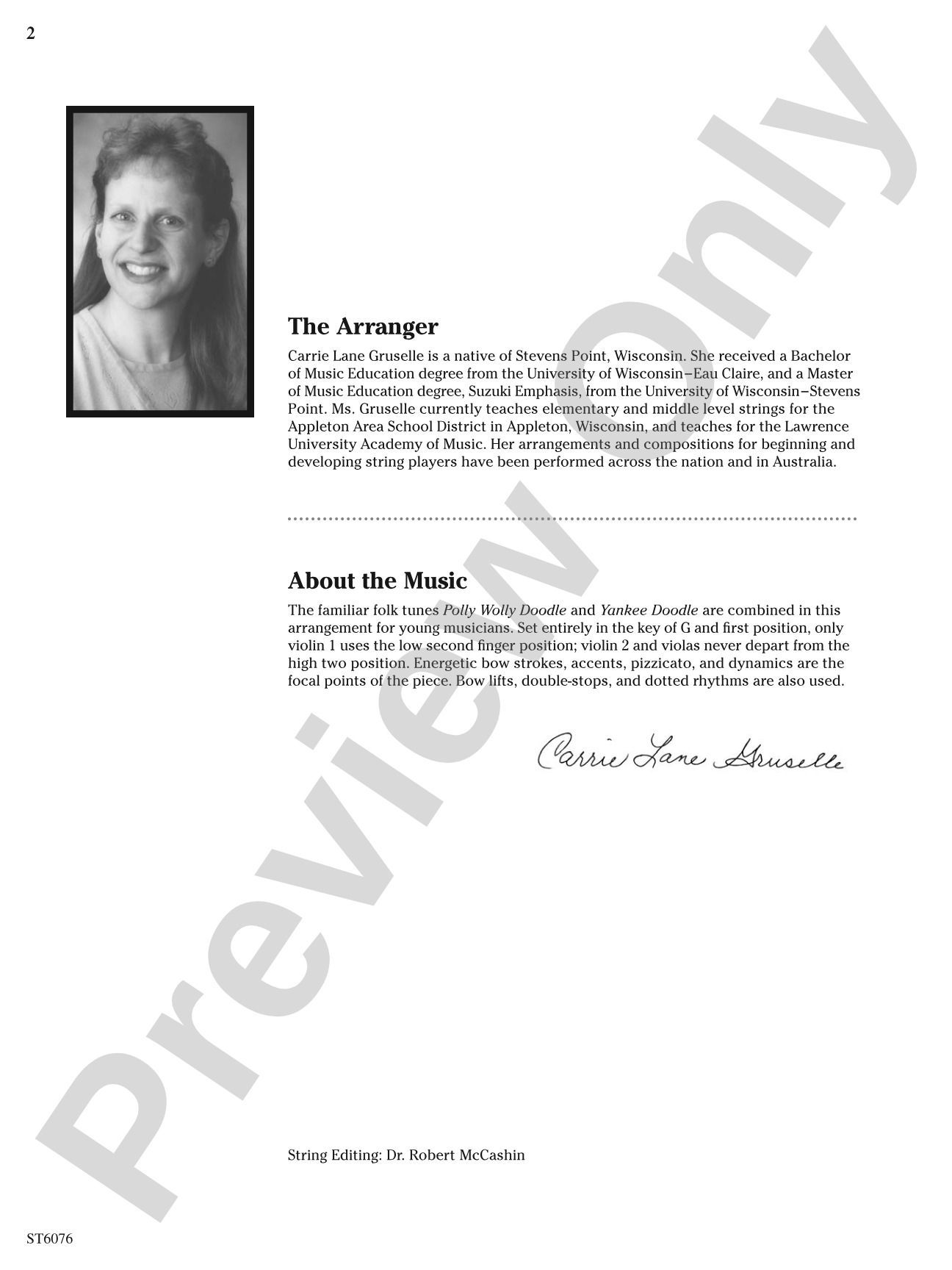
About the Arranger: Carrie Lane Gruselle

Carrie Lane Gruselle earned her Bachelor of Music Education from the University of Wisconsin–Eau Claire and her Master of Music Education from the University of Wisconsin–Stevens Point, where she focused on Suzuki pedagogy. She has taught elementary and middle school strings for the Appleton Area School District and serves as cello instructor at the Lawrence University Arts Academy in Appleton, Wisconsin.
Gruselle's work as both classroom educator and private instructor deeply shapes her arrangements. She writes for the students in front of her: pieces that build technique without feeling like etudes, that engage young players with music they recognize, and that respect what developing musicians can accomplish at each level.
Why we love this
This medley captures two beloved American tunes without sacrificing musicianship. Gruselle's orchestration keeps every voice engaged and lets you layer in technical work (bow control, pizzicato, accents, double stops) without drawing attention away from the fun. Students feel like they're performing a crowd-pleaser while their hands and ears are genuinely learning.
What to expect
Lighthearted and clever, like two old friends having a musical conversation. The familiar melodies create an immediate sense of ownership for young players, while the playful orchestration keeps the ear moving and the bow hand working. It's genuinely fun without a hint of condescension.
Who it's for
String orchestras at the Grade 1.5 level, especially programs working on bow control and articulation variety. This works beautifully as an early-year piece when students still need encouragement and recognition. Any director seeking repertoire that lands well with families and school audiences will find real value here.
How to get the most out of it
- Establish the bow stroke style early in rehearsal. The contrast between the legato opening and the articulated sections needs clarity; mark your bow patterns in the parts so students know exactly where the shift happens.
- Balance pizzicato carefully across the section. Plucked notes can muddy quickly if the lower strings aren't listening to their own articulation and volume.
- Let the double stops breathe. They don't need to be loud to be heard; focus on intonation and clean, simultaneous bow contact first.
How to use it
Place this early in a concert to warm the audience and settle your ensemble into performance mode. It pairs naturally with other patriotic or folk-based repertoire and works as a bridge between learning-focused rehearsals and public performance. Consider programming it alongside pieces that showcase more advanced technique to demonstrate student growth across the year.
Skills your students will build
- Legato and articulated bow strokes in alternating sections
- Pizzicato technique with rhythmic precision and consistent tone
- Dynamic shaping and accent placement
- Double stop intonation and simultaneous bow contact
- Part independence within an orchestral texture