
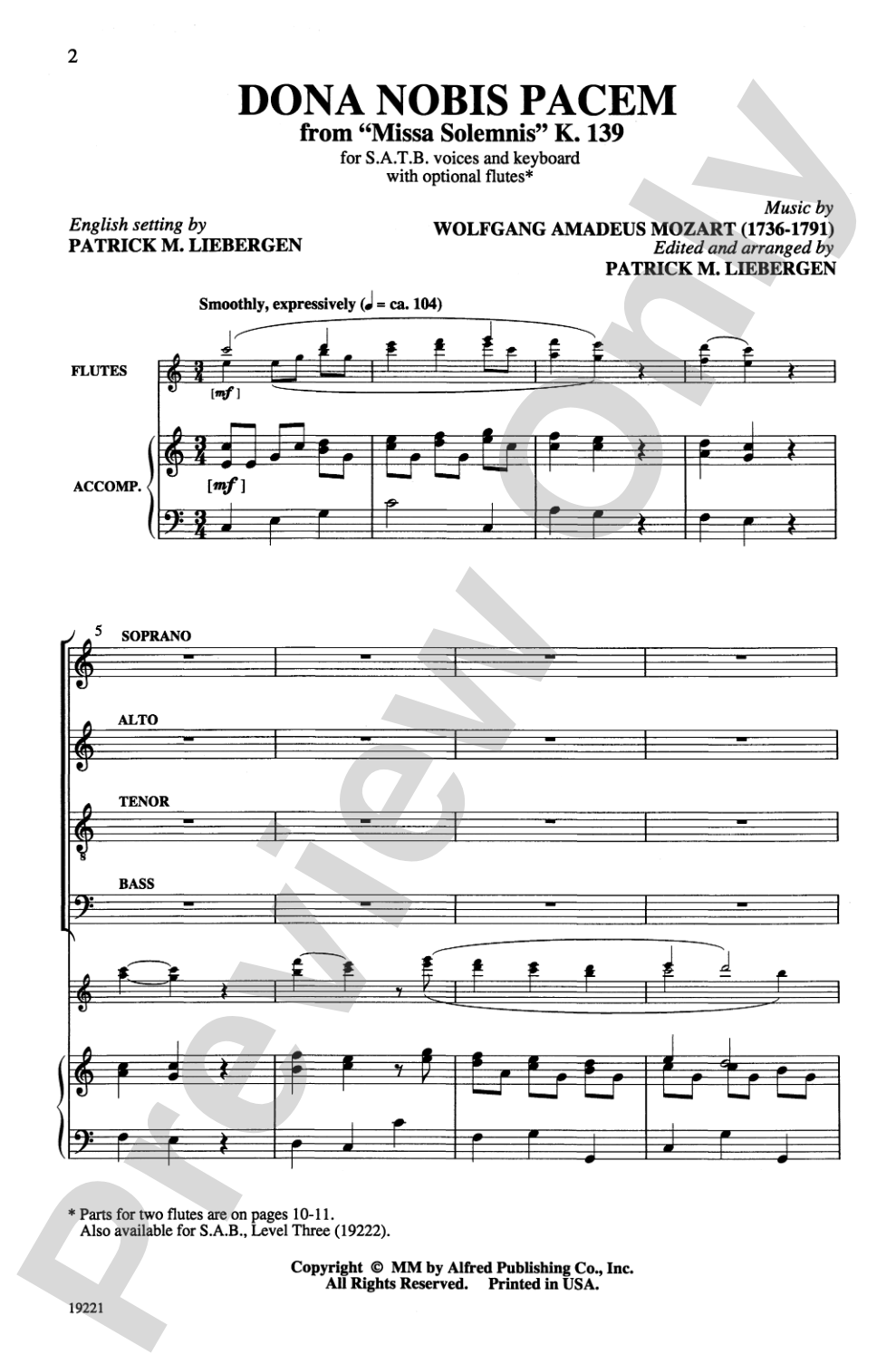
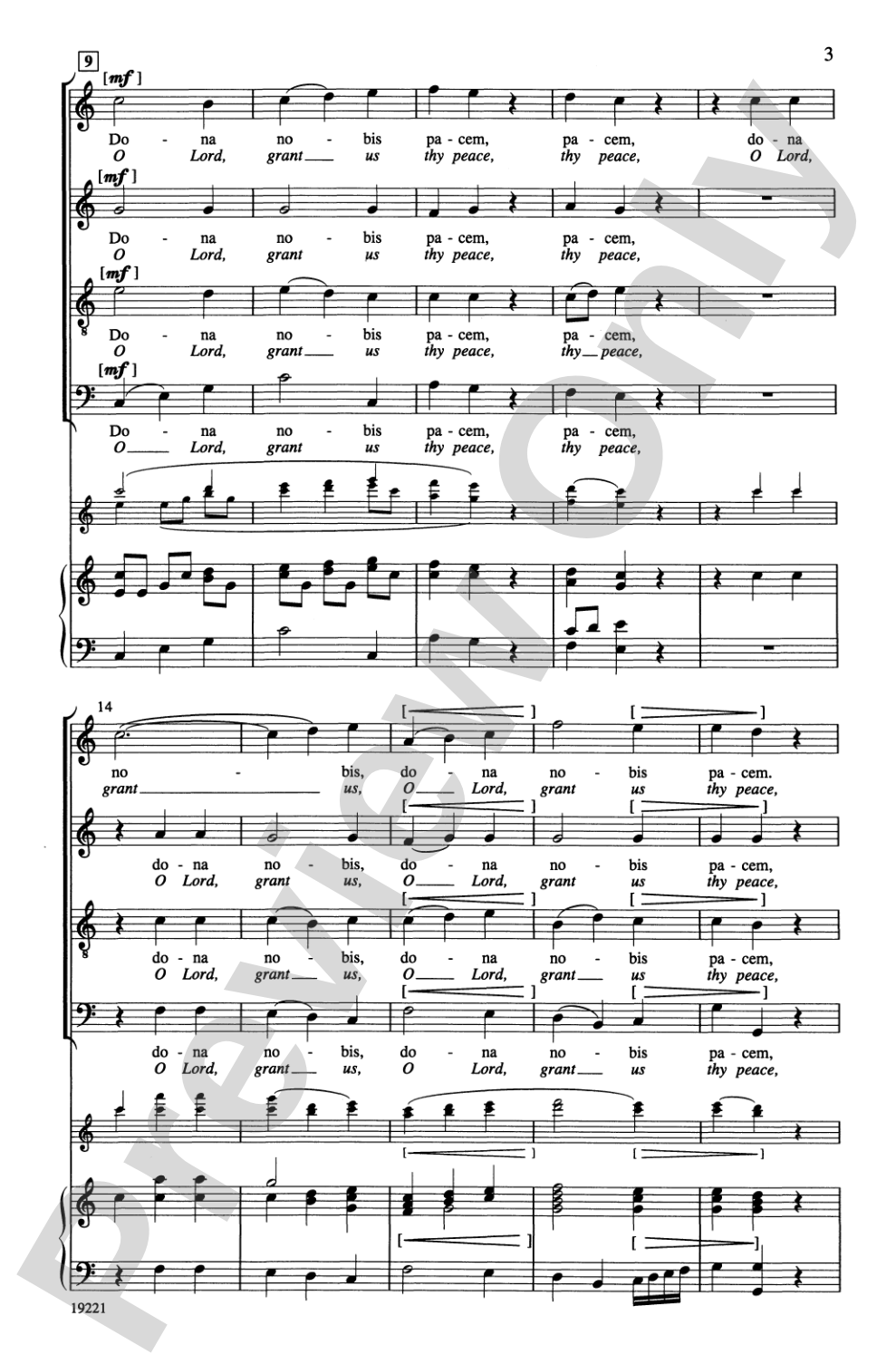
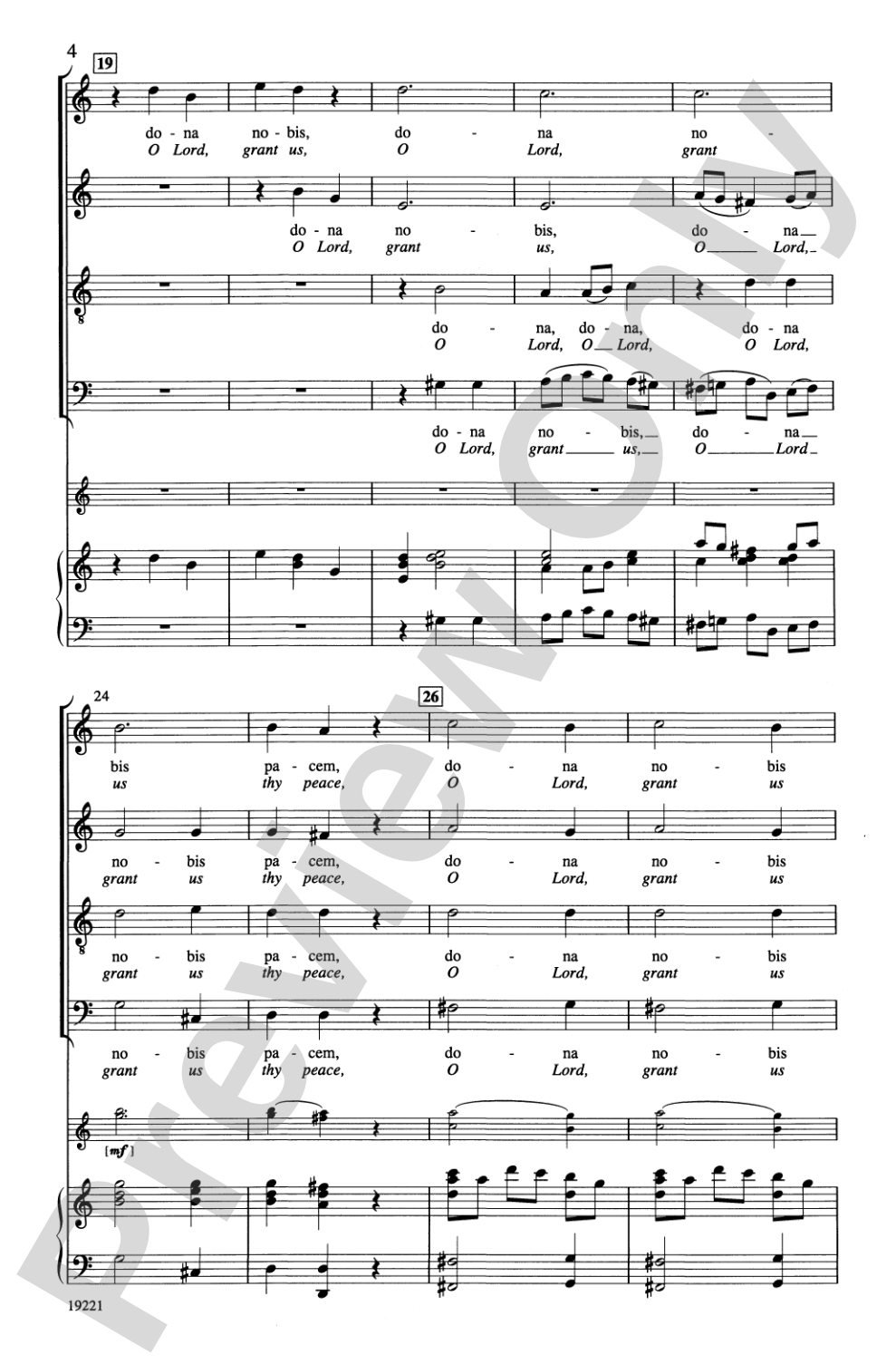

Dona Nobis Pacem (from Missa Solemnis): SATB Choral Octavo
From Missa Solemnis
Music by Wolfgang Amadeus Mozart / arr. Patrick M. Liebergen
Item: 00-PO-0004145

$2.25
Minimum order quantity: 20 copies
Pickup currently not available
Related Items
Dona Nobis Pacem (from Missa in C (Credo Mass), K. 257): SATB Choral Octavo |
$2.20
|
View | |
Dona Nobis Pacem: PianoTrax Digital Download |
$9.99
|
View | |
Dona Nobis Pacem: PianoTrax Digital Download |
$9.99
|
View | |
Dona Nobis Pacem: 3-Part Mixed Choral Octavo |
$2.05
|
View | |
Dona Nobis Pacem: SSA Choral Octavo |
$2.05
|
View | |
Dona Nobis Pacem: SATB Choral Octavo |
$2.20
|
View | |
Dona Nobis Pacem: SATB Choral Octavo |
$2.25
|
View | |
Dona Nobis Pacem: 3-Part Mixed Choral Octavo |
$2.05
|
View | |
Dona Nobis Pacem: SSA Choral Octavo |
$2.05
|
View |
Description
From Mozart's "Missa Solemnis" comes this expressive masterwork, carefully edited for today's choirs by Patrick M. Liebergen. The edition contains optional parts for two flutes, Editor's Notes (great for program information), a Latin pronunciation guide, and an English translation. Educationally appropriate and eminently singable, this masterwork is perfect for concerts, contests, festivals, and adjudications. This title is available in MakeMusic Cloud.


Don't just read it, hear it, play along with it, and watch your students grow with it. In MakeMusic Cloud, Dona Nobis Pacem (from Missa Solemnis): SATB Choral Octavo comes alive with professional accompaniment, adjustable tempo, and built-in practice tools that turn solo practice into real progress.
Open in the Player
Jump straight in and assign it today.
Start Your Free Trial
Open this title and explore the full library in minutes.
Sample Audio
1
Audio File
--:--
0:00
0:00
Sample Video
No sample videos found.
Additional Details
Series:
Alfred Archive Edition: Alfred Choral Designs
Publisher:
Alfred Music
Page Count:
12
SKU:
00-PO-0004145
Instrumentation:
Opt. 2 Flutes
More about this title
About the Composer: Wolfgang Amadeus Mozart
Wolfgang Amadeus Mozart (1756-1791) composed across every major genre of his era with astonishing fluency and invention. His sacred works, including the Missa Solemnis, demonstrate the same structural mastery and melodic gift that define his symphonies and operas, yet they carry a contemplative depth that speaks directly to the human voice.
Why we love this
Patrick M. Liebergen's edition strips away unnecessary complexity while preserving Mozart's essential voice leading and harmonic color. The inclusion of optional flute parts, pronunciation guide, and editor's notes transforms a concert masterpiece into something genuinely teachable without sacrificing the integrity of the original.
What to expect
Solemn yet intimate, with a harmonic language that feels both familiar and elegant. The piece unfolds with quiet dignity, its prayer-like quality emerging from clear voice leading and Mozart's signature blend of simplicity and sophistication.
Who it's for
High school and college choirs, church choirs with strong musicianship, and repertoire-building programs seeking substantial yet accessible classical literature. This edition works equally well in concert, festival, or competition settings.
How to get the most out of it
- Balance the soprano line carefully in the opening phrase; it carries the primary melody and should sing through without overshadowing the inner voices' supporting material.
- Shape each phrase with a gentle arch rather than cutting notes short. Mozart's phrasing works best when phrases breathe into one another rather than land heavily.
- If using the optional flute parts, keep the instrumental texture supportive. The flutes should blend with and reinforce the choir, not compete for attention.
- Pay close attention to the Latin text stress patterns provided in the pronunciation guide. Correct prosody lifts the emotional weight of the text significantly.
How to use it
Program this as a centerpiece in a thematic concert on peace and reconciliation, or pair it with other Mozart sacred works to anchor a Classical-era program. Its moderate length and reflective character work particularly well just before intermission or as a program closer.
Skills your students will build
- Singing in Latin with proper vowel placement and phrase phrasing
- Balancing four-part counterpoint without sacrificing musical line
- Interpreting Classical-era articulation and dynamic nuance
- Coordinating with optional instrumental parts while maintaining vocal primacy
- Reading and applying editor's notes for informed interpretation