

Dona Nobis Pacem (from Missa in C (Credo Mass), K. 257): SATB Choral Octavo
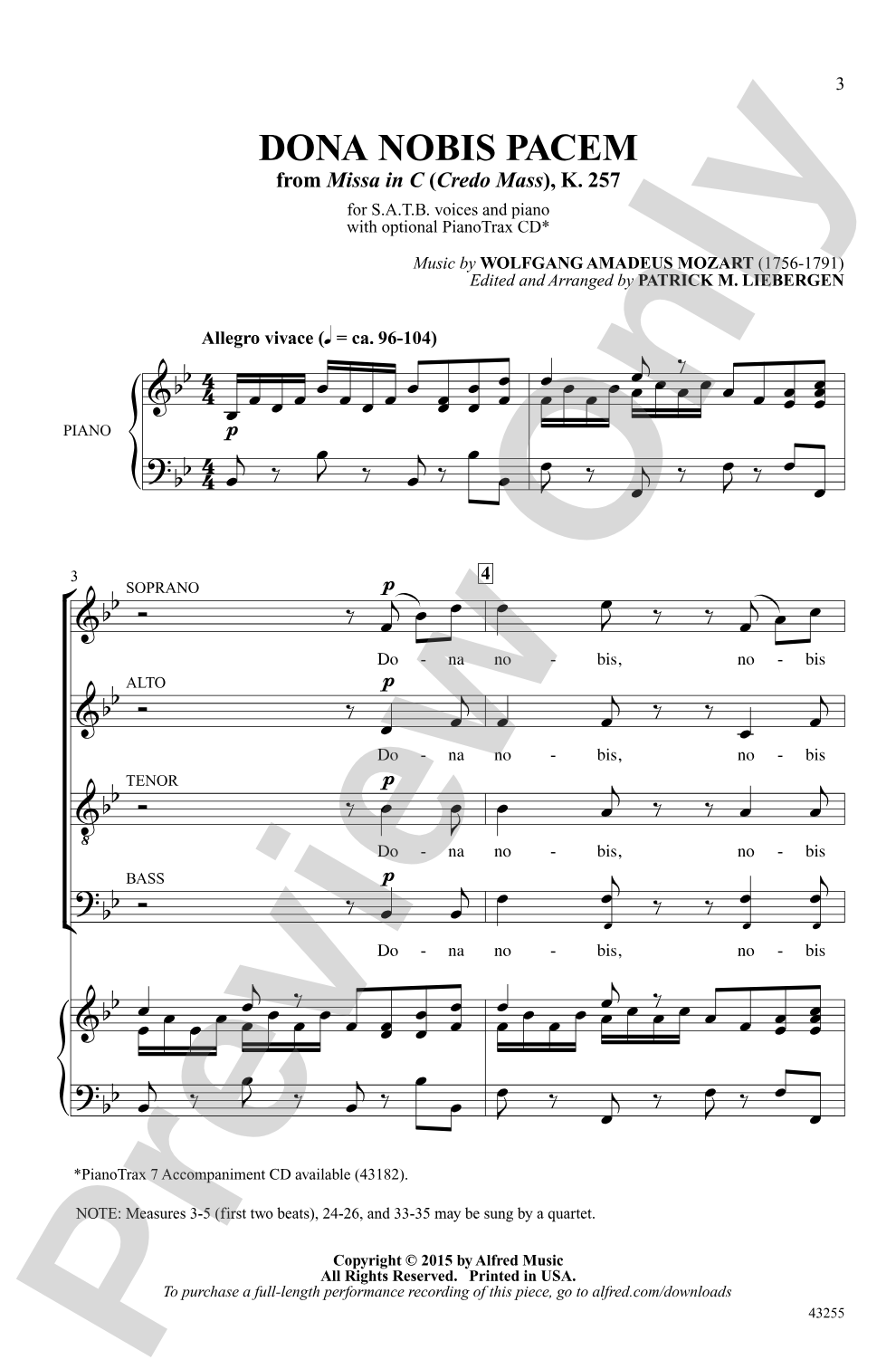
From Missa in C (Credo Mass), K. 257
Music by Wolfgang Amadeus Mozart / ed. and arr. Patrick M. Liebergen
Item: 00-PO-0003231
$2.20
Minimum order quantity: 20 copies
Pickup currently not available
Related Items
Dona Nobis Pacem (from Missa Solemnis): SATB Choral Octavo |
$2.25
|
View | |
Dona Nobis Pacem: PianoTrax Digital Download |
$9.99
|
View | |
Dona Nobis Pacem: PianoTrax Digital Download |
$9.99
|
View | |
Dona Nobis Pacem: 3-Part Mixed Choral Octavo |
$2.05
|
View | |
Dona Nobis Pacem: SSA Choral Octavo |
$2.05
|
View | |
Dona Nobis Pacem: SATB Choral Octavo |
$2.20
|
View | |
Dona Nobis Pacem: SATB Choral Octavo |
$2.25
|
View | |
Dona Nobis Pacem: 3-Part Mixed Choral Octavo |
$2.05
|
View | |
Dona Nobis Pacem: SSA Choral Octavo |
$2.05
|
View |
Description
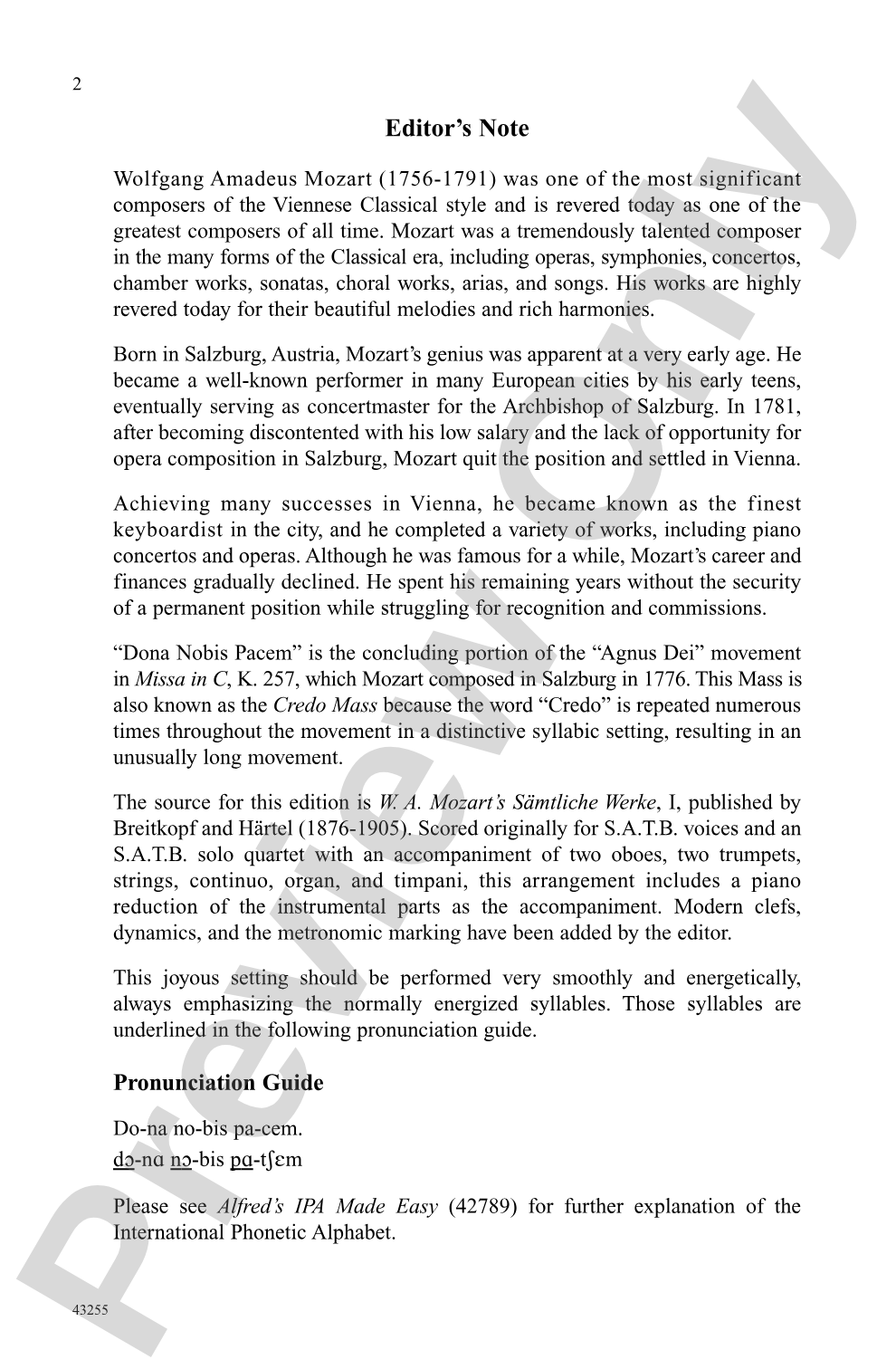
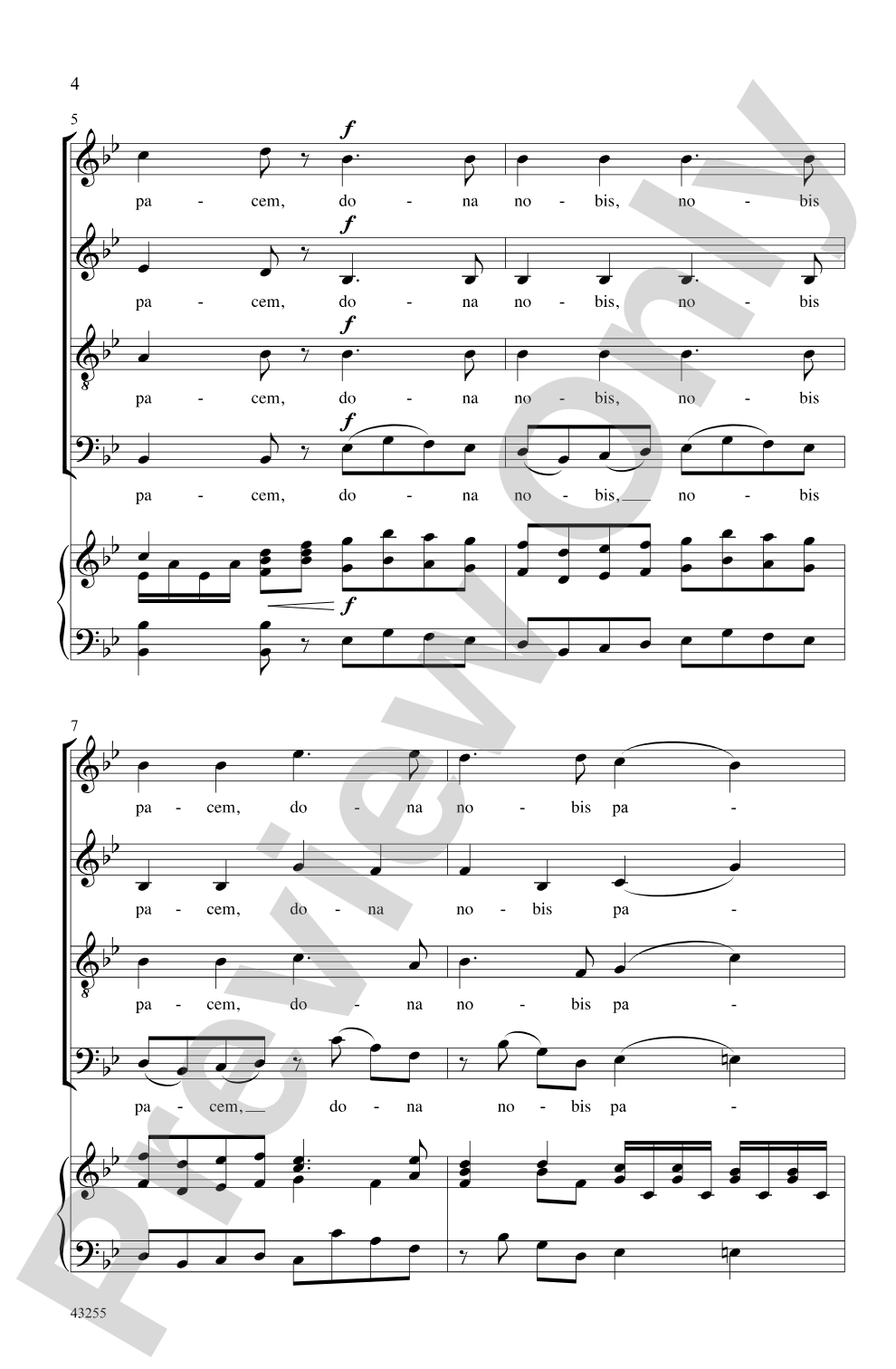
An achievable masterwork in the Viennese Classical style, Dr. Liebergen's edition presents the option of featuring a vocal quartet on selected passages. One Latin phrase and welcome repetition minimize woodshedding and allow musicianship to be the focus in concert or adjudication.


Dona Nobis Pacem (from Missa in C (Credo Mass), K. 257): SATB Choral Octavo isn't in MakeMusic Cloud just yet...but it could be. Let us know you'd like to see it, and you'll help shape what comes next. In the meantime, start a free trial and dive into thousands of interactive titles your students can play along with today.
Request This Title
Tell us you want it.
Start Your Free Trial
Explore everything that's ready to play right now.
Sample Audio
1
Audio File
--:--
0:00
0:00
Sample Video
No sample videos found.
Additional Details
Series:
Alfred Choral Designs
Publisher:
Alfred Music
Page Count:
16
SKU:
00-PO-0003231
More about this title
About the Composer: Wolfgang Amadeus Mozart
Wolfgang Amadeus Mozart (1756-1791) was an Austrian composer whose output spanned every major genre of his time. Born in Salzburg, he began composing and performing publicly as a child and went on to write over 600 works, many of which have become cornerstones of the Western classical canon. His sacred music, including numerous masses and requiems, demonstrates the same melodic brilliance and structural clarity that define his symphonies and operas.
Mozart's choral works occupy a unique place in music education: they are genuinely sophisticated compositions that remain accessible to high school and early college choirs. His masses, written during his tenure in Salzburg and Vienna, blend the grandeur expected of sacred music with a directness of expression that rewards both singers and listeners. This combination of compositional mastery with singable writing makes his sacred works ideal for choirs ready to engage with authentic Classical repertoire.
Why we love this
Liebergen's edition smartly extracts a single movement from a larger mass and makes it work as a standalone piece without sacrificing Mozart's craftsmanship. The option to feature a vocal quartet on selected passages creates natural variety and gives four of your singers a moment to shine while keeping rehearsal demands reasonable. With one Latin phrase and strategic repetition, your choir can focus on phrasing, blend, and the forward motion that makes Mozart's writing so elegant rather than spending weeks on text.
What to expect
Mozart's setting of 'Dona Nobis Pacem' radiates Classical grace and earnest simplicity. The music moves with purpose and clarity, its four-part writing both transparent and full, inviting singers to experience how elegant harmony and clear text declamation can work together to create something both timeless and immediate.
Who it's for
Choirs with solid sight-reading skills and some experience with Latin text will find this piece accessible and musically substantial. It works well for high school choirs aiming at festival or contest performance, as well as college and community choirs looking for concert repertoire that demonstrates musical maturity without requiring an operatic voice.
How to get the most out of it
- Shape the melodic lines through the repetition of 'pacem' to avoid monotony; use subtle dynamics and breath placement to suggest that the text is building, not simply repeating.
- Balance the soprano line carefully in full sections. Mozart wrote sopranos high and exposed; ensure they sit in the choir texture rather than sitting on top of it.
- If using the vocal quartet option, rehearse those passages with the full choir present so the ensemble understands the harmonic foundation beneath the featured voices.
- Observe all repeat signs and fermatas without rushing. Classical style rewards clarity of phrase and proportional pacing over dramatic weight.
How to use it
This works beautifully as an a cappella closing number for a concert focused on sacred music, or paired with other classical choral works to highlight the beauty of the genre. Its brevity and directness make it an excellent choice for a festival entry where you want to showcase your choir's musicianship and blend without overwhelming an audience with a lengthy piece.
Skills your students will build
- Reading SATB four-part vocal writing in open score
- Sustaining line through repetition and understanding when harmonic movement justifies text repetition
- Singing in Latin with clear vowels and articulation
- Balancing part independence with ensemble cohesion
- Phrasing in Classical style (avoiding Romantic interpretation)
- Blending as a section while maintaining individual voice quality