

Dona Nobis Pacem: SAB Choral Octavo
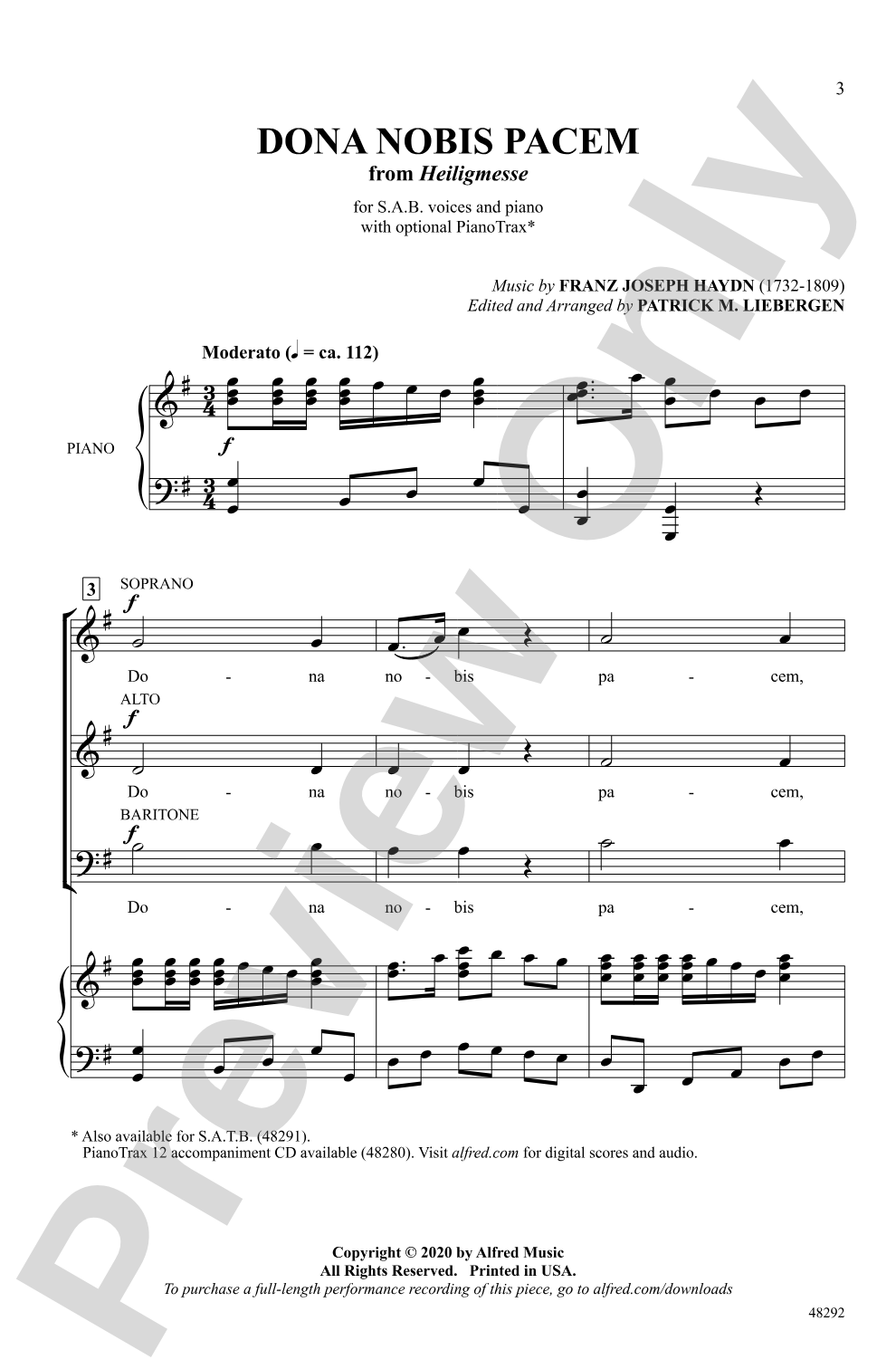
from Heiligmesse
Music by Franz Joseph Haydn / ed. and arr. Patrick M. Liebergen
Item: 00-PO-0006297

$2.05
Minimum order quantity: 20 copies
Pickup currently not available
Description
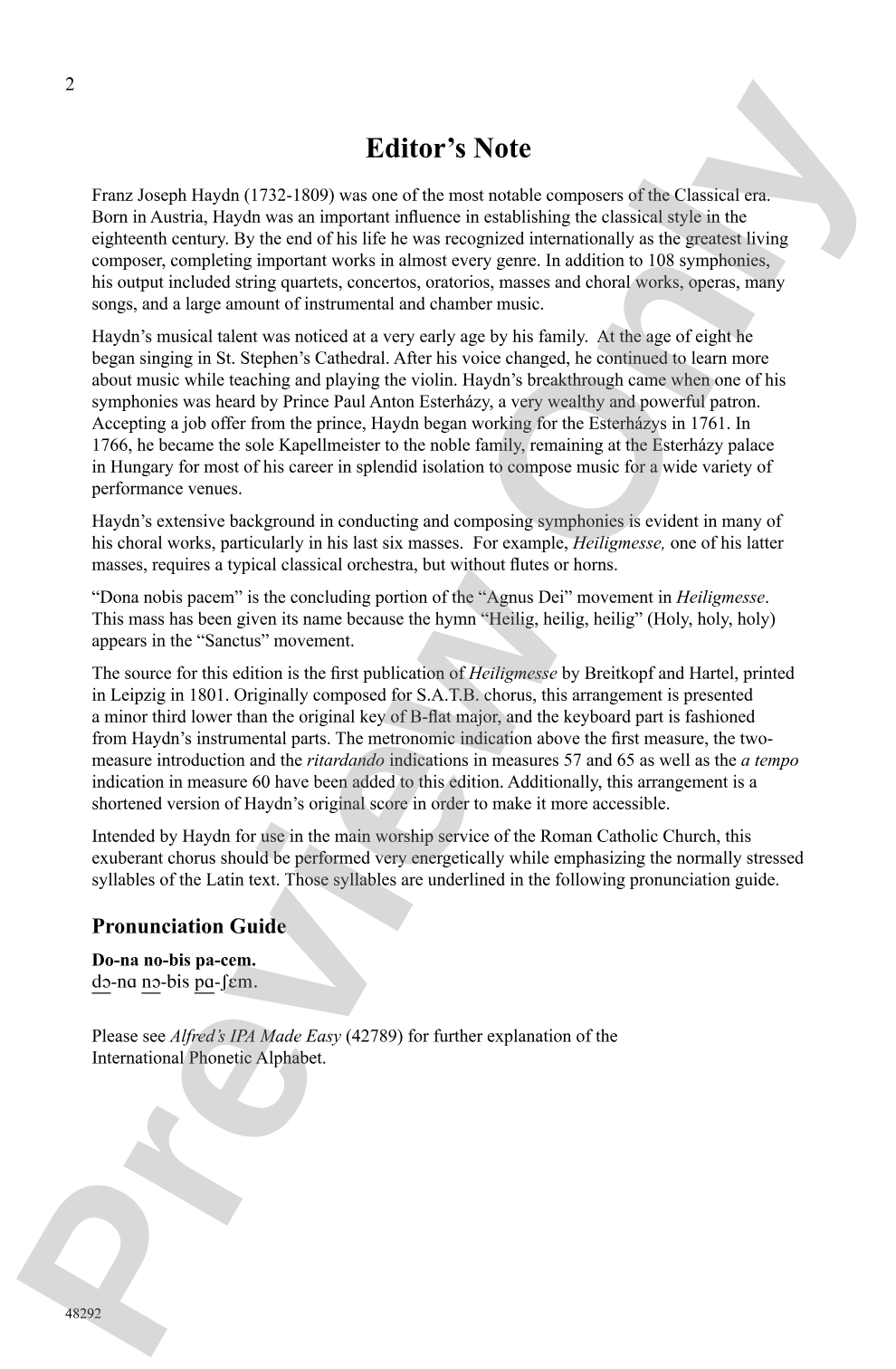
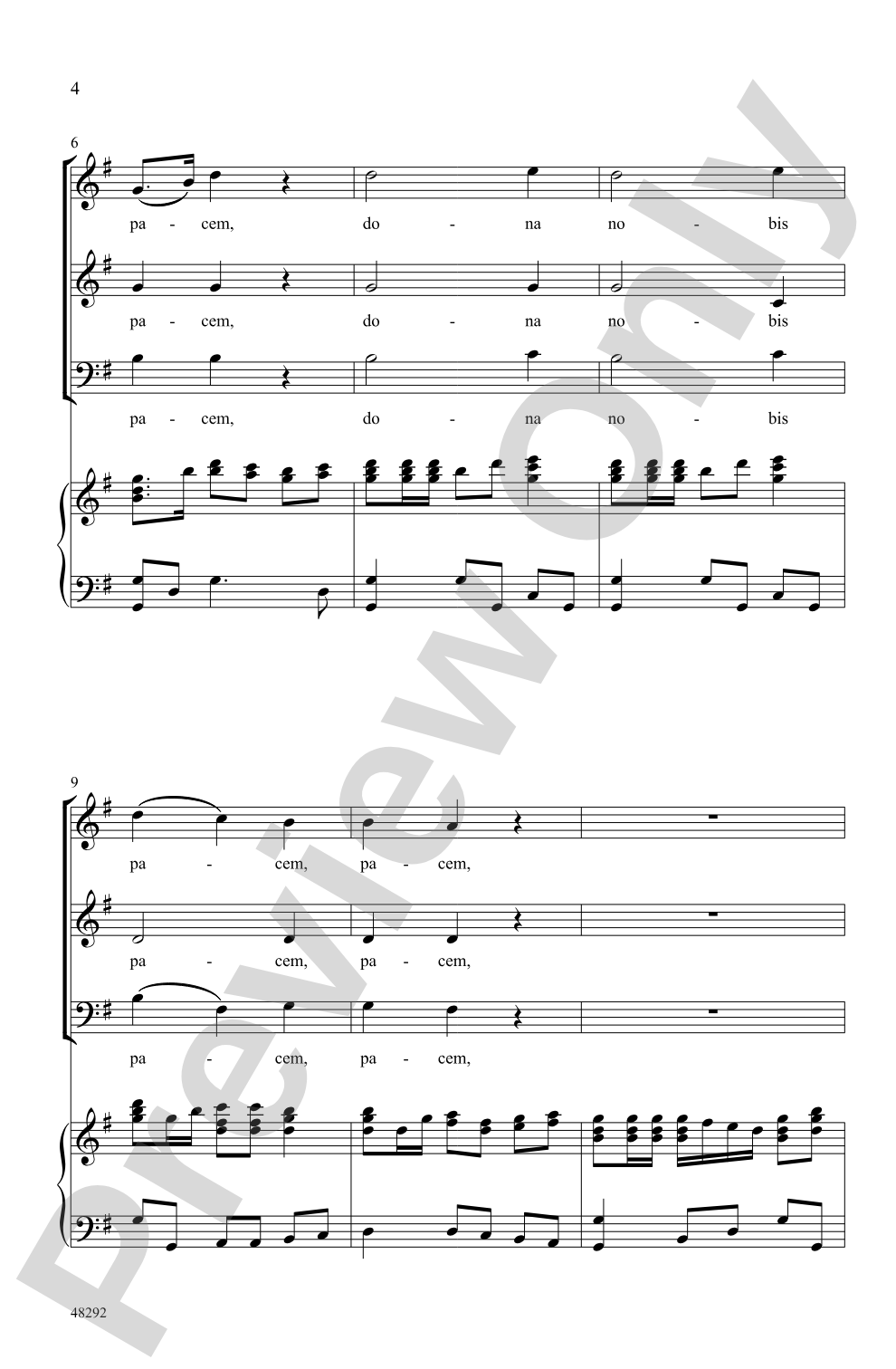
Taken from Haydn's masterwork Heiligmesse, this shortened edition has also been transposed to make it more accessible. The setting of the compact Latin text explores many of the conventions of the Classical period, including energized homophonic choral lines, structured musical form, and stark dynamic contrasts.


Don't just read it, hear it, play along with it, and watch your students grow with it. In MakeMusic Cloud, Dona Nobis Pacem: SAB Choral Octavo comes alive with professional accompaniment, adjustable tempo, and built-in practice tools that turn solo practice into real progress.
Open in the Player
Jump straight in and assign it today.
Start Your Free Trial
Open this title and explore the full library in minutes.
Sample Audio
1
Audio File
--:--
0:00
0:00
Sample Video
No sample videos found.
Additional Details
Series:
Alfred Choral Designs
Publisher:
Alfred Music
Page Count:
12
SKU:
00-PO-0006297
More about this title
About the Composer: Franz Joseph Haydn
Franz Joseph Haydn (1732-1809) shaped the Classical symphony, string quartet, and sacred choral tradition during nearly five decades of composition. Working first as a court musician in Eisenstadt, then as Kapellmeister for the Esterházy family, Haydn developed the structural clarity and emotional directness that define his style. His sacred works, including the Heiligmesse from which this piece is drawn, balance architectural precision with genuine spiritual expression.
Haydn's influence on music education remains profound. His works teach fundamental principles of form, harmonic progression, and orchestration through elegant, singable lines. Choirs encounter in his music the exact conventions that shaped Western music for generations.
Why we love this
This edition captures the architectural elegance of Haydn's original while removing barriers to performance. The transposition and shortened format make a genuine masterwork accessible to developing choirs without sacrificing the energized homophonic writing and dynamic contrasts that make Classical sacred music so satisfying to sing.
What to expect
The piece radiates Classical optimism and clarity. Bright homophonic passages build momentum through direct harmonic motion, punctuated by moments of stillness that ground the text's spiritual weight. The overall effect is both urgent and dignified, befitting a prayer for peace set in the structured language of Haydn's era.
Who it's for
SAB choirs with developing-to-intermediate reading skills who want to perform a recognized masterwork without excessive technical demands. Directors preparing repertoire for concert or festival performance will find this both musically substantial and achievable within a realistic rehearsal timeline.
How to get the most out of it
- Shape the homophonic lines with unified breath placement and consistent vowel formation across all three parts; the strength of Haydn's writing depends on hearing the voices as one voice with three strands.
- Observe the dynamic shifts precisely. The stark contrasts between forte and piano passages are structural markers, not afterthoughts; drilling these transitions separately builds ensemble confidence.
- Balance the SAB voicing by anchoring the bass line without oversinging it. In Classical style, the harmonic foundation supports rather than dominates the texture.
- Consider the text's meaning when shaping phrase endings. Even in energized sections, 'Pacem' (peace) asks for a slight vocal ease that reflects the prayer's spiritual intent.
How to use it
This works beautifully as a centerpiece in a concert pairing sacred masterworks across periods or styles. Its accessible difficulty and uplifting character also make it an ideal closer for a program, leaving the audience with both musical substance and a sense of unity.
Skills your students will build
- Reading homophonic texture and maintaining independent lines within unified blocks of sound
- Executing precise dynamic contrasts typical of Classical composition
- Approaching Latin text with clarity and intention
- Understanding harmonic progression and structural form through a recognized masterwork