

Dona Nobis Pacem: SATB Choral Octavo
from Heiligmesse
Music by Franz Joseph Haydn / ed. and arr. Patrick M. Liebergen
Item: 00-PO-0006296

$2.05
Minimum order quantity: 20 copies
Pickup currently not available
Description
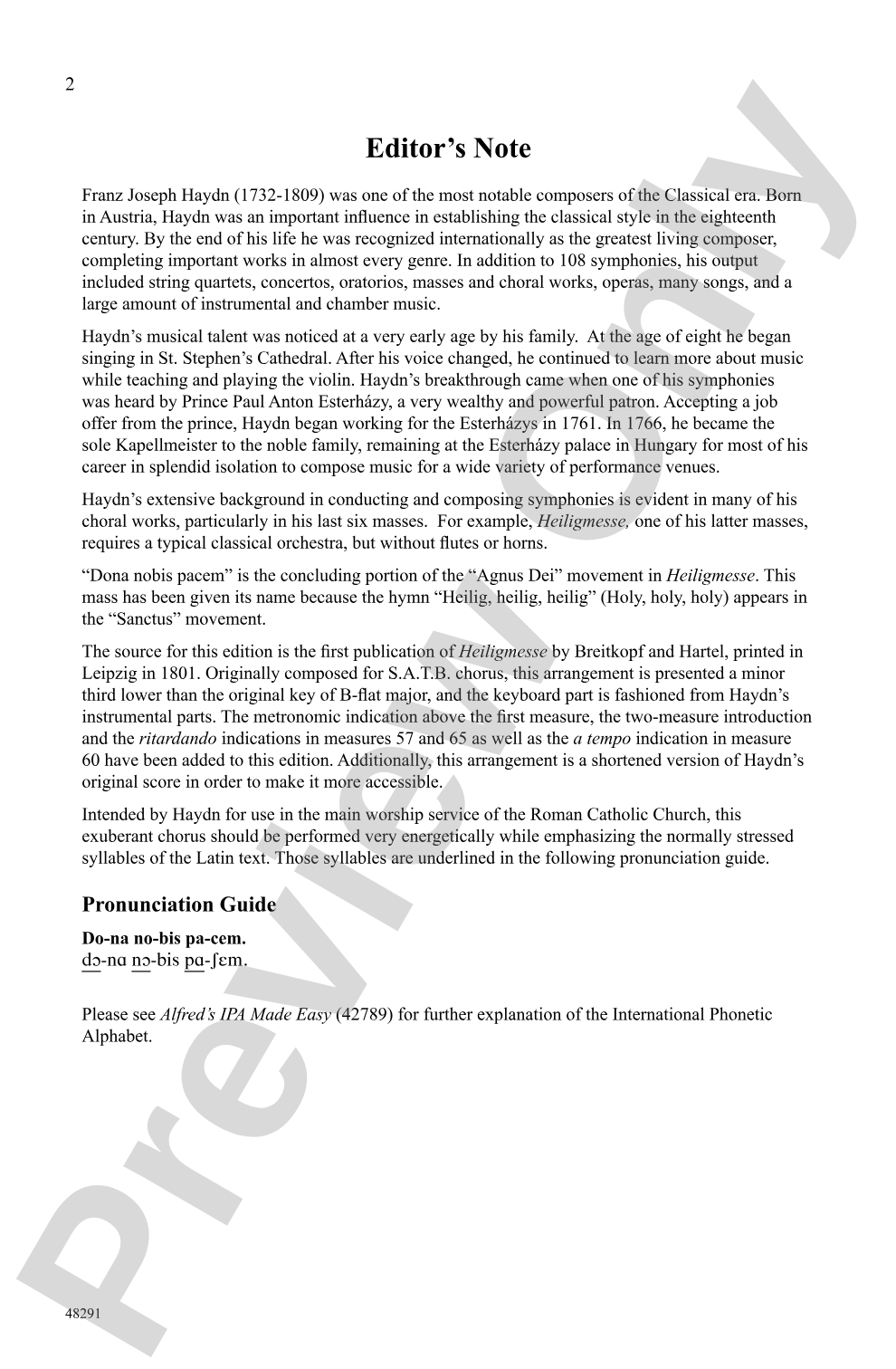
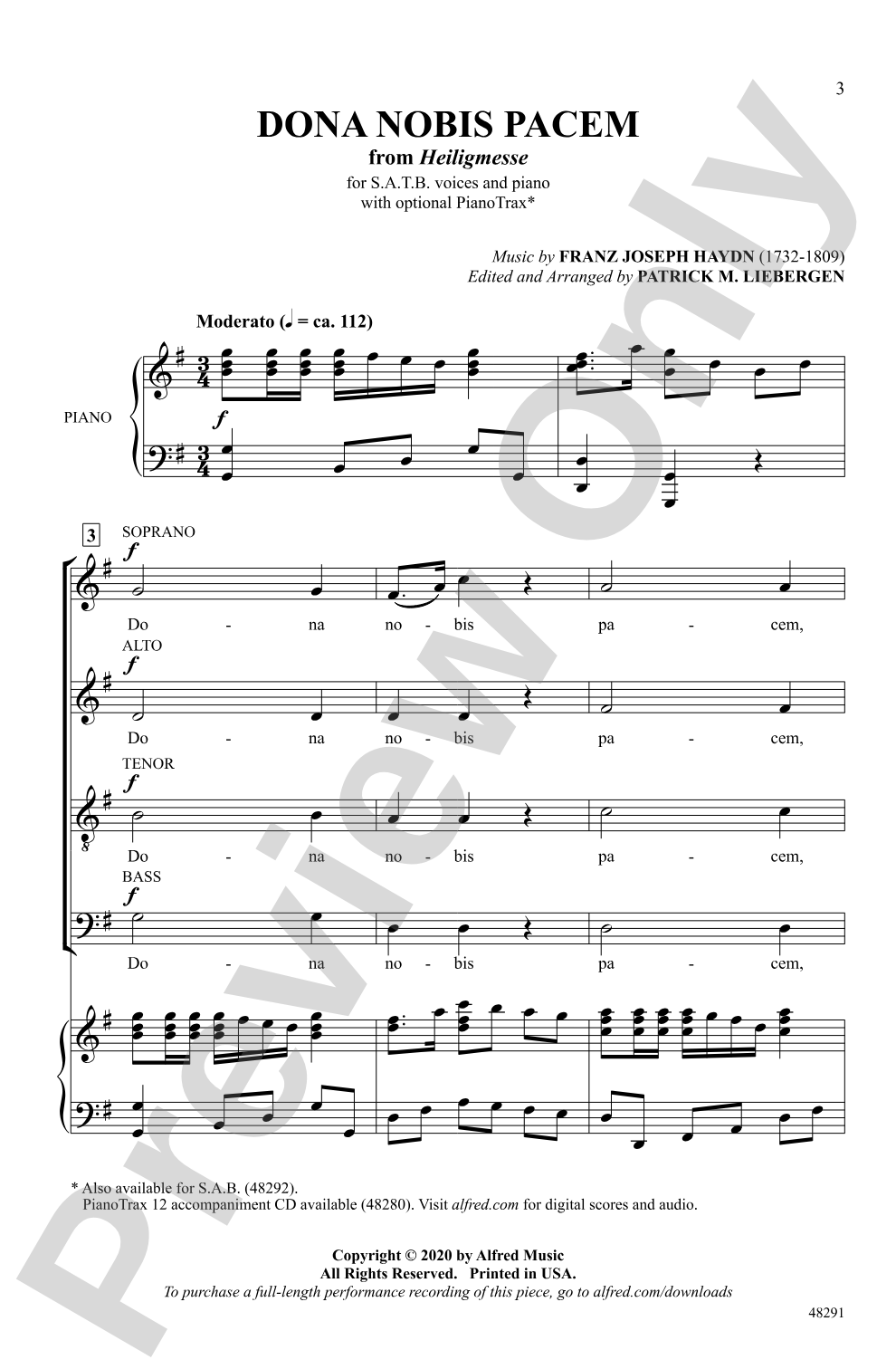
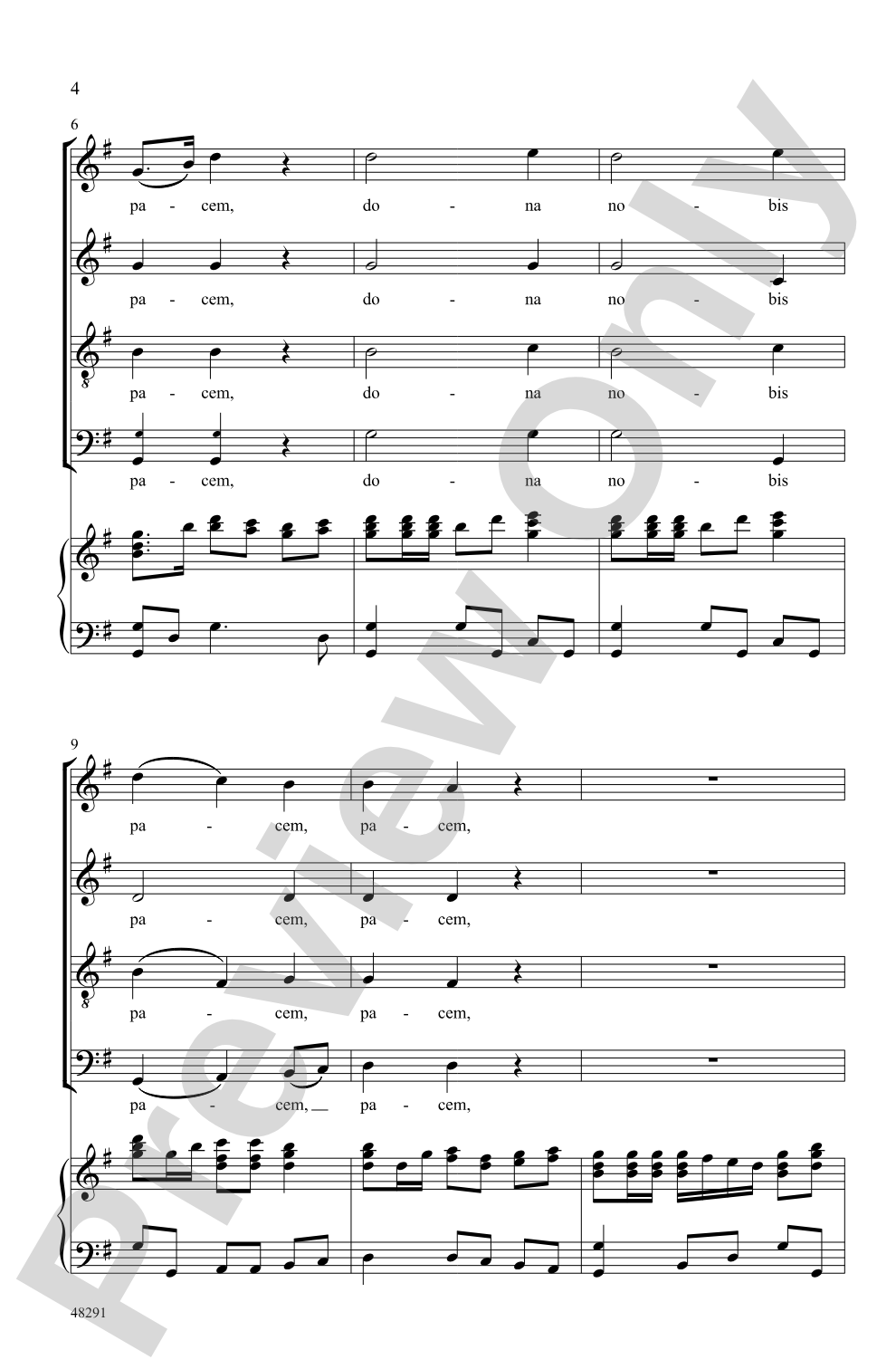
Taken from Haydn's masterwork Heiligmesse, this shortened edition has also been transposed to make it more accessible. The setting of the compact Latin text explores many of the conventions of the Classical period, including energized homophonic choral lines, structured musical form, and stark dynamic contrasts.


Don't just read it, hear it, play along with it, and watch your students grow with it. In MakeMusic Cloud, Dona Nobis Pacem: SATB Choral Octavo comes alive with professional accompaniment, adjustable tempo, and built-in practice tools that turn solo practice into real progress.
Open in the Player
Jump straight in and assign it today.
Start Your Free Trial
Open this title and explore the full library in minutes.
Sample Audio
1
Audio File
--:--
0:00
0:00
Sample Video
Additional Details
Series:
Alfred Choral Designs
Publisher:
Alfred Music
Page Count:
12
SKU:
00-PO-0006296
More about this title
About the Composer: Franz Joseph Haydn
Franz Joseph Haydn (1732-1809) shaped the Classical symphony and string quartet into their mature forms, and his sacred music carries the same structural clarity and emotional intelligence that define his instrumental works. As Kapellmeister at the Esterházy court for nearly three decades, Haydn wrote prolifically for both chapel and concert hall, bringing symphonic thinking to liturgical texts and proving that sacred music could be intellectually rigorous without sacrificing devotion.
Why we love this
This excerpt from the Heiligmesse showcases Haydn's gift for marrying Classical form with spiritual text. The transposition and shortened edition preserve the piece's architectural elegance and dynamic drive while fitting realistic rehearsal timelines and voice ranges, making a genuine masterwork repertoire choice rather than a pedagogical compromise.
What to expect
The piece radiates architectural confidence, with cleanly voiced choral blocks that shift between energized unison and warm four-part harmony. There's formal dignity in the way Haydn treats the prayer for peace, yet the music avoids heaviness through bright Classical scoring and rhythmic vitality.
Who it's for
This octavo works for treble-capable SATB choirs at the intermediate to advanced level who want substantive repertoire with historical weight. It suits community choirs, school and university ensembles, and church music programs seeking concert or festival material with both musical integrity and accessibility.
How to get the most out of it
- Observe the dynamic contrasts with precision; Classical style demands clear articulation between forte and piano sections rather than gradual transitions.
- Shape the homophonic passages so that all four voices move with unified intention; these moments need ensemble cohesion, not individual phrasing.
- Bring out the text clarity in 'Dona nobis pacem' by keeping diction crisp and vowels consistent across the choir, especially in repeated phrases.
- Use the recorded accompaniment to lock ensemble entrances and check intonation; the organ texture will reveal balance issues between voice parts quickly.
How to use it
Program this alongside other shorter sacred works or Classical-era pieces to build a concert around structural sophistication and textual unity. It works especially well for peace-themed or brotherhood programming, and its reasonable length makes it a strong closer for a set or a complement to longer choral works.
Skills your students will build
- Balancing four independent voice parts in homophonic texture
- Executing accurate dynamic contrasts within Classical style conventions
- Clear Latin diction and vowel consistency in ensemble singing
- Reading and responding to structured musical form (exposition, development, recapitulation implied in arrangement)
- Ensemble intonation and blend in sustained harmonic passages