
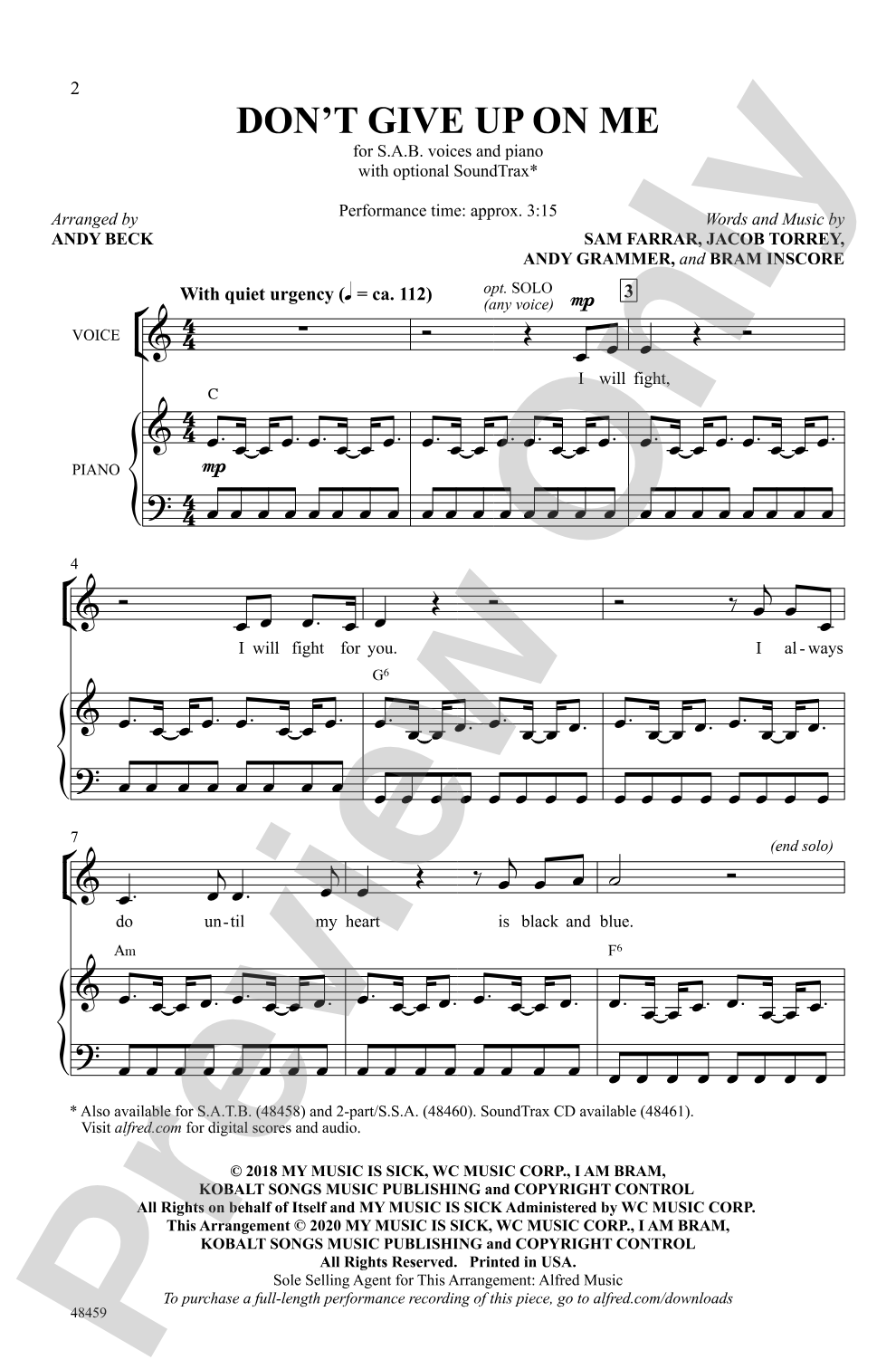
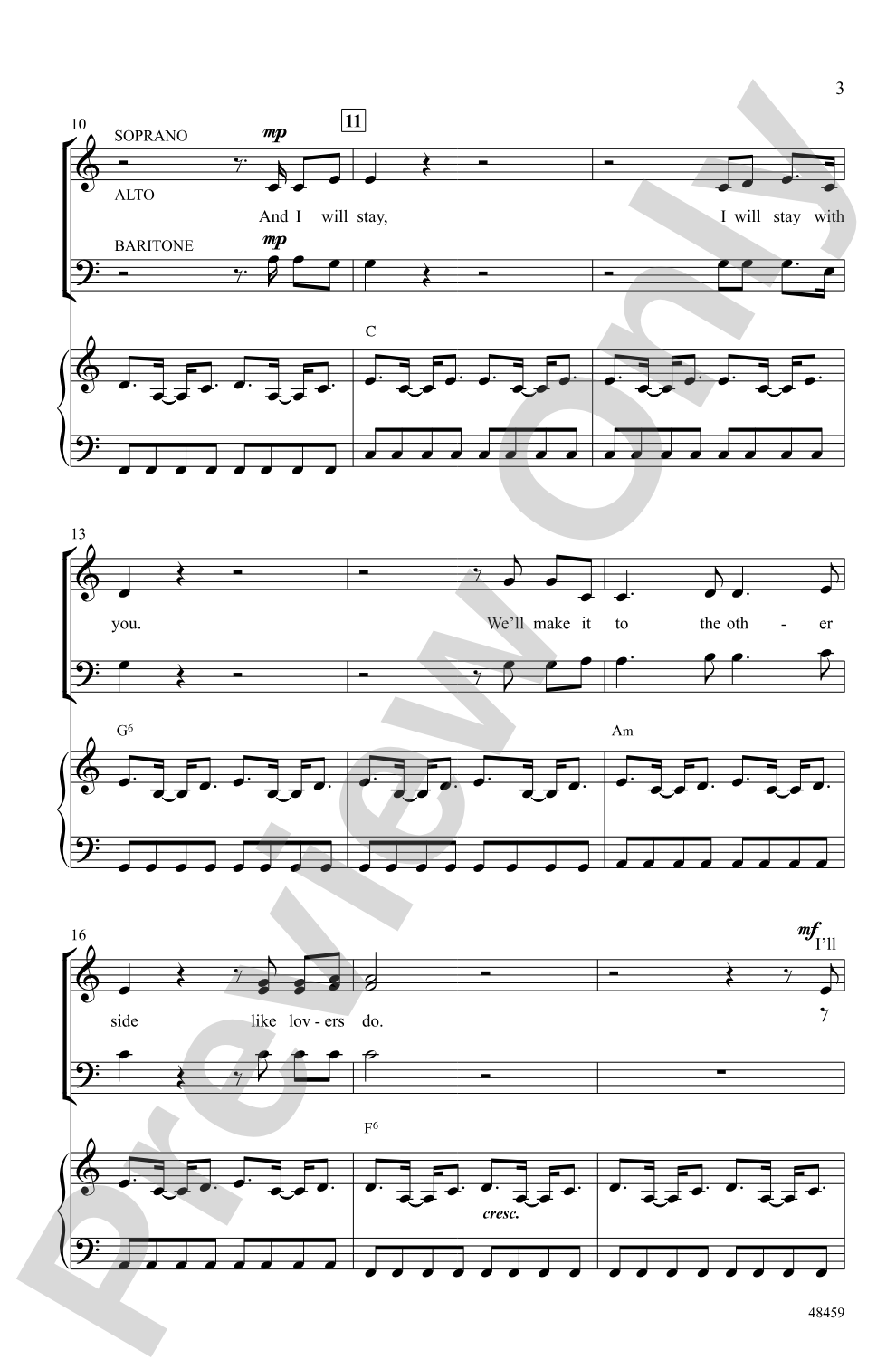

Don't Give Up on Me: SAB Choral Octavo
Words and music by Sam Farrar, Jacob Torrey, Andy Grammer, and Bram Inscore / arr. Andy Beck
Item: 00-PO-0006384

$2.10
Minimum order quantity: 20 copies
One moment…
Related Items
Don't Give Up on Me: SoundTrax Digital Audio Download |
$29.99
|
View | |
Don't Give Up on Me: SATB Choral Octavo |
$2.10
|
View | |
Don't Give Up on Me: 2-Part / SSA Choral Octavo |
$2.10
|
View | |
Don't Give Up on Me: SATB Choral Octavo |
$2.10
|
View | |
Don't Give Up on Me: SAB Choral Octavo |
$2.10
|
View | |
Don't Give Up on Me: 2-Part / SSA Choral Octavo |
$2.10
|
View | |
Don't Give Up on Me: Choral Octavo SoundTrax CD |
$29.99
|
View |
Description
"I'm not givin' up . . . no, not yet." This lead single from Andy Grammer's album Naive is featured in the movie Five Feet Apart and gained YouTube fame among choir directors after Grammer's personal visit to PS22 in New York City. The lyrics speak of the power of friendship, the strength to fight, and the importance of support during difficult times. The catchy, syncopated chorus (with optional handclaps) makes great use of stacked harmony. Use the SoundTrax CD, or add guitar, bass, and drums to build your own band!


Don't just read it, hear it, play along with it, and watch your students grow with it. In MakeMusic Cloud, Don't Give Up on Me: SAB Choral Octavo comes alive with professional accompaniment, adjustable tempo, and built-in practice tools that turn solo practice into real progress.
Open in the Player
Jump straight in and assign it today.
Start Your Free Trial
Open this title and explore the full library in minutes.
Sample Audio
1
Audio File
--:--
0:00
0:00
Sample Video
Additional Details
Series:
Alfred Pop Choral Series
Publisher:
Alfred Music
Page Count:
12
SKU:
00-PO-0006384
More about this title
About the Composer: Sam Farrar
Sam Farrar is a songwriter and producer known for crafting contemporary pop songs that connect with broad audiences. His work spans film soundtracks and chart-climbing singles, often exploring themes of resilience and human connection through accessible melodic writing.
Why we love this
Andy Beck's arrangement captures the infectious energy of the original without losing the emotional core of the song. The stacked harmonies in the chorus give your SAB singers a real sense of modern harmonic depth, and the optional handclaps invite physical engagement that lifts rehearsal energy. Directors have reported that this piece resonates immediately with middle and high school singers because it reflects their actual musical world.
What to expect
Hopeful and energizing, with moments of genuine vulnerability. The syncopated chorus has an irresistible forward motion that makes singers want to move; the layered harmonies create a modern, sophisticated sound that surprises singers who expect pop arrangements to be thin or simplistic. The message of resilience and support carries real emotional weight without feeling heavy.
Who it's for
Choirs at the middle school through early high school level who want contemporary repertoire that speaks to their experience. This works equally well for school choirs and community/youth ensembles that value accessible, meaningful pop arrangement. The SAB voicing opens the piece to mixed groups without extensive soprano section depth.
How to get the most out of it
- Nail the syncopation in the chorus by breaking it into isolated 4-bar segments during rehearsal; once each section locks in their part, layer them together gradually.
- If you're using handclaps, introduce them after the singers are secure on their lines; the rhythm section (if you add guitar, bass, and drums) should anchor the claps, not the other way around.
- Support the message of the song through phrasing and dynamic shaping rather than volume alone; the text about friendship and fighting for each other deserves genuine musical commitment from your singers.
- Balance the recorded accompaniment so it supports without overwhelming; these singers need to hear each other, especially during the stacked harmony moments.
How to use it
Pair this with other contemporary pieces to show your singers that concert programming can include their musical language. It works beautifully in a spring concert celebrating friendship, resilience, or connection, or as an anchor piece in a program built around student-relevant themes. The recorded accompaniment option makes it ideal for situations where your band resources are stretched thin.
Skills your students will build
- Reading and performing syncopated rhythms in a contemporary pop style
- Balancing independent vocal lines within stacked three-part harmony
- Rhythmic precision and ensemble blend when adding optional handclaps to a choral texture
- Interpreting lyrical meaning to inform phrasing and dynamic choices beyond the notated markings