

Don't Get Around Much Anymore: SSA/2-Part Choral Octavo
Arr. Jay Althouse
Item: 00-PO-0003893
$2.25
Minimum order quantity: 20 copies
Pickup currently not available
Related Items
Don't Get Around Much Anymore: SATB Choral Octavo |
$2.25
|
View | |
Don't Get Around Much Anymore: SAB Choral Octavo |
$2.25
|
View | |
Don't Get Around Much Anymore: Choral SoundPax |
$19.99
|
View | |
Don't Get Around Much Anymore: SATB Choral Octavo |
$2.25
|
View | |
Don't Get Around Much Anymore: SAB Choral Octavo |
$2.25
|
View |
Description
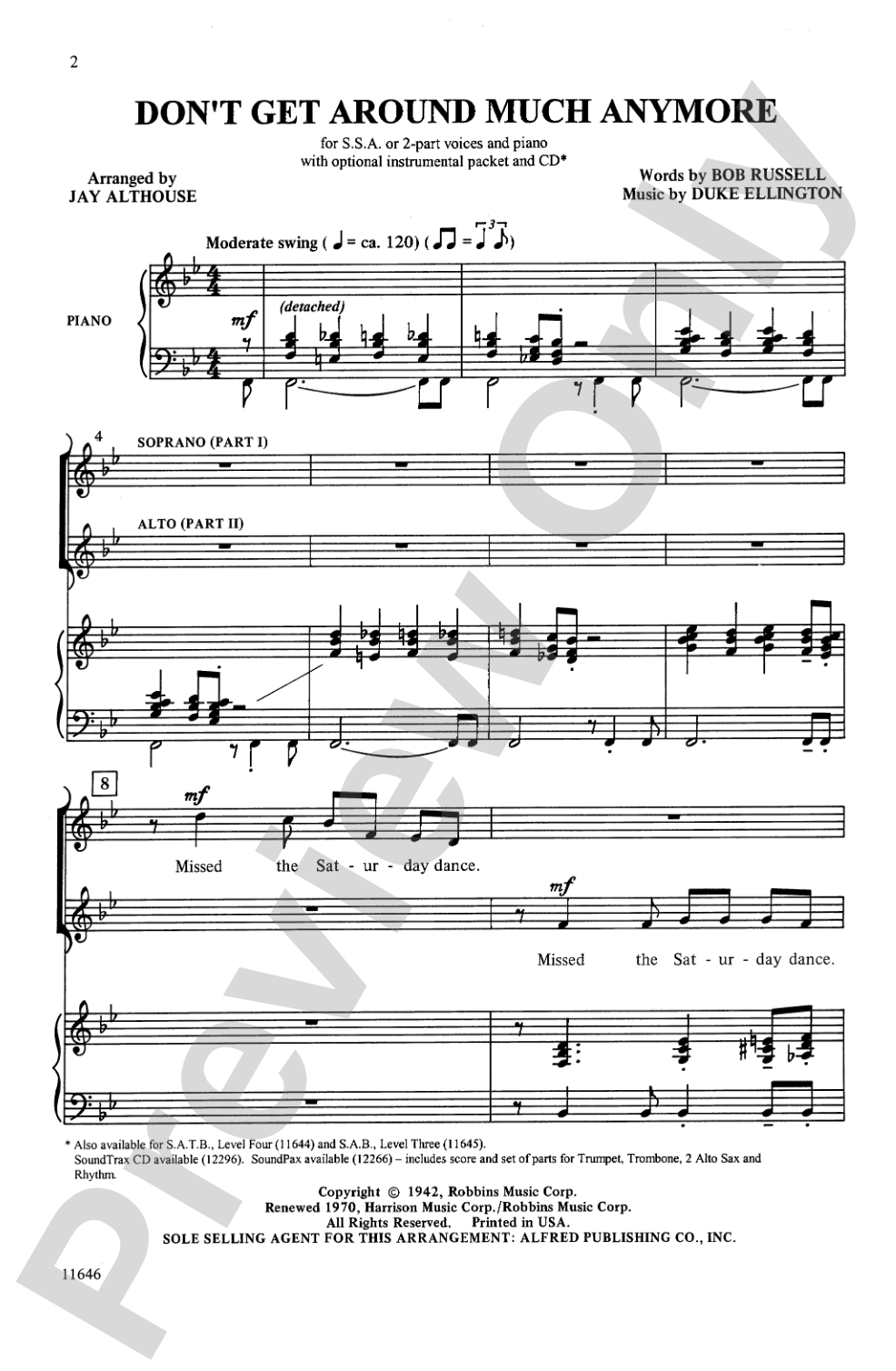
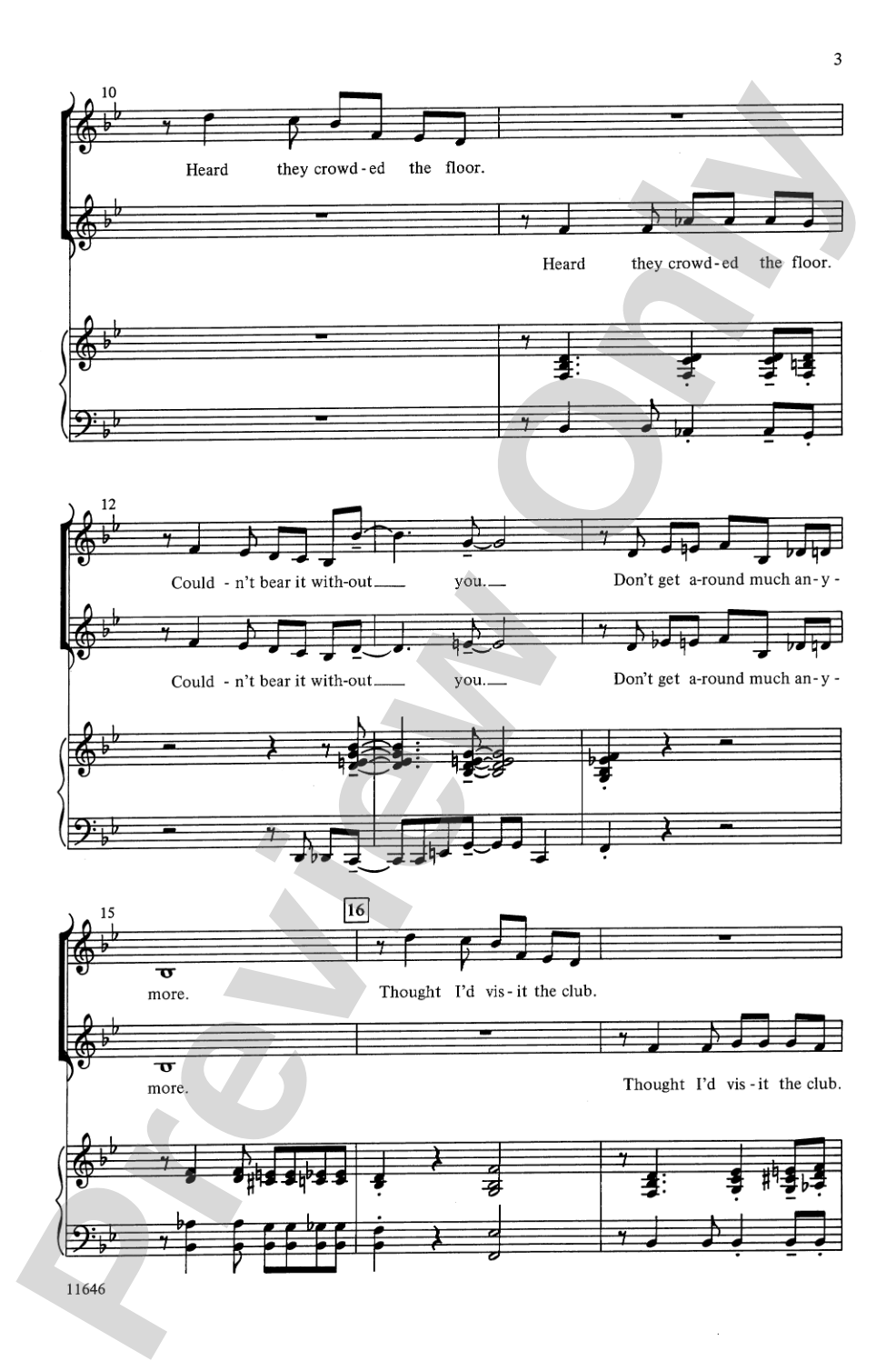
A light, swinging, Jay Althouse arrangement of a Duke Ellington "standard." Features accessible voice leading and some simple scat syllables...but no vocal improvisation. Accessible voice leading. Add the SoundPax parts (horns and rhythm section) for an authentic, small combo sound.


Don't Get Around Much Anymore: SSA/2-Part Choral Octavo isn't in MakeMusic Cloud just yet...but it could be. Let us know you'd like to see it, and you'll help shape what comes next. In the meantime, start a free trial and dive into thousands of interactive titles your students can play along with today.
Request This Title
Tell us you want it.
Start Your Free Trial
Explore everything that's ready to play right now.
Sample Audio
1
Audio File
--:--
0:00
0:00
Sample Video
No sample videos found.
Additional Details
Series:
Alfred Archive Edition: Alfred Choral Designs
Publisher:
Alfred Music
Page Count:
12
SKU:
00-PO-0003893
More about this title
About the Arranger: Jay Althouse

Jay Althouse studied music education and music at Indiana University of Pennsylvania, where he later received the Distinguished Alumni award. His career spans both administration and composition; he worked for eight years in rights and licensing at a major educational music publisher and served on the Executive Board of the Music Publishers Association of America. As a composer, he has written over 800 choral works performed widely across English-speaking countries and is a writer member of ASCAP, a regular recipient of the ASCAP Special Award.
Beyond his prolific output as a composer, Althouse has collaborated with his wife Sally K. Albrecht on children's musicals and co-authored influential resources including The Complete Choral Warm-up Book and Accent on Composers. He has also compiled and arranged vocal solo collections and created classroom materials for music teachers. Currently based in Wake Forest, North Carolina, he serves on the National Advisory Board of the Folk Art Society of America and contributes to its publications.
Why we love this
Althouse brings a jazz musician's ear to this Duke Ellington classic while keeping the choral writing genuinely singable for younger or less experienced singers. The scat syllables add character without demanding improvisation; your singers get the authentic feel of swing without stumbling over complex vocal jazz techniques. It's the kind of arrangement that works equally well as a concert piece or a high-energy addition to a lighter program.
What to expect
A breezy, sophisticated swing tune that feels like eavesdropping on a small jazz combo in a intimate venue. The scat passages and light voicing create an almost conversational quality, mixing genuine jazz flavor with the accessibility and fun that draws students into genre exploration. There's elegance here without pretense.
Who it's for
This arrangement works for treble or 2-part choirs at the middle school through early high school level, especially groups ready to explore jazz repertoire without the technical demands of full vocal improvisation. It's equally at home in a school chorus, church choir, or community ensemble looking to add a fun, accessible standard to their library.
How to get the most out of it
- Establish a relaxed, conversational swing feel in rehearsal before focusing on any written notes; the rhythm section is built into the chart, so lock the ensemble into that groove first.
- Treat the scat syllables as a rhythmic conversation, not a novelty; these moments should feel natural and playful, the way a jazz singer would phrase them.
- Layer in the SoundPax instrumental parts (horns and rhythm section) during dress rehearsal or final run-throughs to let singers hear how their voices sit within the full combo texture.
- Keep the dynamic range light and easy; this tune breathes better when you avoid heavy-handed articulation and let the swing speak for itself.
How to use it
Pair this with other jazz or Ellington arrangements to build a thematic concert set, or use it as a palate-cleanser between more serious classical or contemporary pieces. It also shines as a finale or act-two opener when you want to shift the energy and remind your audience that your singers can swing.
Skills your students will build
- Swing feel and rhythmic precision in a jazz idiom
- Scat singing and rhythmic syllable articulation
- Blend and balance within close voicings
- Phrasing in a jazz context (legato, rhythmic placement, dynamics)
- Listening to and coordinating with instrumental accompaniment