

Dixit Dominus: 3-Part Mixed Choral Octavo
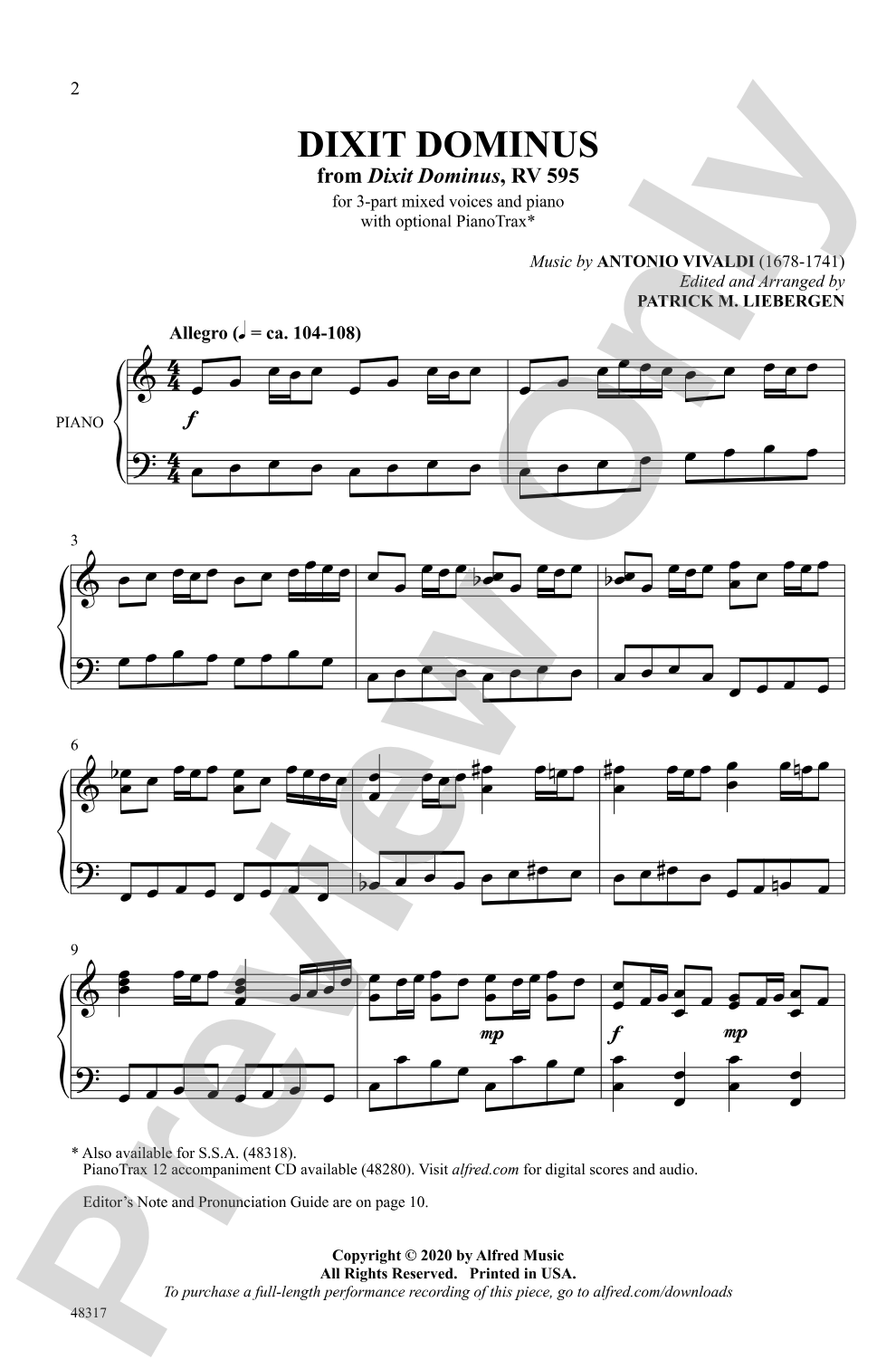
from Dixit Dominus, RV 595
Music by Antonio Vivaldi / ed. and arr. Patrick M. Liebergen
Item: 00-PO-0006313
$2.05
Minimum order quantity: 20 copies
Pickup currently not available
Description
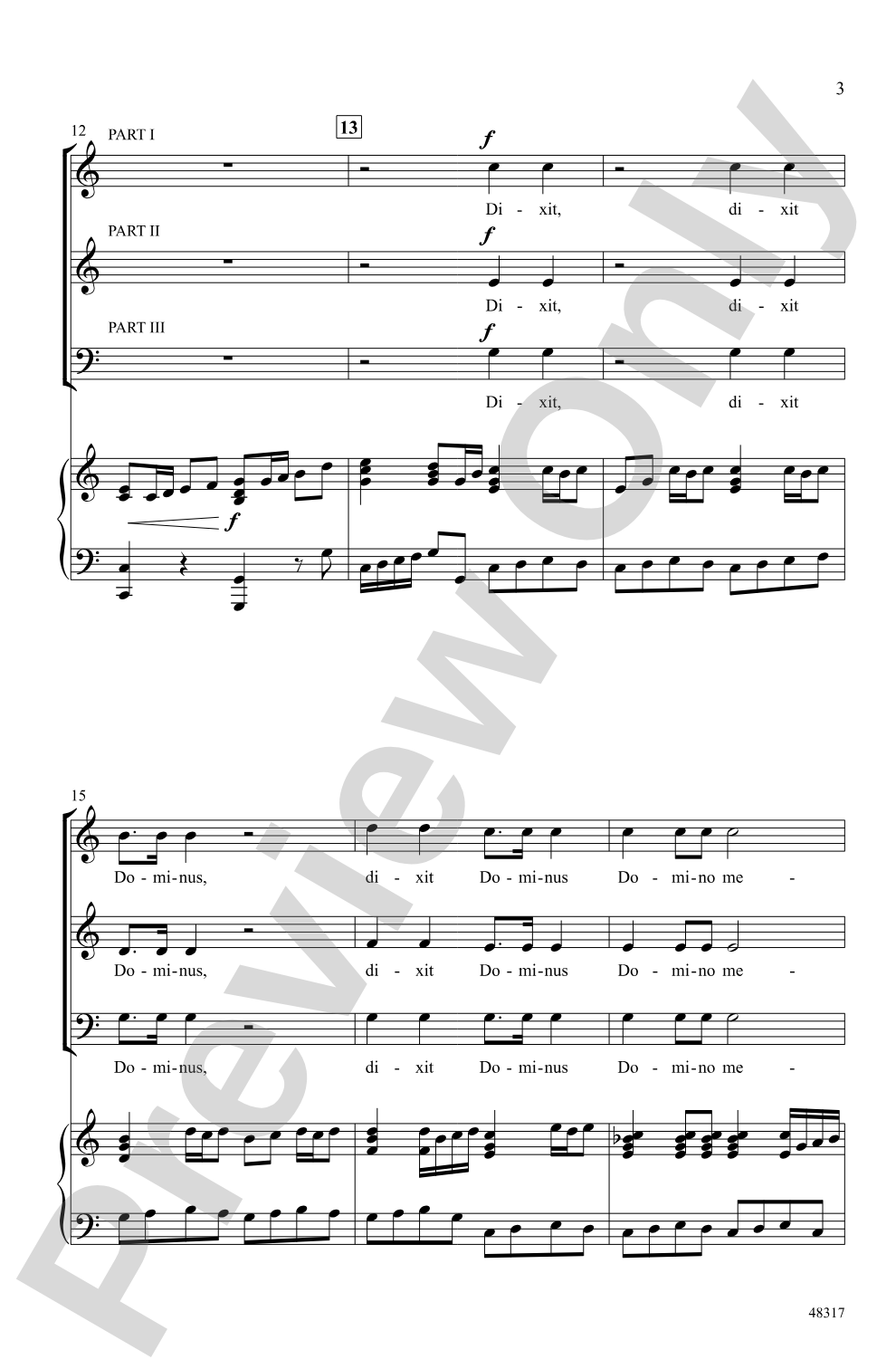
Joy instantly abounds as the well-edited keyboard introduction sets the tone for this impressive, yet approachable Baroque selection---the first movement of Vivaldi's masterwork of the same name. Choral phrasing is obvious, as we alternate between brief marcato statements and longer lines that deliver satisfying suspensions. As always, Dr. Liebergen includes an informative editor's note and a complete IPA pronunciation guide for the Latin text (eight words in total). This title is available in MakeMusic Cloud.


Dixit Dominus: 3-Part Mixed Choral Octavo isn't in MakeMusic Cloud just yet...but it could be. Let us know you'd like to see it, and you'll help shape what comes next. In the meantime, start a free trial and dive into thousands of interactive titles your students can play along with today.
Request This Title
Tell us you want it.
Start Your Free Trial
Explore everything that's ready to play right now.
Sample Audio
1
Audio File
--:--
0:00
0:00
Sample Video
Additional Details
Series:
Alfred Choral Designs
Publisher:
Alfred Music
Page Count:
12
SKU:
00-PO-0006313
More about this title
About the Composer: Antonio Vivaldi
Antonio Vivaldi (1678-1741) stands among the most prolific composers of the Baroque era, with over 500 concertos and numerous sacred vocal works to his name. His facility with melody and harmonic color shaped the instrumental concerto into a dominant form, and his sacred music demonstrates the same rhythmic vitality and emotional directness that made his instrumental works beloved across Europe.
Why we love this
Liebergen's editing transforms Vivaldi's grand opening movement into something genuinely singable for developing choirs without sacrificing the Baroque character that makes the work compelling. The alternation between snappy marcato phrases and sustained lines gives singers immediate, rewarding contrasts to shape, and the keyboard part grounds the texture in authentic period style while remaining accessible to accompany.
What to expect
Vivaldi's music radiates confidence and forward momentum even in its most contemplative moments. This opening movement captures that spirit through clear harmonic movement, energetic rhythmic patterns, and the interplay between declarative choral statements and singing lines that unfold with grace.
Who it's for
This arrangement works for upper-level middle school choirs and high school ensembles ready to tackle authentic Baroque sacred literature in three parts. The piece appeals to singers who enjoy Renaissance and Baroque style and to directors seeking concert or festival repertoire that sounds more substantial than its technical demands suggest.
How to get the most out of it
- Shape the marcato statements with crisp articulation and clear vowel definition; these brief bursts set up the longer lines that follow and need rhythmic precision to land.
- Let the suspensions breathe. The longer phrases that deliver these harmonic moments lose their impact if rushed; allow singers to feel the tension resolve.
- Use the IPA guide consistently in rehearsal so all three parts lock the Latin pronunciation; uniform diction across SAB voicing projects clarity in performance.
- Balance the keyboard introduction carefully so it establishes the Baroque character without overwhelming the choral entries that follow.
How to use it
Program this as a concert opener or as part of a sacred music set that pairs well with Renaissance motets or other Baroque choral works. Its 12-page length and moderate difficulty make it suitable for both concert and festival contexts, and the keyboard accompaniment adapts easily to piano or harpsichord depending on your accompanying resources and desired sound.
Skills your students will build
- Baroque phrasing and style conventions
- Singing Latin pronunciation and diction using IPA
- Contrasting articulation between marcato and legato passages
- Voice independence in three-part mixed voicing
- Harmonic listening and awareness of suspensions