
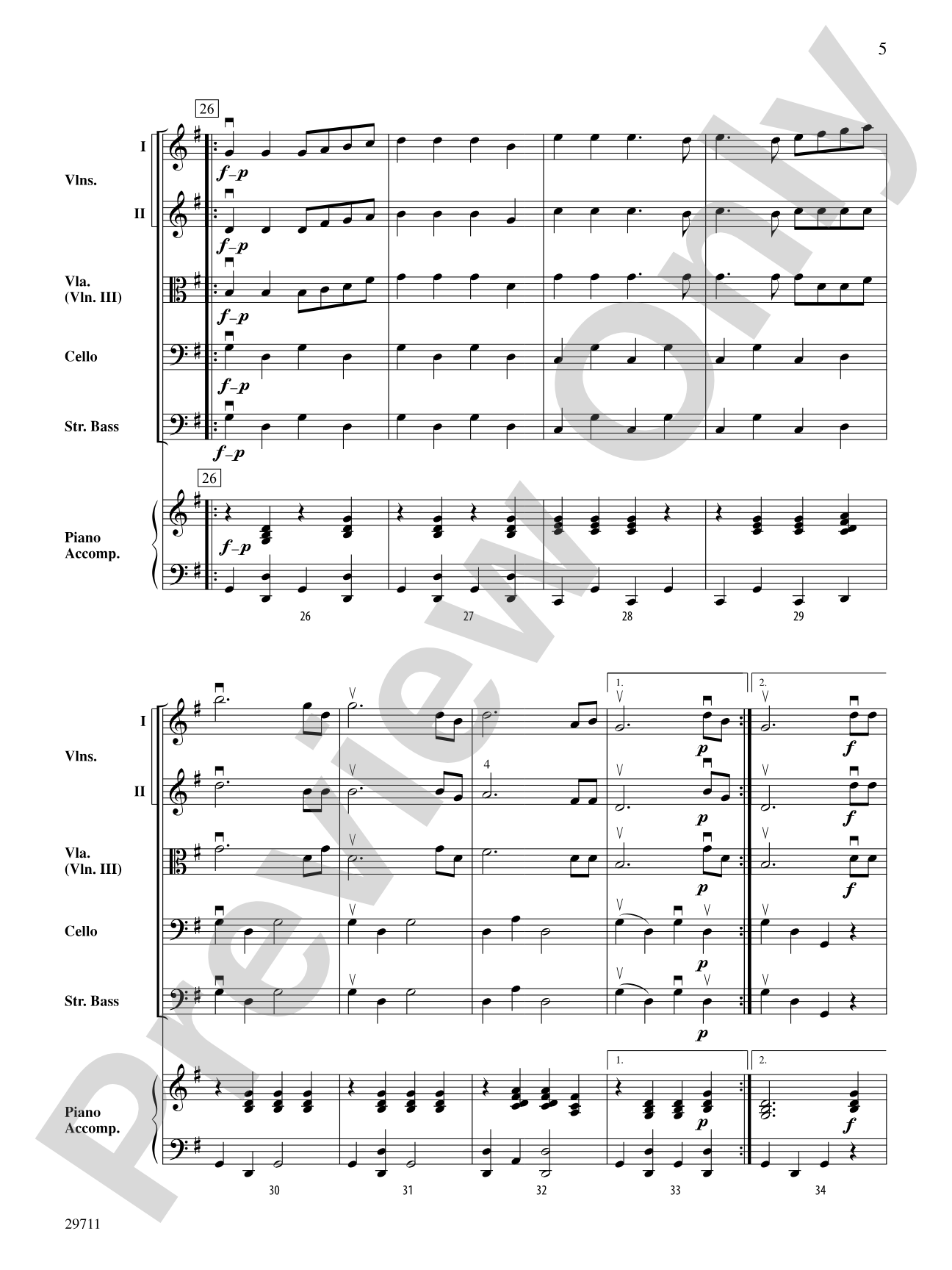
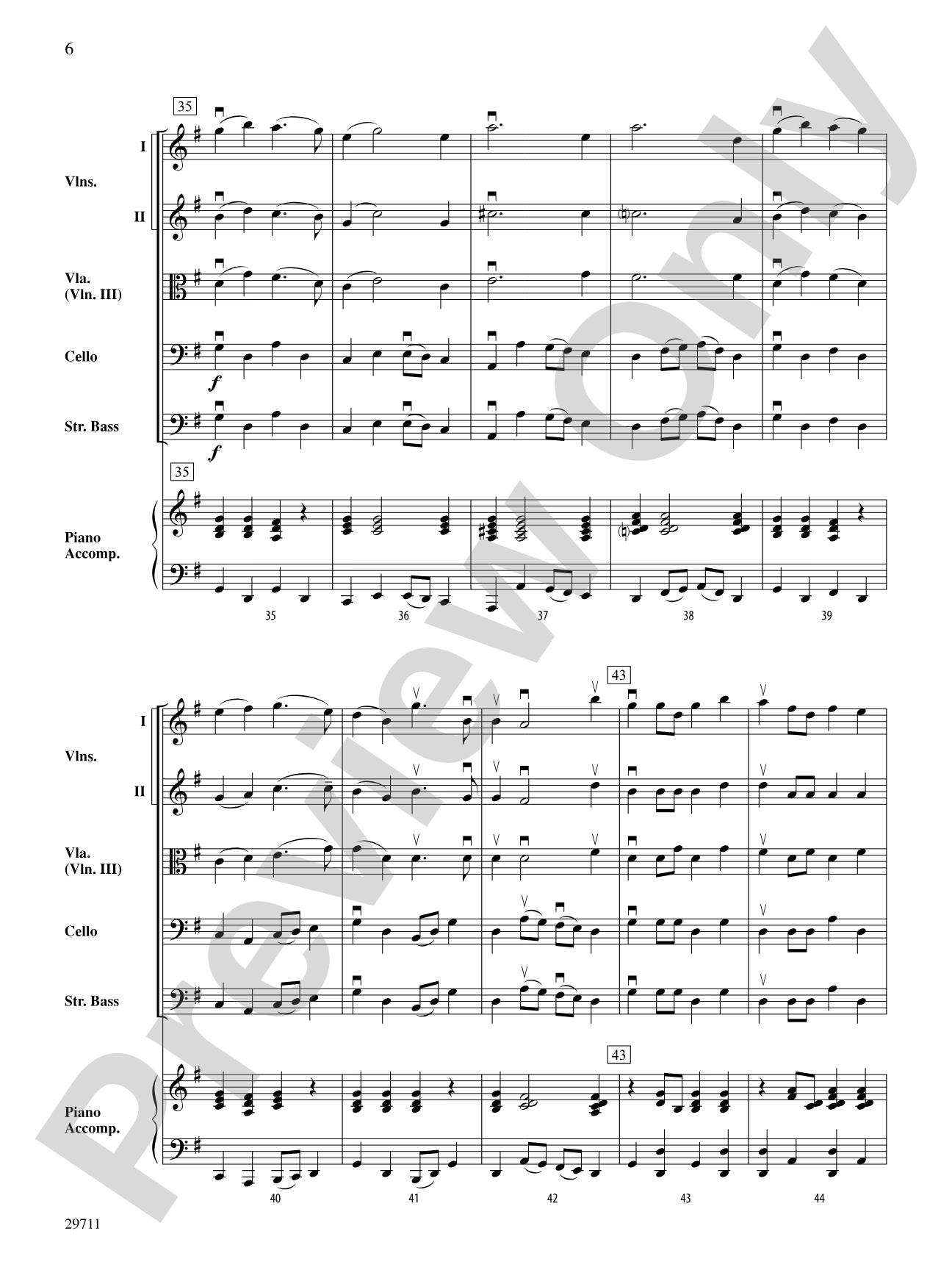
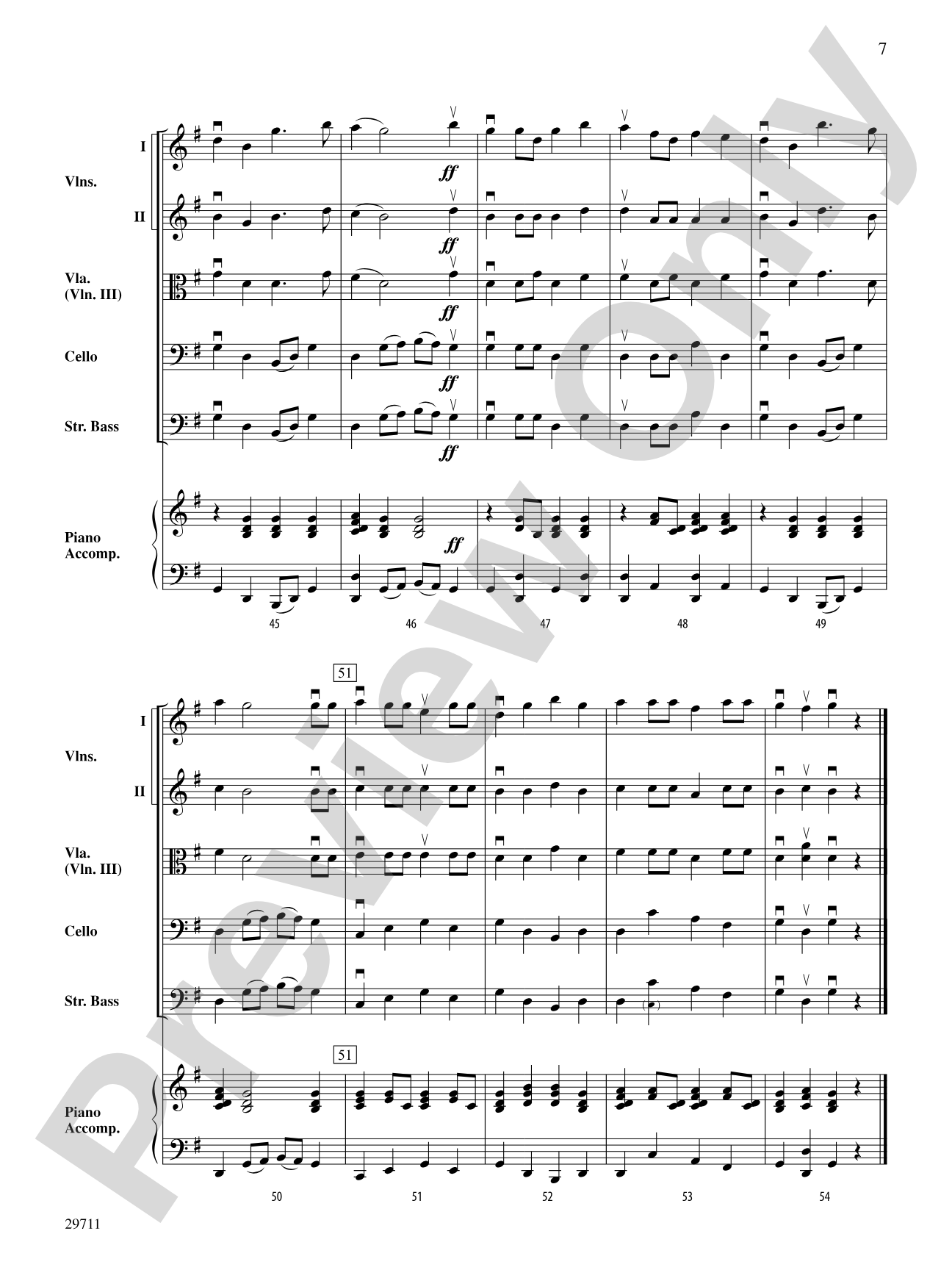


Dixie: String Orchestra Conductor Score & Parts
Arr. Edmund J. Siennicki
Grade: 2
Item: 00-PK-0001573

$46.00
Pickup currently not available
Buy Extra Parts (Digital PDF Download)
| Product | Price | Quantity |
|---|---|---|
| Dixie: Score | $6.00 | |
| Dixie: 1st Violin | $5.99 | |
| Dixie: 2nd Violin | $5.99 | |
| Dixie: 3rd Violin (Viola [TC]) | $5.99 | |
| Dixie: Viola | $5.99 | |
| Dixie: Cello | $5.99 | |
| Dixie: String Bass | $5.99 | |
| Dixie: Piano Accompaniment | $5.99 |
Parts Added to Cart!
Description
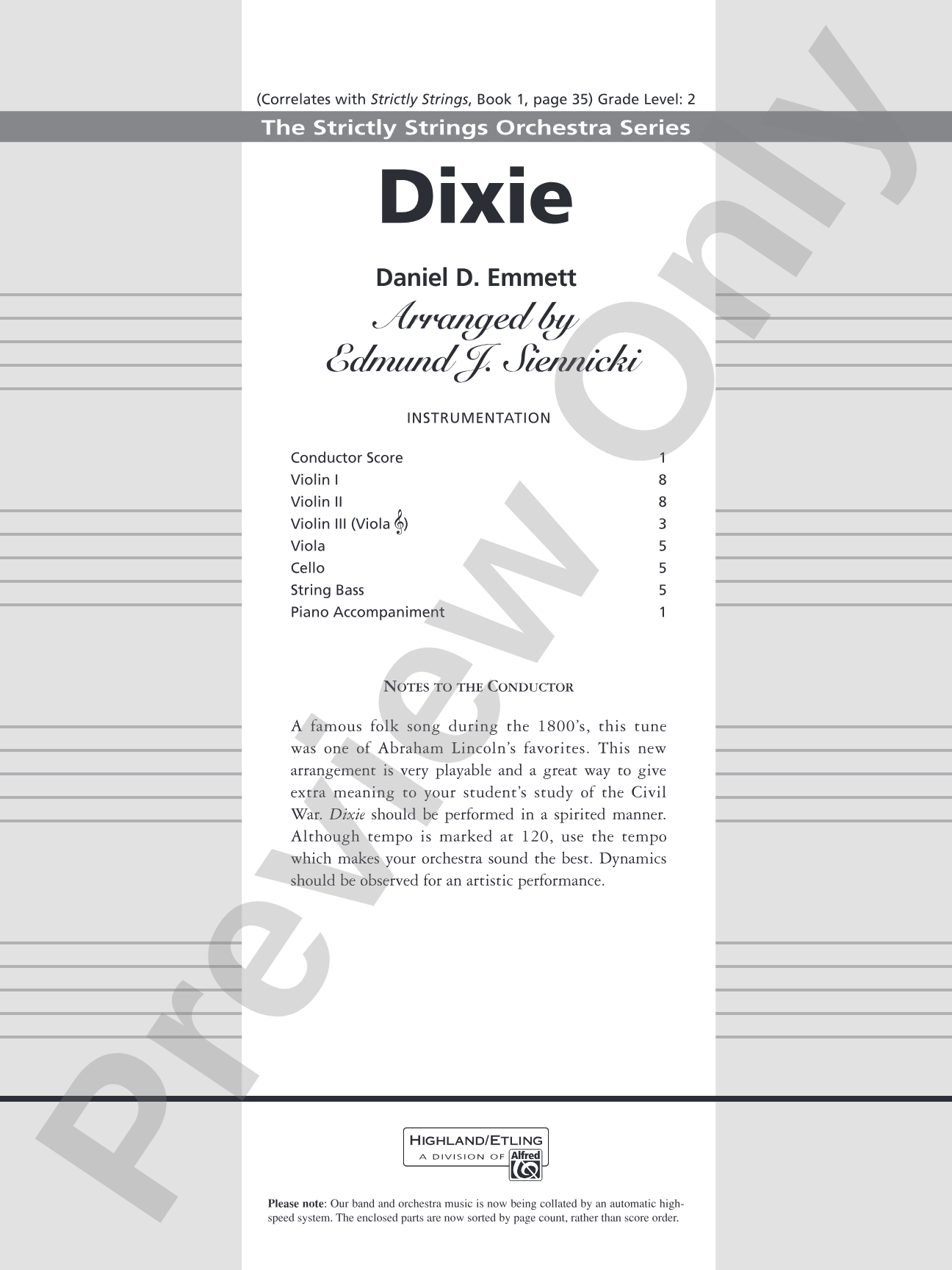
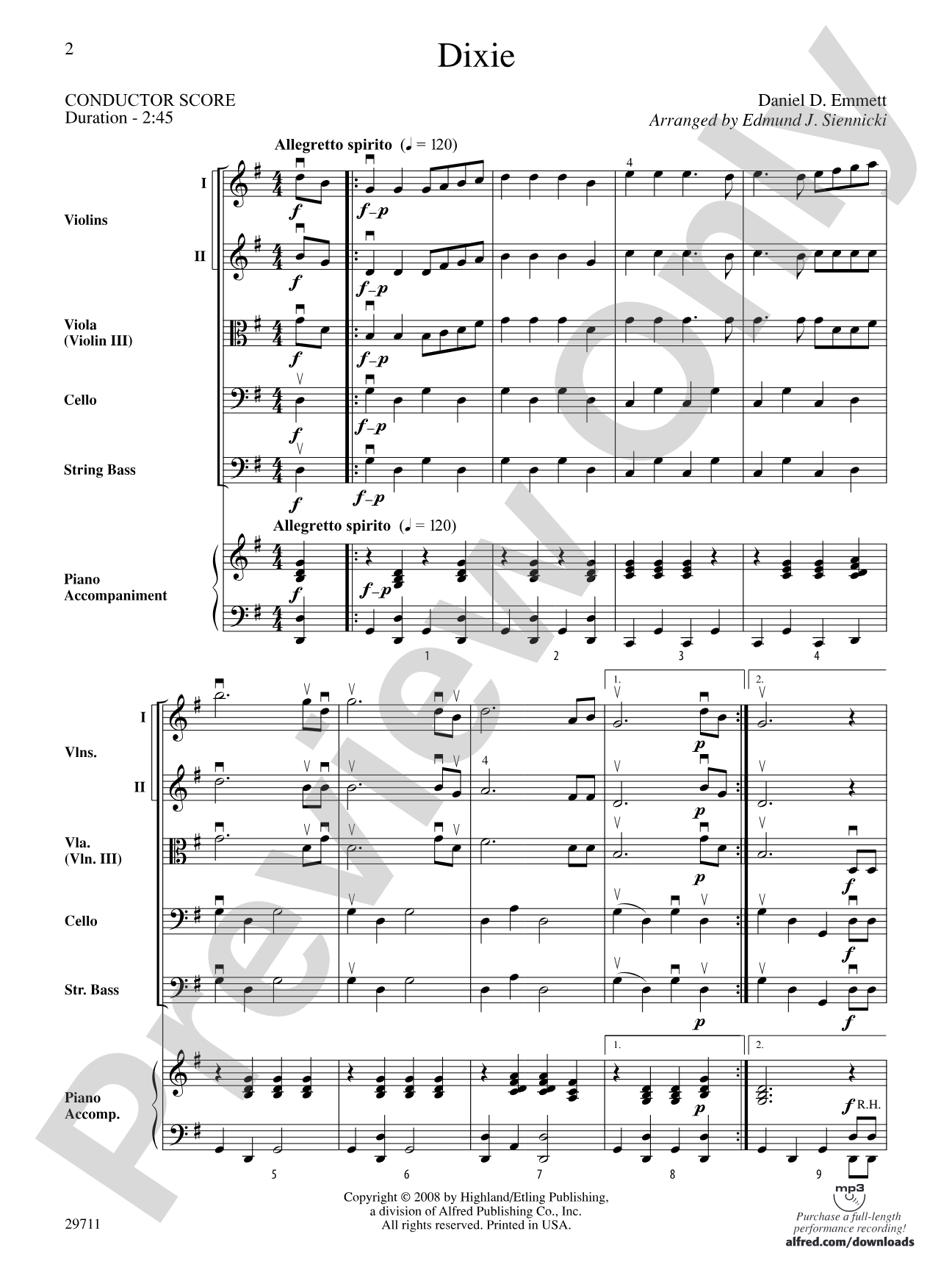
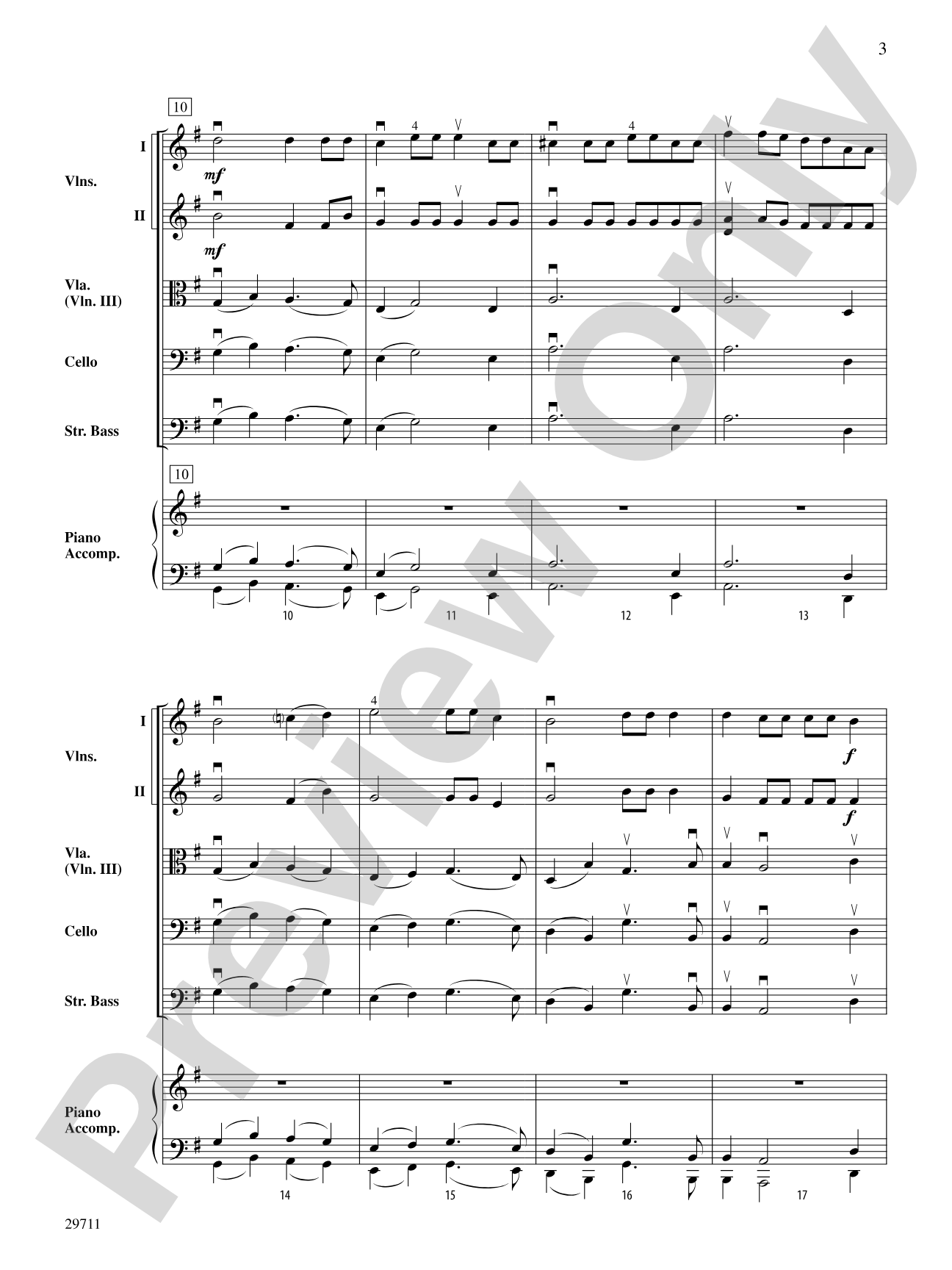
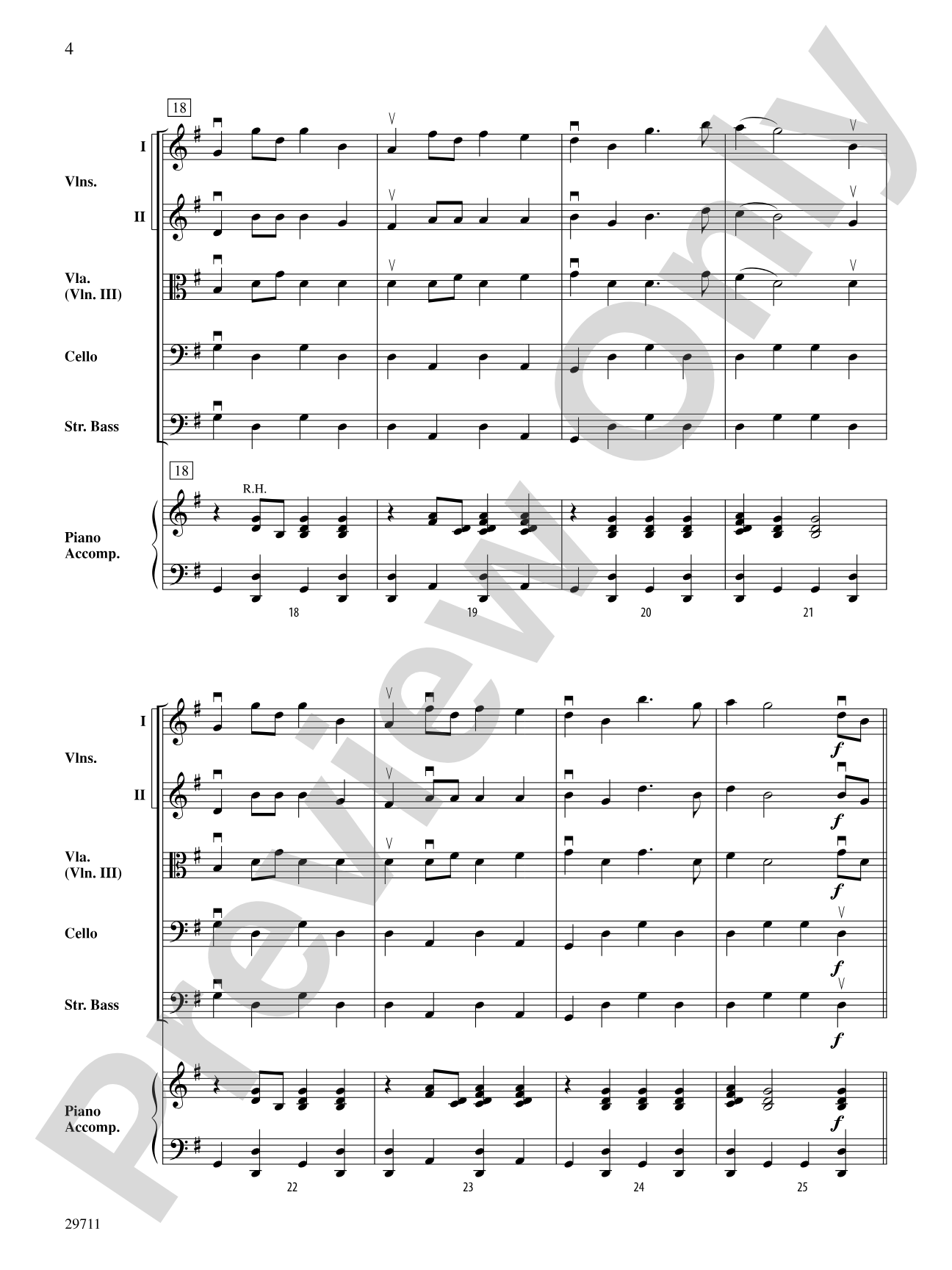
A famous folk song during the 1800s, this tune was one of Abraham Lincoln's favorites. This new arrangement is very playable and a great way to give extra meaning to your students' study of the Civil War. (2:15)
Correlates with Strictly Strings Book 1, page 35.


Correlates with Strictly Strings Book 1, page 35.
Don't just read it, hear it, play along with it, and watch your students grow with it. In MakeMusic Cloud, Dixie: String Orchestra Conductor Score & Parts comes alive with professional accompaniment, adjustable tempo, and built-in practice tools that turn solo practice into real progress.
Open in the Player
Jump straight in and assign it today.
Start Your Free Trial
Open this title and explore the full library in minutes.
Sample Audio
1
Audio File
--:--
0:00
0:00
Sample Video
No sample videos found.
Additional Details
Series:
Highland/Etling Strictly Strings
Publisher:
Alfred Music
Page Count:
72
SKU:
00-PK-0001573
More about this title
About the Arranger: Edmund J. Siennicki
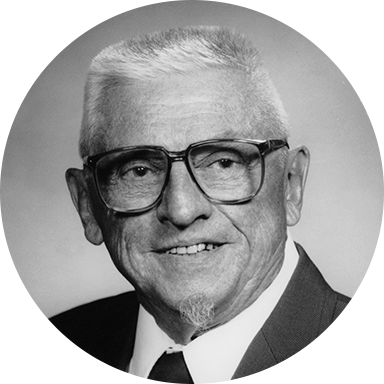
Edmund J. Siennicki (born 1920) grew up in Cleveland, Ohio, where a formative conversation with the renowned pianist Ignacy Jan Paderewski at age twelve shaped his artistic trajectory. He earned his Bachelor's degree from Kent State University, where he composed the school's fight song, a piece still performed at football games today. His graduate studies at Teachers College, Columbia University, included composition work with Herbert Elwell, electronic music study with Sergio Barroso, and consultation with Vincent Persichetti.
Throughout his career, Siennicki has balanced composition and education. He performed professionally as a bassoonist and pianist, taught in Cleveland's junior high schools, and held faculty positions at Michigan and Kent State University. His compositions have earned prizes in National School Orchestra contests and recognition from ASCAP for two decades. With approximately 200 works in print and residencies at the MacDowell Colony, Siennicki continues composing and conducting educational clinics in schools.
Why we love this
This arrangement connects American history with active string playing at a moment when students are developmentally ready to understand the Civil War's cultural weight. The Grade 2 scoring keeps technical demands reasonable, so the emotional and historical significance can take center stage without struggling with the notes. It's the kind of piece that makes interdisciplinary teaching feel natural, not forced.
What to expect
The melody carries the warmth and accessibility of a folk tune that Americans have known for generations, grounded in straightforward string textures that allow the familiar tune to breathe. There's a quiet dignity in the arrangement that respects both the song's historical weight and the musicians performing it.
Who it's for
String orchestras at the early intermediate level (Grade 2) and teachers seeking repertoire that connects music study to American history curricula. This works particularly well for orchestras using the Strictly Strings method, as it correlates directly with Book 1 material.
How to get the most out of it
- Establish a steady, confident tempo that honors the folk melody's singing quality; avoid dragging the familiar tune.
- Balance the violin parts so the melody line projects clearly while violas and cellos provide harmonic support without overwhelming.
- Use the 2 minute 15 second duration as a rehearsal guide; if students rush through sections, work phrases in isolation before putting the whole piece together.
- Consider the historical context during rehearsal; even brief conversation about the song's significance during Lincoln's time can deepen student engagement with their own interpretive choices.
How to use it
Program this during a unit on American history, pairing it with other Civil War-era repertoire or as part of a concert theme exploring American music and identity. Its moderate length and approachable difficulty make it ideal for mid-year festivals or school assembly performances.
Skills your students will build
- Reading and performing American folk melodies with historical awareness
- Balancing melody, harmony, and accompaniment textures in ensemble playing
- Sustaining tone and phrasing in lyrical string writing at Grade 2 level
- Connecting musical repertoire to social studies and cultural history