

Dies Irae (from Requiem): 3-Part Mixed Choral Octavo
Music by Wolfgang Amadeus Mozart / ed. and arr. Patrick M. Liebergen
Item: 00-PO-0003476
$2.05
Minimum order quantity: 20 copies
Pickup currently not available
Related Items
Dies Irae (from Requiem): TTBB Choral Octavo |
$1.80
|
View | |
Dies Irae (from Requiem): PianoTrax Digital Download |
$9.99
|
View | |
Dies Irae (from Requiem): SATB Choral Octavo |
$2.05
|
View | |
Dies Irae (from Requiem): 3-Part Mixed Choral Octavo |
$2.05
|
View | |
Dies Irae (from Requiem): TTBB Choral Octavo |
$1.80
|
View |
Description
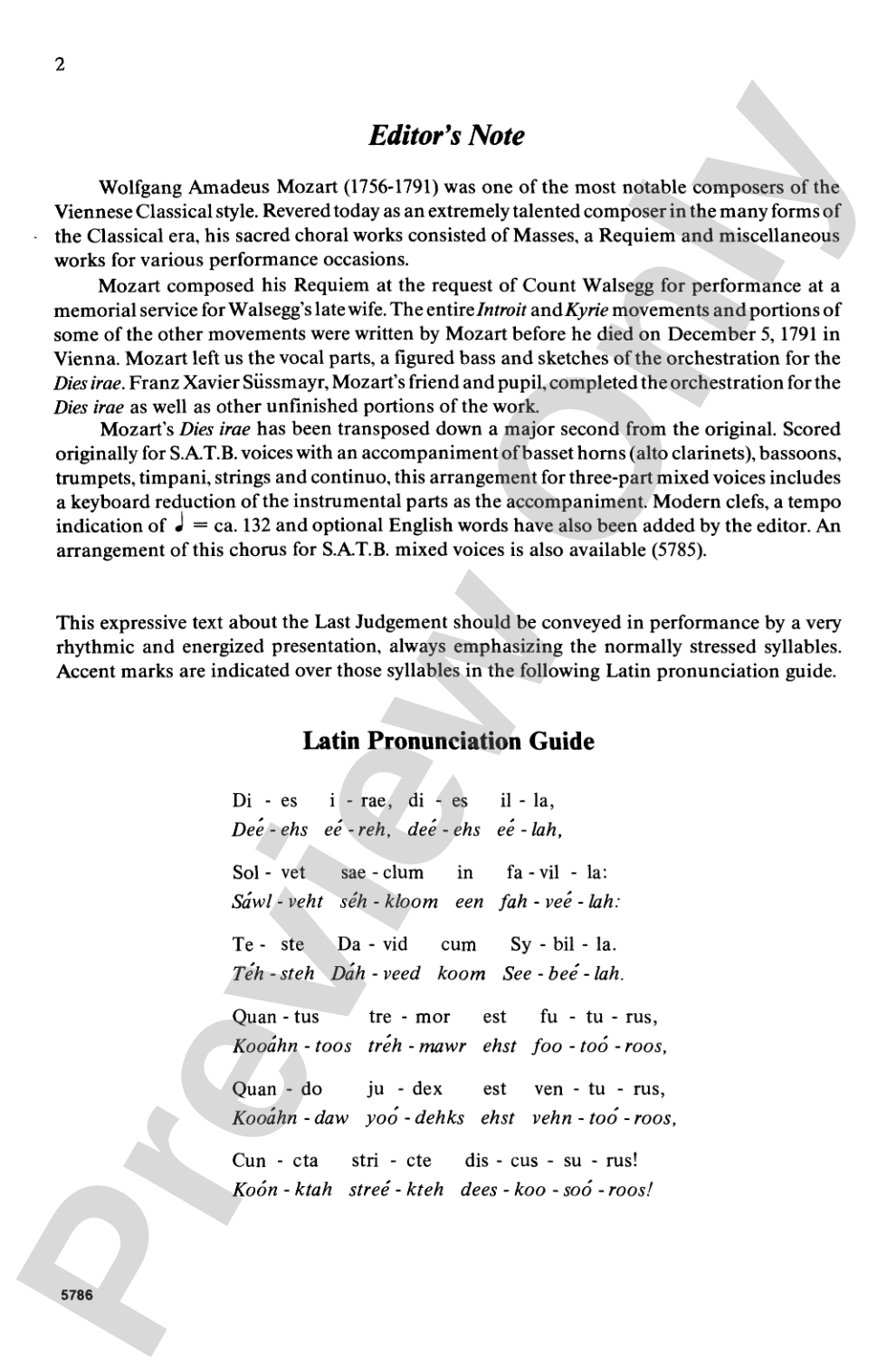
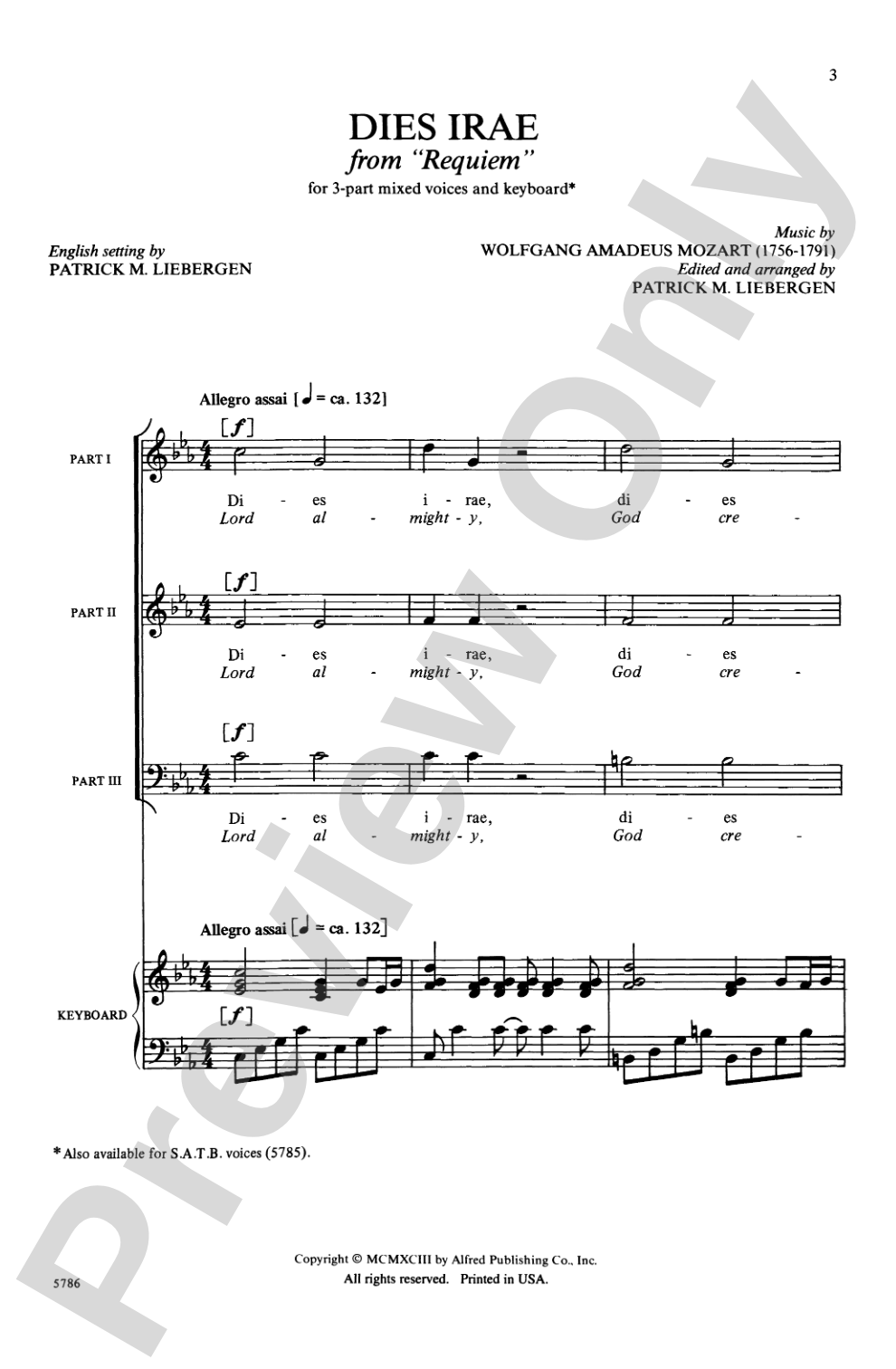
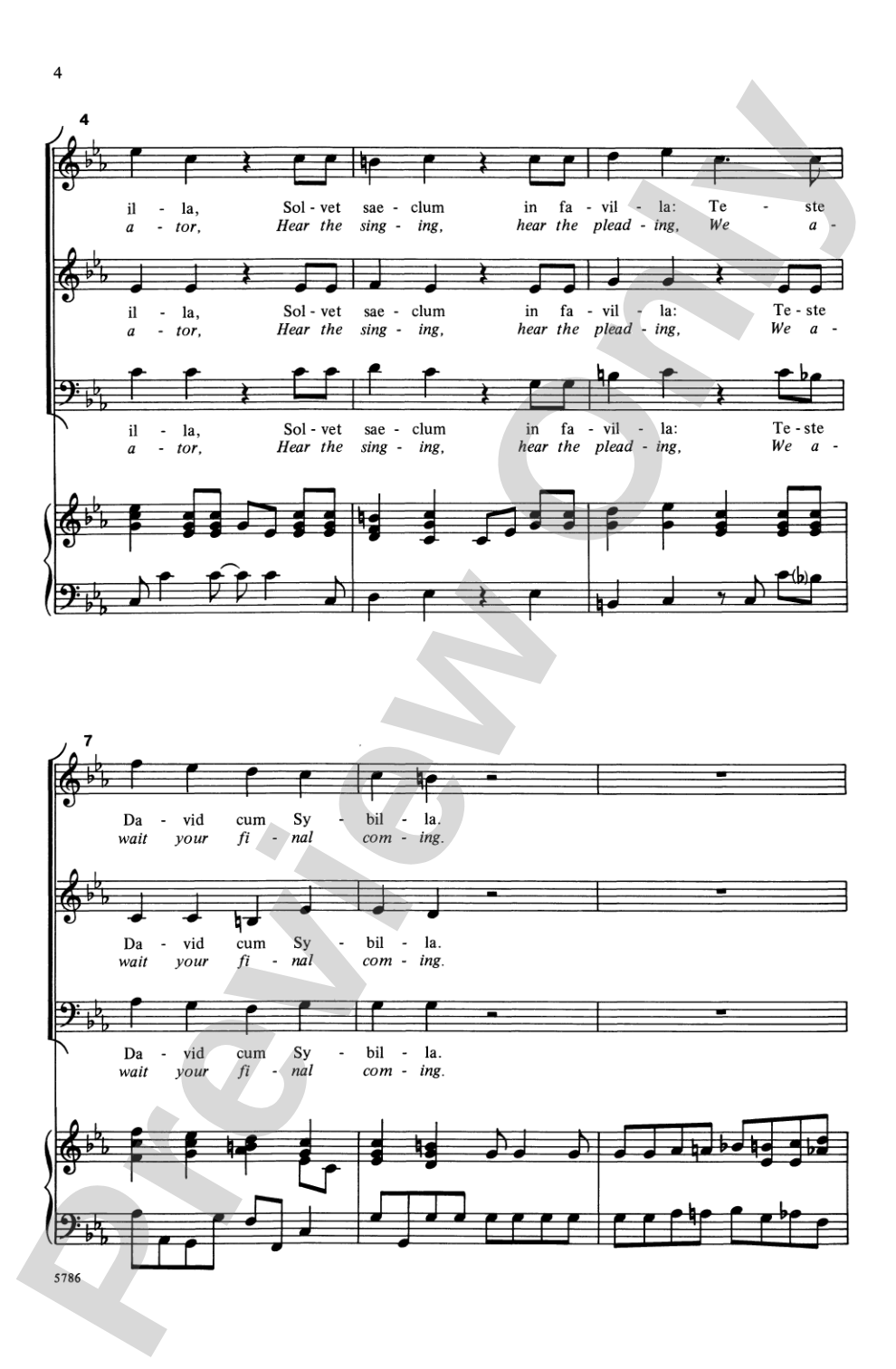
Mozart's Dies Irae has been transposed down a major second from the original. Scored originally for SATB voices with an accompaniment of basset horns (alto clarinets), bassoons, trumpets, timpani, strings, and continuo, this new edition includes a keyboard reduction of the instrumental parts as the accompaniment. Modern clefs, a tempo indication and optional English words have also been added by the editor. Also available for SATB (00-5785) and TTBB (00-34780). Featured on PianoTrax 3 Accompaniment CD (00-34744).


Dies Irae (from Requiem): 3-Part Mixed Choral Octavo isn't in MakeMusic Cloud just yet...but it could be. Let us know you'd like to see it, and you'll help shape what comes next. In the meantime, start a free trial and dive into thousands of interactive titles your students can play along with today.
Request This Title
Tell us you want it.
Start Your Free Trial
Explore everything that's ready to play right now.
Sample Audio
1
Audio File
--:--
0:00
0:00
Sample Video
No sample videos found.
Additional Details
Series:
Alfred Archive Edition: Alfred Choral Designs
Publisher:
Alfred Music
Page Count:
12
SKU:
00-PO-0003476
More about this title
About the Composer: Wolfgang Amadeus Mozart
Wolfgang Amadeus Mozart (1756-1791) composed some of the Western tradition's most enduring sacred music despite his short life. His Requiem, left incomplete at his death and finished by Franz Xaver Süssmayr, stands as one of classical music's most profound works, blending operatic drama with liturgical weight in ways that have inspired musicians for over two centuries.
Mozart's sacred compositions reveal a composer deeply versed in both church tradition and popular musical language. The Dies Irae from the Requiem exemplifies his genius for creating moments of theatrical intensity within sacred contexts, making the text visceral and immediate for performers and listeners alike.
Why we love this
This transposition opens Mozart's most celebrated requiem movement to choirs that might otherwise struggle with the original key, without sacrificing any of the music's dramatic power or harmonic sophistication. The keyboard reduction captures the orchestral drama of basset horns, trumpets, and timpani in ways that keep the accompaniment manageable for rehearsal while preserving Mozart's original orchestral concept. A piece this substantial deserves a place in any choir's concert repertoire, and this accessible voicing makes that possible.
What to expect
The Dies Irae seizes you with its opening unison cry, then unfolds in waves of harmonic intensity and dramatic gestures that feel operatic in their urgency. Mozart channels the medieval chant's apocalyptic vision through classical vocabulary, creating moments of tender polyphony interrupted by shouts of judgment and fear. The transposition preserves the music's visceral power while making it singable for ensembles without dramatic soprano soloists.
Who it's for
Three-part mixed choirs looking to perform substantial sacred repertoire at festival or concert level will find this scoring workable without compromising Mozart's musical intentions. Advanced high school choirs and collegiate ensembles benefit from the accessible voicing while still engaging with one of classical music's masterworks. Solo singers preparing for auditions or recitals can also draw from this version for ensemble work.
How to get the most out of it
- Establish the dramatic opening unison gesture with absolute precision in rhythm and vowel shape; this moment sets the entire emotional tone for the piece
- Balance the three parts carefully during harmonized sections so that no single line drowns out the harmonic progression; Mozart's voice-leading is intricate and demands clarity
- Use the keyboard accompaniment to anchor tempo and support pitch, but pull back in volume during the most intense unison passages so the choir's voices carry the drama
- Attend closely to the text declamation in both Latin and English; clear pronunciation of the Latin words enhances the piece's liturgical weight and emotional impact
How to use it
Program this as the centerpiece of a concert exploring sacred choral literature from the baroque through romantic eras, pairing it with smaller a cappella motets for textural variety. It works particularly well as the climactic work on a spring or winter concert, where its length and emotional range command full audience attention. For festival competition, the piece demonstrates technical facility and musical maturity without requiring a full orchestra.
Skills your students will build
- Singing sustained unison passages with rhythmic cohesion and consistent vowel quality
- Balancing three-part harmony in both homorhythmic and imitative textures
- Shaping dramatic phrasing across longer musical phrases while maintaining textual clarity
- Sight-reading classical harmonic progressions and understanding voice-leading conventions
- Performing in Latin with accurate diction and understanding liturgical text meaning