

Dies Irae (from Requiem): TTBB Choral Octavo
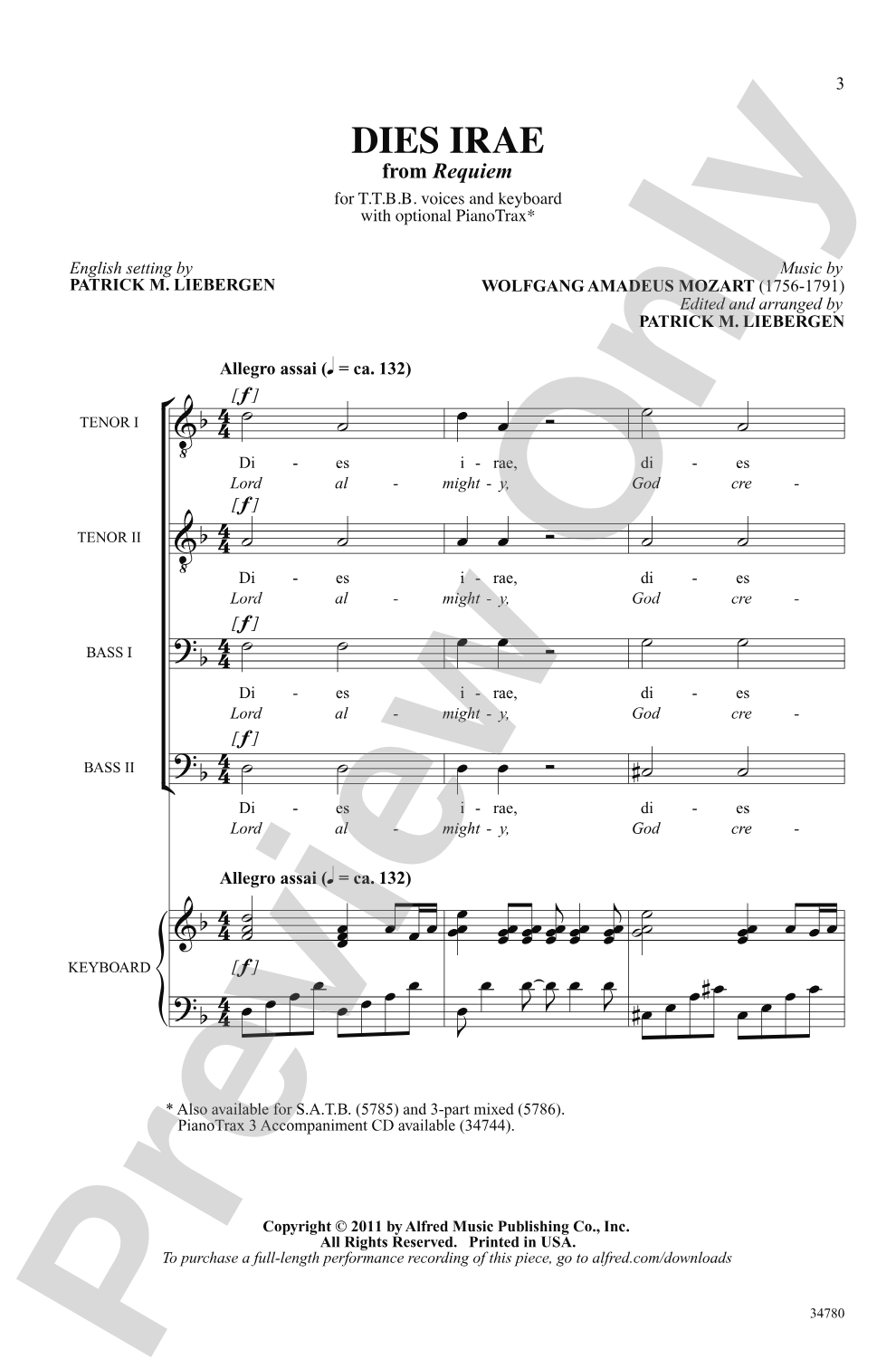
Music by Wolfgang Amadeus Mozart / ed. and arr. Patrick M. Liebergen
Item: 00-PO-0000878

$1.80
Minimum order quantity: 20 copies
Pickup currently not available
Related Items
Dies Irae (from Requiem): 3-Part Mixed Choral Octavo |
$2.05
|
View | |
Dies Irae (from Requiem): PianoTrax Digital Download |
$9.99
|
View | |
Dies Irae (from Requiem): SATB Choral Octavo |
$2.05
|
View | |
Dies Irae (from Requiem): 3-Part Mixed Choral Octavo |
$2.05
|
View | |
Dies Irae (from Requiem): TTBB Choral Octavo |
$1.80
|
View |
Description
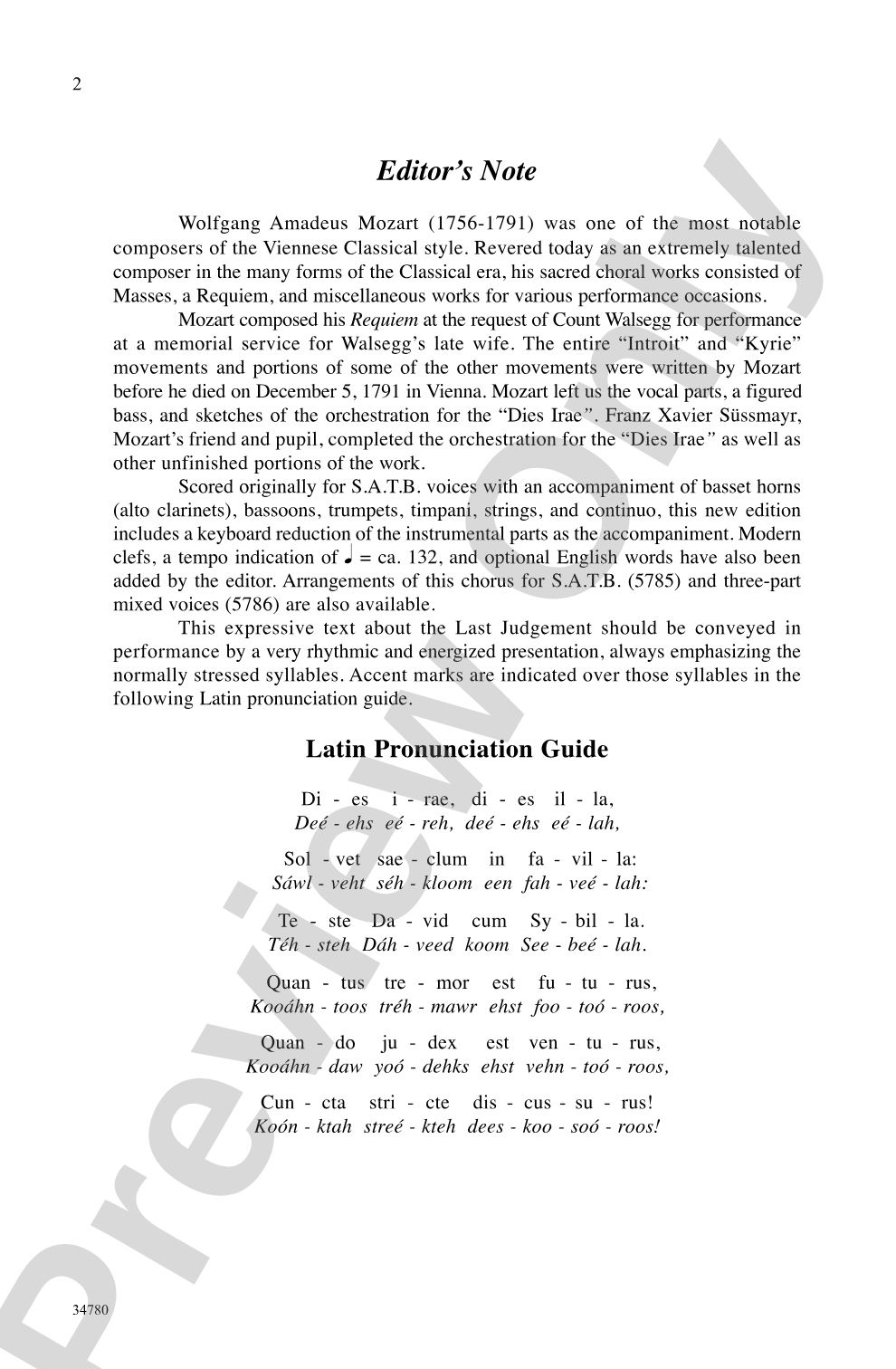
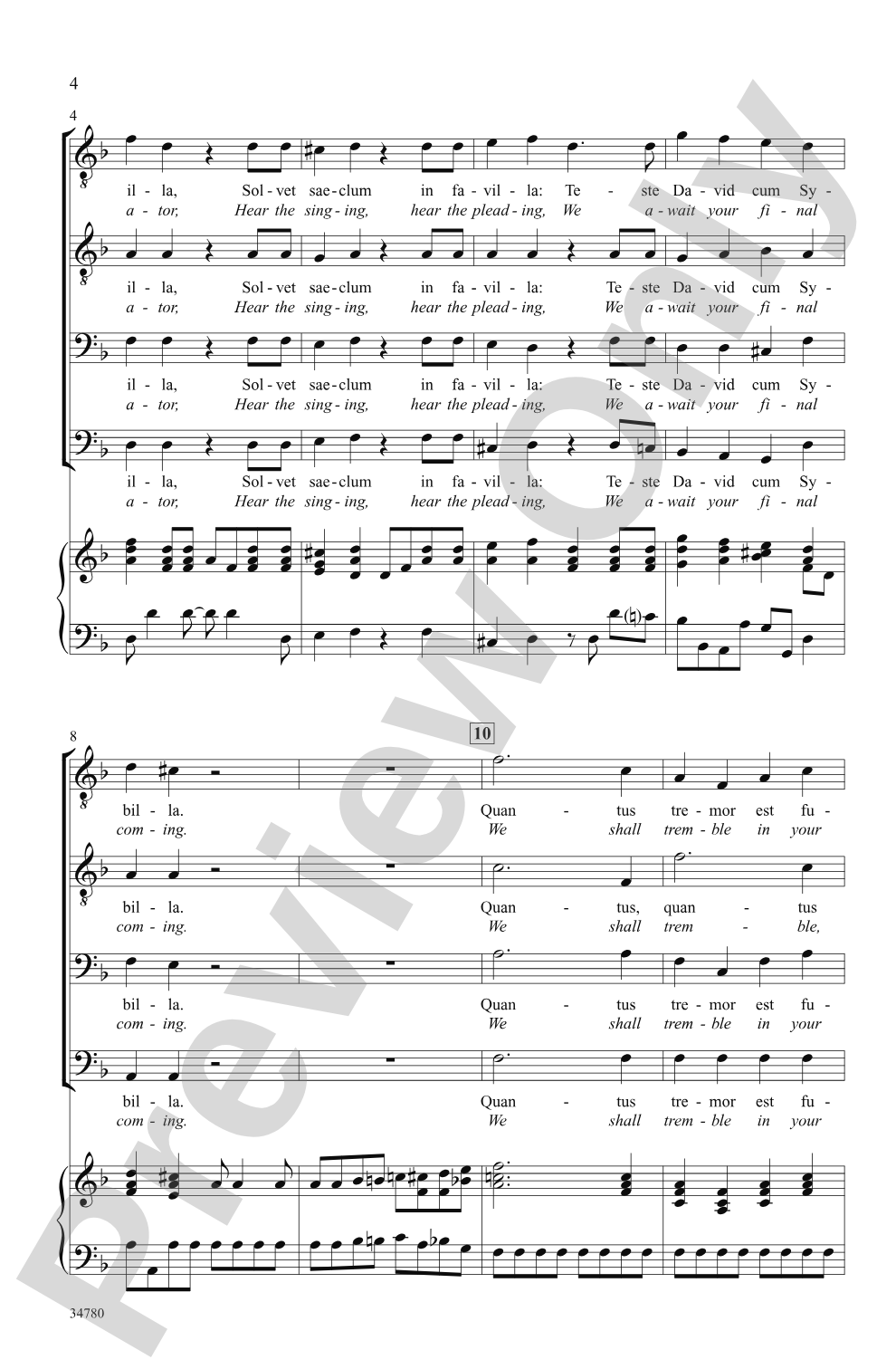
Originally scored for mixed voices with a chamber accompaniment, this new TTBB edition includes a keyboard reduction of the instrumental parts, modern clefs, a tempo indication, a Latin pronunciation guide, and optional English words. Also available for SATB (00-5785) and 3-Part Mixed (00-5786). Featured on PianoTrax 3 Accompaniment CD (00-34744).


Don't just read it, hear it, play along with it, and watch your students grow with it. In MakeMusic Cloud, Dies Irae (from Requiem): TTBB Choral Octavo comes alive with professional accompaniment, adjustable tempo, and built-in practice tools that turn solo practice into real progress.
Open in the Player
Jump straight in and assign it today.
Start Your Free Trial
Open this title and explore the full library in minutes.
Sample Audio
1
Audio File
--:--
0:00
0:00
Sample Video
No sample videos found.
Additional Details
Series:
Alfred Choral Designs
Publisher:
Alfred Music
Page Count:
12
SKU:
00-PO-0000878
More about this title
About the Composer: Wolfgang Amadeus Mozart
Wolfgang Amadeus Mozart (1756-1791) composed some of the most enduring sacred music in the Western canon, balancing profound spiritual depth with the formal elegance of the Classical era. His Requiem, left incomplete at his death and finished by Franz Xaver Süssmayr, stands as one of his final and most ambitious works. The Dies Irae section captures Mozart's gift for blending dramatic intensity with contrapuntal sophistication, making it a cornerstone of choral repertoire across multiple voicings.
Why we love this
This TTBB edition unlocks Mozart's masterwork for tenor-bass ensembles without sacrificing the architectural weight of the original. The keyboard reduction keeps the musical integrity intact while making rehearsal and performance practical, and the addition of a Latin pronunciation guide and optional English text removes common barriers to polished execution.
What to expect
Dramatic and urgent, yet deeply introspective. Mozart's setting balances forward momentum with harmonic richness, moving between moments of austere counterpoint and passages of almost orchestral density. The low register of TTBB voices lends the text a grounded, solemn weight that suits its meaning.
Who it's for
This edition suits advanced TTBB ensembles, college and high school men's choirs, and professional vocal groups seeking substantial Sacred repertoire. It works equally well for festival competition, concert programming, or liturgical settings where the Dies Irae is appropriate.
How to get the most out of it
- Balance the dramatic opening figures between tenor and baritone lines; neither voice should dominate, but both must cut through the keyboard accompaniment.
- Shape the text phrasing across full phrases rather than stopping at bar lines; the Latin prosody will guide your phrasing naturally if you keep the underlying harmonic motion alive.
- Work the keyboard part separately with your accompanist first so they understand how it doubles and supports each voice part, then integrate it gradually during full rehearsals.
- Take care with the rapid text underlay in passages with melismatic writing; mark your pronunciation guide clearly and isolate those measures in sectional rehearsals.
How to use it
Program this as a centerpiece for a concert focused on sacred masterworks, or pair it with other sections of Mozart's Requiem in different voicings to show the work's scope. Its twelve pages and moderate length make it suitable for spring concert programming or festival competition where substantial repertoire is expected but rehearsal time is limited.
Skills your students will build
- Latin text articulation and pronunciation
- Four-part writing in low register (counter-tenor, baritone, bass ranges)
- Sustaining dramatic tension across longer phrases
- Balancing block harmony with moments of independent voice leading
- Coordination with keyboard accompaniment in dense textures