
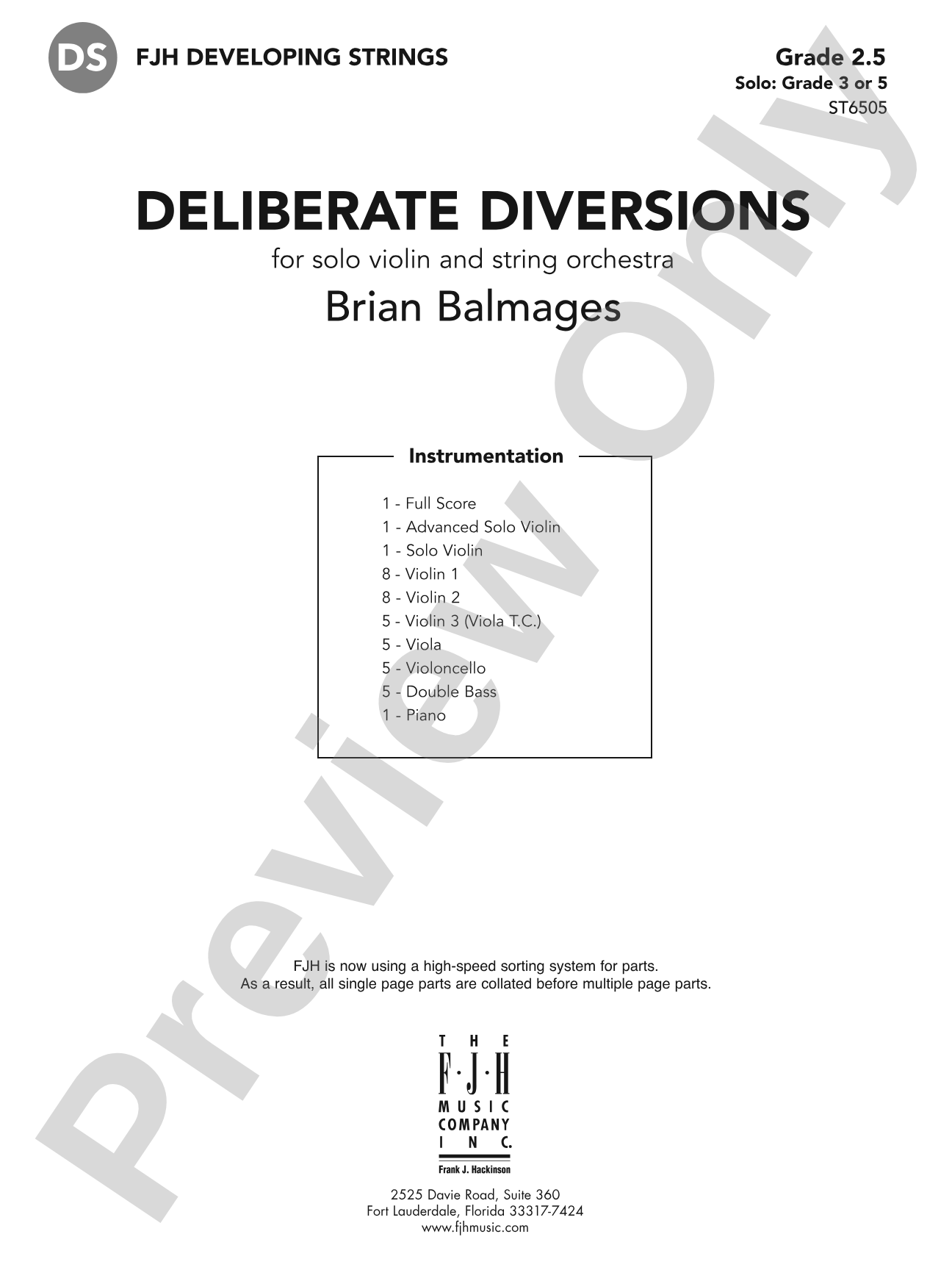
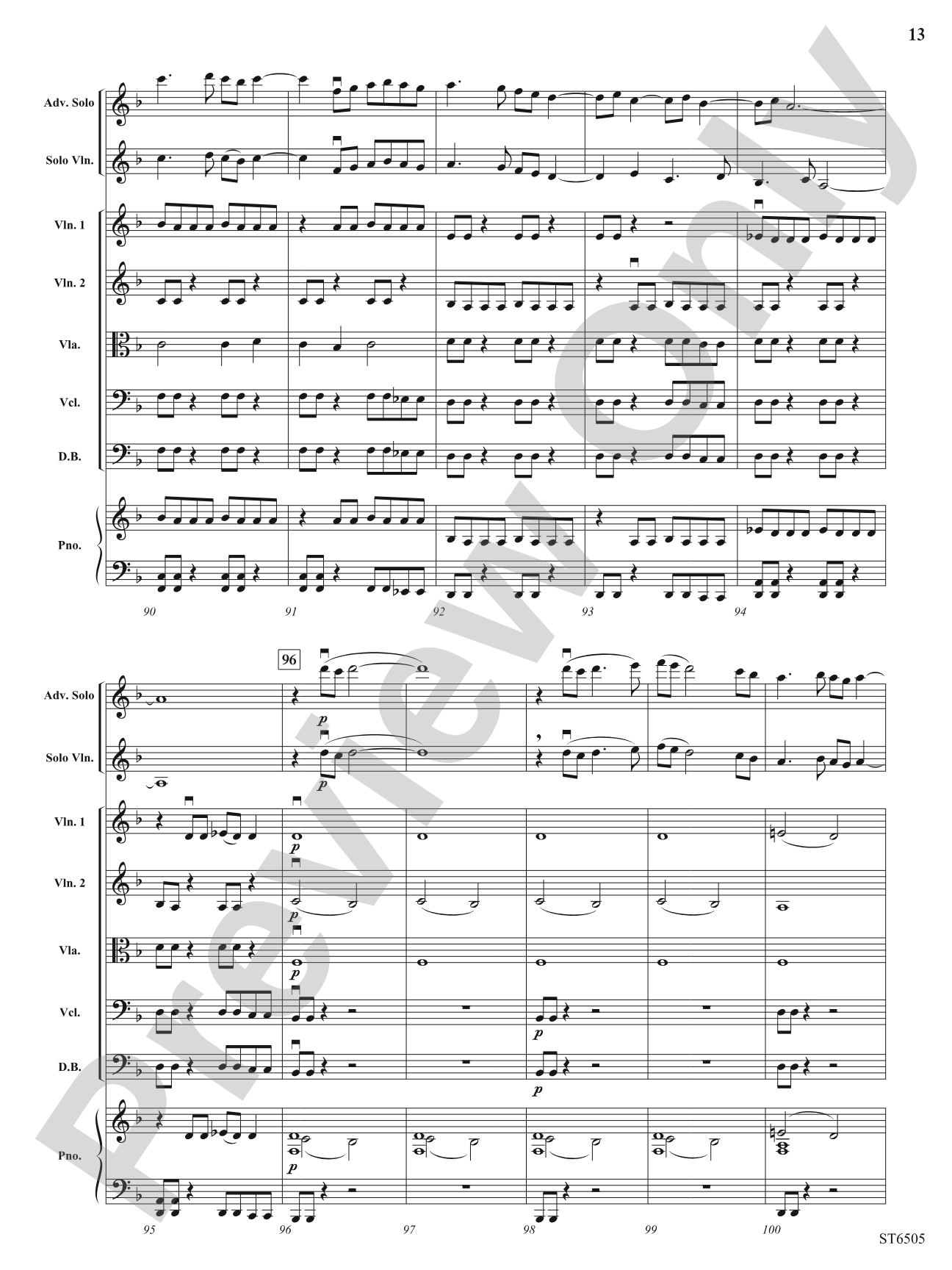
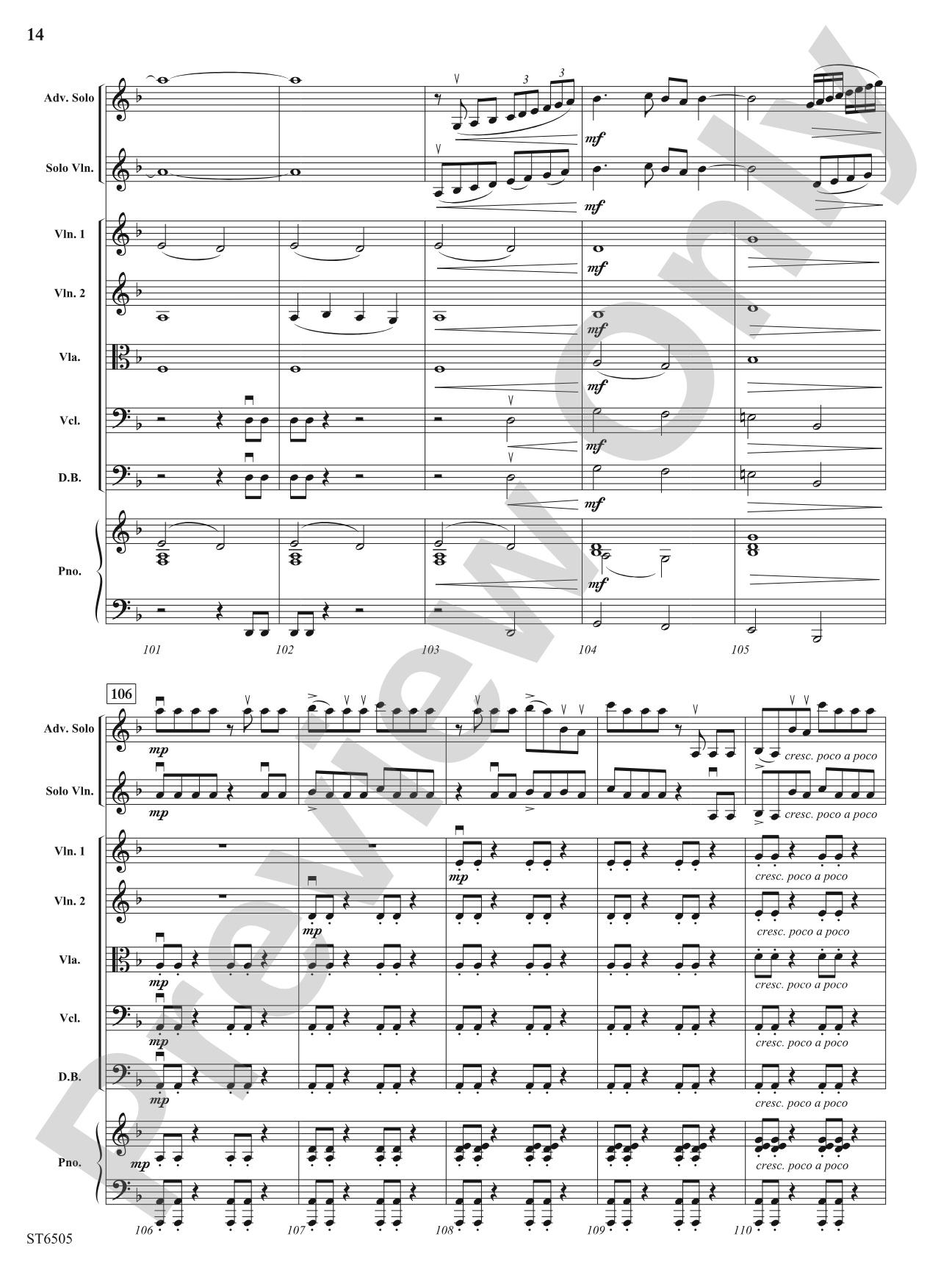
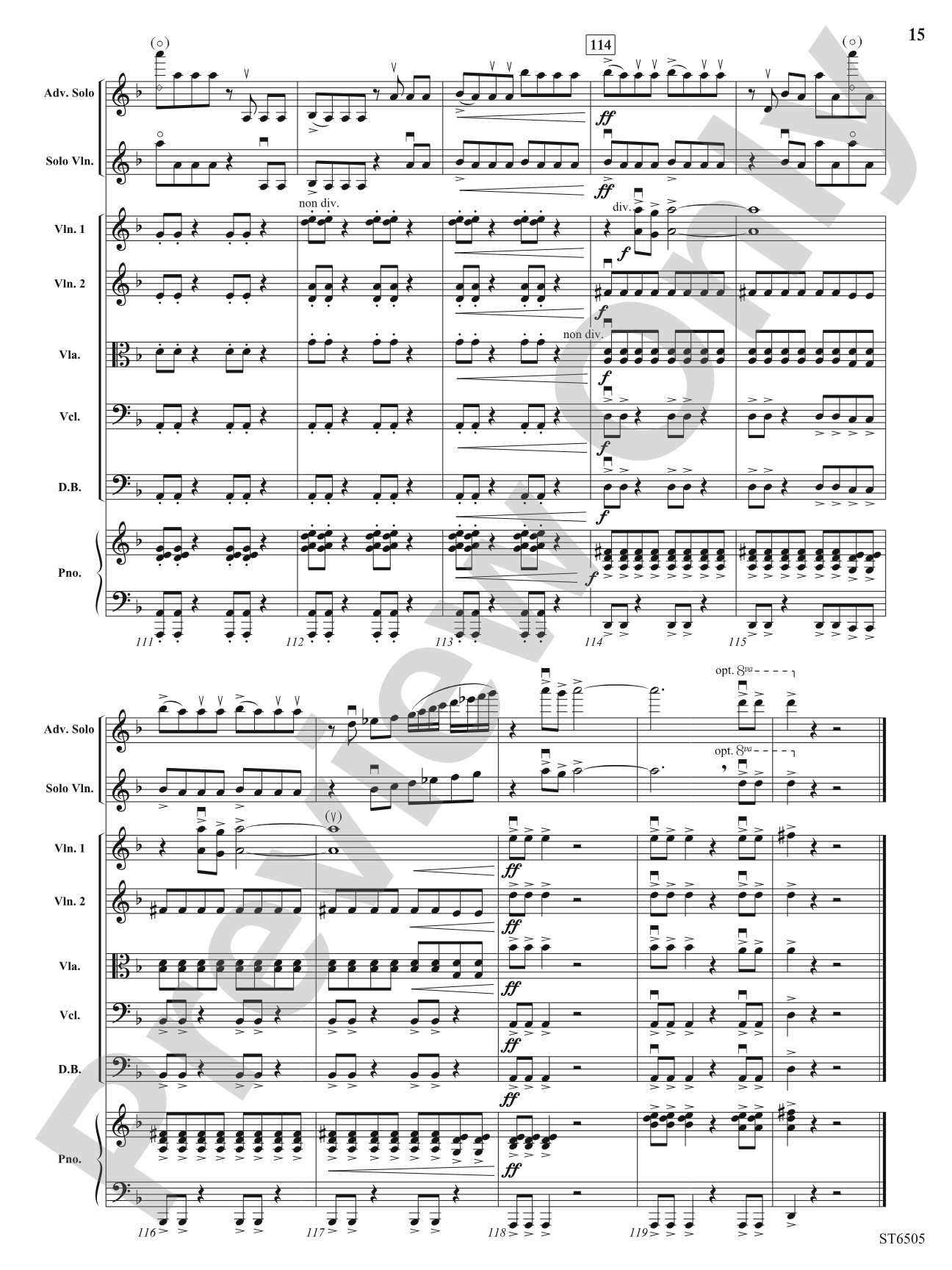

Deliberate Diversions: String Orchestra Conductor Score & Parts
By Brian Balmages
Grade: 2.5
Item: 98-DST6505
$60.00
Pickup currently not available
Buy Extra Parts (Digital PDF Download)
| Product | Price | Quantity |
|---|---|---|
| Deliberate Diversions: Score | $6.00 | |
| Deliberate Diversions: Advanced Solo Violin | $7.00 | |
| Deliberate Diversions: Solo Violin | $7.00 | |
| Deliberate Diversions: Violin 1 | $7.00 | |
| Deliberate Diversions: Violin 2 | $7.00 | |
| Deliberate Diversions: Violin 3 (Viola T.C.) | $7.00 | |
| Deliberate Diversions: Viola | $7.00 | |
| Deliberate Diversions: Violoncello | $7.00 | |
| Deliberate Diversions: Double Bass | $7.00 | |
| Deliberate Diversions: Piano | $7.00 |
Parts Added to Cart!
Description
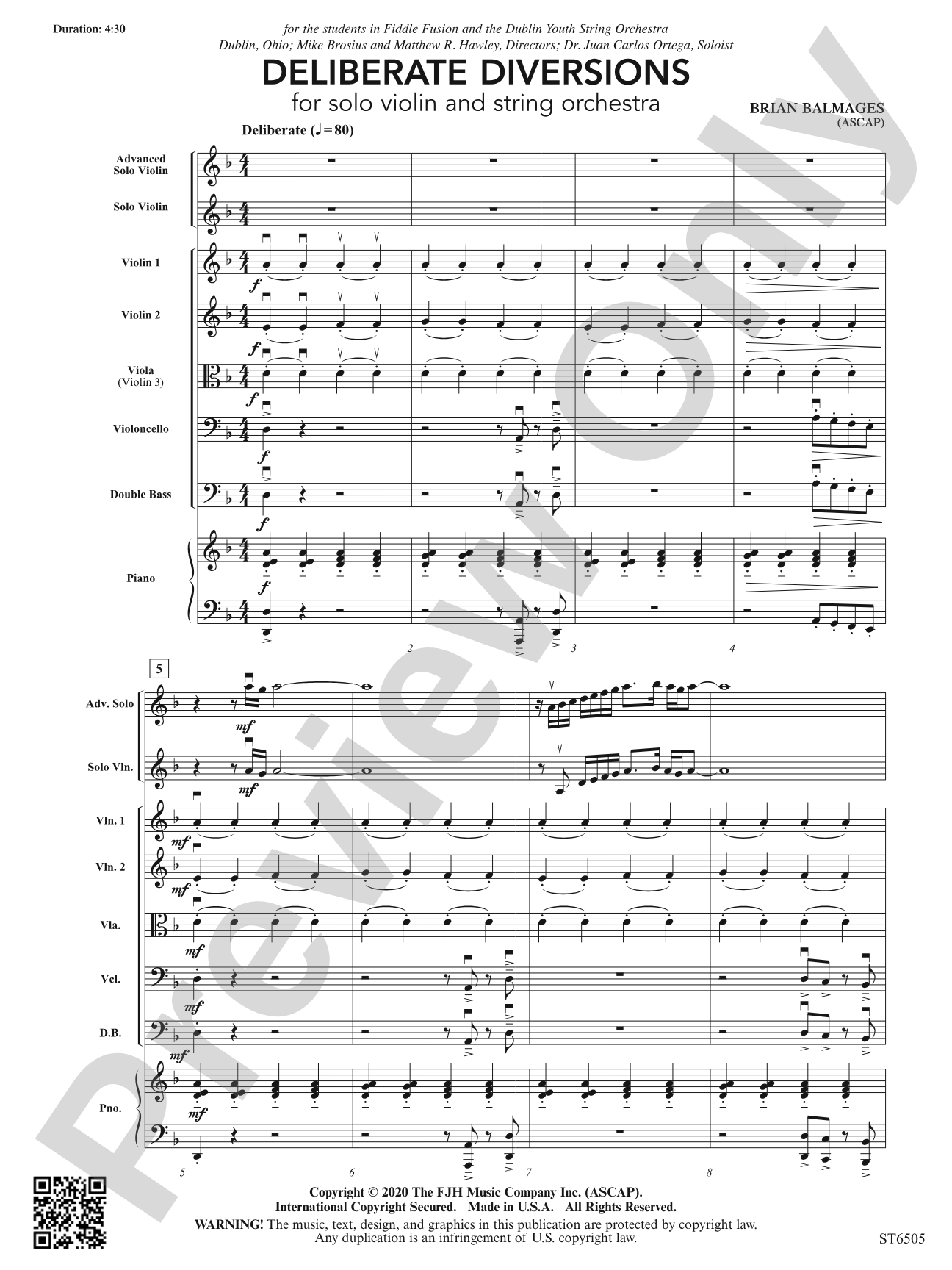
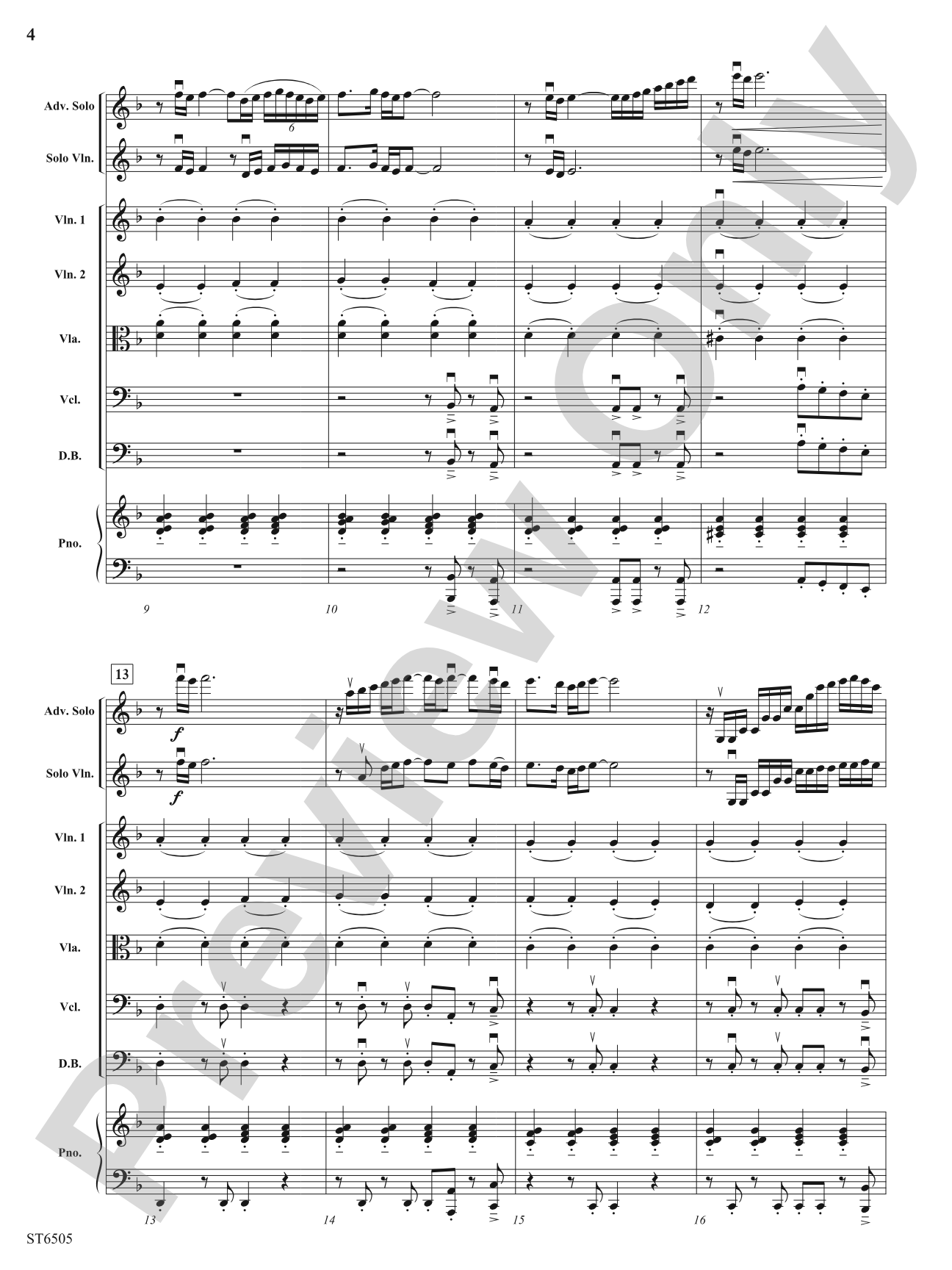
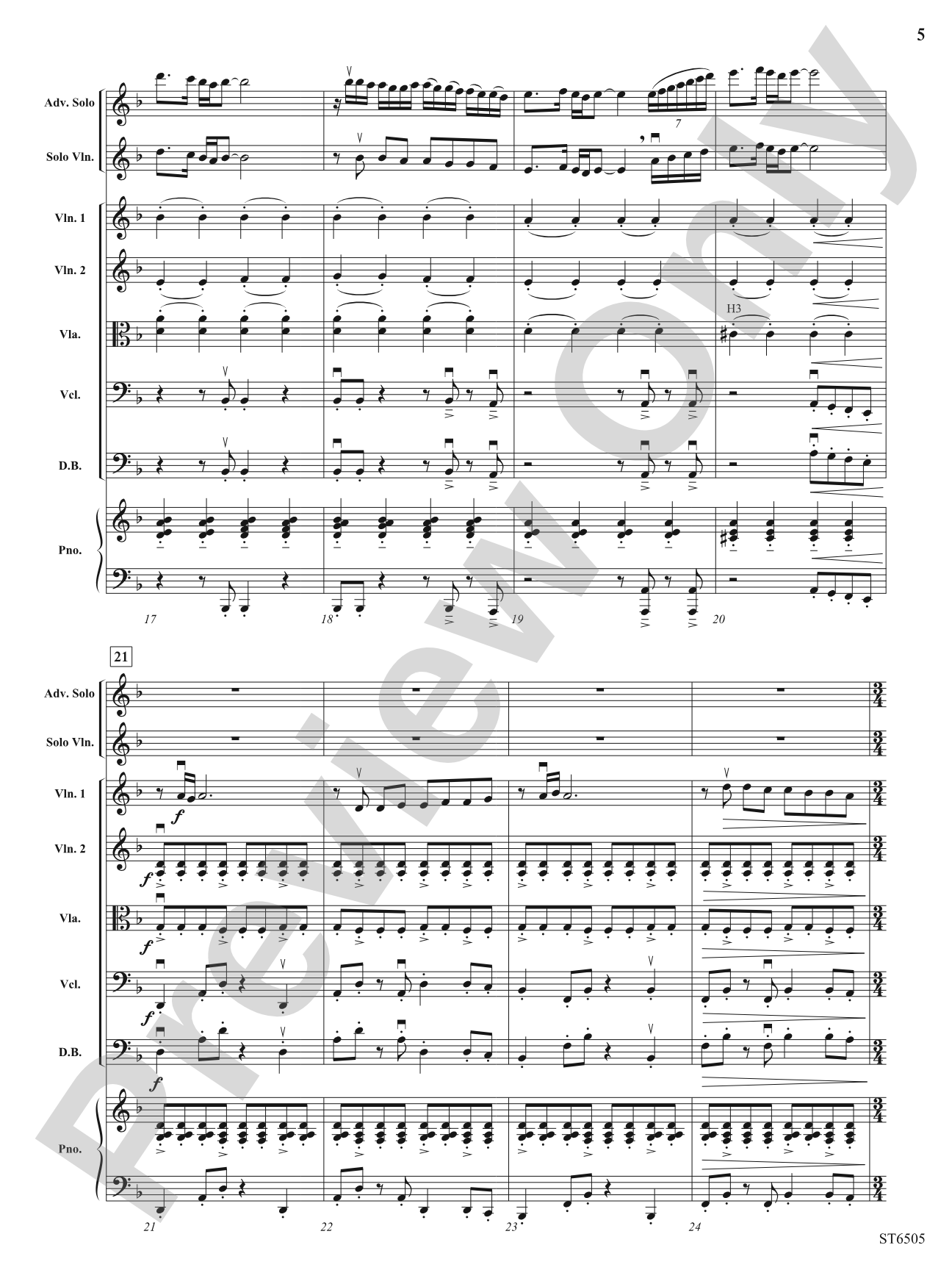
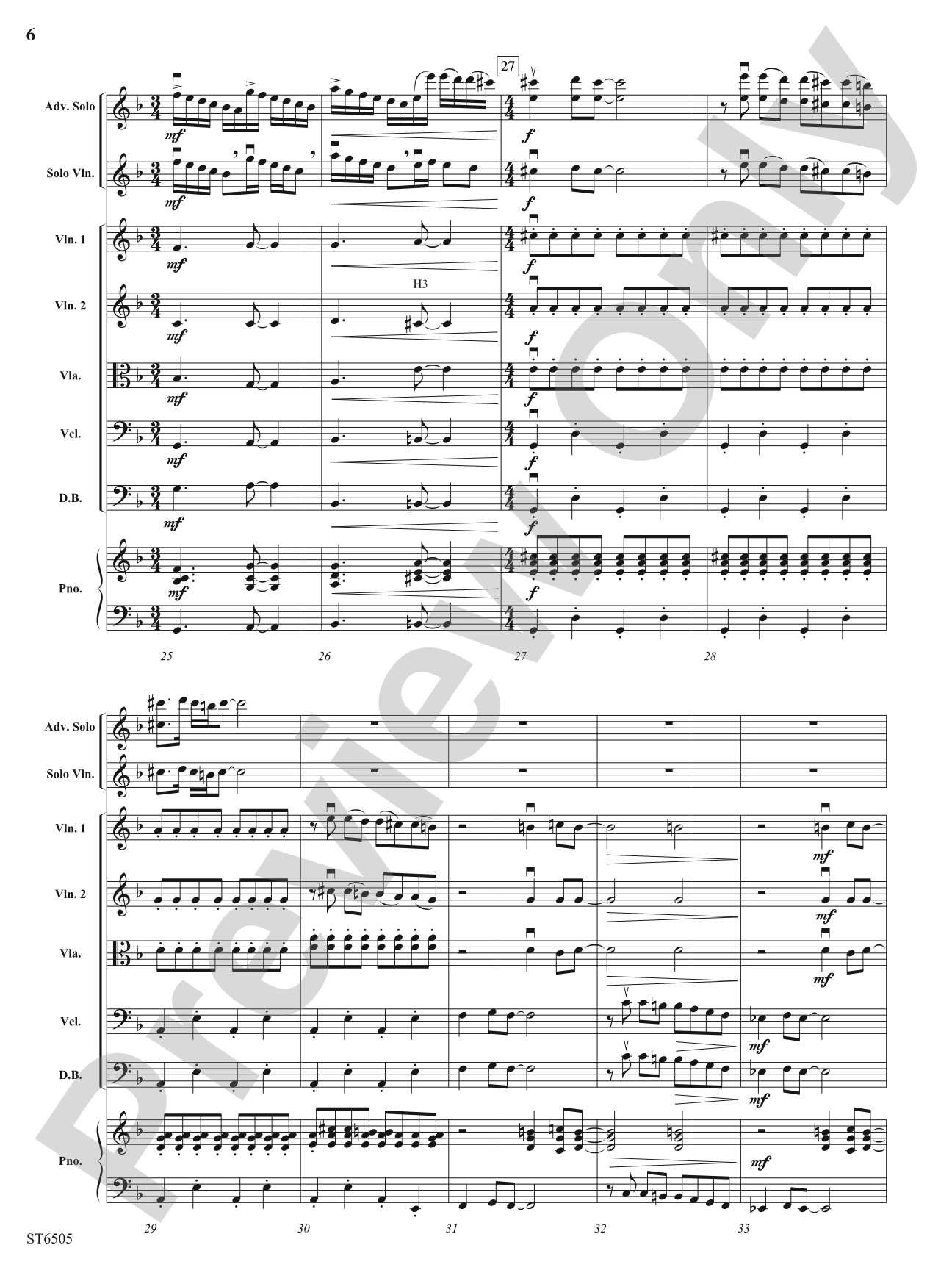
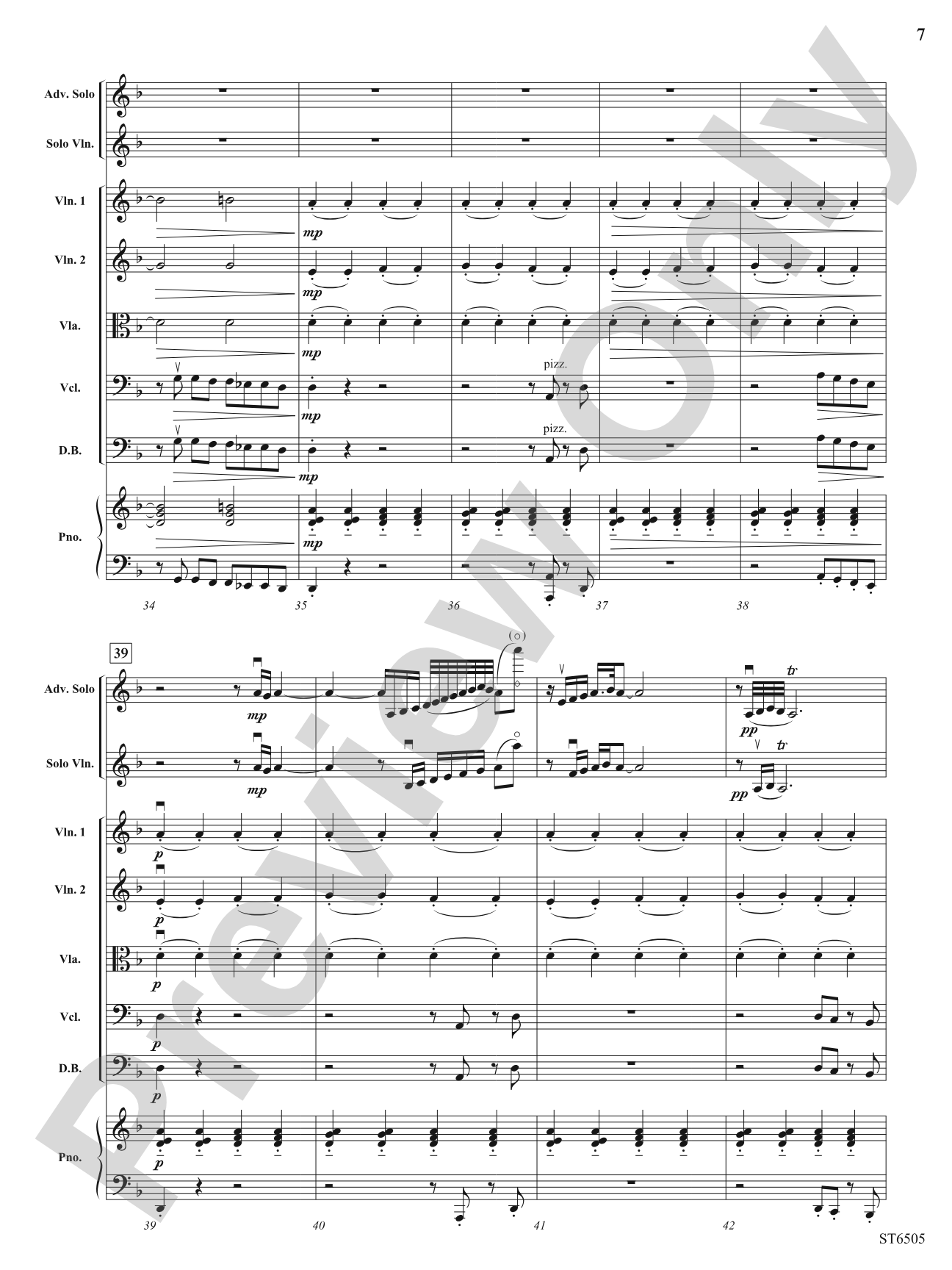
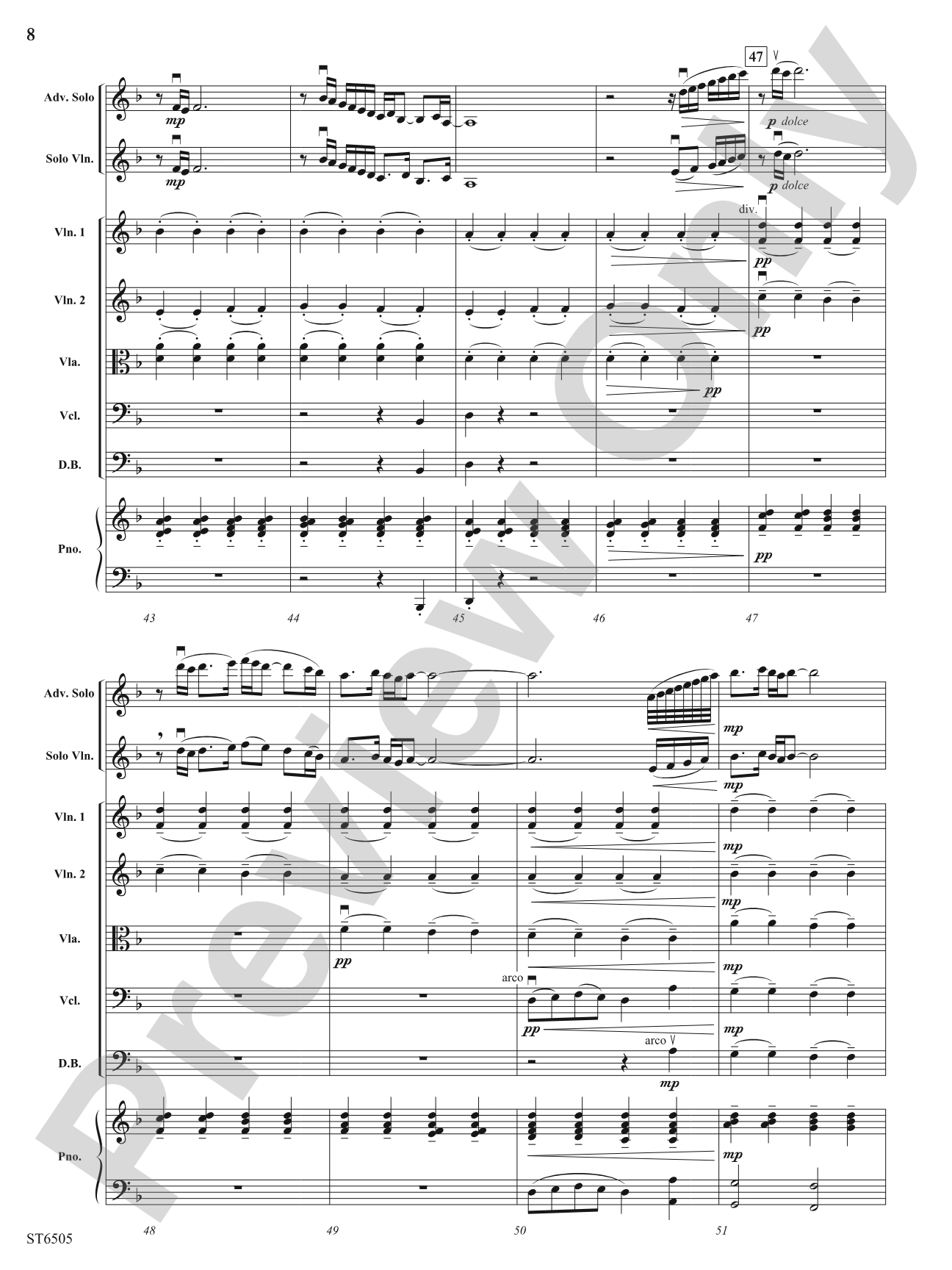
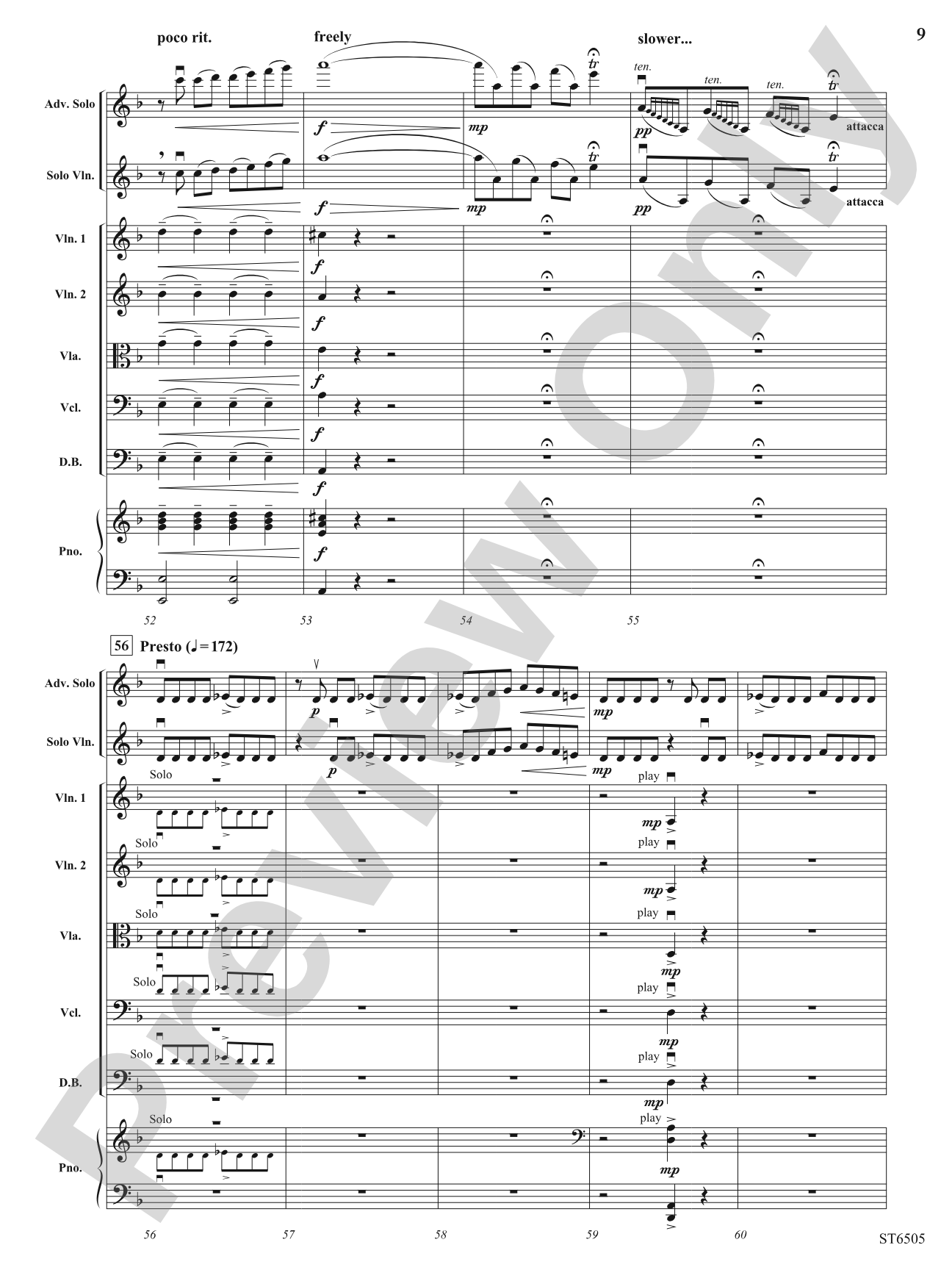
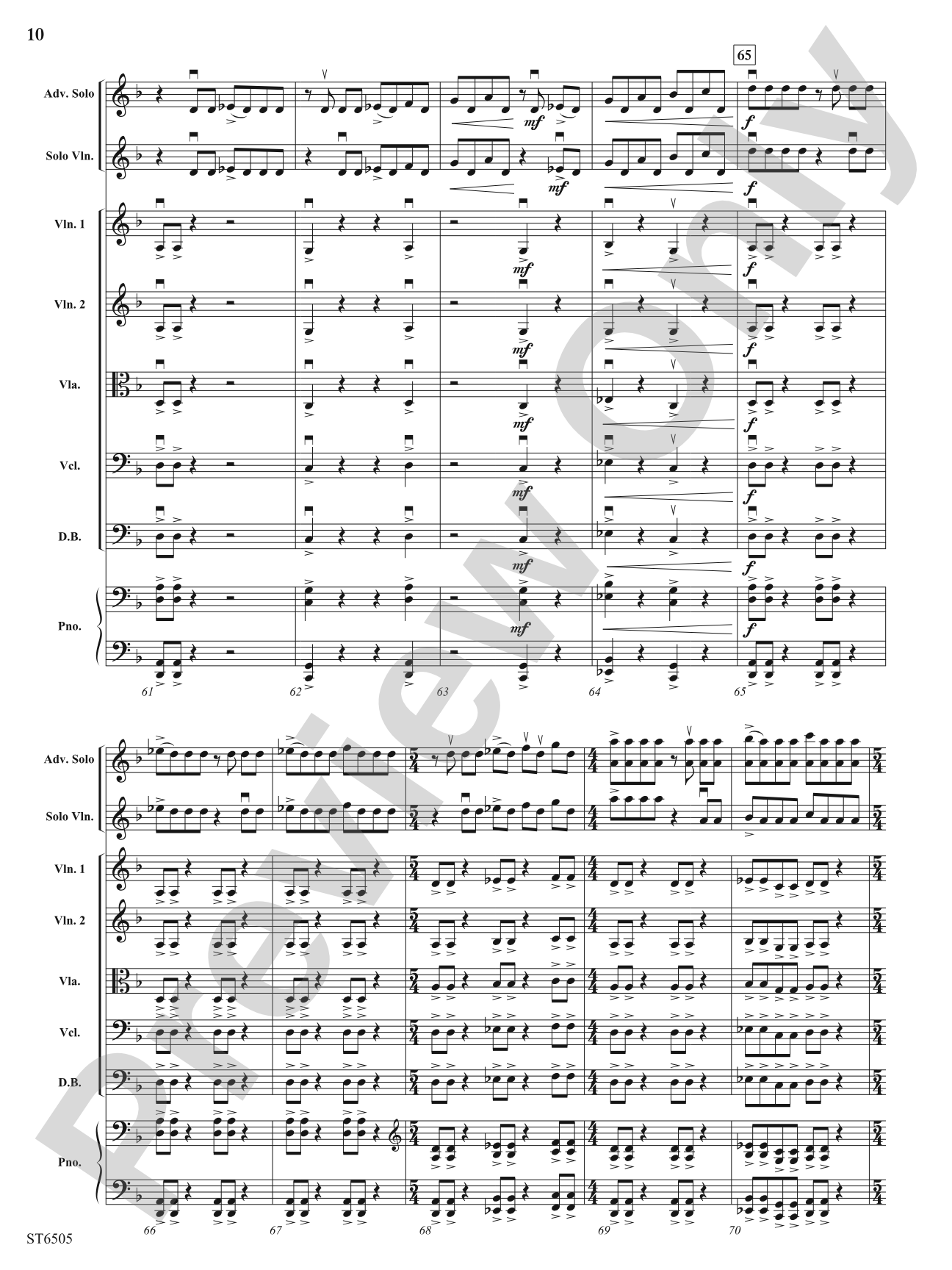
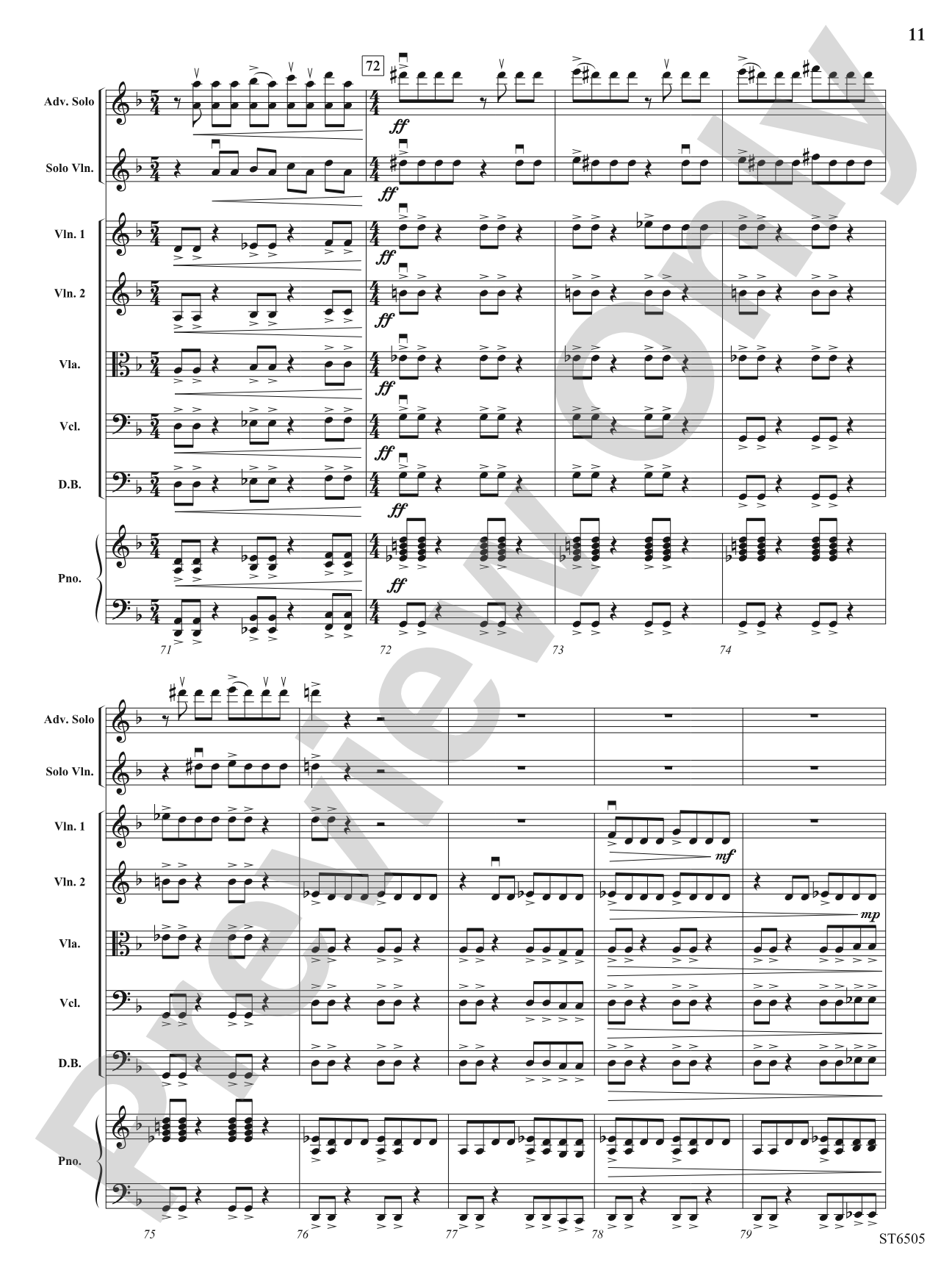
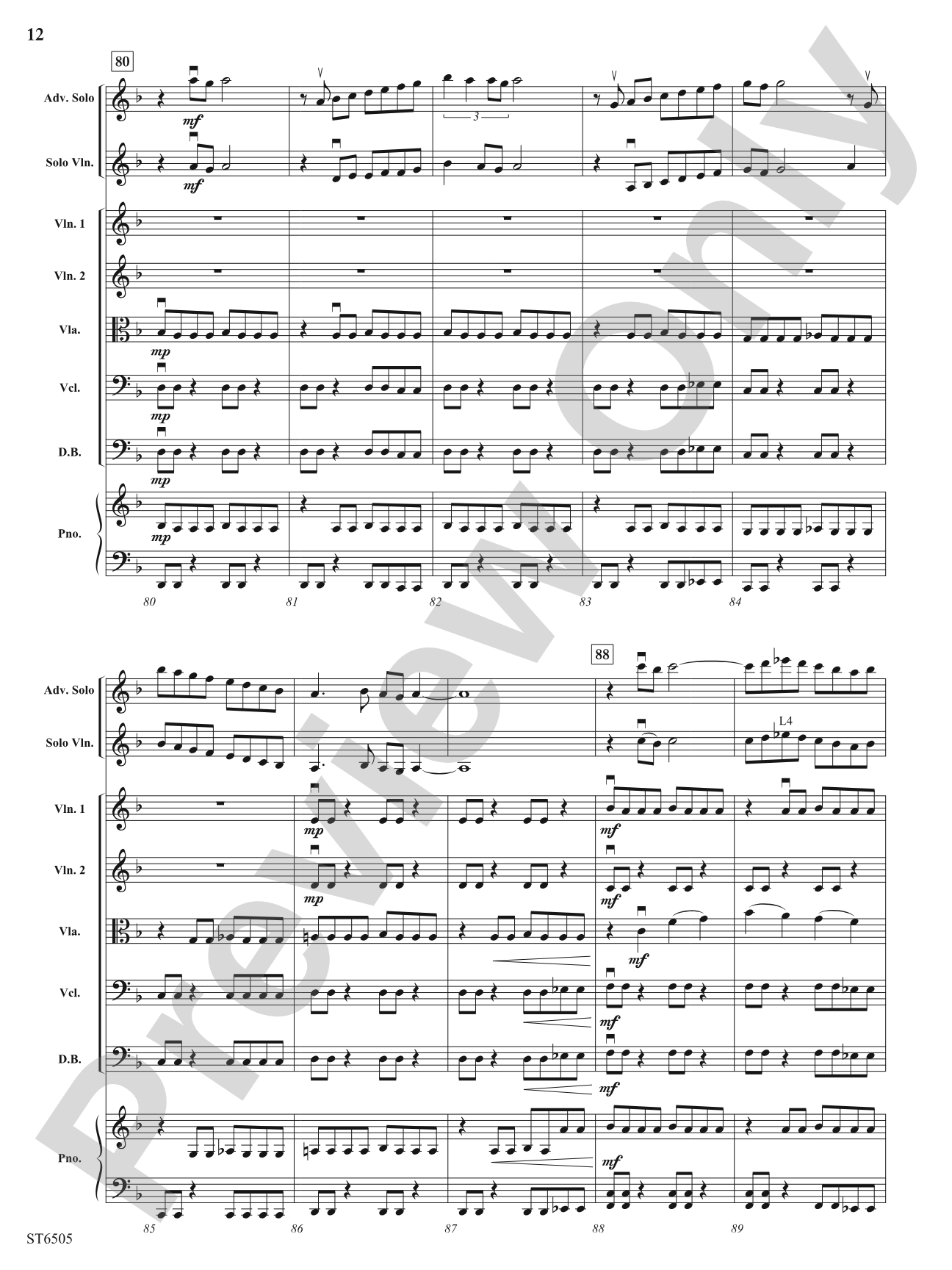
Feature a guest artist or star student in this piece that includes an advanced level violin solo along with a more approachable solo for the younger, yet ambitious student. Well within the technical grasp of young orchestras, the music is designed to allow the soloist to display both technique and lyricism as the piece moves through a series of "diversions" held together by a common theme. Inspiring for your students and your audience!


Deliberate Diversions: String Orchestra Conductor Score & Parts isn't in MakeMusic Cloud just yet...but it could be. Let us know you'd like to see it, and you'll help shape what comes next. In the meantime, start a free trial and dive into thousands of interactive titles your students can play along with today.
Request This Title
Tell us you want it.
Start Your Free Trial
Explore everything that's ready to play right now.
Sample Audio
1
Audio File
--:--
0:00
0:00
Sample Video
Additional Details
Series:
FJH Developing Strings
Publisher:
The FJH Music Company, Inc.
SKU:
98-DST6505
More about this title
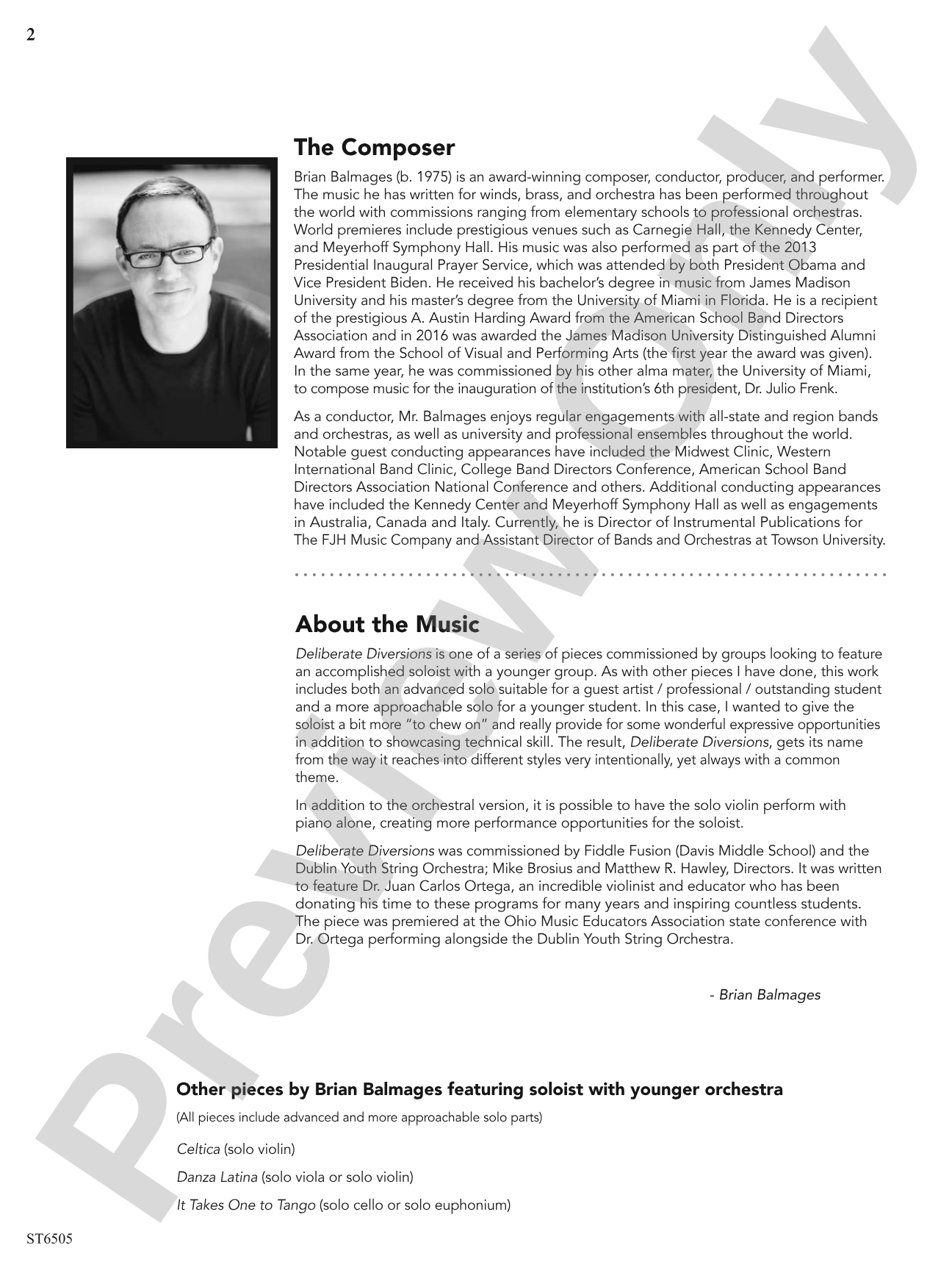
About the Composer: Brian Balmages

Brian Balmages has built a reputation as a composer and conductor equally comfortable in orchestral, band, and chamber settings. His works have appeared in premier venues including Carnegie Hall, the Kennedy Center, and the Sydney Opera House, performed by ensembles ranging from professional symphony orchestras to school groups. He holds membership in the American Bandmasters Association and received the A. Austin Harding Award from the American School Band Directors Association.
Balmages won the 2020 NBA William D. Revelli Composition Contest for his work Love and Light and has received commissions from major institutions including the University of Miami, where he composed for the inauguration of the university's sixth president. His music was performed at the 2013 Presidential Inaugural Prayer Service. As a conductor, he appears regularly at all-state ensembles, university orchestras, and professional groups worldwide, with notable guest conducting engagements at the Midwest Clinic, Western International Band Clinic, and numerous state and regional conferences.
Why we love this
The dual-solo structure lets you showcase two students at very different points in their development, each with music genuinely written for their level. Rather than cramming an advanced passage into a grade 2.5 piece, Balmages creates distinct musical moments that feel equally important, and the shared thematic material binds the work together so both soloists contribute meaningfully to a coherent whole.
What to expect
Buoyant and playful, with episodes that shift in character as the piece travels through its diversions. The music balances brightness with moments of genuine lyricism, creating a performance that feels both spirited and musical rather than merely showy.
Who it's for
Directors who have at least one advanced young violinist ready for a featured role and a second ambitious player eager to carry a solo passage. String orchestras at the grade 2 to 3 level will find the accompaniment well within reach while the soloists have space to demonstrate growth.
How to get the most out of it
- Establish the common theme clearly with the ensemble before bringing in the soloists, so the audience hears it as the musical anchor that returns throughout each diversion.
- Balance the advanced soloist's technical displays against the accompaniment; these moments should sparkle without drowning out the supporting voices.
- Give the younger soloist time in rehearsal to find comfort with their material; the lyricism matters more than flashiness at this level.
- Use sectional rehearsals to lock the transitions between diversions, ensuring the ensemble supports each soloist cleanly as the piece pivots from one section to the next.
How to use it
Slot this into a concert where you want to celebrate individual achievement without overshadowing the ensemble's contribution. It works especially well in a spring or end-of-year program where recognition of specific students feels natural, or in a pops concert where its accessible charm and approachable virtuosity engage family audiences.
Skills your students will build
- Playing unified accompaniment figures while tracking exposed soloists
- Executing clean ensemble transitions between contrasting musical sections
- Developing violin solo technique across varying technical demands
- Balancing lyricism with rhythmic precision in ensemble passages
- Listening actively to soloists and responding as an accompaniment body