
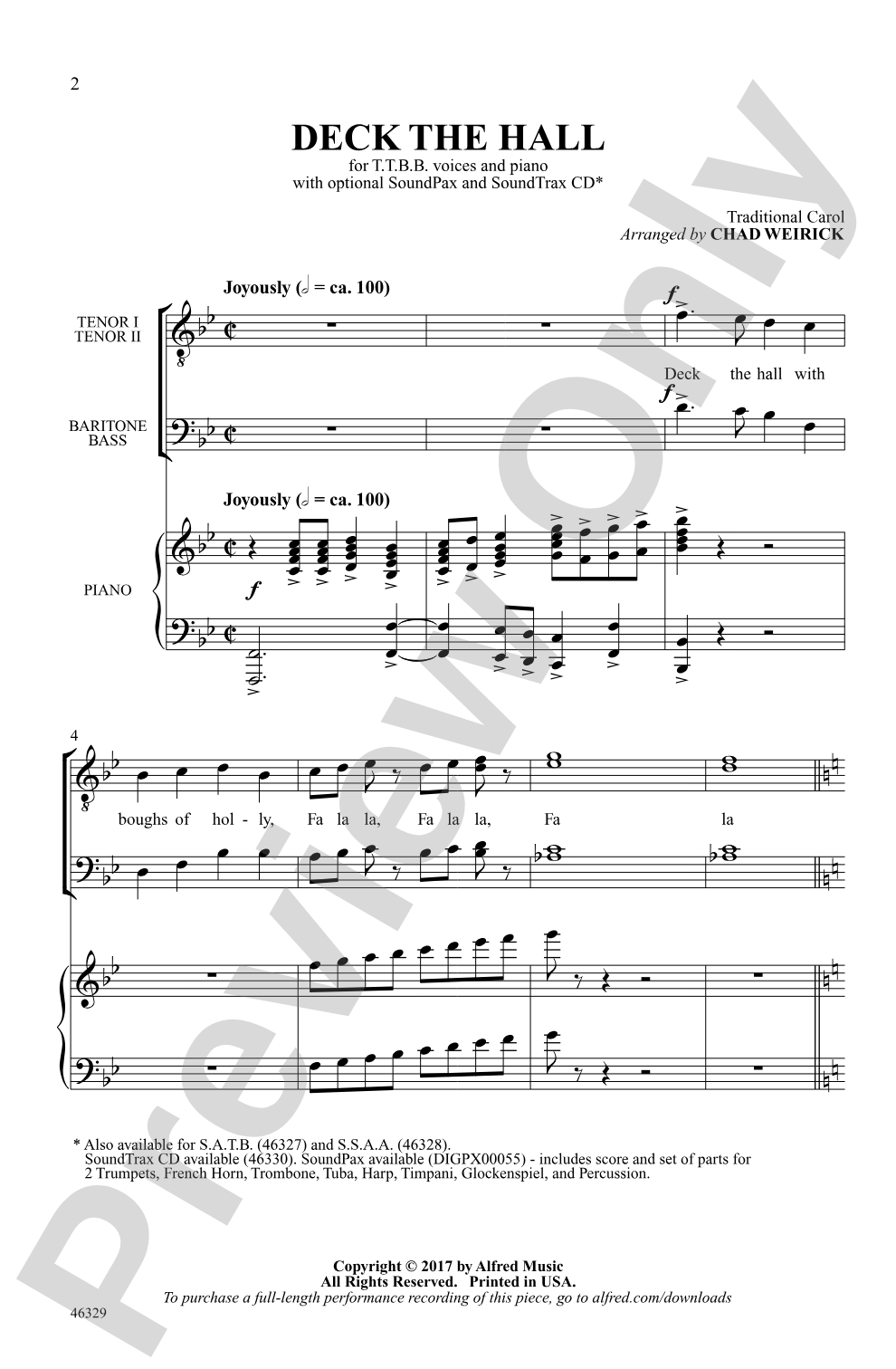
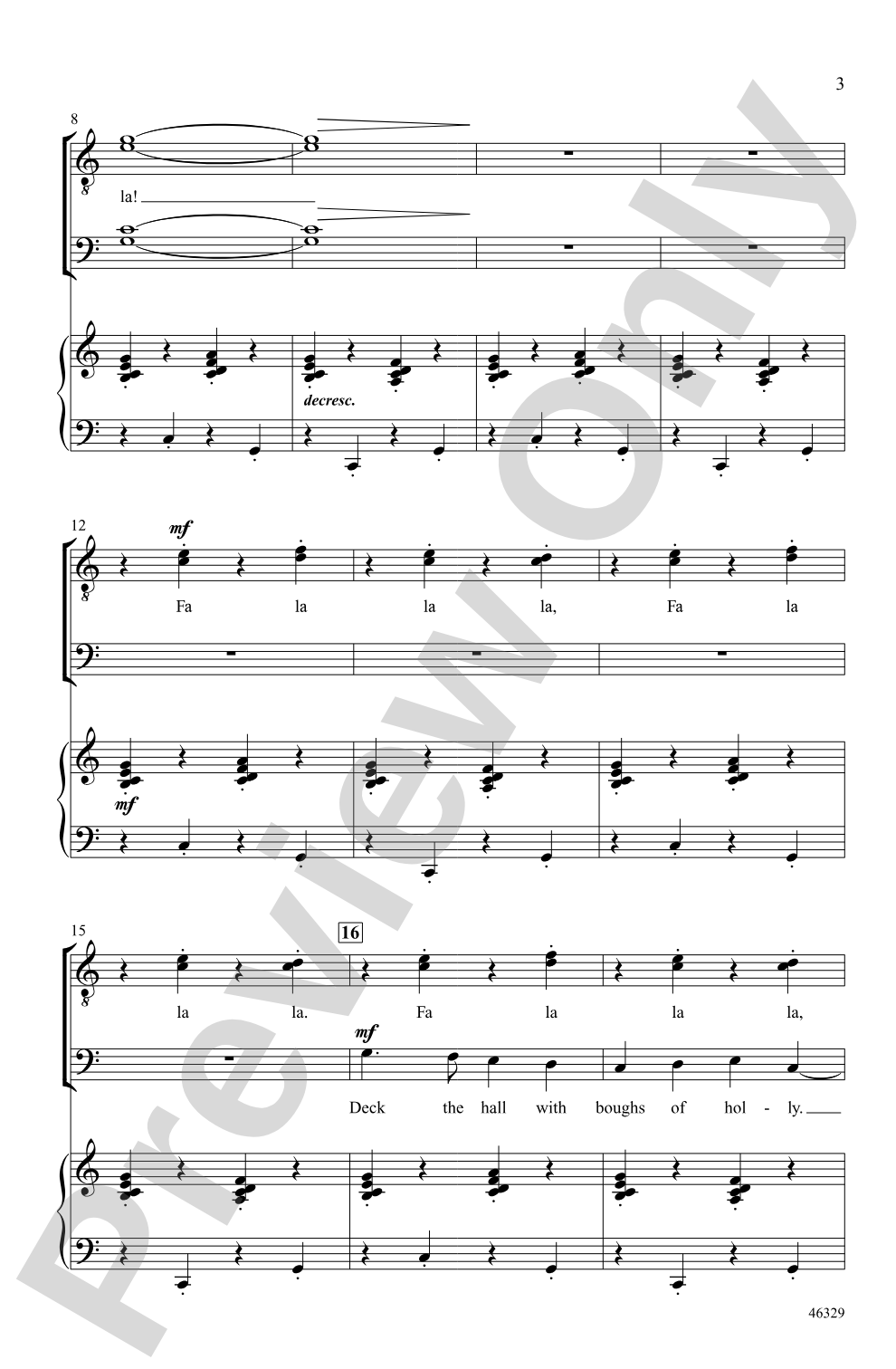
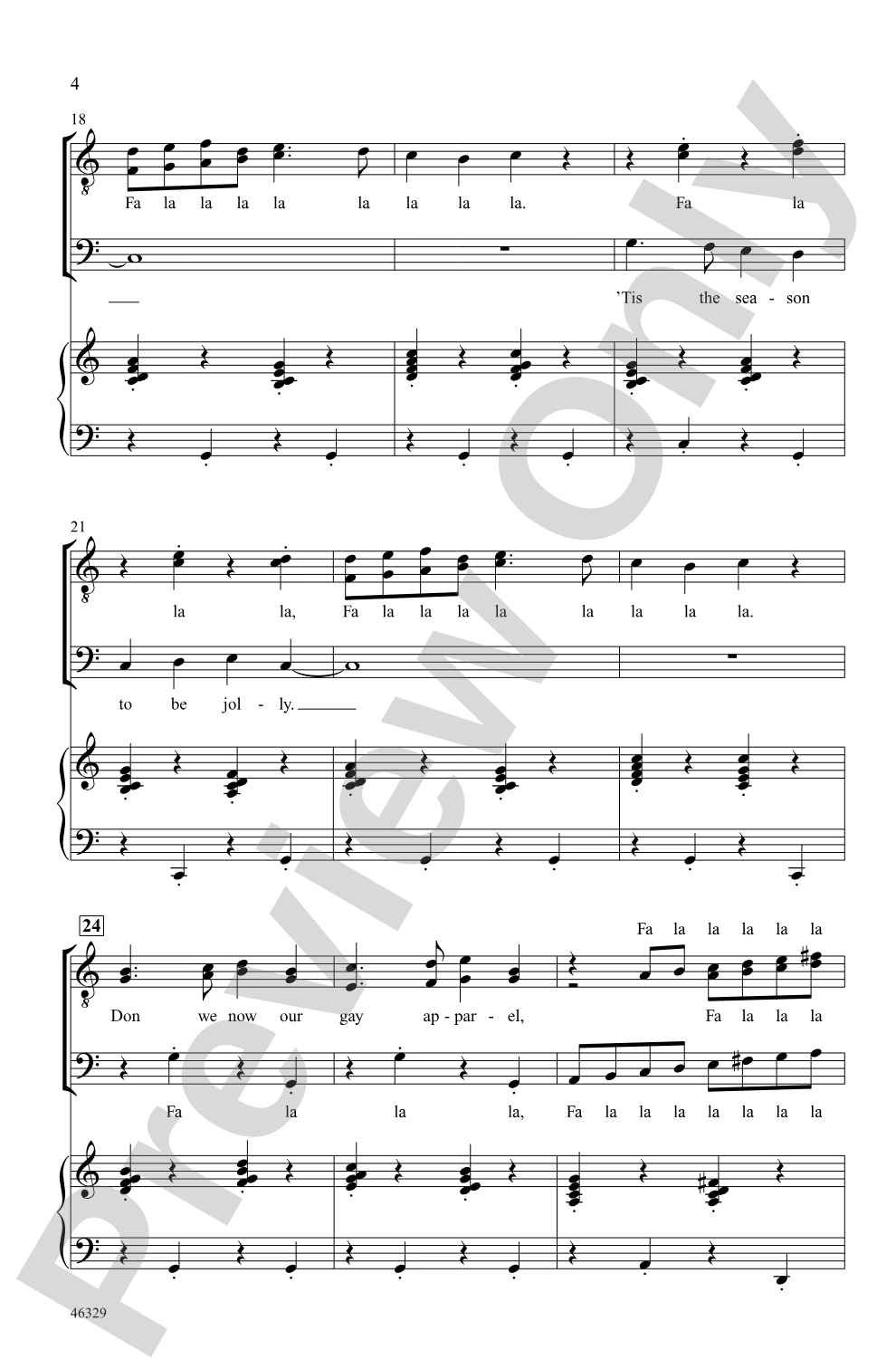

Deck the Hall: TTBB Choral Octavo
Traditional Carol / arr. Chad Weirick
Item: 00-PO-0005586

$1.90
Minimum order quantity: 20 copies
Pickup currently not available
Related Items
Deck the Hall: SoundTrax Digital Audio Download |
$27.99
|
View | |
Deck the Hall: SATB Choral Octavo |
$2.05
|
View | |
Deck the Hall: SSAA Choral Octavo |
$1.90
|
View | |
Deck the Hall: Choral SoundPax |
$50.00
|
View | |
Deck the Hall: SATB Choral Octavo |
$2.05
|
View | |
Deck the Hall: SSAA Choral Octavo |
$1.90
|
View | |
Deck the Hall: TTBB Choral Octavo |
$1.90
|
View | |
Deck the Hall: Choral Octavo SoundTrax CD |
$27.99
|
View | |
Deck the Hall: Choral SoundPax |
$50.00
|
View |
Description
A thrilling arrangement of the traditional carol that is sure to impress. This reimagined classic features colorful harmonies, vibrant rhythms, theme-and-variations surprises, and a sweeping optional orchestration (heard on the SoundTrax CD and available as a SoundPax). Brief in length, but grand in scope!


Don't just read it, hear it, play along with it, and watch your students grow with it. In MakeMusic Cloud, Deck the Hall: TTBB Choral Octavo comes alive with professional accompaniment, adjustable tempo, and built-in practice tools that turn solo practice into real progress.
Open in the Player
Jump straight in and assign it today.
Start Your Free Trial
Open this title and explore the full library in minutes.
Sample Audio
1
Audio File
--:--
0:00
0:00
Sample Video
No sample videos found.
Additional Details
Series:
Alfred Choral Designs
Publisher:
Alfred Music
Page Count:
12
SKU:
00-PO-0005586
More about this title
About the Arranger: Chad Weirick

Chad Weirick began his music career at an unusually early age, graduating high school at 15 and moving to New York City where he became the organist for Radio City Music Hall and rehearsal pianist for the Rockettes. His work on Broadway encompassed positions with major productions including "A Chorus Line," "Shenandoah," and "The Act." He later pursued formal composition studies at the New England Conservatory of Music, earning a Master's degree under Malcolm Peyton.
Weirick has built a distinguished career as a choral arranger, with his work performed and recorded by choruses across the country and internationally. He has served as music director for Marriott's Great America theme park in Illinois and currently works in the choral department at Wellesley High School while serving as Assistant Music Director and accompanist for the Boston Gay Men's Chorus. He is also Minister of Music at the First Congregational Church in Hanover, Massachusetts.
Why we love this
Weirick transforms a familiar carol into something genuinely exciting without losing its recognizable core. The theme-and-variations approach keeps singers engaged throughout what could otherwise feel routine, and the optional orchestration gives your choir a professional concert sound without requiring a full pit.
What to expect
This arrangement crackles with forward momentum and harmonic color. You get the instant recognition of a beloved tune alongside surprising detours and refreshed textures that keep listeners leaning in through every phrase.
Who it's for
TTBB choirs seeking a carol arrangement that stands apart from standard holiday fare. Directors who want their men's voices to sound polished and energized rather than staid will find this reimagining rewarding for both singers and audiences.
How to get the most out of it
- Lean into the rhythmic vitality of the arrangement. These harmonies breathe best when the rhythm section locks in with precision rather than dragging the pulse.
- Balance colorful inner voices with your melody line. The vibrant harmonies are designed to be heard, so avoid letting top voices dominate the mix.
- If performing with the optional orchestration, ensure your singers hear the recorded accompaniment in rehearsal early and often so the ensemble can breathe together.
- The contrasting sections benefit from clean attacks and releases. This brief but expansive arrangement hinges on clarity between its variations.
How to use it
Program this as a mid-show brightener that signals holiday cheer without relying on the expected. Its brevity makes it an ideal pairing with a slower, more introspective carol, or use it to anchor a mixed concert moment between secular and sacred repertoire.
Skills your students will build
- singing sustained harmonies within a jazz-influenced harmonic language
- maintaining rhythmic precision during syncopated passages
- blending multiple melodic lines when themes pass between voice parts
- responding to conducted changes in dynamics and articulation across sectional variations