
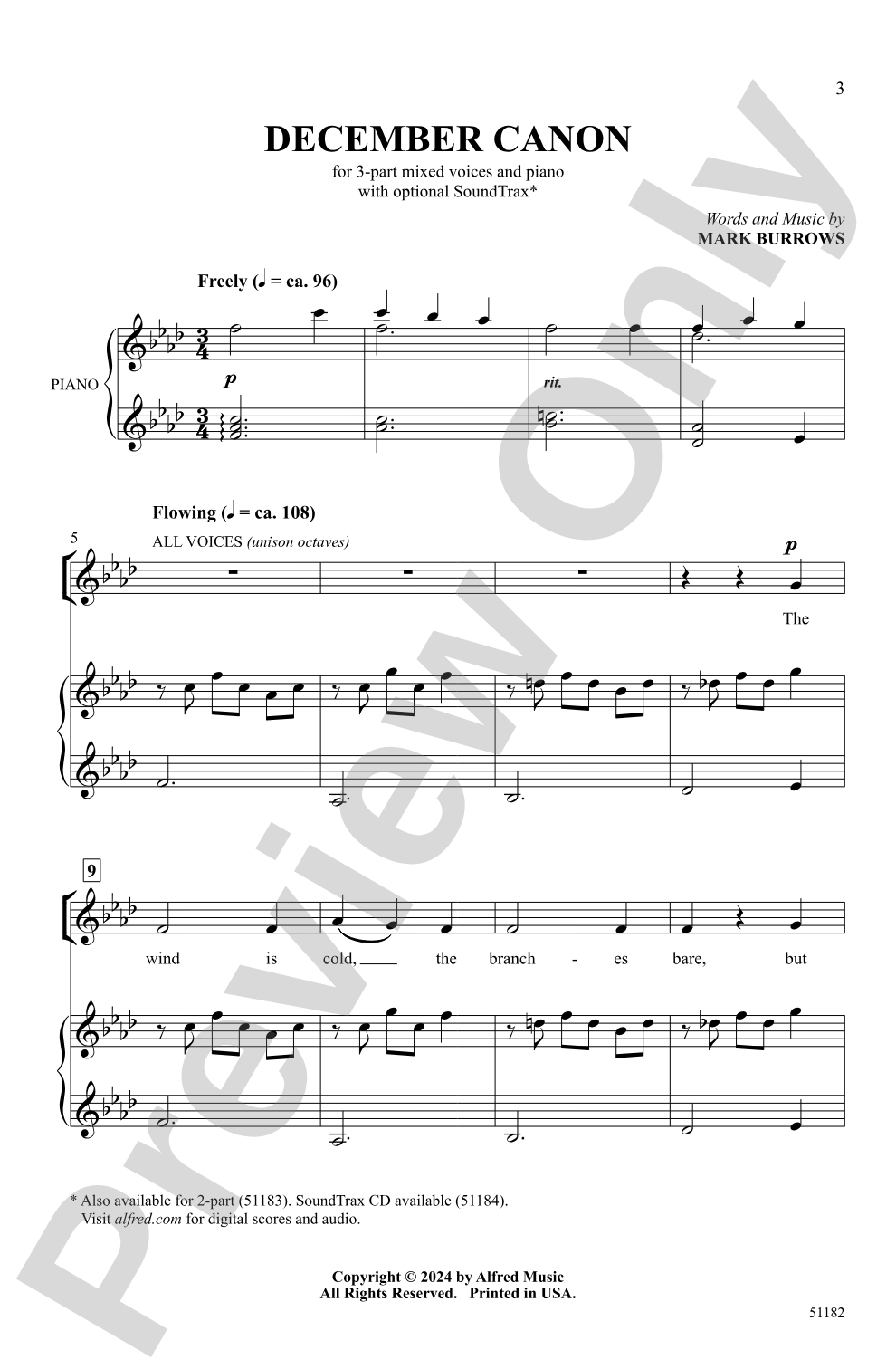

December Canon: 3-Part Mixed Choral Octavo
Words and music by Mark Burrows
Item: 00-PO-0007243

$2.30
Minimum order quantity: 20 copies
Pickup currently not available
Description
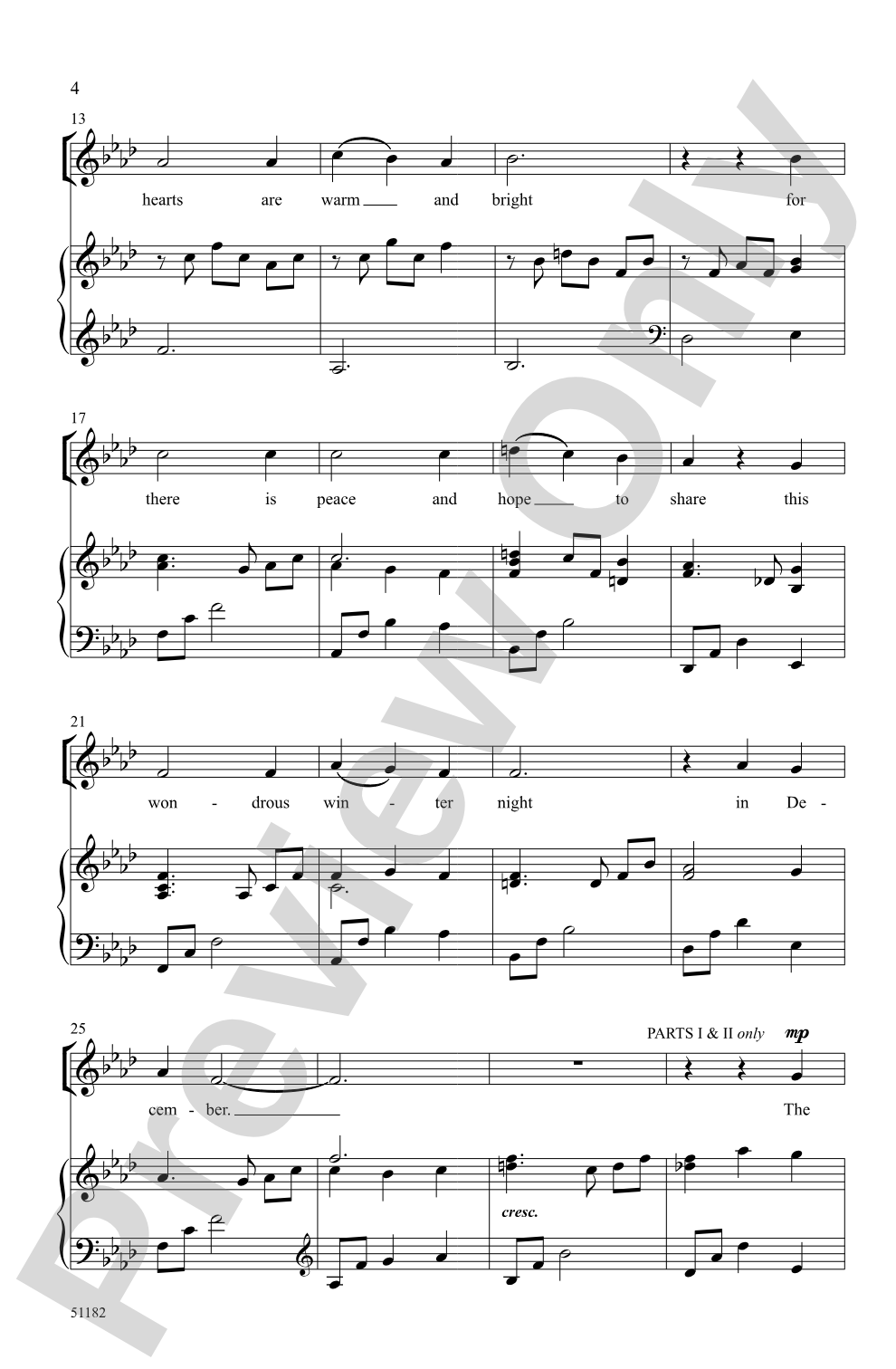
"The wind is cold, the branches bare, but hearts are warm and bright." Despite the chill of December, it's all about hope, peace, and kindling kindness. As you'd expect from a round, a simple melody easily stacks into a complete choral texture. Even better, the conservative-range tune ensures a good fit for all voices. Groups of any age will master the canonic form and enjoy delivering the heartfelt, non-holiday message.


Don't just read it, hear it, play along with it, and watch your students grow with it. In MakeMusic Cloud, December Canon: 3-Part Mixed Choral Octavo comes alive with professional accompaniment, adjustable tempo, and built-in practice tools that turn solo practice into real progress.
Open in the Player
Jump straight in and assign it today.
Start Your Free Trial
Open this title and explore the full library in minutes.
Sample Audio
1
Audio File
--:--
0:00
0:00
Sample Video
Additional Details
Series:
Alfred Choral Designs
Publisher:
Alfred Music
Page Count:
12
SKU:
00-PO-0007243
More about this title
About the Composer: Mark Burrows

Mark Burrows composes for choirs of every size and age, from children's ensembles to adult community groups. His catalogue appears regularly on state and festival lists, and he commissions new works nearly every year, drawing on decades of experience both at the composer's desk and in front of the podium. Burrows holds degrees in music education from Southern Methodist University and conducting from Texas Christian University, grounding his compositional voice in practical pedagogy.
Based in Fort Worth, Texas, Burrows serves as Director of Children's Ministries at FUMC, where he continues to shape young musicians and advocate for accessible, meaningful choral literature. His background in both education and conducting shapes every piece he writes: music that works for real singers in real rehearsals.
Why we love this
December Canon delivers genuine emotional resonance without leaning on holiday sentiment. The canonic structure builds naturally from the simple, singable melody, so your ensemble experiences real satisfaction as the texture grows; by the third entrance, singers hear the complete harmonic picture they've created. The SAB voicing sits comfortably across your mixed choir, and that intentionally conservative range means no one gets left behind.
What to expect
A moment of reflection and warmth amid winter's chill. The steady, unadorned melody carries an earnest, almost hymn-like quality, while the overlapping voices create a sense of communal gathering. There's nothing sentimental here, only honest expression of hope and human connection.
Who it's for
Middle school through adult choirs seeking a secular winter piece with substance. Groups preparing for concert, festival, or contest programs will find a piece that showcases vocal blend and musicality without demanding extensive range or technical demands.
How to get the most out of it
- Establish a steady pulse in rehearsal before layering the parts. Since the canon depends entirely on rhythmic precision, have all three groups sing the melody in unison first, marking the beat clearly.
- Let the entrance points breathe slightly; resist the urge to pile all three parts in immediately. A small space between each entrance makes the canonic architecture audible and lets listeners follow the texture unfolding.
- Balance the parts so the original melody (SAB line 1) remains the anchor. When all three parts sound equally weighted, the canonic effect becomes muddy rather than elegant.
- Consider using the recorded accompaniment to lock in steady time, especially in the early rehearsals when singers are still learning their part entries and adjusting to each other's tempos.
How to use it
Program this as an anchor piece in your December concert, where it stands apart from traditional holiday fare and appeals to audiences seeking genuine winter sentiment. It pairs well with both secular and sacred repertoire, and its length makes it ideal for a contest or festival set where you need a moment of stillness between more dramatic selections.
Skills your students will build
- Singing canonic form and understanding entrances and texture layering
- Maintaining independent vocal lines while listening to other parts simultaneously
- Sustaining proper breath support through longer phrases with conservative range demands
- Blending voices in SAB texture across mixed ensembles