

De Profundis: SSAA Choral Octavo
By Russell Robinson
Item: 00-PO-0002403
$1.85
Minimum order quantity: 20 copies
Pickup currently not available
Description
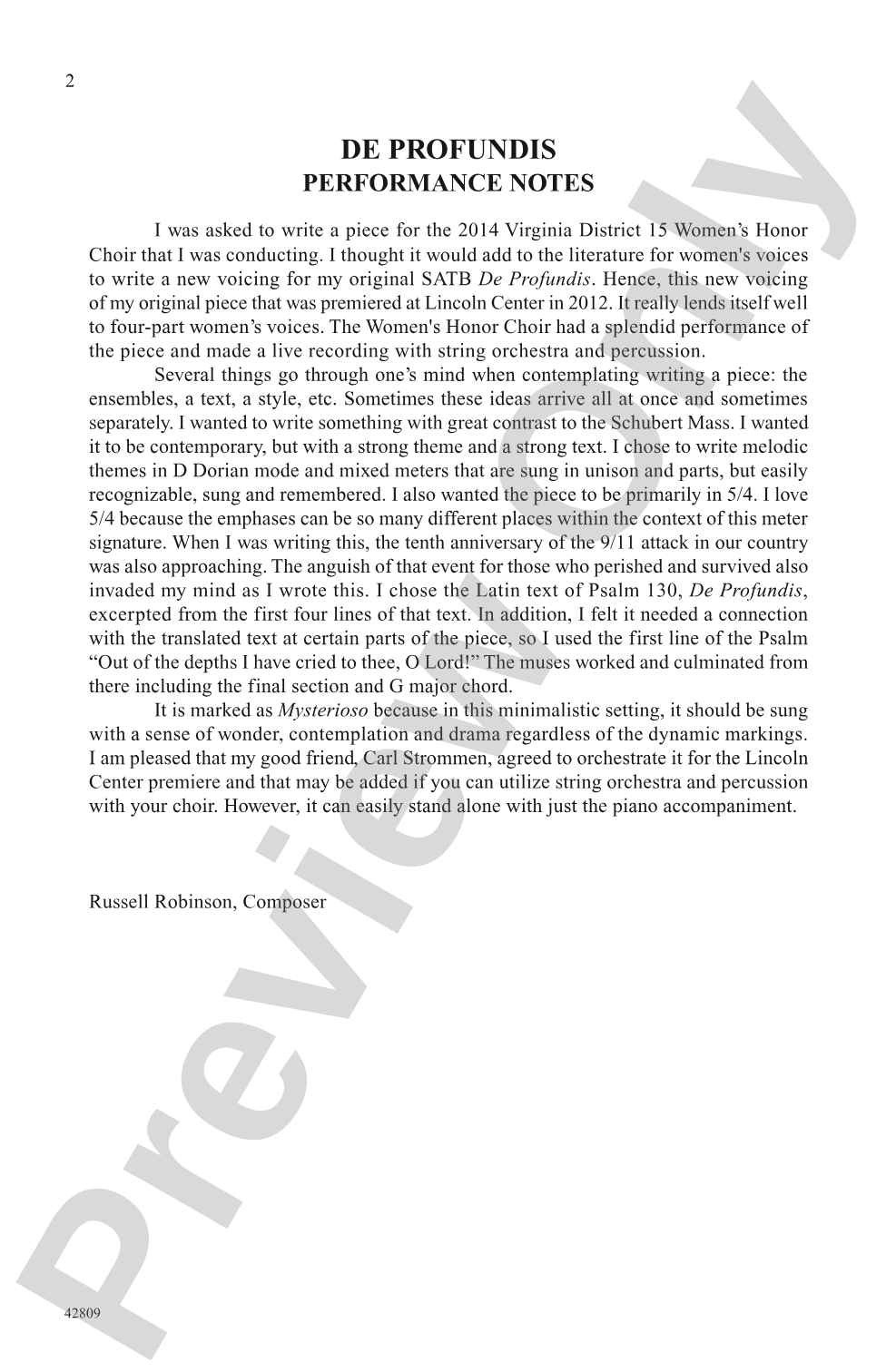
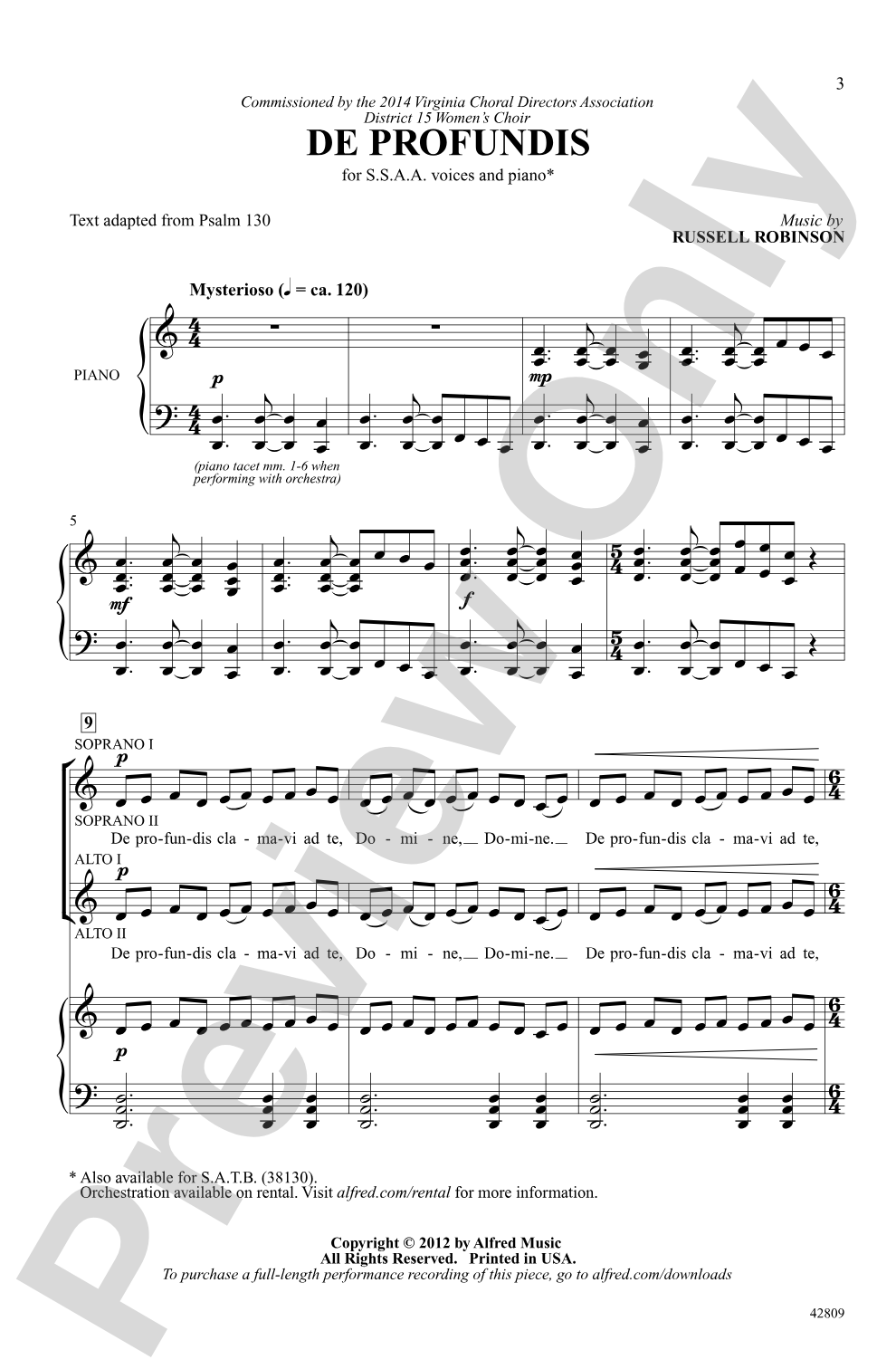
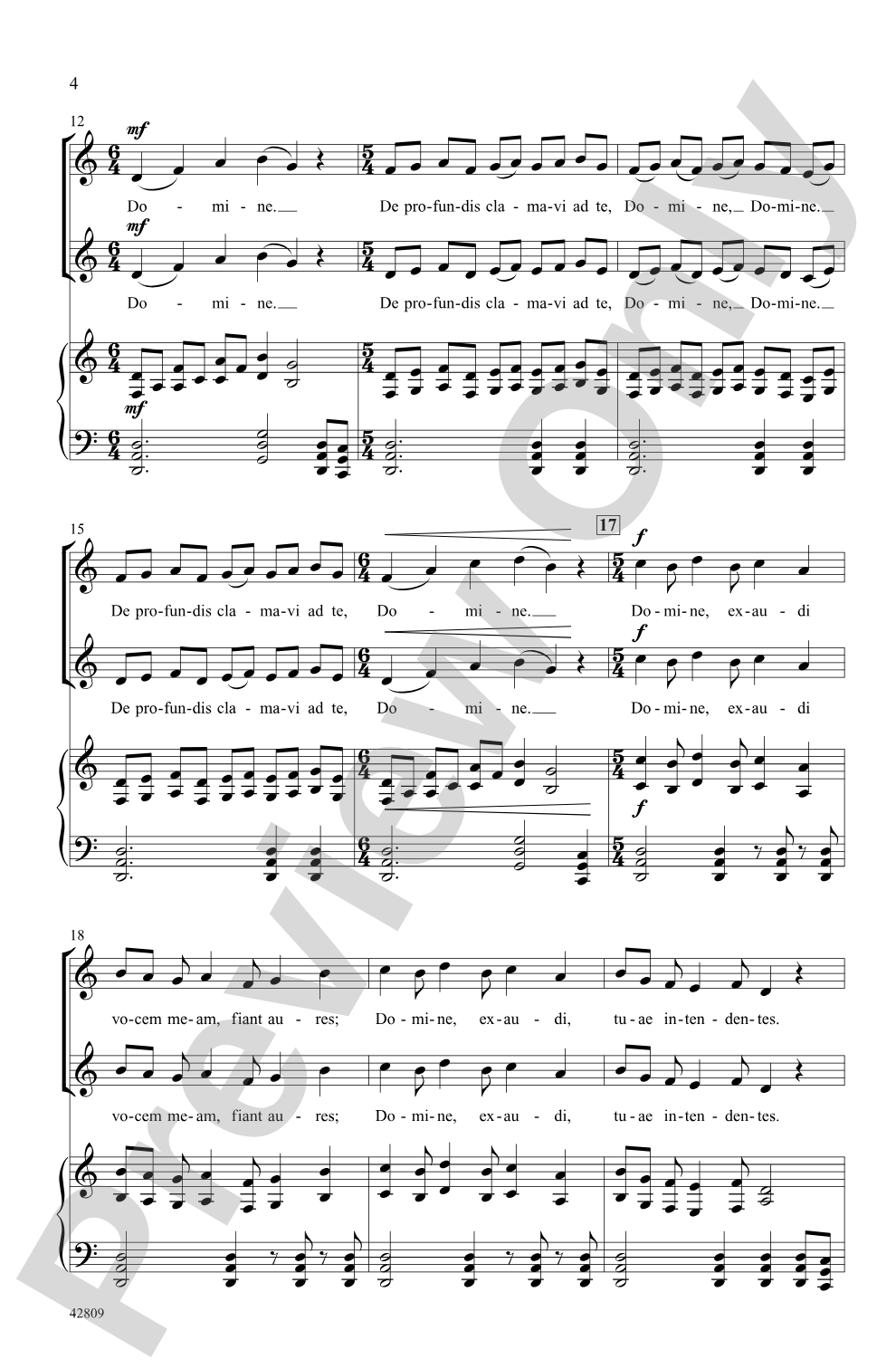
Now available for SSAA, this exciting mixed-meter festival piece features both Latin and English versions of Psalm 130: "Out of my depths I have cried to thee, O Lord." Recording provided by the Virginia District XV High School Women's Honor Choir, directed by Russell Robinson, RonArt Associates Recordings. Optional rental orchestration available at presser.com/request-rental.


De Profundis: SSAA Choral Octavo isn't in MakeMusic Cloud just yet...but it could be. Let us know you'd like to see it, and you'll help shape what comes next. In the meantime, start a free trial and dive into thousands of interactive titles your students can play along with today.
Request This Title
Tell us you want it.
Start Your Free Trial
Explore everything that's ready to play right now.
Sample Audio
1
Audio File
--:--
0:00
0:00
Sample Video
No sample videos found.
Additional Details
Series:
Lawson-Gould
Publisher:
Alfred Music
Page Count:
12
SKU:
00-PO-0002403
More about this title
About the Composer: Russell Robinson

Russell Robinson is an Emeritus Professor of Music Education at the University of Florida whose career spans decades of conducting and music leadership across six continents. He has appeared at Carnegie Hall, Lincoln Center, the Kennedy Center, and the White House, and served as President of the Florida Music Educators Association and National Collegiate Chair for Choral Activities at NAfME. His 2016 induction into the FMEA Hall of Fame recognized his sustained impact on choral music and music education.
As a composer and arranger with over 500 publications in print, Robinson brings both scholarly rigor and practical classroom experience to his work. His compositions and arrangements span choral music, instrumental works, and instructional materials, reflecting a deep understanding of what singers at all levels can achieve.
Why we love this
Robinson's handling of mixed meters feels natural rather than forced, and the dual-language text lets singers engage with both the liturgical weight of Latin and the immediacy of English. The recorded performance by the Virginia District XV High School Women's Honor Choir provides a clear, stylistically informed model that shows exactly how to balance the piece's contemplative moments with its moments of intensity.
What to expect
The piece inhabits a contemplative space between penitence and hope, with the mixed meters creating subtle rhythmic restlessness that mirrors the emotional content of Psalm 130. Harmonies are accessible yet expressive, and the interplay between voices creates moments of striking clarity and moments of supportive blending.
Who it's for
High school and adult women's choirs seeking repertoire that combines liturgical significance with contemporary compositional craft. This works equally well for choirs with strong Latin diction skills and those for whom Latin is newer territory, since the English text provides familiarity alongside the sacred language.
How to get the most out of it
- Attend closely to the meter shifts. Mark them visually in your score and have singers mark their copies as well; these transitions define the piece's emotional arc rather than interrupting it.
- Use the recording not as a target to imitate but as a reference for phrasing and text underlay. Your ensemble's interpretation may differ meaningfully from what you hear.
- Balance the Latin and English sections by considering your singers' comfort with Latin diction. If pronunciation feels shaky, rehearse the vowels and consonants separately before integrating them with melody.
How to use it
Include this on a concert devoted to sacred or psalm-based literature, where it can stand alongside other settings of liturgical texts. The optional orchestration expands programming flexibility if you have instrumental forces available; consult presser.com/request-rental for rental details.
Skills your students will build
- Reading and performing mixed meters (specifically the meter shifts within the piece)
- Singing with accurate Latin diction and vowel formation
- Managing transitions between languages while maintaining musical continuity
- Blending SSAA sonority across four distinct voice parts
- Interpreting text expression through harmonic and rhythmic language