

De Profundis: SATB Choral Octavo
By Russell Robinson
Item: 00-PO-0001406
$2.05
Minimum order quantity: 20 copies
Pickup currently not available
Description
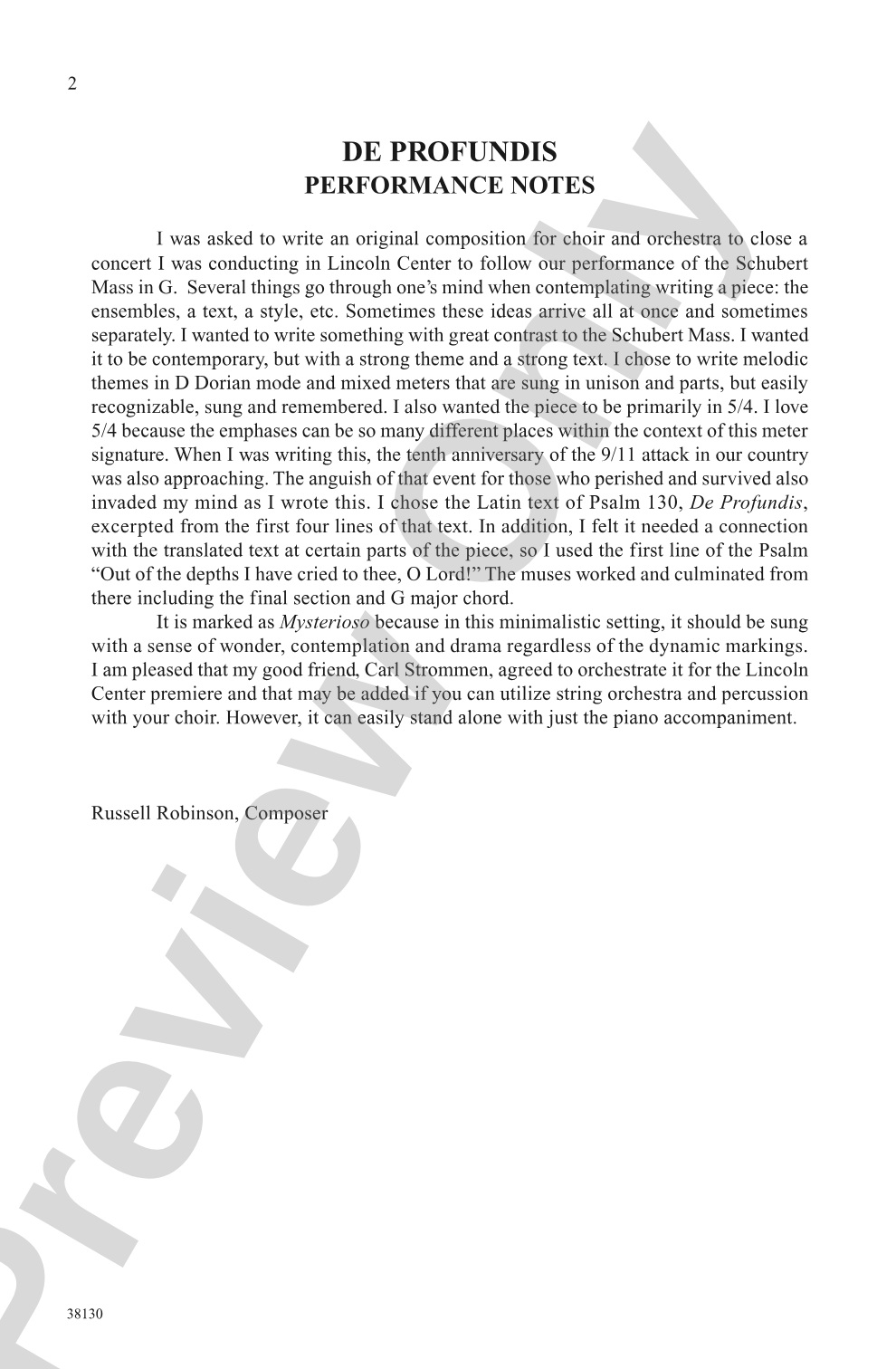
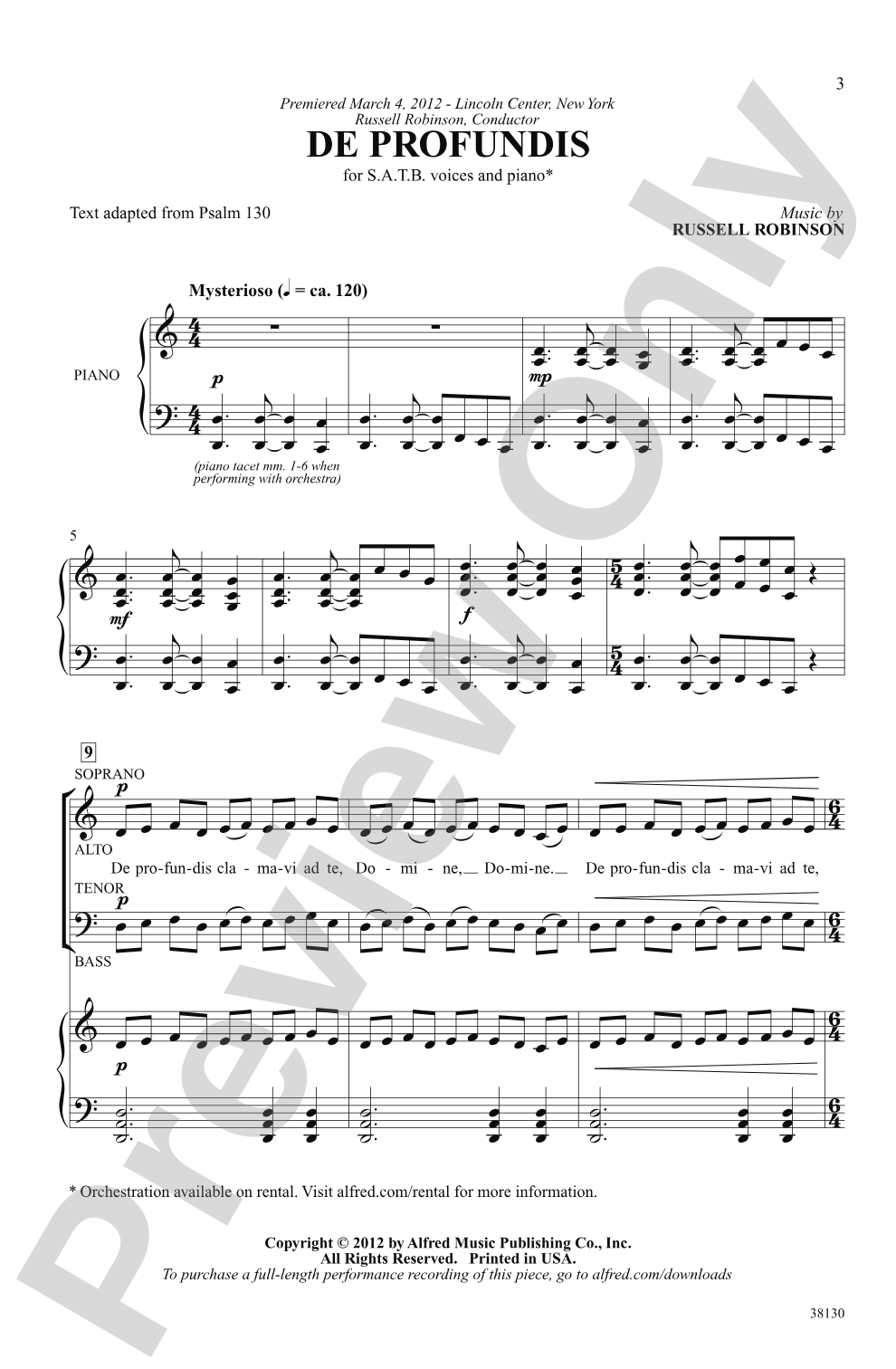
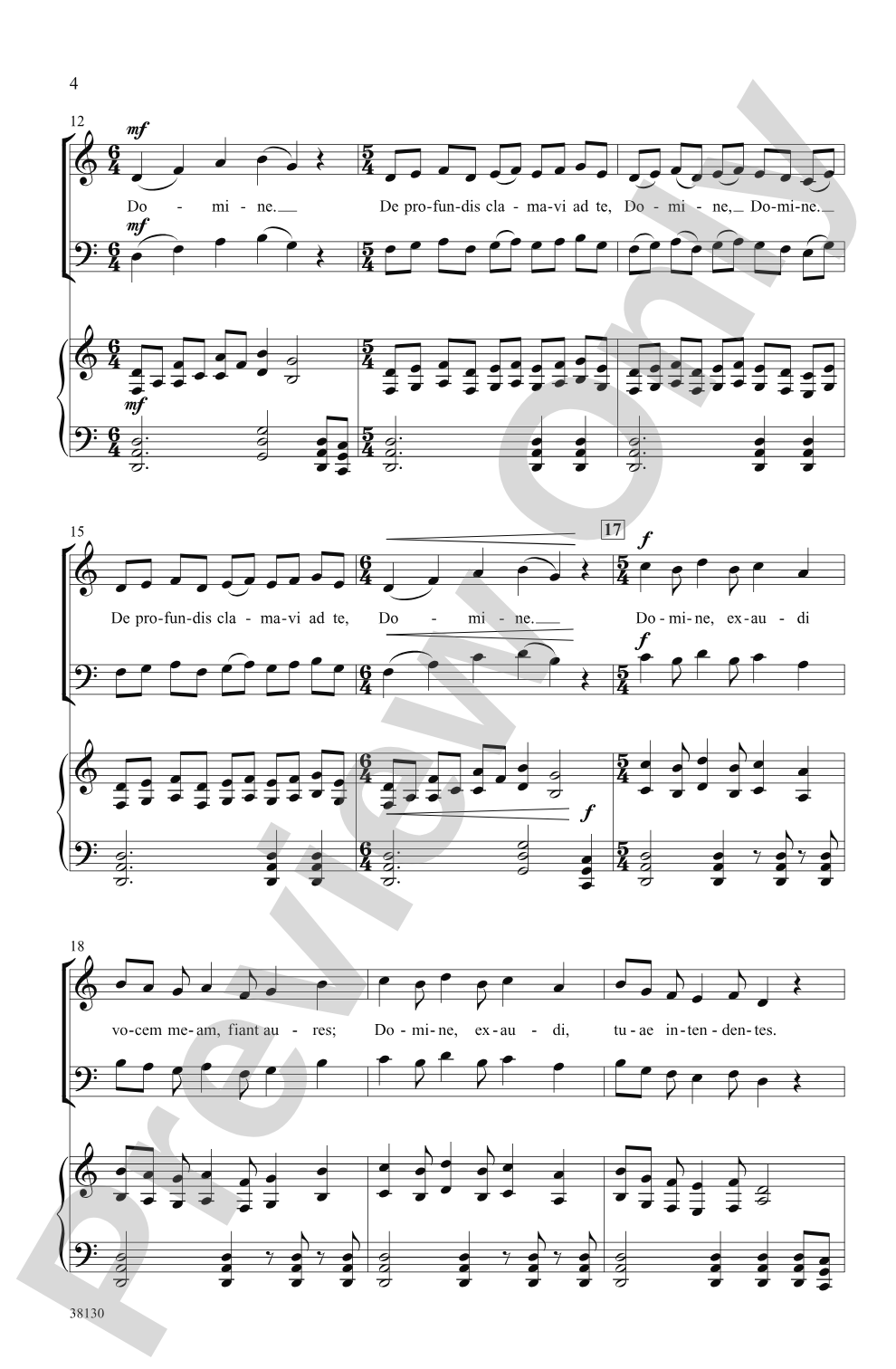
Premiered at Lincoln Center, this exciting mixed-meter festival piece features both Latin and English versions of Psalm 130: "Out of the depths I have cried to thee, O Lord." Recording provided by University of Florida University Choir and Orchestra, Russell Robinson, Conductor. Optional orchestration (arr. Strommen) available at presser.com/request-rental.


De Profundis: SATB Choral Octavo isn't in MakeMusic Cloud just yet...but it could be. Let us know you'd like to see it, and you'll help shape what comes next. In the meantime, start a free trial and dive into thousands of interactive titles your students can play along with today.
Request This Title
Tell us you want it.
Start Your Free Trial
Explore everything that's ready to play right now.
Sample Audio
1
Audio File
--:--
0:00
0:00
Sample Video
No sample videos found.
Additional Details
Series:
Lawson-Gould
Publisher:
Alfred Music
Page Count:
12
SKU:
00-PO-0001406
More about this title
About the Composer: Russell Robinson
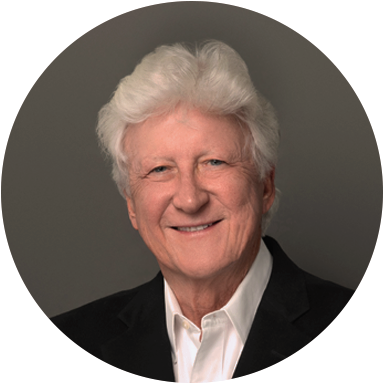
Russell Robinson has established himself as a conductor and music educator with an international presence, appearing over 300 times as a guest conductor and clinician across six continents. His work has taken him to prestigious venues including Carnegie Hall, Lincoln Center, the Kennedy Center, and the White House. At the University of Florida, where he served as Emeritus Professor of Music Education and Associate Dean of the College of the Arts, he mentored generations of musicians and conductors.
Robinson's creative output spans more than 500 published works, encompassing choral compositions, arrangements, scholarly articles, instructional videos, and books. He has held leadership roles in the National Association for Music Education and the Florida Music Educators Association, which inducted him into its Hall of Fame in 2016. His compositions and arrangements remain staples in choral programs nationwide.
Why we love this
Robinson writes for the ensemble with genuine understanding of how voices work together and what choirs can accomplish. The mixed-meter complexity never overwhelms the text setting or obscures the profound emotional arc of Psalm 130, making this a piece that challenges singers without sacrificing musicality or spiritual resonance.
What to expect
The piece emerges from genuine struggle and supplication, with the mixed-meter language reflecting the emotional turbulence of crying out from the depths. Beneath the surface complexity lies a profound dignity and ultimately a hard-won resolution, creating a cathartic arc that resonates far beyond the final cadence.
Who it's for
This octavo suits intermediate to advanced choirs with secure rhythm readers and a strong foundation in ensemble blend. Choirs preparing for festival performances, regional competitions, or concert programs that emphasize contemporary sacred music will find both the technical challenge and the spiritual depth rewarding.
How to get the most out of it
- Balance the Latin and English text versions in rehearsal. The dual language setting works best when singers understand both versions carry equal weight; rehearse each separately before combining them.
- Conduct the mixed meters with clear independence between the choir and optional orchestration. If using the orchestral arrangement, ensure your downbeats align with the orchestra's pulse during meter changes.
- Listen closely to the University of Florida recording to internalize Robinson's interpretation of tempo relationships across the shifting meters. The recording clarifies how fluid the piece should feel despite its rhythmic complexity.
- Mark fermata placements and breath points in rehearsal. With the dense harmonic writing, singers need clear guidance on where to breathe without losing forward momentum.
How to use it
Program this as a centerpiece for a sacred music concert or as the anchor piece in a program exploring Psalm settings across different eras and languages. Its Lincoln Center premiere credentials and recorded performance by a university ensemble make it ideal for programs celebrating choral artistry or for showcasing your choir's advanced musicianship.
Skills your students will build
- Reading and performing mixed meters (including compound meter shifts within a single piece)
- Maintaining rhythmic stability across complex harmonic changes
- Balancing text clarity with harmonic density in contemporary sacred writing
- Interpreting two language versions of the same text with stylistic authenticity
- Ensemble cohesion under shifting metric and tonal environments