
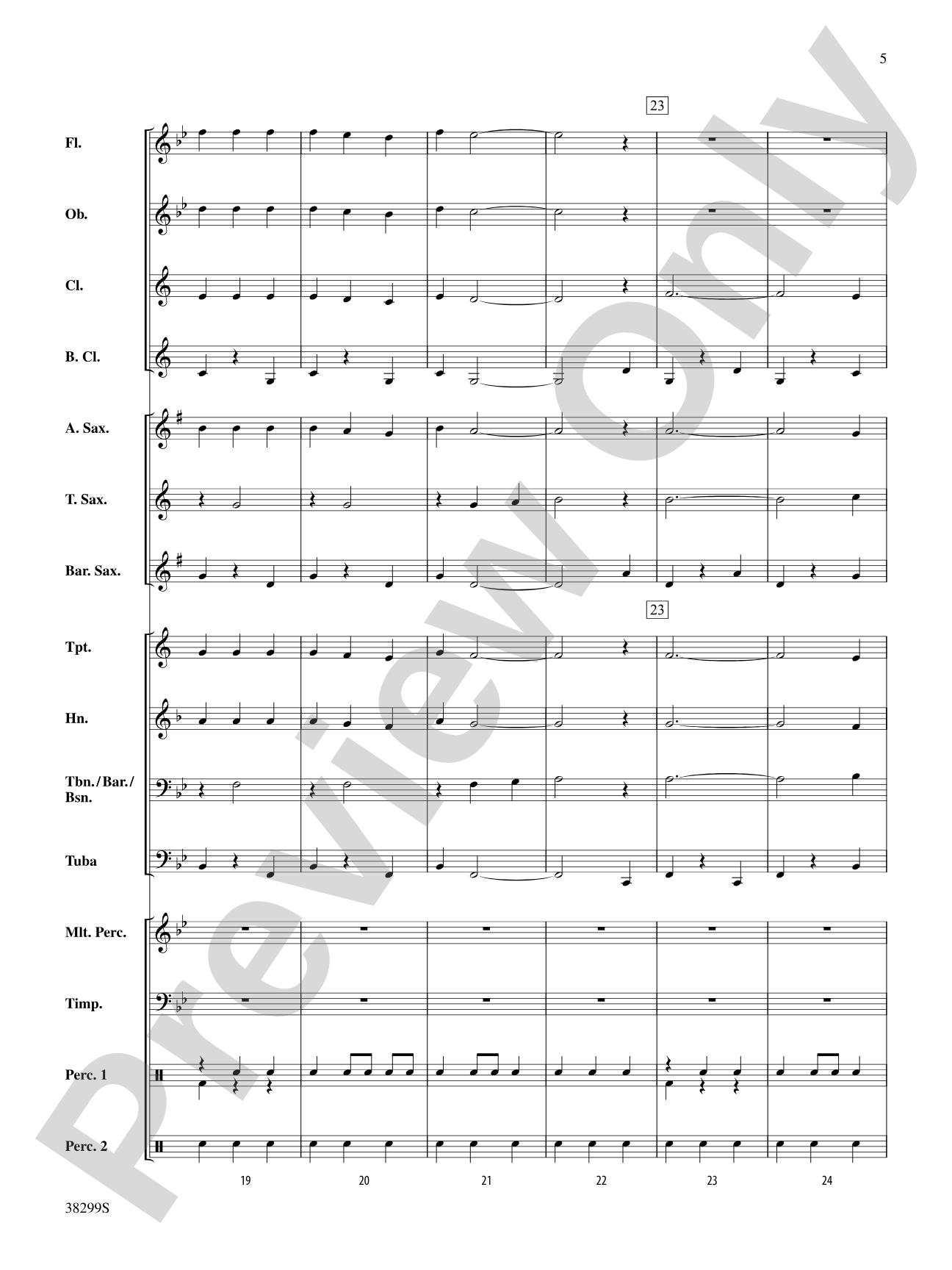
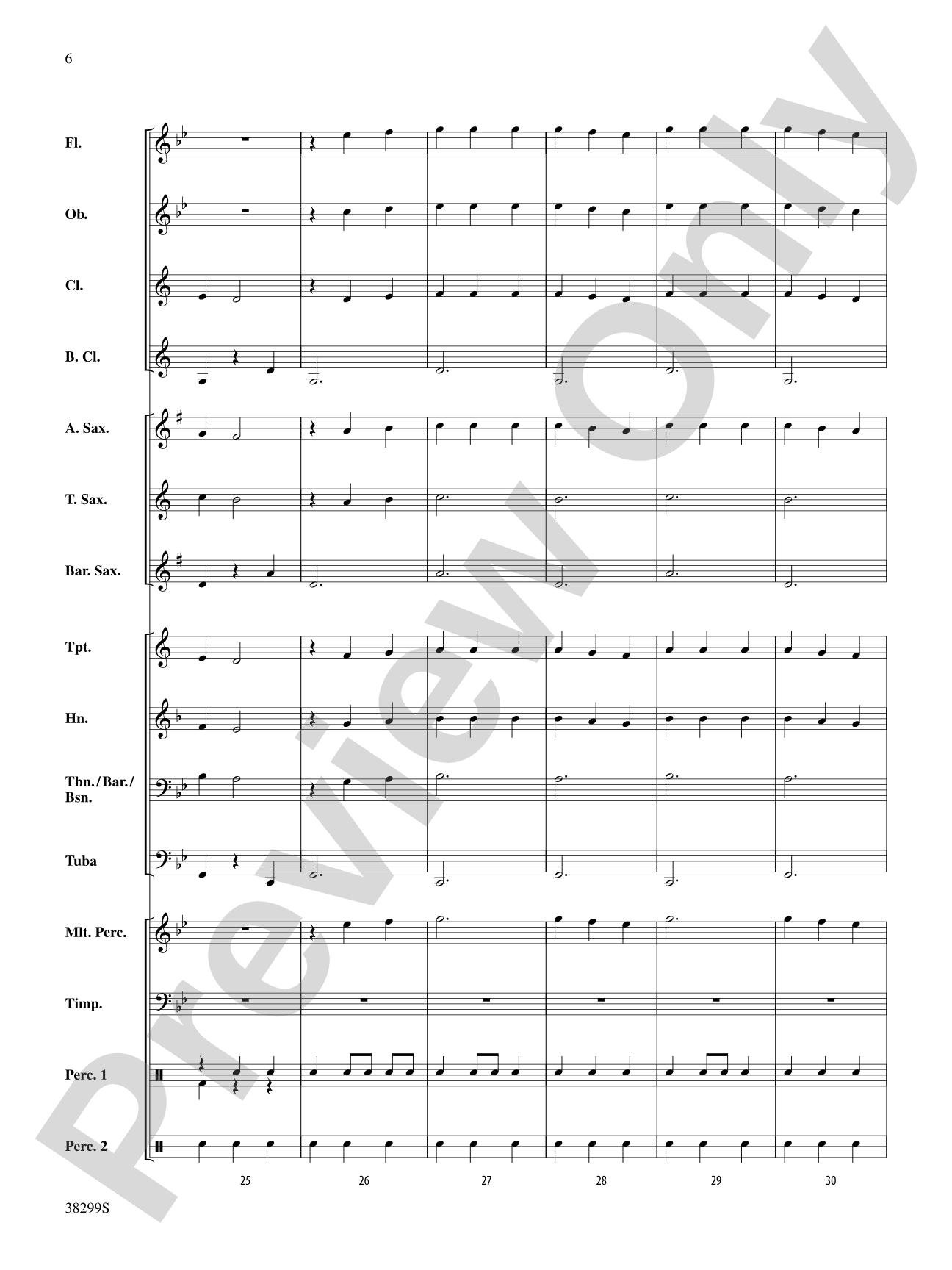
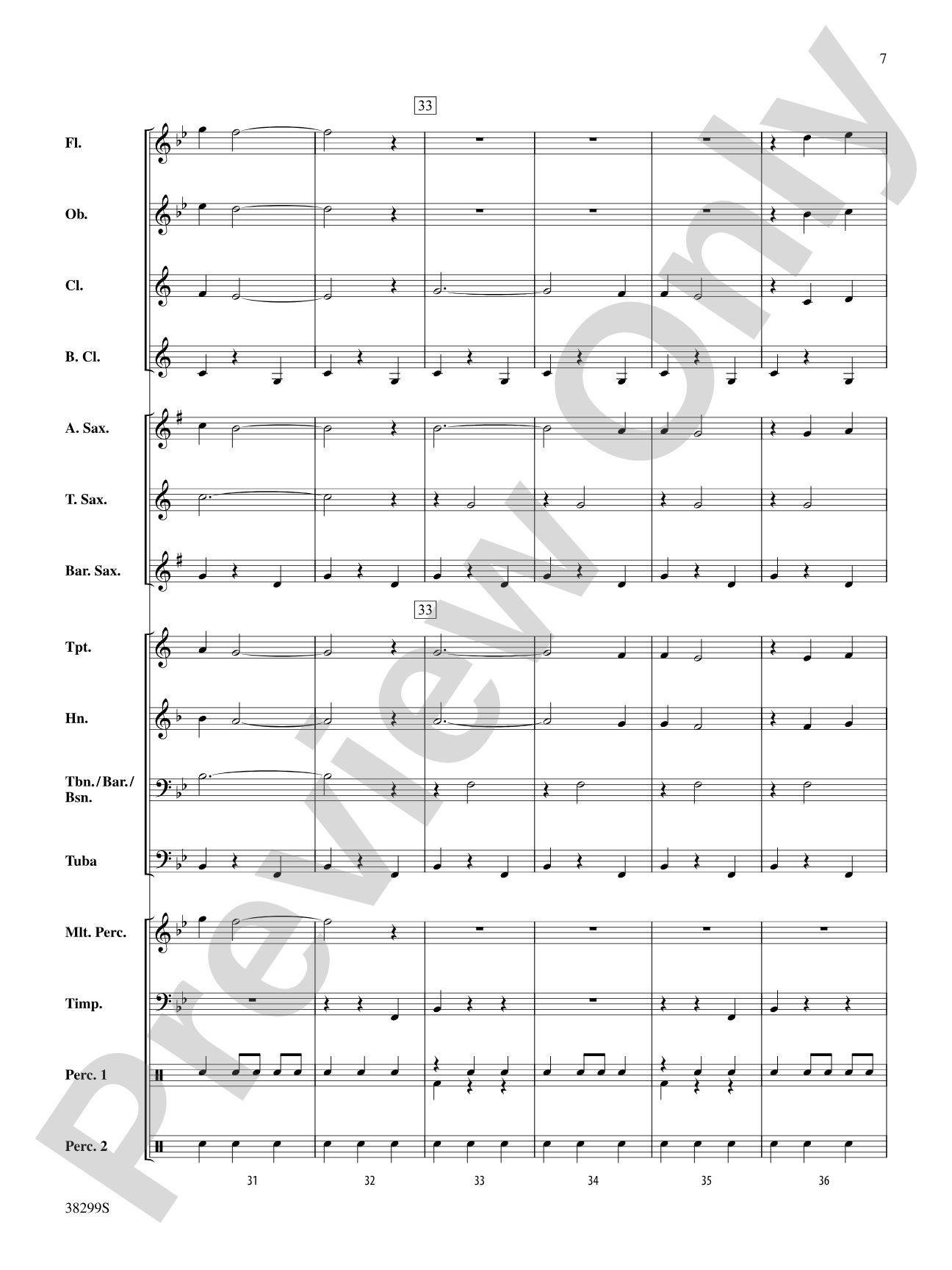
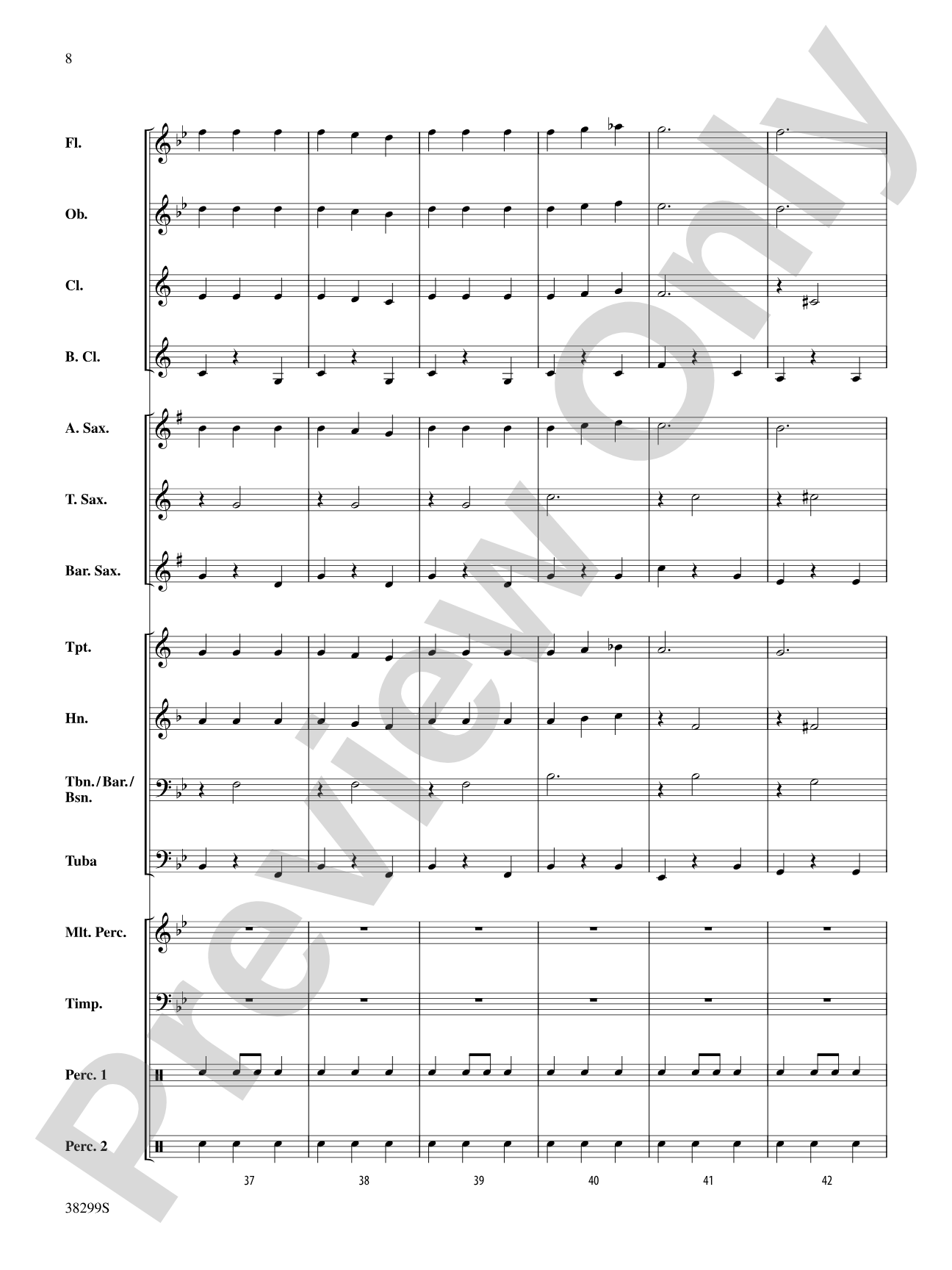
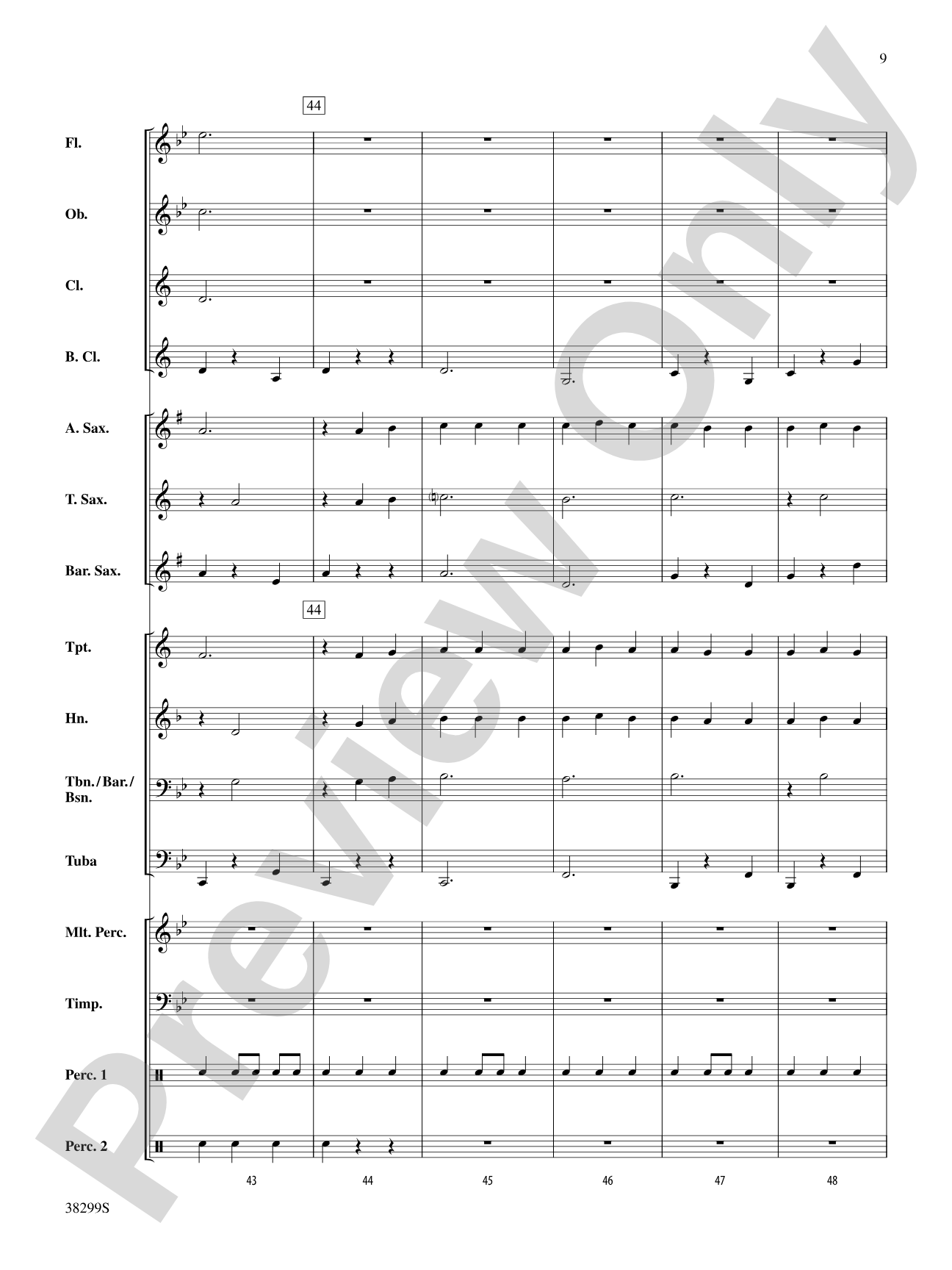
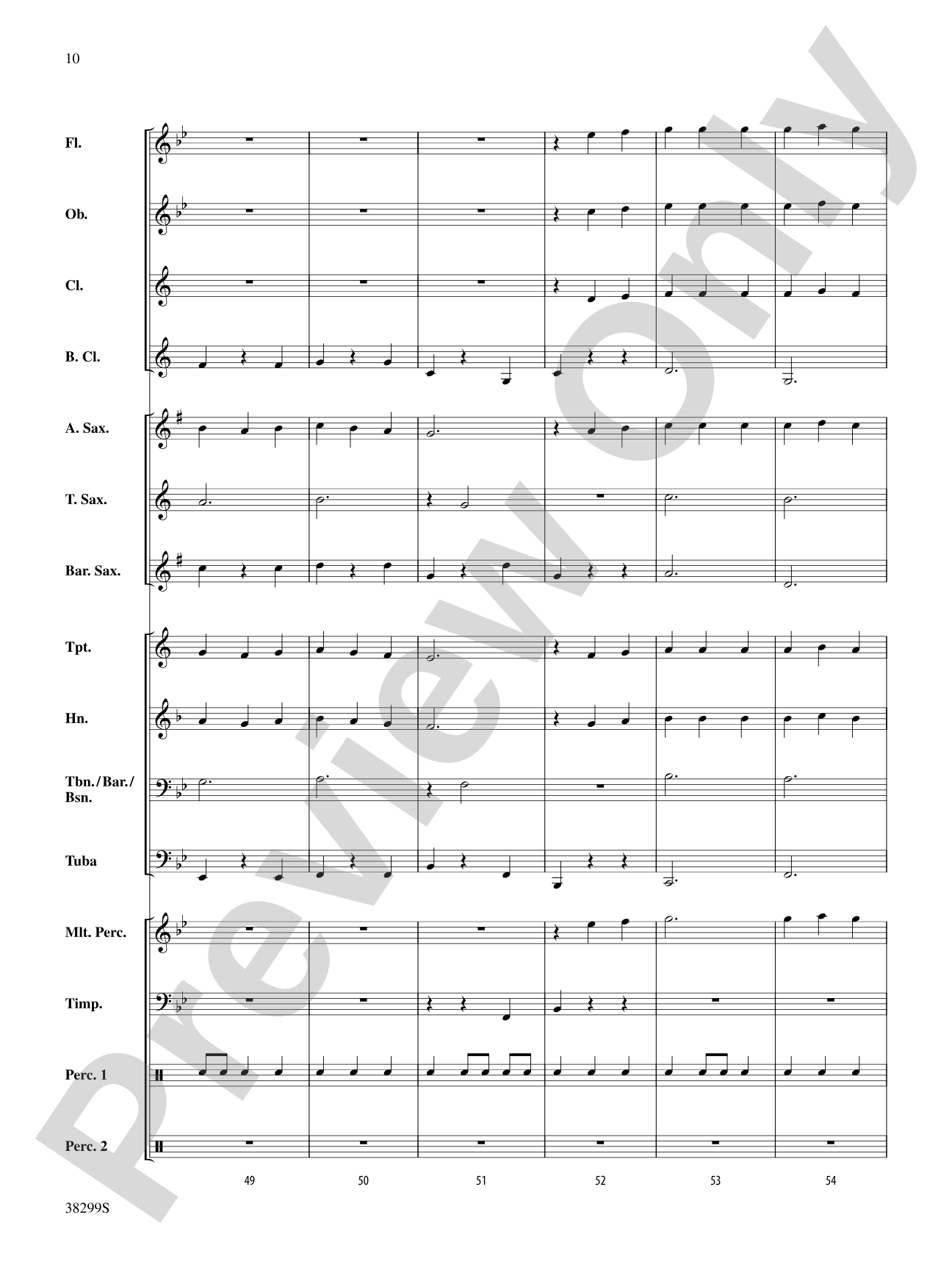
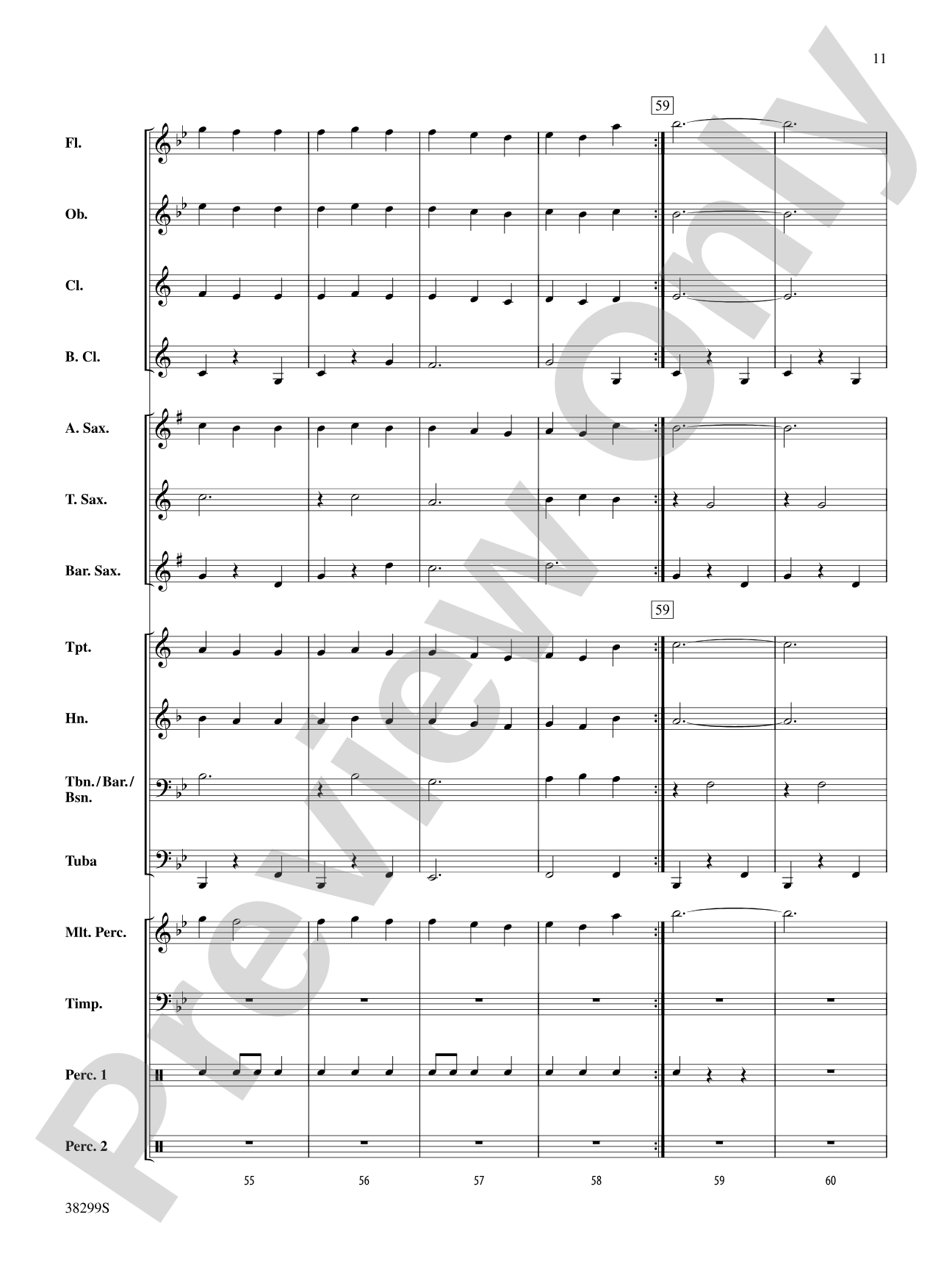
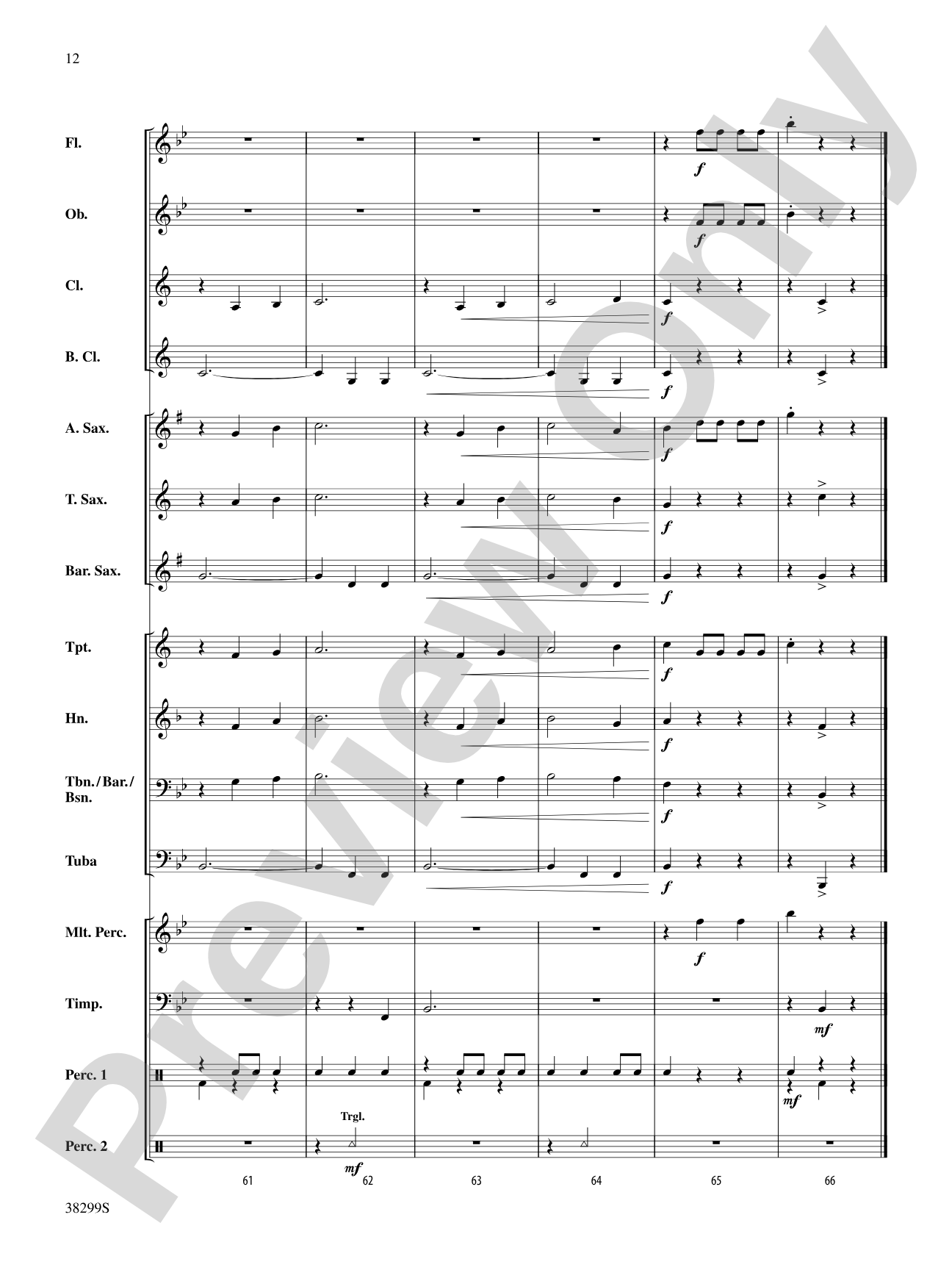

De Colores: Concert Band Conductor Score & Parts
Traditional Spanish / arr. Douglas E. Wagner
Grade: 1 (Very Easy)
Item: 00-PK-0005538

$56.00
Pickup currently not available
Buy Extra Parts (Digital PDF Download)
| Product | Price | Quantity |
|---|---|---|
| De Colores: Score | $9.00 | |
| De Colores: Flute | $3.00 | |
| De Colores: Oboe | $3.00 | |
| De Colores: 1st B-flat Clarinet | $3.00 | |
| De Colores: B-flat Bass Clarinet | $3.00 | |
| De Colores: E-flat Alto Saxophone | $3.00 | |
| De Colores: B-flat Tenor Saxophone | $3.00 | |
| De Colores: E-flat Baritone Saxophone | $3.00 | |
| De Colores: 1st B-flat Trumpet | $3.00 | |
| De Colores: 1st F Horn | $3.00 | |
| De Colores: 1st Trombone | $3.00 | |
| De Colores: Baritone T.C. | $3.00 | |
| De Colores: Tuba | $3.00 | |
| De Colores: Mallets | $3.00 | |
| De Colores: 1st Percussion | $3.00 | |
| De Colores: 2nd Percussion | $3.00 | |
| De Colores: Timpani | $3.00 |
Parts Added to Cart!
Description
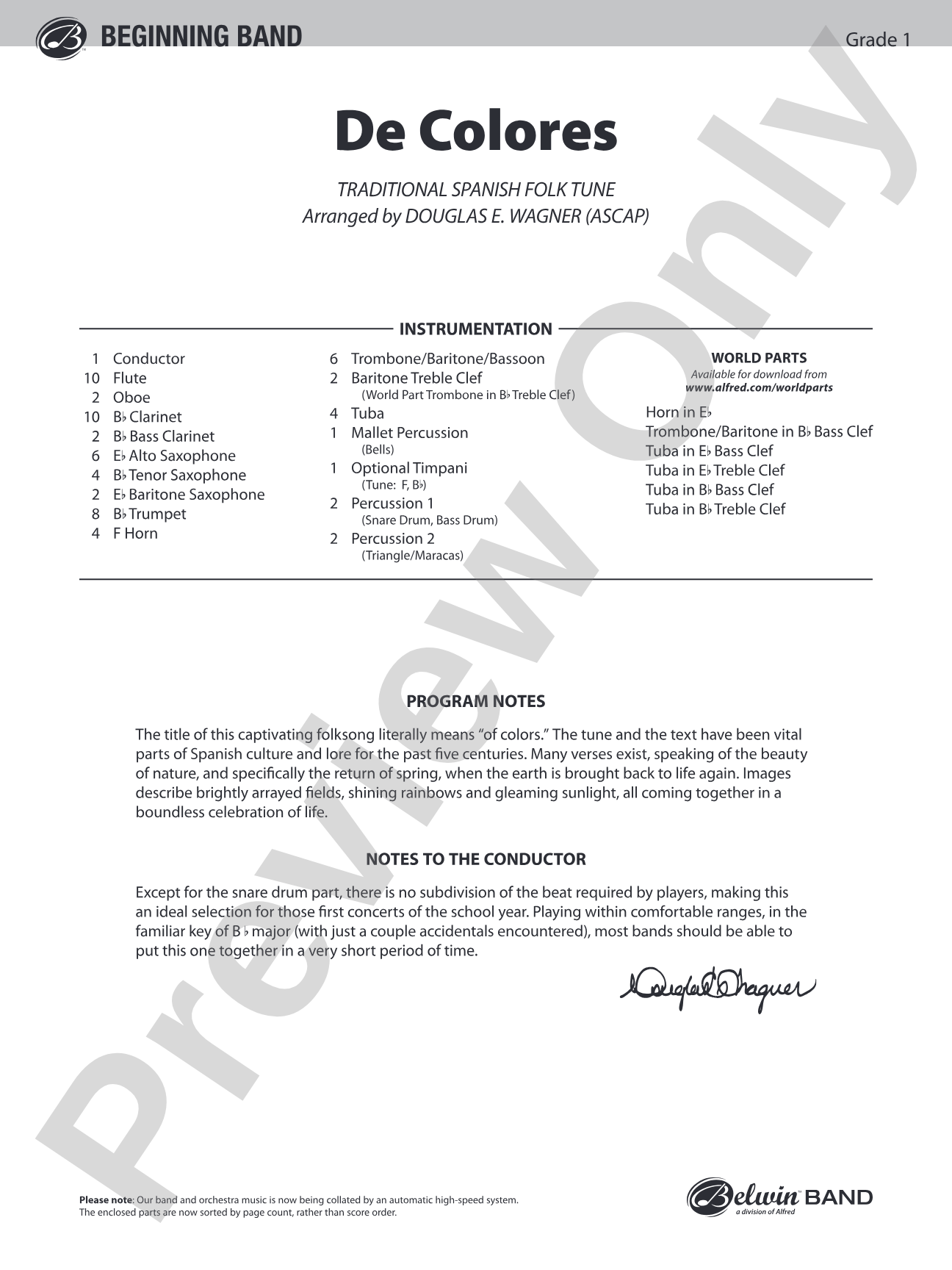
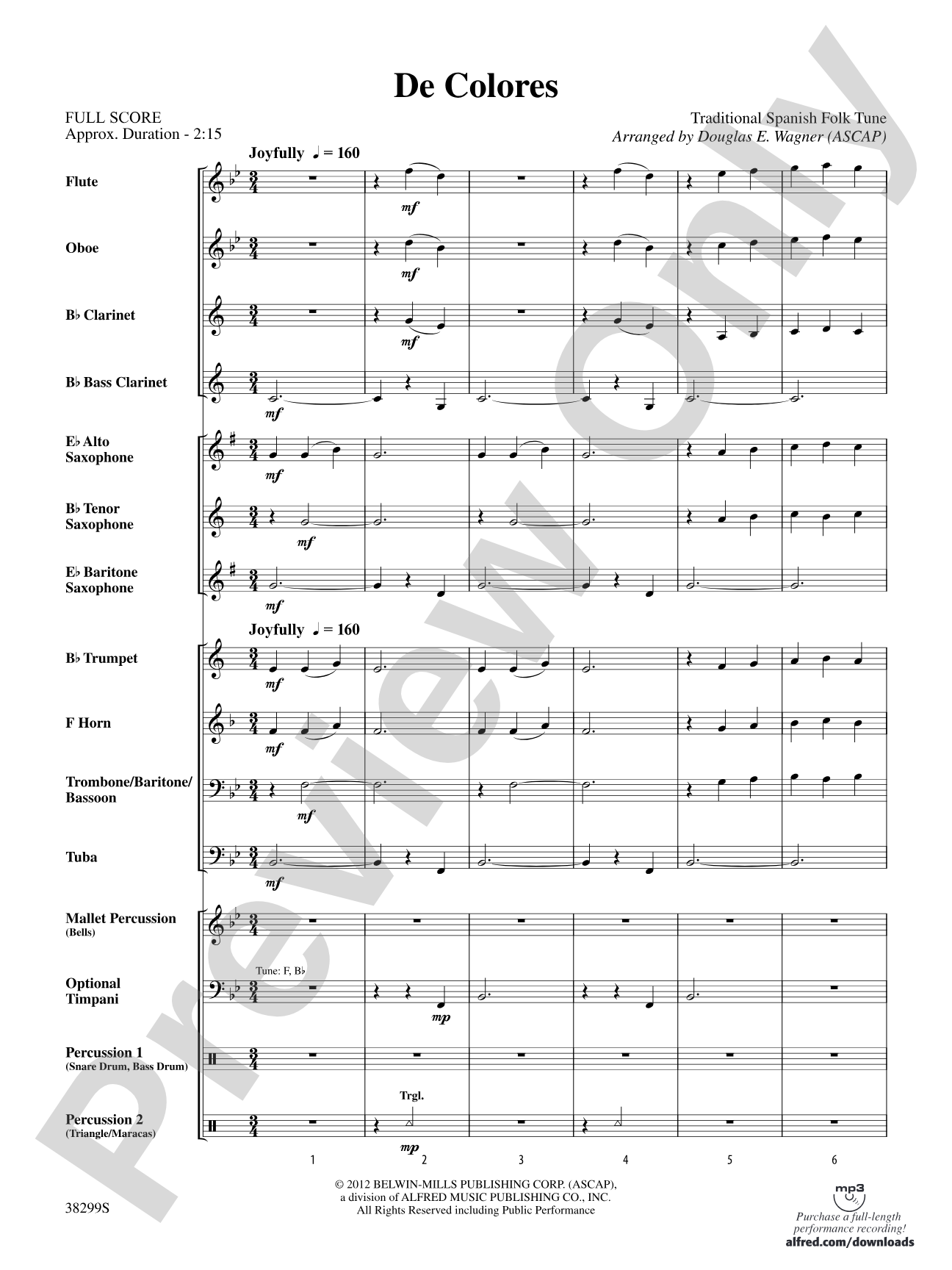
With charming old world style, this traditional Spanish folk tune, cast in three-quarter time, will be a delightfully colorful addition to your beginning band concert---so much so that the title literally translated means "of colors." This charismatic tune will be warmly received on any program. (2:15) This title is available in MakeMusic Cloud.


Don't just read it, hear it, play along with it, and watch your students grow with it. In MakeMusic Cloud, De Colores: Concert Band Conductor Score & Parts comes alive with professional accompaniment, adjustable tempo, and built-in practice tools that turn solo practice into real progress.
Open in the Player
Jump straight in and assign it today.
Start Your Free Trial
Open this title and explore the full library in minutes.
Sample Audio
1
Audio File
--:--
0:00
0:00
Sample Video
No sample videos found.
Additional Details
Series:
Belwin Beginning Band
Publisher:
Alfred Music
Page Count:
132
SKU:
00-PK-0005538
More about this title
About the Arranger: Douglas E. Wagner

Douglas E. Wagner grew up in Chicago and earned degrees in music from Butler University. He spent three decades as a high school music director and administrator before committing fully to composition and arrangement work.
Since 1973, Wagner has published over 3,500 works across choral, band, orchestral, handbell, organ, piano, and vocal genres. His music has circulated in concert halls, on broadcasts, and in schools worldwide, with more than seventeen million copies in circulation. He now lives in Indianapolis with his wife, Sandy.
Why we love this
Wagner's arrangement captures the brightness and forward momentum of this Spanish folk melody without overwhelming young musicians. The straightforward three-quarter time and Grade 1 scoring leave room for students to focus on tone, phrasing, and ensemble blend rather than technical complexity. It's a piece that sounds charming and finished from the first run-through, building student confidence and musicianship simultaneously.
What to expect
A conversation at a Spanish plaza at dusk: unhurried, melodic, and genuinely inviting. The arrangement wraps a timeless folk tune in accessible orchestration that lets students hear themselves as part of something larger than single lines. Warmth emerges from simplicity.
Who it's for
Beginning band directors seeking literature that sounds rich and intentional without straining developing players. This Grade 1 arrangement works equally well for middle school ensembles finding their ensemble voice or high school groups in transition seasons.
How to get the most out of it
- Shape the phrases gently through dynamic contours; even at this level, students hear and respond to direction within the melodic line.
- Let the traditional character breathe by keeping the tempo steady and allowing the three-quarter meter to settle naturally without rushing.
- Balance the melody across sections so that the folk tune sings clearly regardless of which instruments carry the primary line.
- Highlight the warmth in lower voices when they appear; this arrangement uses fuller voicing than many Grade 1 pieces, and supporting parts deserve attention.
How to use it
Use this as the emotional centerpiece of a multicultural concert or as a welcome contrast to more rhythmically driven opening works. The two-minute-fifteen-second length fits naturally into a program block alongside other folk or cultural selections, and its approachable style makes it ideal for a concert where family and community members expect to hear their students playing with confidence and musicianship from the opening note.
Skills your students will build
- Sustaining lyrical phrasing across longer melodic lines
- Balancing ensemble tone when melody shifts between sections
- Reading and executing three-quarter time with musical intent rather than mechanical counting
- Supporting harmonic texture through inner voices and accompaniment parts