Dave Brubeck: It's About Time Cover Image

Dave Brubeck: It's About Time: Concert Band Conductor Score

$9.00 USD
Sale price  $9.00 USD Regular price 
Skip to product information
Dave Brubeck: It's About Time Cover Image

Dave Brubeck: It's About Time: Concert Band Conductor Score

Featuring: Take Five / Unsquare Dance / Blue Rondo a la Turk

The music of Dave Brubeck / arr. Charles Sayre

Grade: 4 (Medium)

Item: 00-CB9727C

$9.00
Shipped

One moment…

Description
The Dave Brubeck Quartet literally broke the ice regarding odd time signatures with their recordings Time Out and Time Further Out. Today, the ability to play in all time signatures is in every musician's repertoire. Charles Sayre skillfully combines "Take Five," "Unsquare Dance," and "Blue Rondo a la Turk" to take us back to when it all began. This is a magnificent medley! (4:40)

Dave Brubeck: It's About Time: Concert Band Conductor Score isn't in MakeMusic Cloud just yet...but it could be. Let us know you'd like to see it, and you'll help shape what comes next. In the meantime, start a free trial and dive into thousands of interactive titles your students can play along with today.

Sample Pages

Sample Audio
No sample audio found.
Sample Video
Additional Details
Series: Pop Symphonic Band
Publisher: Alfred Music
Page Count: 40
UPC: 029156662771
SKU: 00-CB9727C

More about this title

About the Composer: Dave Brubeck
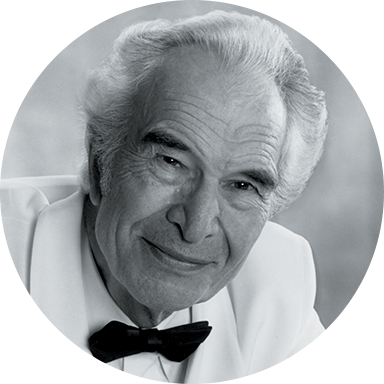
Dave Brubeck

Dave Brubeck was a pianist and composer who fundamentally changed how jazz and classical music could coexist. His improvisation at the keyboard was matched by his ambition to write fully realized concert works spanning choruses, orchestral pieces, chamber music, and ballet suites. Beyond the music itself, he helped dismantle racial barriers in American performance during the mid-20th century, earning recognition that included the Presidential Medal of the Arts and a Grammy Lifetime Achievement Award.

Brubeck's impact on jazz education cannot be overstated. His albums Time Out and Time Further Out proved that complex meters were not obstacles but gateways to new creative possibilities, and his composition Take Five became one of the most recognizable jazz pieces ever recorded. His formal training under Darius Milhaud at Mills College shaped his conviction that composers could speak fluently in both jazz and classical languages. Works like his mass To Hope! and various oratorios have been performed and recorded worldwide, cementing his legacy as both an innovator and a serious composer.

Why we love this

This medley captures the exact moment jazz decided odd meters were normal, not exotic. Charles Sayre's arrangement respects the originals while building something cohesive enough to program on a serious concert without apology. The four-minute-forty-second runtime fits perfectly into a set without overwhelming rehearsal schedules, yet delivers enough rhythmic sophistication to genuinely challenge and engage your band.

What to expect

Energetic and intellectually playful. The medley swings with purpose yet never loses sight of the joy in unexpected rhythmic twists. There's a sense of discovery here, as if the band is stepping into the same studio where Brubeck broke open the door to a whole new way of thinking about time.

Who it's for

Concert bands at the Grade 4 level ready to tackle non-traditional meters with confidence. Your ensemble should have solid fundamentals in rhythmic reading and independence, but this chart will reward that foundation by proving meters like 5/4 and 7/8 are musical territory, not technical hurdles.

How to get the most out of it

  • Establish the meter feel in sectional rehearsals before attempting full-band runs. The transition between 5/4, 7/8, and 3/4 depends on locked internal pulse, not rushing through the written notes.
  • Mark the phrase boundaries clearly in your score so sections understand where to breathe collectively. The medley's power lies in its continuity, and sloppy attacks between sections dissolve that connection.
  • Balance the jazz voicings in the reeds and brass. These aren't classical chord colors; lean into the slight dissonance and open sonorities that define Brubeck's harmonic language.

How to use it

This works beautifully as a bridge between your classical first half and a more adventurous second set. Program it after something traditionally metered to demonstrate how your band thinks about rhythm as a creative tool. It also fits naturally into a concert celebrating American jazz pioneers or as the statement piece that shows your audience what Grade 4 bands can actually do.

Skills your students will build

  • Maintaining steady pulse while reading in 5/4, 7/8, and mixed meter passages
  • Articulating jazz phrasing in a concert band context
  • Sectional balance and independence within non-traditional meters
  • Recognizing and executing stylistic differences between straight-eighths and swing feels
  • Responding to conductor cues across metric modulations

You May Also Like