
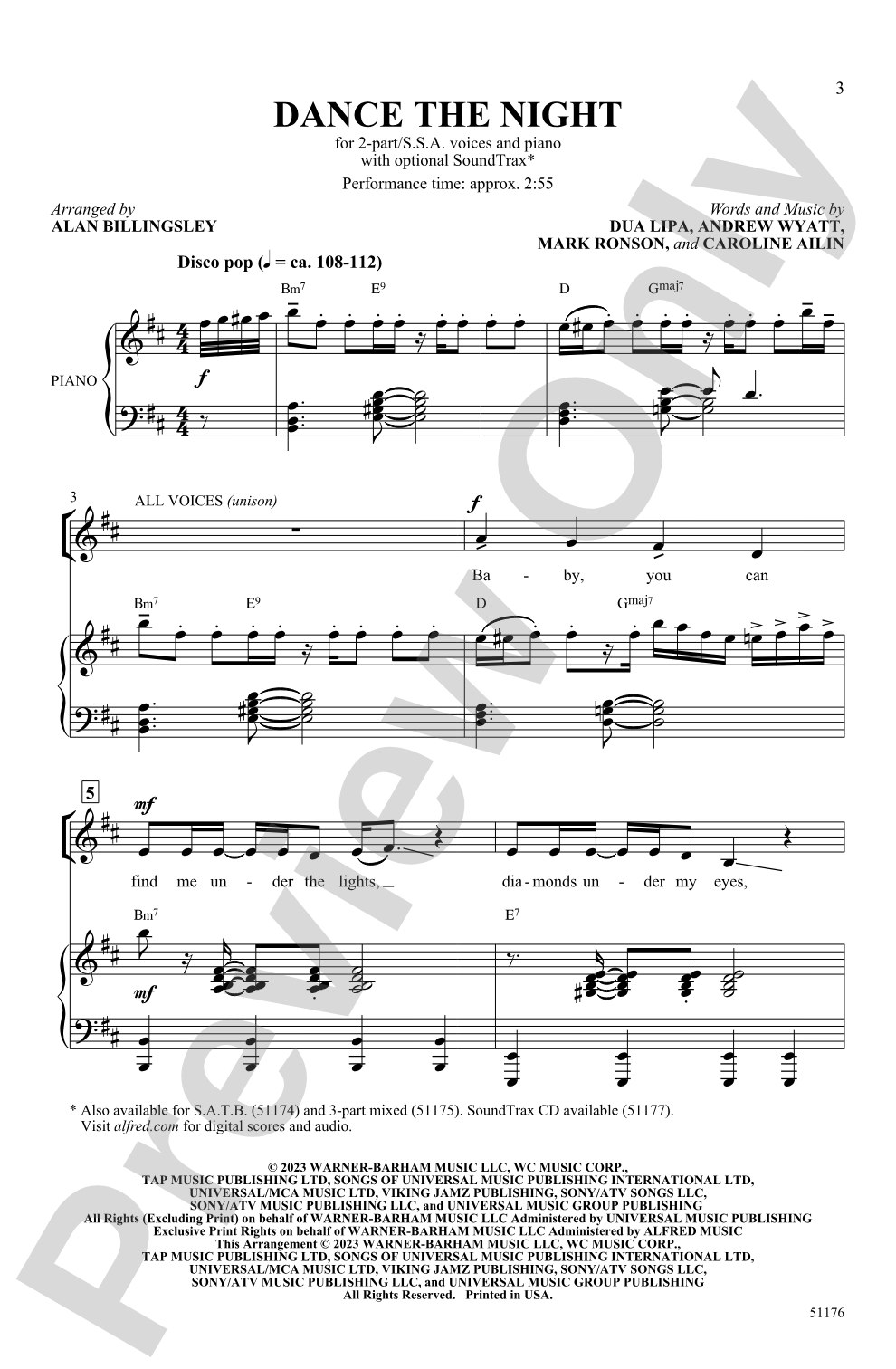
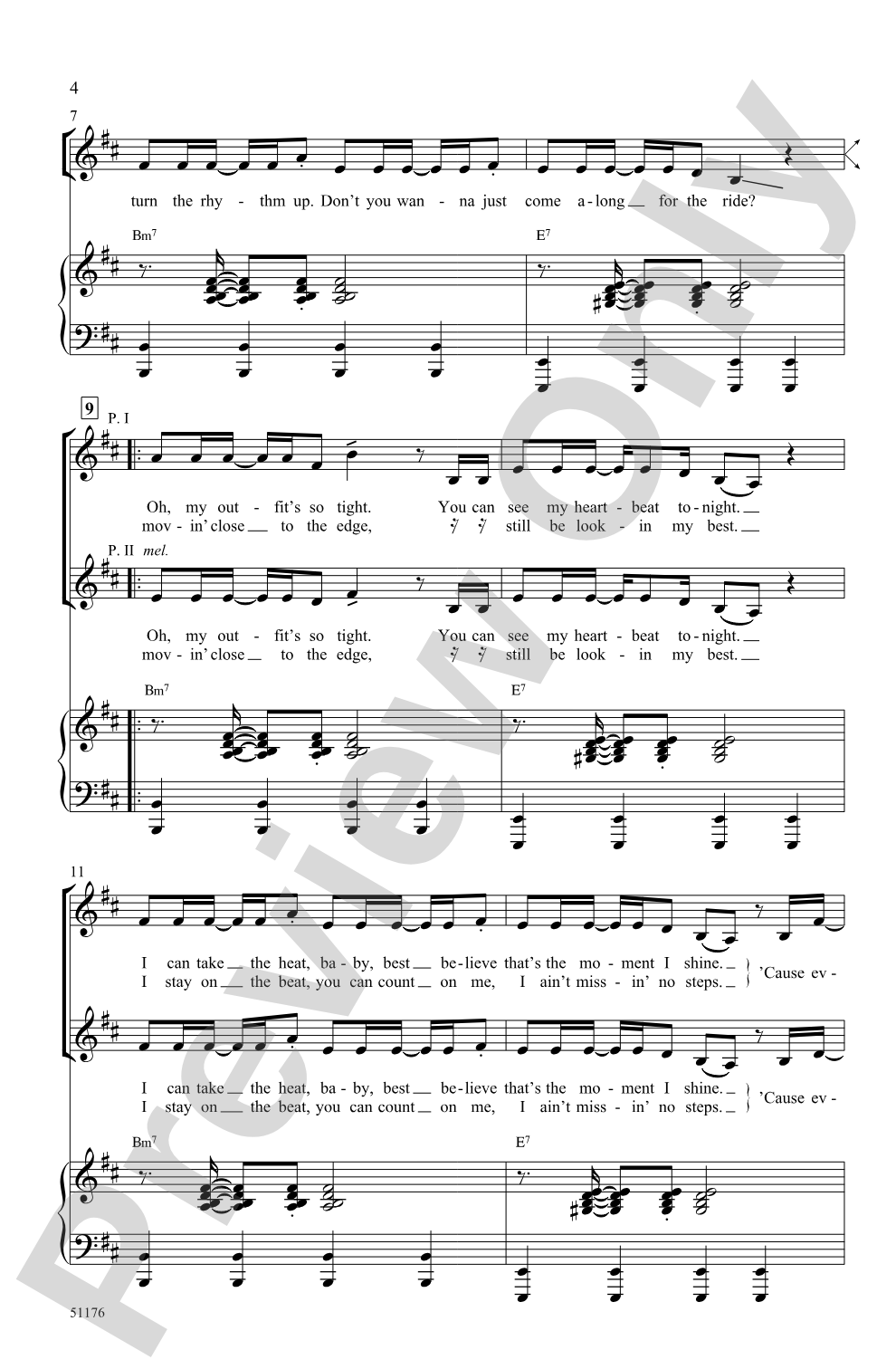

Dance the Night: 2-Part / SSA Choral Octavo
Recorded by Dua Lipa for Barbie
Words and music by Dua Lipa, Andrew Wyatt, Mark Ronson, and Caroline Ailin / arr. Alan Billingsley
Item: 00-PO-0007160
$2.35
Minimum order quantity: 20 copies
One moment…
Related Items
Dance the Night: SATB Choral Octavo |
$2.35
|
View | |
Dance the Night: 3-Part Mixed Choral Octavo |
$2.35
|
View | |
Dance the Night: SoundTrax Digital Audio Download |
$29.99
|
View | |
Dance the Night: SATB Choral Octavo |
$2.35
|
View | |
Dance the Night: 3-Part Mixed Choral Octavo |
$2.35
|
View | |
Dance the Night: 2-Part / SSA Choral Octavo |
$2.35
|
View | |
Dance the Night: Choral Octavo SoundTrax CD |
$29.99
|
View |
Description
Dua Lipa rocked movie theaters around the world with her thrilling contribution to the Barbie soundtrack! Destined to become an icon of disco-pop style, the catchy, rhythmic hook and good-time lyrics make you want to move and groove. Your choir will have a blast, and your audience is sure to be on their feet! Don't miss Alan's soundalike SoundTrax accompaniment.


Discover MakeMusic Cloud: thousands of interactive titles your students can play along with today.
Sample Audio
1
Audio File
--:--
0:00
0:00
Sample Video
Additional Details
Series:
Alfred Pop Choral Series
Publisher:
Alfred Music
Page Count:
12
SKU:
00-PO-0007160
More about this title
About the Composer: Dua Lipa
Dua Lipa is a Kosovan-British singer and songwriter who emerged as one of the defining pop voices of the 2010s and 2020s. Her work spans disco-influenced pop, dance, and electronic production, with a gift for crafting hooks that lodge instantly in the listener's ear. Beyond her own releases, she has collaborated with producers and songwriters across multiple genres, creating music that translates effectively to both commercial and educational contexts.
In the context of choral music, Lipa's songwriting here demonstrates accessibility without sacrificing energy or style. The arrangement by Alan Billingsley makes her disco-pop sensibility work naturally for young singers, proving that contemporary pop can be both fun and musically substantive for ensemble performance.
Why we love this
This arrangement captures the infectious, feel-good spirit of the original while giving young singers something genuinely fun to perform. The disco-pop groove sits comfortably in developing voices, and the rhythmic drive keeps choirs engaged without demanding advanced technique. Billingsley's accompaniment makes the piece feel polished and concert-ready from first rehearsal.
What to expect
Disco-pop euphoria. The piece radiates the kind of unself-conscious joy that makes listeners want to move; syncopated rhythms and bright harmony create momentum that carries the choir through from top to finish. This is music made for smiling.
Who it's for
This piece works beautifully for middle school through high school choirs seeking energetic, contemporary repertoire that audiences recognize and enjoy. It's ideal for groups wanting to program modern pop without sacrificing vocal development or musicianship.
How to get the most out of it
- Lock the rhythmic hook early in rehearsal by speaking the lyric rhythm before singing, especially in the unison sections. This establishes the pop groove and prevents the piece from dragging.
- Balance the two or three parts so the melody line stays prominent; the harmony should support rather than compete. Check that SSA voicing doesn't obscure the memorable hook.
- Lean into the light, danceable quality of the accompaniment. Encourage singers to feel the beat in their bodies, not just sing the notes, so the performance has genuine energy.
- Use the recorded accompaniment to lock tempos and feel; pop music demands rhythmic precision that's easier to achieve when singers hear the full groove with drums and bass.
How to use it
Open a concert with this number to set an upbeat tone and signal to the audience that your choir performs music beyond the traditional canon. It pairs well with other contemporary pop or musical theater selections, and it's especially effective as a finale that leaves the audience energized. Spring concerts and pops programs are the natural home for this one.
Skills your students will build
- Rhythmic precision in syncopated pop grooves
- Balancing melody and harmony in small-ensemble voicing
- Matching contemporary style and energy without oversinging
- Reading and performing alongside recorded accompaniment
- Part independence in 2-Part and SSA textures