
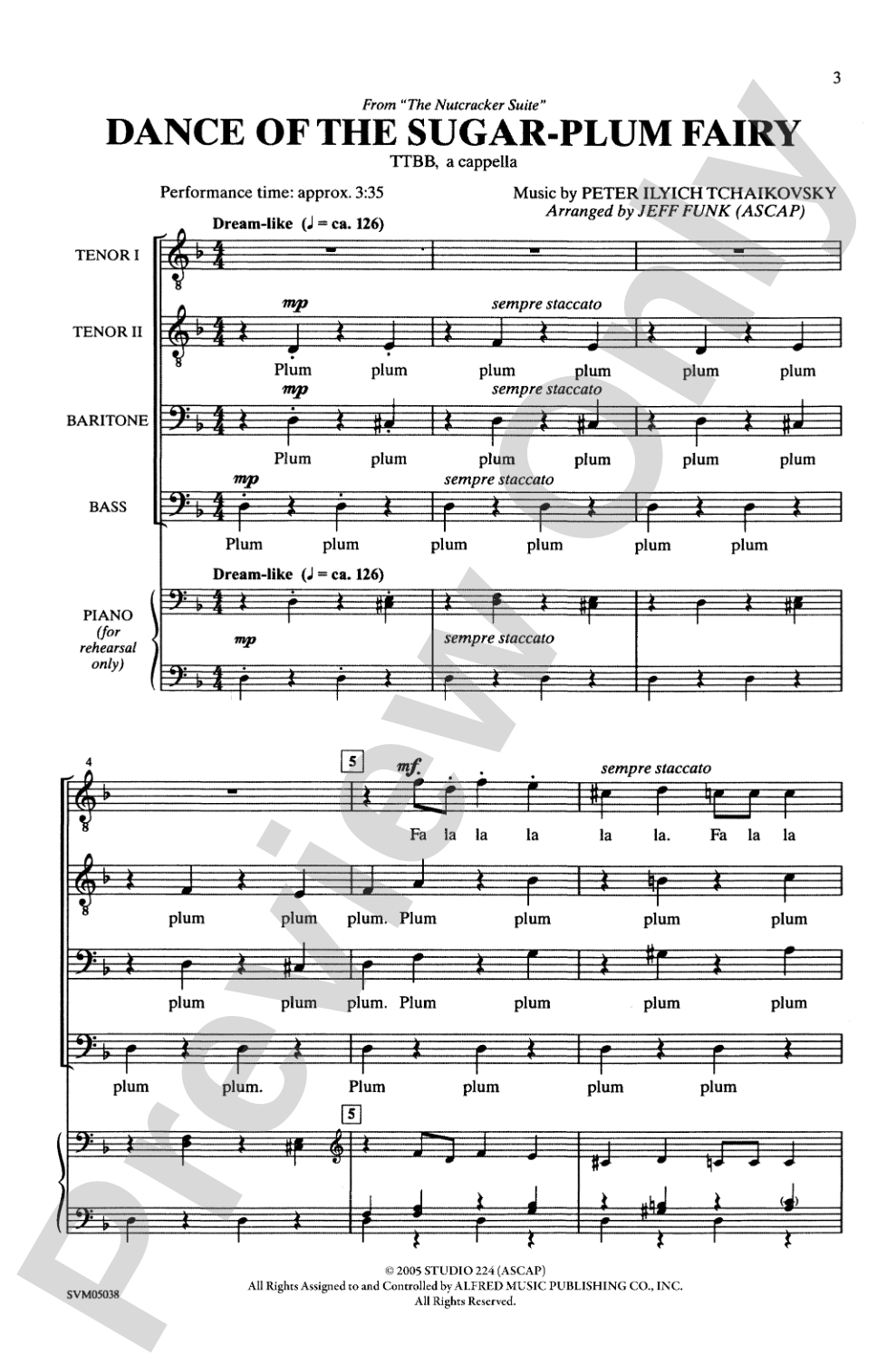
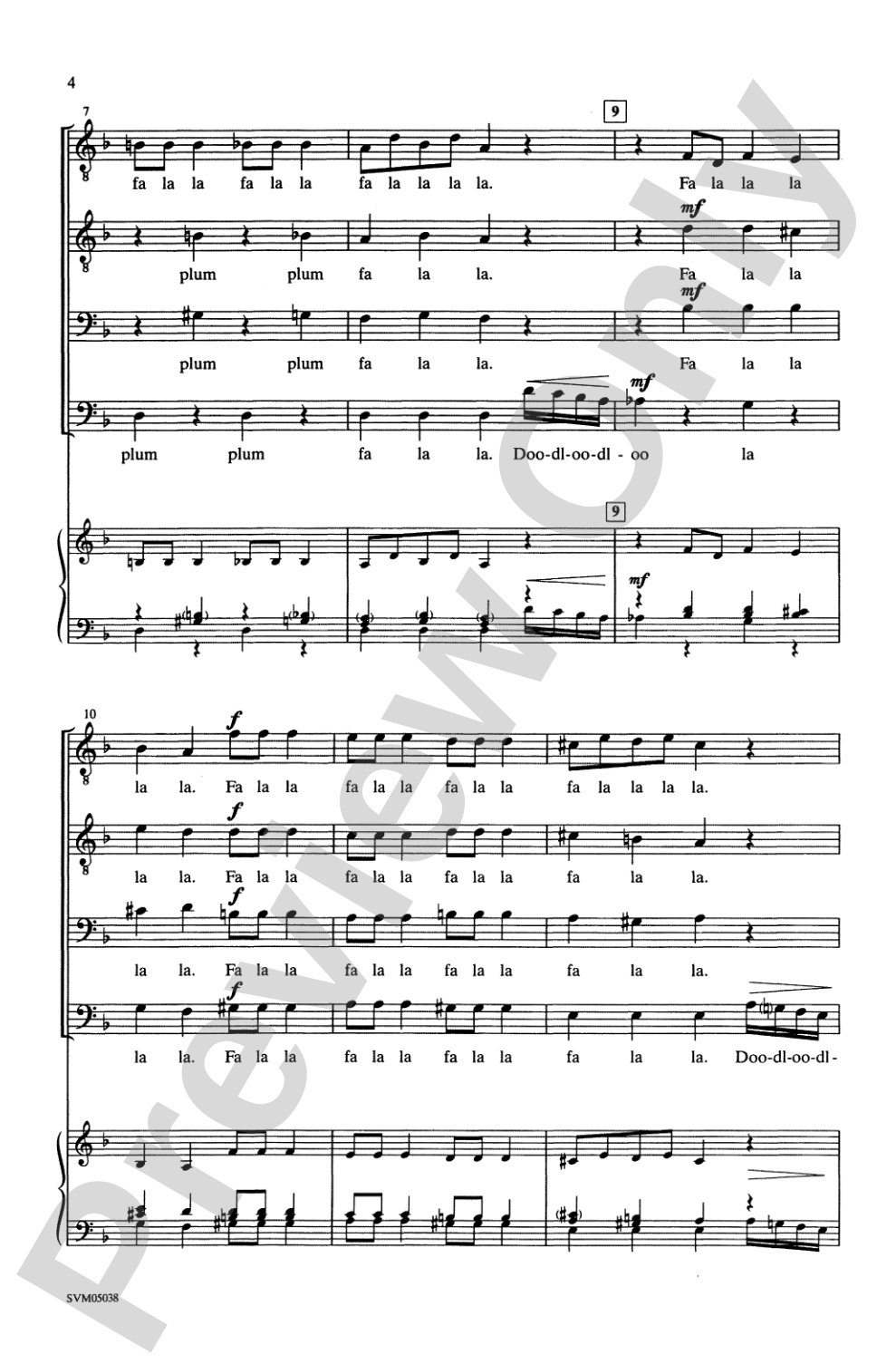

Dance of the Sugar-Plum Fairy (from The Nutcracker Suite): TTBB, a cappella Choral Octavo
From The Nutcracker Suite
Music by Peter Ilyich Tchaikovsky / arr. Jeff Funk
Level: Moderate
Item: 00-PO-0002798
$2.25
Minimum order quantity: 20 copies
Pickup currently not available
Related Items
Dance of the Sugar-Plum Fairy (from The Nutcracker Suite): SATB, a cappella Choral Octavo |
$2.05
|
View | |
Dance of the Sugar-Plum Fairy (from The Nutcracker Suite): SSAA, a cappella Choral Octavo |
$2.05
|
View | |
Dance of the Sugar-Plum Fairy (from The Nutcracker Suite): 3-Part Mixed, a cappella Choral Octavo |
$2.05
|
View | |
Dance of the Sugar-Plum Fairy: SATB, a cappella Choral Octavo |
$2.05
|
View | |
Dance of the Sugar-Plum Fairy: SSAA, a cappella Choral Octavo |
$2.05
|
View | |
Dance of the Sugar-Plum Fairy: 3-Part Mixed, a cappella Choral Octavo |
$2.05
|
View | |
Dance of the Sugar-Plum Fairy: TTBB, a cappella Choral Octavo |
$2.25
|
View |
Description
Jeff Funk's choral adaptation of this selection from The Nutcracker Suite was a huge success in its original SATB setting. Also available in 3-part mixed, women's, and men's editions that will that will provide wonderful lighthearted programming for your next holiday concert.


Dance of the Sugar-Plum Fairy (from The Nutcracker Suite): TTBB, a cappella Choral Octavo isn't in MakeMusic Cloud just yet...but it could be. Let us know you'd like to see it, and you'll help shape what comes next. In the meantime, start a free trial and dive into thousands of interactive titles your students can play along with today.
Request This Title
Tell us you want it.
Start Your Free Trial
Explore everything that's ready to play right now.
Sample Audio
1
Audio File
--:--
0:00
0:00
Sample Video
No sample videos found.
Additional Details
Series:
Alfred Archive Edition: Studio PR Catalog
Publisher:
Alfred Music
Page Count:
12
SKU:
00-PO-0002798
More about this title
About the Composer: Peter Ilyich Tchaikovsky
Peter Ilyich Tchaikovsky (1840-1893) was a Russian Romantic composer whose gift for melody and orchestration shaped late 19th-century classical music. His ballets—Swan Lake, Sleeping Beauty, and The Nutcracker—remain cornerstone works in both dance and concert repertoire, prized for their accessibility and emotional directness.
Tchaikovsky's ability to write music that speaks immediately to listeners, whether in grand symphonic form or intimate character pieces, makes his work invaluable for music education. The Nutcracker in particular has introduced generations of students to orchestral color and thematic development, making this choral adaptation an ideal bridge between instrumental and vocal literature.
Why we love this
Jeff Funk's arrangement captures the delicate shimmer of the original without sacrificing the warmth and resonance that makes TTBB singing distinctive. This version gives male voices access to one of the most recognizable melodies in classical music, and the a cappella setting forces singers to lock in rhythmically and harmonically—building ensemble tightness fast.
What to expect
Delicate, playful, and crystalline. You're capturing the tinkling, jewel-box quality of Tchaikovsky's original orchestration through voice alone, which means clarity and precision matter. There's a lightness here that contrasts beautifully with heavier winter repertoire, creating space and character within the concert.
Who it's for
Men's choirs and TTBB ensembles looking for approachable, recognizable repertoire with real musical substance. This works equally well for groups preparing their first holiday concert and for experienced singers wanting a charming, technically straightforward piece that still demands ensemble focus.
How to get the most out of it
- Balance the upper two tenor parts so the primary melody sings through; these voices often carry the tunefulness while baritone and bass provide grounding. Rehearse them separately if they're drowning.
- Approach the lighter, dance-like character with crisp articulation on repeated note figures. This isn't a ballad; it moves with spring and wit.
- Lock the bass line early and rehearse it as the structural anchor. Without a piano or accompaniment, bass intonation becomes the grid everything else locks into.
- Shape phrases through subtle dynamic contour rather than drastic volume changes. The Sugar-Plum Fairy's world is delicate and precise.
How to use it
Program this early in your concert, before the heavier choral works, to establish an energetic, festive tone. It pairs naturally with other Nutcracker selections or classical reimaginings, and its brevity (12 pages) makes it perfect for filling a programming gap or providing a palate cleanser between longer pieces.
Skills your students will build
- Balancing upper and lower voice parts in a cappella texture
- Maintaining rhythmic precision without instrumental reference
- Singing light, articulate passages with clarity and brightness
- Listening for intonation in four-part harmony without accompaniment support
- Interpreting character and style in a recognizable classical melody