
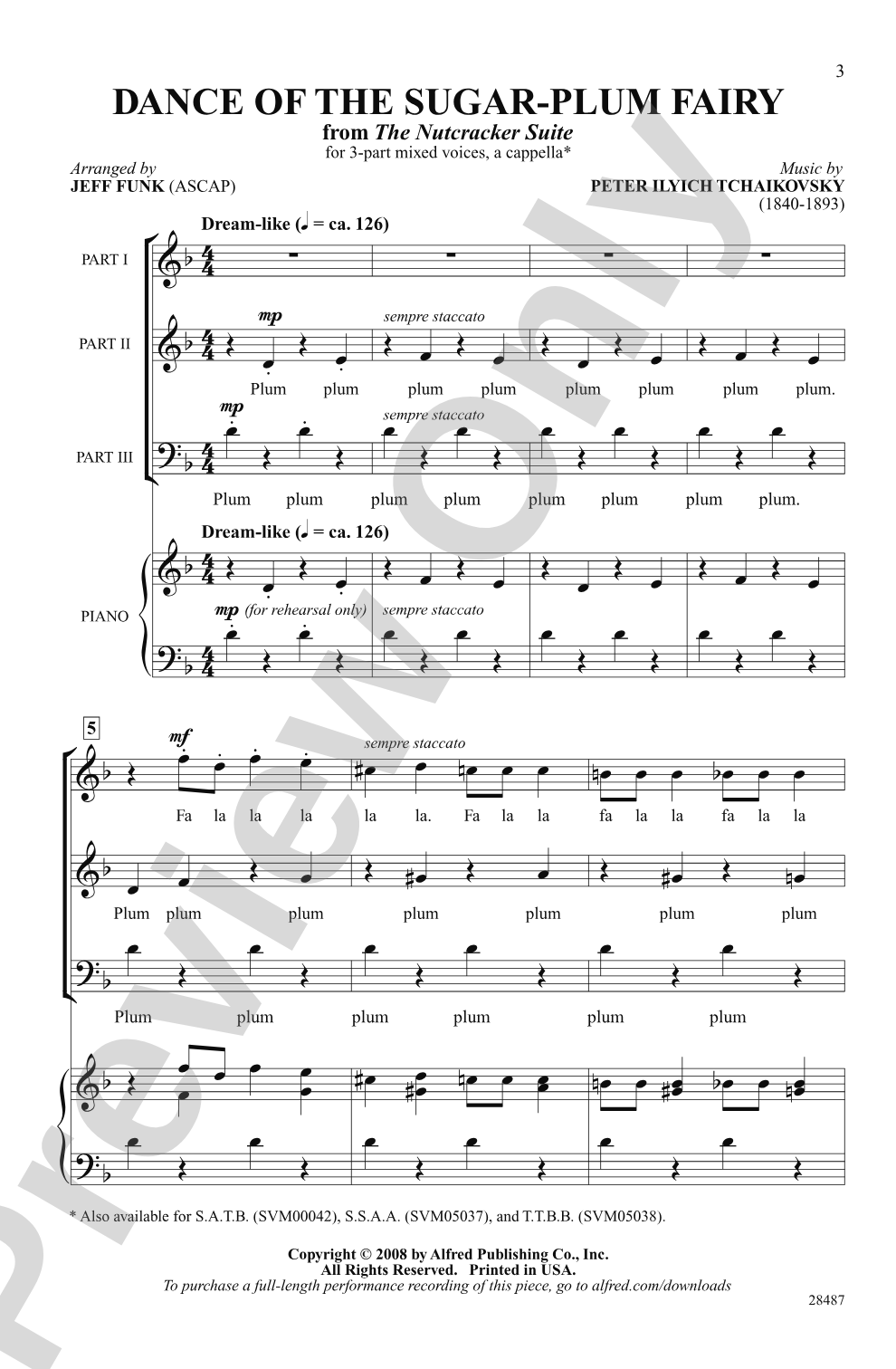
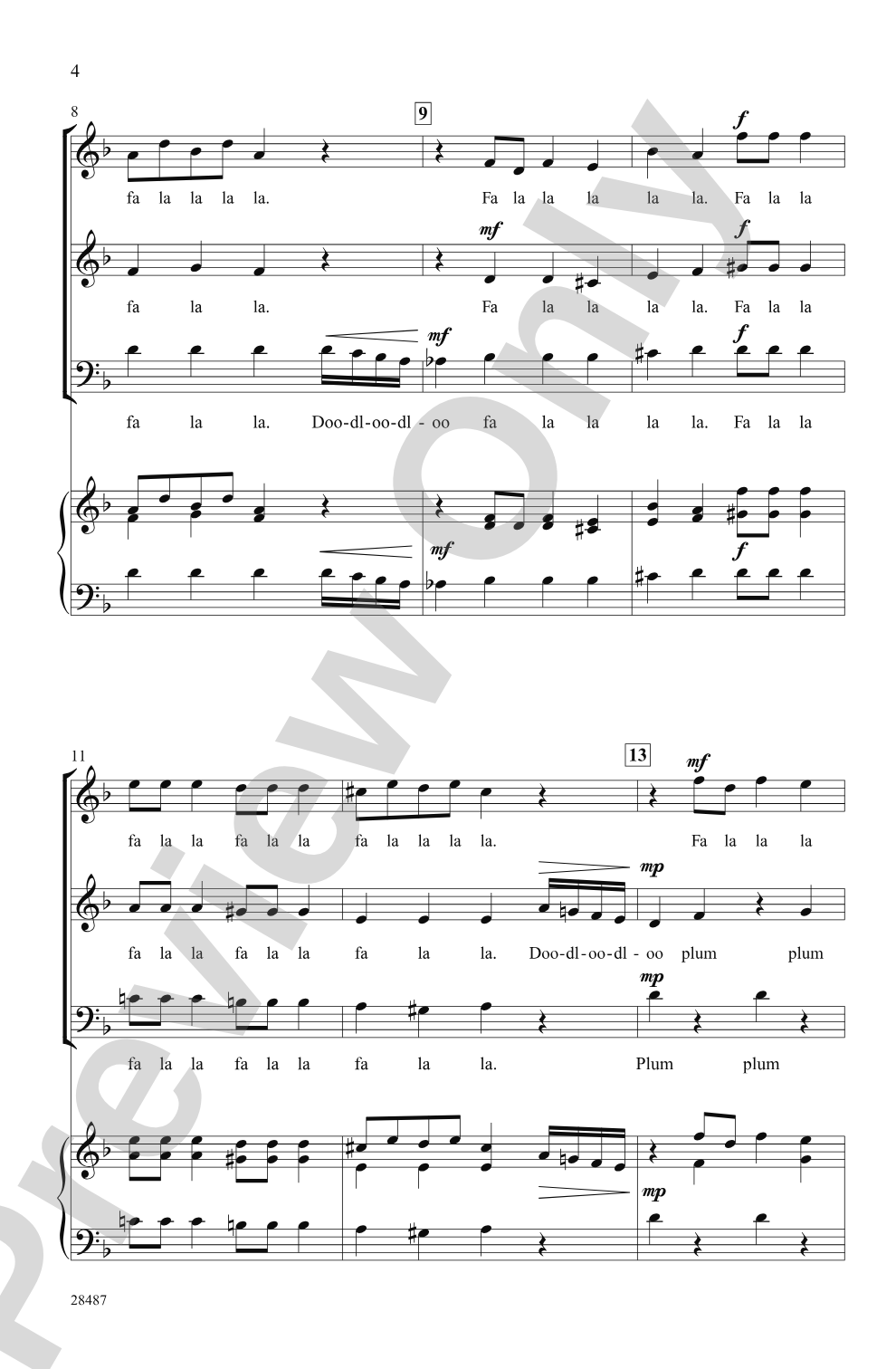

Dance of the Sugar-Plum Fairy (from The Nutcracker Suite): 3-Part Mixed, a cappella Choral Octavo
From The Nutcracker Suite
Music by Peter Ilyich Tchaikovsky / arr. Jeff Funk
Item: 00-PO-0000458
$2.05
Minimum order quantity: 20 copies
Pickup currently not available
Related Items
Dance of the Sugar-Plum Fairy (from The Nutcracker Suite): SATB, a cappella Choral Octavo |
$2.05
|
View | |
Dance of the Sugar-Plum Fairy (from The Nutcracker Suite): SSAA, a cappella Choral Octavo |
$2.05
|
View | |
Dance of the Sugar-Plum Fairy (from The Nutcracker Suite): TTBB, a cappella Choral Octavo |
$2.25
|
View | |
Dance of the Sugar-Plum Fairy: SATB, a cappella Choral Octavo |
$2.05
|
View | |
Dance of the Sugar-Plum Fairy: SSAA, a cappella Choral Octavo |
$2.05
|
View | |
Dance of the Sugar-Plum Fairy: 3-Part Mixed, a cappella Choral Octavo |
$2.05
|
View | |
Dance of the Sugar-Plum Fairy: TTBB, a cappella Choral Octavo |
$2.25
|
View |
Description
Jeff Funk's choral adaptation of this selection from The Nutcracker Suite was a huge success in its original SATB setting. Also available in 3-part mixed, women's, and men's editions that will that will provide wonderful lighthearted programming for your next holiday concert. This title is available in Music Prodigy.


Dance of the Sugar-Plum Fairy (from The Nutcracker Suite): 3-Part Mixed, a cappella Choral Octavo isn't in MakeMusic Cloud just yet...but it could be. Let us know you'd like to see it, and you'll help shape what comes next. In the meantime, start a free trial and dive into thousands of interactive titles your students can play along with today.
Request This Title
Tell us you want it.
Start Your Free Trial
Explore everything that's ready to play right now.
Sample Audio
1
Audio File
--:--
0:00
0:00
Sample Video
Additional Details
Series:
Alfred Choral Designs
Publisher:
Alfred Music
Page Count:
12
SKU:
00-PO-0000458
More about this title
About the Composer: Peter Ilyich Tchaikovsky
Peter Ilyich Tchaikovsky (1840-1893) stands as one of the most performed composers in the concert hall, yet his path was anything but conventional. Born in St. Petersburg, he studied law before turning to music against his family's wishes, eventually becoming a towering figure of the Romantic era. His gift for melody and orchestration made him a master of emotional expression, from intimate chamber works to grand ballets that continue to define the repertoire.
Tchaikovsky's three ballets—Swan Lake, The Sleeping Beauty, and The Nutcracker—remain the cornerstone of classical ballet worldwide. The Nutcracker in particular has become inseparable from the winter season, its music instantly recognizable across generations. For choral musicians, his ability to craft singable, memorable lines translates beautifully into ensemble settings, making his works ideal for concert programming.
Why we love this
Jeff Funk has captured the whimsy and elegance of this beloved orchestral moment while shaping it perfectly for mixed voices. The 3-part mixed voicing makes it accessible to a broad range of choir levels without sacrificing the delicate character that makes this piece magical. Programming this alongside other holiday selections gives you an arrangement that feels fresh and sophisticated rather than typical.
What to expect
Delicate and sparkling, this arrangement captures the original's sense of wonder and playfulness. The a cappella setting gives it an almost intimate quality, as if the choir is conjuring the Sugar-Plum Fairy's world through pure vocal color rather than relying on instrumental support.
Who it's for
This arrangement works for middle school through adult community choirs, particularly those looking for repertoire that appeals to audiences without requiring extensive rehearsal time. Directors seeking accessible holiday programming that avoids overly arranged or novelty treatments will find this a natural fit.
How to get the most out of it
- Keep the texture light and transparent throughout. Think of the voices as individual strands rather than a full choir; this allows the melodic contour to shine without muddying the a cappella sonority.
- Shape the phrasing with gentle dynamic curves that suggest the original orchestral scoring. Avoid rigid phrase breaks; let each line breathe naturally into the next.
- Balance the middle and lower voices carefully so they support rather than obscure the top line. A cappella requires precise intonation, so rehearse the harmonic underpinnings as their own exercise.
- Approach the articulation with precision but warmth. Crisp diction preserves clarity in the quick passages without making the piece sound brittle or rushed.
How to use it
This works beautifully as a standalone showstopper in a holiday concert or as a connector between heavier seasonal fare and more serious repertoire. Its familiar melody draws audiences in immediately while demonstrating your choir's control and blend in an a cappella context.
Skills your students will build
- Balancing melodic and harmonic roles in a cappella ensembles
- Maintaining rhythmic precision and intonation without instrumental support
- Shaping phrasing to suggest orchestral articulation through vocal technique
- Blending three-part voicing with even tone production across the range