Dance of the Blue People Cover Image

Dance of the Blue People: Brass Quintet Score & Parts

$15.00 USD
Sale price  $15.00 USD Regular price 
Skip to product information
Dance of the Blue People Cover Image

Dance of the Blue People: Brass Quintet Score & Parts

By Vince Gassi

Level: Medium

Item: 81-BQ26225

$15.00
Shipped

One moment…

Description
If you are interested in "Time Travel" this piece is definitely for them. It starts out in 5/4 and moves back and forth through time; 3/4, 4/4, back to 5/4 - it never gets predictable. Angular melodic lines and funky solos for trumpet and tuba round this challenging chart out. Optional percussion parts include conga, cymbal, tambourine, guica and even handclaps. This is a standard on the planet Remulak.

Dance of the Blue People: Brass Quintet Score & Parts isn't in MakeMusic Cloud just yet...but it could be. Let us know you'd like to see it, and you'll help shape what comes next. In the meantime, start a free trial and dive into thousands of interactive titles your students can play along with today.

Sample Pages

No sample pages found.

Sample Audio
0:00
0:00
Sample Video
Additional Details
Series: Eighth Note Publications
Publisher: Eighth Note Publications
ISBN10: 1-55472-252-7
ISBN13: 978-1-55472-252-5
UPC: 685462002566
SKU: 81-BQ26225
Instrumentation: Brass Quintet (Opt. Drumset)

More about this title

About the Composer: Vince Gassi
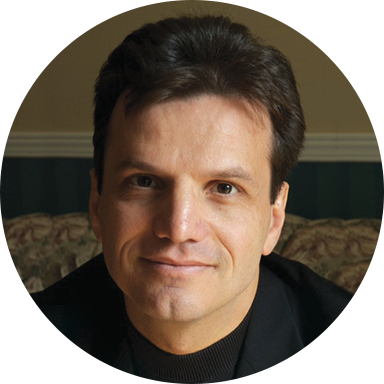
Vince Gassi

Vince Gassi has published over 100 works since establishing himself with Alfred Music in 2006, building a reputation as a composer whose output balances genuine musical substance with genuine appeal to young ensembles. He holds a Bachelor of Music from the University of Western Ontario and later earned his Ph.D. from York University in Toronto, with additional training in composition and arranging at the Dick Grove School of Music in Los Angeles.

Gassi has spent twenty-five years teaching instrumental music at elementary and secondary levels while maintaining an active schedule as a guest conductor, adjudicator, and clinician across North America. His pieces appear regularly on international concert and festival programs, and his workshops on creative engagement and digital workflow have become known for bridging the gap between musical ambition and practical classroom teaching. His works have been performed and recorded across North America, Europe, and Japan, with frequent performances at the Midwest Clinic.

Why we love this

This is the kind of chart that keeps musicians engaged precisely because it refuses to settle into predictability. The shifting meter structure (5/4, 3/4, 4/4) works because Gassi writes through the changes rather than around them; the melody and rhythm push forward rather than pause for reorientation. The trumpet and tuba solos add personality and a touch of humor, making this a piece musicians want to rehearse, not one they feel obligated to learn.

What to expect

Angular and propulsive, with a playful undercurrent of funk that suggests a piece comfortable in both jazz and contemporary classical spaces. The constant rhythmic reorientation creates an almost hypnotic forward momentum, especially when the ensemble locks into the interplay between the shifting meters and the soloists' phrasing. There's an element of controlled chaos here—deliberate and compositionally sophisticated, yet energetic enough to feel like you're discovering something new with each rehearsal.

Who it's for

Medium-level brass quintets that thrive on rhythmic complexity and contemporary style will find this score both challenging and creatively satisfying. It works well for groups preparing for competitions or festivals where arrangements with personality and musicianship stand out. This piece suits ensembles whose players are secure enough to navigate meter changes without losing ensemble cohesion.

How to get the most out of it

  • Lock the meter changes together in rehearsal by isolating each section in isolation first, then creating a brief conducted transition where you hold the downbeat of the new measure clearly. Verbal counting during early rehearsals ('one-two-three-four-five, now one-two-three') helps the ensemble internalize the switch rather than rely on muscle memory alone.
  • Let the trumpet and tuba soloists claim their character early. These aren't accompaniment passages; they're moments of instrumental personality. Give them rehearsal time to find their voice and confidence in the funky phrasing before locking everything together.
  • The optional percussion parts (conga, cymbal, tambourine, guica, handclaps) add texture and rhythmic drive, but only if the rhythms are crystalline. If you include them, make sure each percussionist understands their exact placement in the meter structure, not just the general feel.
  • Treat the angular melodic lines as written features, not problems to smooth out. The disjunct intervals and unexpected leaps are what make this piece distinctive. Encourage players to articulate the shape clearly rather than trying to make it lyrical.

How to use it

Program this as a standalone feature during a brass showcase or contemporary music concert, where its rhythmic innovation and solos make it a conversation piece. It pairs effectively with more traditional quintet repertoire in a concert that balances historical and contemporary brass writing, providing programmatic contrast without jarring stylistic whiplash. For contest preparation, this piece demonstrates musicianship and technical precision to adjudicators because the difficulty lies not in technical display but in rhythmic maturity and ensemble listening.

Skills your students will build

  • Reading and performing in multiple meters (5/4, 3/4, 4/4) with rhythmic security
  • Executing meter changes without losing ensemble cohesion
  • Interpreting angular melodic lines with appropriate articulation and phrasing
  • Balancing written solos with ensemble texture
  • Incorporating optional percussion parts with accurate rhythmic coordination
  • Developing rhythmic independence while maintaining ensemble synchronization

You May Also Like