

D-Tour: String Orchestra Conductor Score & Parts
By Todd Parrish
Grade: 1
Item: 00-PK-0007704

$50.00
Pickup currently not available
Buy Extra Parts (Digital PDF Download)
| Product | Price | Quantity |
|---|---|---|
| D-Tour: Score | $9.00 | |
| D-Tour: 1st Violin | $5.99 | |
| D-Tour: 2nd Violin | $5.99 | |
| D-Tour: Viola | $5.99 | |
| D-Tour: Cello | $5.99 | |
| D-Tour: String Bass | $5.99 | |
| D-Tour: Piano Accompaniment | $5.99 |
Parts Added to Cart!
Description
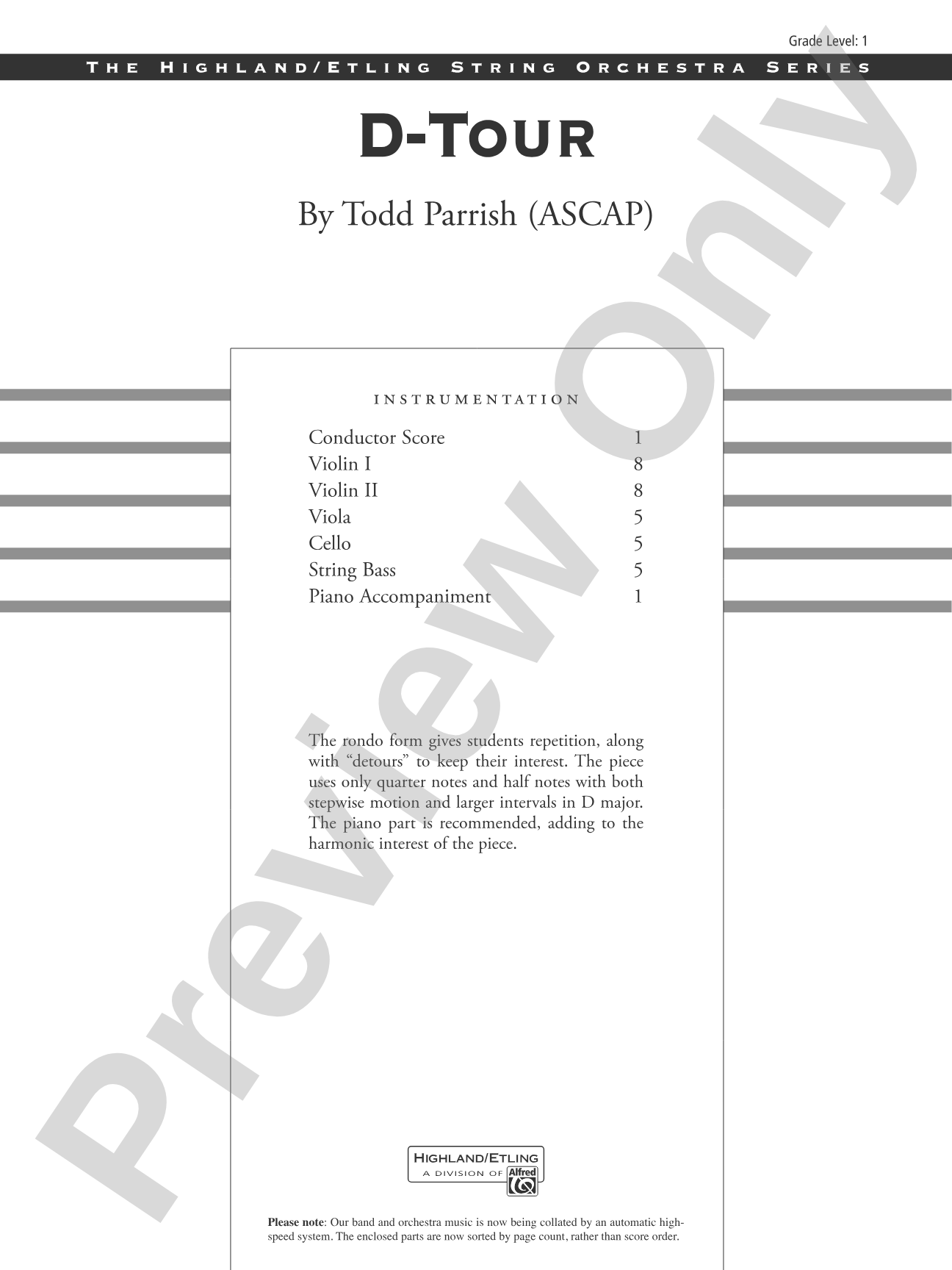
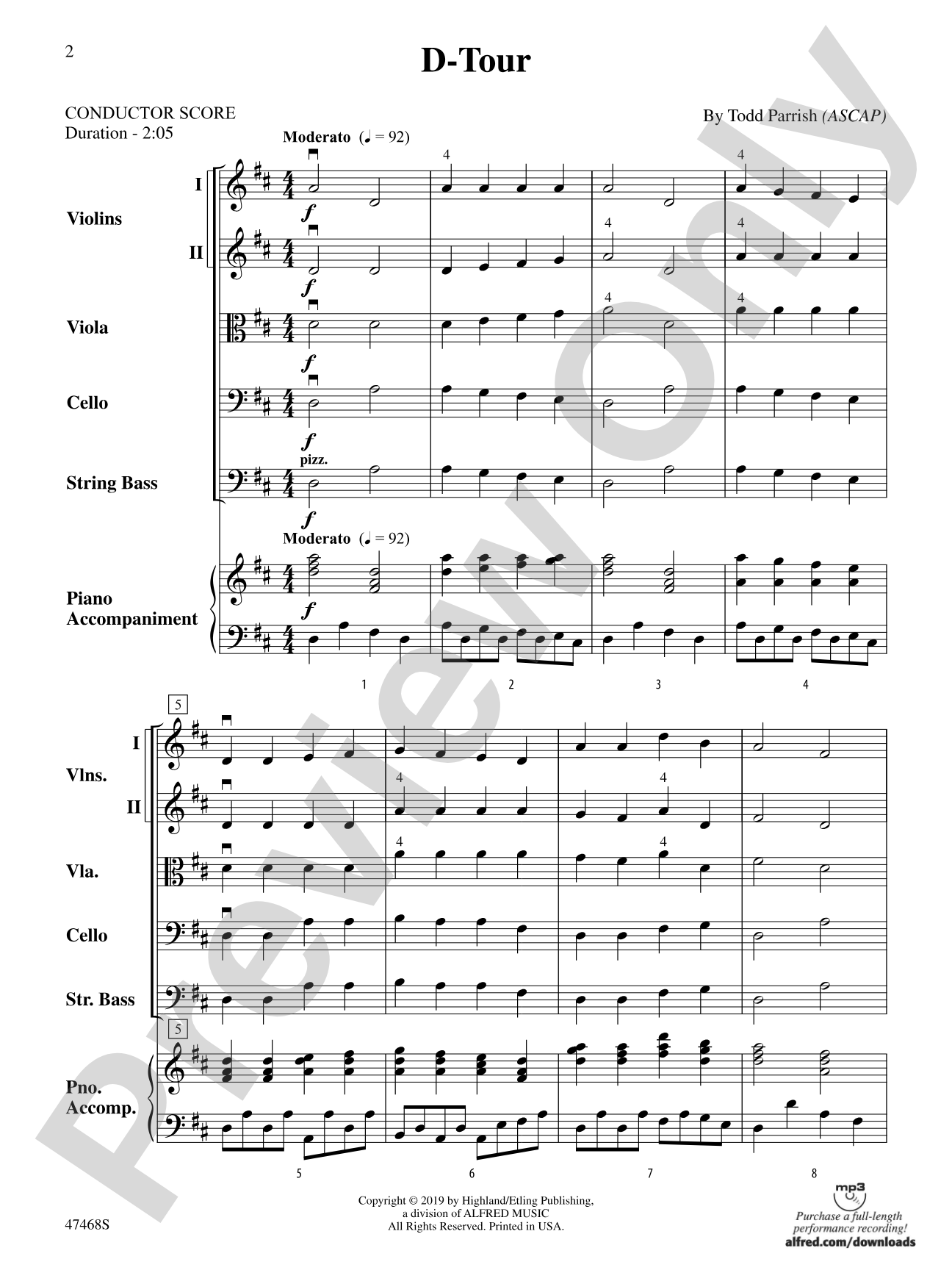
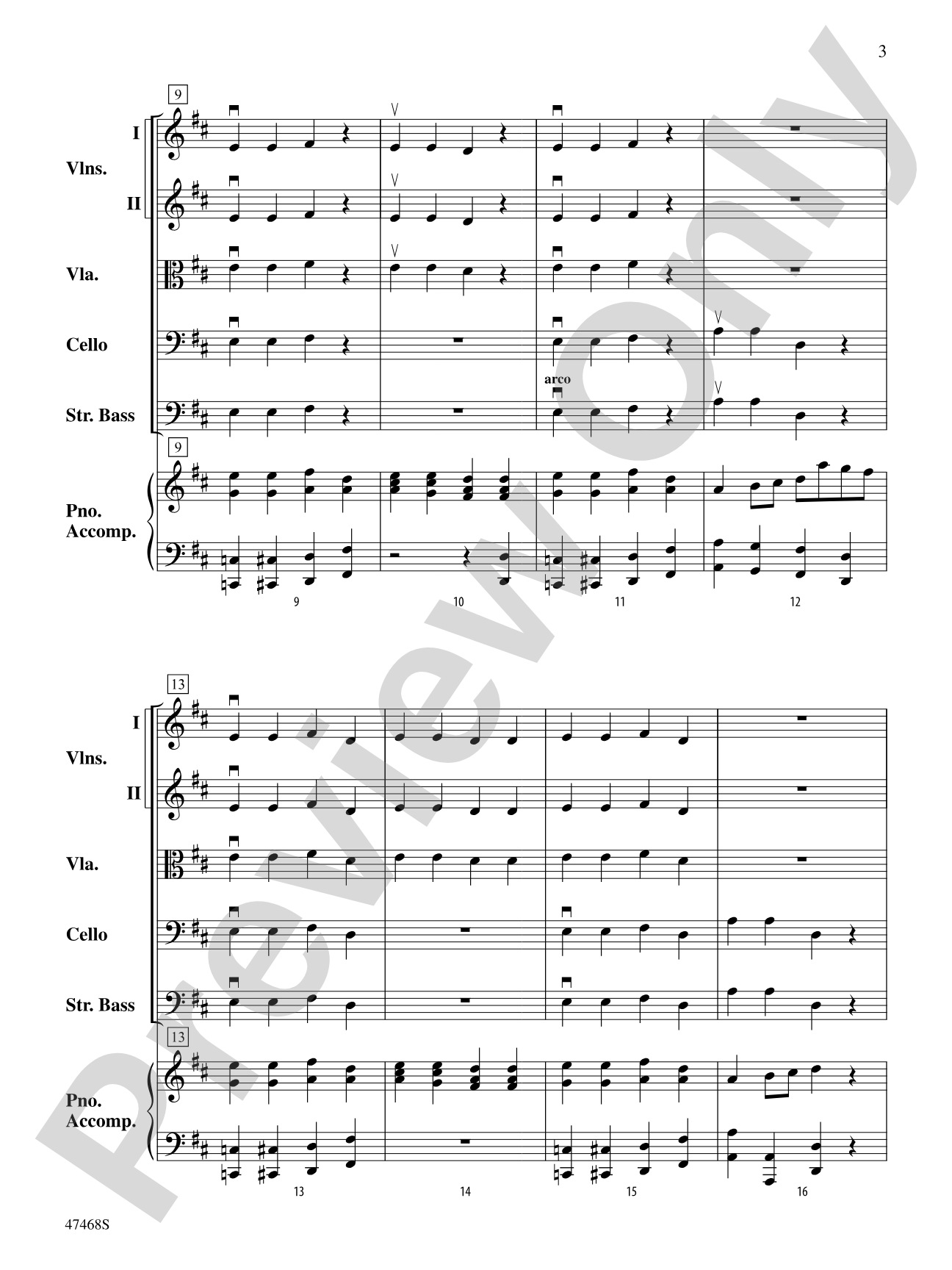
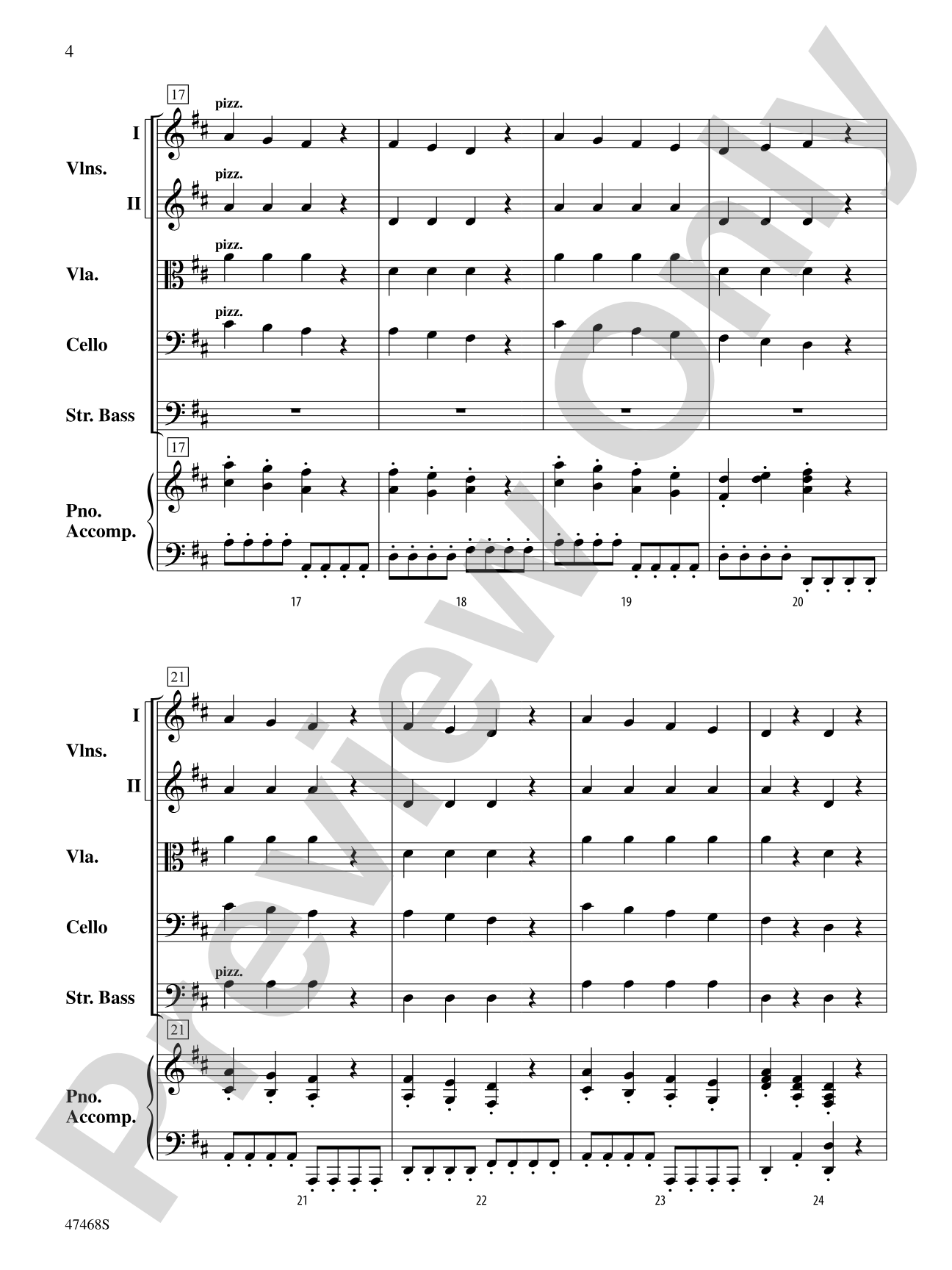
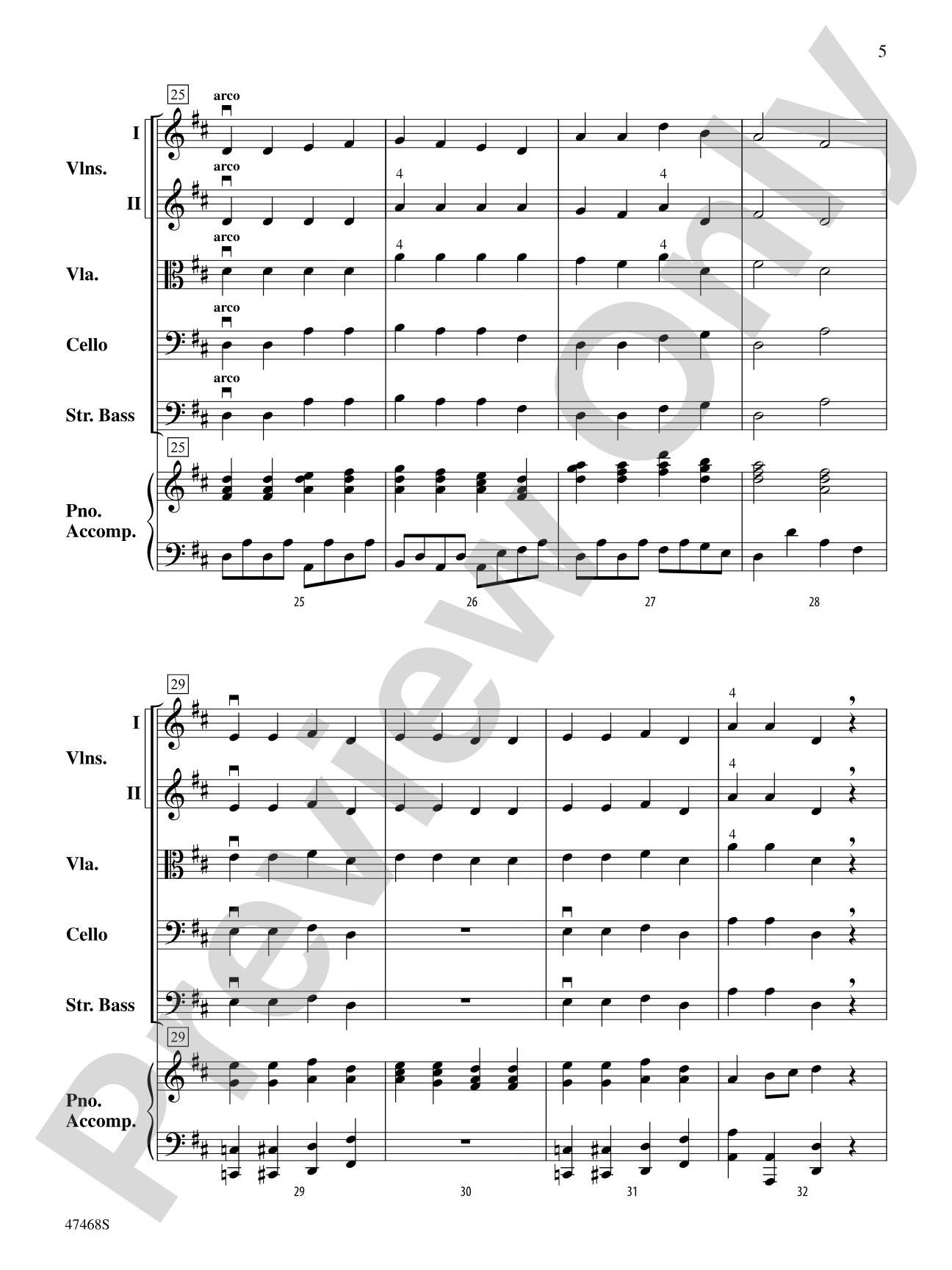
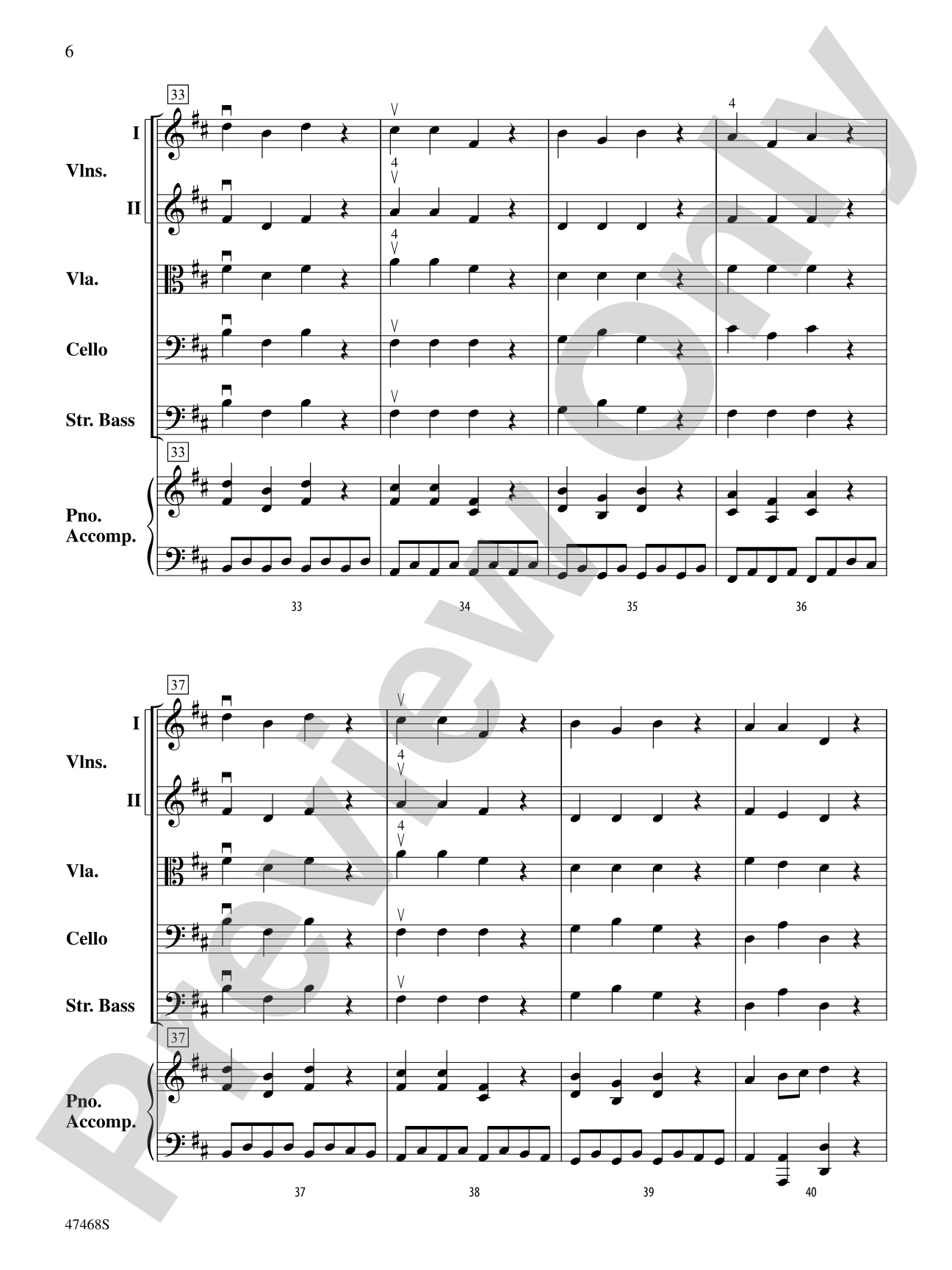
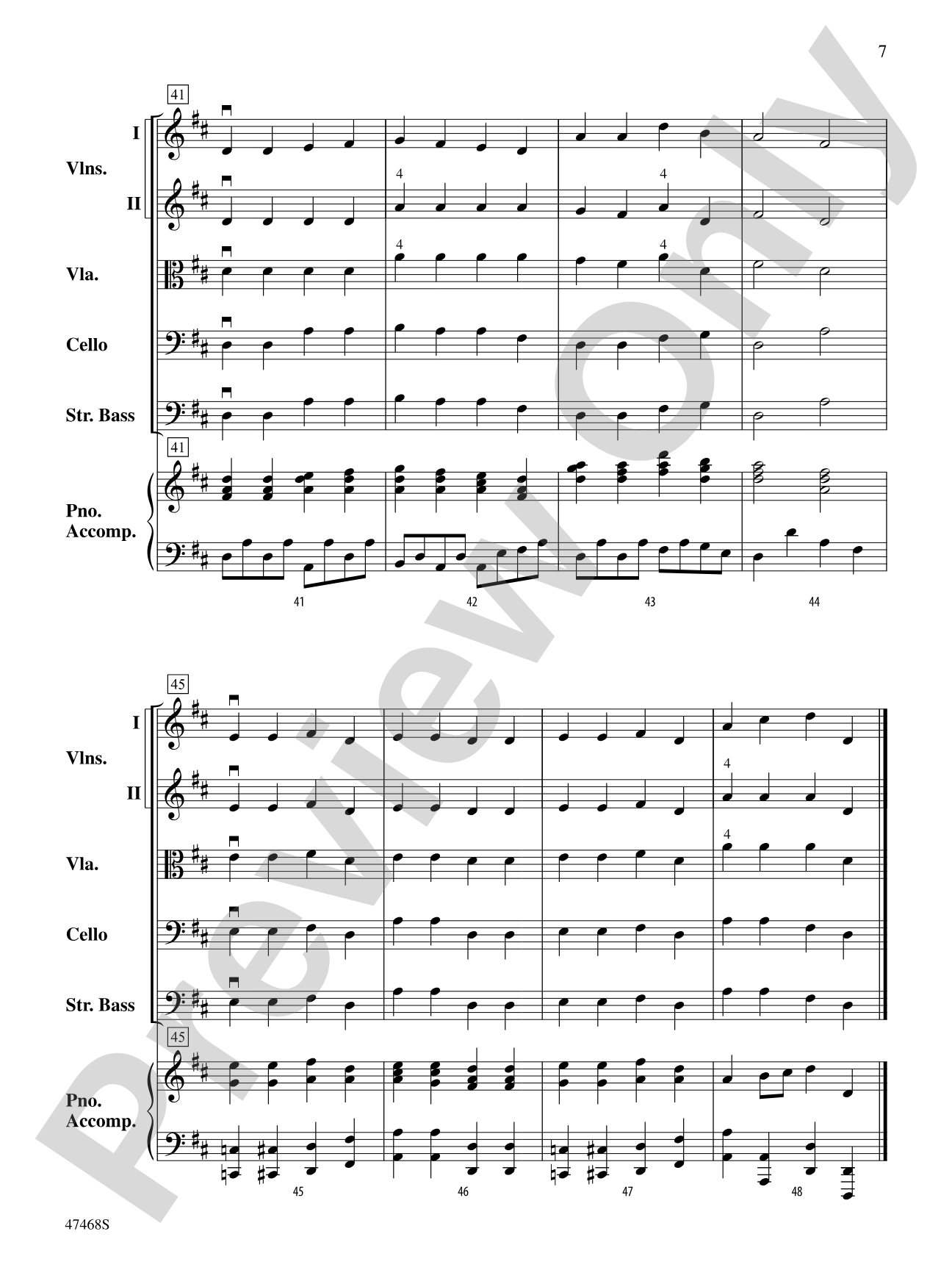
The rondo form of this work gives students repetition, along with "detours" to keep their interest. The piece uses only quarter notes and half notes with both stepwise motion and larger intervals in D major. The piano part is recommended, adding to the harmonic interest of the piece.


Don't just read it, hear it, play along with it, and watch your students grow with it. In MakeMusic Cloud, D-Tour: String Orchestra Conductor Score & Parts comes alive with professional accompaniment, adjustable tempo, and built-in practice tools that turn solo practice into real progress.
Open in the Player
Jump straight in and assign it today.
Start Your Free Trial
Open this title and explore the full library in minutes.
Sample Audio
1
Audio File
--:--
0:00
0:00
Sample Video
Additional Details
Series:
Highland/Etling String Orchestra
Publisher:
Alfred Music
Page Count:
66
SKU:
00-PK-0007704
More about this title
About the Composer: Todd Parrish
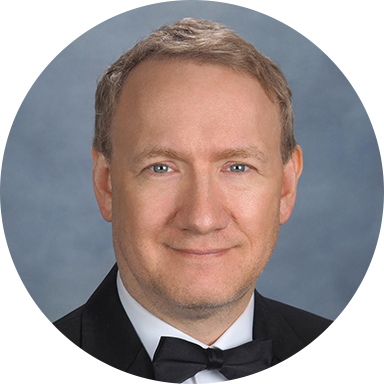
Todd Parrish brings two decades of public school orchestral experience across Illinois, Virginia, and Florida to his work as both educator and composer. He holds a Bachelor of Music Education from ORU, where he studied violin and piano, and earned his Master of Music in Orchestral Conducting from the University of Arizona under Jindong Cai, with additional string studies and conducting workshops across the United States and France.
As orchestra editor for Carl Fischer Music and formerly for J.W. Pepper and Wingert-Jones Publications, Parrish has shaped the landscape of school orchestra repertoire. His original compositions and arrangements for young orchestras number over forty published works, reflecting his deep understanding of what student musicians can accomplish at each developmental stage.
Why we love this
The architecture here is genuinely smart: a rondo structure inherently reinforces material through repetition, yet Parrish designs those "detours" to feel like genuine musical exploration rather than filler. For a Grade 1 ensemble, this balance between comfort and discovery keeps young players engaged while building confidence, and the addition of piano harmony elevates the whole ensemble sound without demanding virtuosity from the string section.
What to expect
Bright and purposeful, with a sense of forward motion that never feels rushed. The alternation between familiar ground and unexpected turns creates a kind of playful architecture, like a familiar path with interesting side streets to explore.
Who it's for
Beginning string orchestras ready to move beyond purely unison or two-part writing into true ensemble textures. This work suits orchestras with mixed experience levels, since the rhythmic simplicity allows newer players to focus on tone and intonation while offering enough structural sophistication to keep more advanced students musically satisfied.
How to get the most out of it
- Bring the A section material into sharp focus during rehearsals; students will naturally lock into the returning theme more securely when the contrast with each detour is crystal clear.
- If including the optional piano part, have the pianist and conductor establish a steady partnership during early rehearsals. The harmonic foundation makes balancing easier later.
- Keep the larger intervallic leaps clean and intentional; they stand out in Grade 1 writing, so intonation at those moments will shape the ensemble's overall sound significantly.
How to use it
Open a concert with this to establish strong ensemble energy and demonstrate your students' control of tone. It also works beautifully as part of a thematic program pairing lighter concert pieces, or as the centerpiece of a Grade 1 showcase that highlights young musicians' growing musicianship.
Skills your students will build
- Recognizing and performing rondo form (A-B-A-C-A structure)
- Intonation and tone control with stepwise motion and larger intervallic leaps
- Ensemble balance and rhythmic cohesion with half notes and quarter notes
- Listening to harmonic context when performing with piano accompaniment