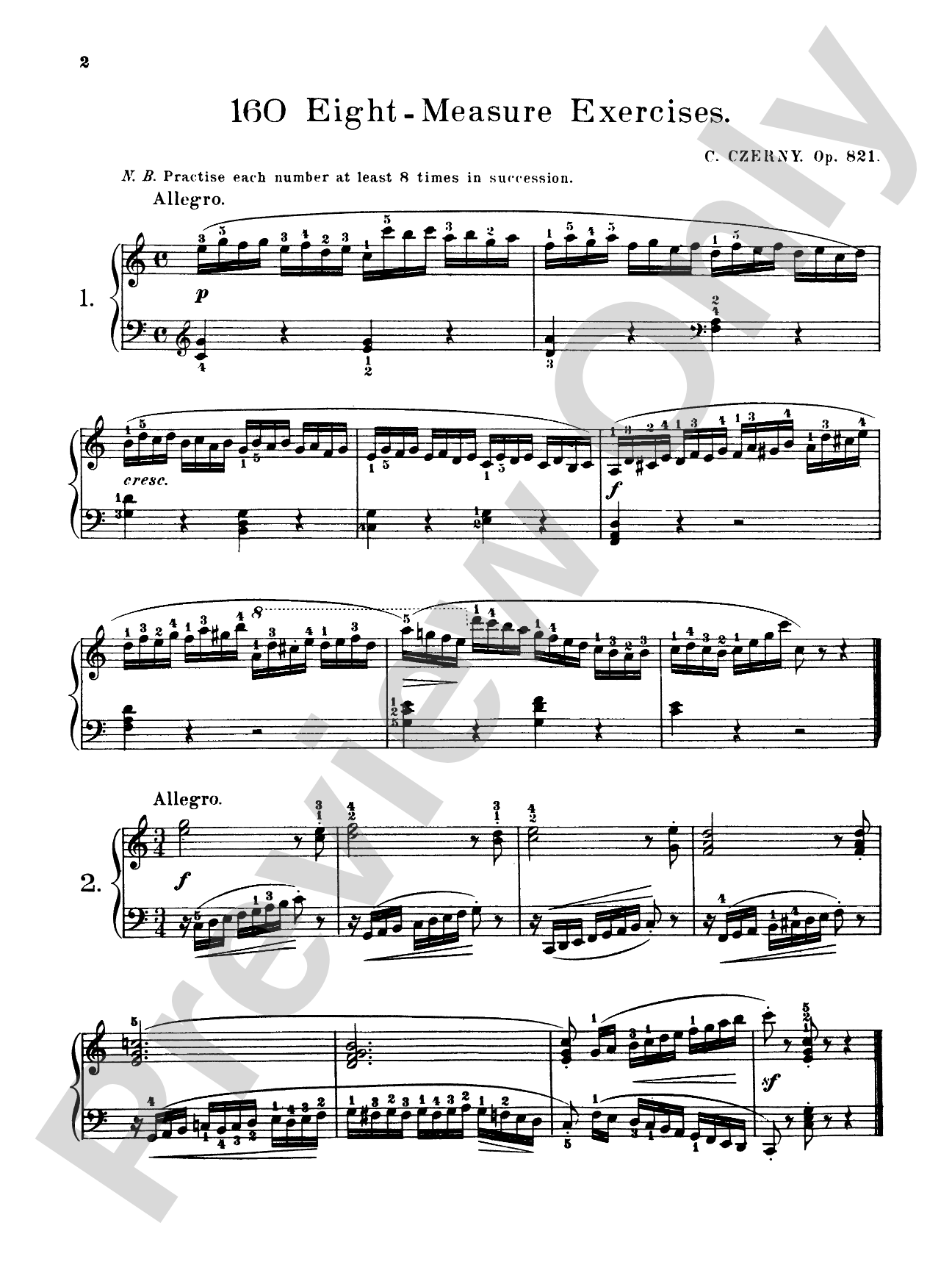
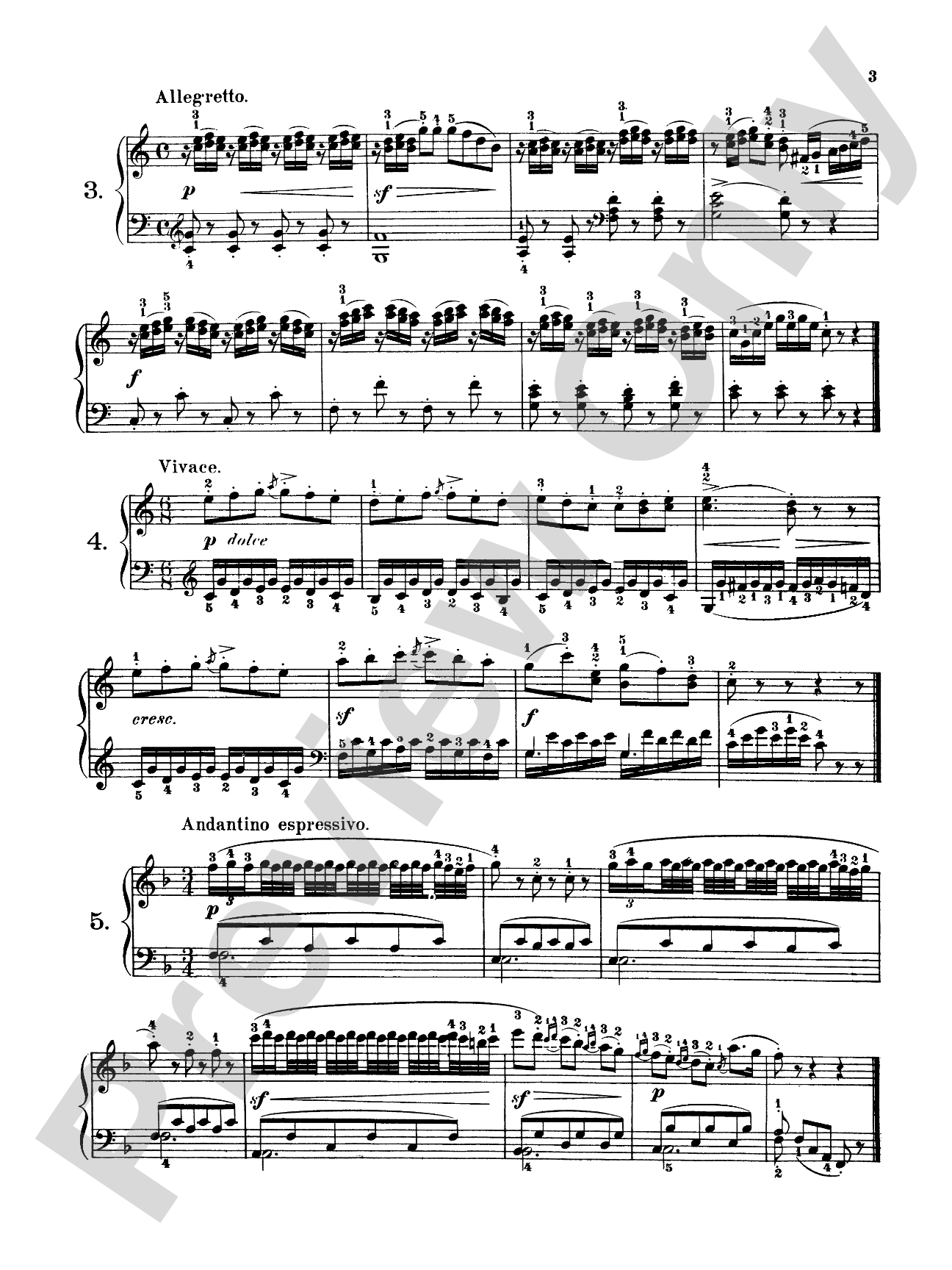
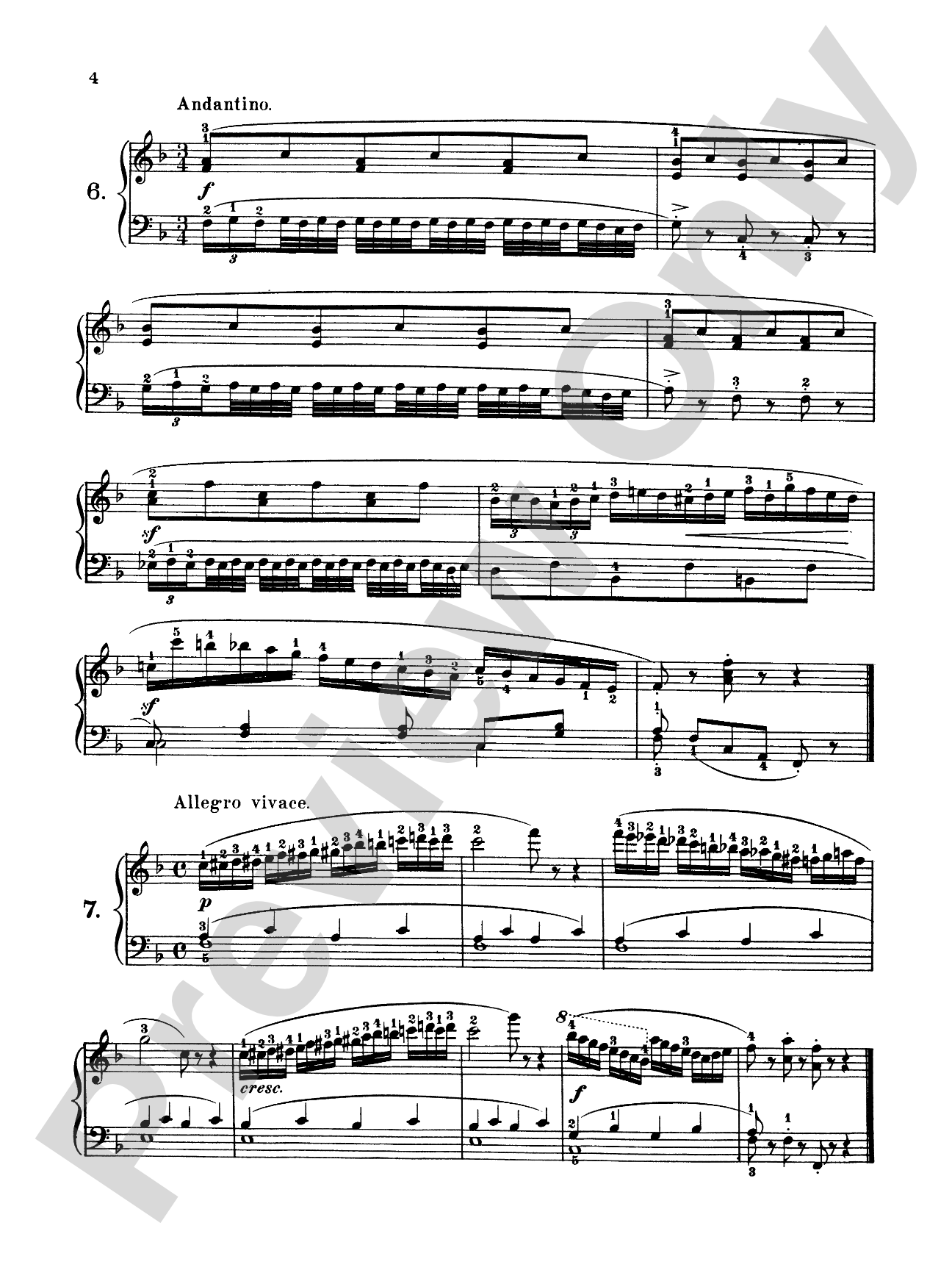
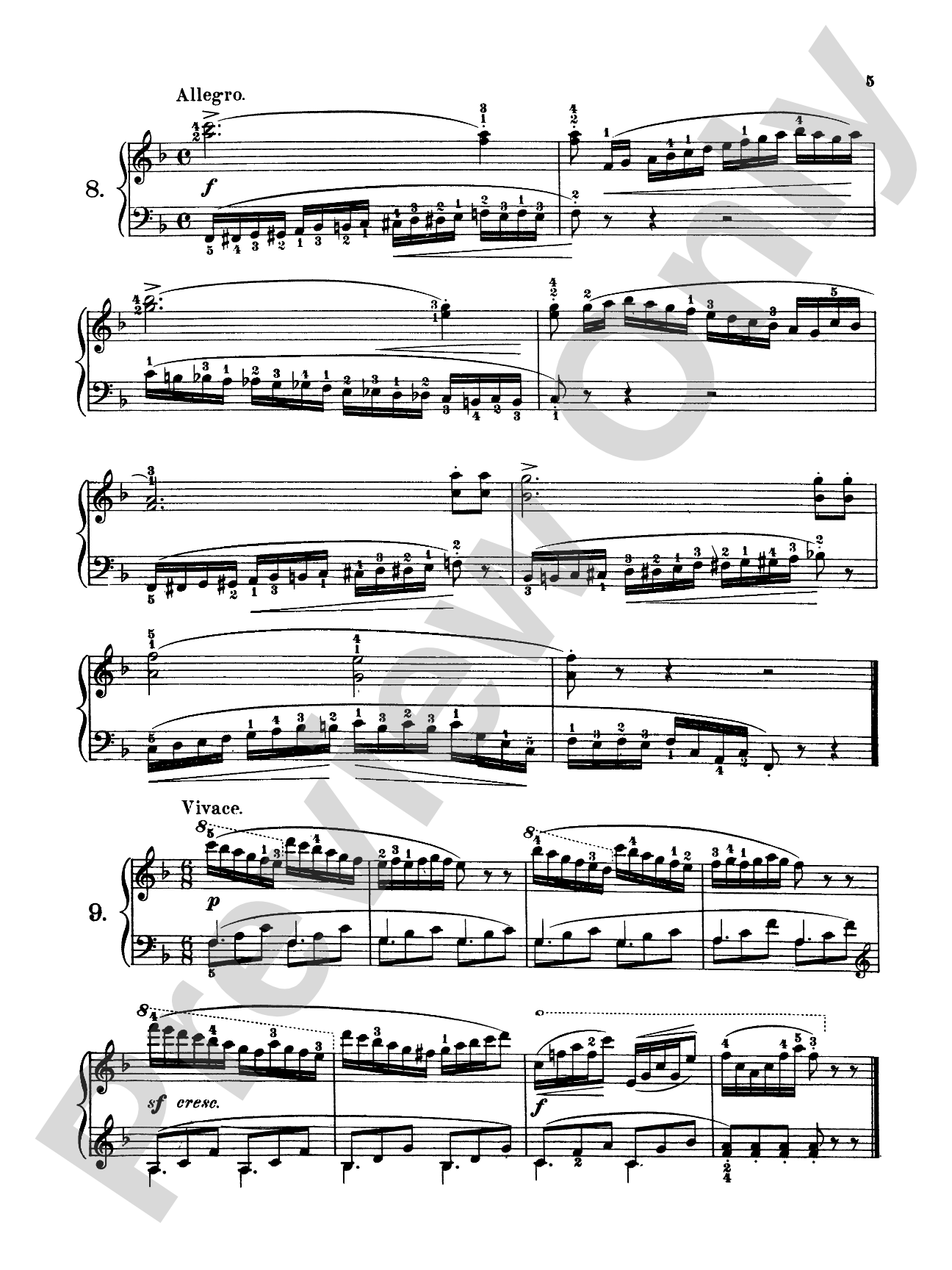
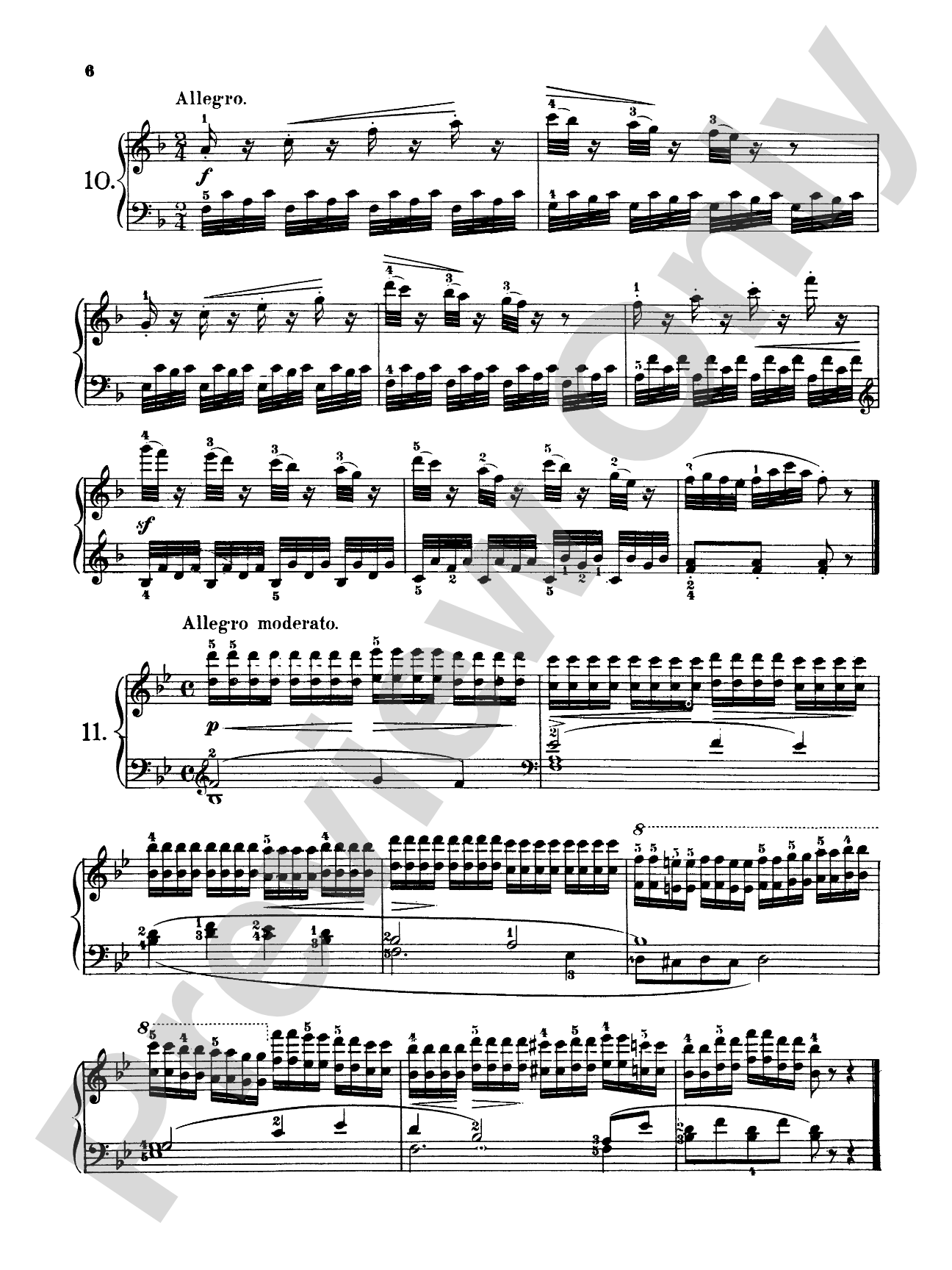
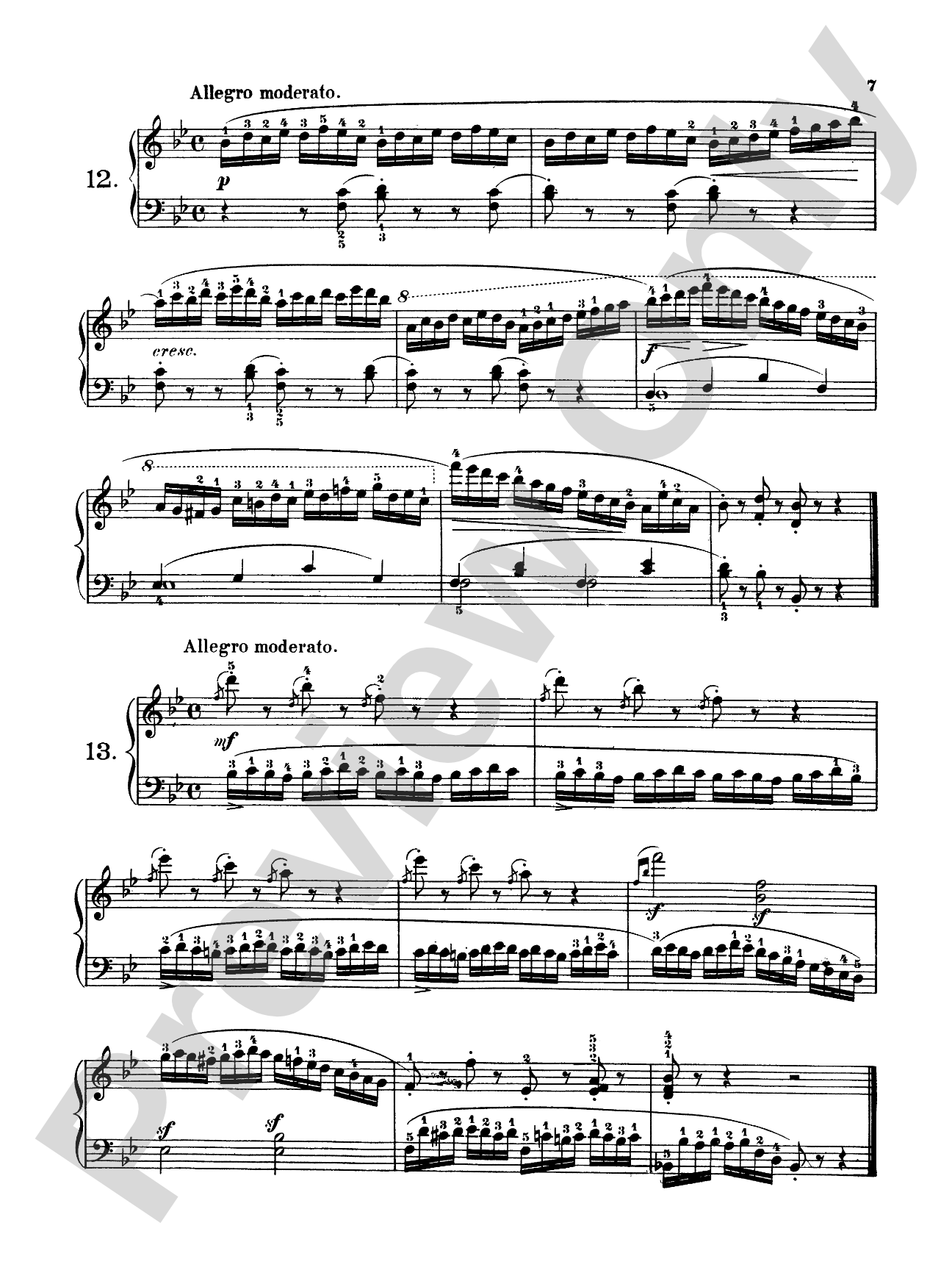
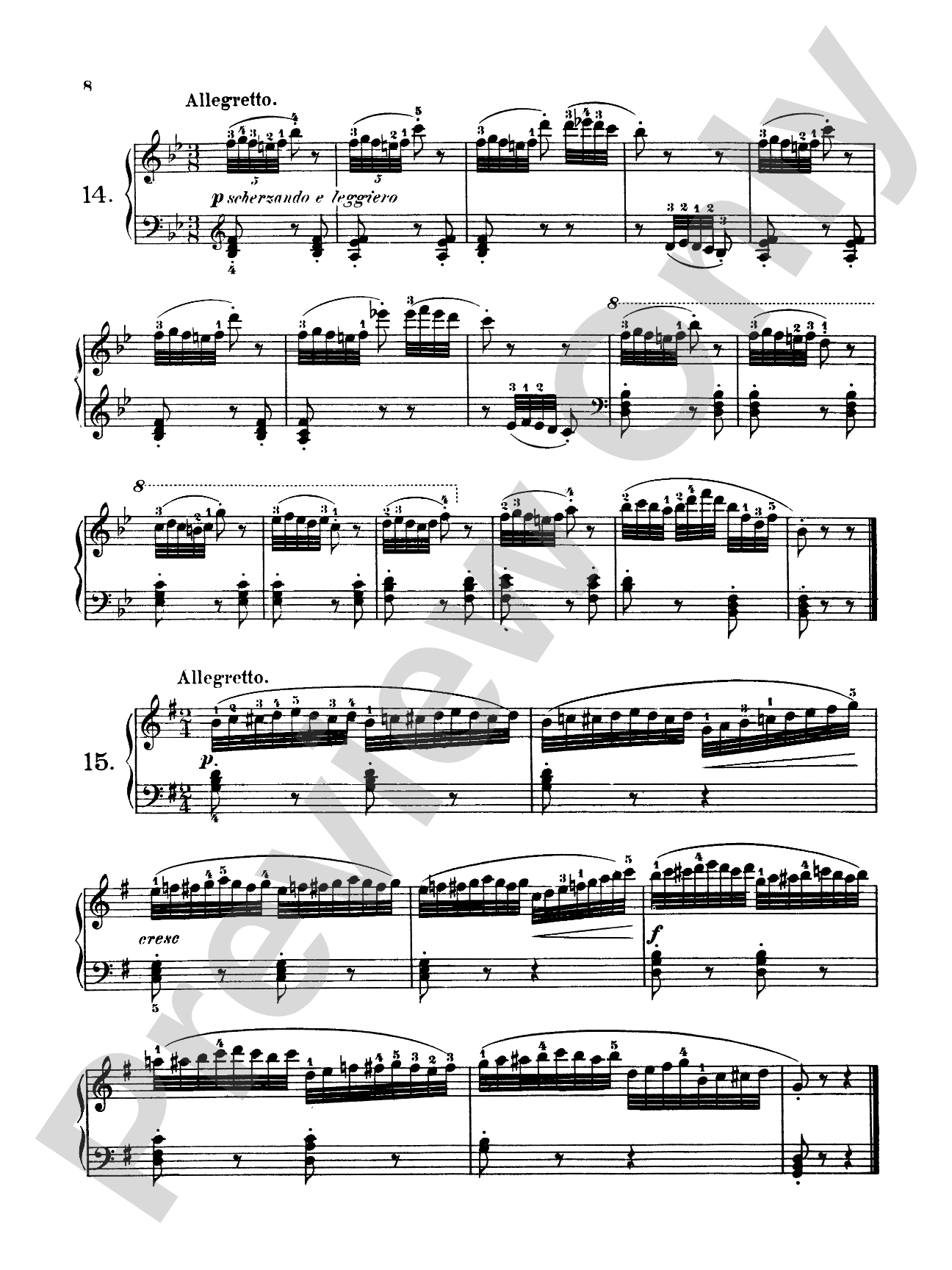
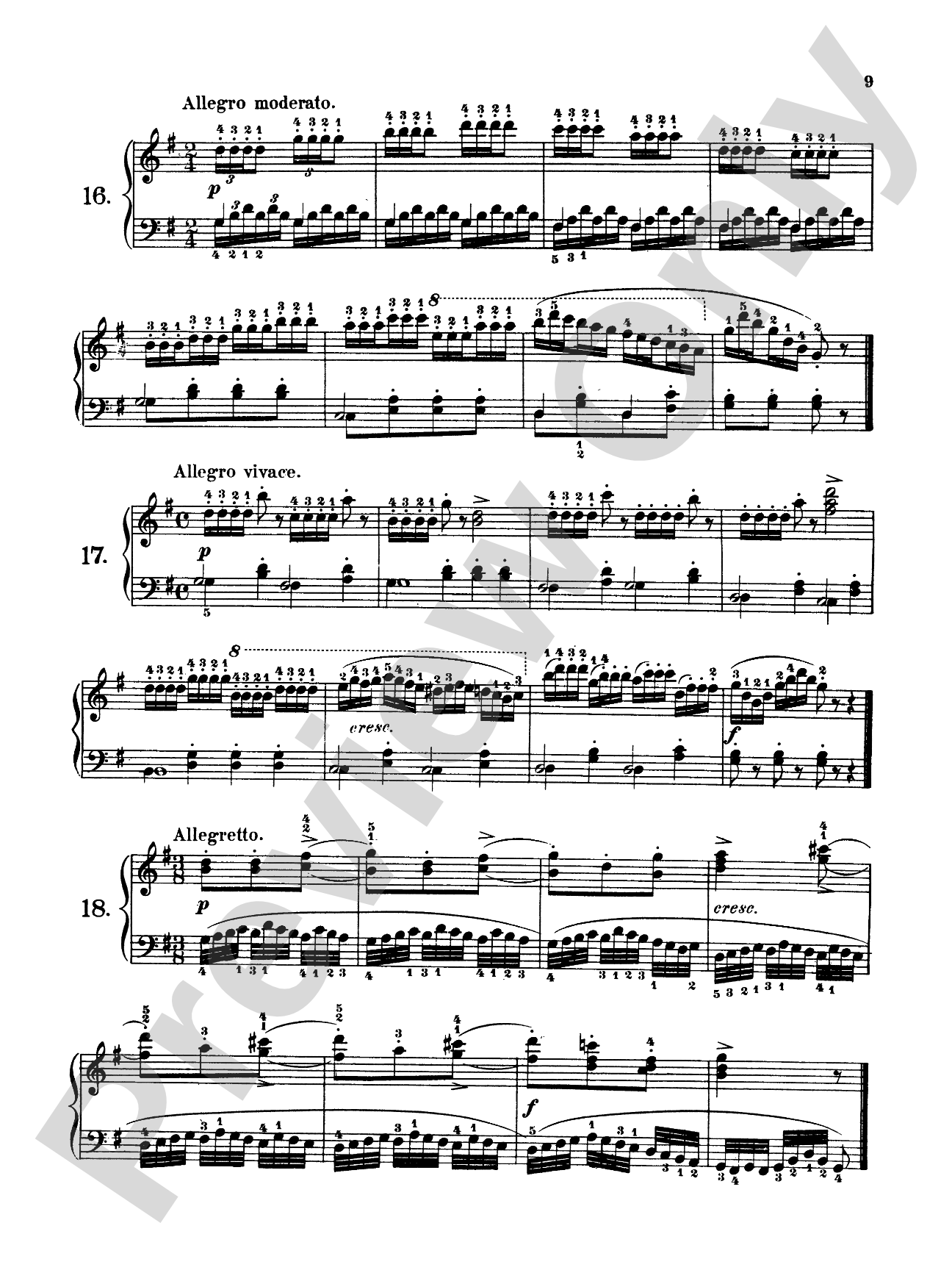
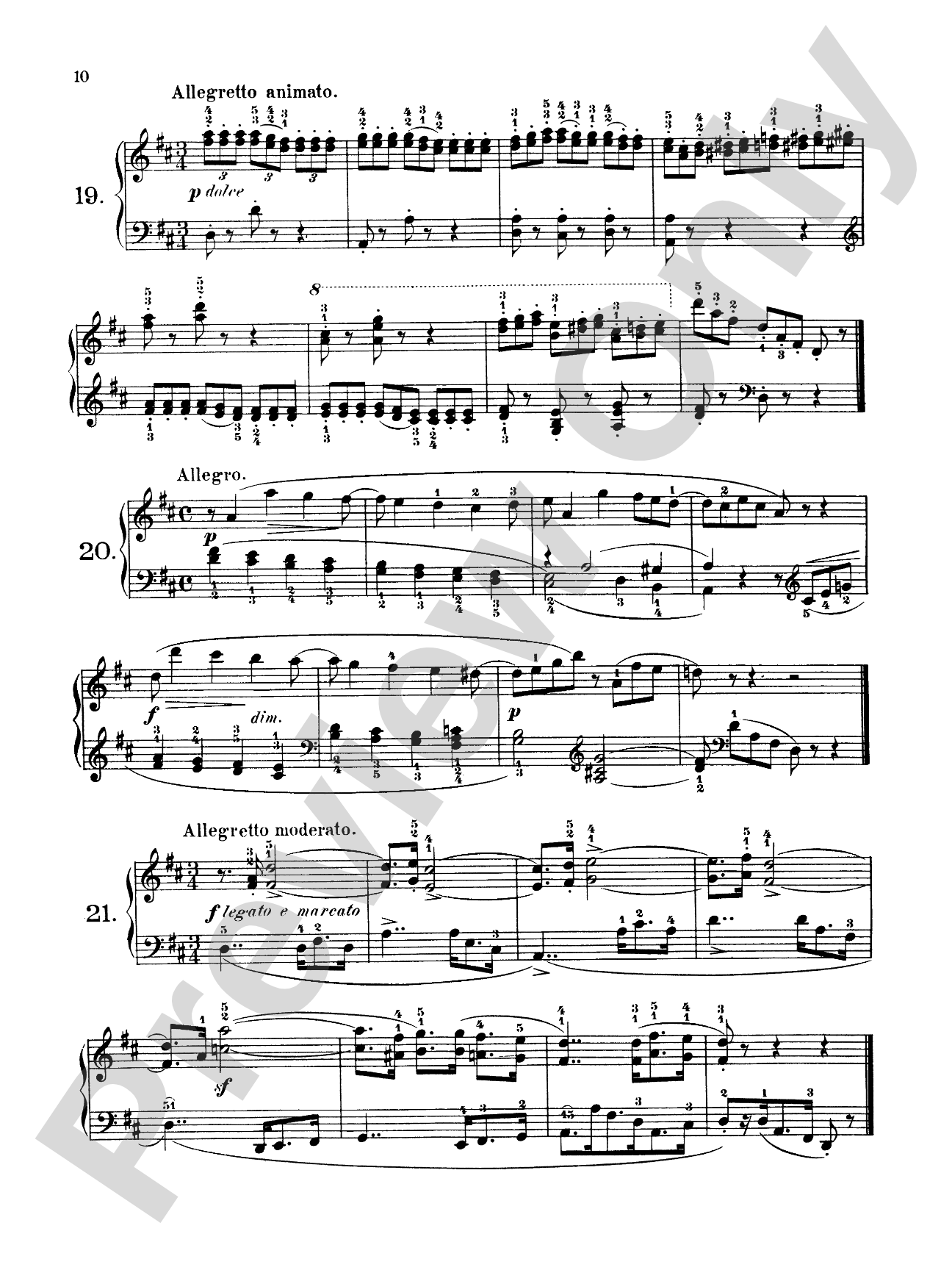
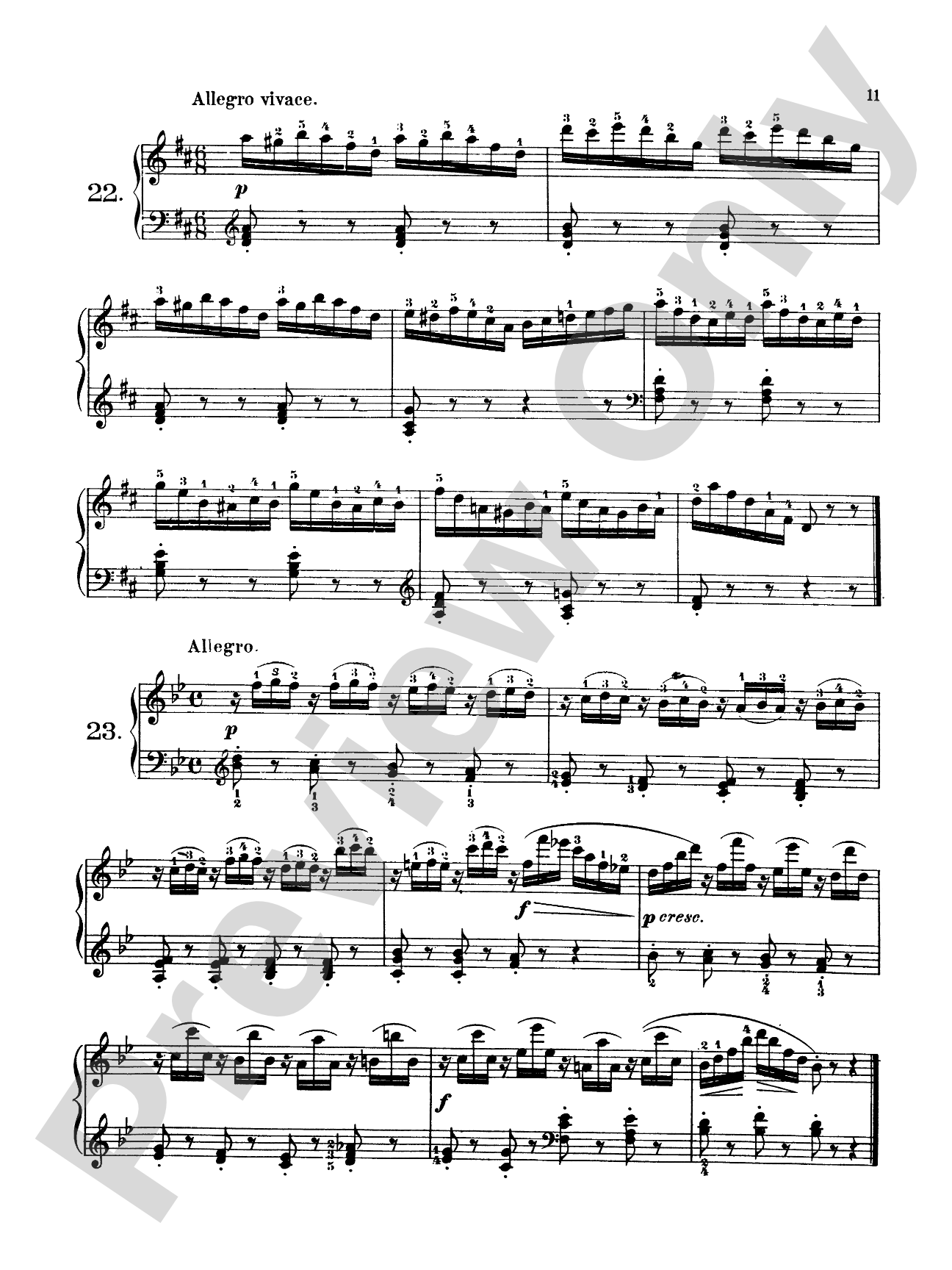
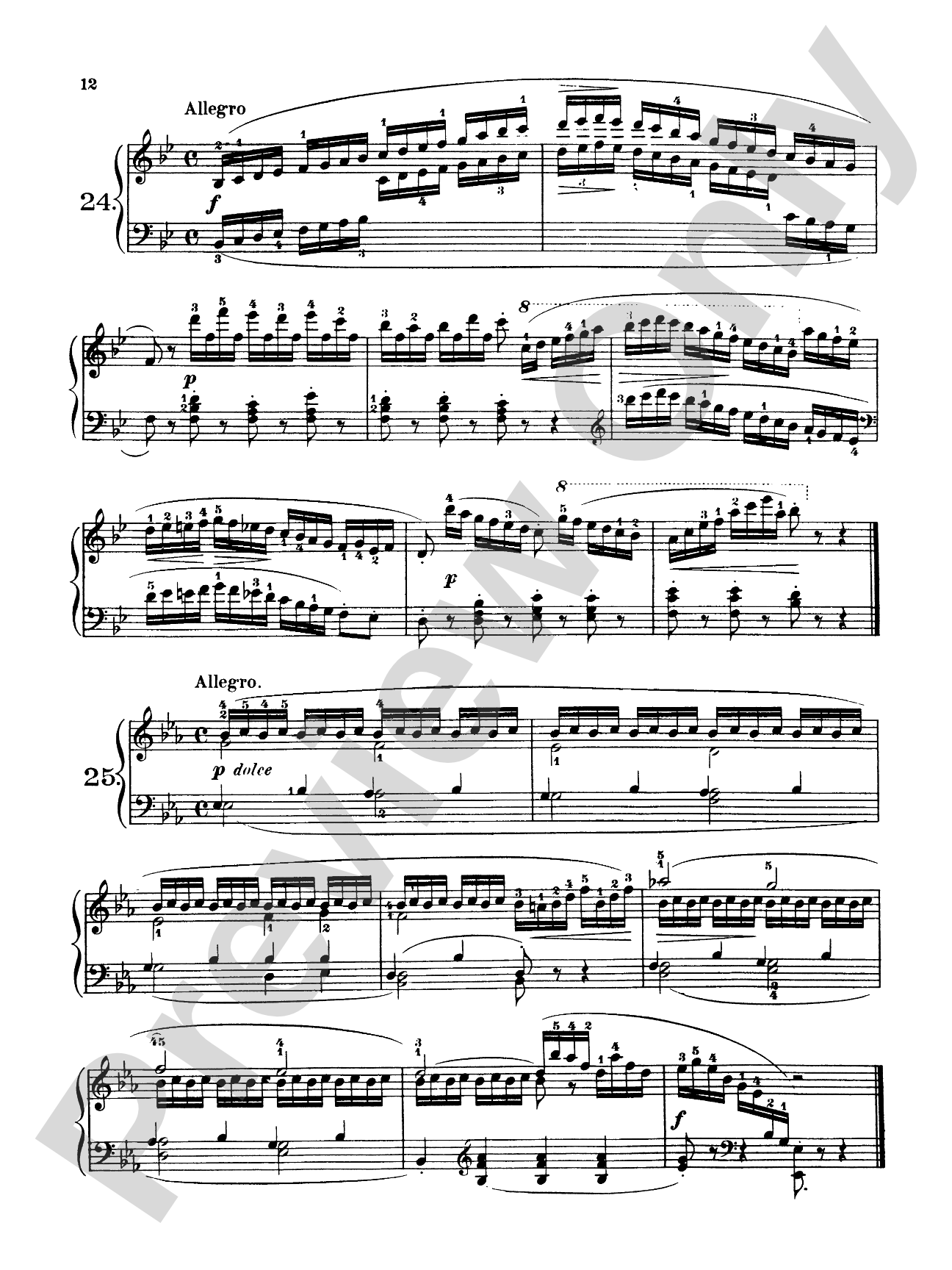
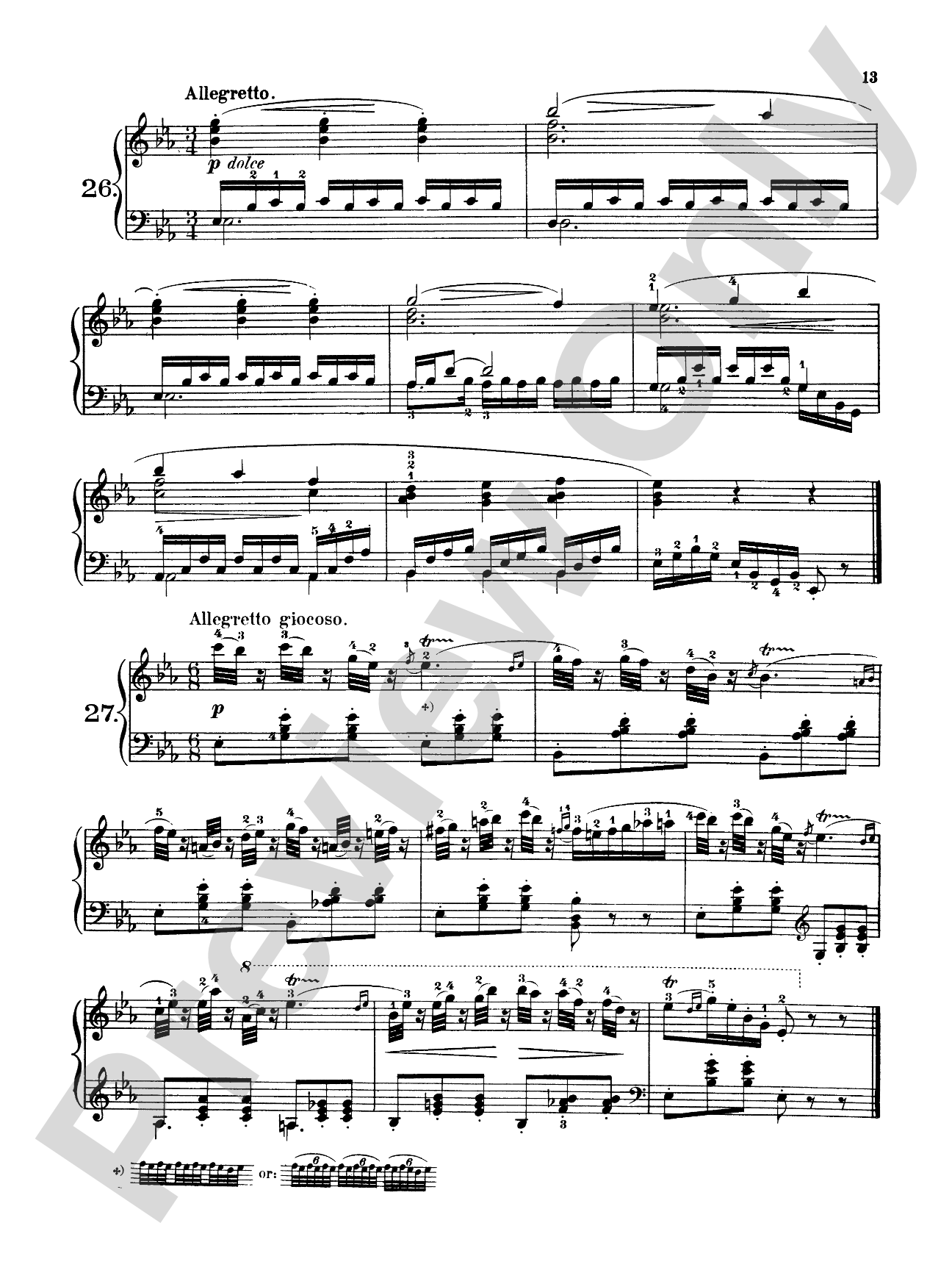
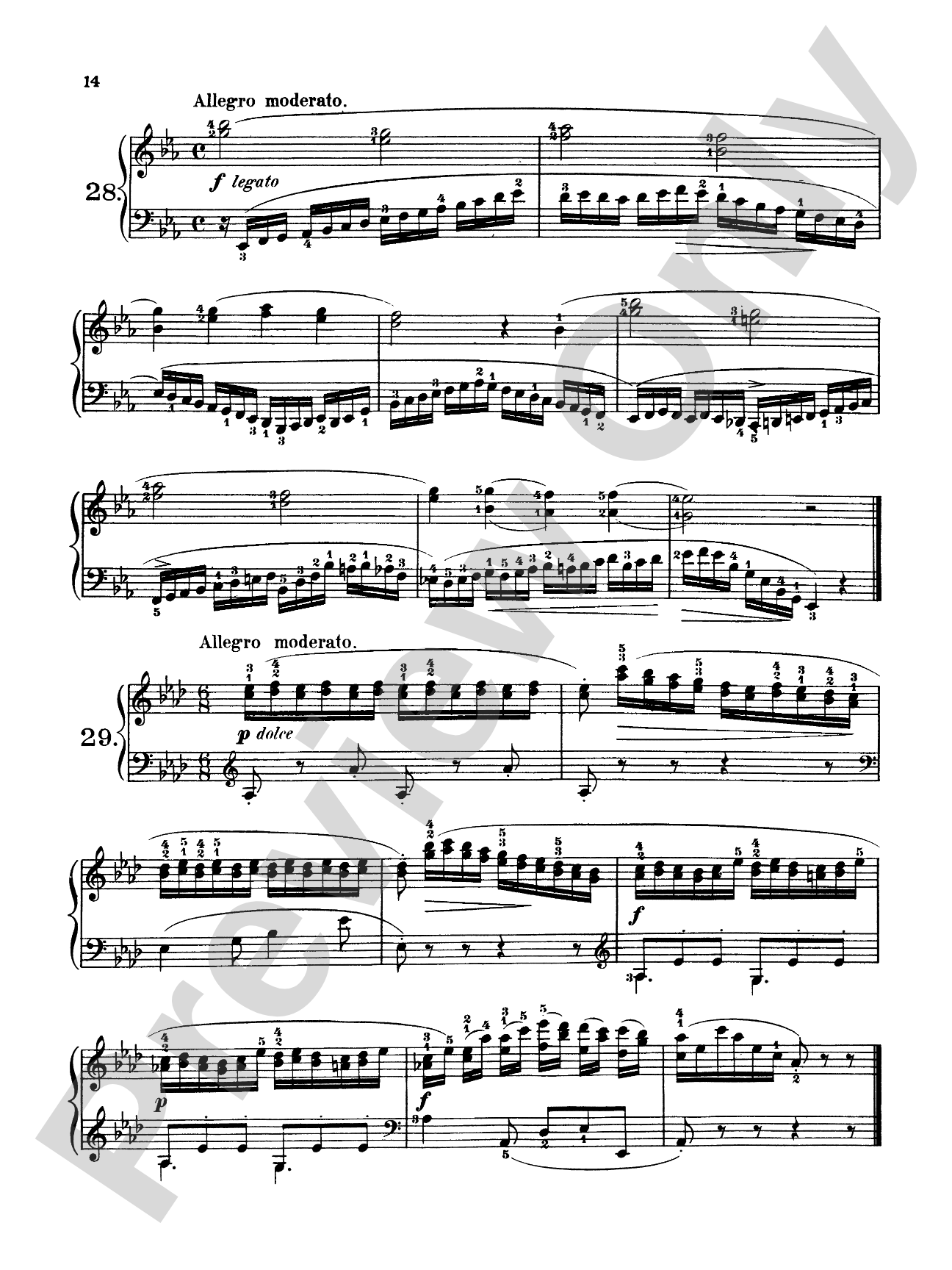
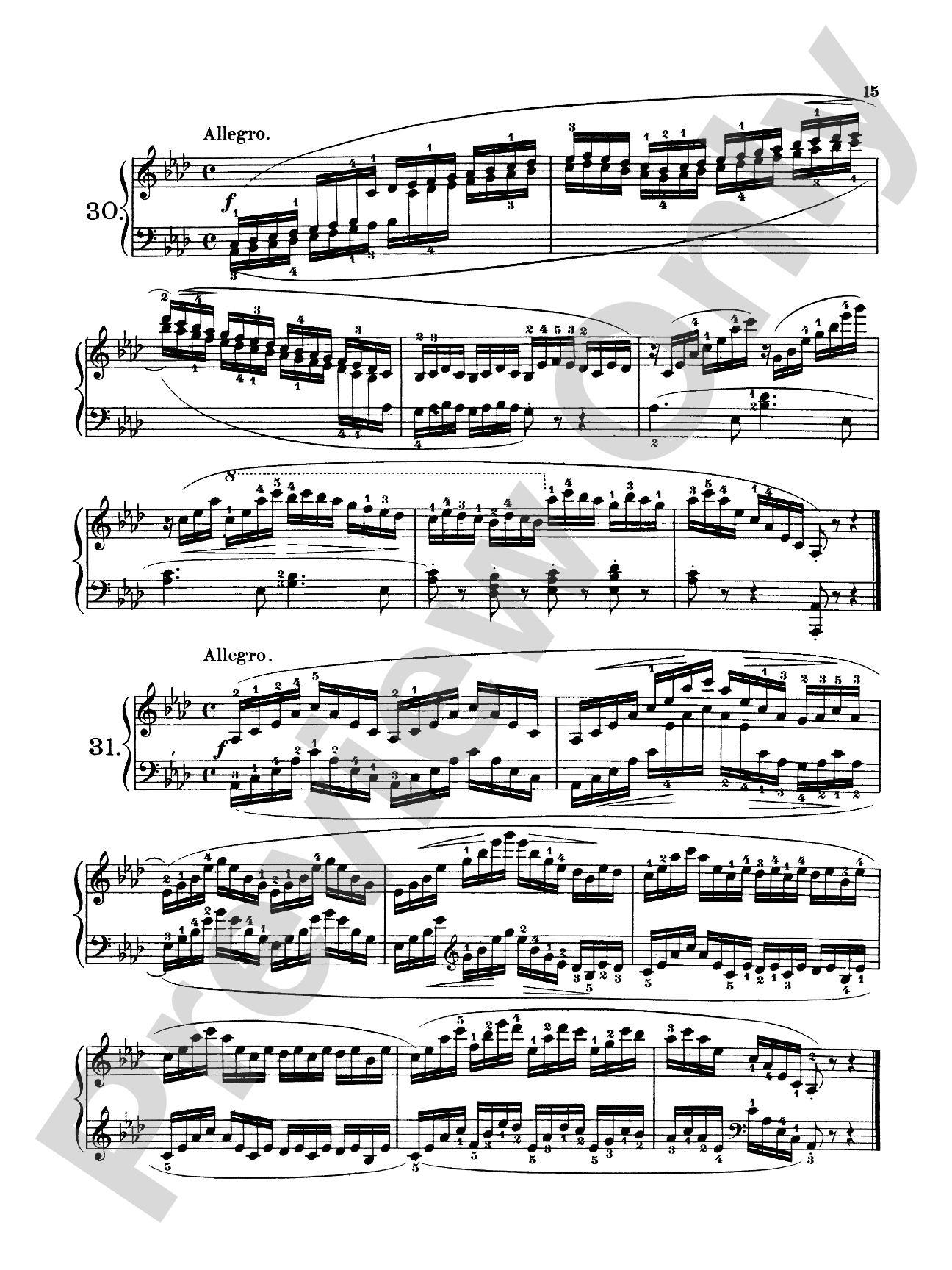
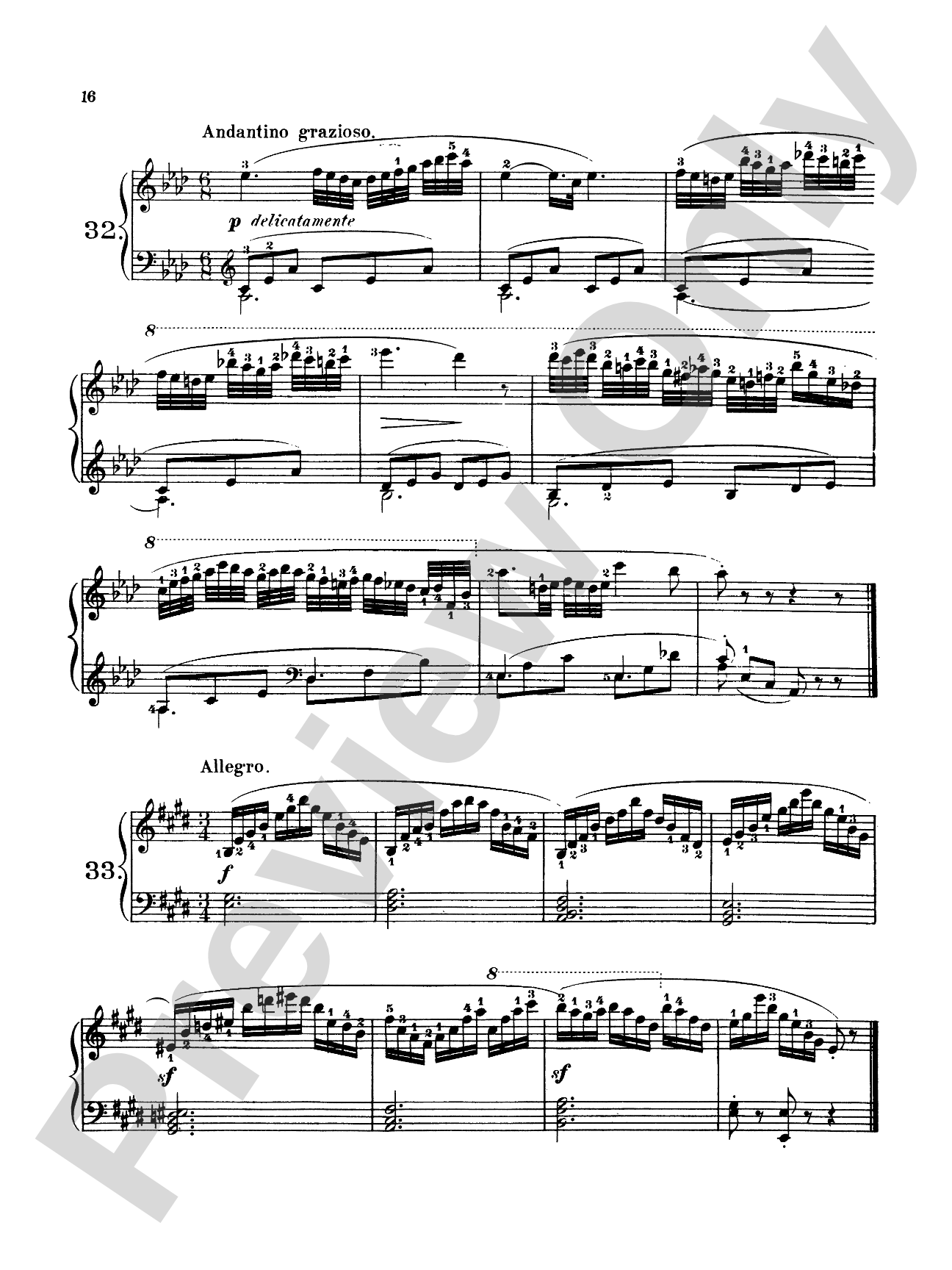
Czerny: 160 Eight-Measure Exercises, 821 Sheet Music Preview

Czerny: 160 Eight-Measure Exercises, 821

By Carl Czerny

Level: Intermediate / Advanced

Item: 00-PC-0006783

Digital Download
$11.95
Description
Carl Czerny (1791--1857) was an Austrian pianist, composer and teacher. Today he is best remembered for his volumes of études for the piano. Czerny's music was greatly influenced by his teachers, Clementi, Hummel, Salieri and Beethoven. This book contains Czerny's Opus 821, "160 Eight-Measure Exercises."

Czerny: 160 Eight-Measure Exercises, 821 isn't in MakeMusic Cloud just yet...but it could be. Let us know you'd like to see it, and you'll help shape what comes next. In the meantime, start a free trial and dive into thousands of interactive titles your students can play along with today.

Sample Audio
No sample audio found.
Sample Video
Additional Details
Series: Kalmus Edition
Publisher: Alfred Music
Page Count: 76
SKU: 00-PC-0006783

More about this title

About the Composer: Karl Czerny

Karl Czerny (1791–1857) bridged the Classical and Romantic eras as a virtuoso pianist, prolific composer, and one of the most influential pedagogues in piano history. A student of Beethoven, Muzio Clementi, and Johann Hummel, he absorbed the technical innovations and musical sensibilities of his teachers and synthesized them into a vast body of instructional repertoire that shaped how generations of pianists developed their craft.

Czerny's gift lay in understanding exactly what pianists needed at each stage of development. Rather than writing showpieces or abstract technical studies, he created focused, musical exercises that built specific skills while remaining genuinely enjoyable to play. His output included over a thousand compositions, but his études and exercise collections are his enduring legacy; they remain standard references in conservatories worldwide because they solve real problems in technical development without sacrificing musicality.

Why we love this

Czerny's Op. 821 offers something rare: short, self-contained exercises that function as micro-compositions rather than mechanical drills. Each eight-measure piece targets a specific technical goal while maintaining enough melodic interest to keep students engaged over the course of 160 exercises. Teachers trust this collection because students actually want to work through it.

What to expect

Purposeful and elegant. Czerny's eight-measure format creates a satisfying sense of completion; you play something, it ends, and you move to the next challenge. The writing is never clunky or finger-twisting for its own sake; instead, each exercise unfolds naturally while quietly building the specific technical control needed for the next level of concert repertoire.

Who it's for

Intermediate to advanced pianists building technical facility and musicianship during the transition from early studies to more sophisticated repertoire. Studio teachers and conservatory instructors use this collection when students need focused work on specific technical challenges without abandoning the requirement that every piece sound musical.

How to get the most out of it

  • Treat each exercise as a complete musical thought. Even at eight measures, shape the phrase with a clear beginning, middle, and point of arrival rather than rushing through mechanically.
  • Group exercises by technical focus rather than playing them sequentially. Work several pieces targeting the same skill (finger independence, arpeggiation, hand position) in succession, then move to a different technical area.
  • Use a tempo that allows clean execution of the written technical material. Czerny's exercises reveal their purpose only when played accurately; rushing obscures the learning objective.

How to use it

This collection works best as the foundation of a student's daily technical practice rather than as concert material. Studio teachers integrate exercises from Op. 821 into lesson plans over months or years, assigning them alongside more ambitious pieces to strengthen technique in isolation without competing for practice time.

Skills your students will build

  • Finger independence and evenness in scalar passages
  • Arpeggiation across multiple octaves
  • Hand position stability and weight transfer
  • Rhythmic precision and control at varied tempos
  • Sight-reading fluency and pattern recognition
  • Musical phrasing within constrained harmonic and melodic frameworks

You May Also Like