
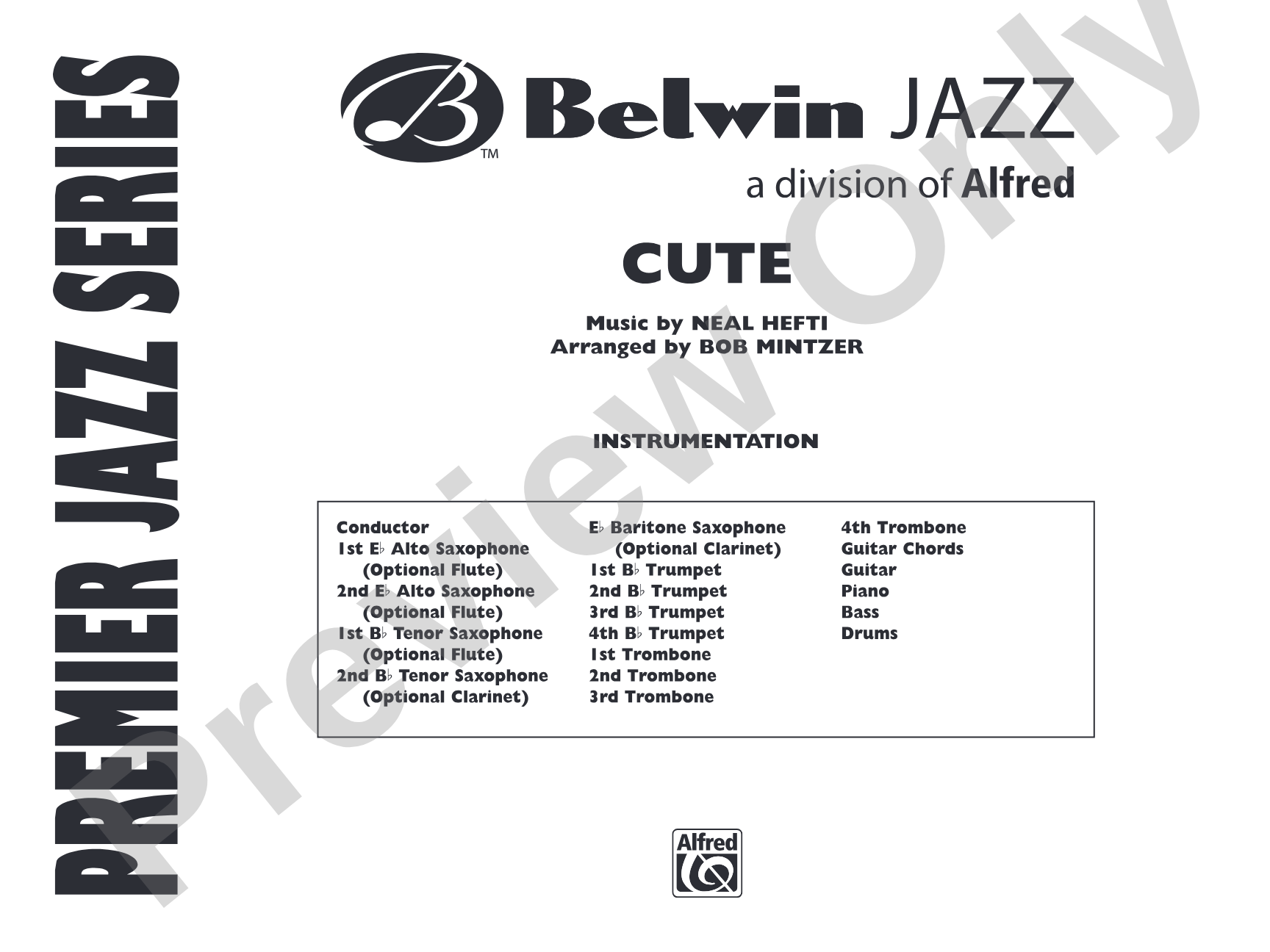
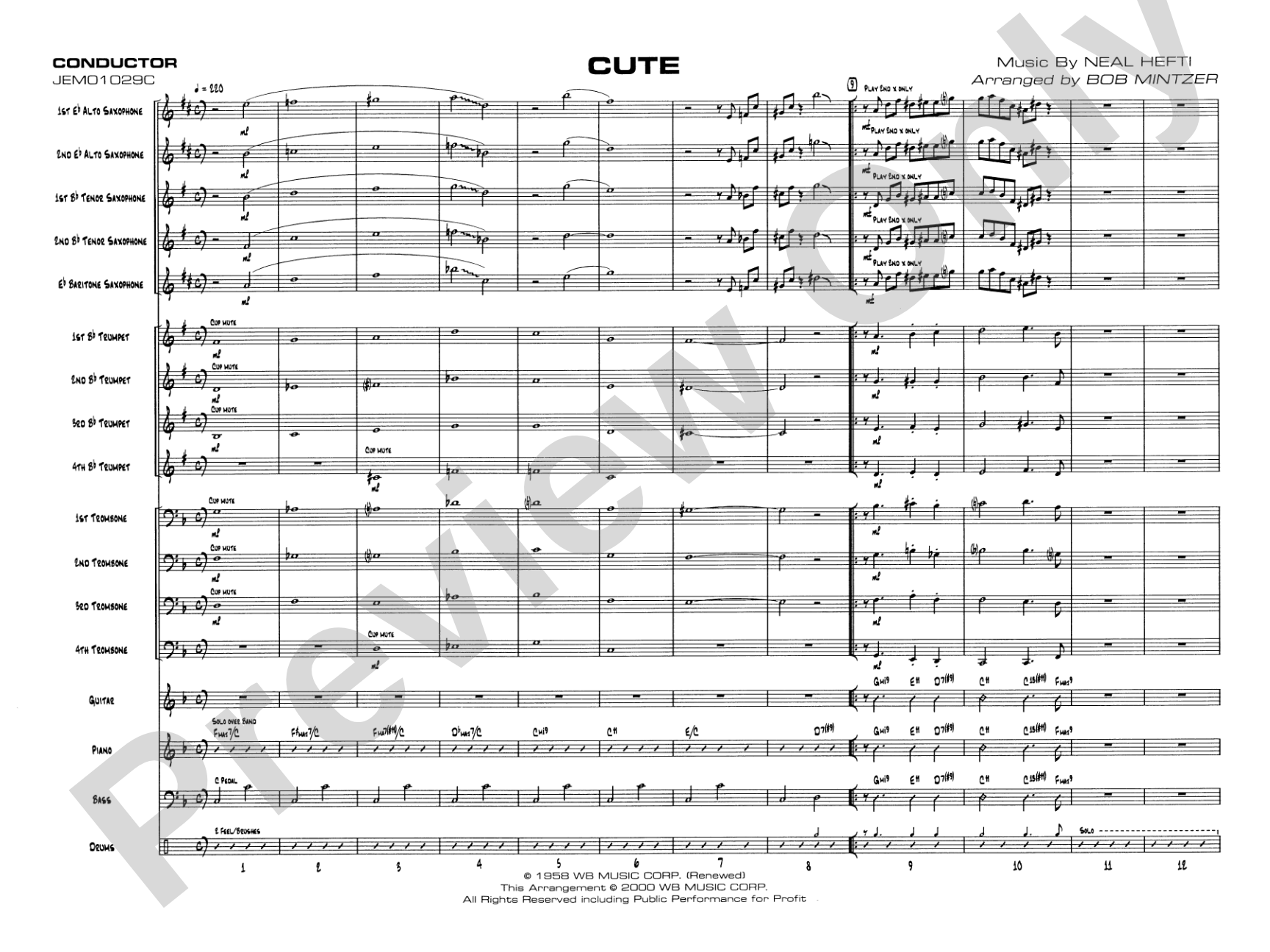
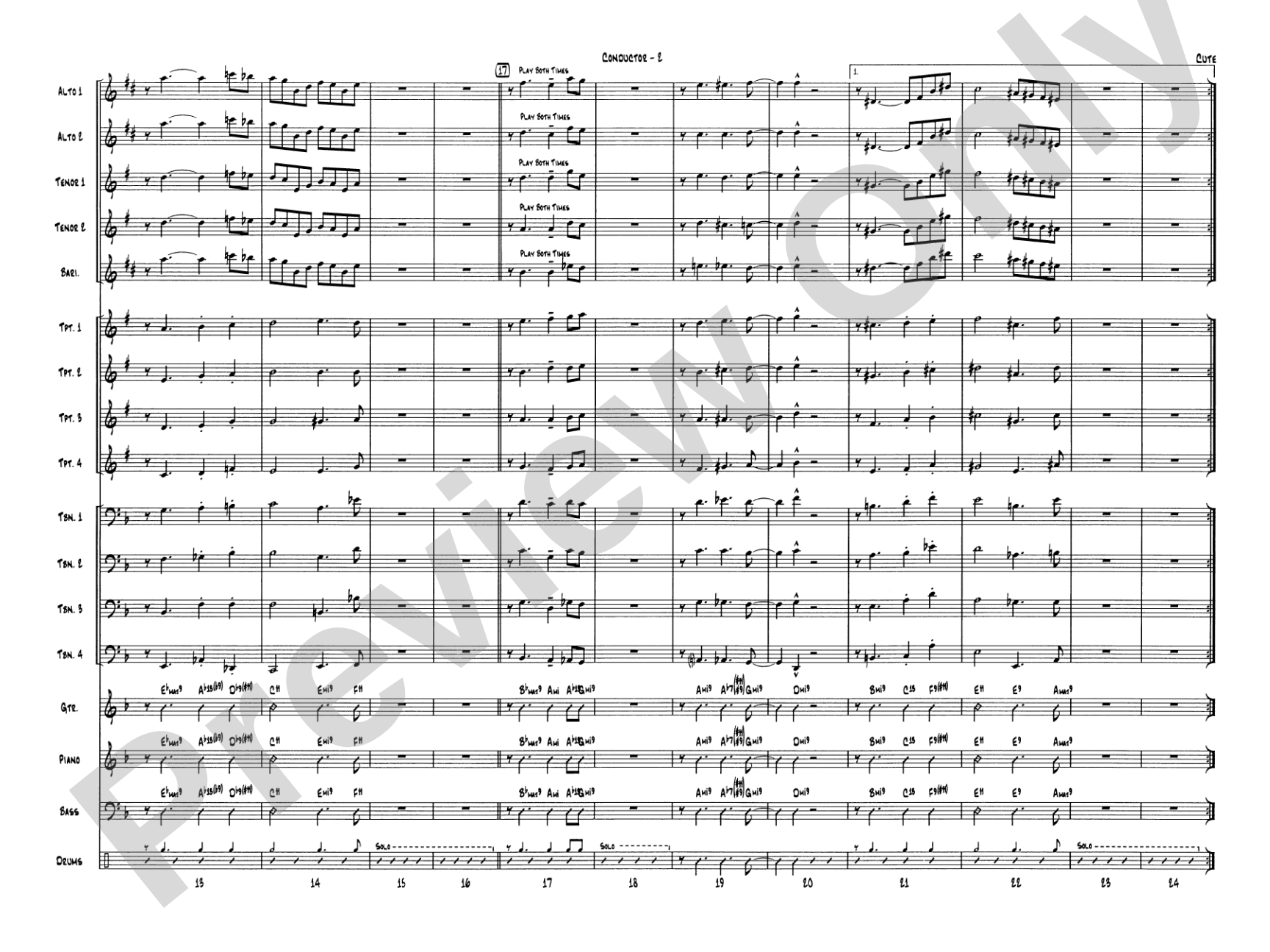
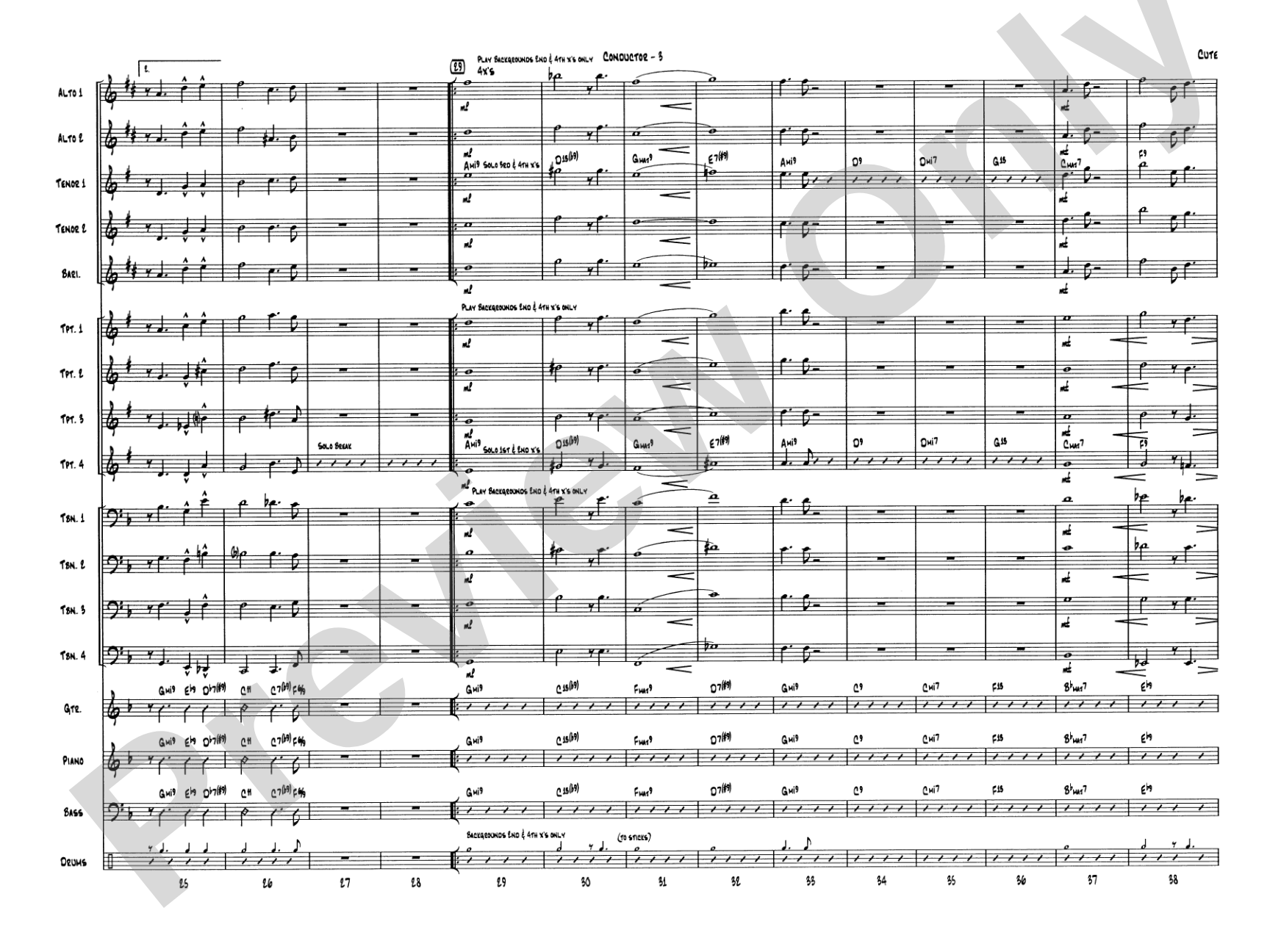
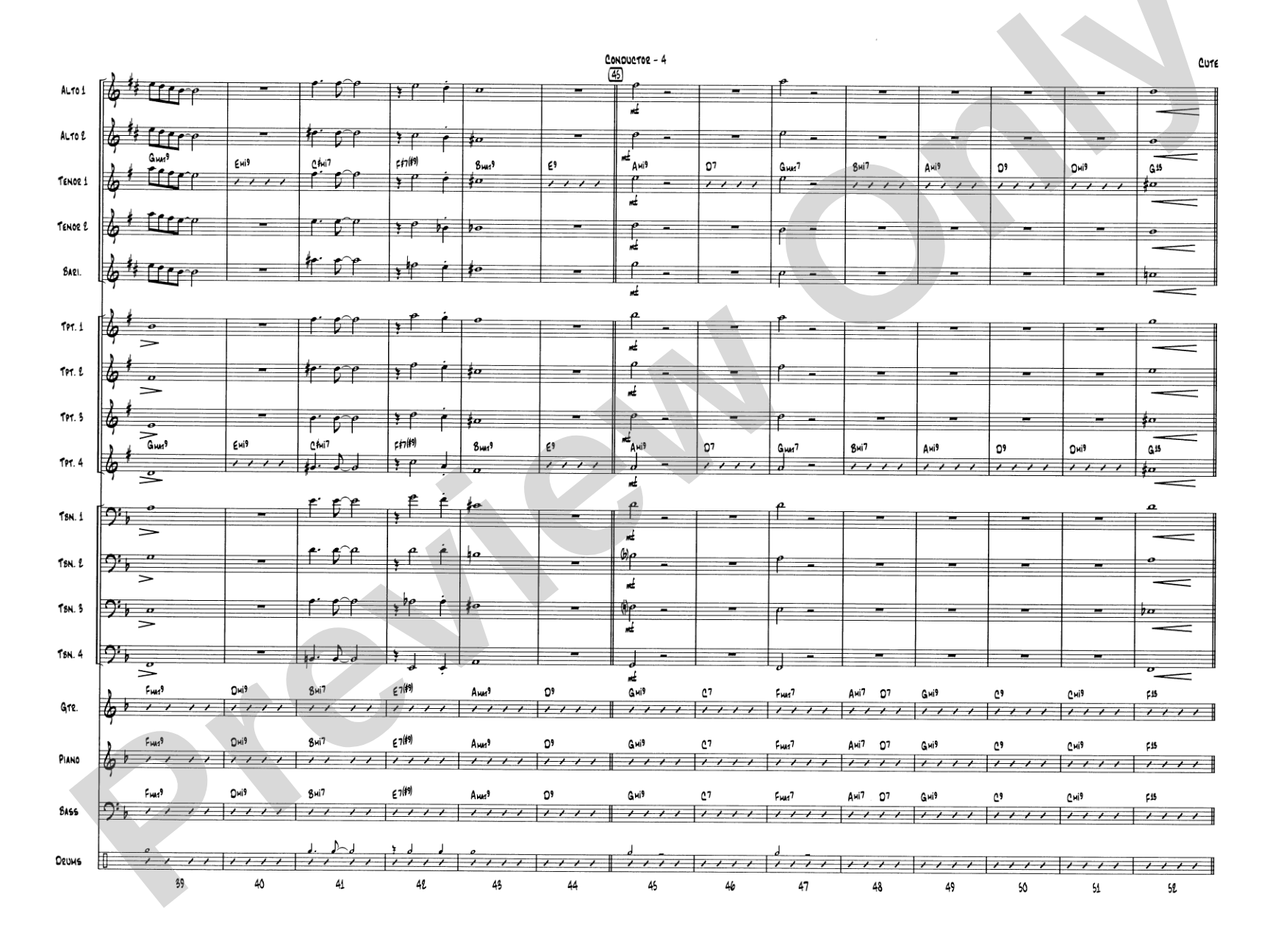
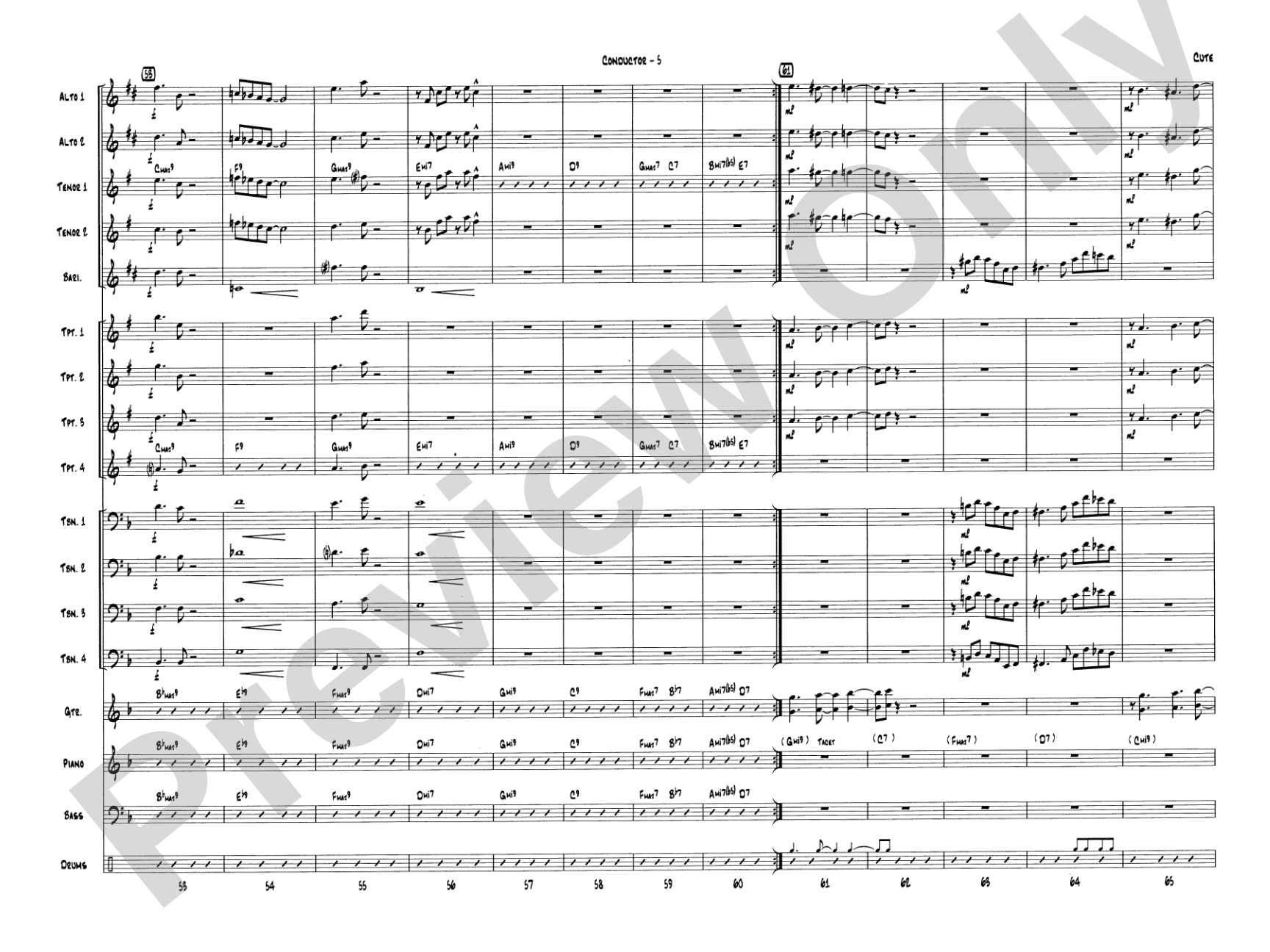
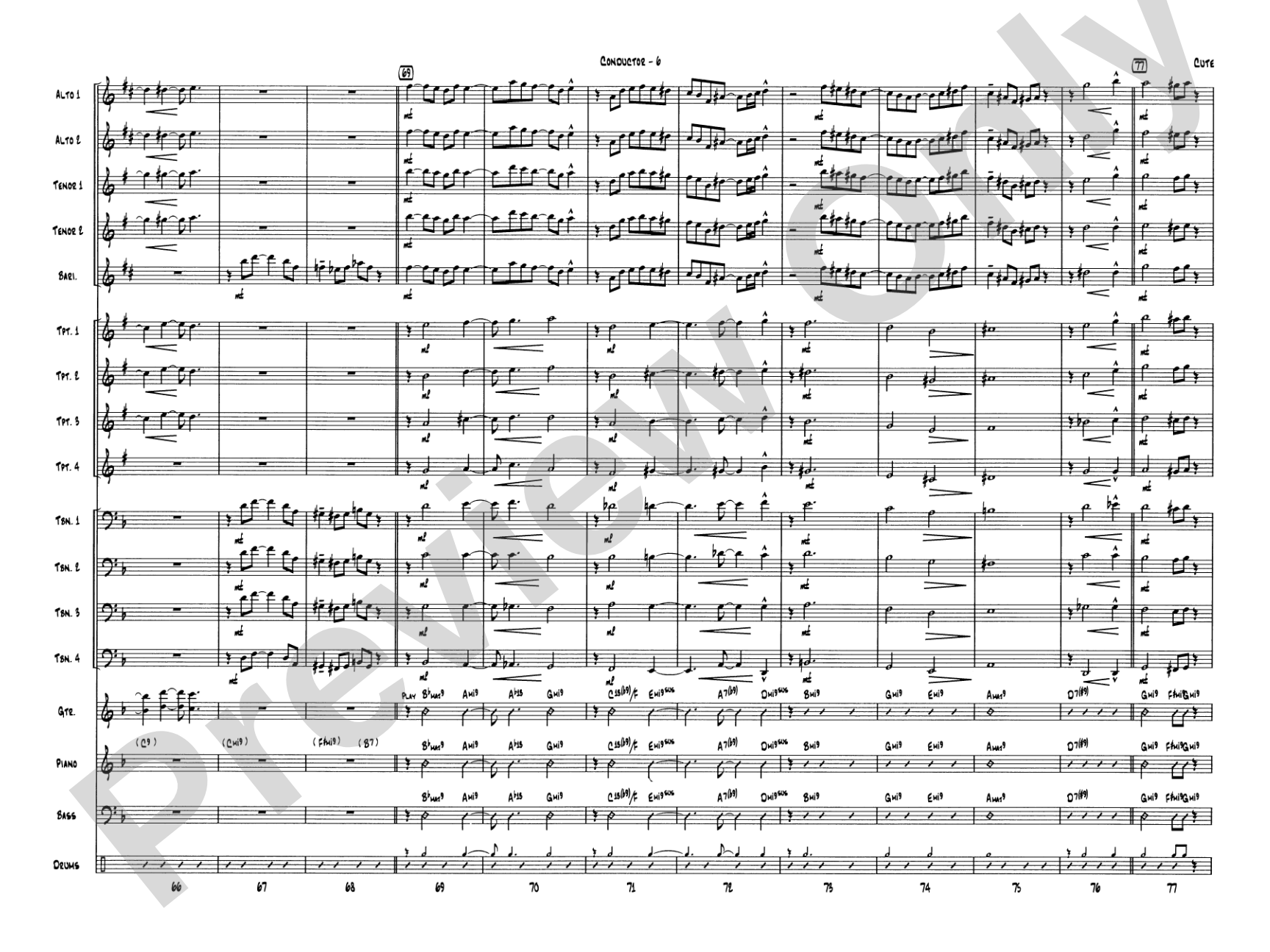
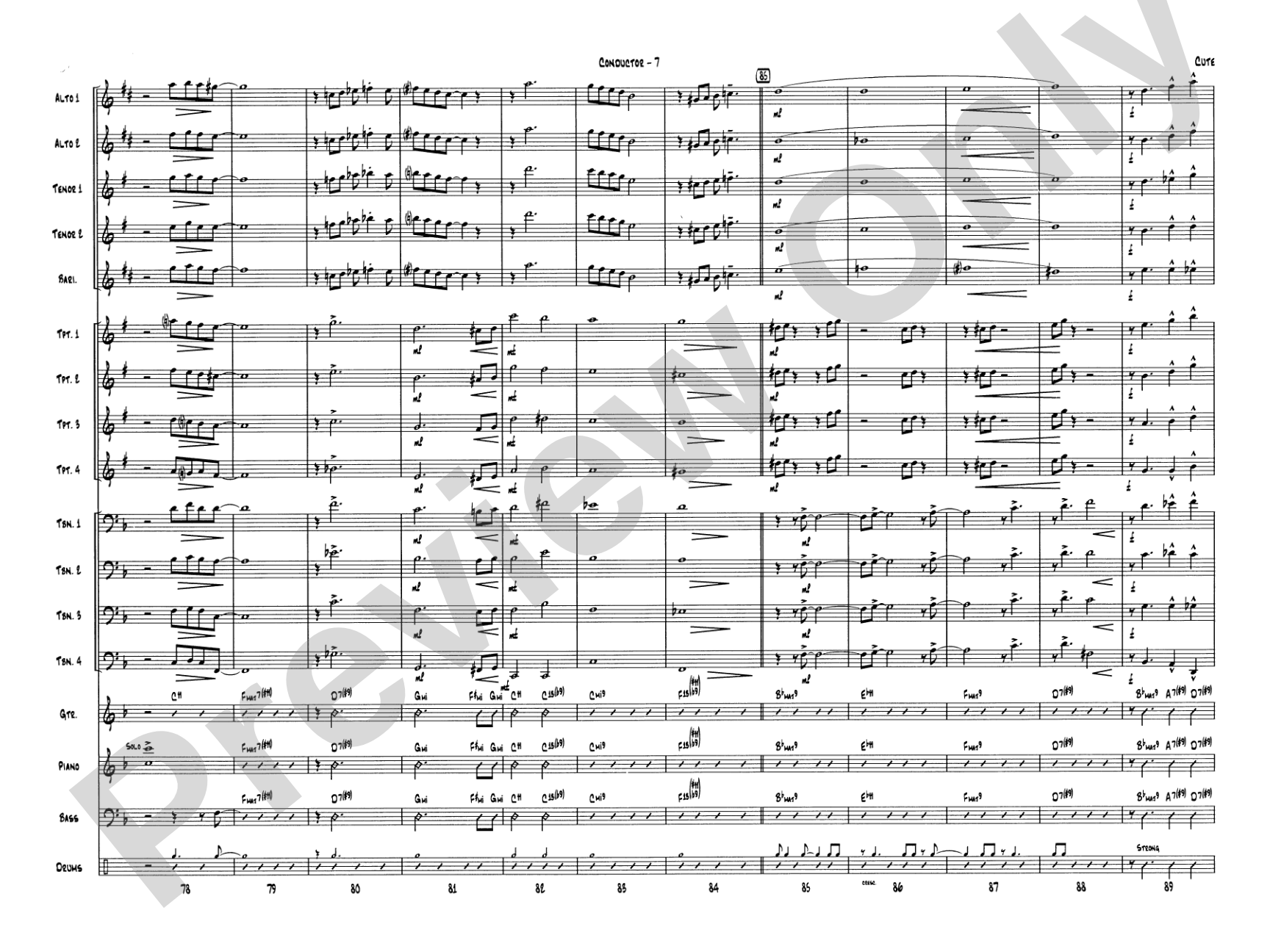
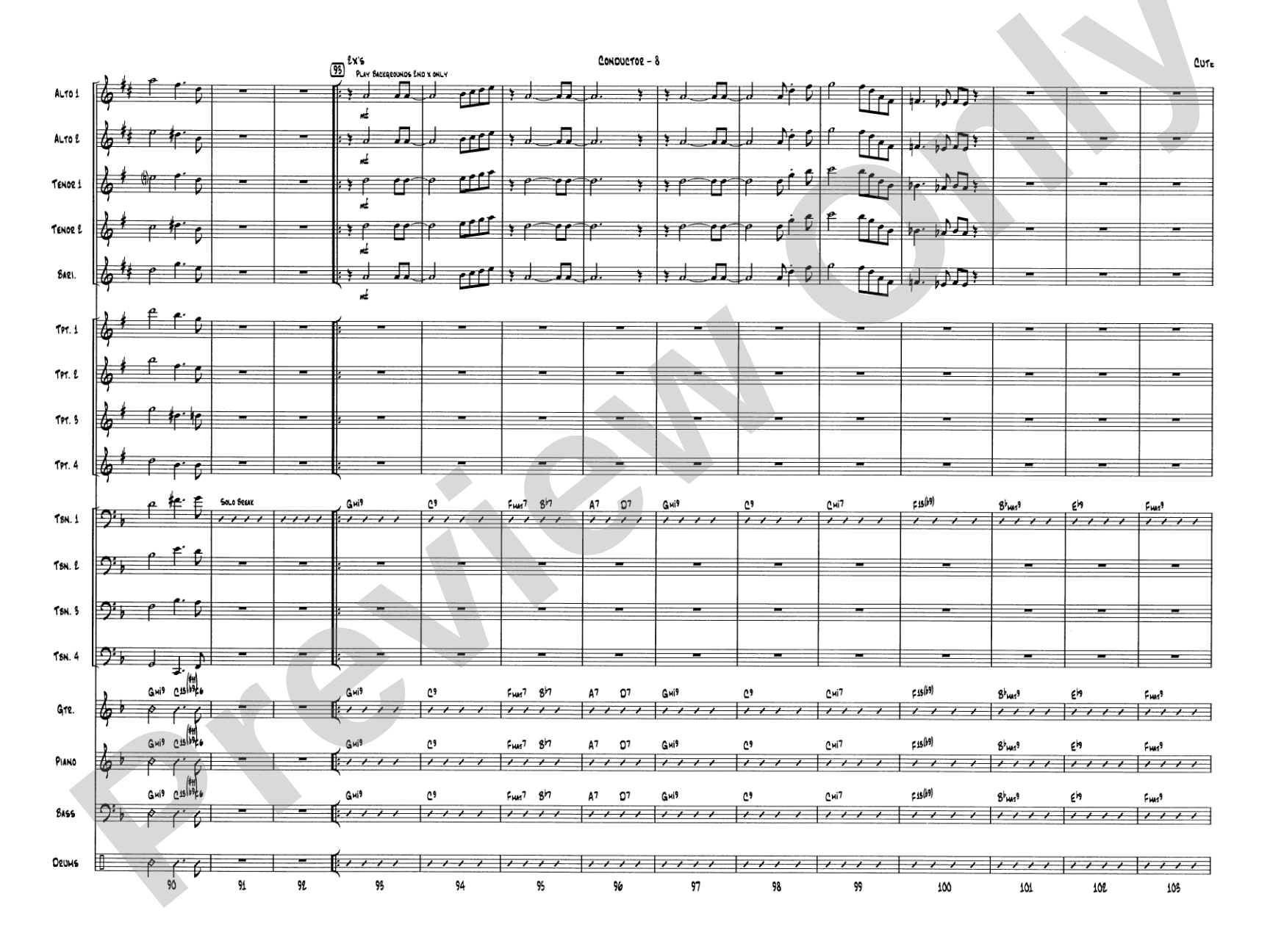
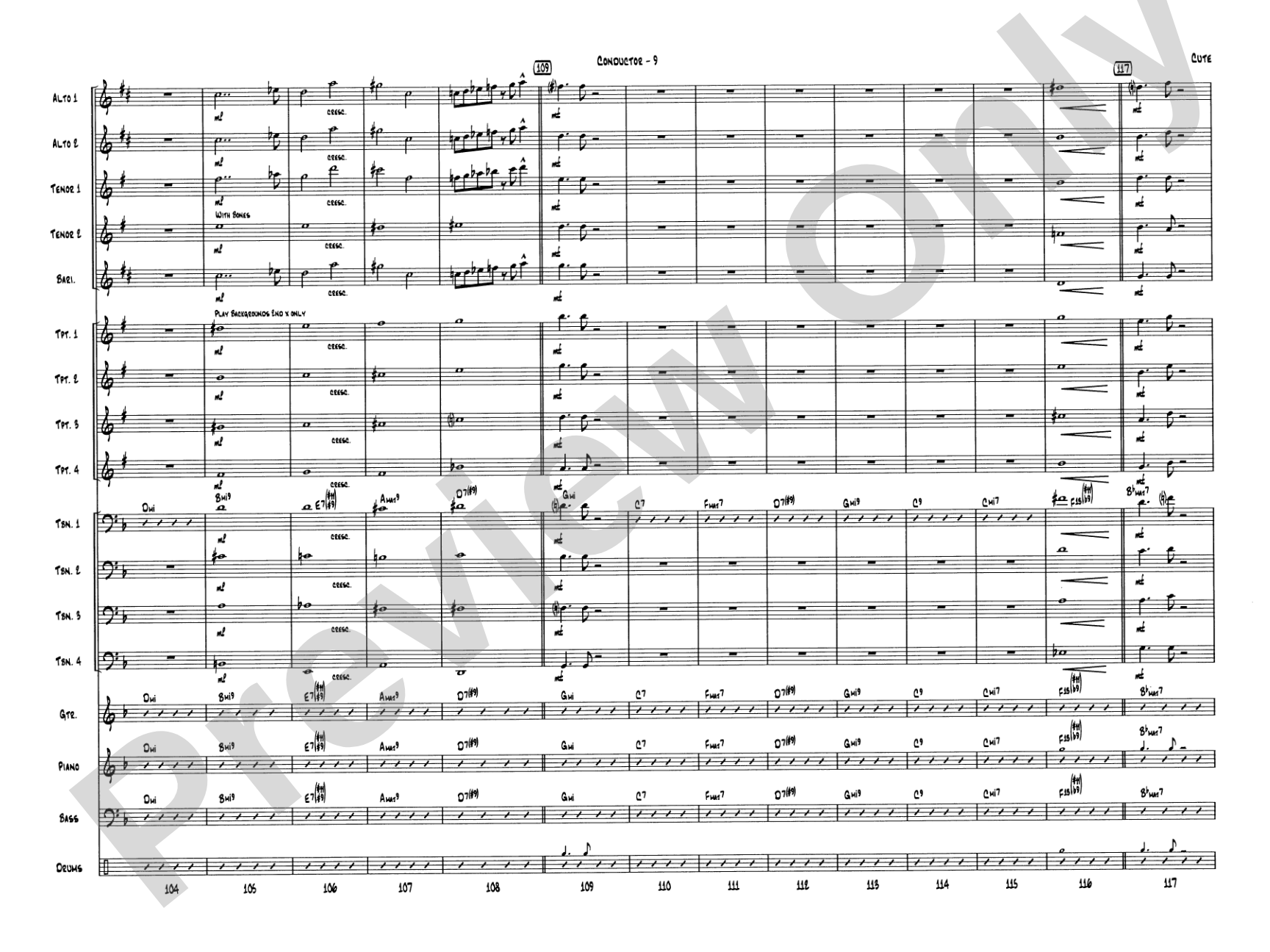
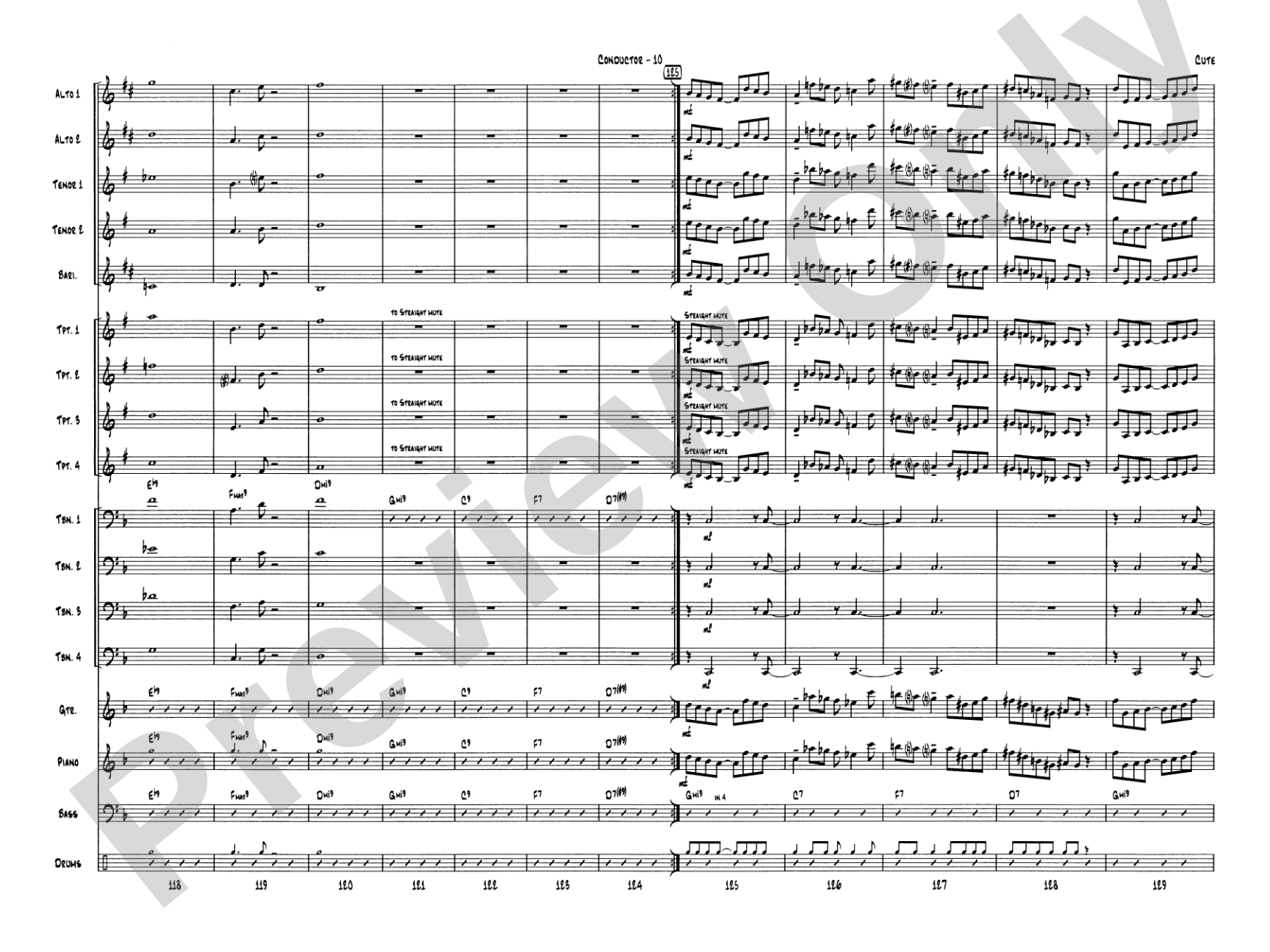
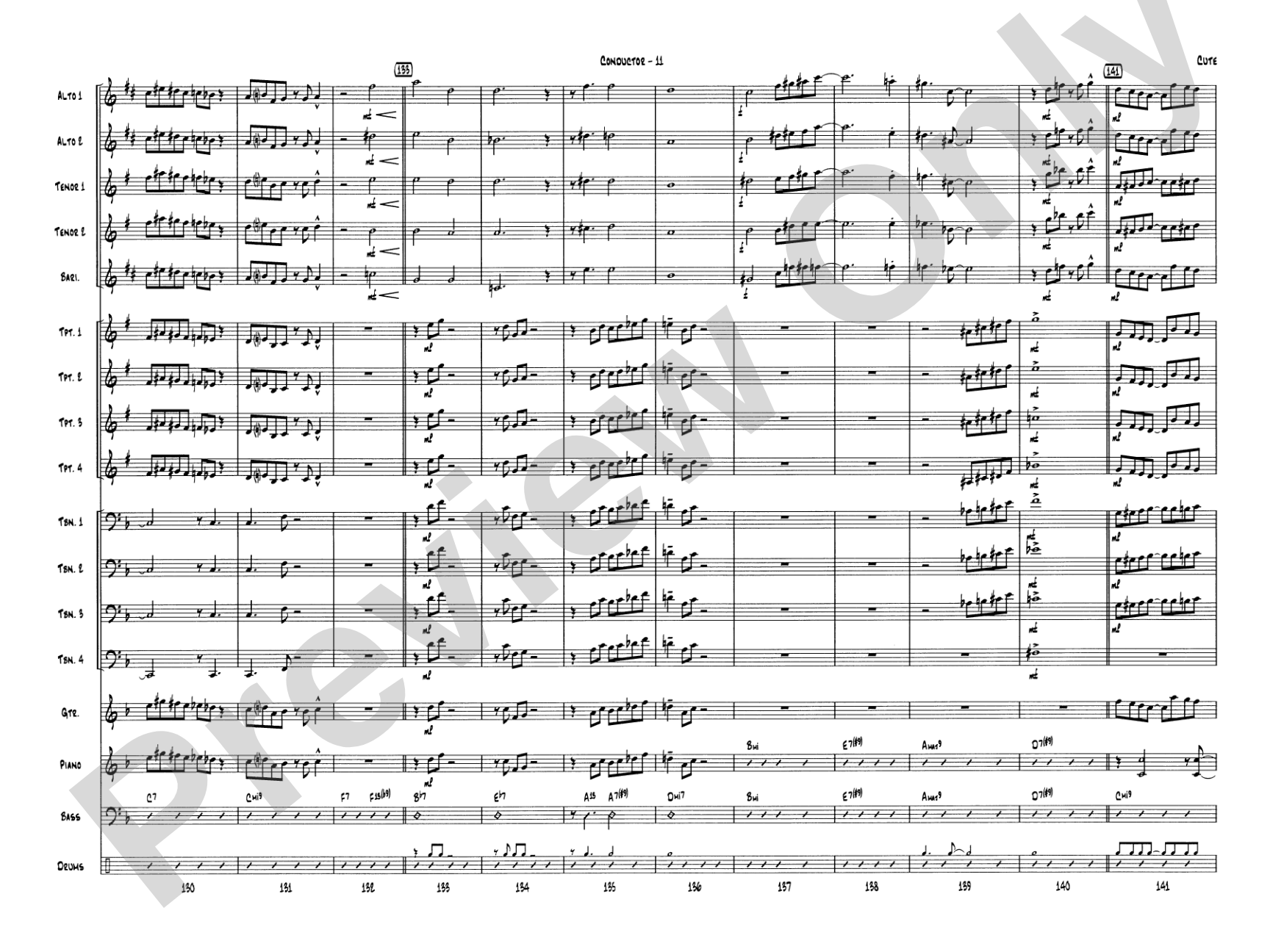
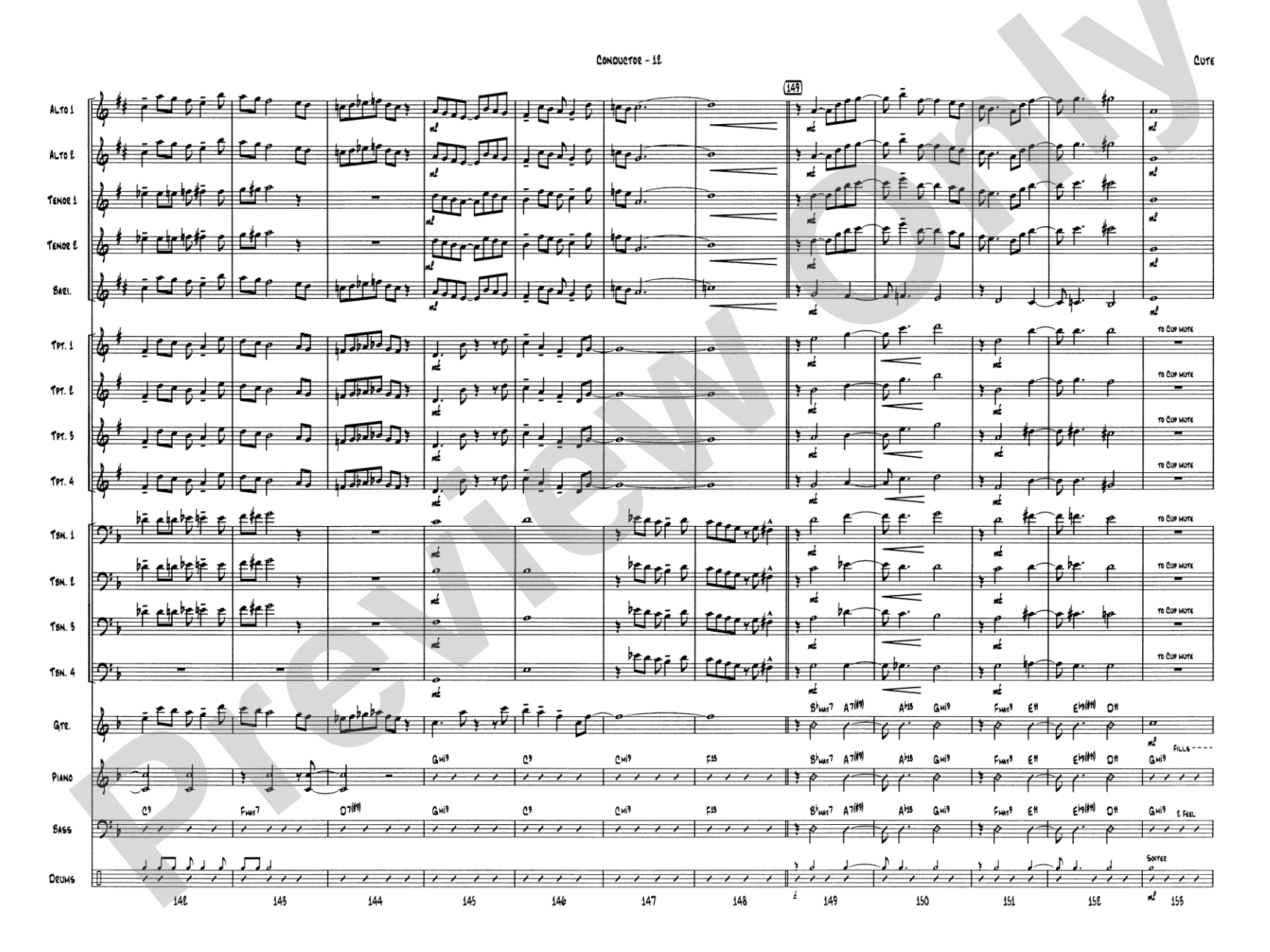
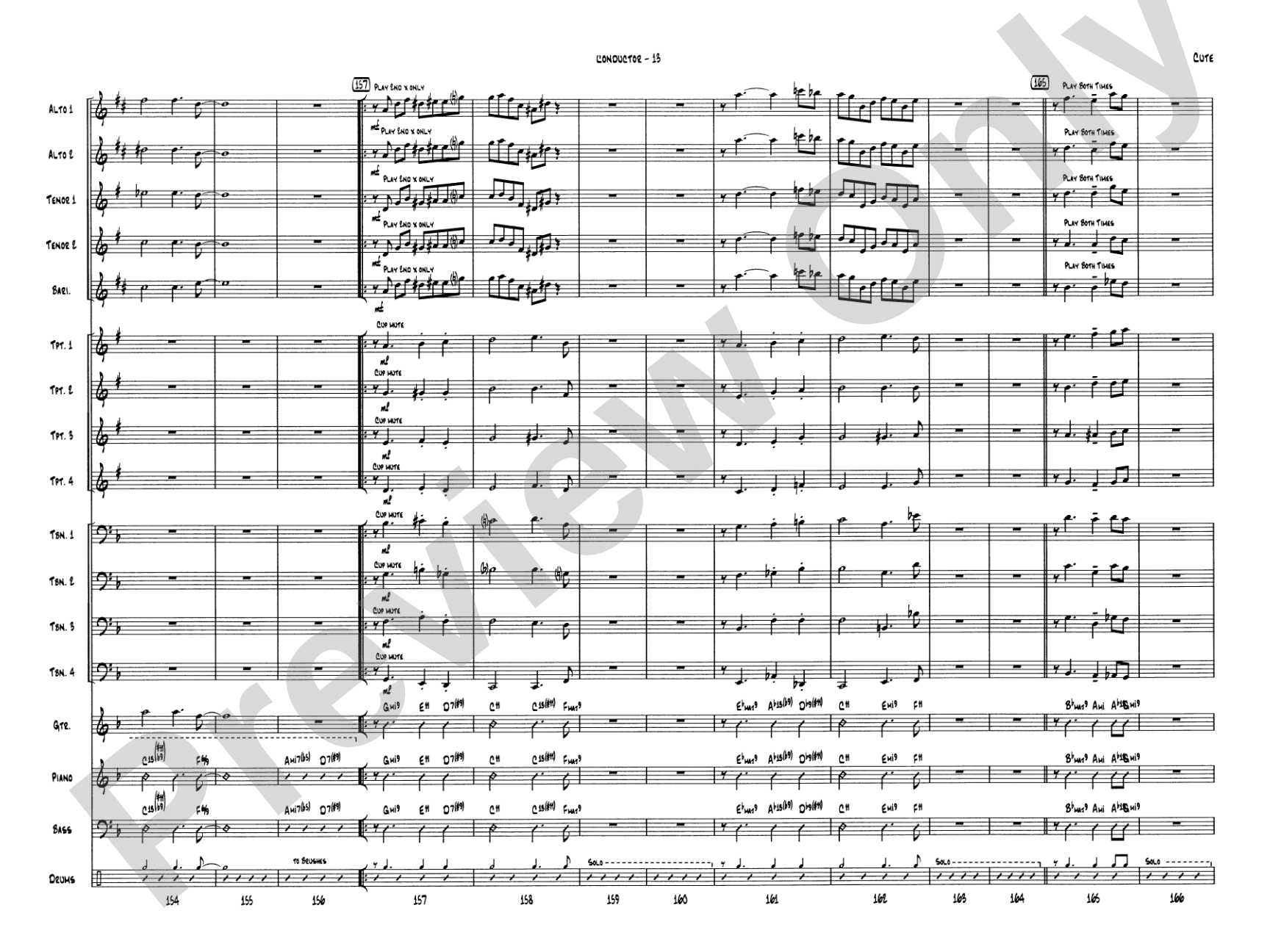
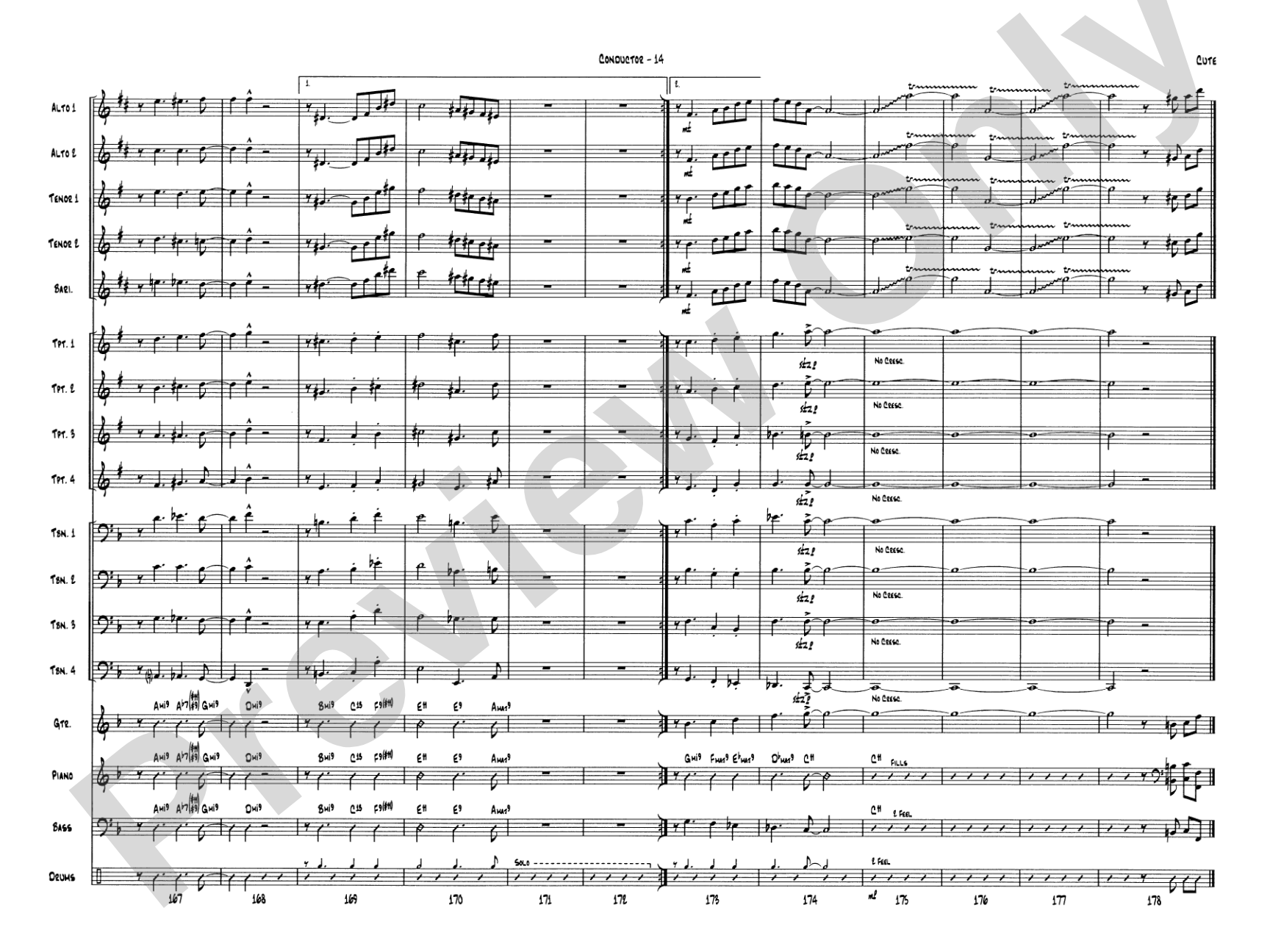


Cute: Jazz Ensemble Conductor Score & Parts
By Neal Hefti / arr. Bob Mintzer
Grade: 4.5 (Medium Advanced / Difficult)
Item: 00-PK-0002487

$60.00
One moment…
Description
Bob Mintzer has arranged Neal Hefti's classic "Cute." From the Bob Mintzer Big Band's newest CD, Homage to Count Basie, this is a fresh and contemporary treatment of the clever and appealing tune. The tempo is brisk and the rhythms and harmonies are sophisticated, making this chart suitable for the more experienced band. Featuring the drums (of course) along with tenor, trumpet, and trombone. Audiences and musicians will delight in a creative arrangement of this well-known big band standard written by one of today's most innovative writers. Optional woodwind doubles. An outstanding chart!


Don't just read it, hear it, play along with it, and watch your students grow with it. In MakeMusic Cloud, Cute: Jazz Ensemble Conductor Score & Parts comes alive with professional accompaniment, adjustable tempo, and built-in practice tools that turn solo practice into real progress.
Open in the Player
Jump straight in and assign it today.
Start Your Free Trial
Open this title and explore the full library in minutes.
Sample Audio
1
Audio File
--:--
0:00
0:00
Sample Video
Additional Details
Series:
Premier Jazz Series
Publisher:
Alfred Music
Page Count:
92
SKU:
00-PK-0002487
More about this title
About the Composer: Neal Hefti
Neal Hefti composed some of the most enduring big band standards of the 1950s and beyond. His gift for melody and his understanding of how to write idiomatically for jazz ensembles made him a sought-after composer for the Count Basie Orchestra and other leading bands of the era. Hefti's work remains central to the jazz repertoire, prized for its sophistication, wit, and immediate appeal to both musicians and audiences.
Why we love this
Bob Mintzer's arrangement honors the original charm of Hefti's melody while bringing contemporary harmonic sophistication and rhythmic energy to the arrangement. The chart respects the tune's accessibility without sacrificing the challenge experienced jazz musicians crave, making it rewarding material for groups ready to tackle brisk tempos and nuanced ensemble balance. The featured soloists and optional woodwind doubles give you flexibility in casting while keeping the focus on the groove and the tune itself.
What to expect
The piece swings with intelligence and verve, balancing the clever melodic charm of the original tune with Mintzer's contemporary harmonic language. Despite the sophistication, the arrangement never loses touch with the tune's fundamental appeal and humor, creating an energetic chart that feels both sophisticated and fun. There's a sense of controlled exuberance throughout, with dynamic passages that reward clean ensemble execution.
Who it's for
This arrangement serves advanced jazz ensembles with experienced musicians who can navigate a brisk tempo, sophisticated harmonies, and ensemble precision. Directors programming for groups with strong rhythm sections and capable soloists will find this chart both challenging and highly rewarding. The material suits showcasing ensembles on concert programs or festival performances where technical fluency and contemporary big band arranging are assets.
How to get the most out of it
- Lock the rhythm section first. The brisk tempo and sophisticated harmonic movement depend on tight coordination between drums, bass, and piano; use rehearsals to establish this foundation before layering in the horn sections.
- Shape the solo sections with dynamic contrast. The tenor, trumpet, and trombone solos invite individual voices to emerge, so encourage soloists to craft their narrative within the ensemble framework rather than playing over it.
- Balance the optional woodwind doubles carefully. If you include them, ensure they enhance the texture rather than muddy the original voicings; consider their deployment section by section rather than throughout.
- Nail the rhythmic precision in the arranged passages. Mintzer's sophisticated rhythms require accurate ensemble articulation, so invest rehearsal time in counting through complex figures and checking alignment across sections.
How to use it
Pair this with other Grade 4-5 jazz charts to demonstrate your ensemble's stylistic range and technical maturity. The contemporary arranging alongside Hefti's classic tune makes it an excellent centerpiece for programs exploring how modern arrangers reinterpret big band standards. It works particularly well on festival or concert programs where you want to showcase ensemble cohesion and individual soloists in a recognizable, engaging standard.
Skills your students will build
- Reading and executing sophisticated jazz harmonies at brisk tempos
- Ensemble precision in rhythmically complex arranged passages
- Solo construction and improvisation within a structured ensemble context
- Stylistic accuracy in big band swing, including articulation and phrasing conventions
- Rhythm section coordination and interplay