

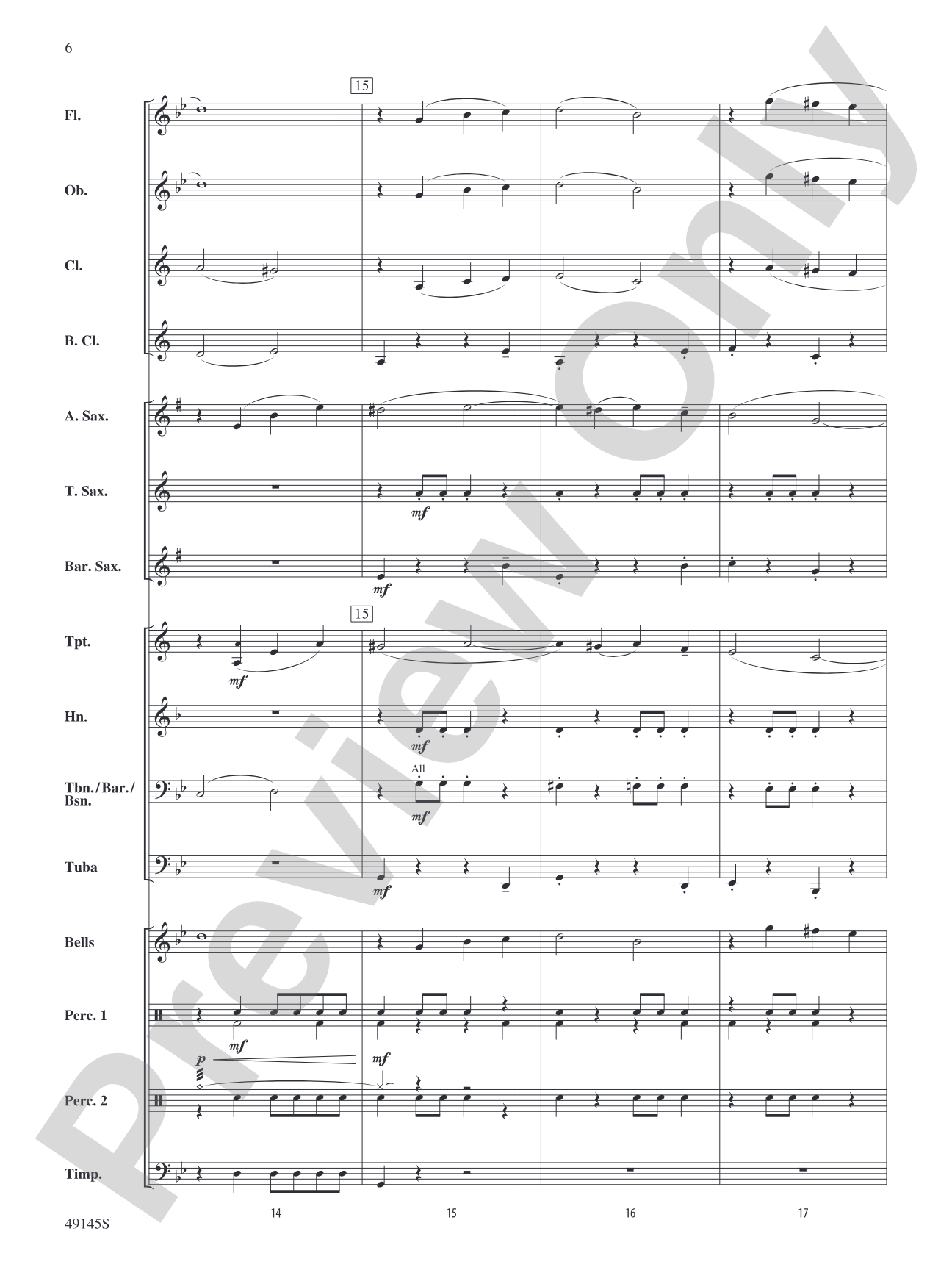
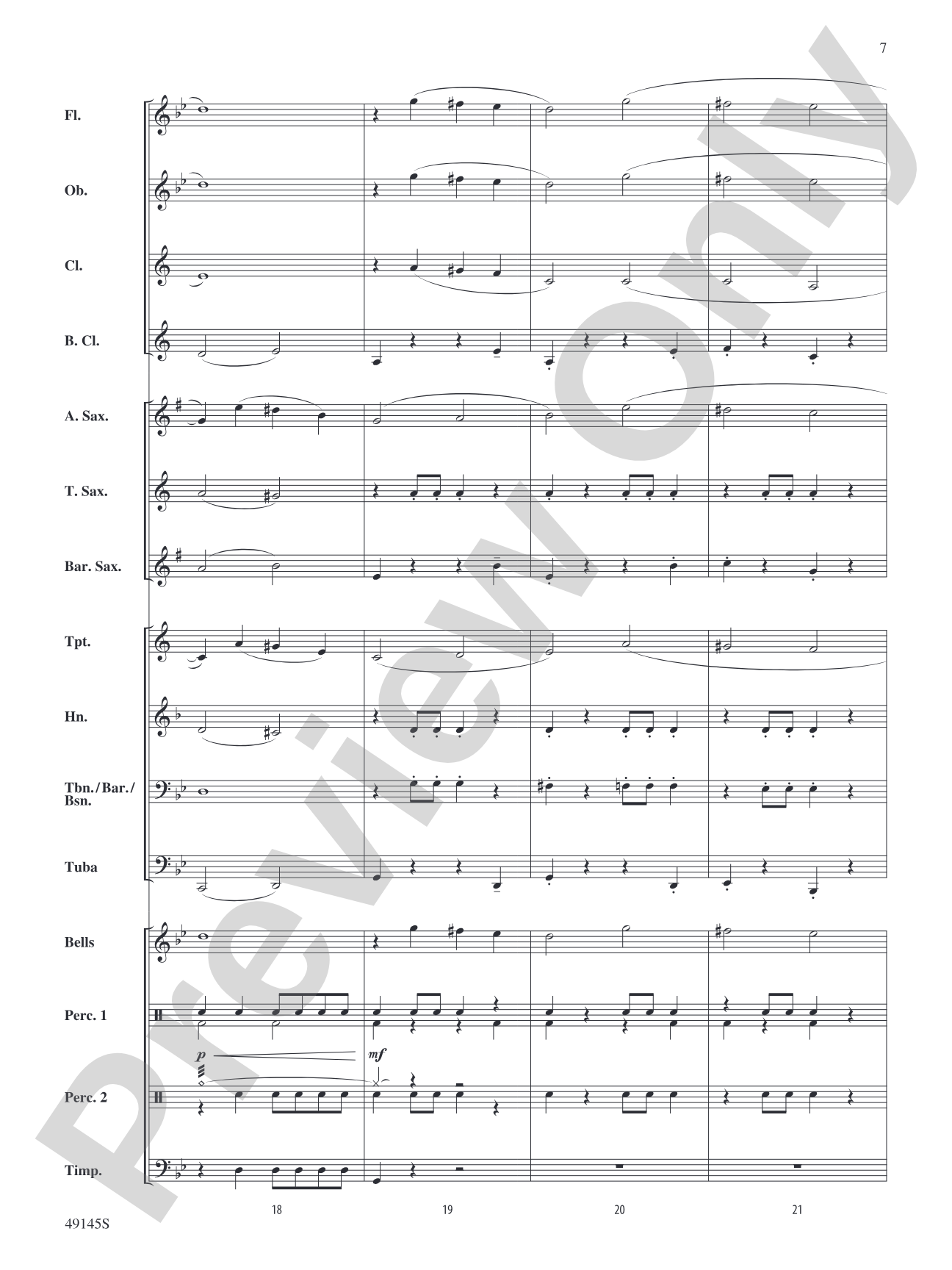
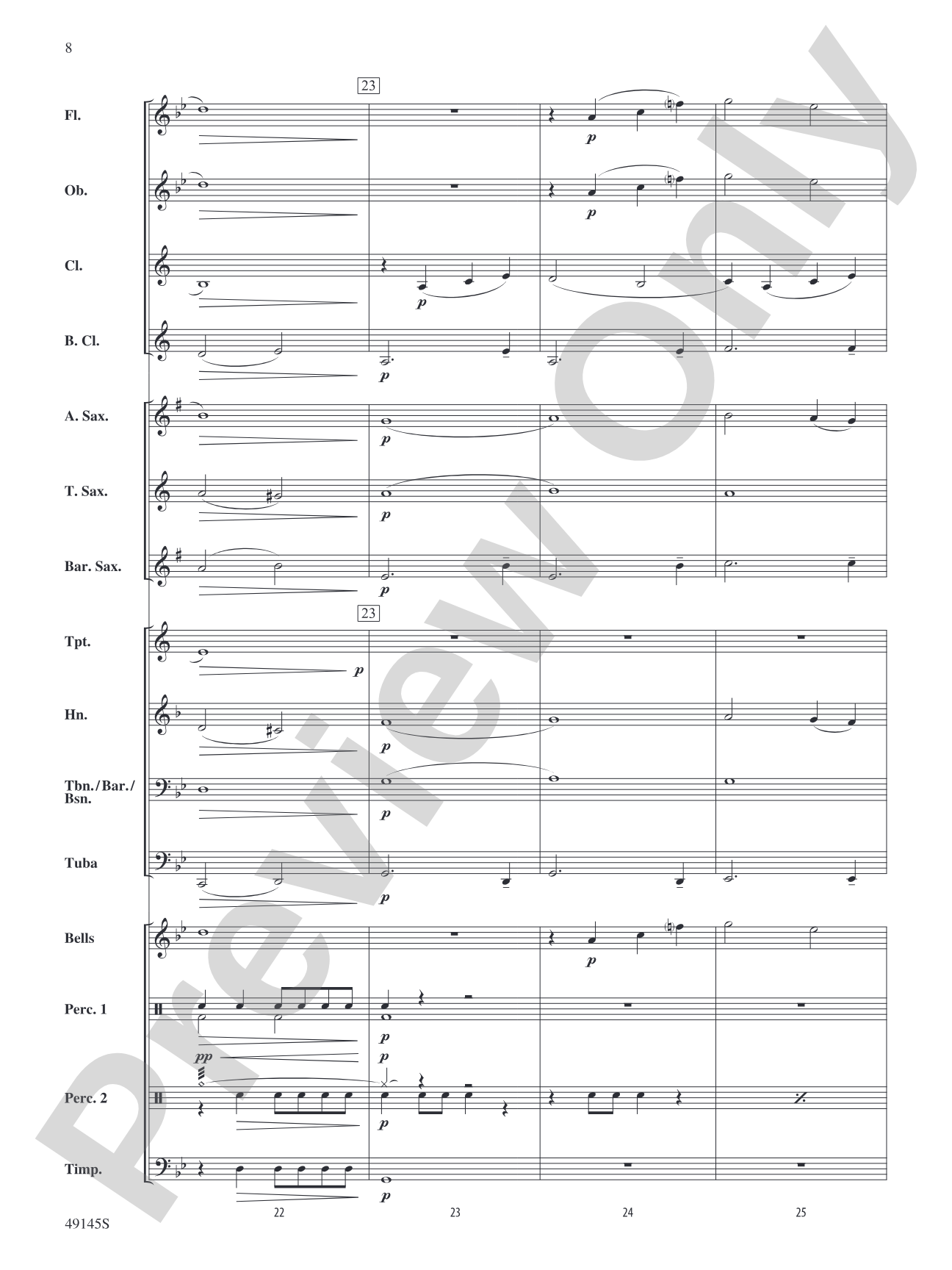
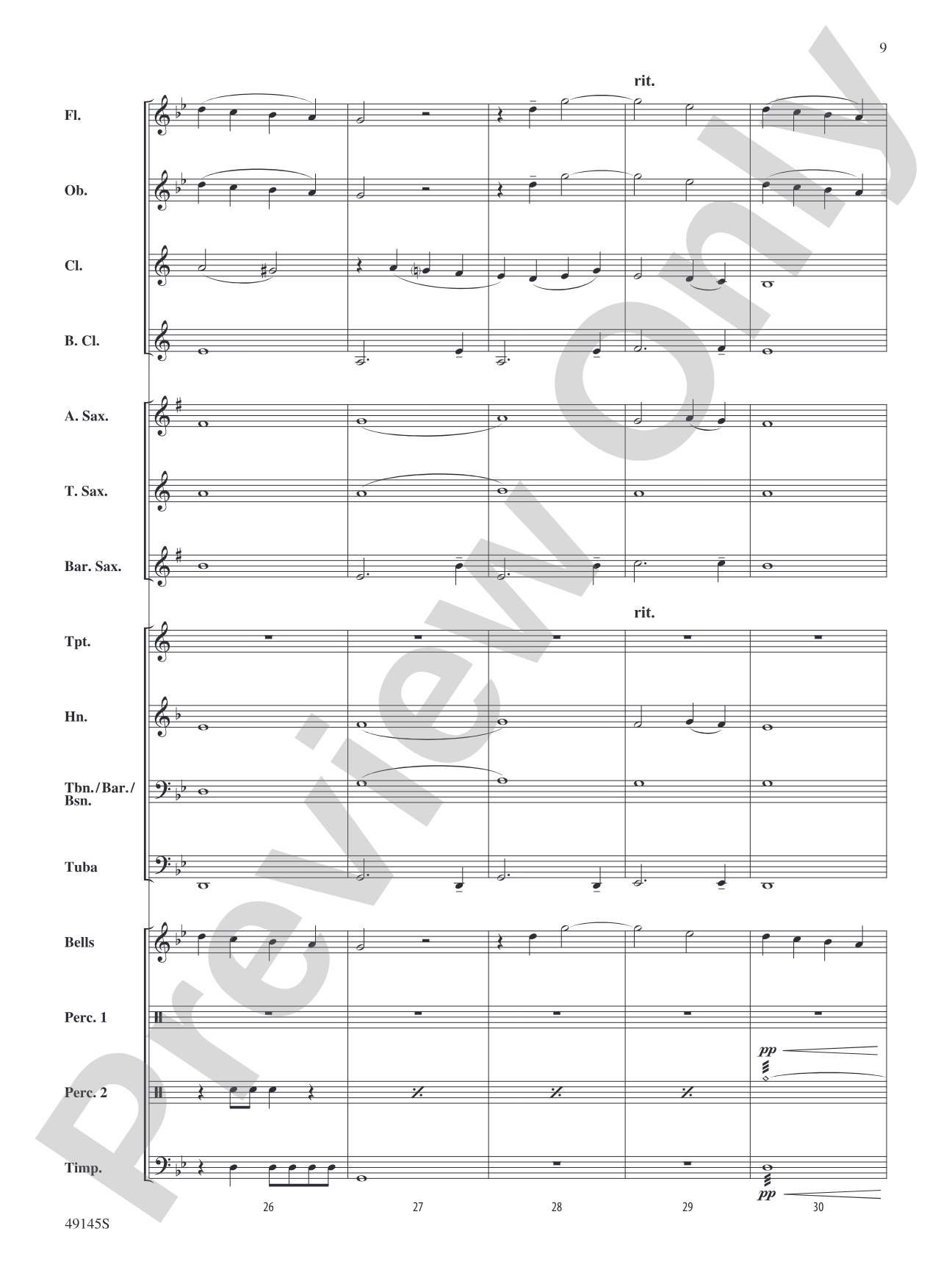
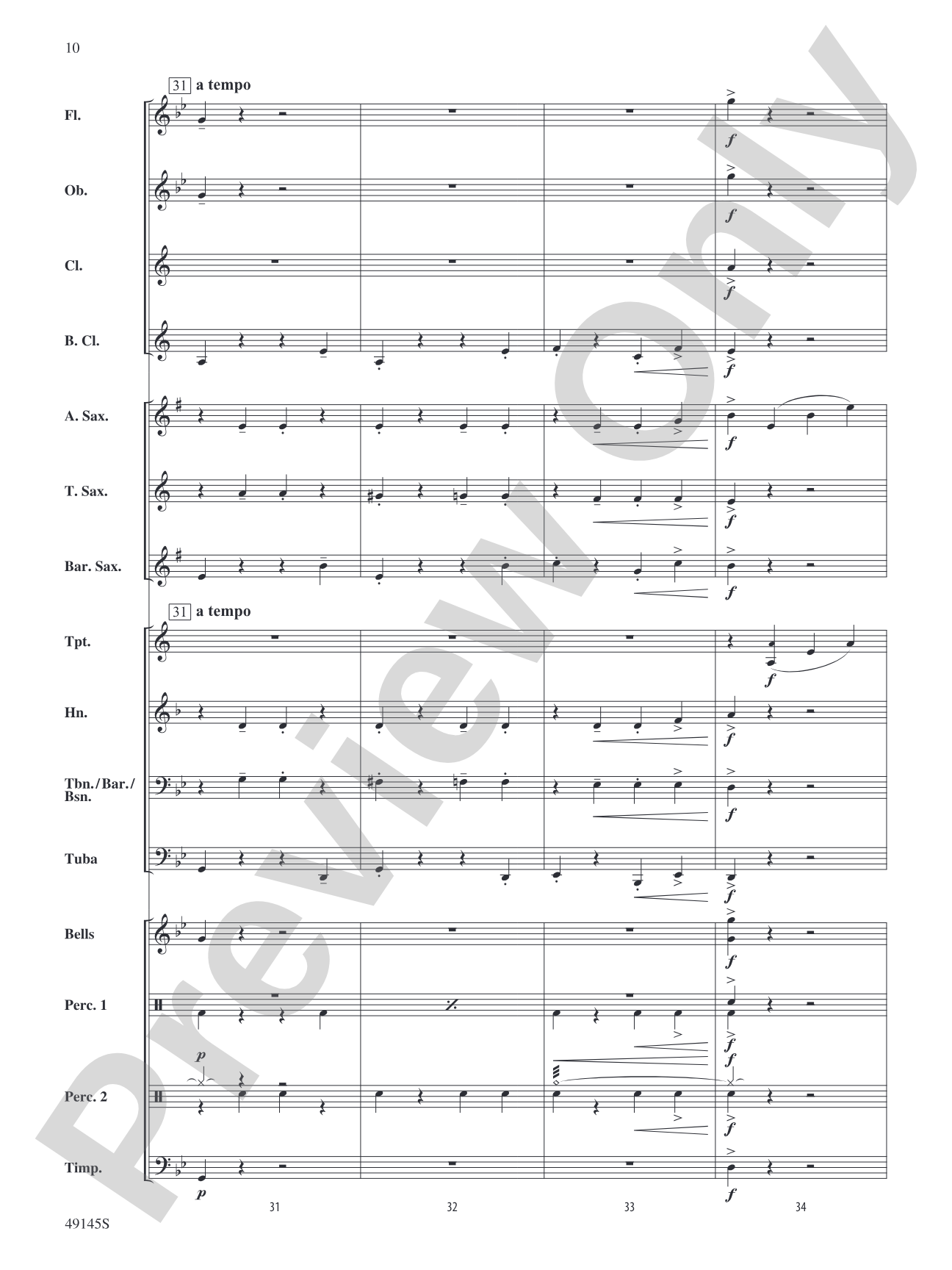
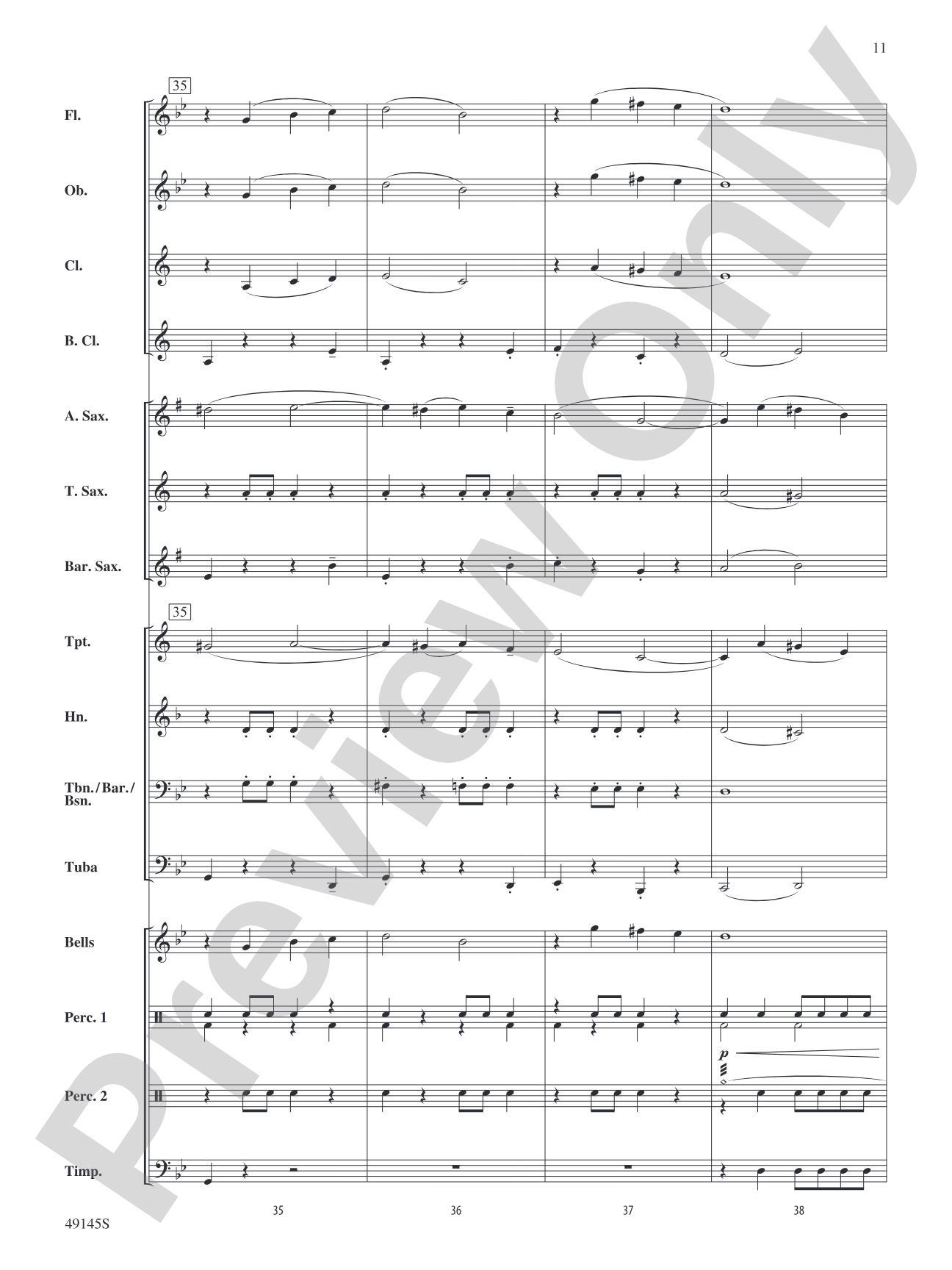
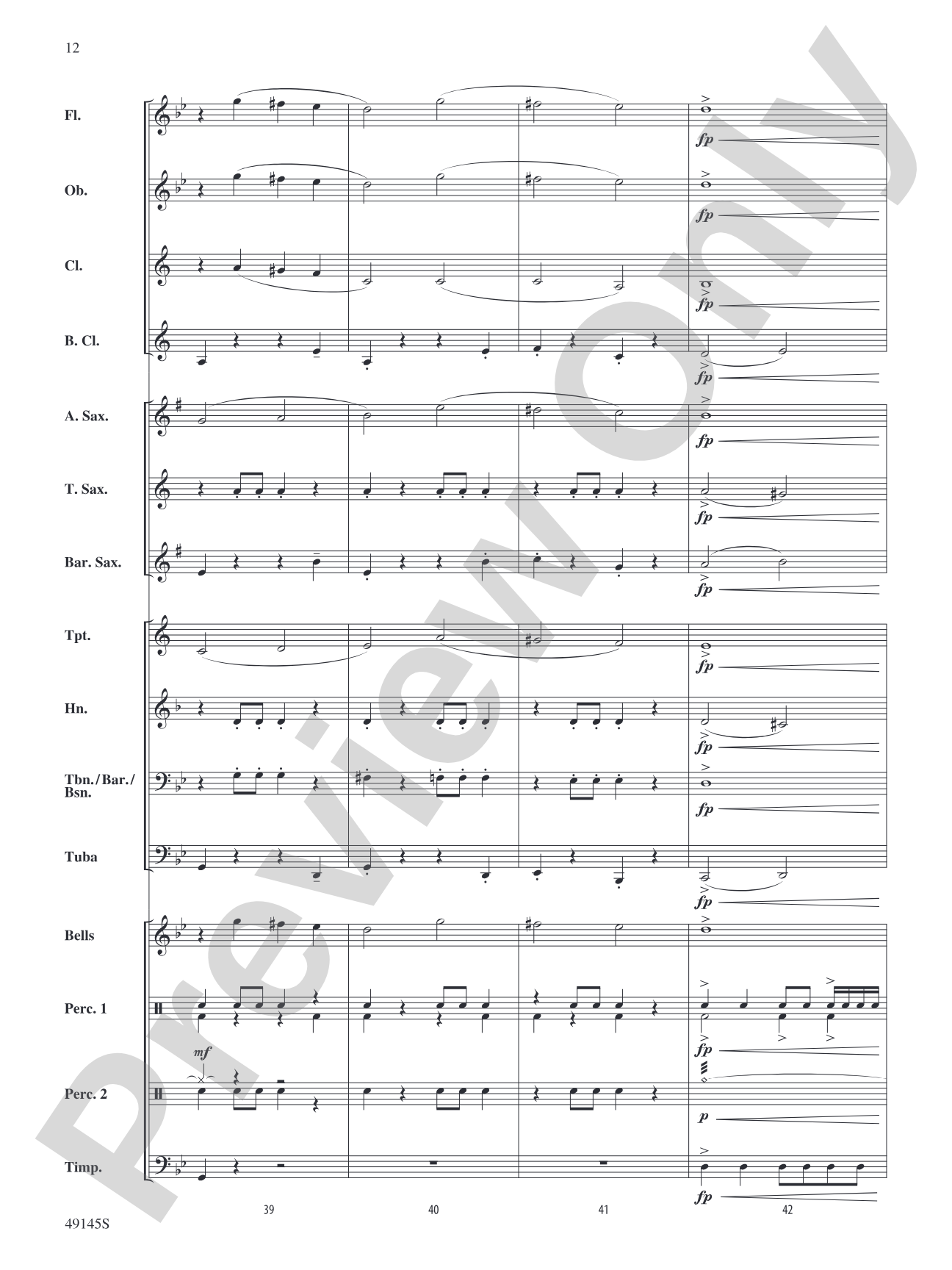
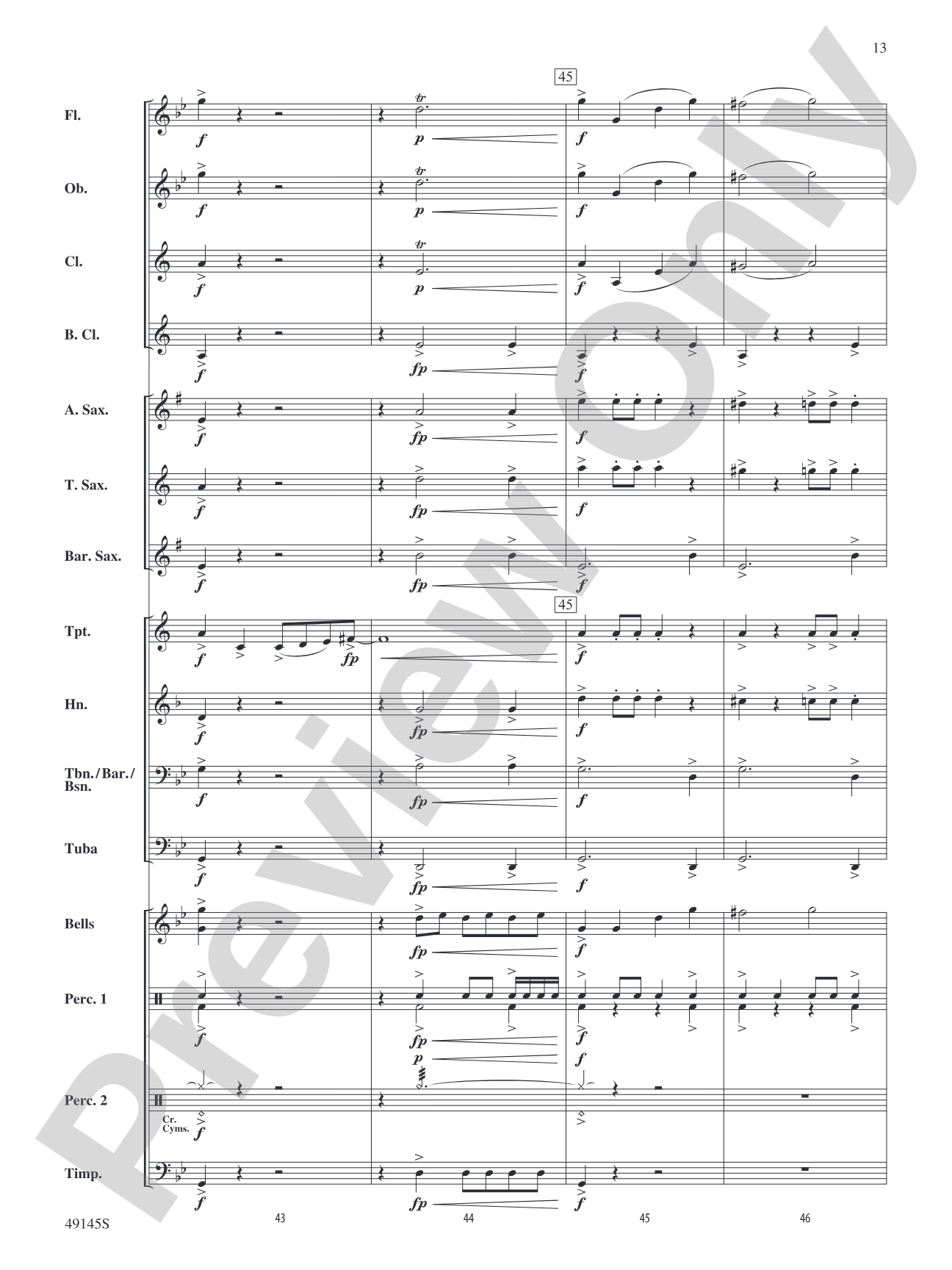
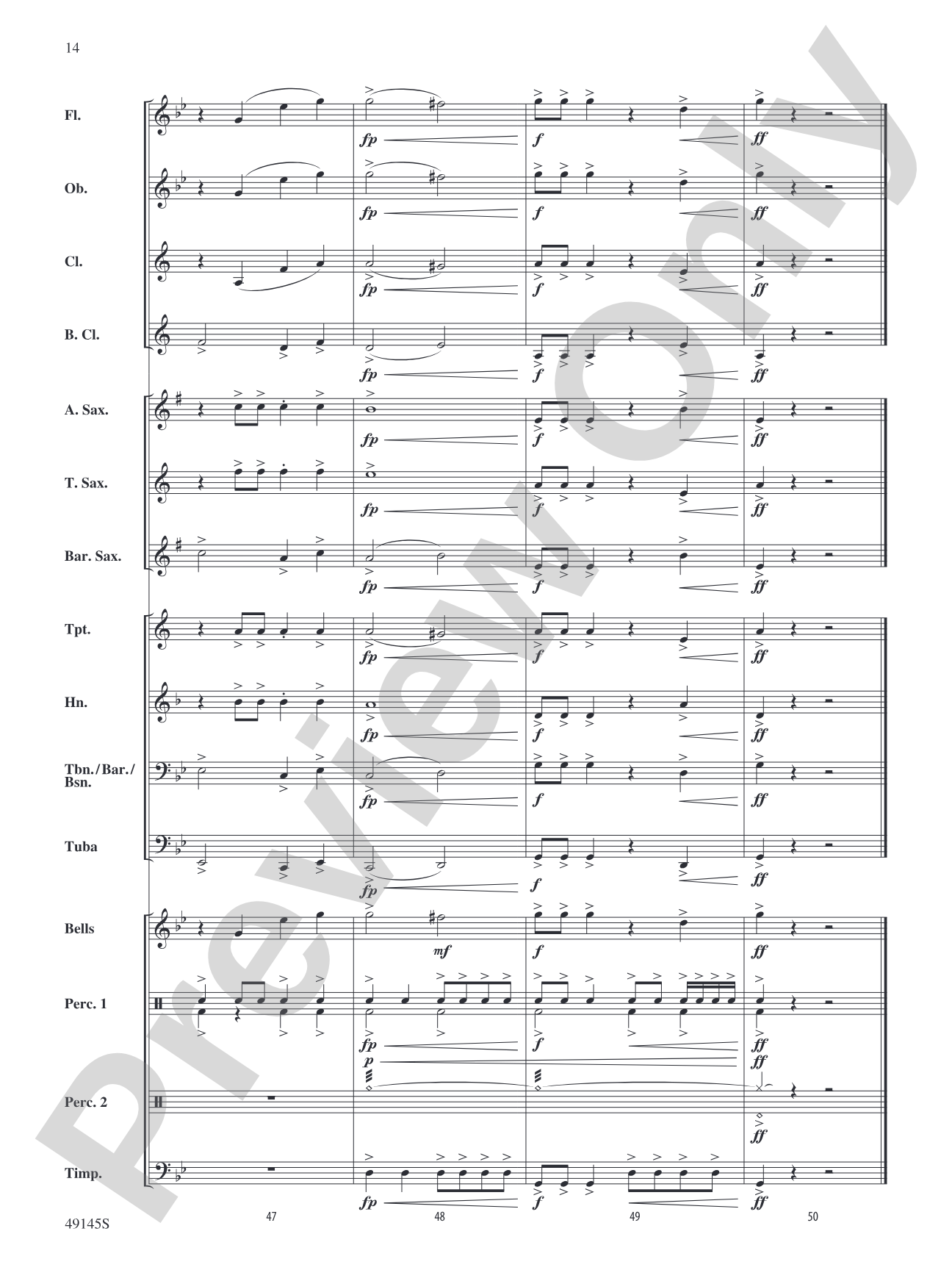

Crossfade: Concert Band Conductor Score & Parts
Quarantine 2020
By Patrick Roszell
Grade: 1.5 (Very Easy)
Item: 00-PK-0008404

$52.00
Pickup currently not available
Buy Extra Parts (Digital PDF Download)
| Product | Price | Quantity |
|---|---|---|
| Crossfade: Score | $9.00 | |
| Crossfade: Flute | $3.00 | |
| Crossfade: Oboe | $3.00 | |
| Crossfade: 1st B-flat Clarinet | $3.00 | |
| Crossfade: B-flat Bass Clarinet | $3.00 | |
| Crossfade: E-flat Alto Saxophone | $3.00 | |
| Crossfade: B-flat Tenor Saxophone | $3.00 | |
| Crossfade: E-flat Baritone Saxophone | $3.00 | |
| Crossfade: 1st B-flat Trumpet | $3.00 | |
| Crossfade: 1st F Horn | $3.00 | |
| Crossfade: 1st Trombone | $3.00 | |
| Crossfade: Baritone T.C. | $3.00 | |
| Crossfade: Tuba | $3.00 | |
| Crossfade: Mallets | $3.00 | |
| Crossfade: Timpani | $3.00 | |
| Crossfade: 1st Percussion | $3.00 | |
| Crossfade: 2nd Percussion | $3.00 |
Parts Added to Cart!
Description
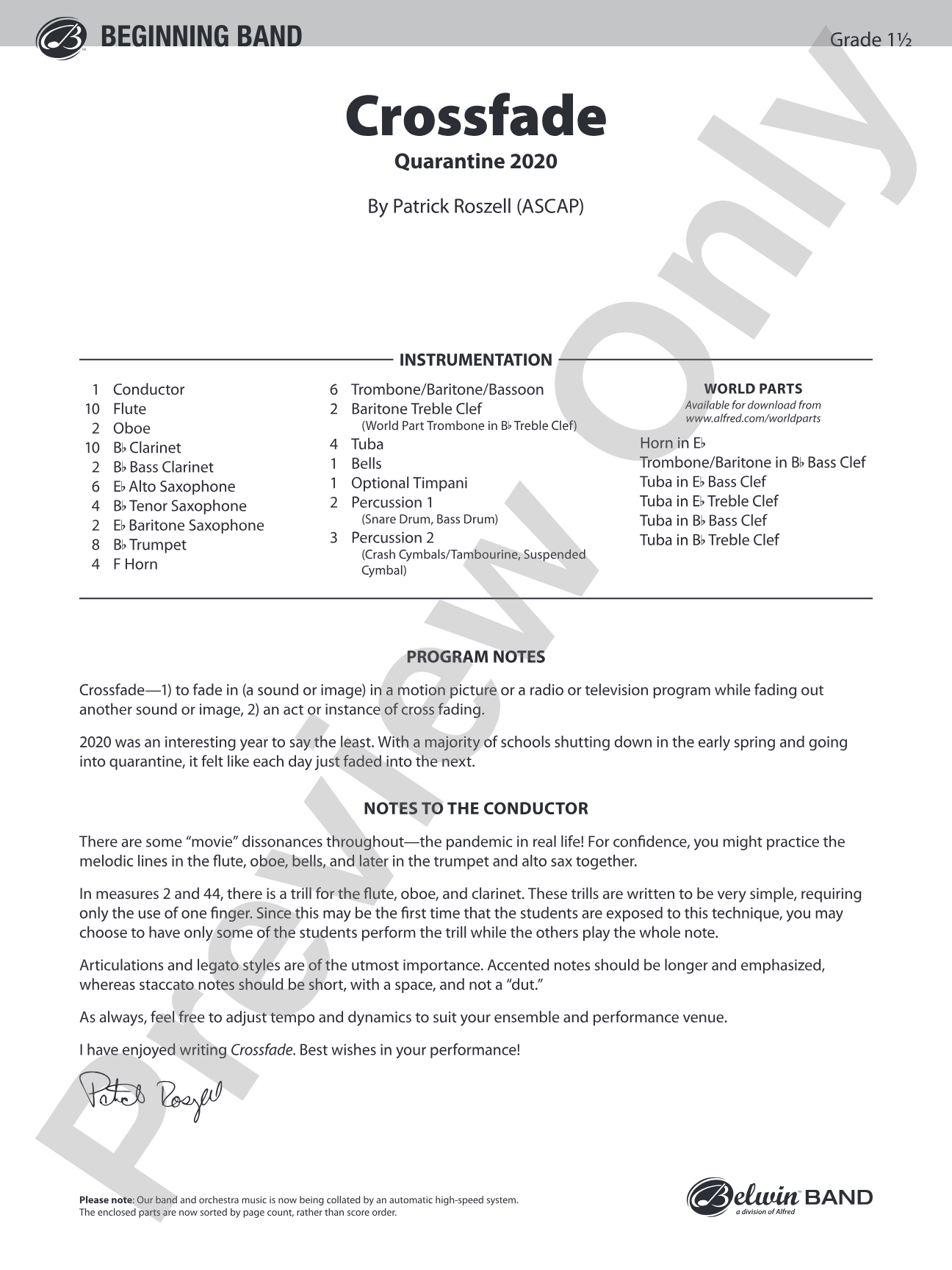
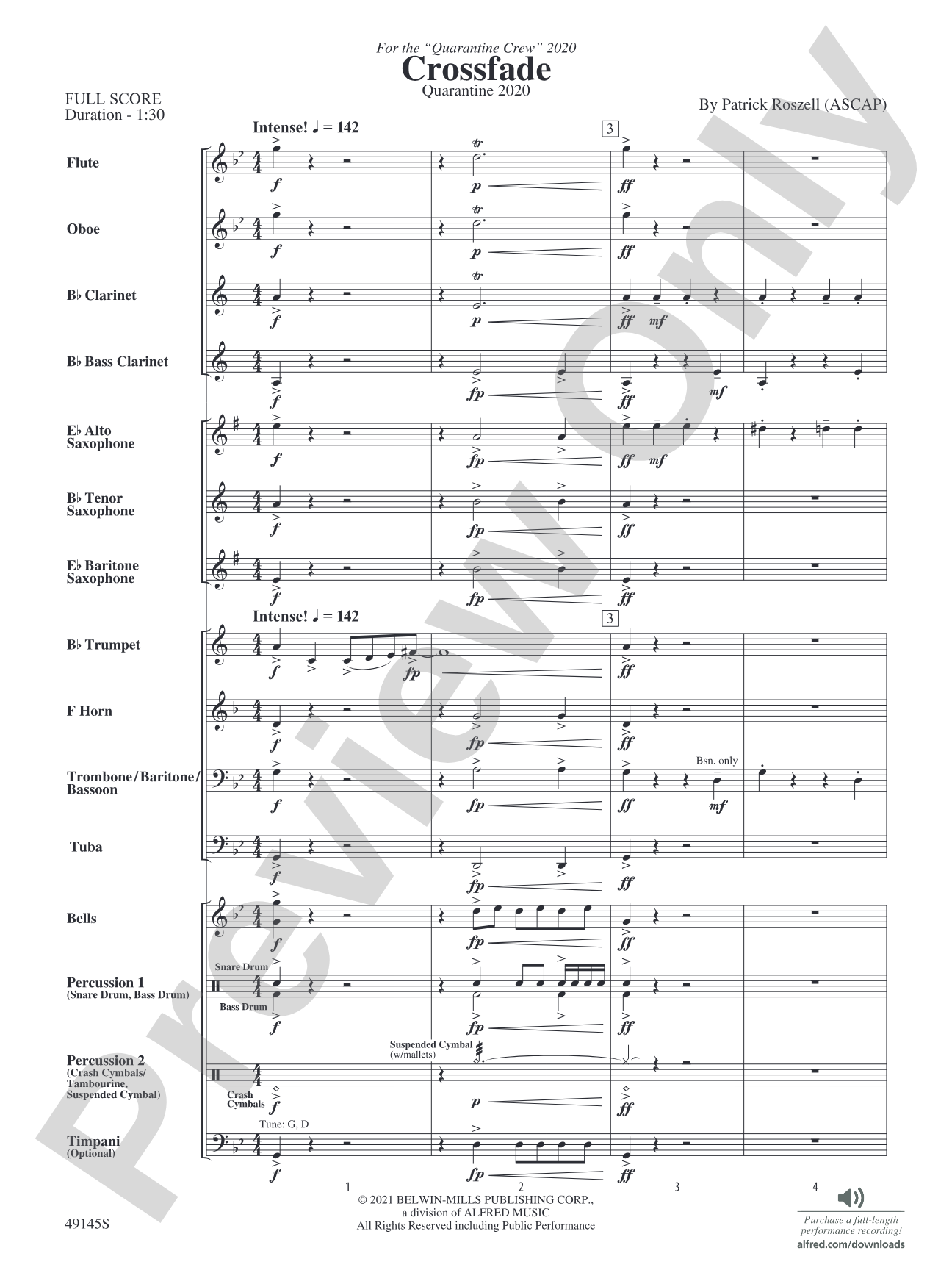
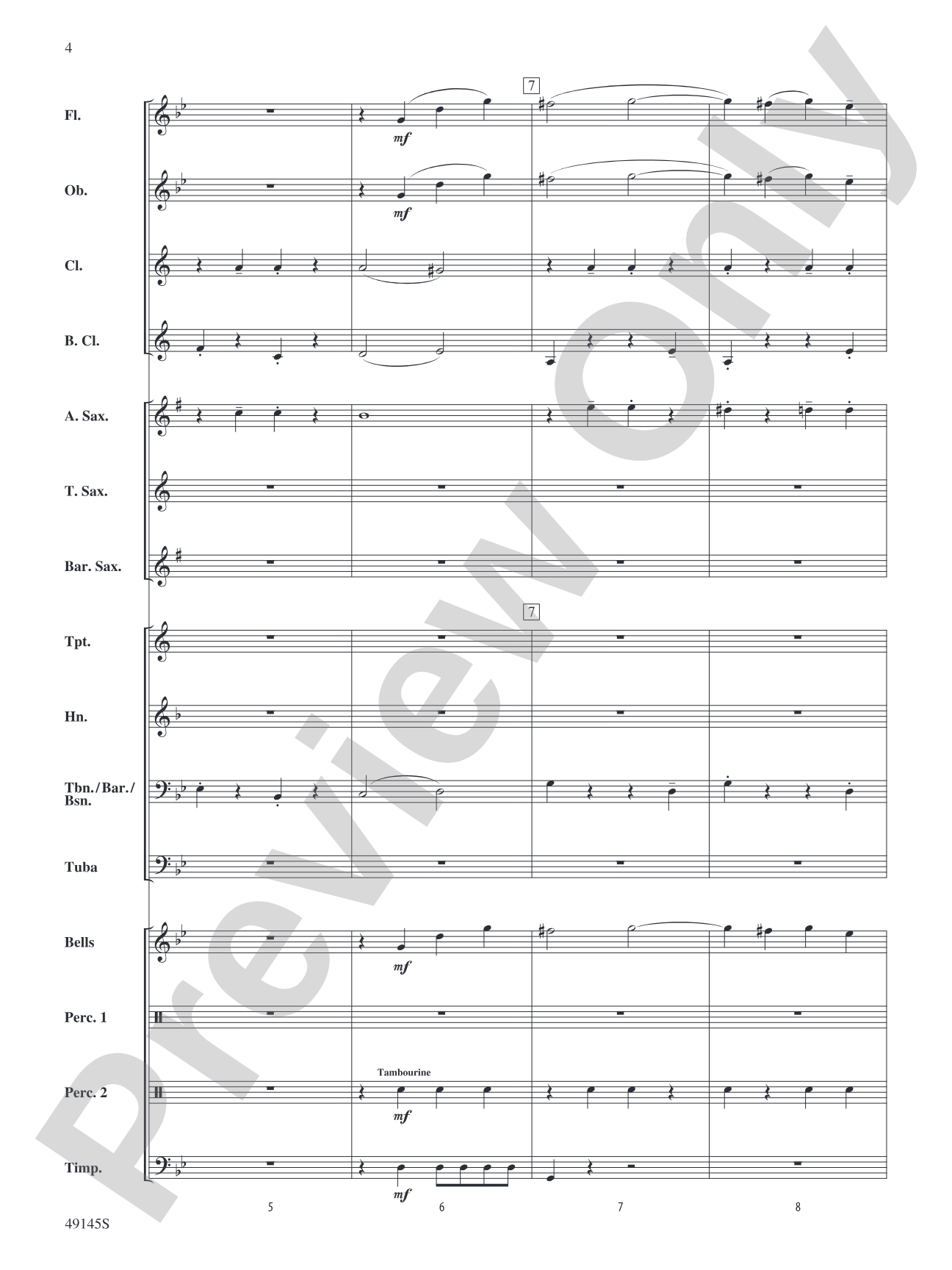
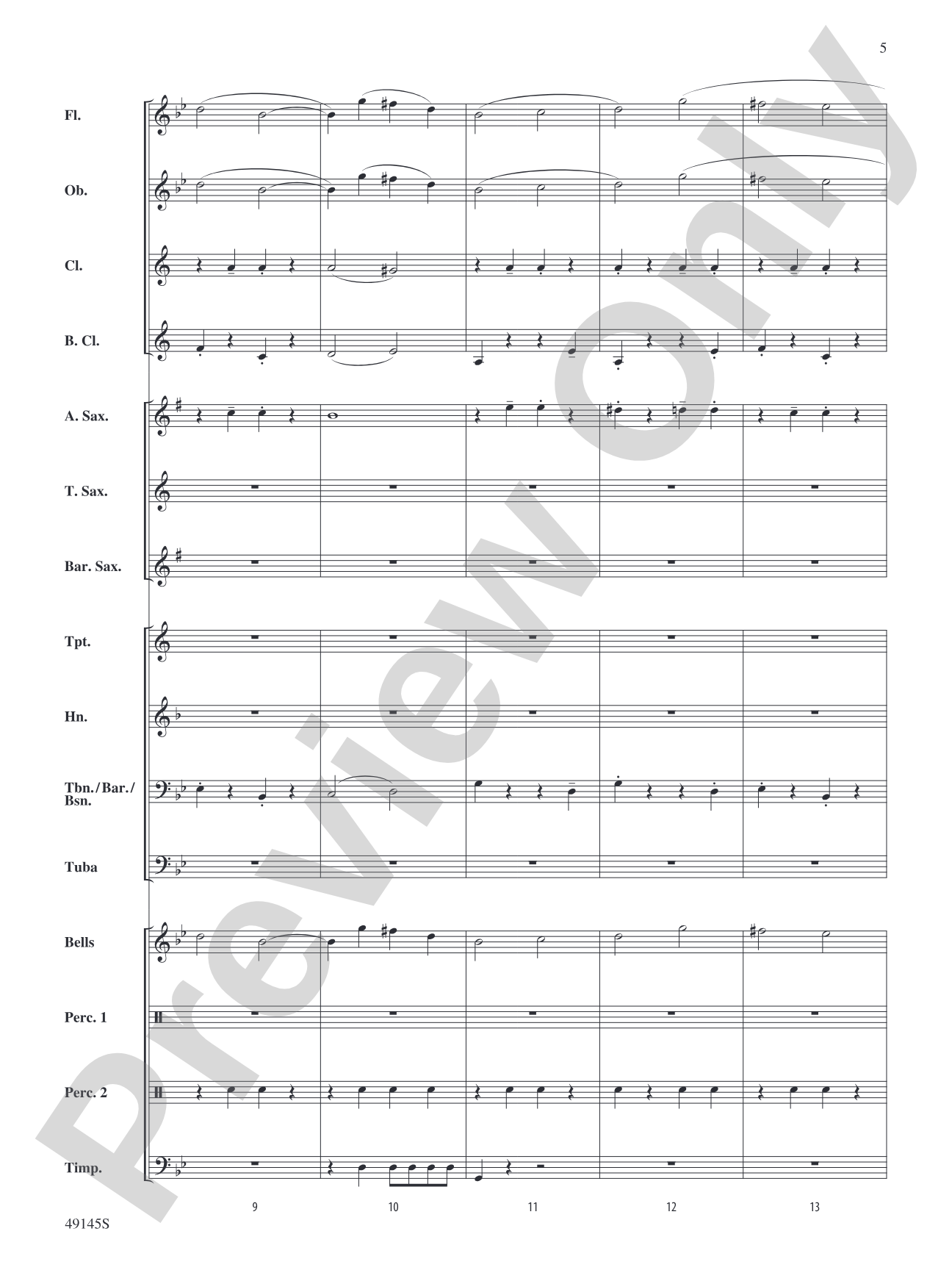
2020 was an interesting year. With schools shutting down, and going into quarantine, it felt like each day just faded into the next. This playable musical journey through 2020 offers a wide variety of articulations, dynamics, and textures. Crossfade by Patrick Roszell contains some "movie" dissonances throughout offering the opportunity to teach accidentals, dissonance, and resolution, as well as ensemble balance. (1:30)


Don't just read it, hear it, play along with it, and watch your students grow with it. In MakeMusic Cloud, Crossfade: Concert Band Conductor Score & Parts comes alive with professional accompaniment, adjustable tempo, and built-in practice tools that turn solo practice into real progress.
Open in the Player
Jump straight in and assign it today.
Start Your Free Trial
Open this title and explore the full library in minutes.
Sample Audio
1
Audio File
--:--
0:00
0:00
Sample Video
Additional Details
Series:
Belwin Beginning Band
Publisher:
Alfred Music
Page Count:
85
SKU:
00-PK-0008404
More about this title
About the Composer: Patrick Roszell
Patrick Roszell brings a contemporary sensibility to beginning band repertoire, crafting pieces that engage young musicians with thoughtful orchestration and purposeful musical narratives. His work often draws inspiration from lived experience and cultural moments, translating them into accessible yet artistically substantial scores.
Why we love this
Roszell captures something genuinely musical about the experience of temporal blur without resorting to gimmick. The piece teaches real concepts (dissonance, resolution, ensemble balance) through purposeful compositional choices rather than exercises, and at Grade 1.5 it remains entirely playable while avoiding the patronizing simplicity that plagues beginner repertoire.
What to expect
The piece mirrors the subtle erosion of time described in its program notes. Textural shifts and dynamic changes arrive gradually, creating a sense of unfolding rather than dramatic arc. Dissonant moments interrupt what feels familiar, then resolve into clarity, reflecting the emotional experience of uncertainty followed by understanding.
Who it's for
Beginning concert bands and Grade 1.5 ensembles seeking repertoire that teaches harmonic concepts through genuine musical ideas. This works well for groups ready to explore dissonance and resolution as expressive tools, not just academic concepts.
How to get the most out of it
- Balance the ensemble carefully during passages with dissonant writing. Have parts play at marked dynamics but listen for the harmonic function: accidentals should read clearly without dominating.
- Articulation variety is central to the piece's texture. Mark in rehearsal exactly where each section shifts between legato, staccato, and marcato so the transitions feel intentional rather than accidental.
- The 1:30 duration works best when tempo remains consistent throughout. Avoid the temptation to rush through transitions; let each textural section breathe at its marked tempo.
- Rehearse the resolution passages after dissonant sections with specific attention to intonation. Students often rush these moments; lock in the pitches as the harmony settles.
How to use it
This pairs well with contemporary beginning band repertoire that emphasizes expression and technique over showiness. Program it mid-concert to demonstrate your ensemble's ability to shape dynamics and articulation with maturity, or use it as a contest/festival selection where its musical substance stands out at this grade level.
Skills your students will build
- Reading and performing accidentals in context
- Balancing ensemble blend when dissonance is present
- Shaping phrase dynamics and textural articulations
- Understanding harmonic dissonance and resolution
- Listening critically for intonation in chromatic passages