
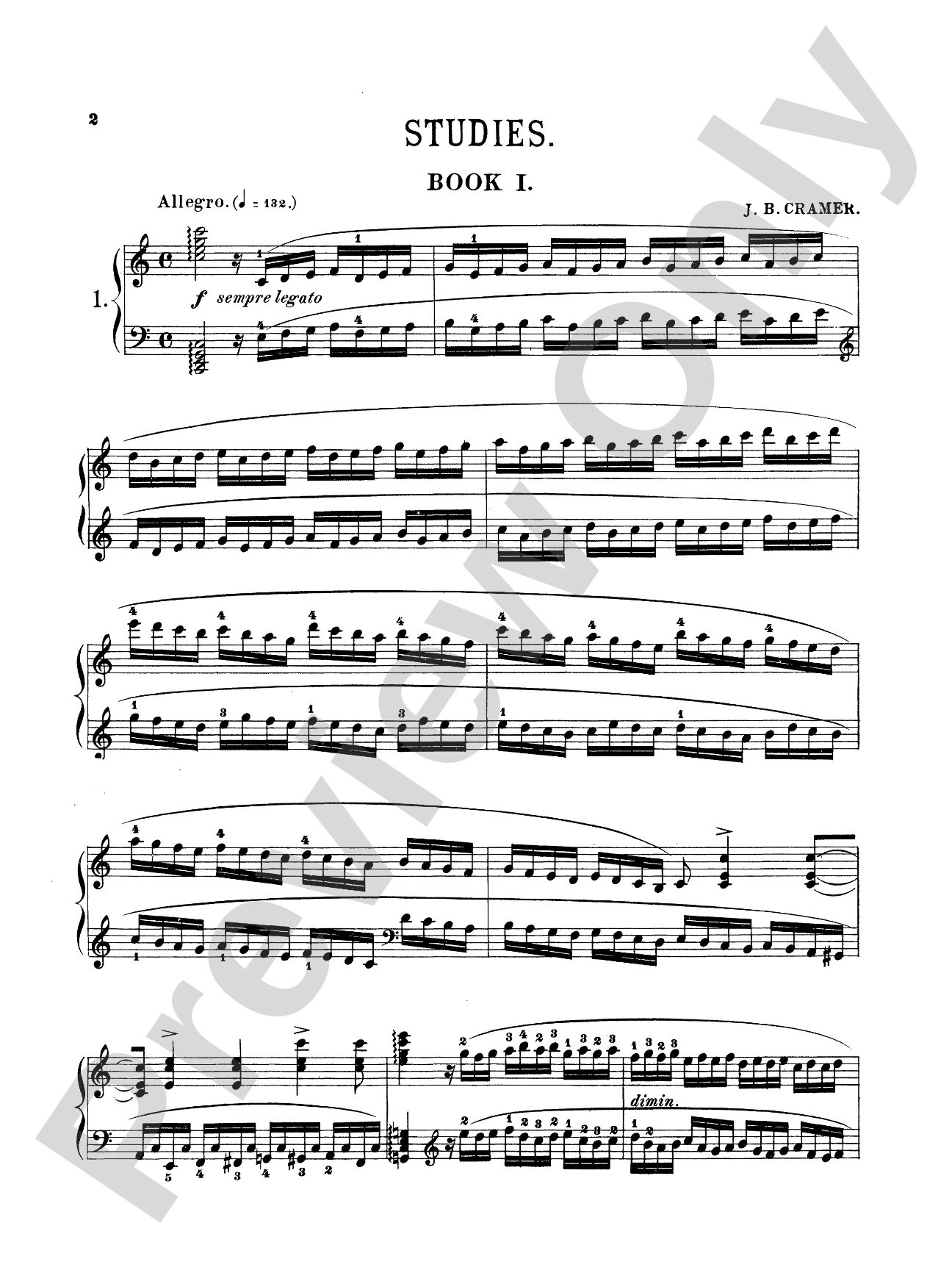
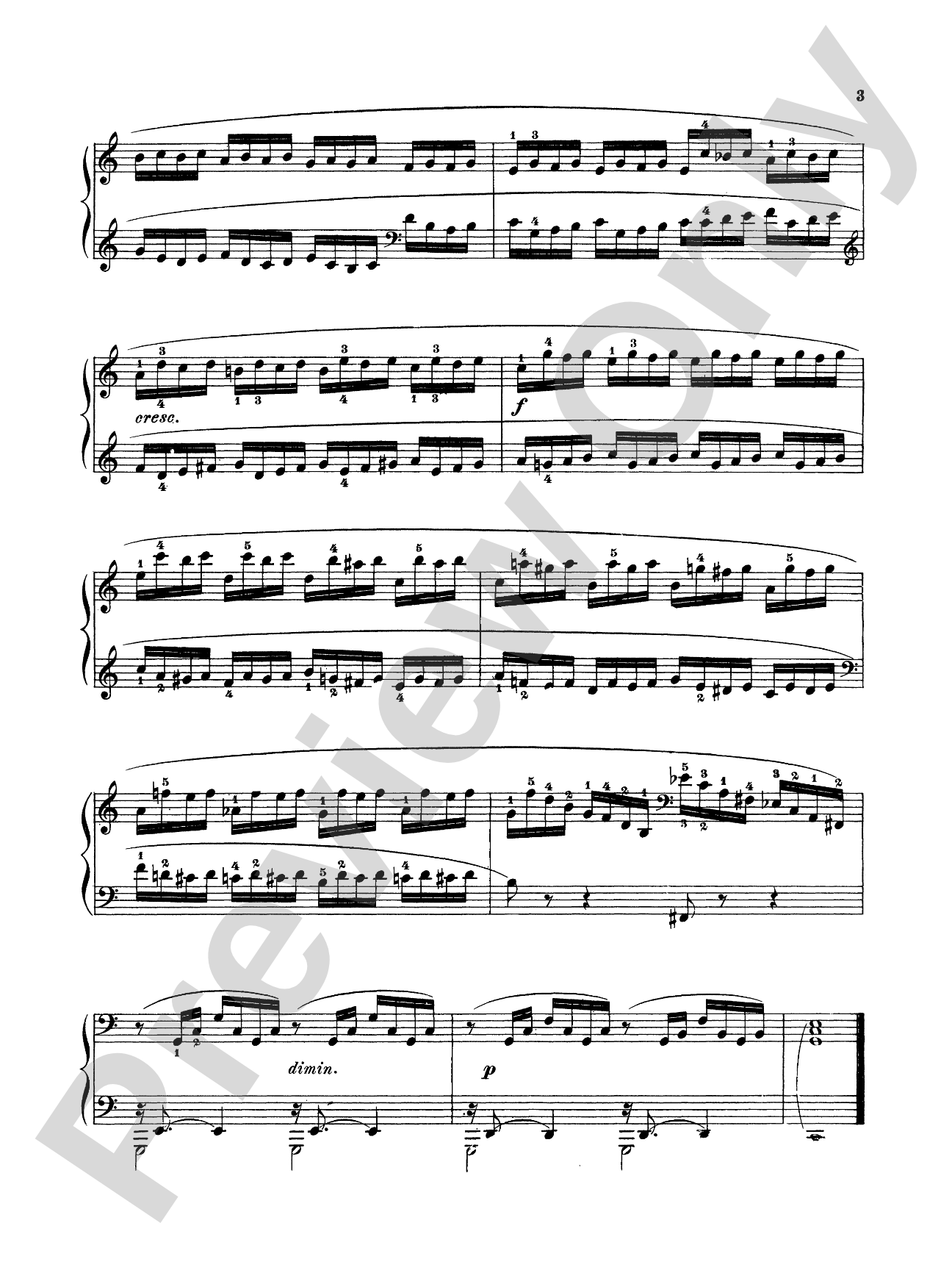

Cramer: Eighty-Four Studies (Volume I): Piano Book
By Johann Baptist Cramer
Item: 00-PK-0003008

$9.99
Pickup currently not available
Buy Extra Parts (Digital PDF Download)
Parts Added to Cart!
Related Items
Eighty-four Studies, Volume I: Piano Book |
$9.95
|
View |
Description
Johann Baptist Cramer (1771--1858) was the son of Wilhelm Cramer, a famous London violinist. He studied piano under Muzio Clementi and enjoyed a worldwide reputation, particularly appreciated by Beethoven. Both were considered the greatest pianists of their time, Beethoven excelling in interpretive expressiveness, Cramer in pure technical perfection. This volume includes technical studies Nos. 1 through 21 of his 84 Studies for piano.


Don't just read it, hear it, play along with it, and watch your students grow with it. In MakeMusic Cloud, Cramer: Eighty-Four Studies (Volume I): Piano Book comes alive with professional accompaniment, adjustable tempo, and built-in practice tools that turn solo practice into real progress.
Open in the Player
Jump straight in and assign it today.
Start Your Free Trial
Open this title and explore the full library in minutes.
Sample Audio
No sample audio found.
Sample Video
No sample videos found.
Additional Details
Series:
Kalmus Edition
Publisher:
Alfred Music
Page Count:
48
SKU:
00-PK-0003008
More about this title
About the Composer: Johann Baptist Cramer
Johann Baptist Cramer (1771, 1858) was born into a musical family; his father Wilhelm was an accomplished violinist in London's concert world. He studied piano with Muzio Clementi, absorbing the technical rigor and elegant phrasing that defined early Romantic keyboard writing. Cramer built an international reputation as a virtuoso and pedagogue, earning Beethoven's respect at a time when few pianists commanded that level of admiration from the master.
His 84 Studies represent a lifetime of thinking about what pianists need to master. Unlike mere finger exercises, Cramer's studies embed technical challenges within musical contexts, so students develop facility while learning to shape phrases and navigate harmonic progression. These works bridge the Classical world of Clementi and the emerging demands of Romantic repertoire.
Why we love this
Cramer's studies occupy a sweet spot that many pedagogical works miss: they require real technical growth without abandoning musicality. Studies 1, 21 in this volume introduce hand position, scale work, and basic passagework in ways that feel purposeful rather than grinding. Teachers appreciate that students encounter legitimate musical problems here, not abstract drills, which keeps practice sessions engaging.
What to expect
These studies pulse with the confident clarity of early 19th-century keyboard writing. Rapid passagework sits comfortably under the hand, lyrical episodes breathe with Romantic sensibility, and rhythmic figures feel propulsive rather than labored. There's an elegance throughout, a sense that technical mastery and graceful musicmaking are not separate pursuits but one unified discipline.
Who it's for
Intermediate to advancing pianists who need systematic technical training grounded in real music. Music teachers building a solid pedagogical foundation for students ages 10, 16 will find these studies invaluable for developing independence in both hands, particularly when transitioning from method books to concert repertoire.
How to get the most out of it
- Approach evenness as phrasing, not just mechanics. Maintain consistent tone color across scalar passages even when the fingering changes; think of the passage as a singing line that happens to move quickly.
- Anchor your preparation by identifying the harmonic structure beneath each study. Many of Cramer's technical figures follow classical progression patterns, and recognizing the harmony underneath prevents the piece from becoming mere fingerwork.
- Isolate and practice the hand position shifts in slow motion before tempo work. Many studies contain subtle position changes that catch intermediate students; mapping these physically saves weeks of frustrated practice.
- Listen to how tempo interacts with your technical security. A study performed slightly slower while maintaining absolute steadiness often sounds more accomplished than a faster performance with wavering control.
How to use it
While these studies function primarily as daily practice material rather than recital pieces, selected studies can anchor recital programs that trace the evolution of piano technique or teaching traditions. Pairing a Cramer study with a contemporary sonata or character piece demonstrates how historical technique supports the demands of later Romantic repertoire. For studio teachers, assigning studies sequentially across a semester or year creates a pedagogical through-line that reinforce specific skills at logical points in the student's development.
Skills your students will build
- Scalar and broken-figure patterns in multiple keys and hand positions
- Hand independence and coordination across register changes
- Evenness and tonal consistency at varying tempos
- Rhythmic precision within Romantic-era idiomatic figures
- Sight-reading fluency in classical harmonic progressions
- Pedal awareness and sustain techniques appropriate to the Classical-Romantic transition