
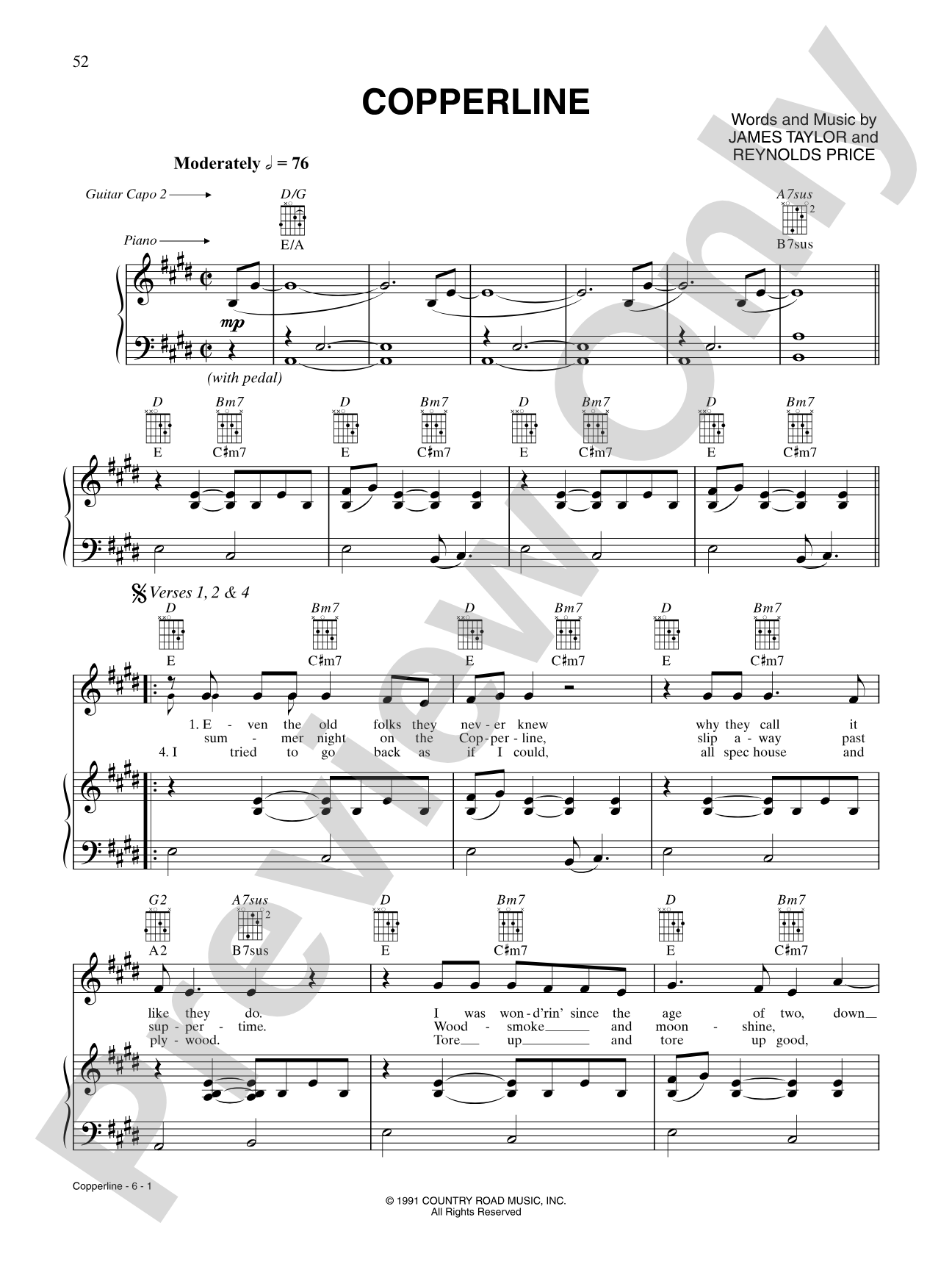
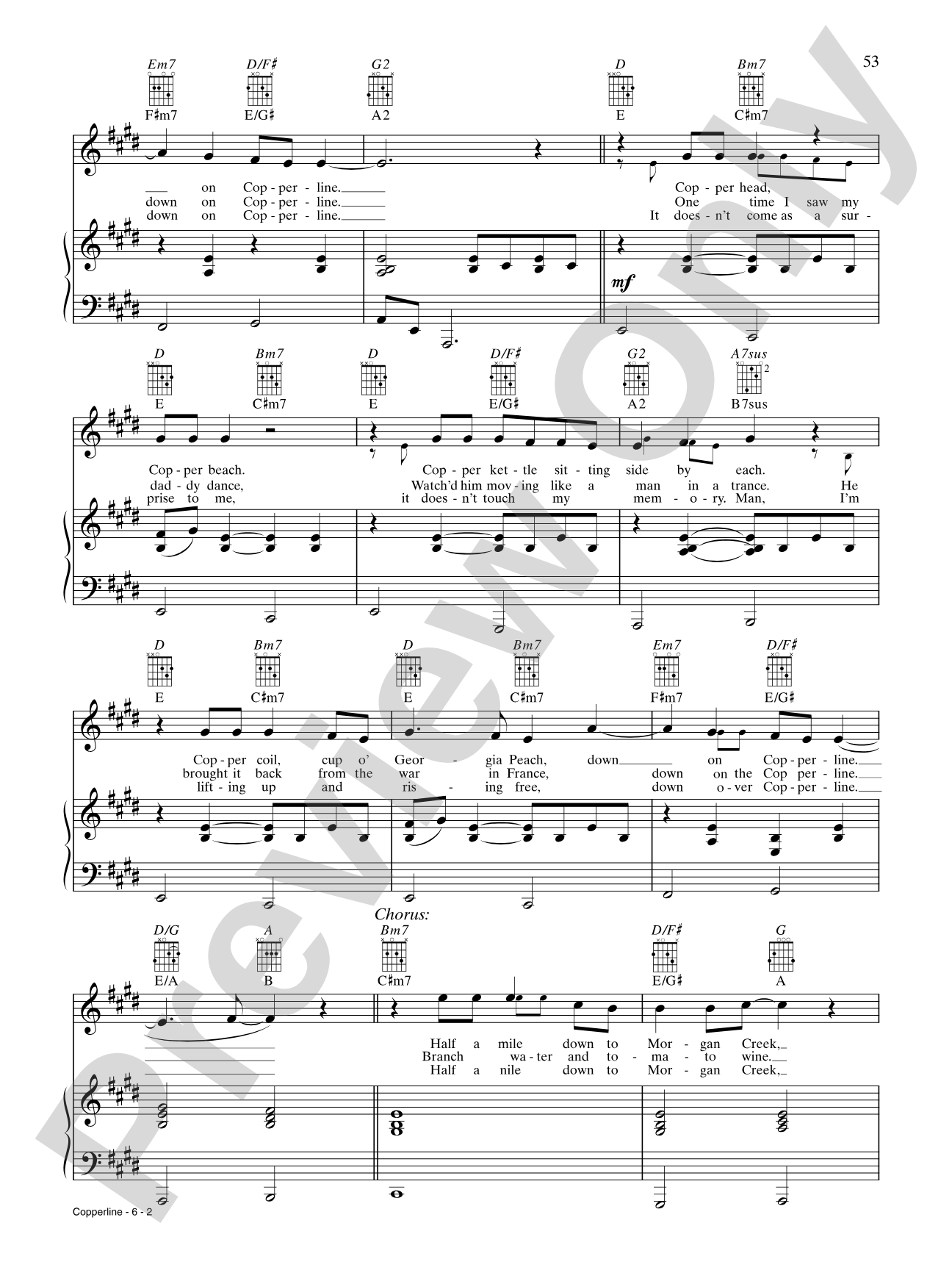

Copperline: Piano/Vocal/Chords
Over 40 Pop Music Favorites
By various artists and composers
Item: 00-PS-0015859
$5.99
One moment…
Related Items
My Favorite Mistake: Piano/Vocal/Chords |
$5.99
|
View | |
When I See You Smile: Piano/Vocal/Chords |
$5.99
|
View | |
How Can We Be Lovers: Piano/Vocal/Chords |
$4.99
|
View | |
If You Asked Me To: Piano/Vocal/Chords |
$4.99
|
View | |
Love Can Move Mountains: Piano/Vocal/Chords |
$4.99
|
View | |
Leaving Las Vegas: Piano/Vocal/Chords |
$5.99
|
View | |
Gonna Make You Sweat (Everybody Dance Now): Piano/Vocal/Chords |
$5.99
|
View | |
Live for Loving You: Piano/Vocal/Chords |
$5.99
|
View | |
I'll Stand by You: Piano/Vocal/Chords |
$5.99
|
View | |
Torn: Piano/Vocal/Chords |
$9.99
|
View | |
One: Piano/Vocal/Chords |
$5.99
|
View | |
Greatest Hits: The 1990s for Piano: Piano/Vocal/Guitar Book |
$22.99
|
View |
Description
This enormous collection of over 40 songs highlights the biggest hits from the start of the 1990s. Piano accompaniment, vocal melodies, lyrics, and guitar chord diagrams are included. Titles: All I Wanna Do (Sheryl Crow) * All the Pretty Little Ponies (Kenny Loggins) * Because You Loved Me (Theme from Up Close and Personal) (Celine Dion) * Better Days (Bruce Springsteen) * Bitter Sweet Symphony (The Verve) * Blame It on the Rain (Milli Vanilli) * A Change Would Do You Good (Sheryl Crow) * Coming Out of the Dark (Gloria Estefan) * Copperline (James Taylor) * The Dance (Garth Brooks) * Every Road Leads Back to You (Bette Midler) * (Everything I Do) I Do It for You (Bryan Adams) * Feels Like Home (Randy Newman) * Go Rest High on That Mountain (Vince Gill) * Gonna Make You Sweat (Everybody Dance Now) (C+C Music Factory) * How Can We Be Lovers? (Michael Bolton) * How Do I Live? (LeAnn Rimes) * Human Touch (Bruce Springsteen) * I Don't Want to Miss a Thing (from Armageddon) (Aerosmith) * I Have Nothing (Whitney Houston) * I Love to See You Smile (Randy Newman) * I Swear (John Michael Montgomery) * I Turn to You (Christina Aguilera) * If I Could Turn Back Time (Cher) * If It Makes You Happy (Sheryl Crow) * If You Asked Me To (Celine Dion) * I'll Stand by You (The Pretenders) * I'm Too Sexy (Right Said Fred) * Just to Hear You Say That You Love Me (Faith Hill and Tim McGraw) * Leaving Las Vegas (Sheryl Crow) * Live for Loving You (Gloria Estefan) * Love Can Move Mountains (Celine Dion) * Love Will Lead You Back (Taylor Dayne) * Maria Maria (Carlos Santana) * My Favorite Mistake (Sheryl Crow) * One (Creed) * Reach (Gloria Estefan) * Streets of Philadelphia (Bruce Springsteen) * Time, Love and Tenderness (Michael Bolton) * Torn (Creed) * Un-Break My Heart (Toni Braxton) * When I See You Smile (Bad English) * When the Night Comes (Bryan Adams) * You've Got a Friend in Me (from Toy Story) (Randy Newman).


Copperline: Piano/Vocal/Chords isn't in MakeMusic Cloud just yet...but it could be. Let us know you'd like to see it, and you'll help shape what comes next. In the meantime, start a free trial and dive into thousands of interactive titles your students can play along with today.
Request This Title
Tell us you want it.
Start Your Free Trial
Explore everything that's ready to play right now.
Sample Audio
No sample audio found.
Sample Video
No sample videos found.
Additional Details
Series:
Greatest Hits
Publisher:
Alfred Music
Page Count:
264
SKU:
00-PS-0015859
More about this title
About the Composer: James Taylor
James Taylor emerged as one of America's most influential singer-songwriters, bringing introspective, poetic lyrics and fingerstyle guitar work to the forefront of popular music. His career spanning five decades has produced enduring classics that blend folk sensibility with pop accessibility, making his catalog foundational to how many musicians understand songwriting craft and emotional storytelling through music.
Why we love this
This collection pairs iconic 1990s hits with professional piano arrangements and complete lyrical text, creating a goldmine for pianists who want to accompany singers in recitals or rehearsals. The breadth of vocal styles represented—from Whitney Houston to Garth Brooks to Sheryl Crow—means you'll find pieces that suit nearly every voice type in your studio or ensemble, and the inclusion of chord diagrams lets guitarists jump in seamlessly.
What to expect
Opening this collection is like stepping into a time capsule of mainstream pop at its most emotionally generous: power ballads that soar, dance-floor anthems that still feel fresh, and intimate character pieces that reward careful listening. The songs breathe with the confidence of hits that earned their place through genuine melodic strength and relatable emotional content.
Who it's for
Voice teachers and piano accompanists preparing singers for recitals, performance auditions, or casual showcases will find reliable, singable arrangements of recognizable material across multiple vocal ranges and styles. pianists building a contemporary standards repertoire for their own performance or for use with varied singers will appreciate the breadth and professional voicings throughout.
How to get the most out of it
- Study the lyrical phrasing before diving into the accompaniment pattern; these songs often sit between the grid, and singing the melody first will anchor your timing more reliably than reading rhythm notation alone.
- Use the guitar chord symbols as a reference for harmonic movement even if you're playing piano; they frequently reveal voice-leading pathways that keep your left hand fluid through key changes.
- Adjust the vocal line up or down to match your singer's comfortable range before the first rehearsal; many of these hits sit in middle register but transpose beautifully without changing the character of the arrangement.
- Practice the piano part as a solo framework first, then layer in the vocal line; this reveals which moments need flexibility in tempo and which demand metronomic precision.
How to use it
Build a mixed recital around a handful of these titles paired with art song or classical repertoire to show the breadth of your students' musicianship; a classically trained singer performing both Strauss and Sheryl Crow demonstrates real interpretive range. Alternatively, curate a thematic evening of 1990s pop arranged for voice and piano, or draw from this collection when a student requests contemporary material that deserves serious musical treatment.
Skills your students will build
- Sight-reading idiomatic pop accompaniment patterns and adjusting them for different harmonic contexts
- Matching piano voicing to vocal phrasing and breath marks
- Transposing on sight to accommodate different voice types
- Reading and implementing guitar chord symbols while playing keyboard
- Balancing accompaniment texture to support rather than overpower the vocalist
- Interpreting performance markings and emotional direction in popular song arrangements