
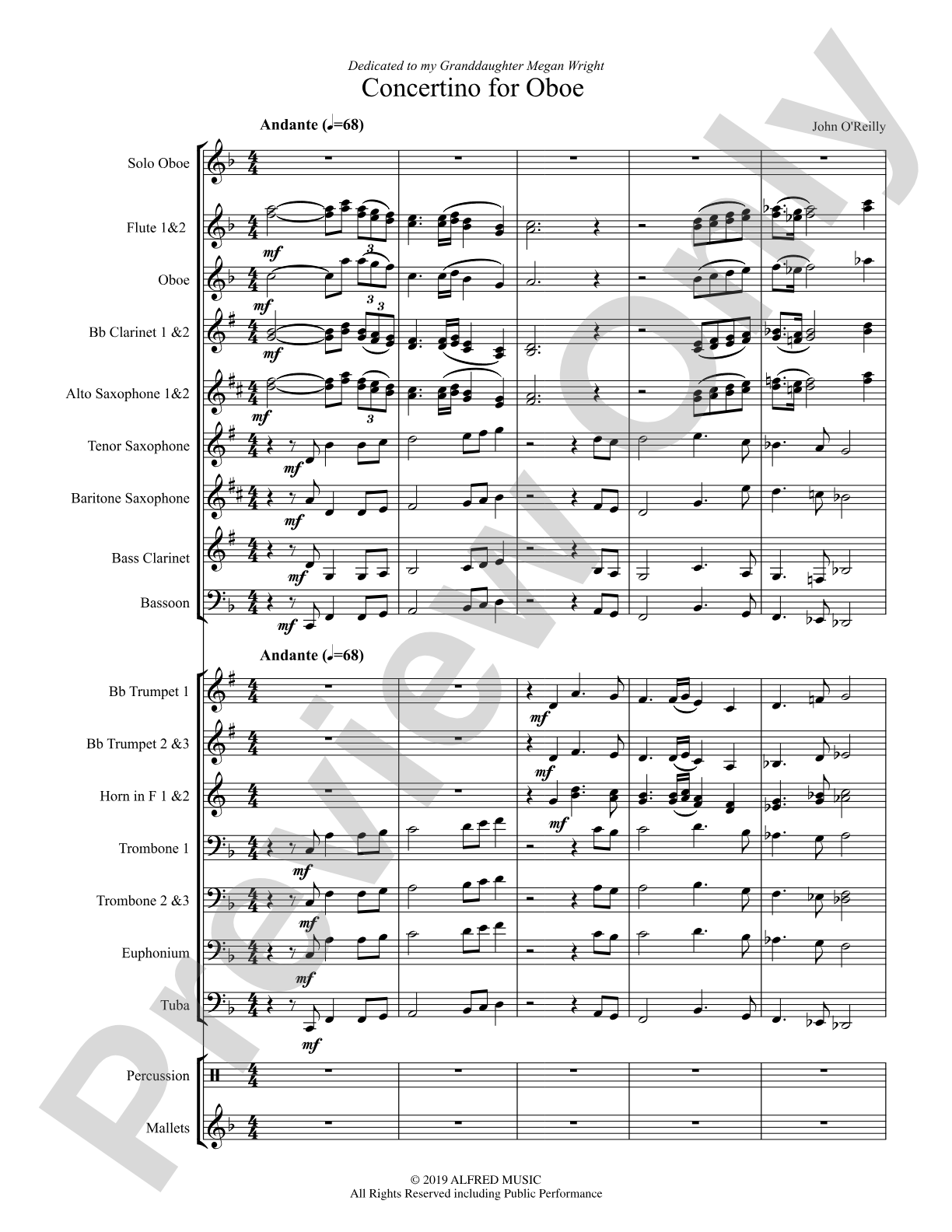
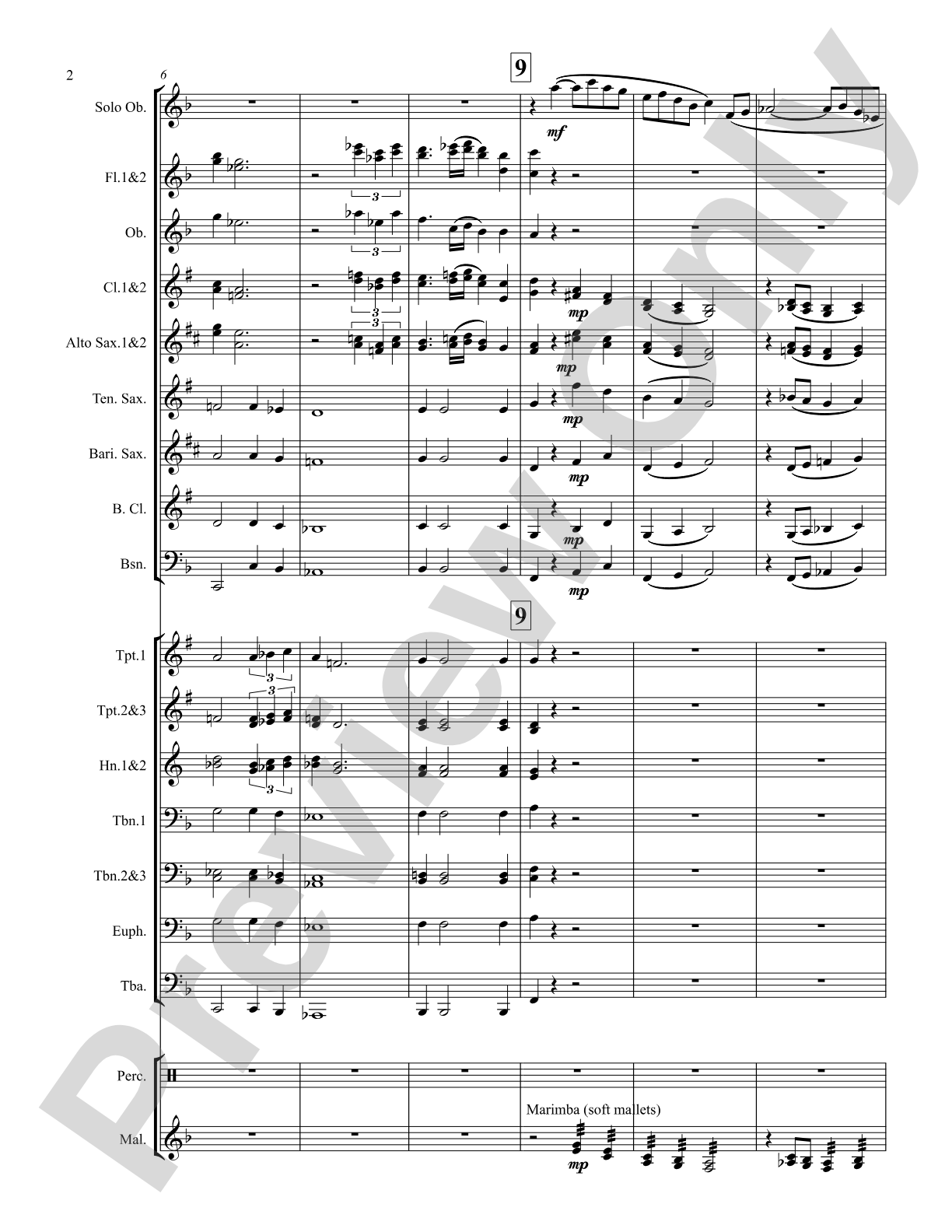
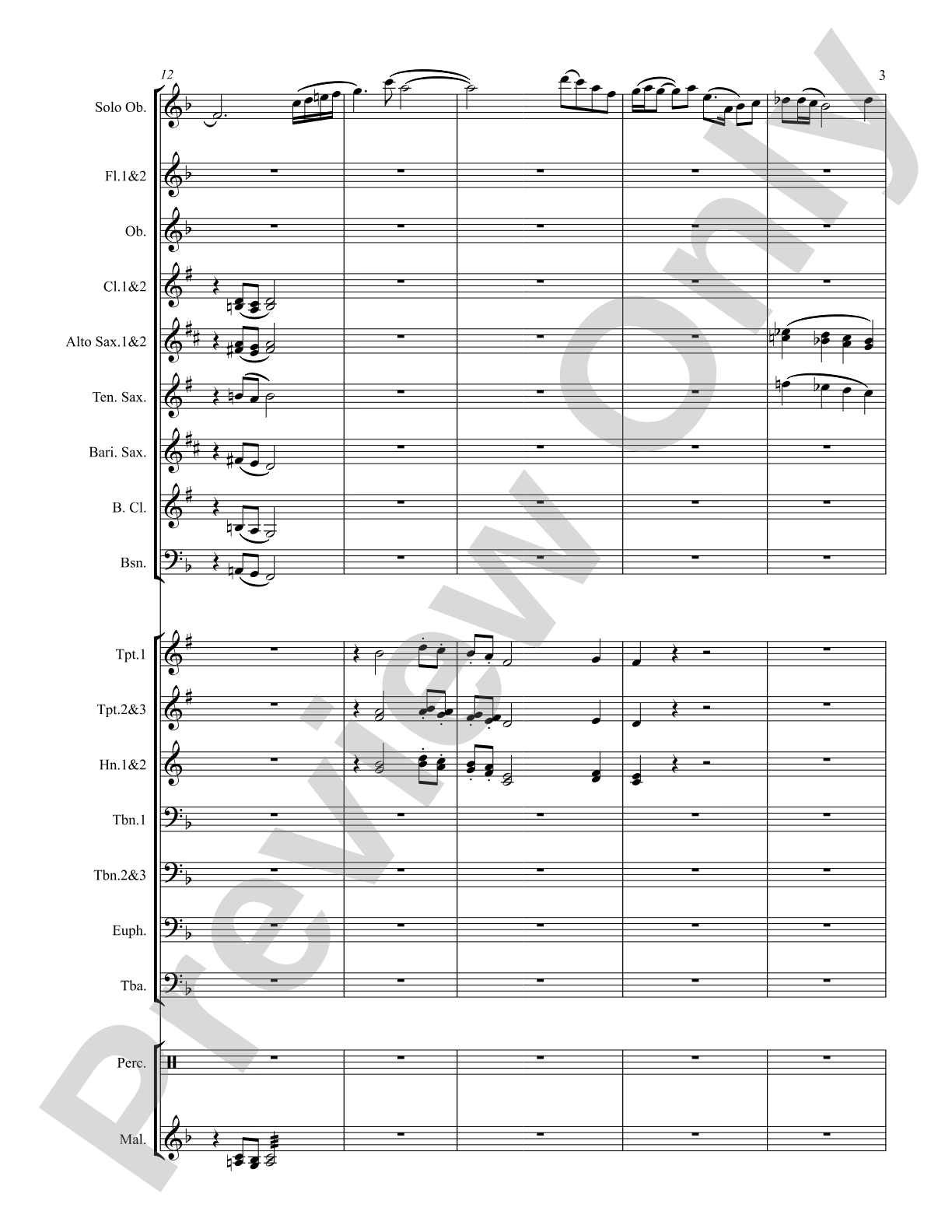
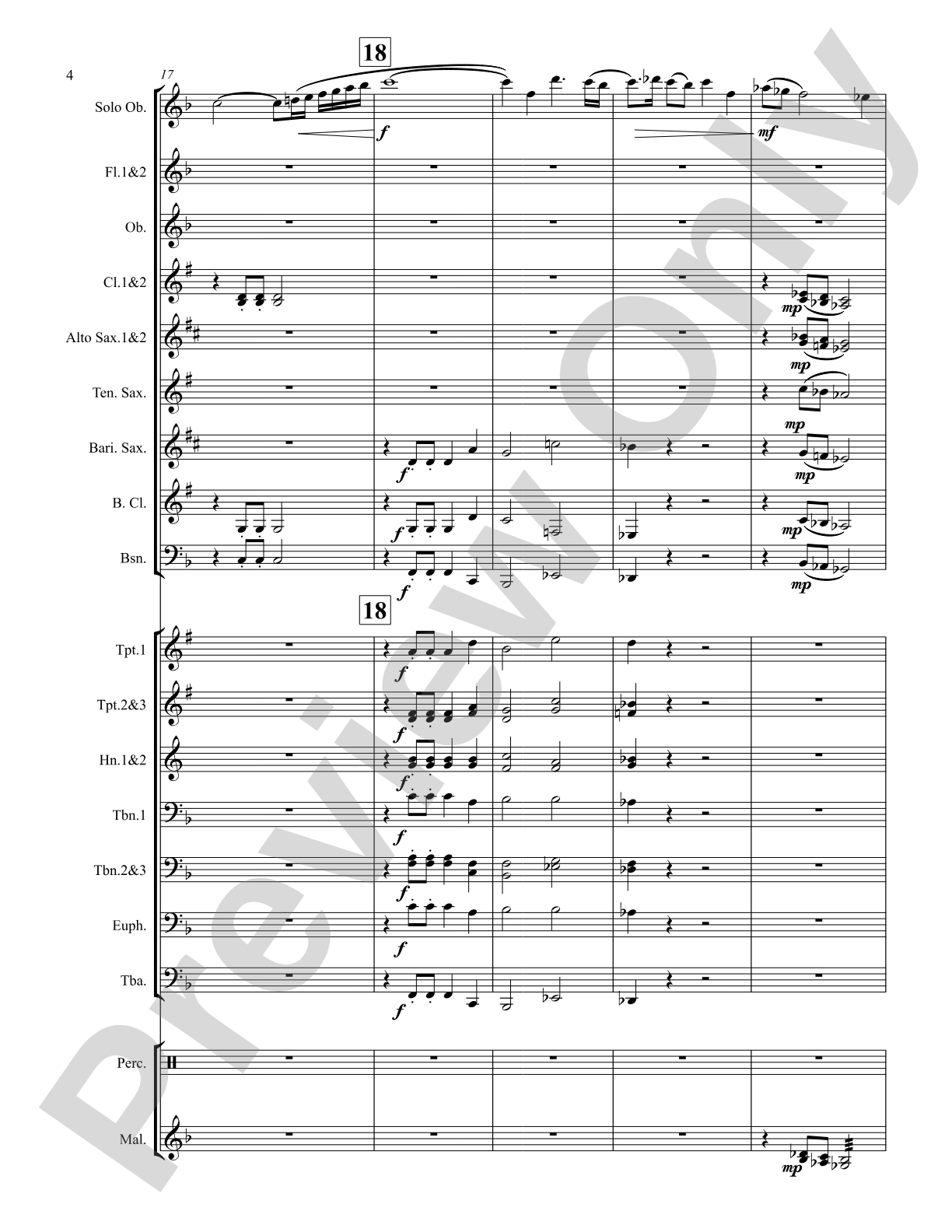
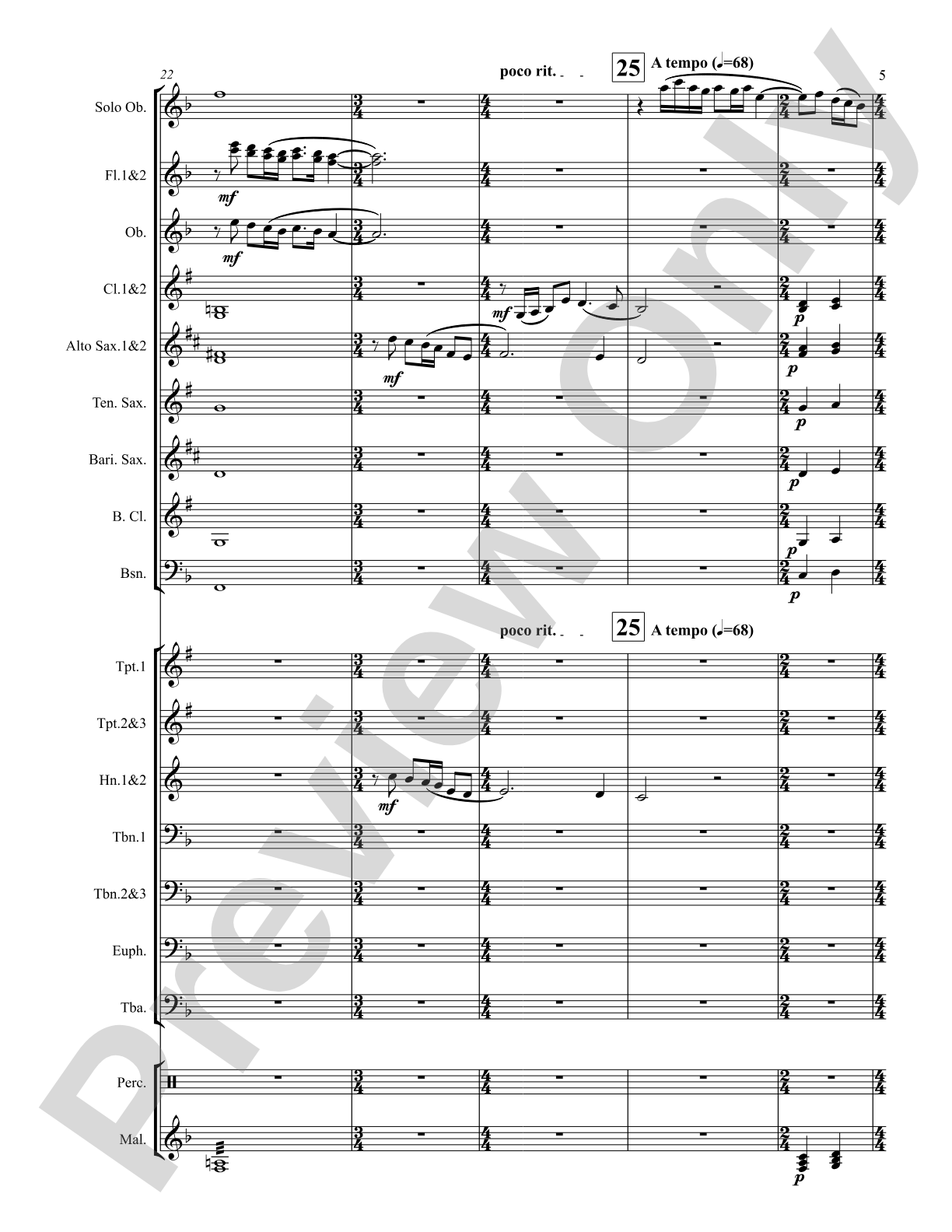
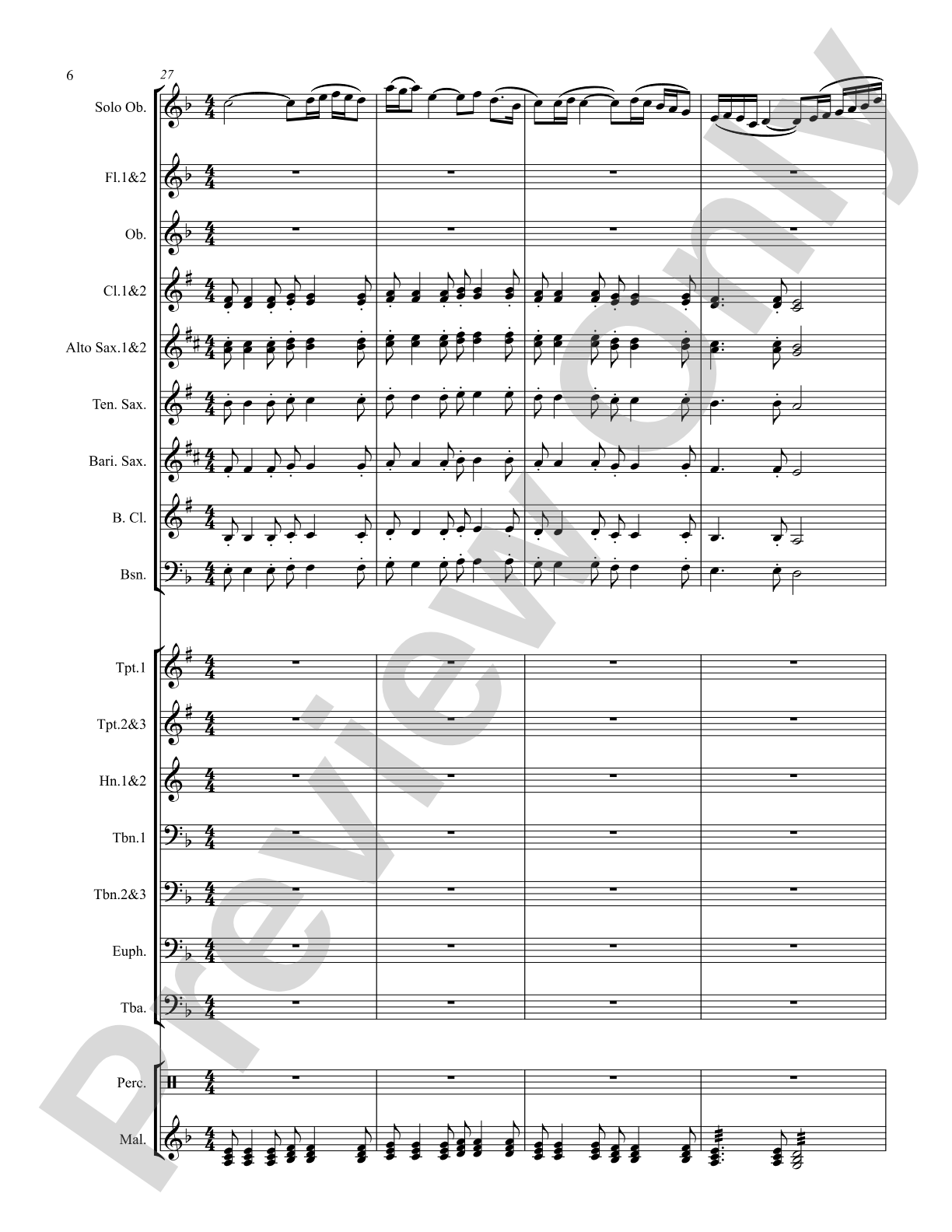
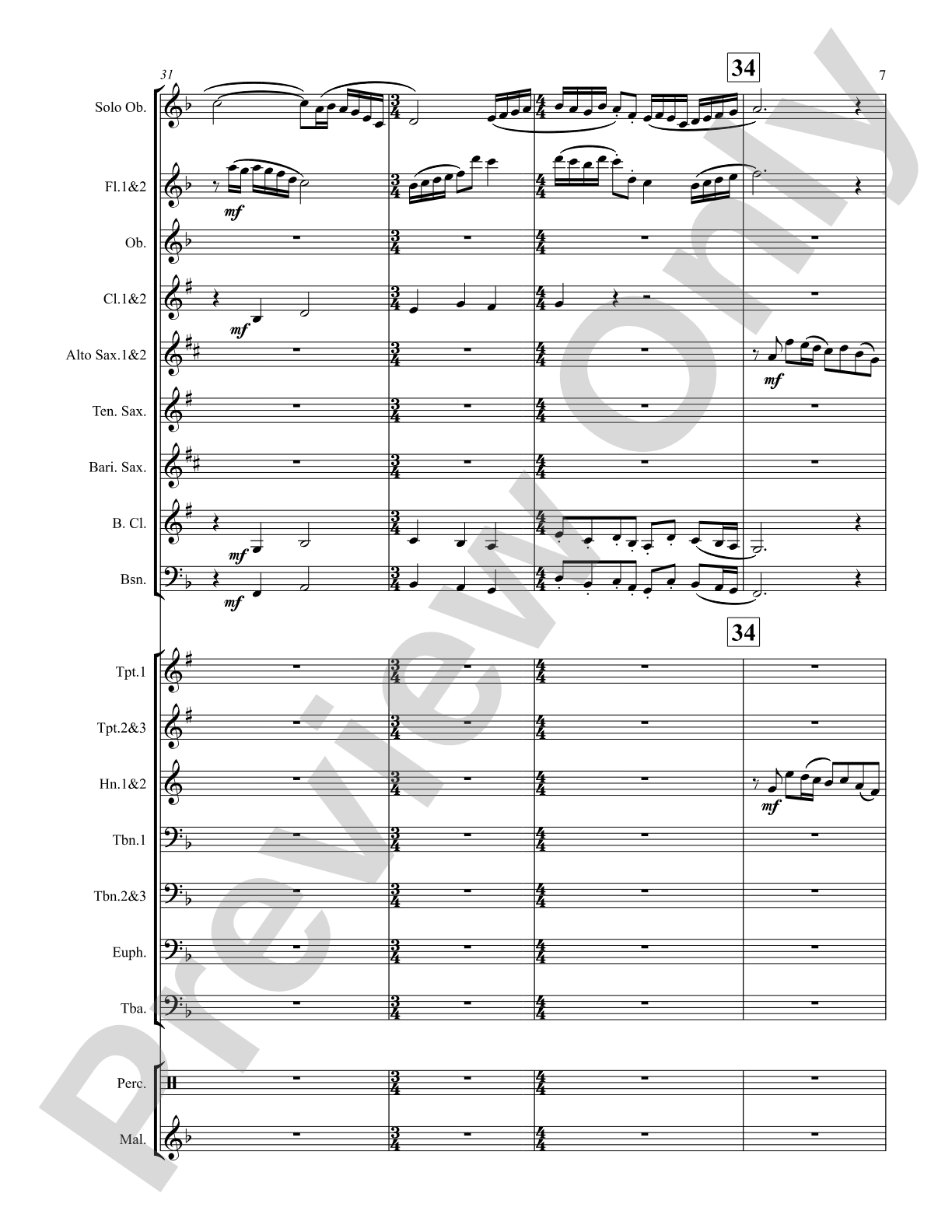
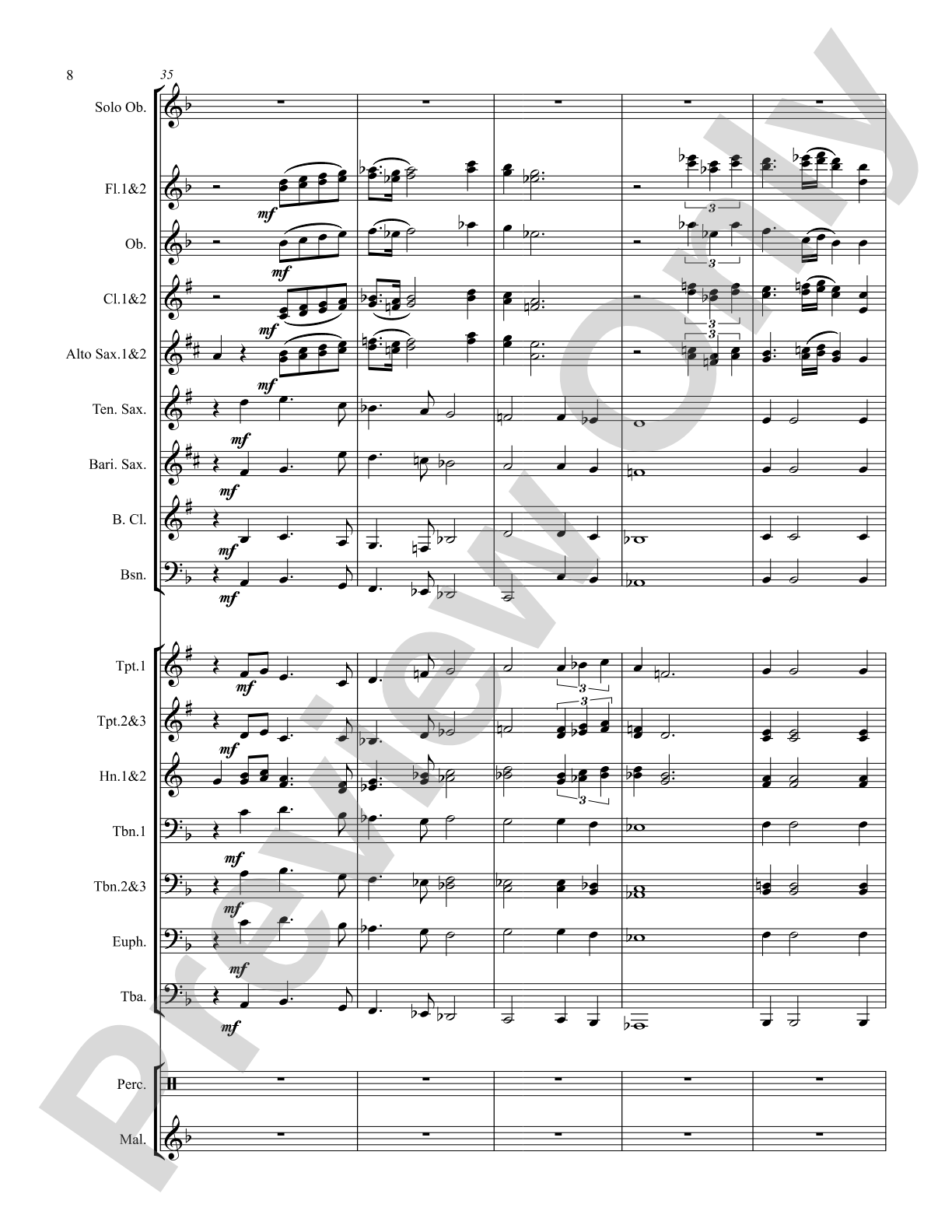
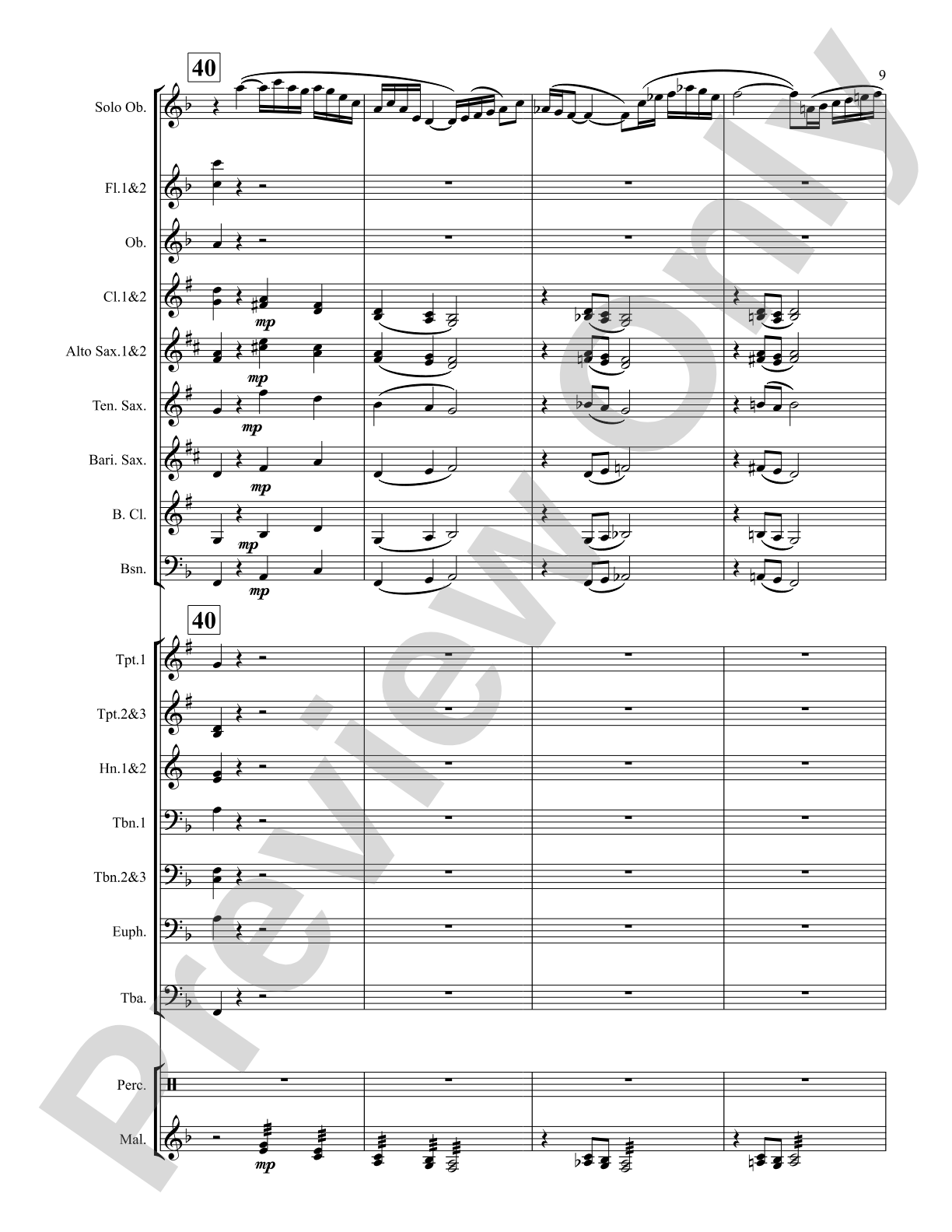
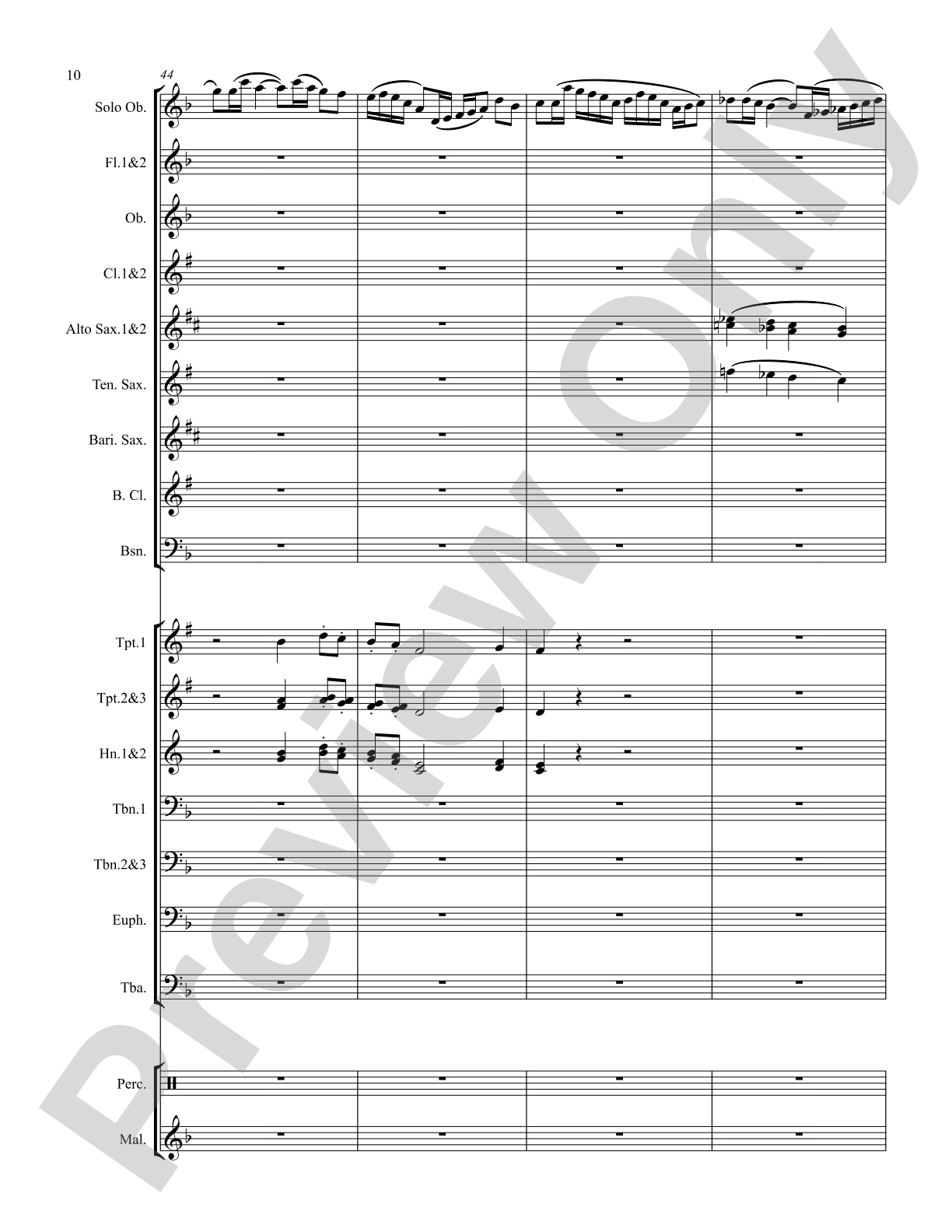
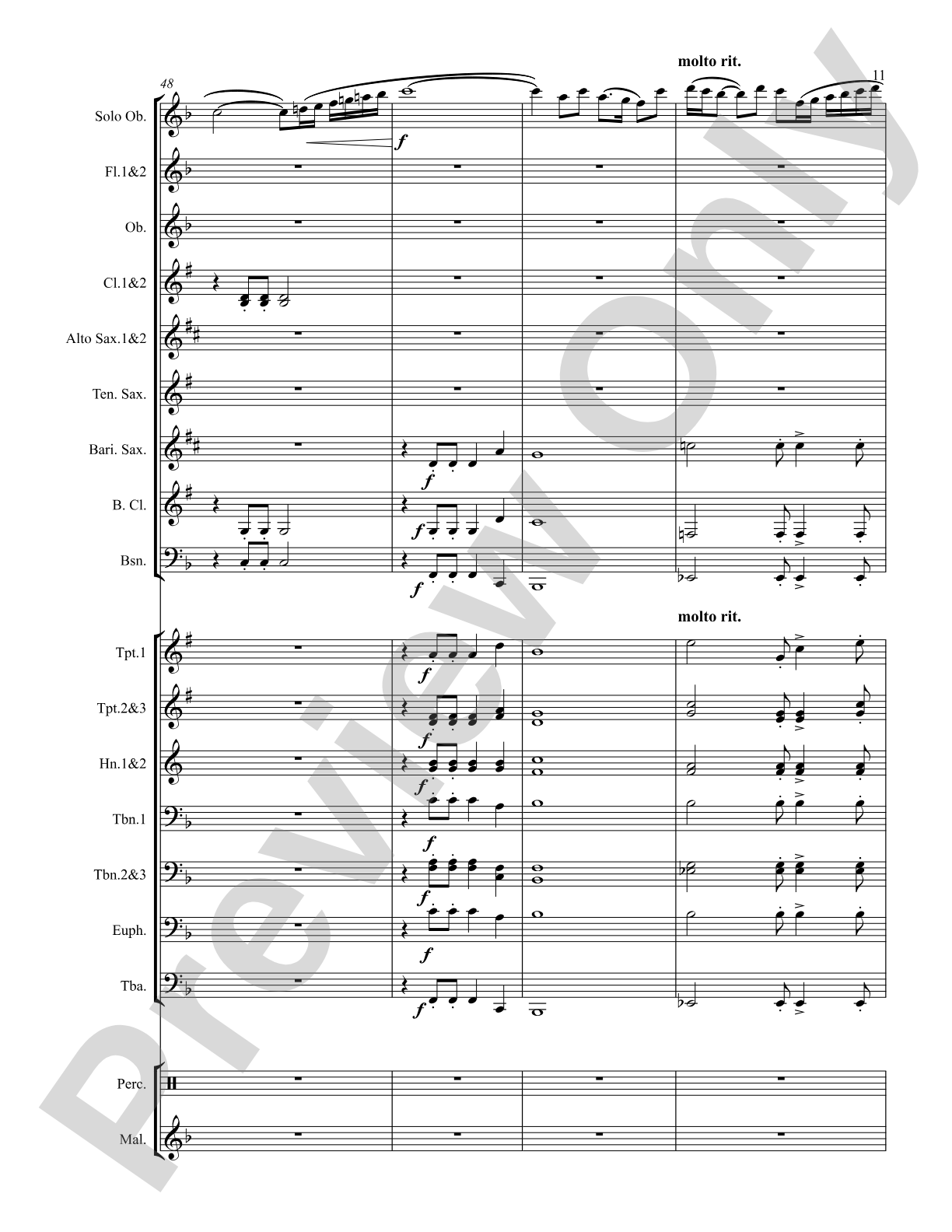
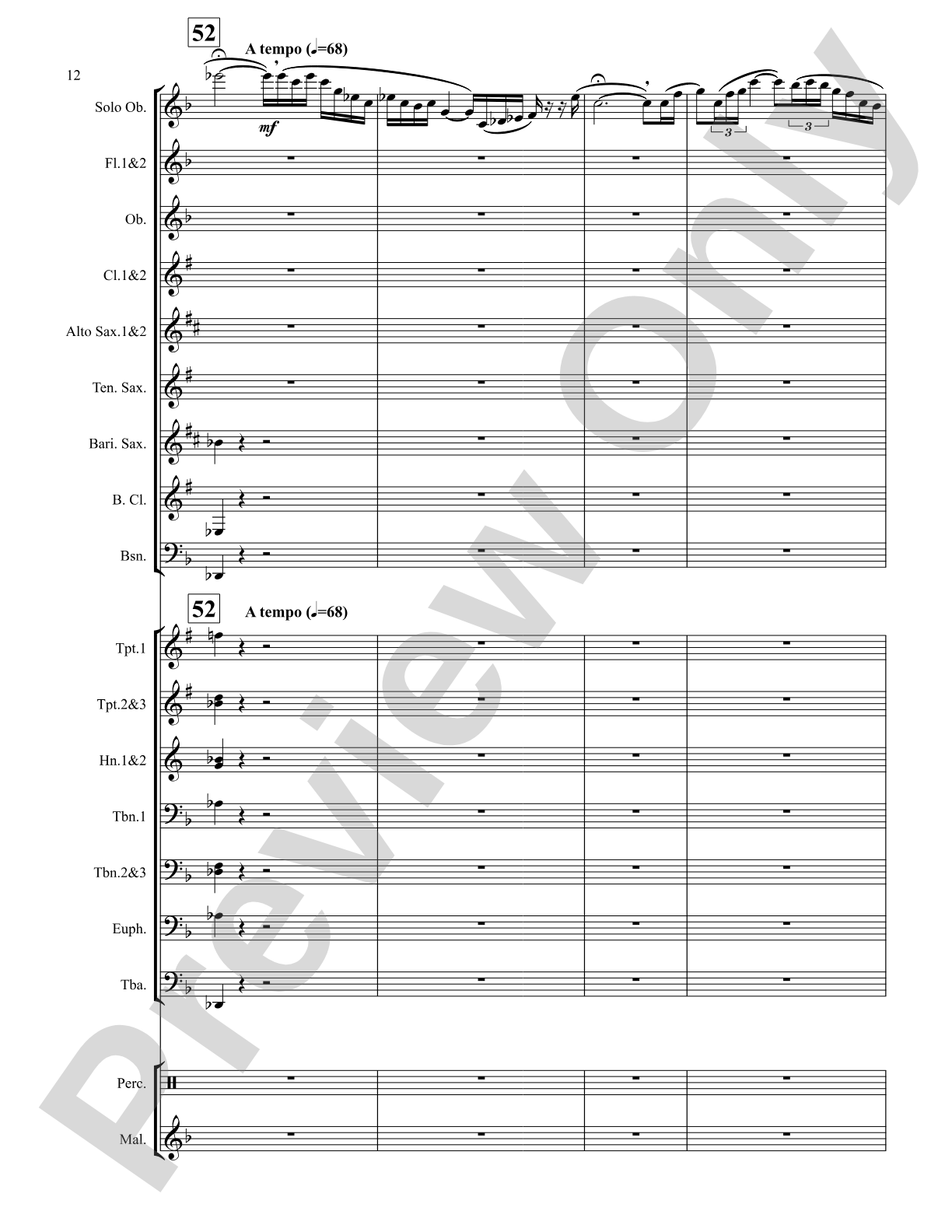
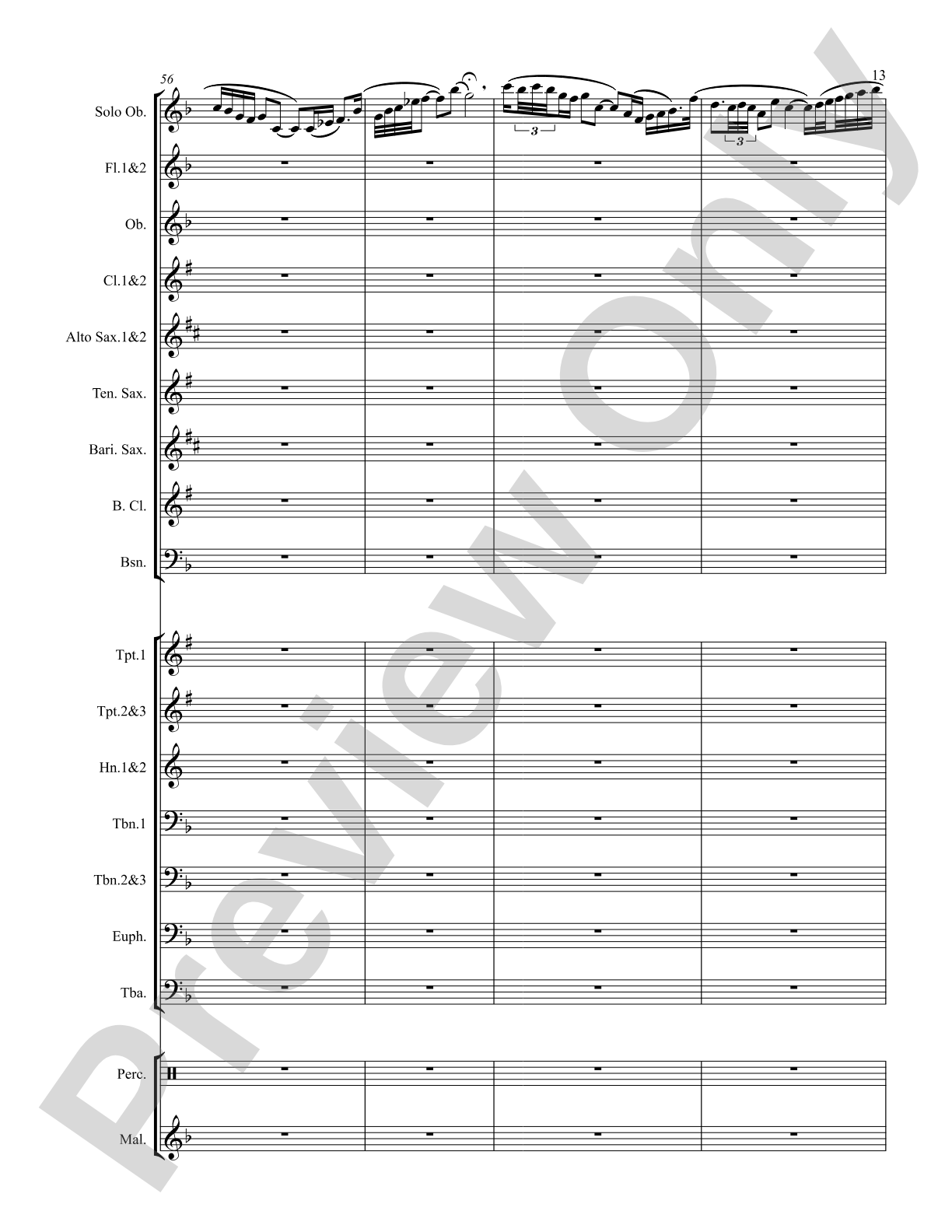
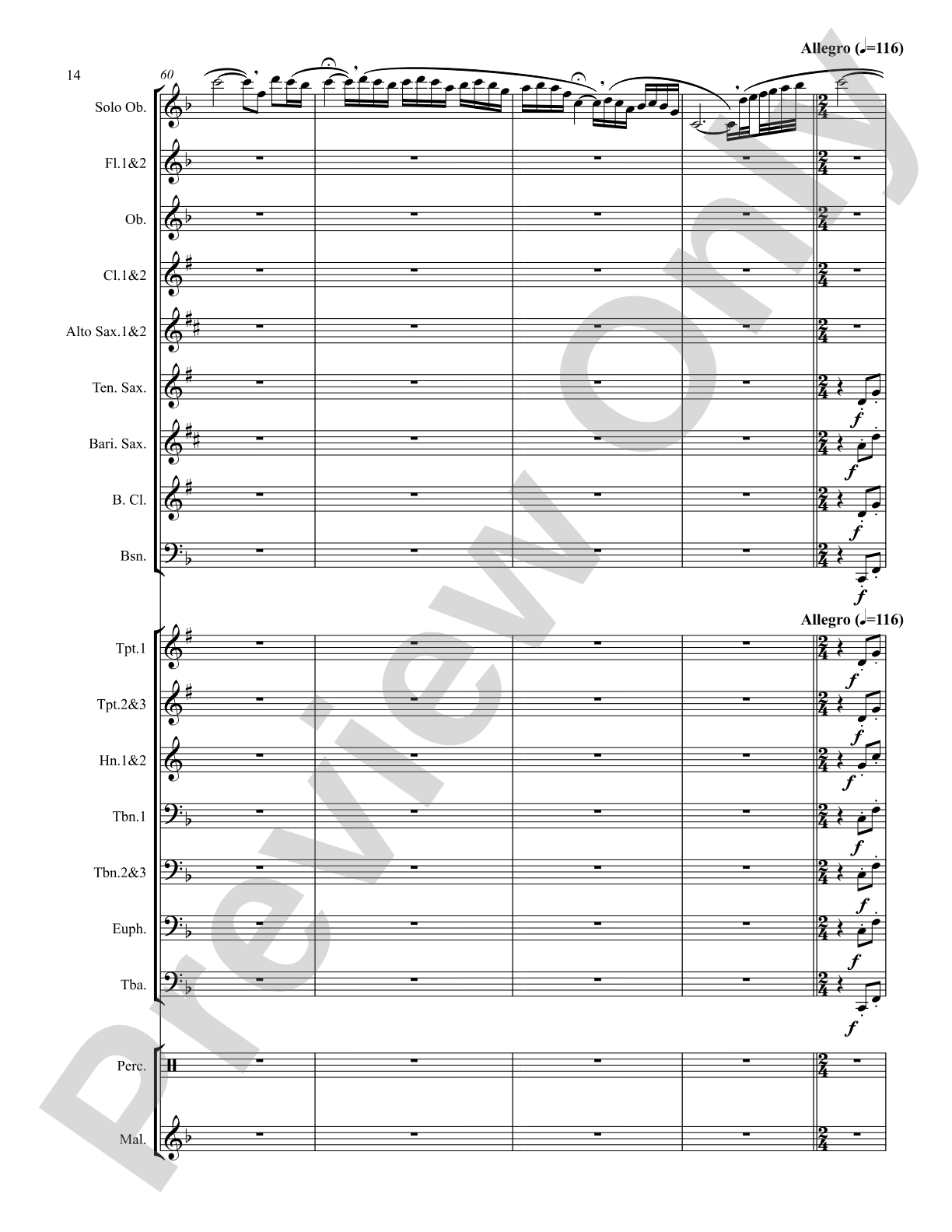
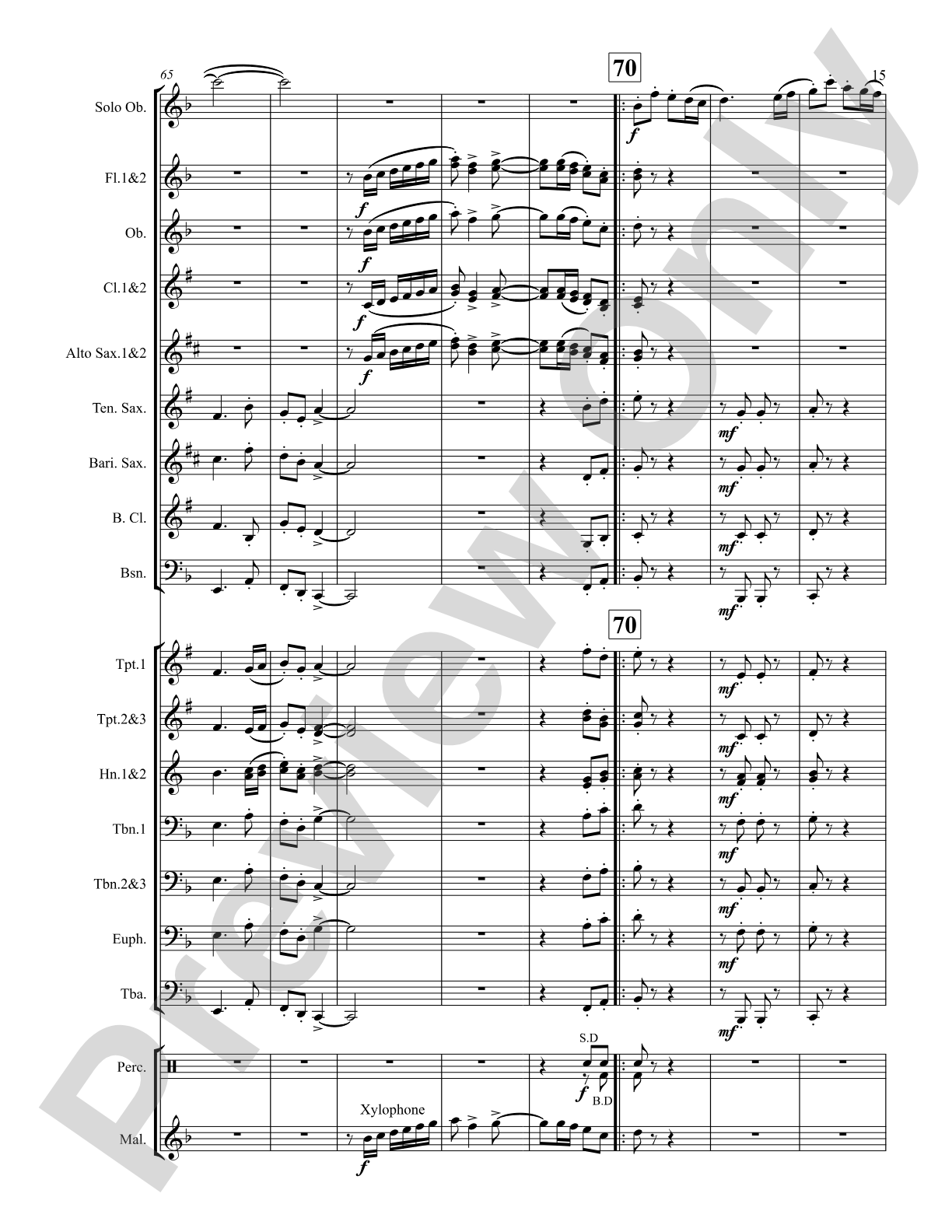
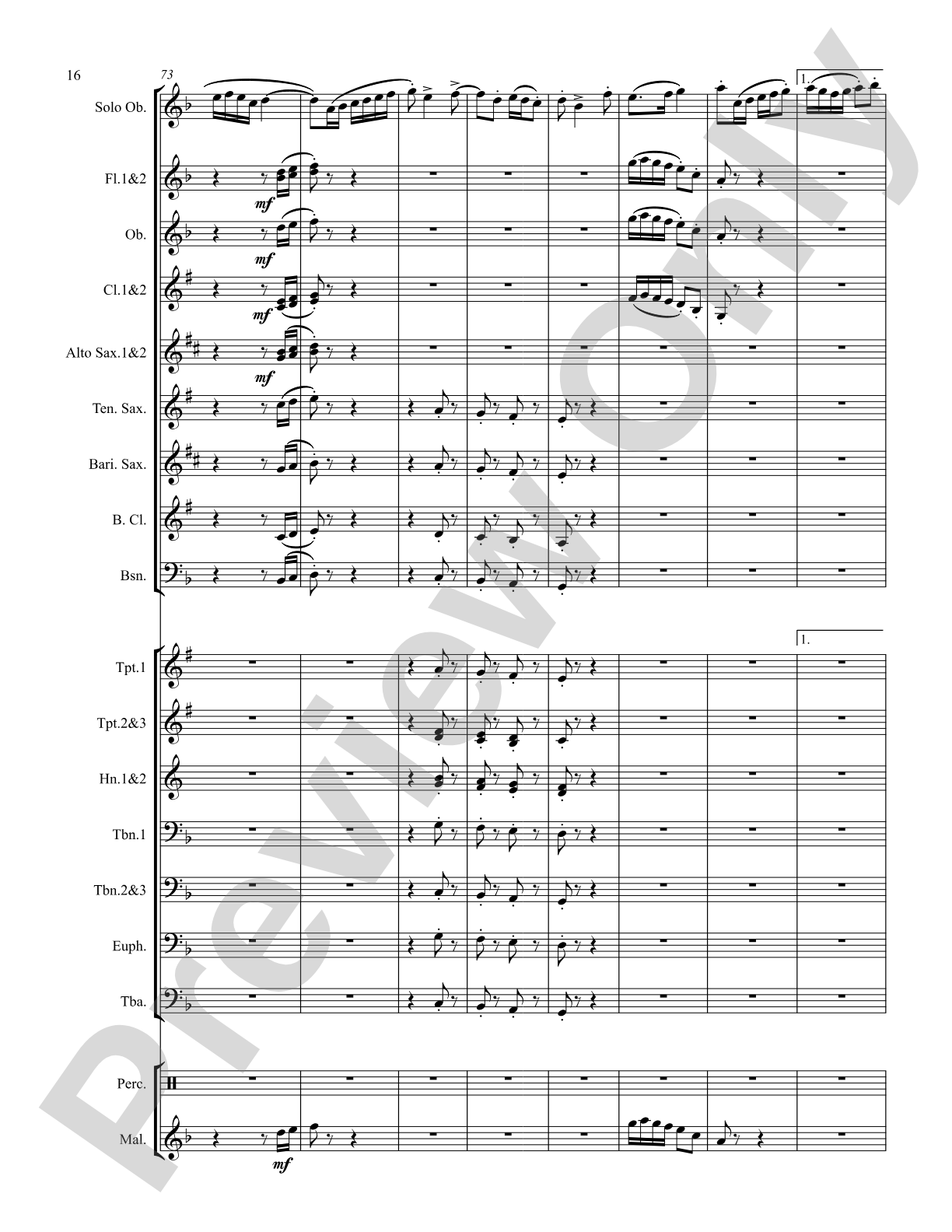
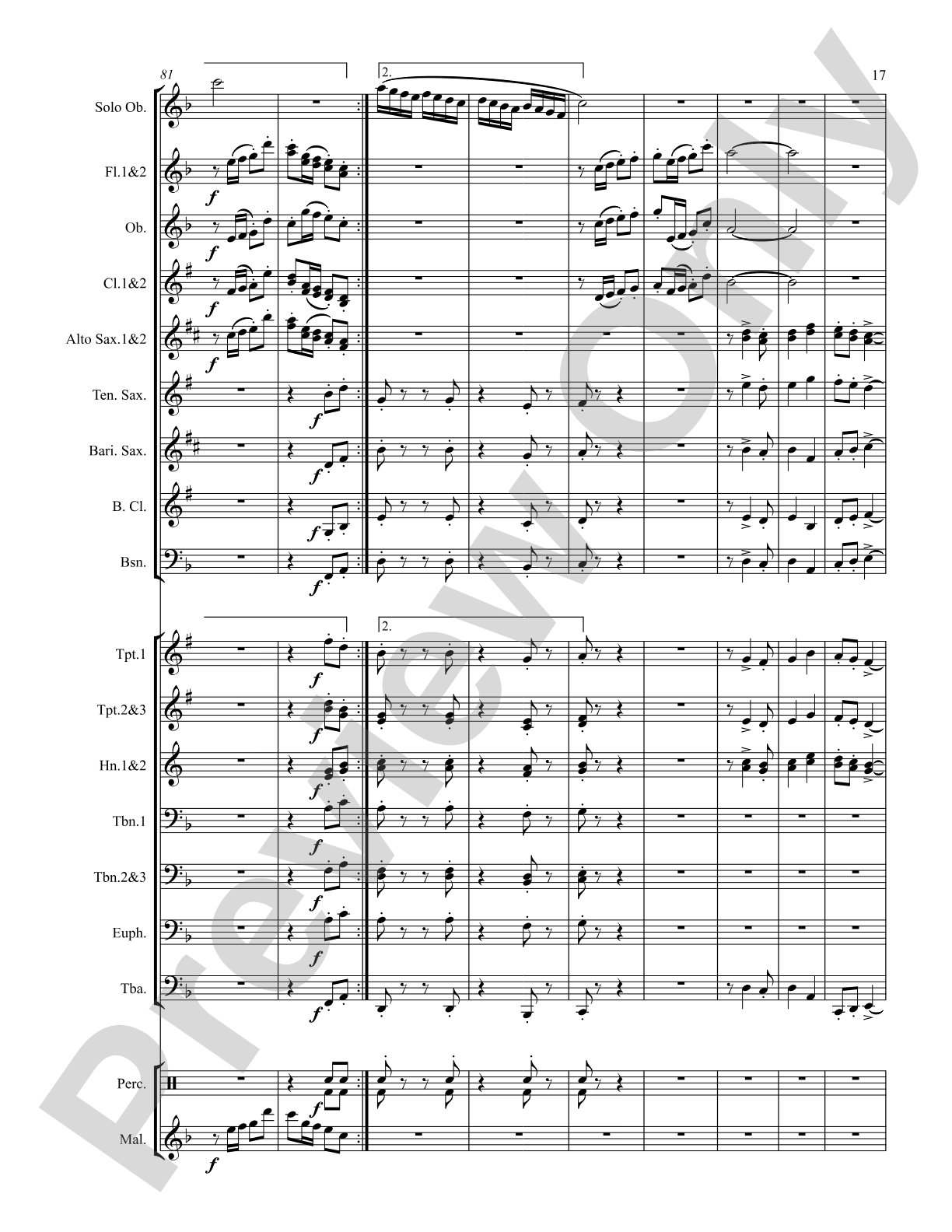
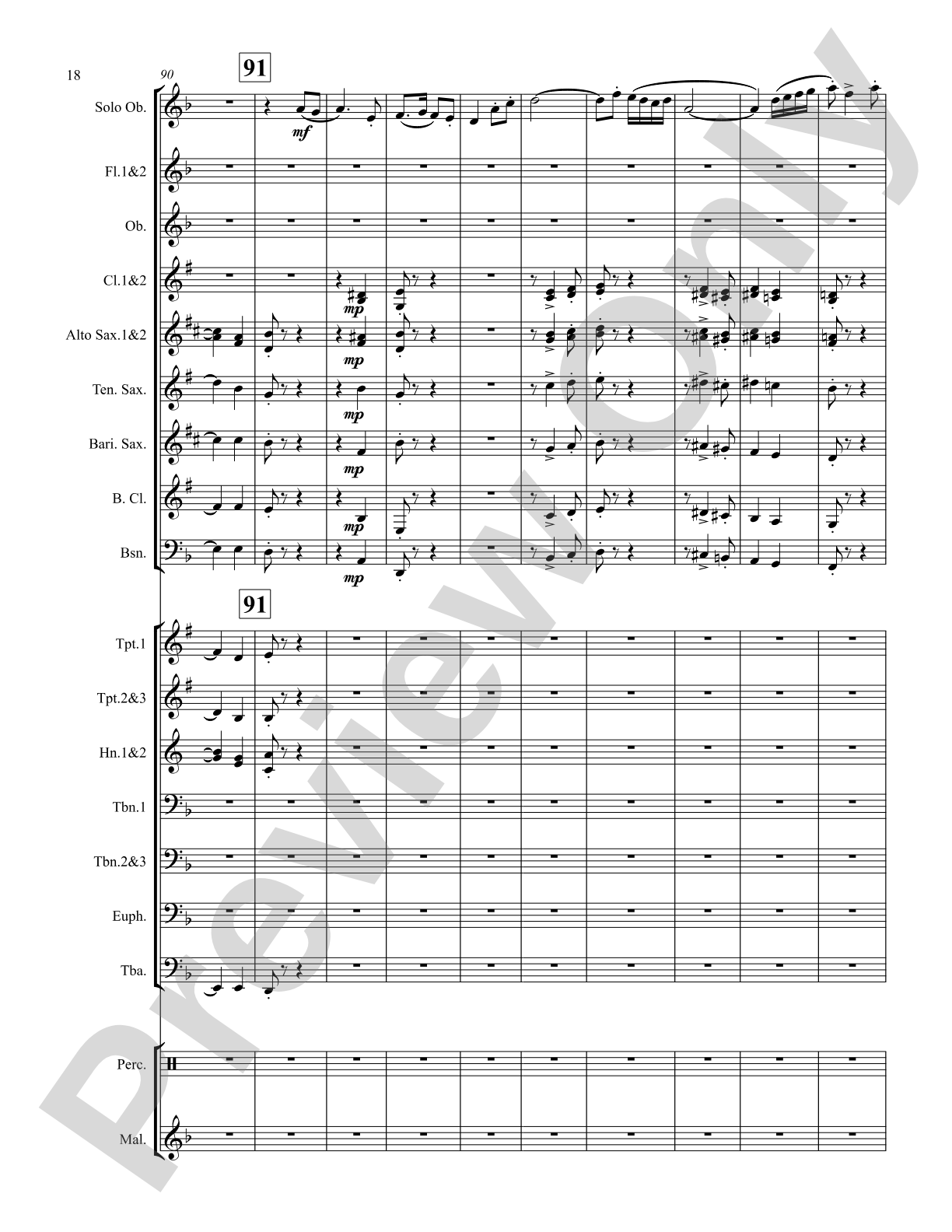
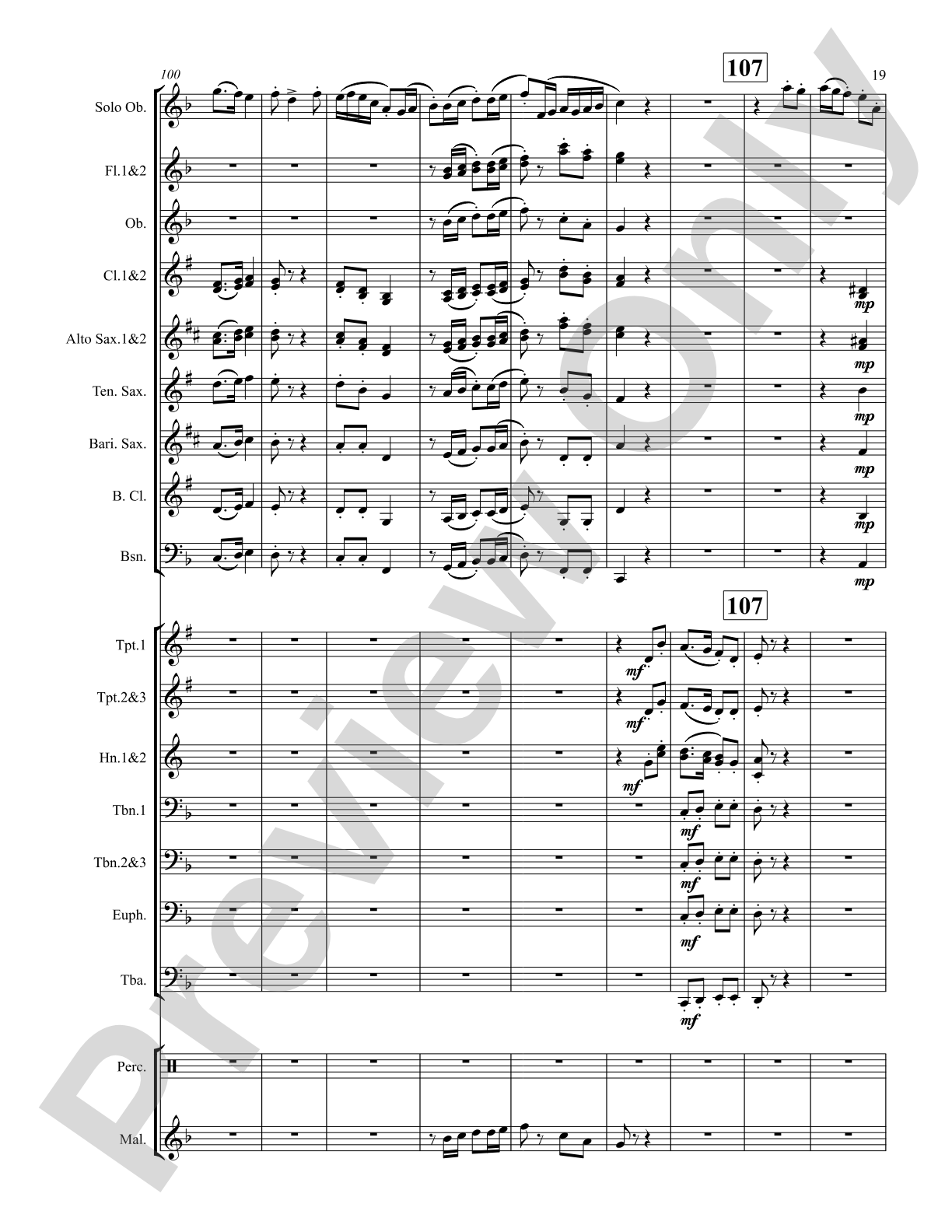
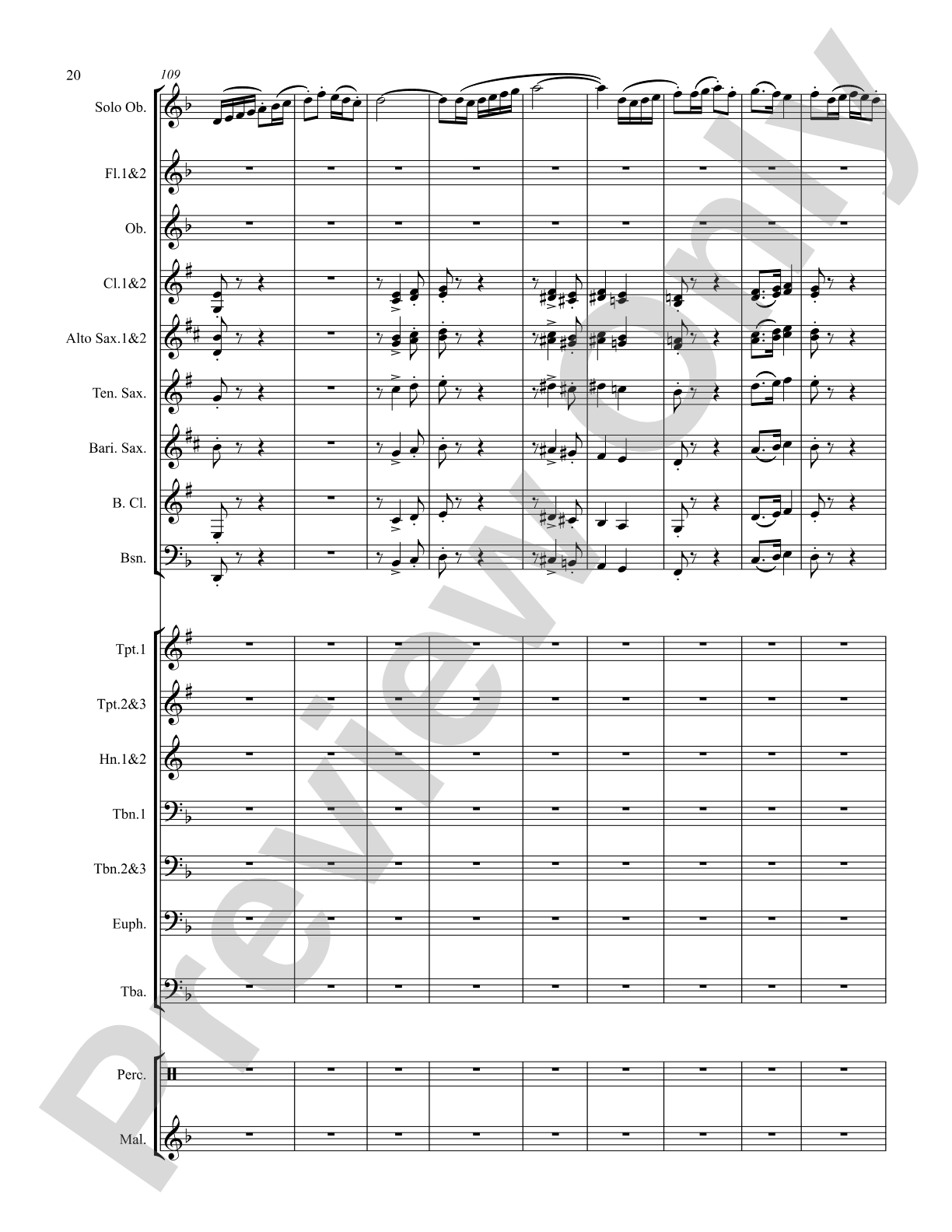
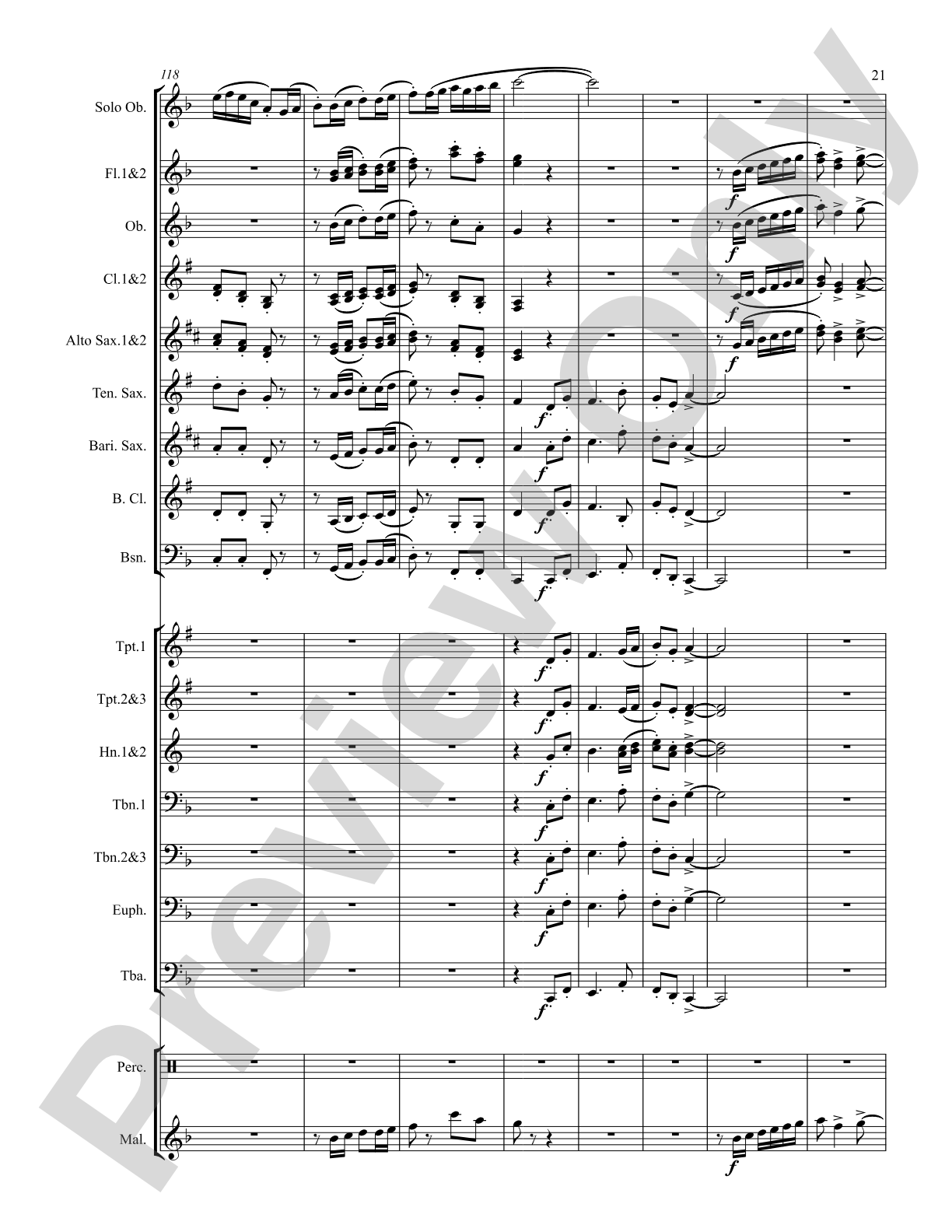
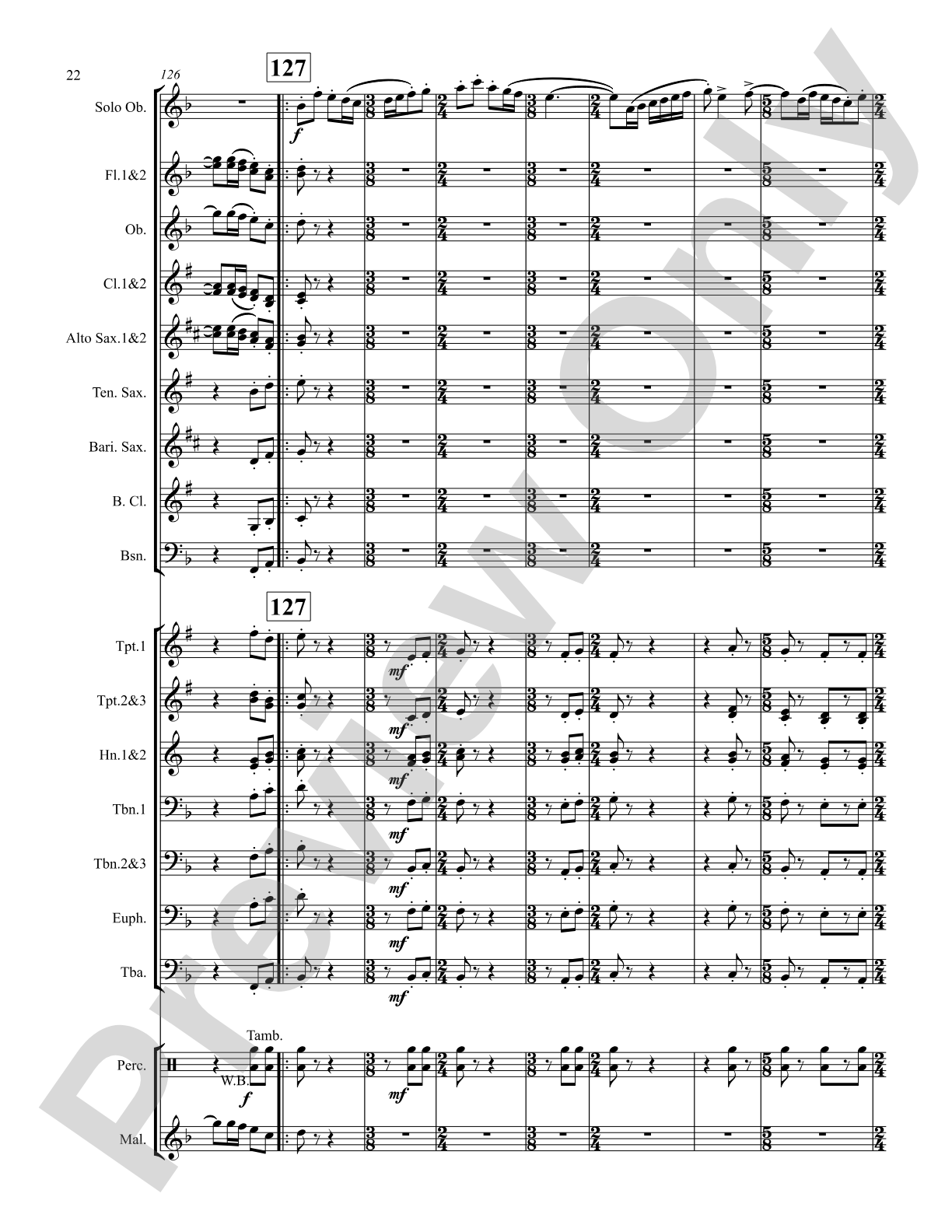
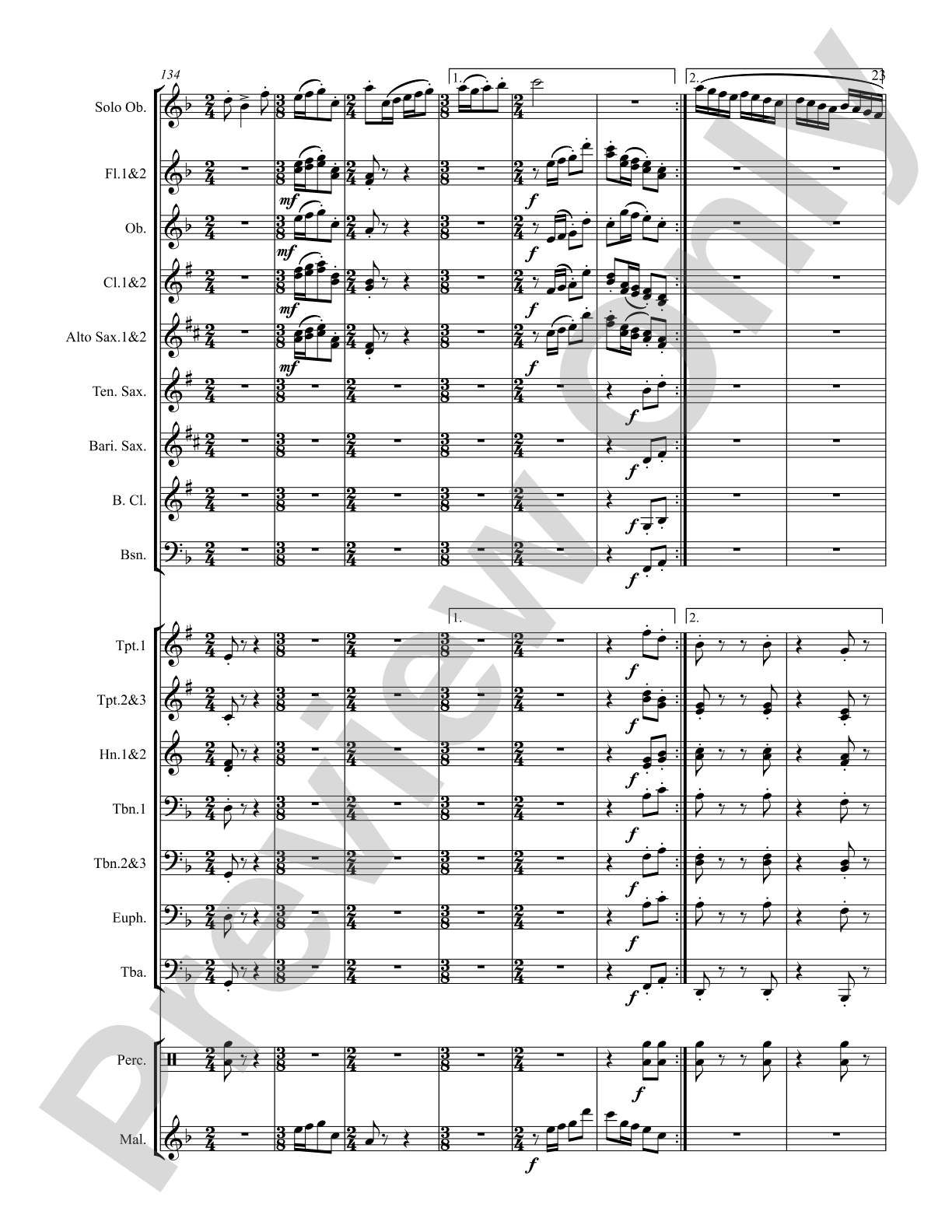
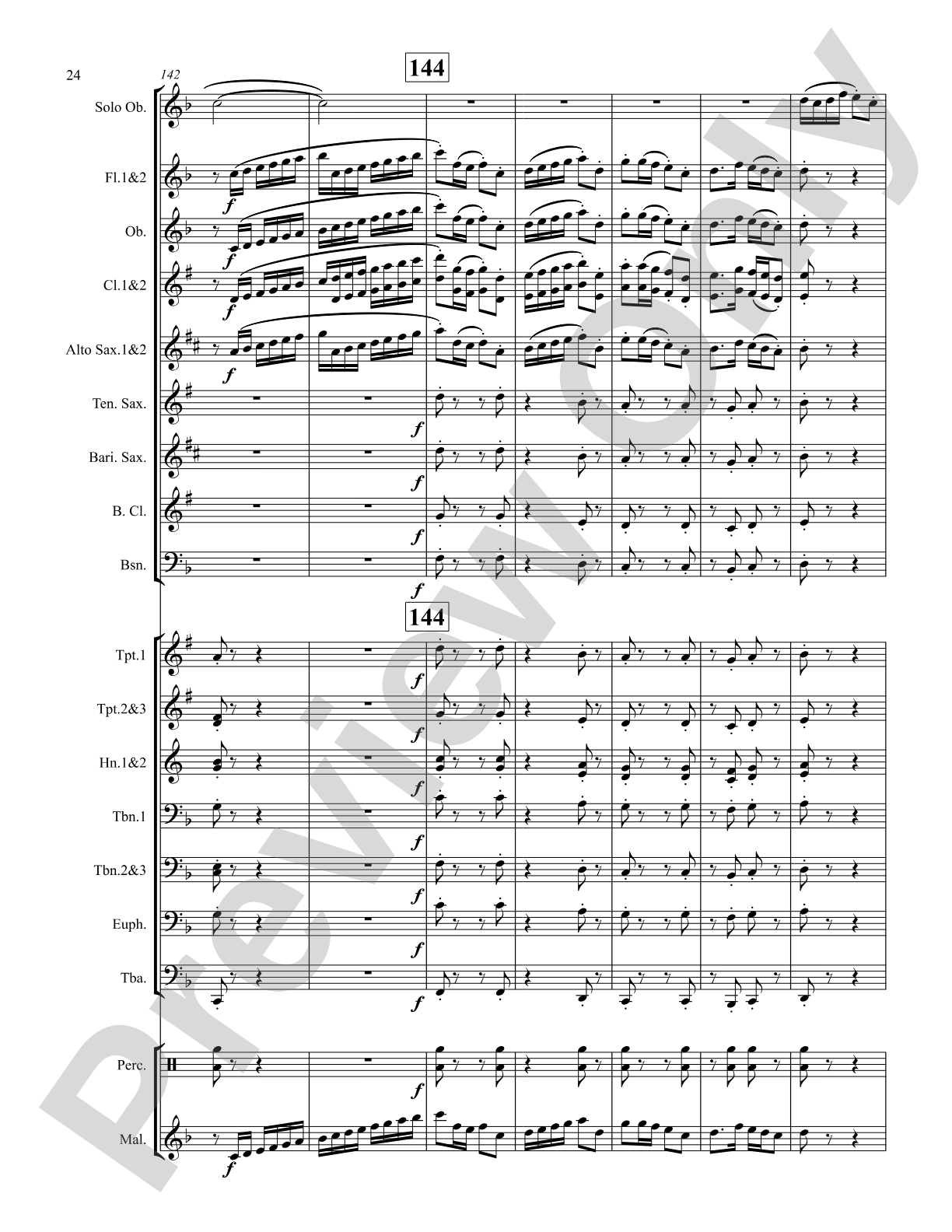
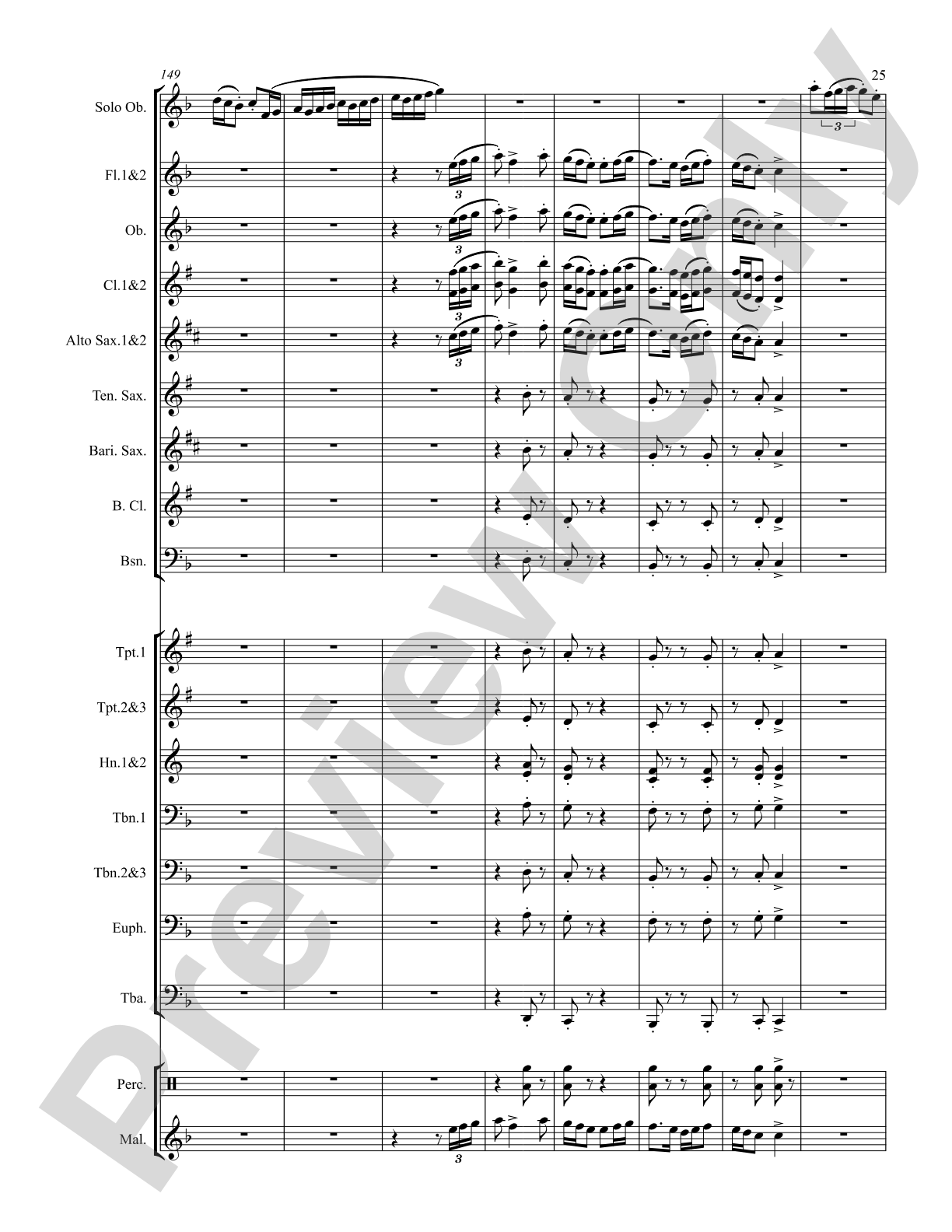
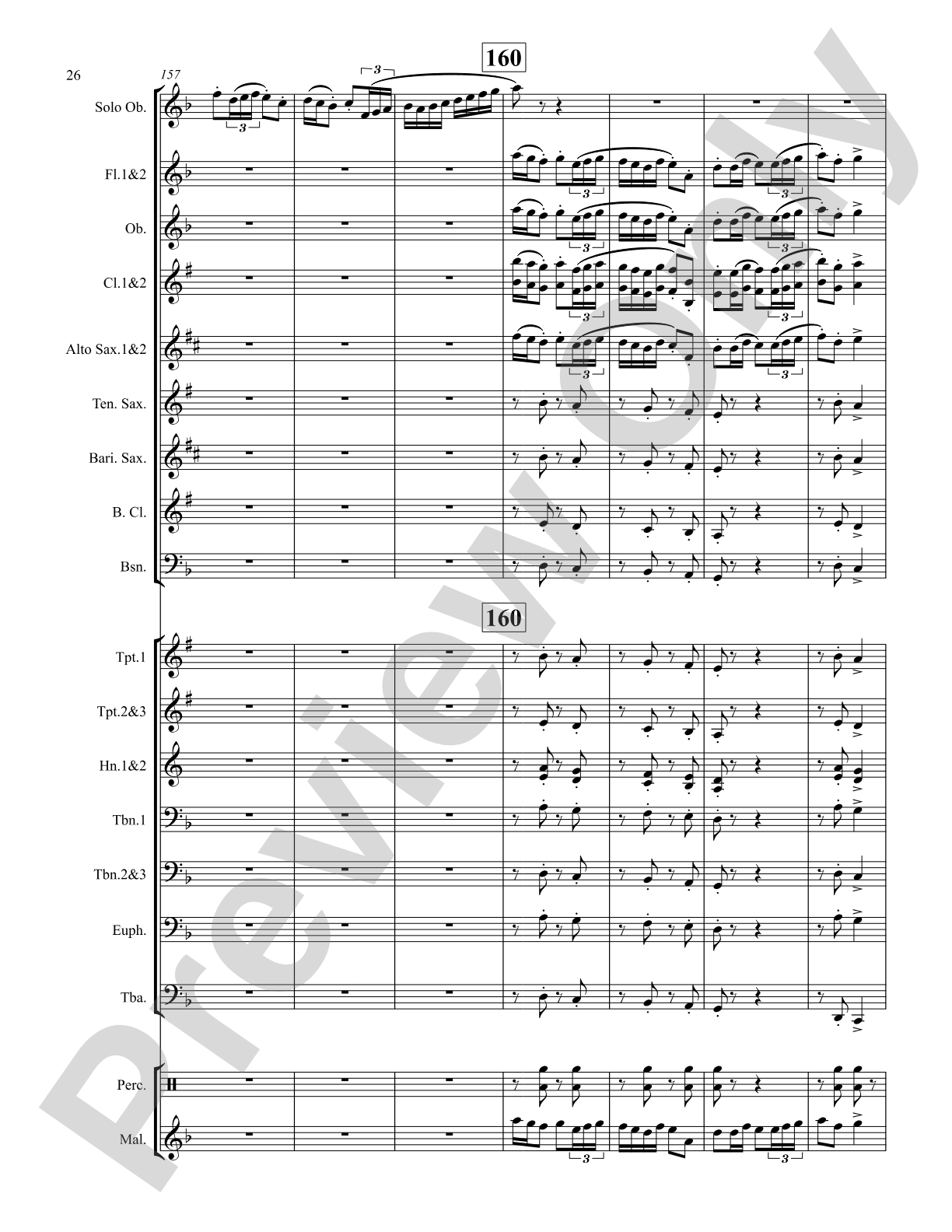
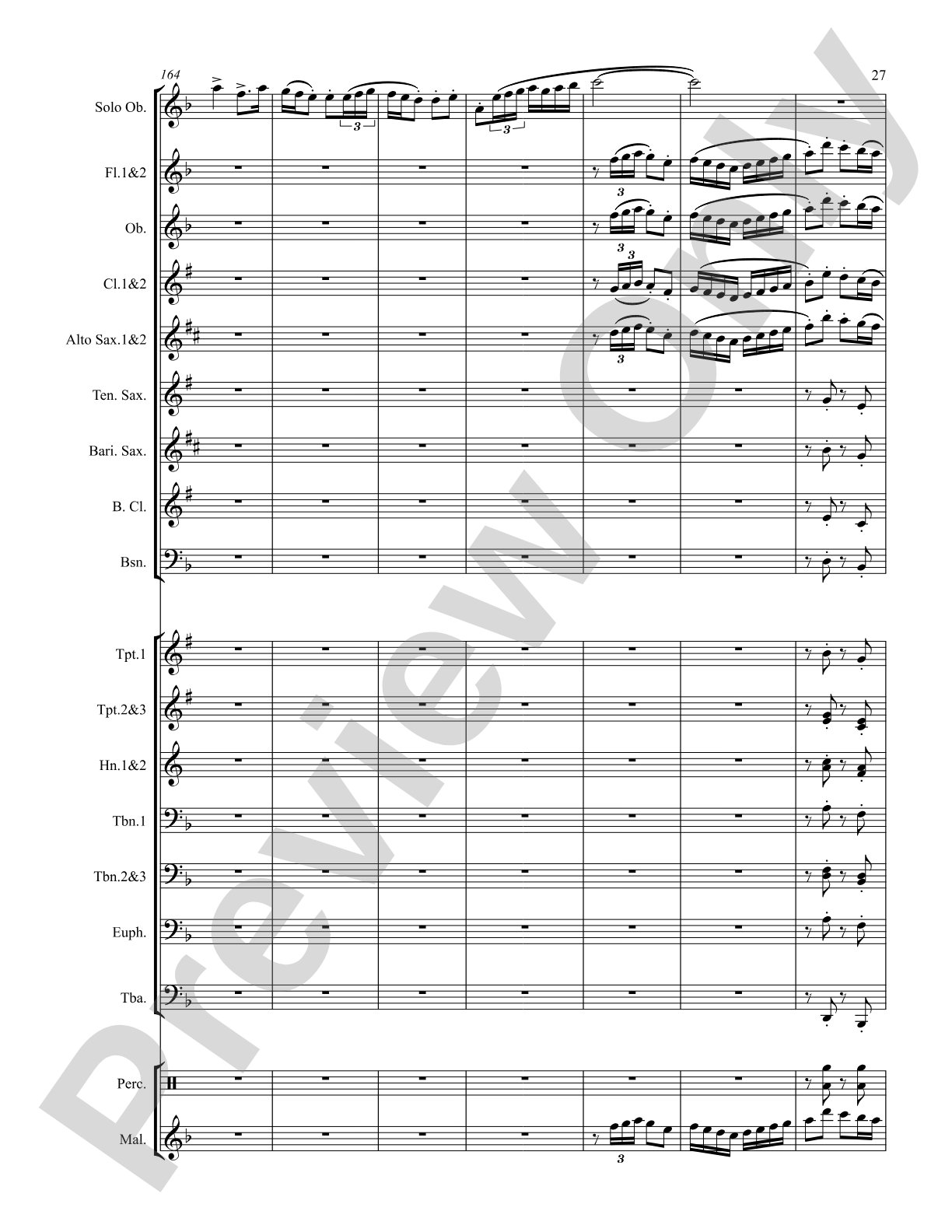
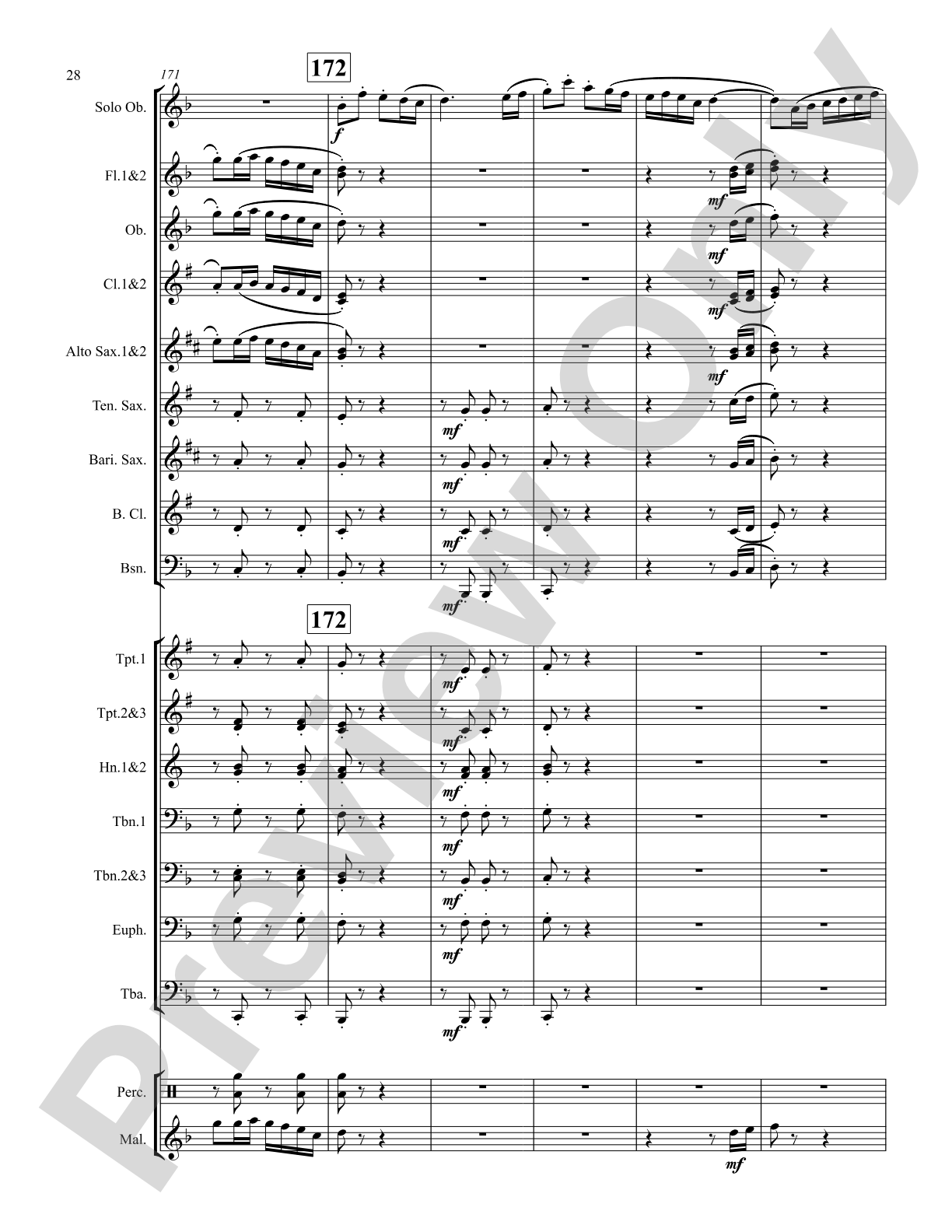
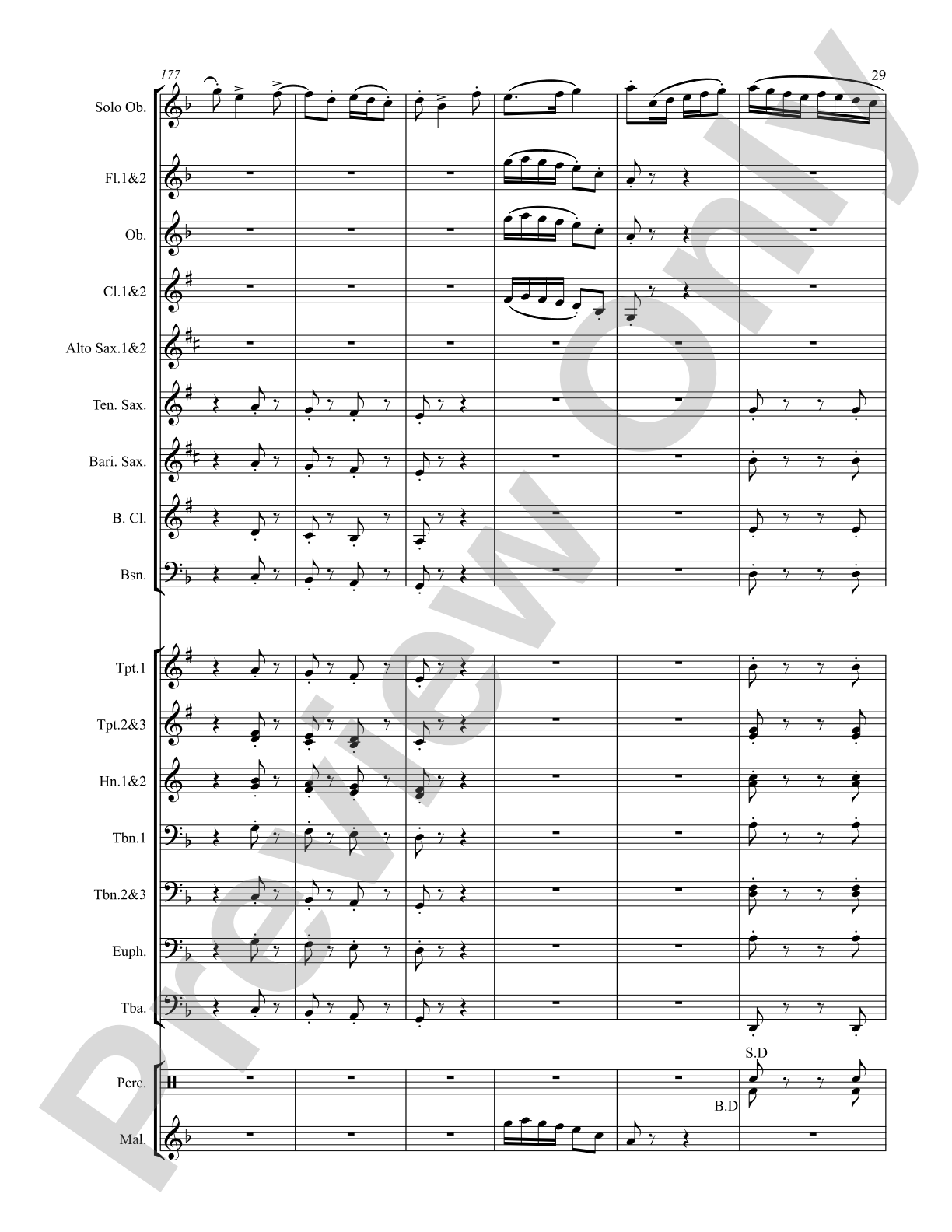
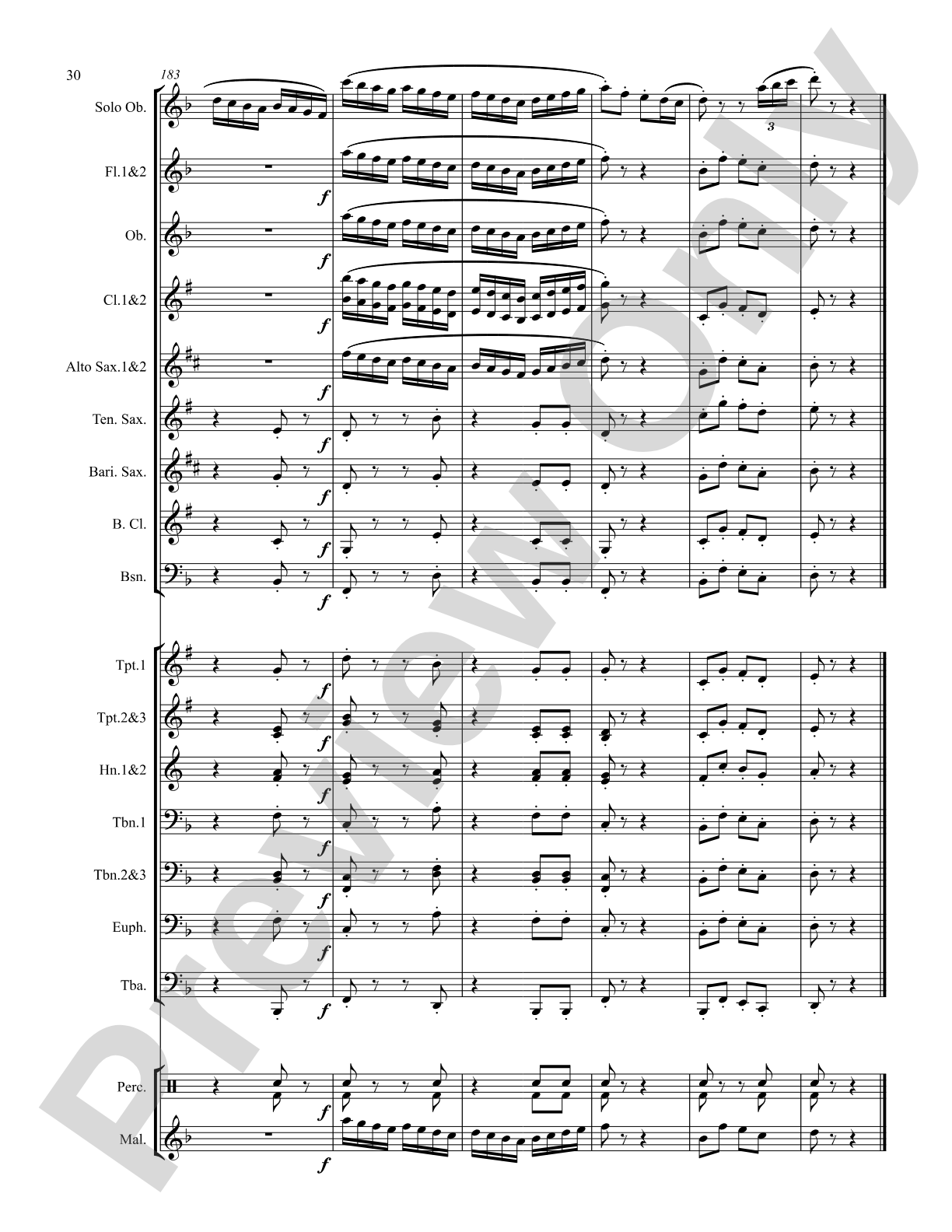

Concertino for Oboe: Concert Band Conductor Score & Parts
By John O'Reilly
Grade: 6 (Difficult)
Item: 00-PK-0008091

$85.00
Pickup currently not available
Buy Extra Parts (Digital PDF Download)
Parts Added to Cart!
Related Items
Concertino for Oboe: String Orchestra Conductor Score & Parts |
$60.00
|
View |
Description
Concertino for Oboe is a two movement work for a very proficient oboist accompanied by a less experienced (grade 3--4) ensemble. The accompaniment is available for Concert Band, String Orchestra, String Quartet, and Piano. In addition, the solo part can alternately be performed by Flute, Bb Clarinet, or Eb Alto Saxophone. All of these options are included in this digital edition. Mr. O'Reilly conducted the premier performance of this composition with his granddaughter Megan Wright as the soloist with the Newsome High School band in Valrico, Florida. Megan is now an Oboe major at Florida State University.


Don't just read it, hear it, play along with it, and watch your students grow with it. In MakeMusic Cloud, Concertino for Oboe: Concert Band Conductor Score & Parts comes alive with professional accompaniment, adjustable tempo, and built-in practice tools that turn solo practice into real progress.
Open in the Player
Jump straight in and assign it today.
Start Your Free Trial
Open this title and explore the full library in minutes.
Sample Audio
1
Audio File
--:--
0:00
0:00
Sample Video
Additional Details
Series:
Alfred Digital Concert Band
SKU:
00-PK-0008091
More about this title
About the Composer: John O'Reilly
John O'Reilly is a composer and educator with deep roots in band music pedagogy. His work demonstrates a keen understanding of what student musicians can accomplish when given repertoire that respects both their aspirations and their current abilities.
Why we love this
This work solves a real programming challenge: finding repertoire that showcases an advanced oboist while keeping ensemble demands at an accessible level. The flexibility to swap in flute, clarinet, or alto saxophone means you're not locked into oboe availability, and the multiple accompaniment options (band, strings, quartet, or piano) let you adapt to your resources. It's genuinely useful music, not a gimmick.
What to expect
A showcase for individual artistry within an ensemble setting. The solo line has room to sing and demonstrate technical command while the accompaniment provides lyrical support without demanding virtuosity. The two-movement form gives both soloist and ensemble space to breathe and shift character.
Who it's for
Band directors with an advanced oboist or flutist ready for solo repertoire, paired with ensembles still developing their technical foundation. This works equally well for the student soloist preparing a recital and for the band building concert variety without overextending less experienced players.
How to get the most out of it
- Balance the ensemble accompaniment so the oboe line remains in clear relief throughout both movements. The band parts sit at grade 3-4, which means younger players may lack the dynamic control needed to support rather than overshadow the soloist.
- If you're substituting flute, clarinet, or saxophone for oboe, rehearse the soloist with the actual transposition in mind. Each alternative instrument changes the color and weight of the solo line, so early coordination matters.
- Address the two-movement structure as a single unified performance. Use the transition between movements intentionally rather than letting it feel like two unrelated pieces.
How to use it
Feature this on a concert where you want to highlight an emerging solo talent without making the ensemble feel like a mere backing track. It pairs well on the same program as full-band concert works, since the grade 3-4 accompaniment keeps your band's overall difficulty level transparent and appropriate for the music education context.
Skills your students will build
- Supporting a featured soloist through balanced accompaniment writing
- Reading and executing two-movement solo-ensemble form
- Managing dynamic control in an ensemble setting (ensemble players learn to listen and adjust)
- Transposition awareness if substituting alternate solo instruments