
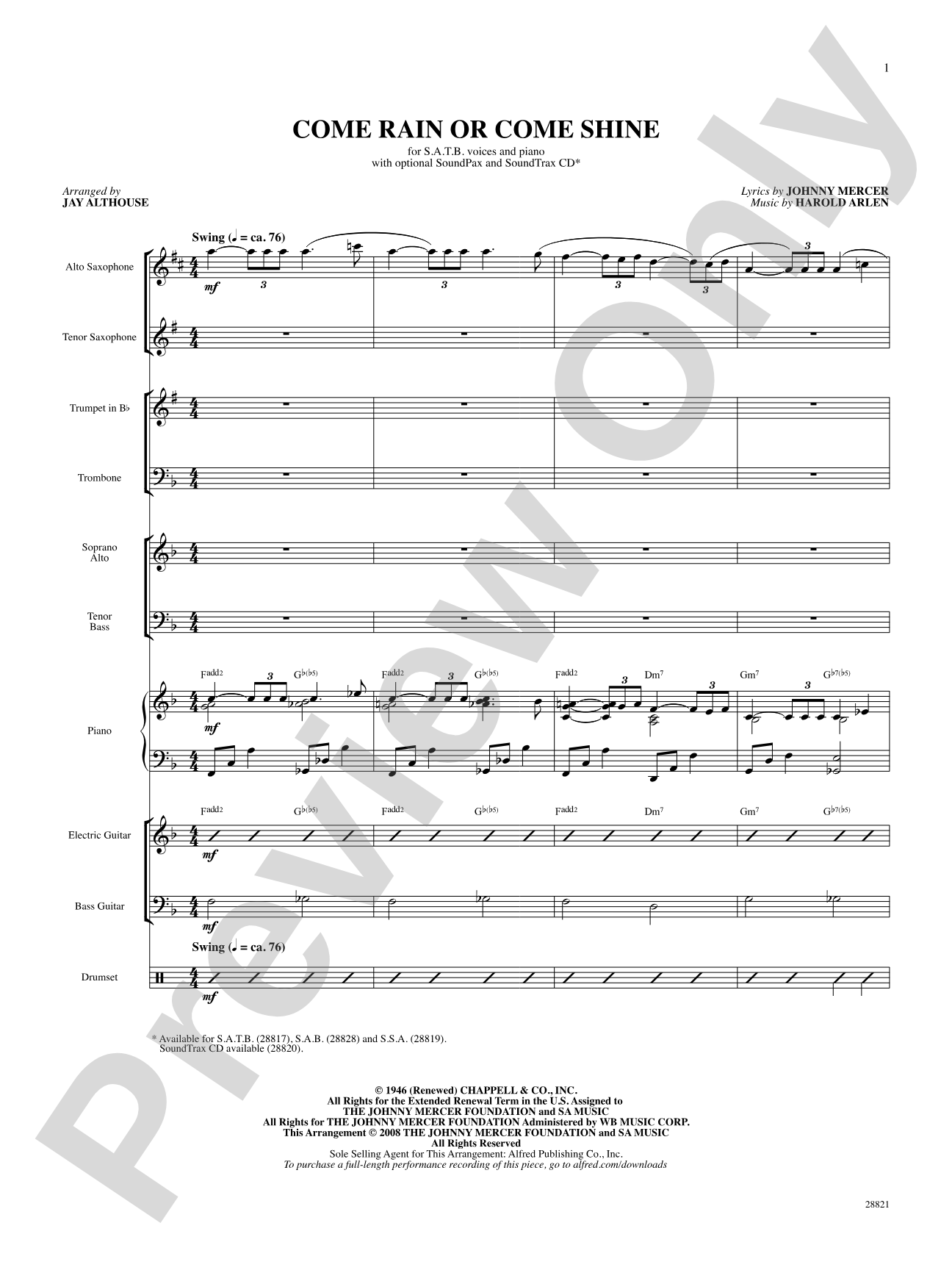
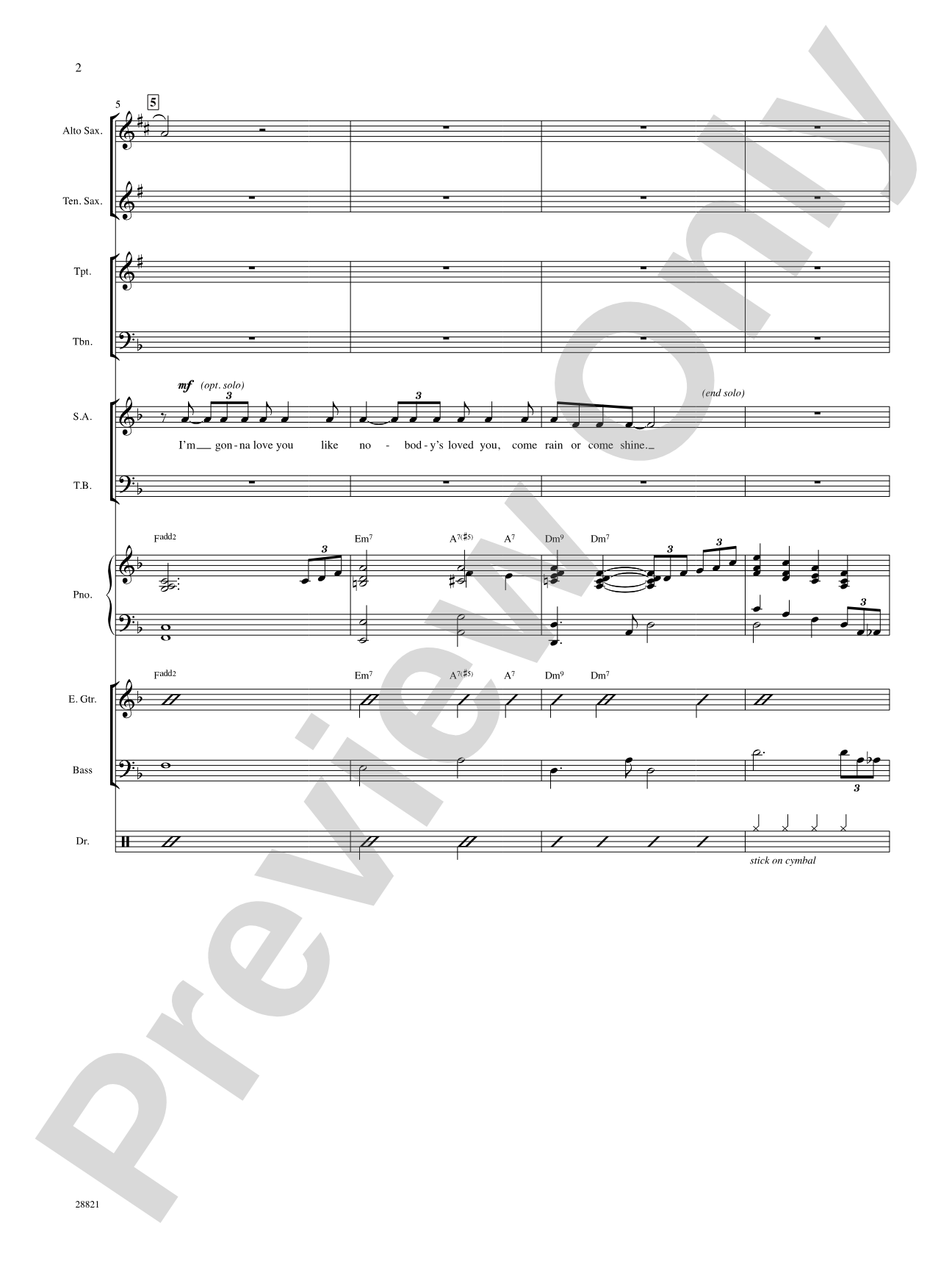
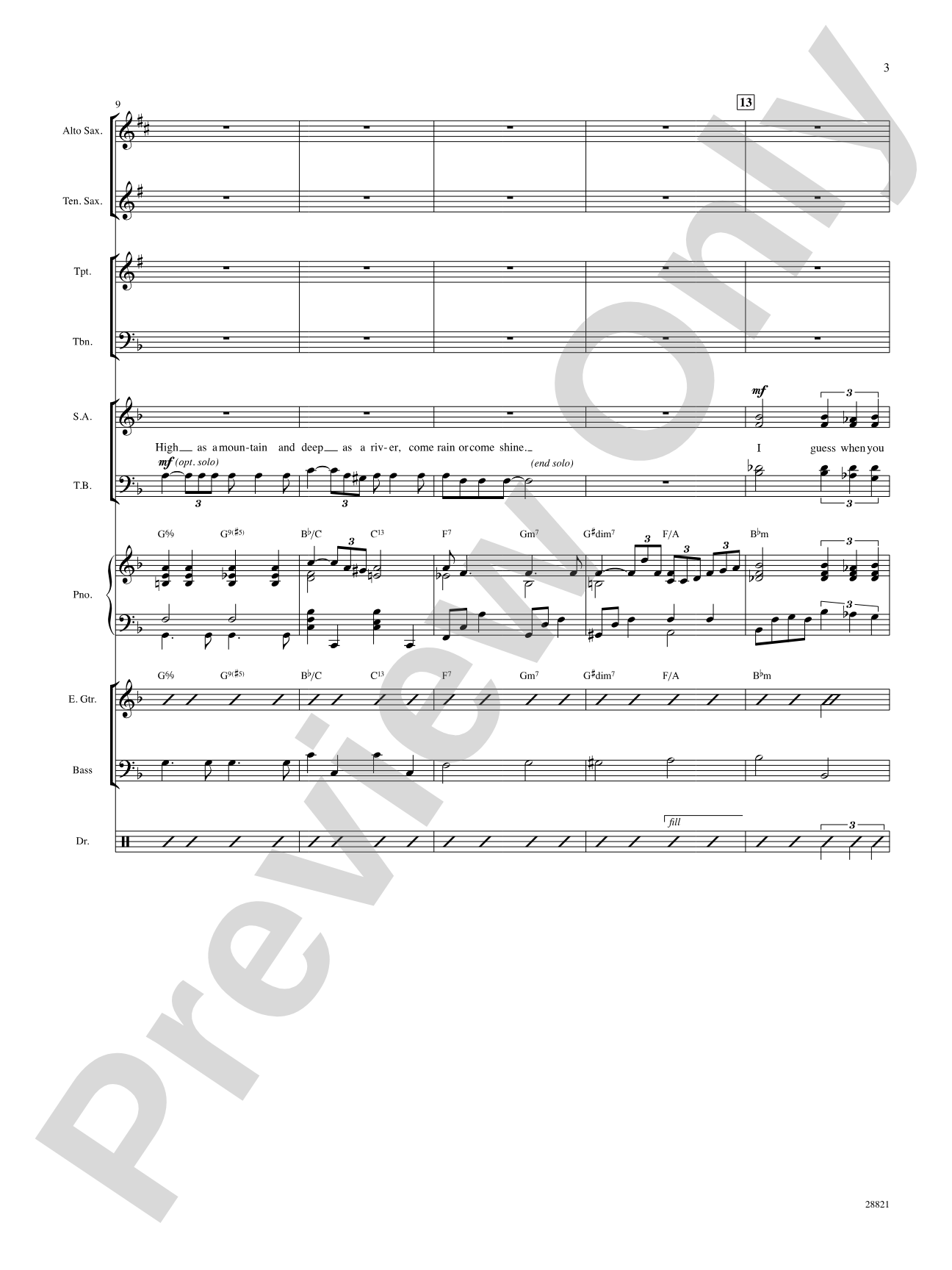
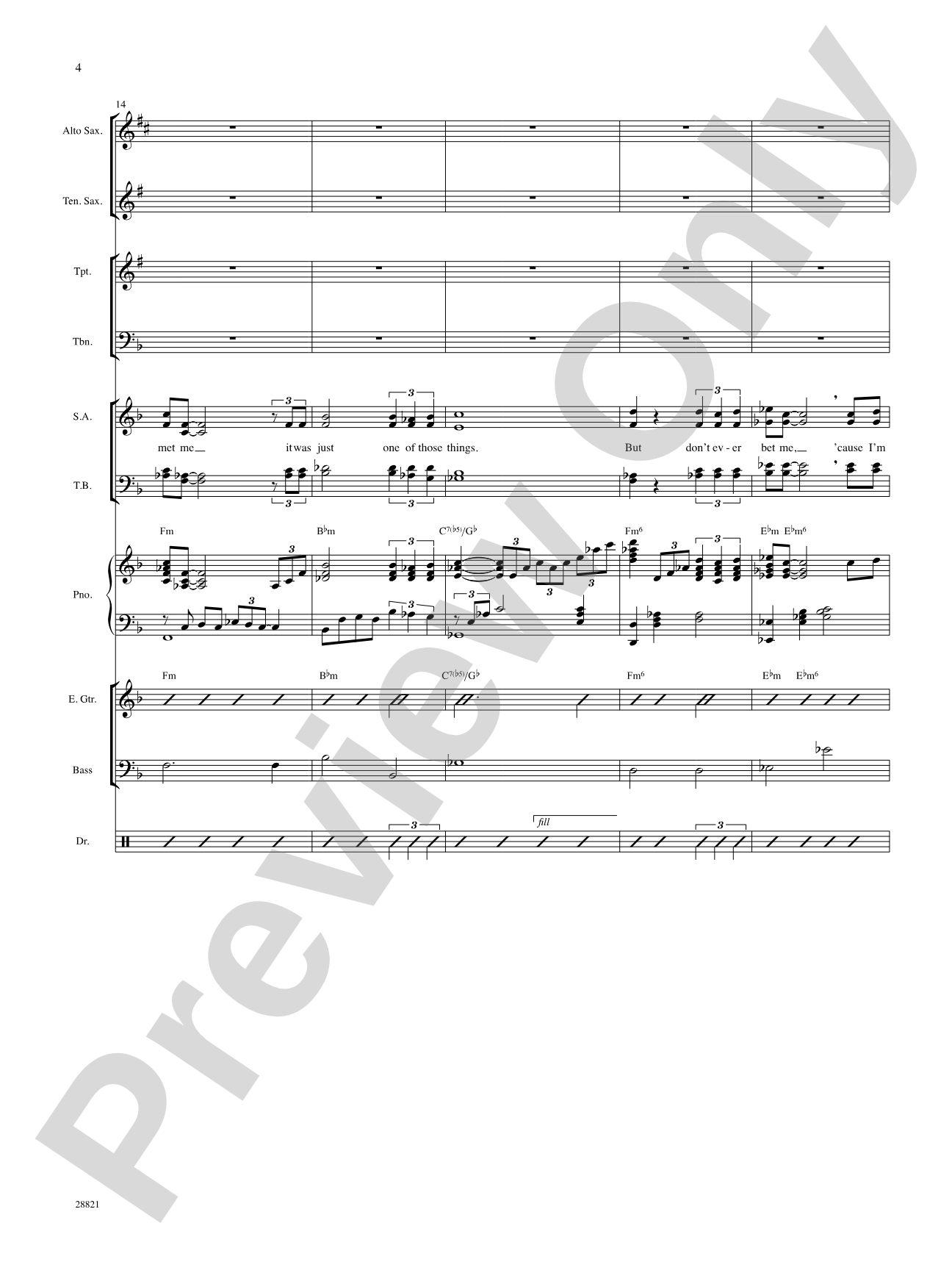
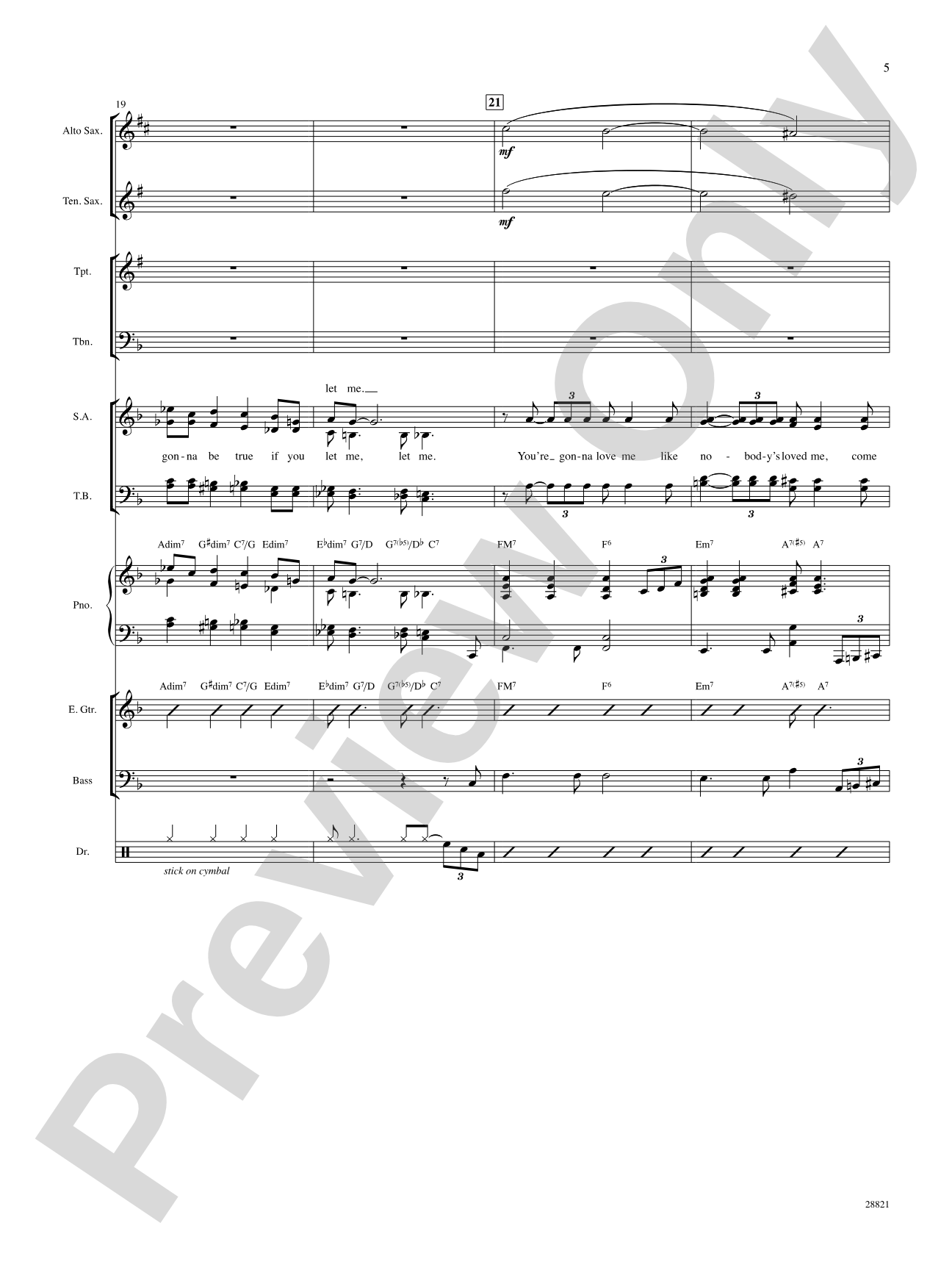
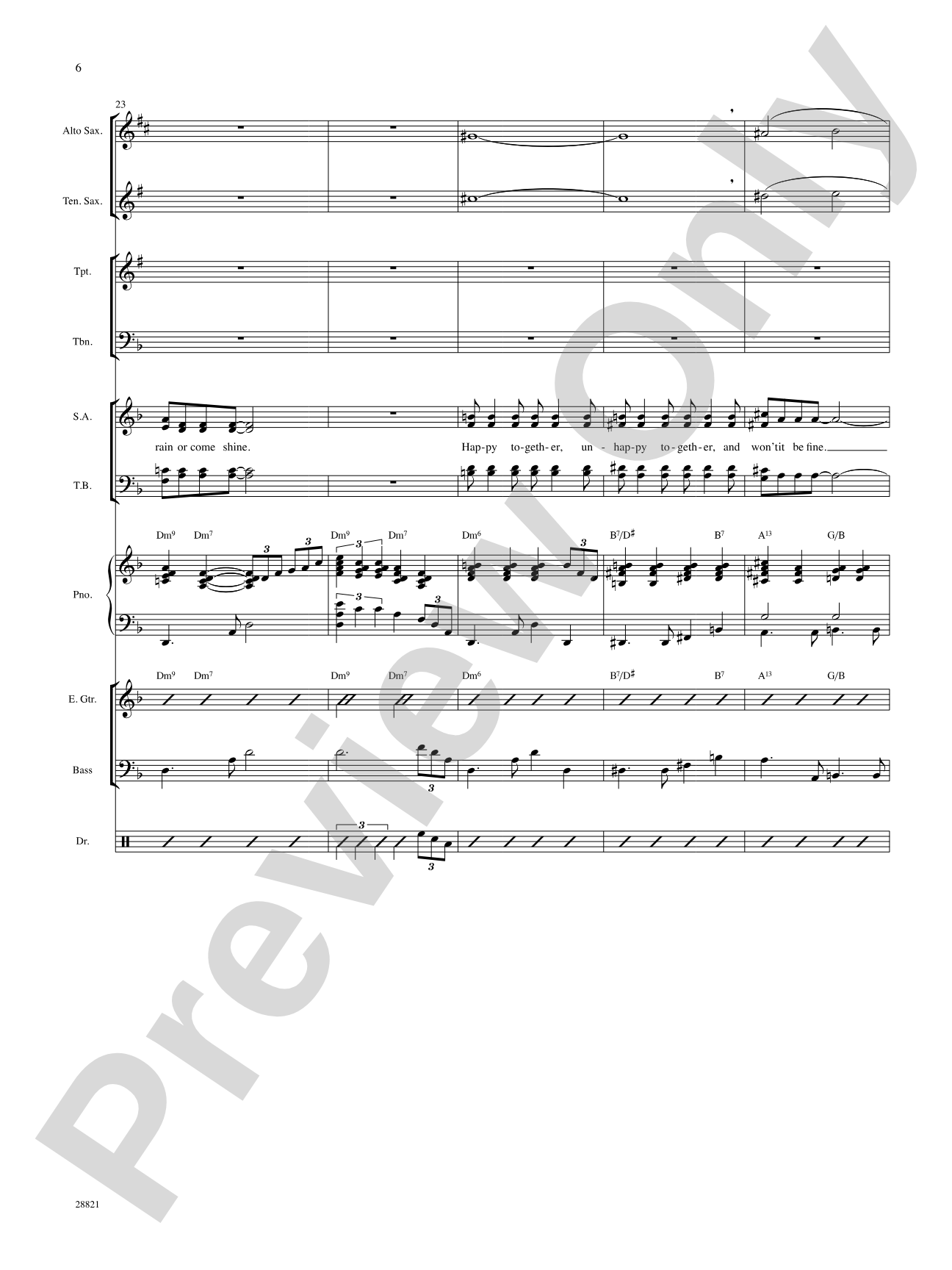
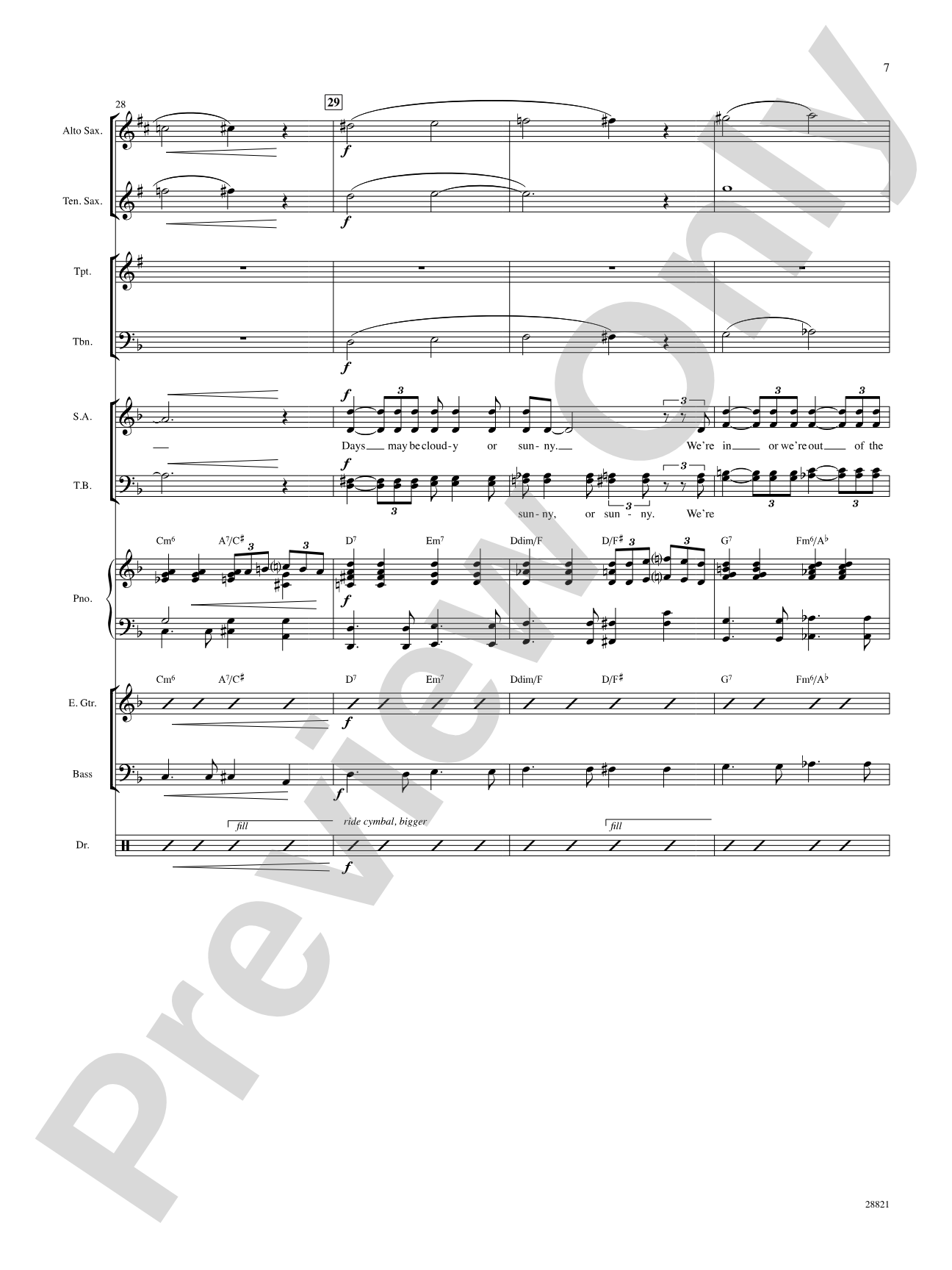
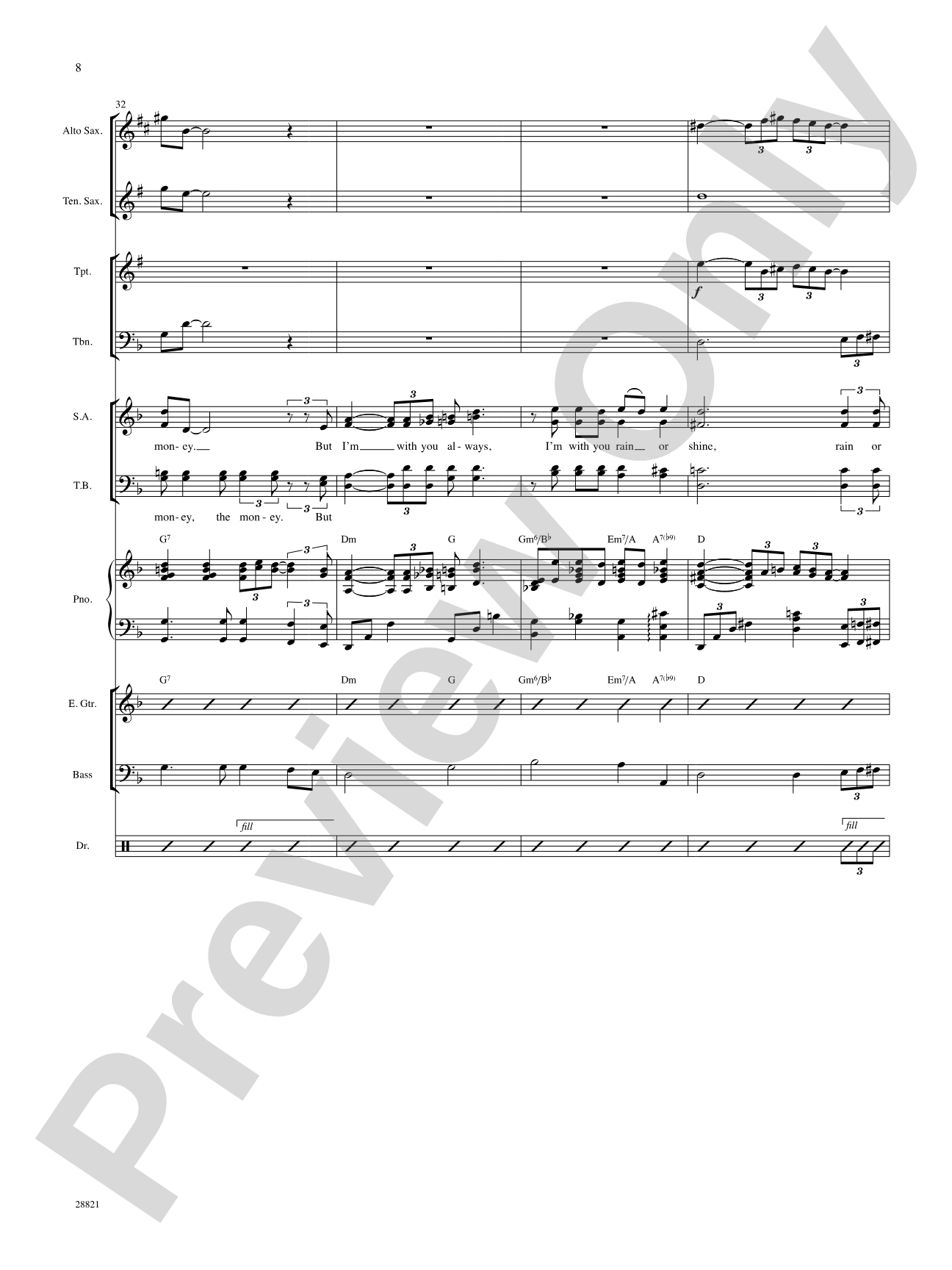
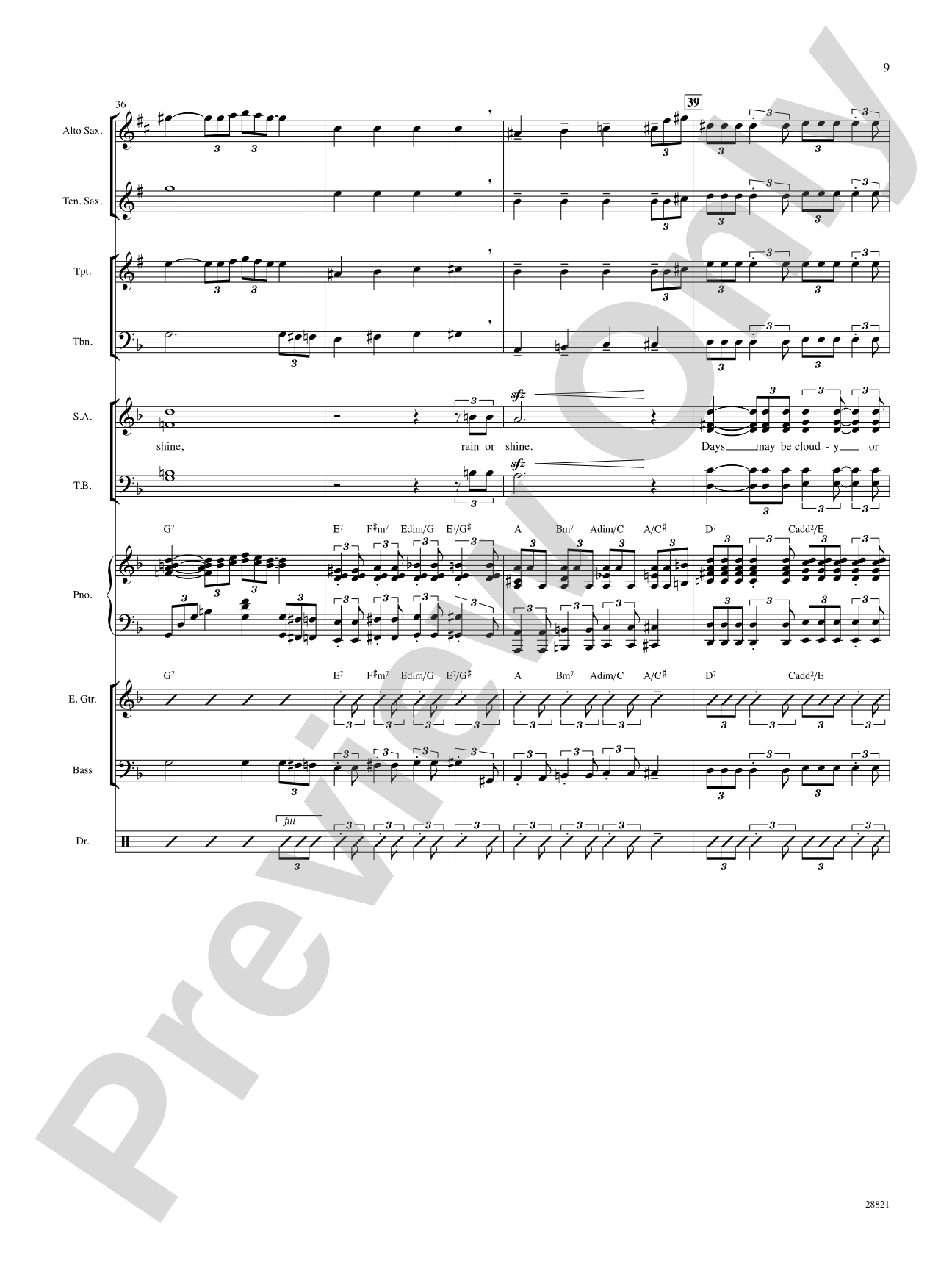
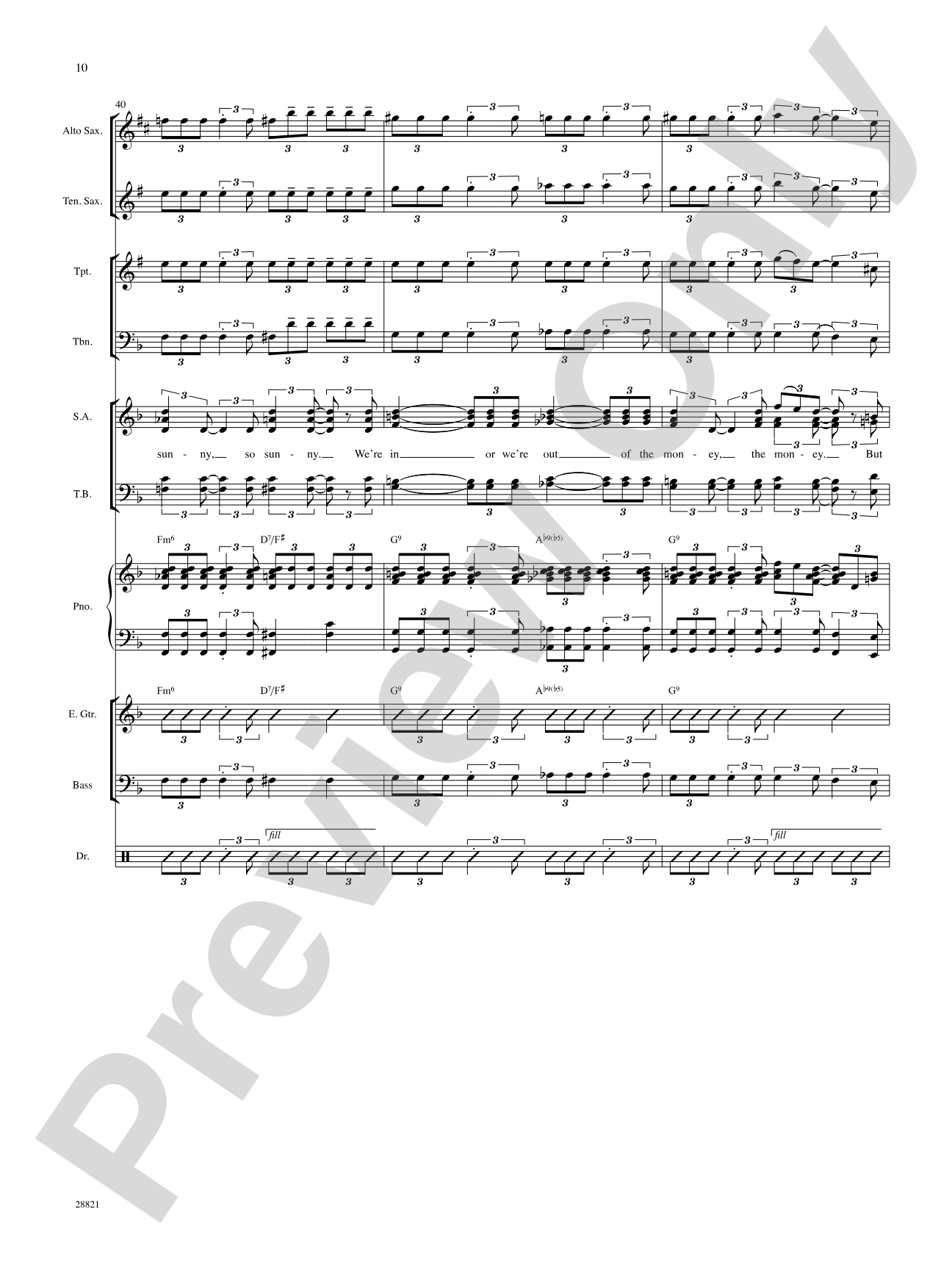
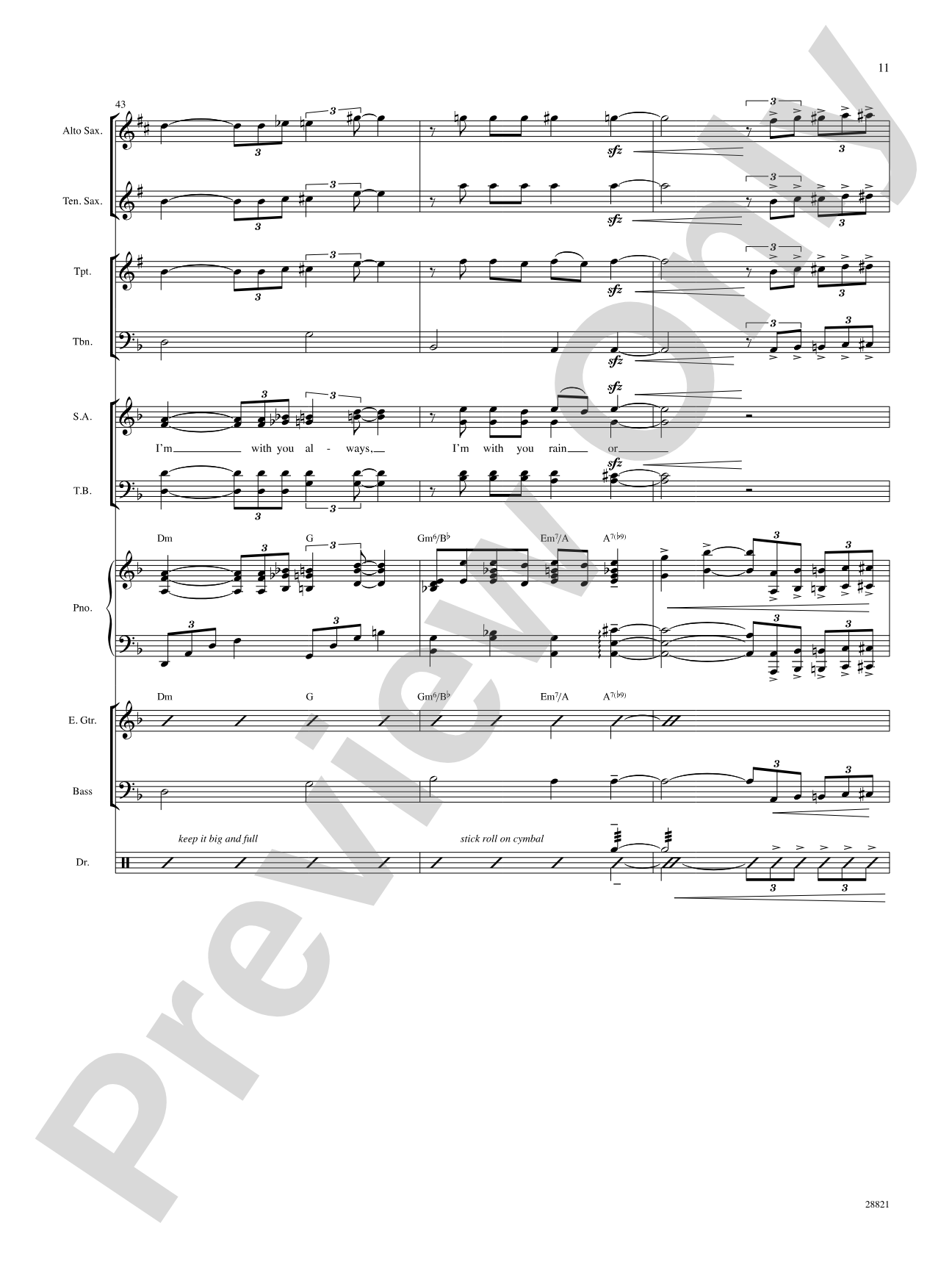
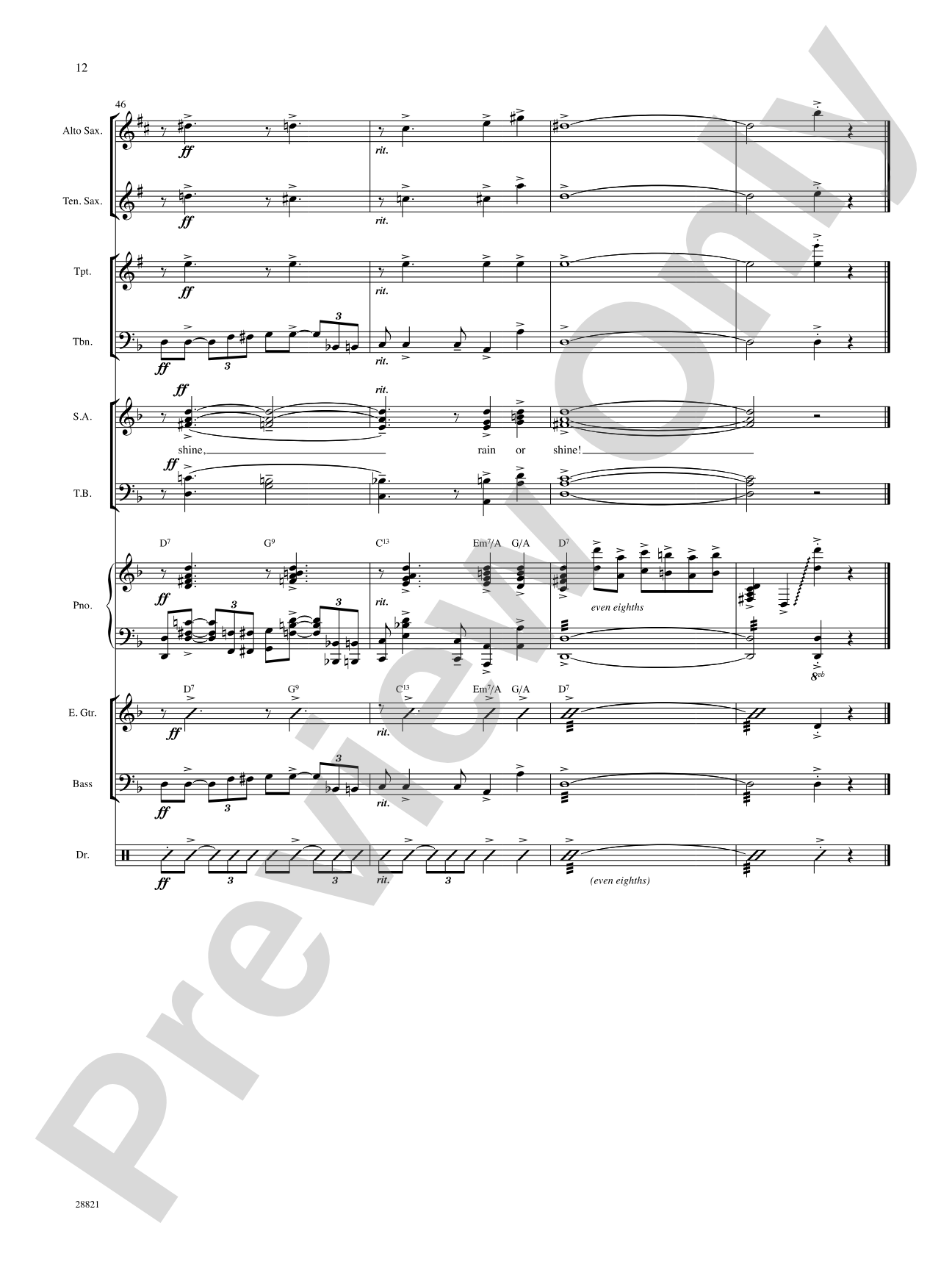

Come Rain or Come Shine: Choral SoundPax
Lyrics by Johnny Mercer, music by Harold Arlen / arr. Jay Althouse
Item: 00-PK-0001370

$25.00
One moment…
Related Items
Come Rain or Come Shine: SoundTrax Digital Audio Download |
$27.99
|
View | |
Come Rain or Come Shine: SATB Choral Octavo |
$2.25
|
View | |
Come Rain or Come Shine: SAB Choral Octavo |
$1.85
|
View | |
Come Rain or Come Shine: SSA Choral Octavo |
$2.25
|
View | |
Come Rain or Come Shine: SATB Choral Octavo |
$2.25
|
View | |
Come Rain or Come Shine: SSA Choral Octavo |
$2.25
|
View | |
Come Rain or Come Shine: Choral Octavo SoundTrax CD |
$27.99
|
View | |
Come Rain or Come Shine: Choral SoundPax |
$25.00
|
View |
Description
This sultry ballad from the Great American Songbook is one of the finest works from the songwriting team of Johnny Mercer and Harold Arlen. The dazzling arrangement has a great piano accompaniment, full choral writing, and a pull-out-the-stops finish. Very appropriate for concert choirs as well as show and jazz groups. Includes parts for alto sax., tenor sax., trumpet, trombone, and rhythm.


Don't just read it, hear it, play along with it, and watch your students grow with it. In MakeMusic Cloud, Come Rain or Come Shine: Choral SoundPax comes alive with professional accompaniment, adjustable tempo, and built-in practice tools that turn solo practice into real progress.
Open in the Player
Jump straight in and assign it today.
Start Your Free Trial
Open this title and explore the full library in minutes.
Sample Audio
1
Audio File
--:--
0:00
0:00
Sample Video
No sample videos found.
Additional Details
Series:
Alfred Pop Choral Series
Publisher:
Alfred Music
Page Count:
18
SKU:
00-PK-0001370
Instrumentation:
SoundPax
More about this title
About the Composer: Harold Arlen
Harold Arlen (1905-1986) composed some of the most enduring melodies in American popular music. His partnerships with lyricist Johnny Mercer and others produced standards that have become central to jazz, musical theatre, and American songbook repertoire. Arlen's gift for crafting singable, memorable lines with sophisticated harmonic underpinnings made his songs natural fits for choral arrangement, and his work remains a cornerstone of pops and jazz choral programming.
Why we love this
Jay Althouse's treatment of this Arlen-Mercer standard respects the elegance of the original while giving it real ensemble bite. The inclusion of saxophones, trumpet, and trombone adds the exact flavor this song demands, and the arrangement builds intelligently from intimate verses to a finish that lets your singers shine without overshadowing the tune's sophisticated appeal.
What to expect
There's a warmth and resignation woven through this ballad, a feeling of commitment despite uncertainty. Arlen's melody unfolds with the kind of grace that feels conversational at first, then gradually reveals its emotional depth as harmonies shift and the ensemble voice grows. By the finish, what started intimate has become something expansive and affirming.
Who it's for
This arrangement serves concert choirs seeking substantial popular music that still demands musicianship, as well as show choirs and jazz ensembles looking for a piece with real emotional weight. Directors programming a blend of standards and contemporary repertoire will find this connects directly with student singers who love the Great American Songbook sound.
How to get the most out of it
- Let the rhythm section lock in first during rehearsals. The swing feel depends on secure piano, bass, and drums; once that's solid, the voices will sit naturally into the pocket.
- Shape the verses with restrained dynamics and clear text. The power of this ballad lives in the storytelling before you reach the climactic final sections.
- Balance the sax section against the choral blend. These horns should enhance, not overpower; they're conversational partners with the voices, not a wall of sound.
- Bring out the piano accompaniment in rehearsal. It's a featured voice here, and singers need to hear it to understand the harmonic and rhythmic foundation they're building on.
How to use it
Program this alongside other jazz-inflected standards to build a cohesive set, or pair it with contemporary pop arrangements to show how songwriting craft has evolved. The piece works equally well as a concert showcase or as part of a musical theatre revue, and its moderate length makes it a strong closer for programs that need a ballad with real presence.
Skills your students will build
- Swing rhythm interpretation and jazz phrasing
- Blending voices while tracking independent harmonic lines
- Balance between ensemble and featured instrumental parts
- Lyrical interpretation of sophisticated song forms
- Intonation in chromatic and jazz-inflected harmony