

Clap Your Hands!: 3-Part Mixed Choral Octavo
(A Song of Joy)
Words and music by David Waggoner
Item: 00-PO-0006307
$2.20
Minimum order quantity: 20 copies
Pickup currently not available
Description
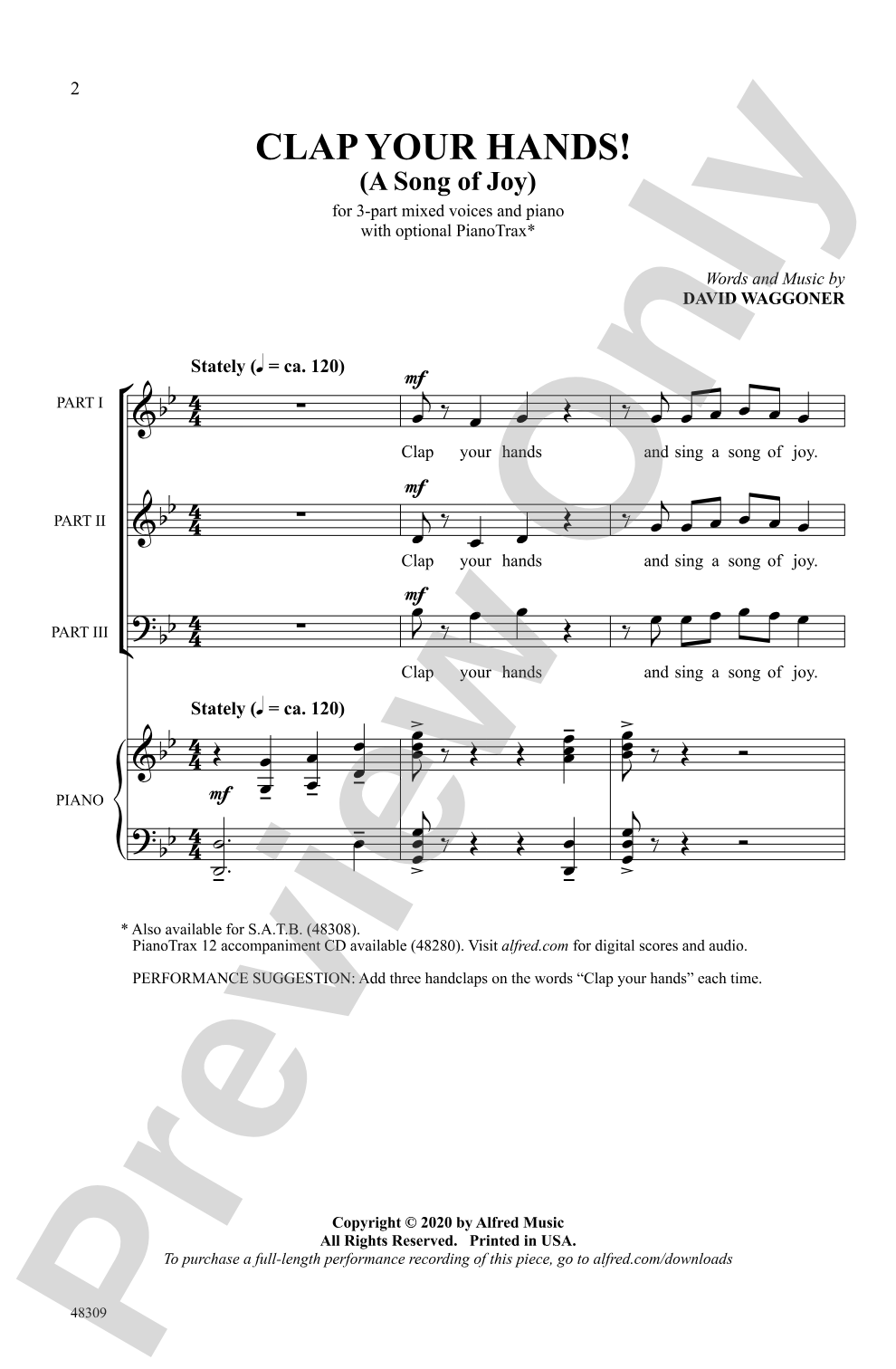
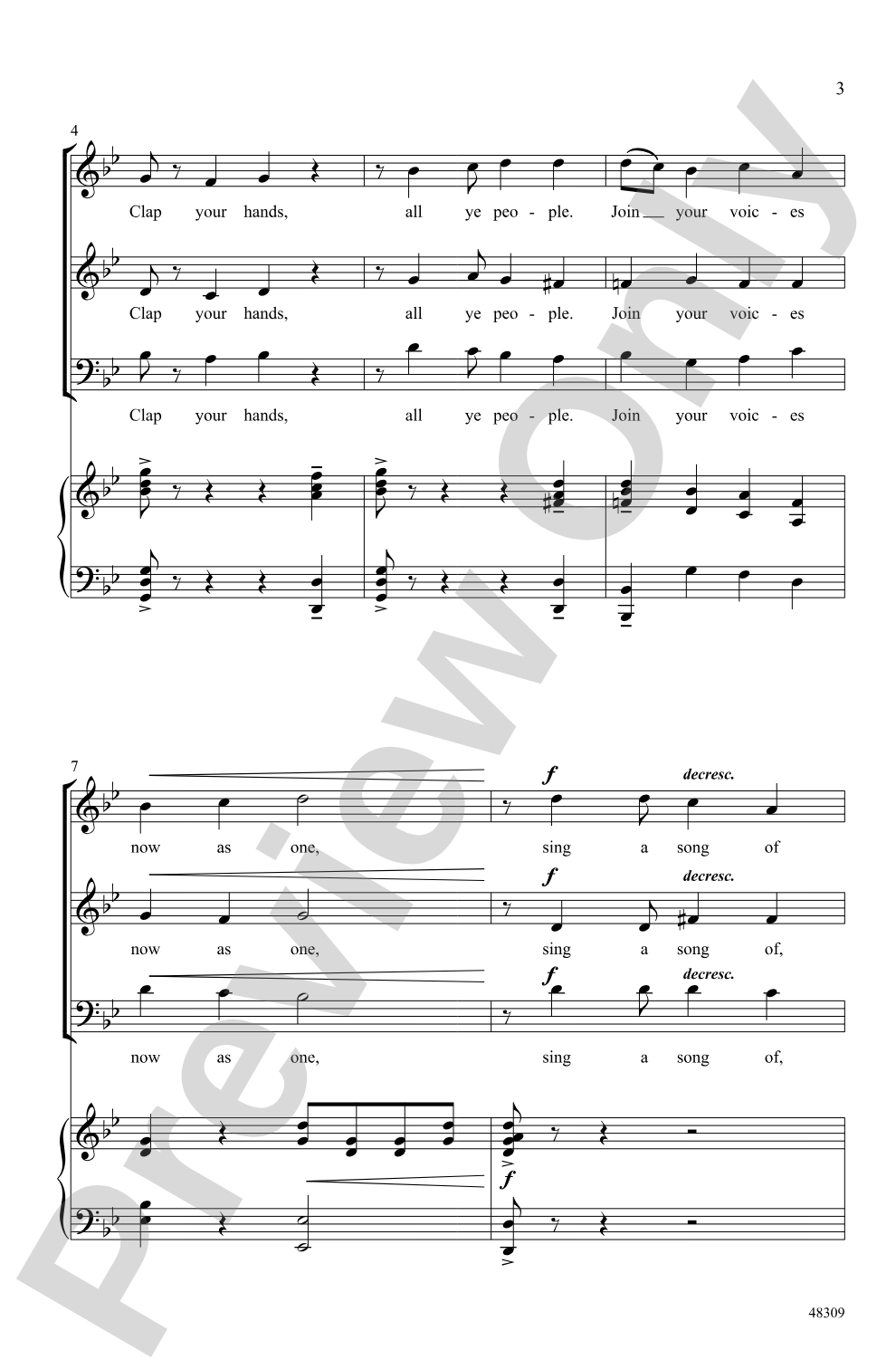
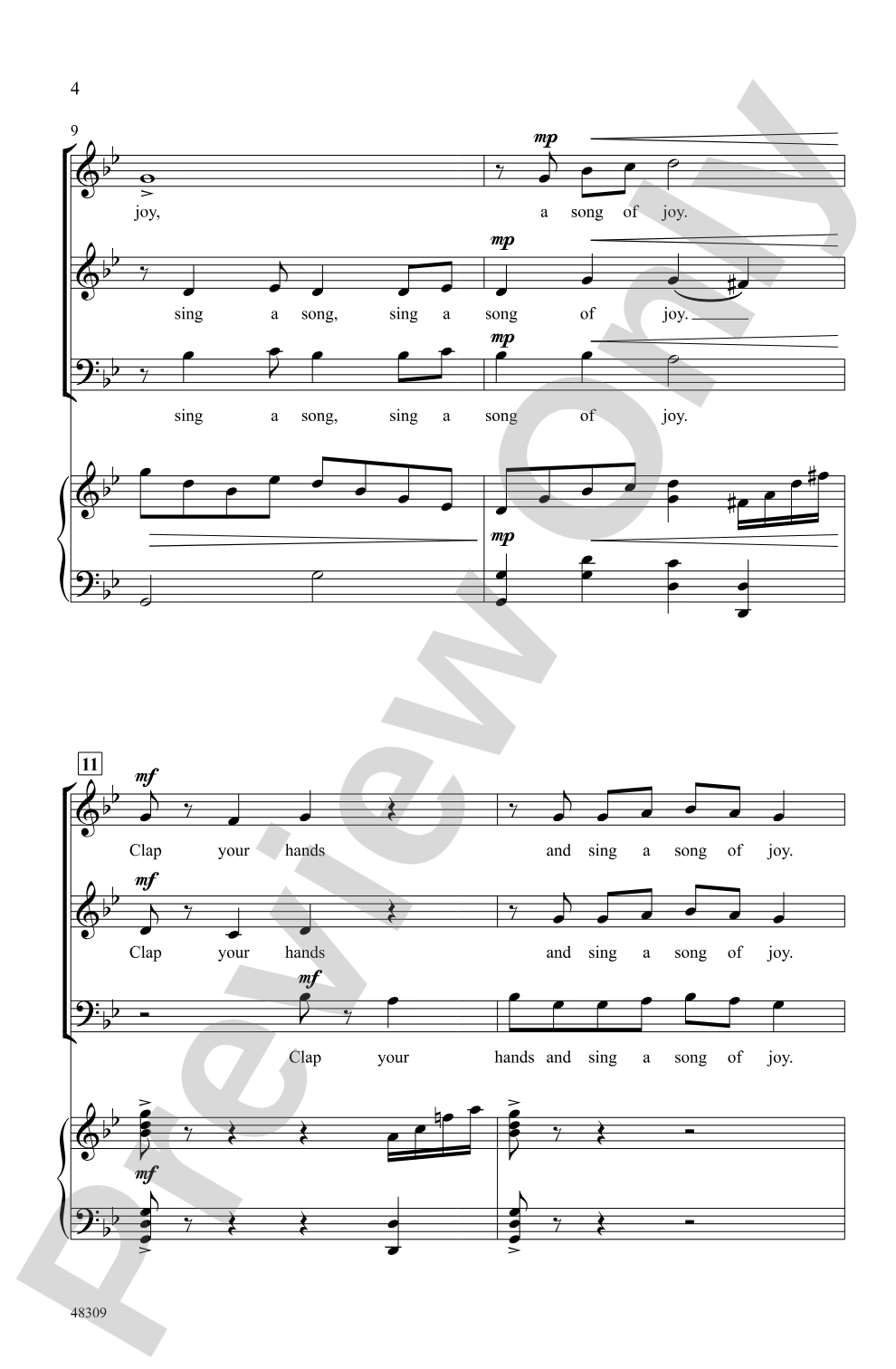
This thrilling concert/contest work boasts an array of musical moods and artful contrasts. A striking minor theme opens the piece, enhanced by percussive handclaps and punctuated by emphatic cadences from the piano. In the middle, a lyrical major-key melody surfaces along with beautifully sustained legato choral phrases. A joyful recapitulation ends this tour de force even stronger than it began.


Clap Your Hands!: 3-Part Mixed Choral Octavo isn't in MakeMusic Cloud just yet...but it could be. Let us know you'd like to see it, and you'll help shape what comes next. In the meantime, start a free trial and dive into thousands of interactive titles your students can play along with today.
Request This Title
Tell us you want it.
Start Your Free Trial
Explore everything that's ready to play right now.
Sample Audio
1
Audio File
--:--
0:00
0:00
Sample Video
No sample videos found.
Additional Details
Series:
Alfred Choral Designs
Publisher:
Alfred Music
Page Count:
16
SKU:
00-PO-0006307
More about this title
About the Composer: David Waggoner

David Waggoner combines his work as an elementary music educator in Woodhaven, Michigan with active composition across multiple ensembles and instruments. He holds degrees from the University of Michigan School of Music and Eastern Michigan University, where he earned a master's degree in music. Beyond the classroom, Waggoner serves as Director of Music at First United Methodist Church in Wyandotte, Michigan, where he continues to develop his craft through both teaching and creative work.
His compositions reflect the needs of school and church musicians, with pieces written specifically for choirs, handbells, and other instruments. This practical grounding in educational settings informs his approach to writing music that engages performers while maintaining artistic integrity.
Why we love this
Waggoner structures this piece around genuine musical contrasts rather than surface-level variety. The opening minor theme establishes dramatic tension through percussive handclaps and piano punctuation, then pivots to legato major-key writing that gives singers room to sustain and shape phrases. The architecture feels intentional, and the return to the opening material lands with earned impact because the middle section has established something substantively different.
What to expect
The piece opens with edgy minor-key momentum, punctuated by the physical presence of handclaps and a rhythmically active piano part. When the major-key melody emerges, the texture blooms into sustained warmth and legato lyricism. The final return sweeps back in with renewed energy, leaving audiences with the exhilaration of that stronger recapitulation.
Who it's for
This octavo works well for intermediate to advancing mixed choirs with some rehearsal time available. The three-part voicing keeps it accessible for developing singers while the musical sophistication and contrasting sections demand focused ensemble work.
How to get the most out of it
- Articulate the opening minor section cleanly. The handclaps and piano punctuation create a rhythmic grid that the voices need to lock into without dragging or rushing.
- Shape the legato melody section with long breath management and consistent vowel awareness across all three parts. This is where contrast becomes audible.
- Let the recapitulation breathe dynamically. Since it returns stronger than the opening, build gradually into it rather than starting at full volume.
How to use it
Program this as a concert opener or festival piece where you want to establish your choir's range of expression early. The dramatic arc and percussive elements work especially well on programs that include both classical and contemporary choral work, and the recorded accompaniment option makes it flexible for both adjudicated contests and concert hall settings.
Skills your students will build
- Contrasting articulation between rhythmic and legato passages
- Sustaining phrases with attention to vowel consistency across parts
- Ensemble precision with piano and percussive accompaniment
- Dynamic shaping within the recapitulation section
- Three-part SAB balance and blend