
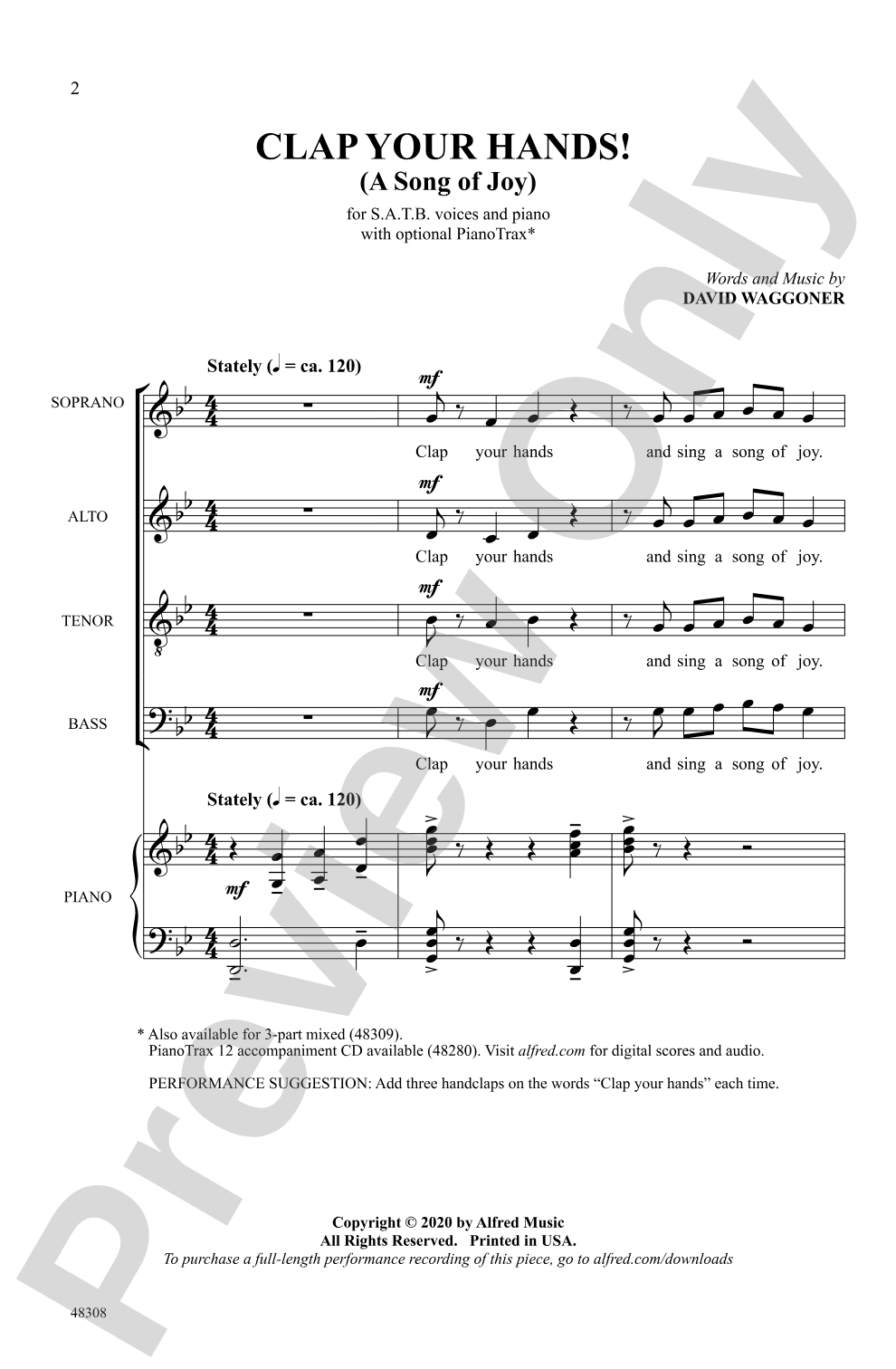

Clap Your Hands!: SATB Choral Octavo
(A Song of Joy)
Words and music by David Waggoner
Item: 00-PO-0006306
$2.20
Minimum order quantity: 20 copies
Pickup currently not available
Description
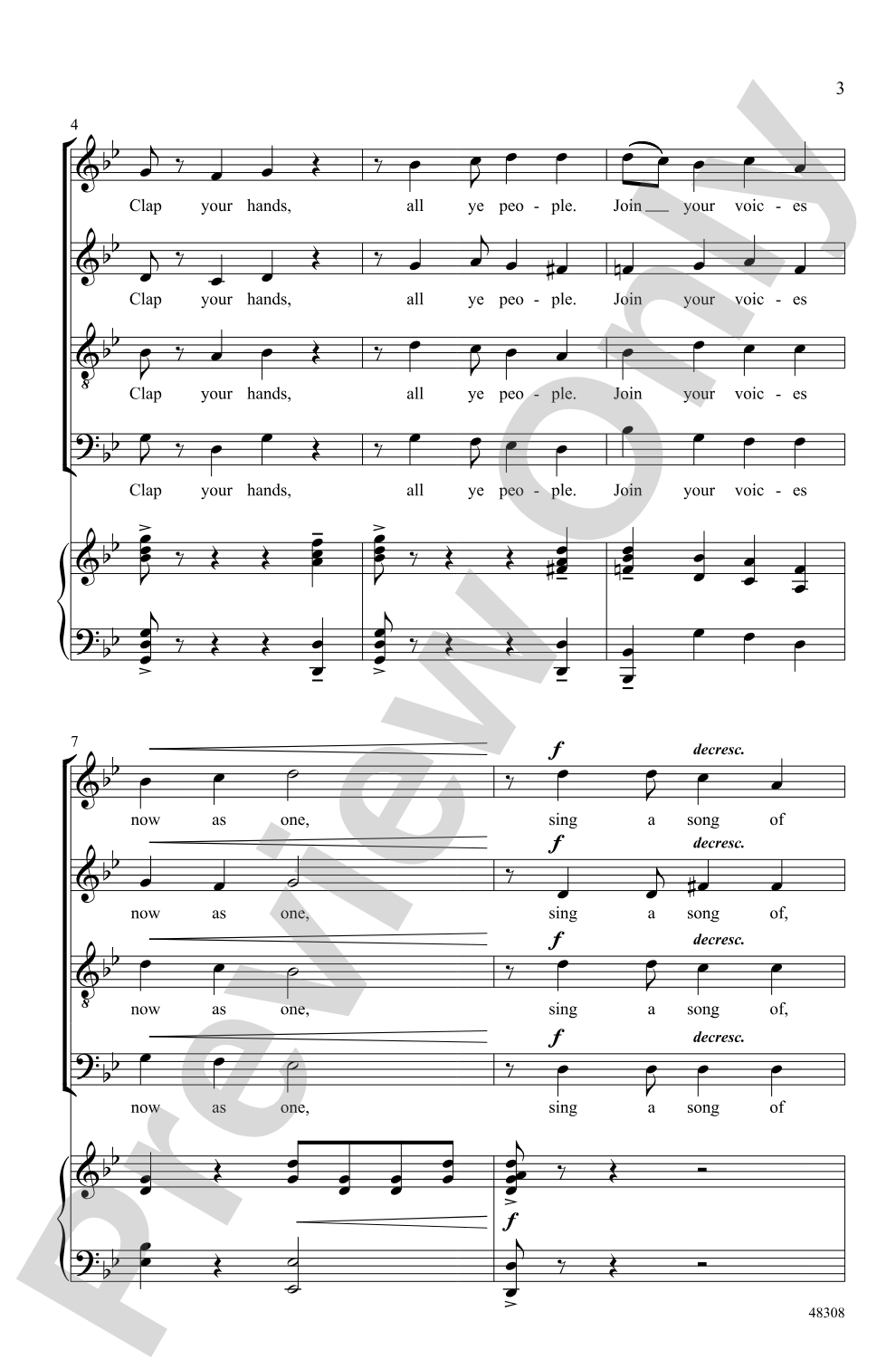
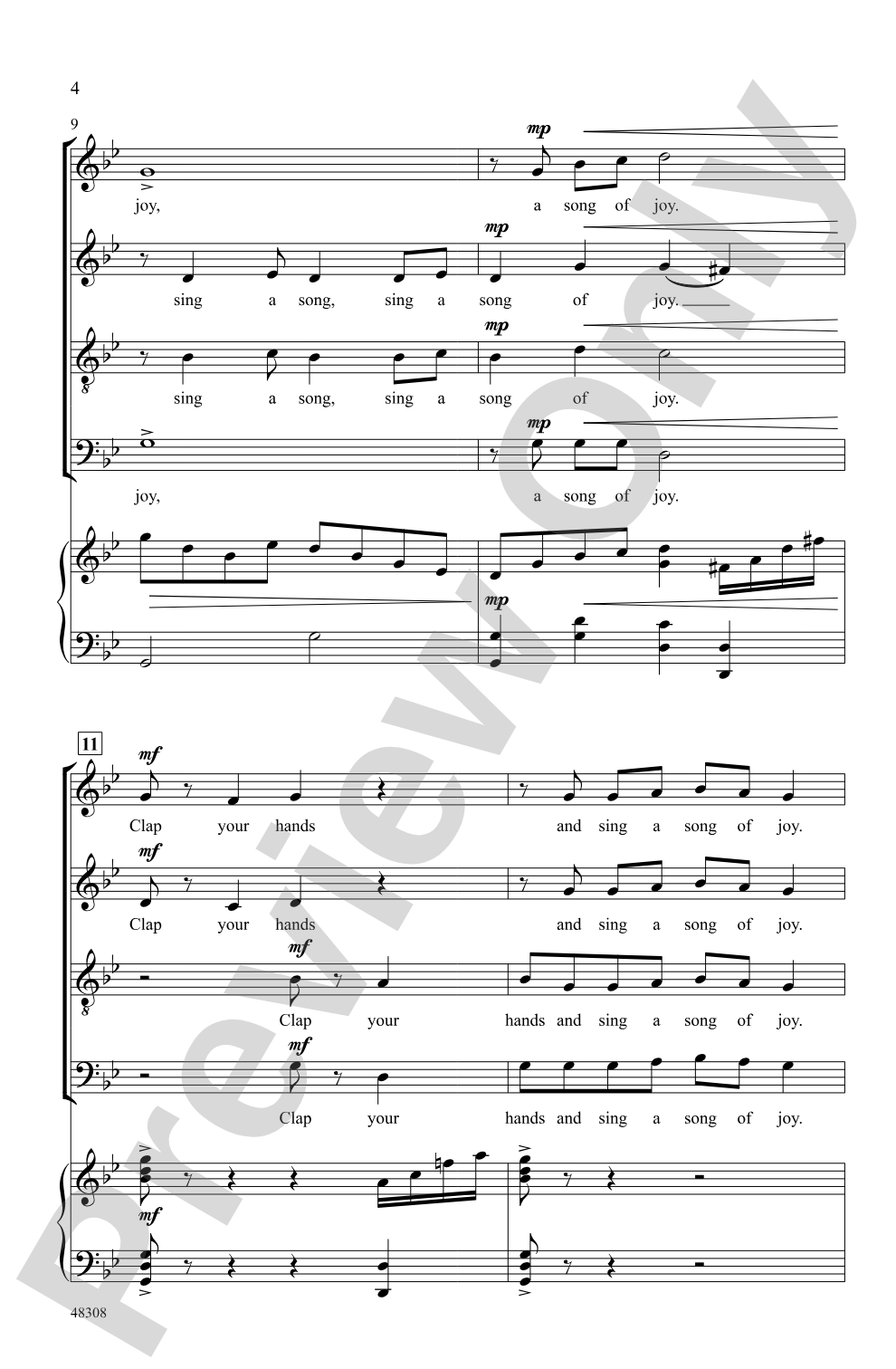
This thrilling concert/contest work boasts an array of musical moods and artful contrasts. A striking minor theme opens the piece, enhanced by percussive handclaps and punctuated by emphatic cadences from the piano. In the middle, a lyrical major-key melody surfaces along with beautifully sustained legato choral phrases. A joyful recapitulation ends this tour de force even stronger than it began.


Clap Your Hands!: SATB Choral Octavo isn't in MakeMusic Cloud just yet...but it could be. Let us know you'd like to see it, and you'll help shape what comes next. In the meantime, start a free trial and dive into thousands of interactive titles your students can play along with today.
Request This Title
Tell us you want it.
Start Your Free Trial
Explore everything that's ready to play right now.
Sample Audio
1
Audio File
--:--
0:00
0:00
Sample Video
1 / 2
Additional Details
Series:
Alfred Choral Designs
Publisher:
Alfred Music
Page Count:
16
SKU:
00-PO-0006306
More about this title
About the Composer: David Waggoner

David Waggoner holds degrees from the University of Michigan School of Music and Eastern Michigan University, where he earned a master's degree in music. He brings classroom experience as an elementary music educator in Woodhaven, Michigan, while also serving as Director of Music at the First United Methodist Church in Wyandotte. His compositional output spans choirs, handbells, and instrumental ensembles, grounded in both pedagogical and practical performance contexts.
Waggoner's work reflects a dual commitment to accessible, engaging music for young singers and sophisticated writing for experienced ensembles. His compositions balance technical craftsmanship with the needs of working directors and students in school and church settings.
Why we love this
This piece delivers real concert impact without sacrificing singability. The structure itself teaches contrast and dramatic arc: you get a gripping minor-key opening, a moment of genuine lyricism in the middle section, and a powerful recapitulation that justifies the entire arc. Directors appreciate writing that sounds polished and intentional rather than merely serviceable.
What to expect
The opening strikes like a sudden minor-key wake-up call, with handclaps creating physical energy and piano cadences that puncture the texture. Then the music softens into something genuinely lyrical, almost a reprieve, before building back toward a final statement that feels earned and celebratory.
Who it's for
SATB choirs preparing for concert or festival performance, particularly groups with solid musicianship who can manage stylistic shifts and articulate rhythmic precision. This works equally well for advanced high school choirs and collegiate ensembles seeking repertoire that balances accessibility with musical substance.
How to get the most out of it
- Secure the handclaps as a rhythmic anchor in the opening section. They're not decoration; they drive the percussive energy and need consistency across all four voice parts.
- Shape the legato phrases in the major-key middle section with genuine line and breath. This contrast requires singers to shift their vocal approach entirely from the angular opening material.
- Lean into the cadences at the end of phrases, especially the emphatic ones that follow the minor theme. These moments define the form and give the piece its architectural strength.
- If using the recorded accompaniment, rehearse with it from an early stage so singers internalize the piano's rhythmic punctuation and harmonic support.
How to use it
Program this as a centerpiece concert work or festival selection where you want to show range and musicianship. The contrasting moods make it an excellent anchor piece between lighter repertoire and heavier sacred or classical works, demonstrating your singers' technical control and interpretive maturity.
Skills your students will build
- Dynamic contrast and mood shifting (moving between minor and major tonality)
- Rhythmic precision in ensemble handclapping and punctuated cadences
- Legato phrasing and sustained tone quality in the lyrical middle section
- Harmonic awareness through the piece's tonal journey and cadential structure
- Concert performance presence and dramatic arc in a through-composed work