Circinus Cover Image

Circinus: String Orchestra Conductor Score & Parts

$44.00 USD
Sale price  $44.00 USD Regular price 
Skip to product information
Circinus Cover Image

Circinus: String Orchestra Conductor Score & Parts

By Shirl Jae Atwell

Grade: 3.5

Item: 00-24954

makemusic Cloud badge

Need it now?

Buy Digital Version
$44.00
Shipped

One moment…

Description
Circinus is a Latin word meaning circle. And in music, a circle of organized sound is a canon. The theme of this canon weaves itself through the voices; sometimes in unison, octaves, as a duet, a trio, or in imitation until it completes the circle and ends where it began.

Don't just read it, hear it, play along with it, and watch your students grow with it. In MakeMusic Cloud, Circinus: String Orchestra Conductor Score & Parts comes alive with professional accompaniment, adjustable tempo, and built-in practice tools that turn solo practice into real progress.

Sample Pages

Sample Audio
0:00
0:00
Sample Video
Additional Details
Series: Highland/Etling String Orchestra
Publisher: Alfred Music
Page Count: 72
UPC: 038081274607
SKU: 00-24954

More about this title

About the Composer: Shirl Jae Atwell
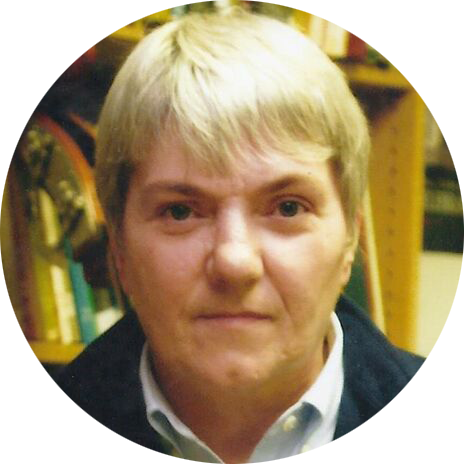
Shirl Jae Atwell

Shirl Jae Atwell studied composition at the University of Louisville (Master of Music Theory/Composition) and completed four years of advanced work in composition at the University of South Carolina. Her body of work spans opera, ballet, and orchestral music, earning her the 1996 National School Orchestra Association composition prize for the string orchestra piece Modus á Four and the 1997 Texas Orchestra Directors Association award for Drifen.

Atwell's compositional voice has been recognized internationally. Six of her scores were selected for the permanent collection of the Paris Bibliothèque Internationale de Musique Contemporaine. Her ballet Lucy, which premiered with the Louisville Ballet in 1999, received the 2000 Emmy Award for Arts & Culture from the Ohio Valley Chapter of the National Academy of Television Arts & Sciences. She has been commissioned to write for churches and educational ensembles, with her work regularly performed by student orchestras across the country.

Why we love this

Circinus offers Grade 3.5 string orchestras a musically substantial piece that teaches canonical writing without sacrificing accessibility. The architecture is brilliant: a single theme that transforms across different textural combinations (unison, octaves, duets, trios, imitation) keeps students engaged while developing their listening skills and part independence. This is the kind of piece that sounds polished at a festival or concert because the compositional structure itself supports strong ensemble playing.

What to expect

Circinus is elegant and purposeful, built on the mathematical beauty of a canon that spirals through different combinations of voices. There's a sense of discovery as the same theme emerges in new contexts, creating both familiarity and novelty. The piece unfolds with classical clarity while remaining accessible enough for young musicians to perform with confidence.

Who it's for

Grade 3.5 string orchestras that are ready to explore formal structure and textural variety. The piece works equally well for middle school orchestras with solid fundamentals and beginning high school groups building repertoire for contests or concerts.

How to get the most out of it

  • Balance the theme carefully as it passes between sections. When voices enter in imitation, the original voice carrying the melody should remain audible above the new voice entering below or above it.
  • Use changes in texture (unison to duet to trio) as natural rehearsal landmarks. Breaking the piece into these distinct sections helps students understand the form and gives them achievable targets within each rehearsal.
  • Attend to rhythmic precision in the imitative passages. The canonical structure depends on parts locking together; sloppy rhythm will expose the writing rather than showcase it.
  • Prepare the conclusion carefully so the piece truly returns to its starting point. Bring the same clarity and focus to the ending as you do to the opening, completing the circle.

How to use it

This is an excellent choice for festival competition or concert programming alongside other forms-based repertoire. It pairs well with pieces that explore different textural approaches, giving audiences insight into orchestral writing across a program. The piece is also ideal when you want to showcase students' ability to maintain independent lines while listening to the ensemble.

Skills your students will build

  • Following a single thematic idea through variations and textural transformations
  • Maintaining independent lines while supporting other voices in imitative texture
  • Distinguishing between unison, octaves, and true polyphonic writing
  • Coordinating ensemble entrances in canon and imitation
  • Understanding musical form and closure

You May Also Like
