
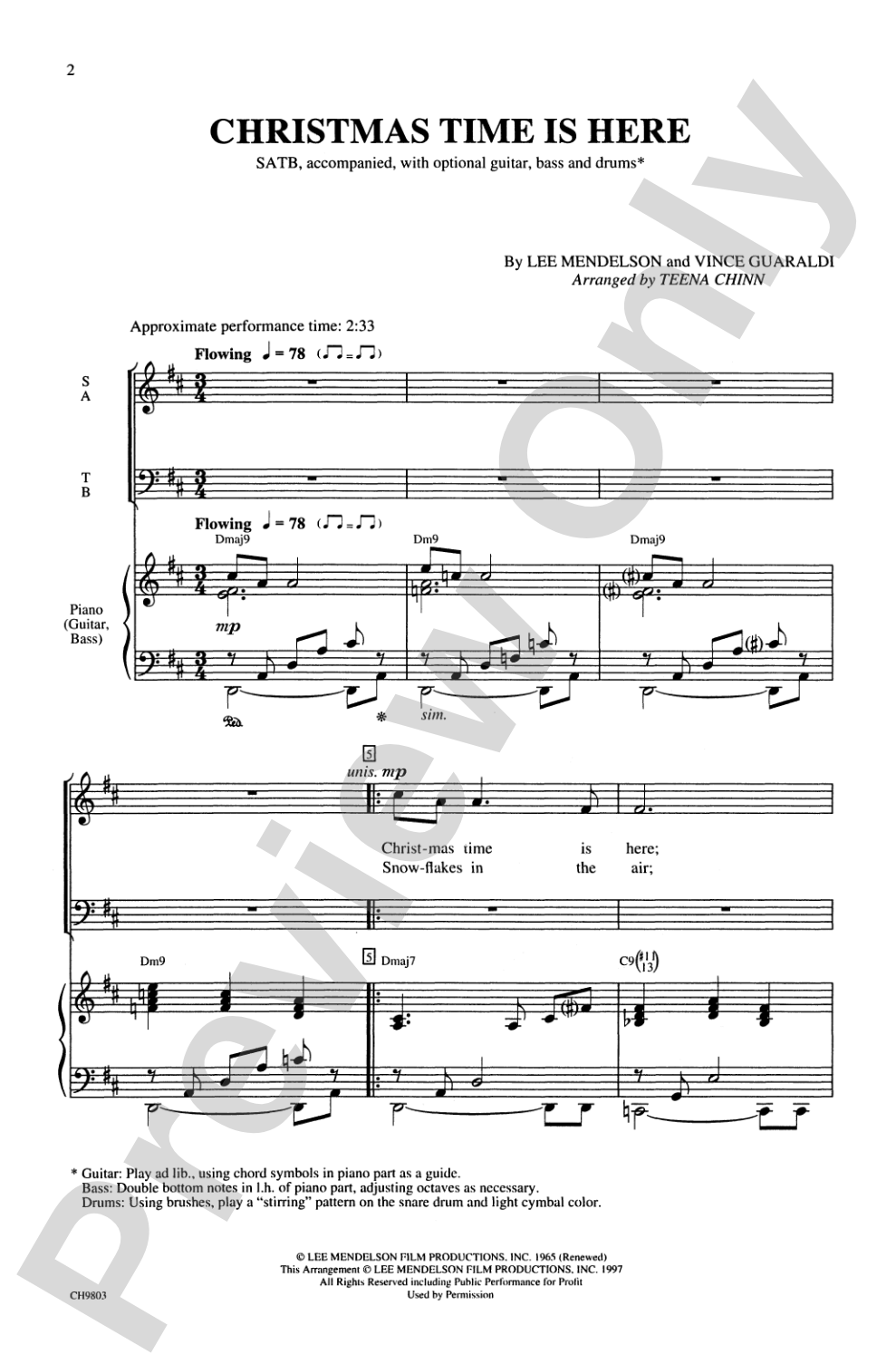
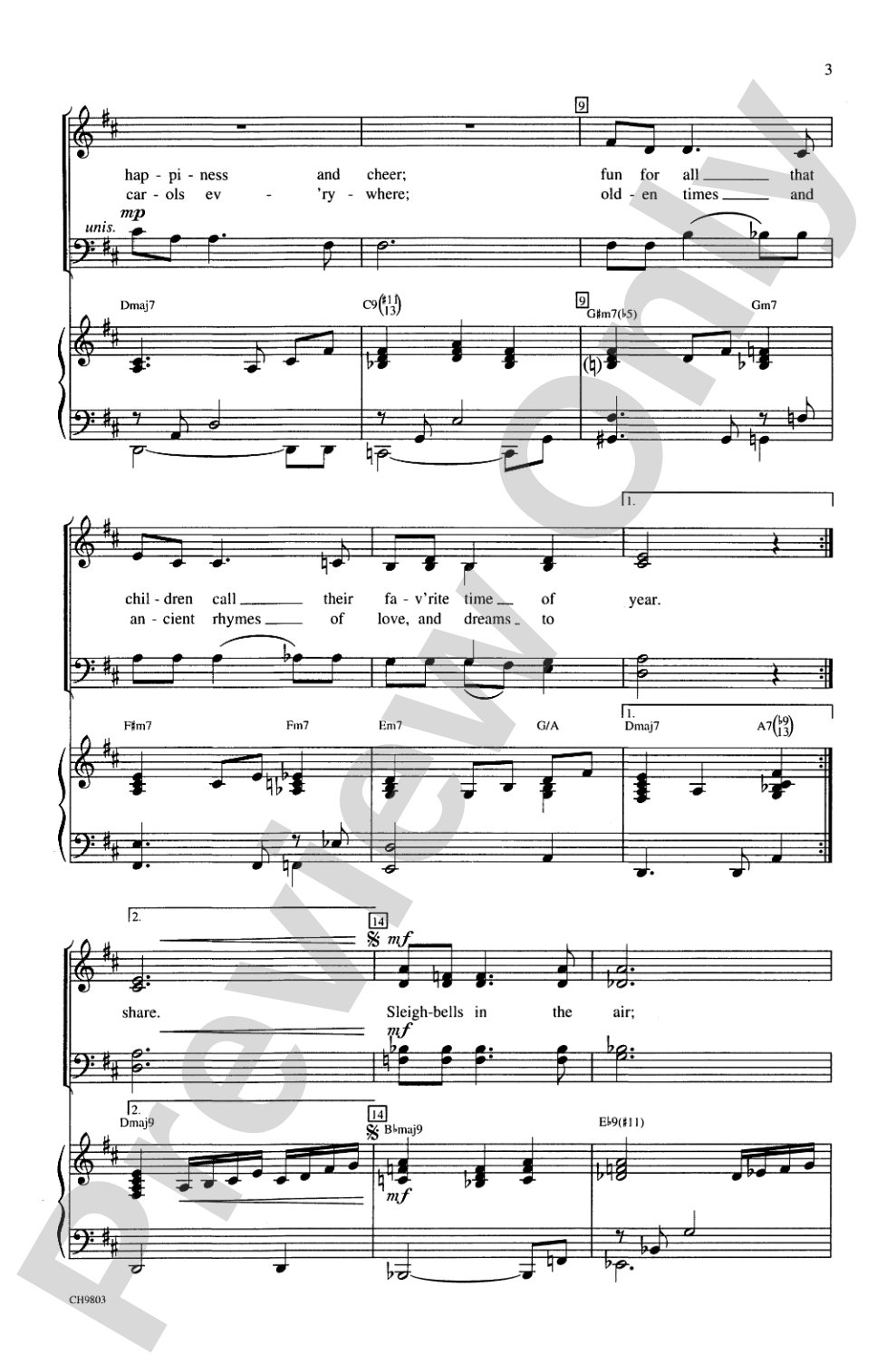

Christmas Time Is Here: SATB Choral Octavo
By Lee Mendelson and Vince Guaraldi / arr. Teena Chinn
Item: 00-PO-0006746
$2.25
Minimum order quantity: 20 copies
One moment…
Related Items
Christmas Time Is Here: 3-Part Mixed Choral Octavo |
$2.25
|
View | |
Christmas Time Is Here: 2-Part Choral Octavo |
$2.25
|
View | |
Christmas Time Is Here: SATB Choral Octavo |
$2.25
|
View | |
Christmas Time Is Here: 3-Part Mixed Choral Octavo |
$2.25
|
View | |
Christmas Time Is Here: 2-Part Choral Octavo |
$2.25
|
View | |
Christmas Time Is Here: Choral Octavo SoundTrax CD |
$27.99
|
View |
Description
This holiday perennial from 'A Charlie Brown Christmas' is sure to warm the hearts of everyone within earshot of your performance. A welcome, fun addition to any holiday concert.


Christmas Time Is Here: SATB Choral Octavo isn't in MakeMusic Cloud just yet...but it could be. Let us know you'd like to see it, and you'll help shape what comes next. In the meantime, start a free trial and dive into thousands of interactive titles your students can play along with today.
Request This Title
Tell us you want it.
Start Your Free Trial
Explore everything that's ready to play right now.
Sample Audio
No sample audio found.
Sample Video
No sample videos found.
Additional Details
Series:
Alfred Archive Edition: Alfred Pop Choral Series
Publisher:
Alfred Music
Page Count:
8
SKU:
00-PO-0006746
More about this title
About the Composer: Lee Mendelson
Lee Mendelson (1933-2005) was a producer, composer, and animator best known for creating the Peanuts television specials with Charles M. Schulz. His collaboration with jazz pianist Vince Guaraldi on 'A Charlie Brown Christmas' (1965) produced some of the most iconic holiday music in American culture. Mendelson's gift for combining gentle humor with emotional warmth made him a pioneer in television music for young audiences.
As a composer, Mendelson understood how to write for ensemble contexts without sacrificing charm or sophistication. His holiday scores remain standards in choral libraries because they honor both the source material and the singers performing them.
Why we love this
Teena Chinn's SATB arrangement captures the tender vulnerability of the original while giving four-part choirs genuine musicality to sink their teeth into. The voicing avoids both oversimplification and unnecessary complexity, making it achievable for high school and community choirs while sounding genuinely polished. This is one of the few holiday arrangements that works equally well as an opening number or a quiet moment of reflection in a concert.
What to expect
Gentle and nostalgic, with the kind of honest sentiment that reads as sincere rather than saccharine. The harmonic movement feels contemporary but grounded, creating a contemplative rather than celebratory mood. Singing this arrangement feels like stepping into a warm room on a winter evening.
Who it's for
This octavo works for high school and college choirs, community ensembles, and church choirs adding holiday depth to their seasons. Singers who love the Peanuts franchise will connect immediately with the material, while directors seeking a sophisticated yet accessible holiday choice will appreciate its musical integrity.
How to get the most out of it
- Balance the soprano melody against warm harmonic support from lower voices; resist the urge to let sopranos dominate, which will undercut the song's intimacy.
- Shape the phrase contours gently rather than hitting rhythmic patterns hard. This tune thrives on legit legato singing and air between phrases.
- If using the recorded accompaniment, allow a brief breath before entering on the second verse to reset the listeners' attention and build emotional momentum.
- Explore dynamic contrast between sections (e.g., first verse at mezzo-piano, second verse building to mezzo-forte) to sustain interest across the full arrangement.
How to use it
Open a holiday concert with this piece to set an intimate, reflective tone before moving into brighter seasonal fare. It also serves beautifully as a penultimate selection, offering quietness and emotional resonance before a rousing finale. The familiarity of the tune means audiences will lean in and listen carefully, making it an excellent anchor for a mixed program of holiday styles.
Skills your students will build
- Balancing four-part harmony while maintaining a single melodic focus
- Sustaining legato phrasing across longer musical lines
- Shaping dynamic arcs within moderate ranges to create musical interest
- Blending vowels and tone quality across voice parts