
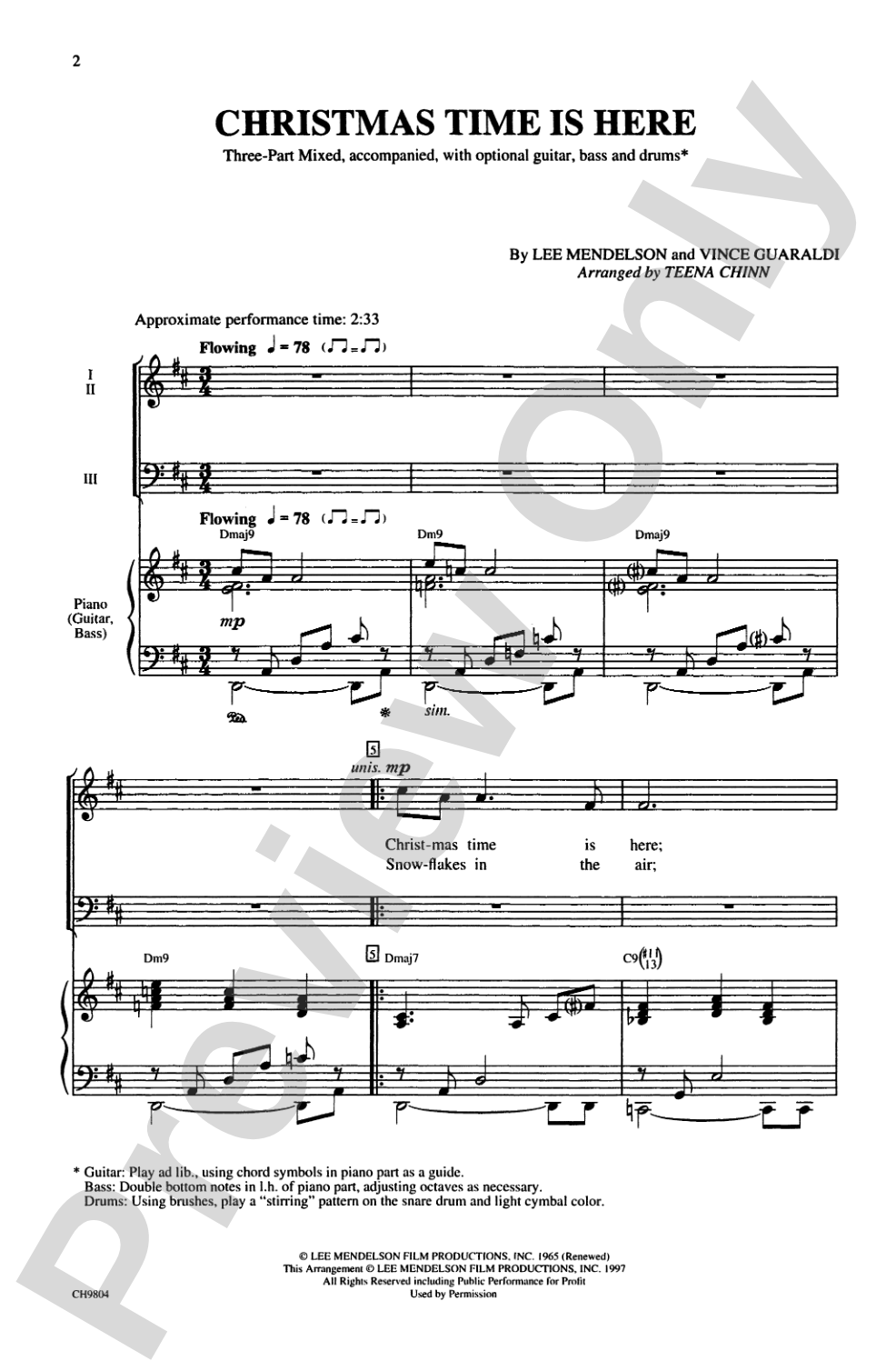
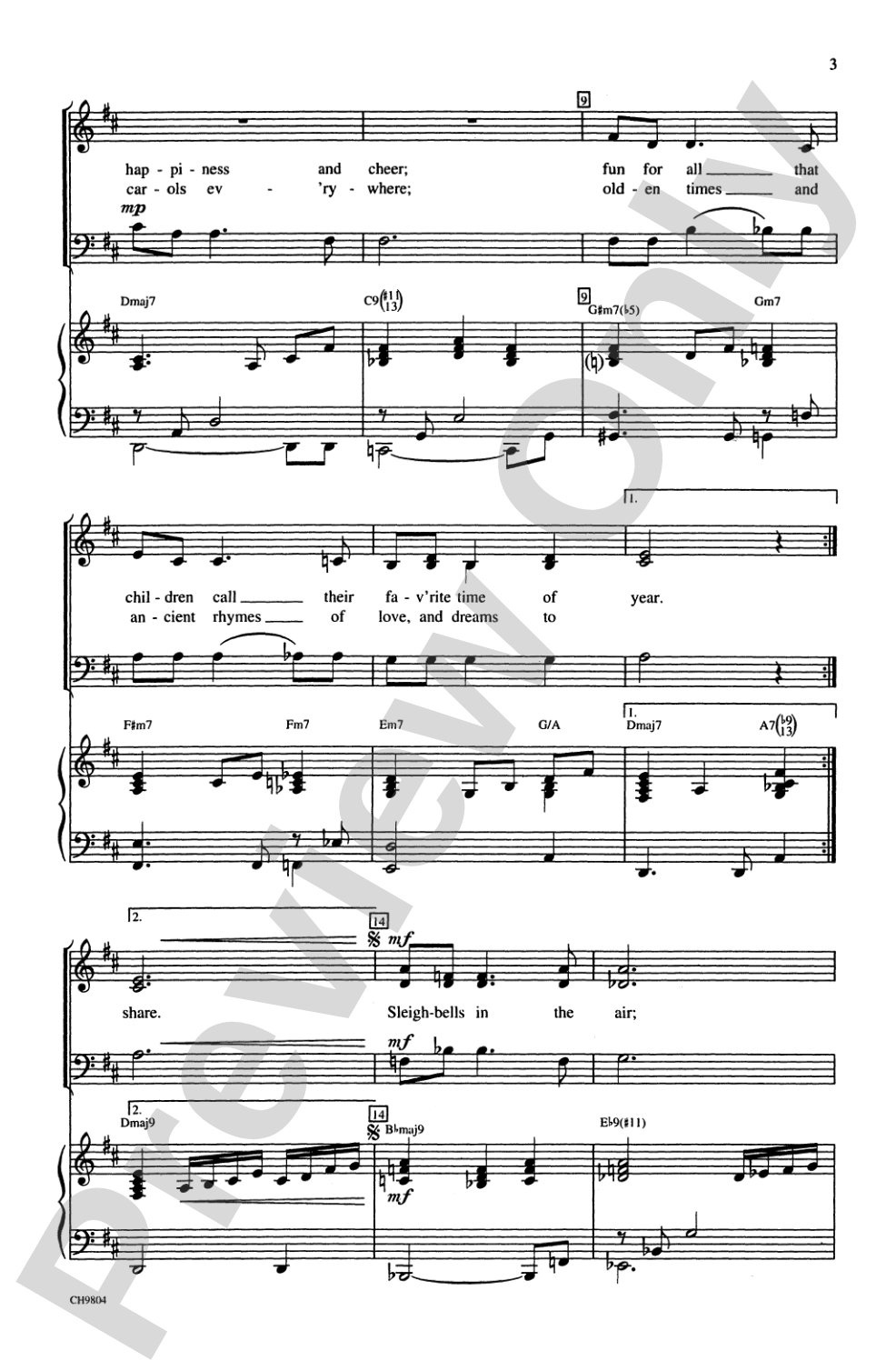

Christmas Time Is Here: 3-Part Mixed Choral Octavo
By Lee Mendelson and Vince Guaraldi / arr. Teena Chinn
Item: 00-PO-0004722
$2.25
Minimum order quantity: 20 copies
One moment…
Related Items
Christmas Time Is Here: SATB Choral Octavo |
$2.25
|
View | |
Christmas Time Is Here: 2-Part Choral Octavo |
$2.25
|
View | |
Christmas Time Is Here: SATB Choral Octavo |
$2.25
|
View | |
Christmas Time Is Here: 3-Part Mixed Choral Octavo |
$2.25
|
View | |
Christmas Time Is Here: 2-Part Choral Octavo |
$2.25
|
View | |
Christmas Time Is Here: Choral Octavo SoundTrax CD |
$27.99
|
View |
Description
This holiday perennial from 'A Charlie Brown Christmas' is sure to warm the hearts of everyone within earshot of your performance. A welcome, fun addition to any holiday concert.


Christmas Time Is Here: 3-Part Mixed Choral Octavo isn't in MakeMusic Cloud just yet...but it could be. Let us know you'd like to see it, and you'll help shape what comes next. In the meantime, start a free trial and dive into thousands of interactive titles your students can play along with today.
Request This Title
Tell us you want it.
Start Your Free Trial
Explore everything that's ready to play right now.
Sample Audio
No sample audio found.
Sample Video
No sample videos found.
Additional Details
Series:
Alfred Archive Edition: Alfred Pop Choral Series
Publisher:
Alfred Music
Page Count:
8
SKU:
00-PO-0004722
More about this title
About the Composer: Lee Mendelson
Lee Mendelson (1932-2005) was a pioneering television producer and composer who fundamentally shaped how America experienced holiday entertainment. His collaboration with animator Bill Melendez and pianist Vince Guaraldi on 'A Charlie Brown Christmas' in 1965 created a cultural touchstone that continues to define the season for generations of listeners and performers.
Mendelson's gift was recognizing the emotional power of simplicity and sincerity. The music he helped bring to life in that special avoids sentimentality, instead capturing genuine warmth and moments of quiet reflection. For music educators, his work demonstrates how accessible, unpretentious melodies can carry real depth and meaning.
Why we love this
This arrangement preserves the tender, almost wistful quality of the original while remaining genuinely singable for mixed choirs of varying experience levels. The 3-part voicing sits comfortably across ranges without sacrificing the song's inherent beauty, making it an ideal choice for concerts that need a moment of genuine emotion rather than spectacle.
What to expect
The piece carries a nostalgic, introspective warmth without ever becoming treacly. There's a simplicity to the harmonic language that feels almost like a lullaby, inviting singers and listeners alike into a quiet moment of reflection. The melody itself has a gentle, conversational quality that makes the text feel both personal and universally understood.
Who it's for
This octavo suits mixed choirs ranging from developing high school ensembles to adult community choirs seeking repertoire that audiences will recognize and cherish. Directors programming holiday concerts will find it especially valuable because it requires minimal rehearsal time while delivering genuine musical and emotional payoff.
How to get the most out of it
- Keep the tempo spacious and unhurried. This song breathes naturally at a moderate pace, and rushing it robs the lyric of its reflective quality.
- Balance the parts so the melody never disappears, but allow the inner voices to sing expressively rather than acting as pure accompaniment.
- Shape phrases according to the text; the sentiment of 'Christmas time is here' deserves a gentle, warm approach from the opening note.
- Use the recorded accompaniment as a rehearsal tool to secure intonation and blend, particularly in passages where voices move independently.
How to use it
Position this as a reflective interlude in your holiday concert, perhaps following a more energetic secular or sacred selection. Its brevity and gentle character make it ideal for opening a second half or creating a peaceful transition between contrasting pieces. Audiences typically respond with genuine warmth to this number, so it works beautifully as a bridge between formal concert segments and more celebratory material.
Skills your students will build
- Balancing melodic and harmonic roles within a mixed ensemble
- Sustaining a legato line with expressive shape across a complete phrase
- Maintaining steady intonation in sustained chords
- Interpreting text through dynamic and timbral nuance rather than volume changes