

Christmas Is Coming: SAB Choral Octavo
Traditional English Round / arr., with new words and music, by Andy Beck
Item: 00-PO-0005735
$2.20
Minimum order quantity: 20 copies
Pickup currently not available
Related Items
Christmas Is Coming: SoundTrax Digital Audio Download |
$27.99
|
View | |
Christmas Is Coming: SATB Choral Octavo |
$2.20
|
View | |
Christmas Is Coming: TBB Choral Octavo |
$2.20
|
View | |
Christmas Is Coming: 2-Part / SSA Choral Octavo |
$2.20
|
View | |
Christmas Is Coming: SATB Choral Octavo |
$2.20
|
View | |
Christmas Is Coming: SAB Choral Octavo |
$2.20
|
View | |
Christmas Is Coming: TBB Choral Octavo |
$2.20
|
View | |
Christmas Is Coming: 2-Part / SSA Choral Octavo |
$2.20
|
View | |
Christmas Is Coming: Choral Octavo SoundTrax CD |
$27.99
|
View |
Description
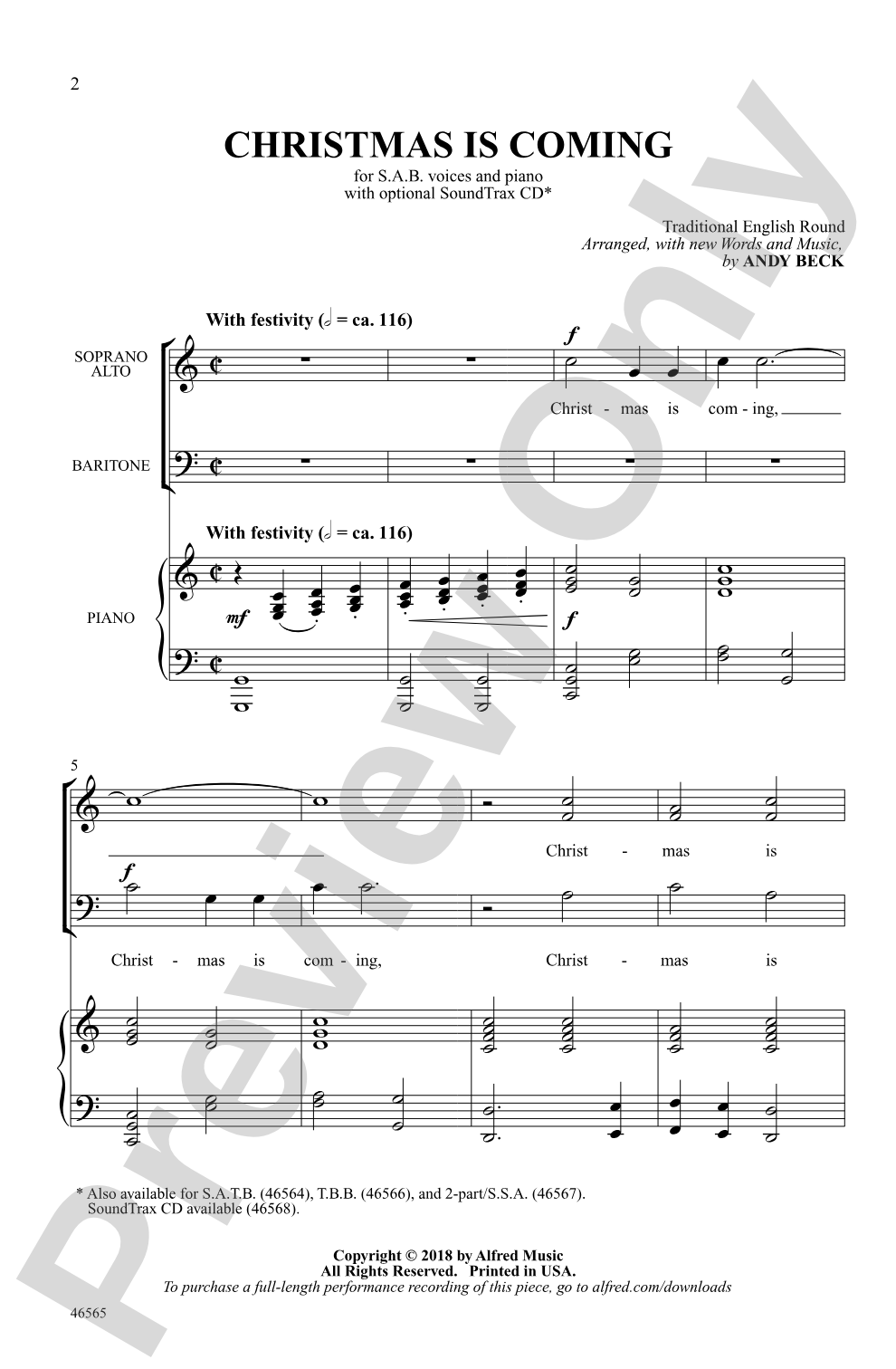
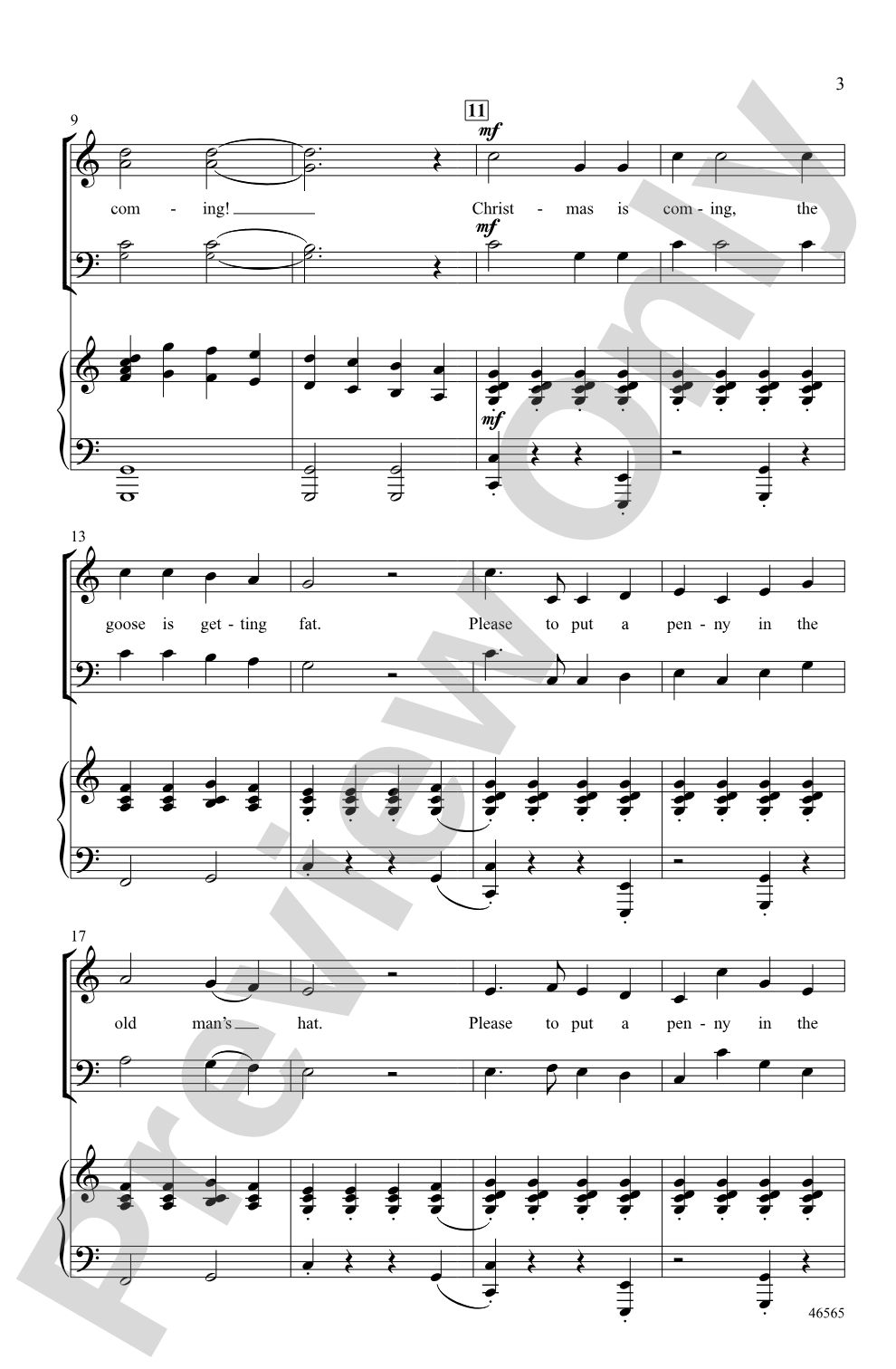
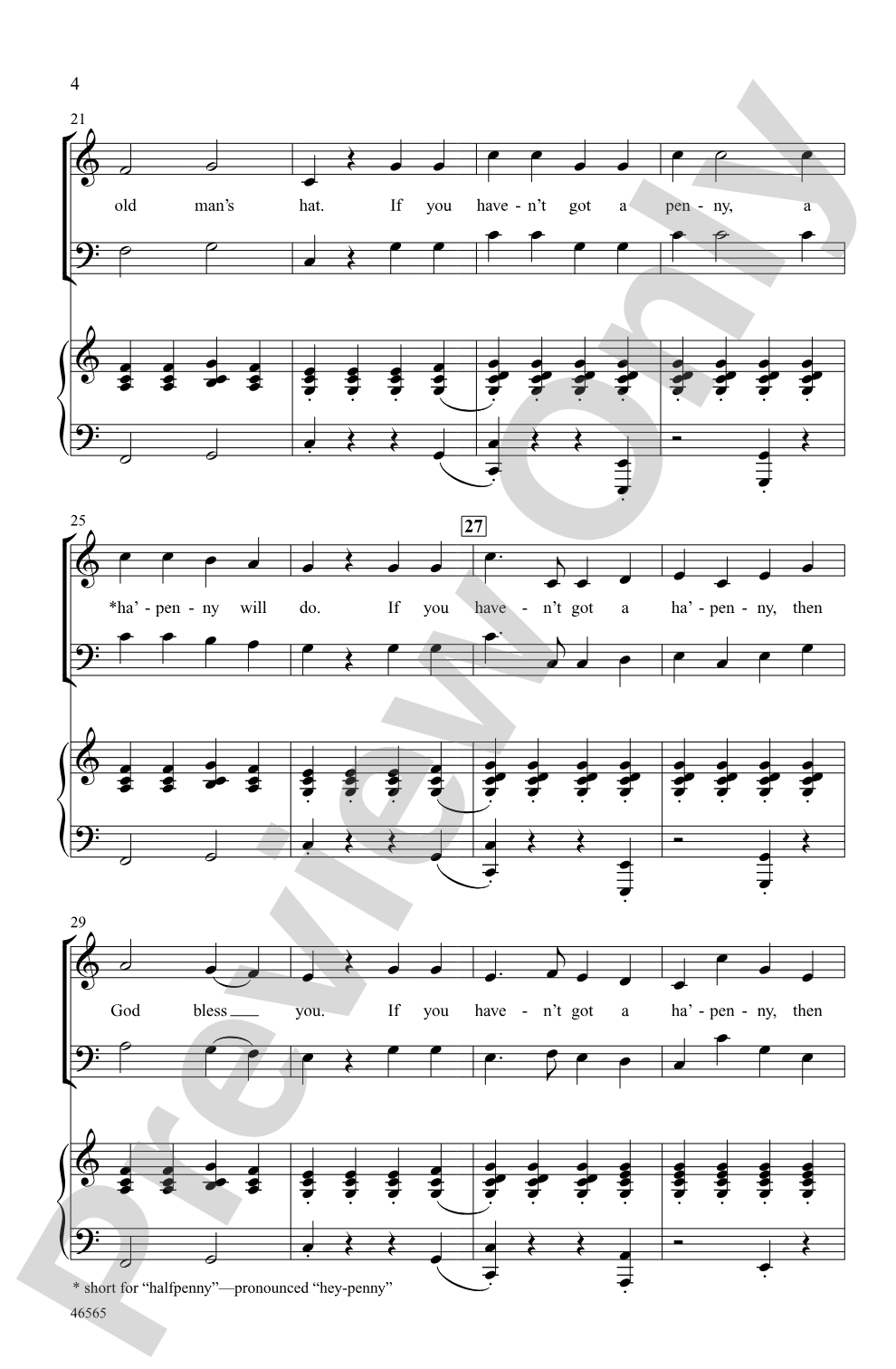
A festive setting of the English round that will come together quickly at that busy time of year! A rousing antiphonal treatment (a fanfare) leads into the traditional tune, followed by a newly composed bridge. Later, the unison melody becomes a 2-part, and eventually a 3-part round. A wonderful opener for holiday performances!


Christmas Is Coming: SAB Choral Octavo isn't in MakeMusic Cloud just yet...but it could be. Let us know you'd like to see it, and you'll help shape what comes next. In the meantime, start a free trial and dive into thousands of interactive titles your students can play along with today.
Request This Title
Tell us you want it.
Start Your Free Trial
Explore everything that's ready to play right now.
Sample Audio
1
Audio File
--:--
0:00
0:00
Sample Video
No sample videos found.
Additional Details
Series:
Alfred Choral Designs
Publisher:
Alfred Music
Page Count:
16
SKU:
00-PO-0005735
More about this title
About the Arranger: Andy Beck

Andy Beck directs choral publications at Alfred Music and has established himself as one of the most performed choral arrangers in education today. With more than 450 works in print spanning traditional arrangements, original compositions, and vocal pedagogical resources, his music reaches singers across every age level and skill range. He holds degrees from Ithaca College and Northwest Missouri State University and remains active as a guest conductor, clinician, and adjudicator throughout the United States.
Beyond his work at Alfred, Beck is a commissioned composer for honor choirs and all-state ensembles, particularly throughout the Southeast. He performs as a tenor vocalist and has contributed to Alfred's studio recordings since 1992. His commitment to music literacy and choral artistry shapes both the pieces he creates and the publications he develops for the company's catalog.
Why we love this
This arrangement understands exactly what conductors need in December: a piece that sounds polished and substantial while actually coming together in rehearsal without weeks of preparation. Beck's layering of the familiar tune from a straightforward unison opening through a two-part section and finally into a three-part round builds genuine musical interest while requiring only modest rehearsal time from singers who are already stretched thin.
What to expect
Bright, energetic, and genuinely celebratory without feeling overstuffed or precious. The familiar round melody carries inherent warmth, and Beck's antiphonal opening gives the piece architectural shape that lifts it beyond a simple sing-through arrangement.
Who it's for
This octavo works for any mixed or mixed-equivalent choir with at least basic reading skills and some experience with part-singing. It suits intermediate and advanced choirs equally well, scaling from a straightforward performance to something truly polished depending on rehearsal time available.
How to get the most out of it
- Shape the opening fanfare with clear dynamic contrast to establish the festive energy; this passage sets the tone for the entire performance and should feel deliberate rather than rushed.
- Bring out the transition into the traditional melody by pulling back slightly after the fanfare, allowing singers to connect with the familiar tune before the round begins.
- Balance the round sections carefully so each voice part remains audible; SAB voicing can muddy quickly if sopranos and altos don't sing with independent clarity.
- Use the recorded accompaniment to lock the harmonic foundation, especially during the round sections where singers need rhythmic security.
How to use it
Position this as a concert opener to set an immediate festive tone, or use it mid-program as a palate-cleanser between longer works. The piece's accessibility and audience familiarity make it effective either as a standalone moment or paired with other holiday selections of varying styles.
Skills your students will build
- Part independence within round structures
- Maintaining pulse while singing simultaneously with other voice parts
- Dynamic control and phrase shaping in a traditional melody
- Transitions between unison, two-part, and three-part textures
- Antiphonal (call-and-response) singing technique