

Christmas Is Coming: SATB Choral Octavo
Traditional English Round / arr., with new words and music, by Andy Beck
Item: 00-PO-0005734
$2.20
Minimum order quantity: 20 copies
Pickup currently not available
Related Items
Christmas Is Coming: SoundTrax Digital Audio Download |
$27.99
|
View | |
Christmas Is Coming: SAB Choral Octavo |
$2.20
|
View | |
Christmas Is Coming: TBB Choral Octavo |
$2.20
|
View | |
Christmas Is Coming: 2-Part / SSA Choral Octavo |
$2.20
|
View | |
Christmas Is Coming: SATB Choral Octavo |
$2.20
|
View | |
Christmas Is Coming: SAB Choral Octavo |
$2.20
|
View | |
Christmas Is Coming: TBB Choral Octavo |
$2.20
|
View | |
Christmas Is Coming: 2-Part / SSA Choral Octavo |
$2.20
|
View | |
Christmas Is Coming: Choral Octavo SoundTrax CD |
$27.99
|
View |
Description
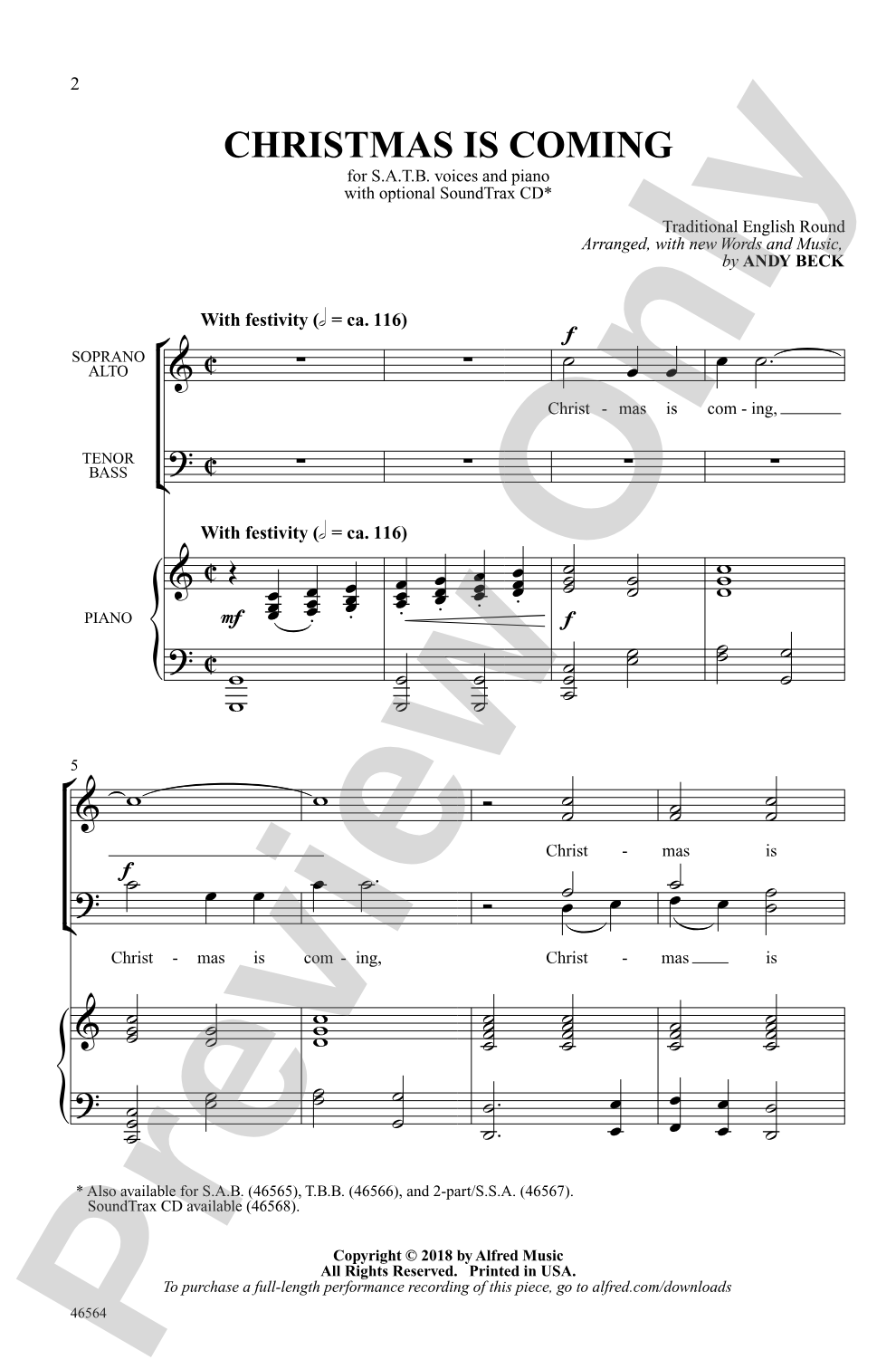
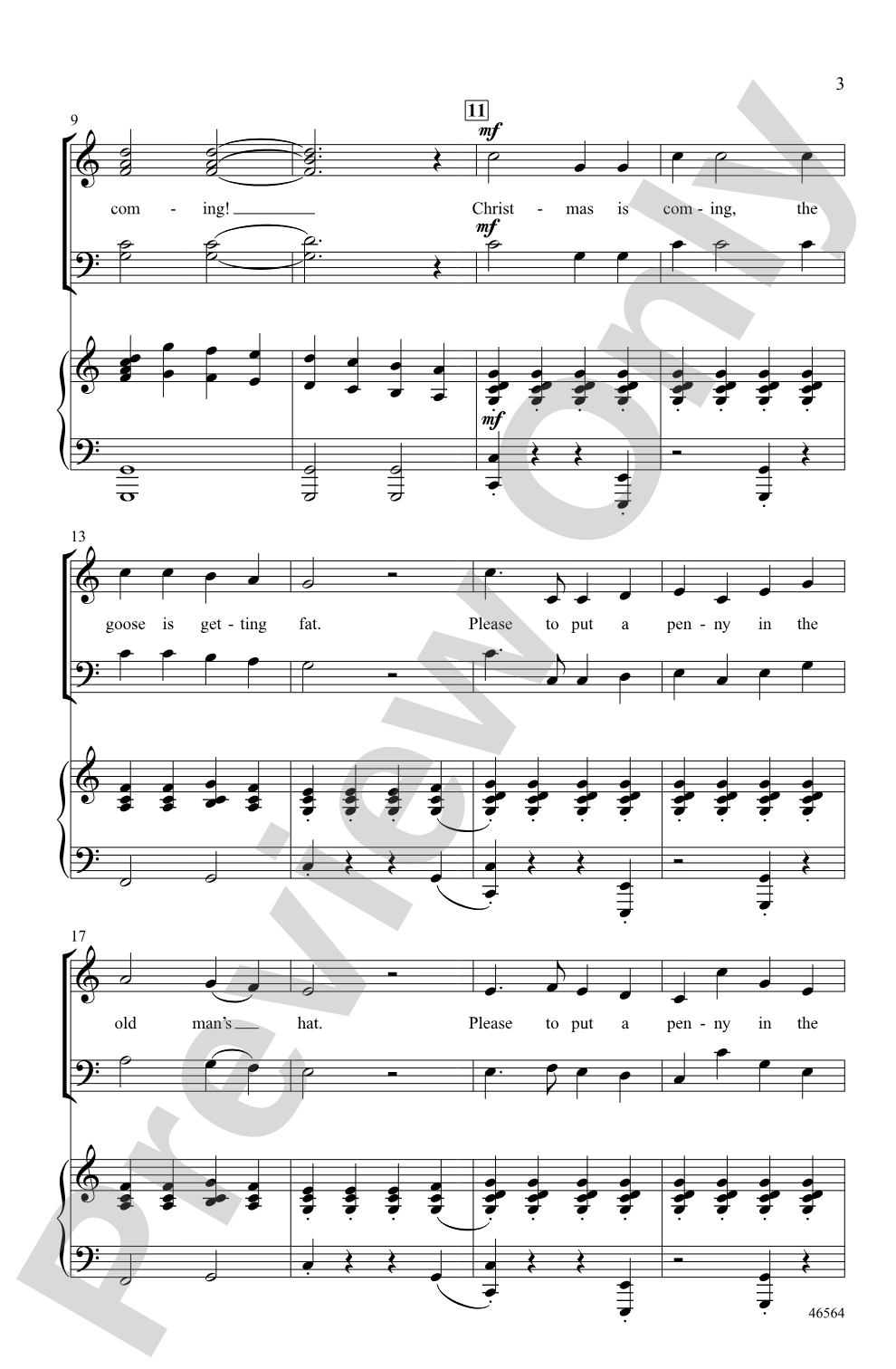
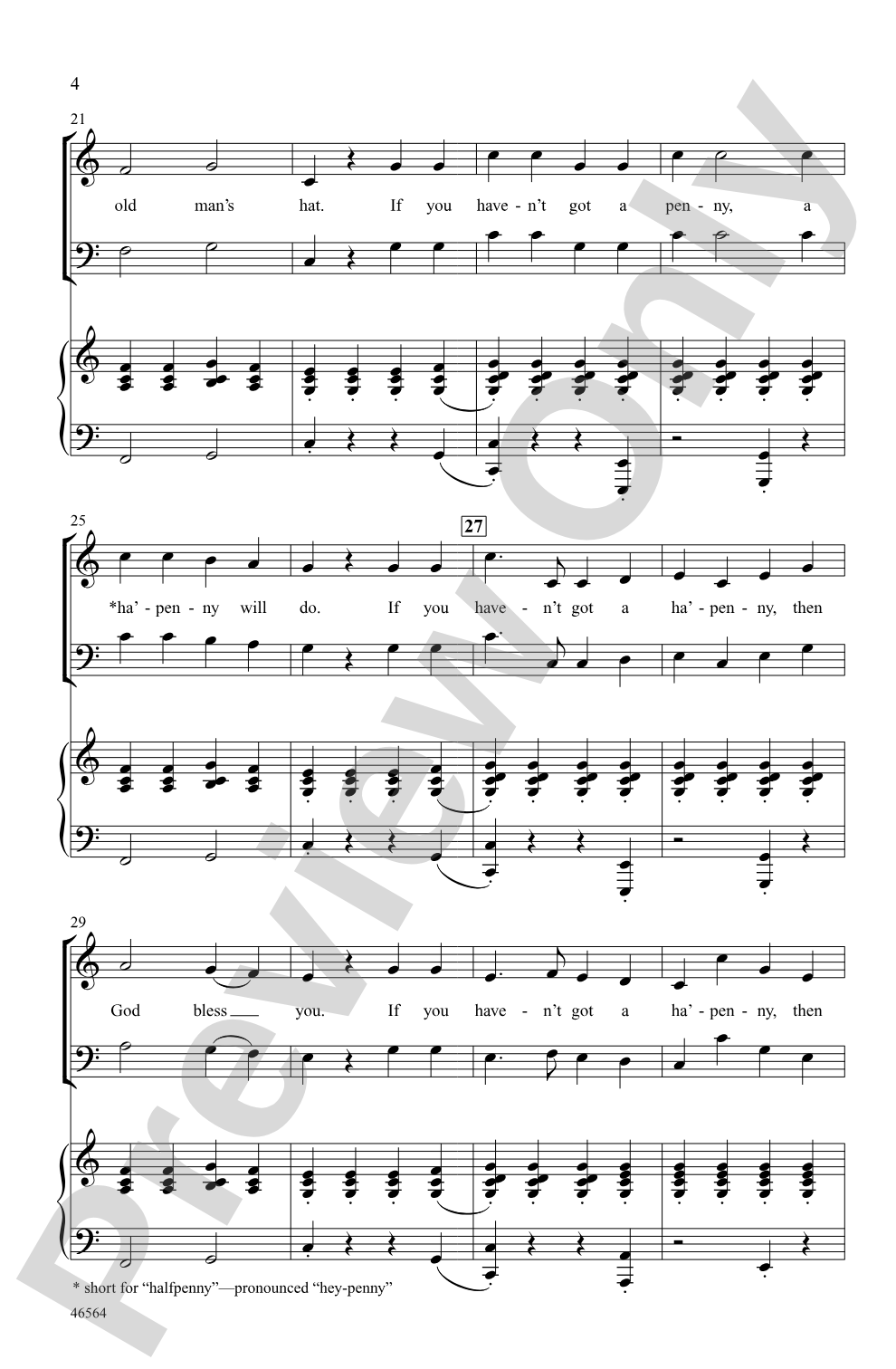
A festive setting of the English round that will come together quickly at that busy time of year! A rousing antiphonal treatment (a fanfare) leads into the traditional tune, followed by a newly composed bridge. Later, the unison melody becomes a 2-part, and eventually a 3-part round. A wonderful opener for holiday performances!


Christmas Is Coming: SATB Choral Octavo isn't in MakeMusic Cloud just yet...but it could be. Let us know you'd like to see it, and you'll help shape what comes next. In the meantime, start a free trial and dive into thousands of interactive titles your students can play along with today.
Request This Title
Tell us you want it.
Start Your Free Trial
Explore everything that's ready to play right now.
Sample Audio
1
Audio File
--:--
0:00
0:00
Sample Video
Additional Details
Series:
Alfred Choral Designs
Publisher:
Alfred Music
Page Count:
16
SKU:
00-PO-0005734
More about this title
About the Arranger: Andy Beck

Andy Beck directs choral publications at Alfred Music and has built one of the most performed choral catalogs in American music education. Over 450 of his compositions and arrangements are in print, and his influence extends through internationally recognized resources like Sing at First Sight and Vocalize! 45 Vocal Warm-Ups That Teach Technique, both widely adopted by directors seeking pedagogically sound, musically engaging material.
Beyond the publishing office, Beck maintains an active presence as a commissioned composer, guest conductor, and clinician for honor choirs and all-state groups. A tenor vocalist and musical theatre director, he has performed with the North Carolina Master Chorale Chamber Choir and served as an Alfred Music studio singer since 1992. His education at Ithaca College and Northwest Missouri State University anchors a career defined by deep commitment to music literacy and choral artistry.
Why we love this
Beck's treatment transforms a familiar round into a piece that builds musical momentum and interest without requiring pages of score or intensive rehearsal time. The antiphonal fanfare opening immediately signals celebration, and the progression from unison through 2-part and 3-part writing lets singers experience rounds as an achievable, enjoyable exploration rather than an advanced technique. It's a smart opener that energizes an audience and your singers alike.
What to expect
Bright, energetic, and warmly celebratory. The opening fanfare crackles with festive energy, and the familiar tune grounds singers and audiences in comfort and tradition. As the piece evolves through its round sections, there's a sense of musical discovery and building joy.
Who it's for
SATB choirs seeking uplifting, accessible holiday repertoire that comes together quickly without sacrificing musical interest. Ensembles of mixed vocal maturity benefit from the unison and part-writing progression, which allows less experienced singers to participate fully while offering harmonic depth for stronger sections.
How to get the most out of it
- Balance the antiphonal fanfare so both sections feel equally authoritative. This opening gesture sets the tone for the whole piece, so rehearse the give-and-take between groups until it feels snappy and alive.
- When the round begins in unison, lock the ensemble into a steady tempo before introducing parts. A confident, unison entrance gives singers the security they need before splitting.
- Let the bridge section breathe as a contrast. Beck's newly composed passage offers a moment to showcase harmonic color before returning to the round, so shape the dynamics and phrasing intentionally.
- Rehearse the 3-part round section in layers: start with two parts, then add the third. This builds confidence and prevents the texture from becoming muddy.
How to use it
Perfect as a concert opener or to anchor a holiday program's first set. The piece signals seasonal warmth and ensemble capability without stealing focus from longer or more elaborate works. Its 16 pages and straightforward demands make it ideal for programming alongside more complex seasonal literature or as a standalone opener that wakes up an audience.
Skills your students will build
- Maintaining rhythmic independence while singing in canon
- Balancing unison against harmonic textures
- Responding to antiphonal conducting cues
- Transitioning smoothly between different song sections
- Blending across part changes (unison to 2-part to 3-part writing)