
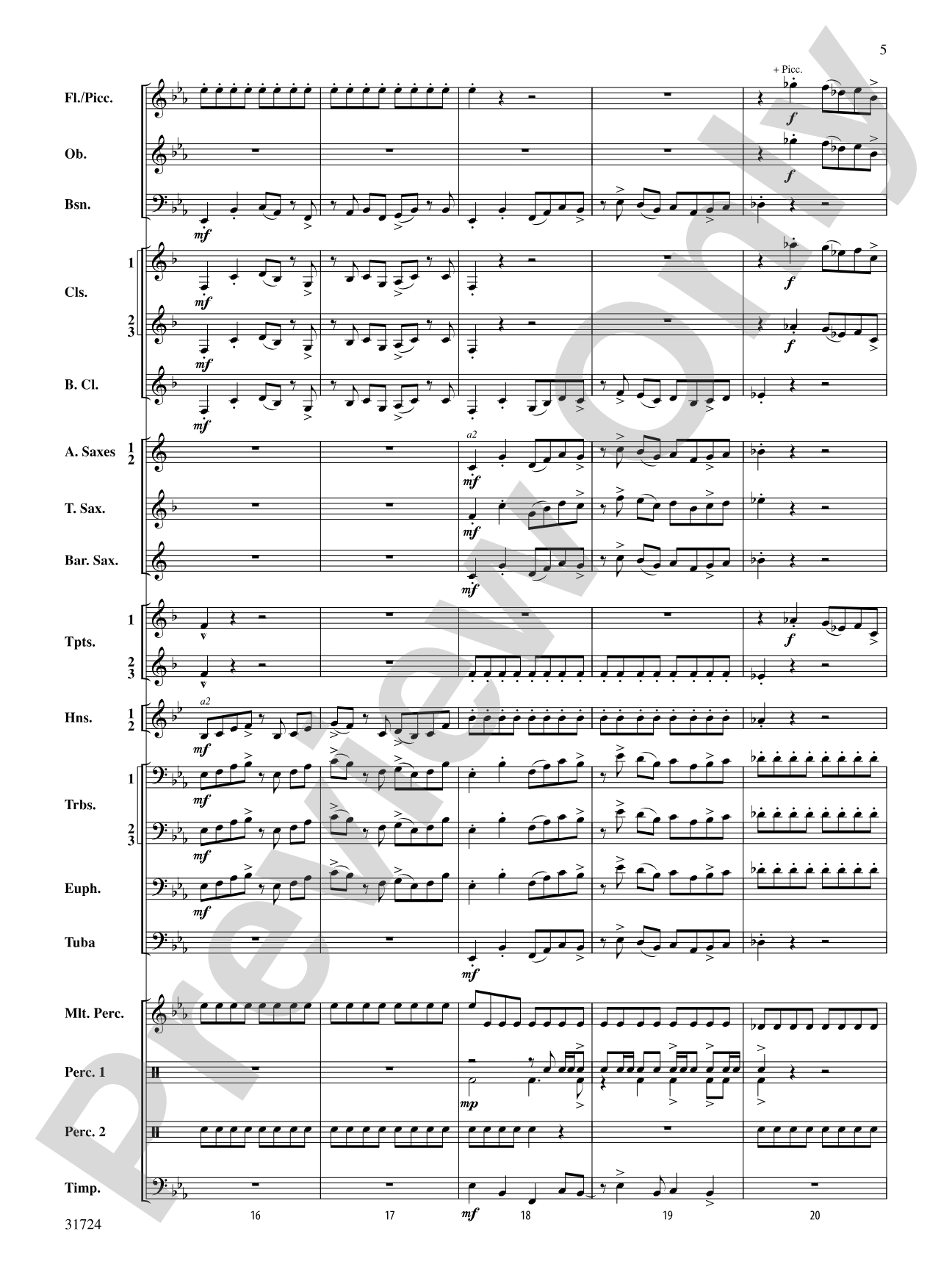
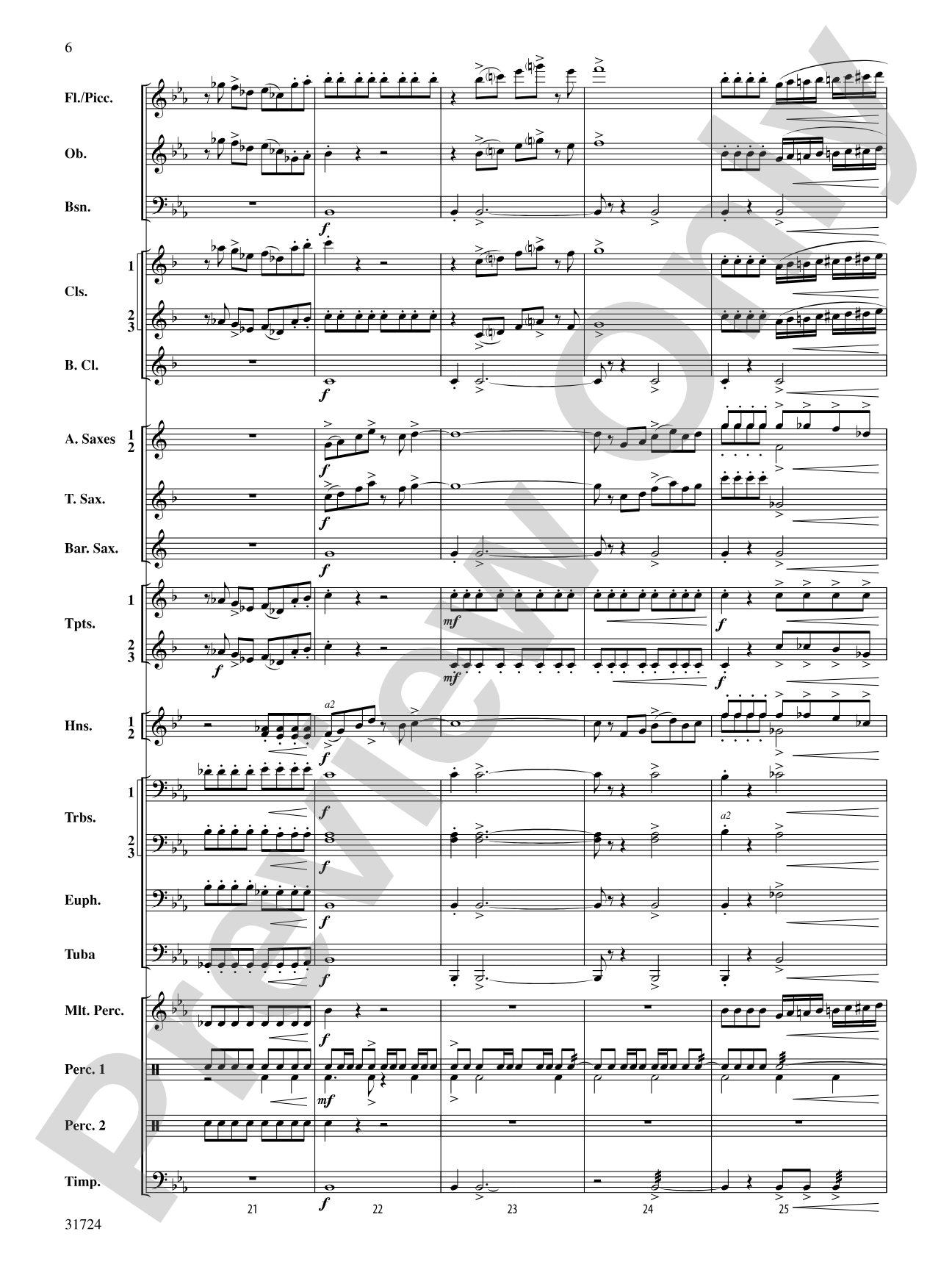
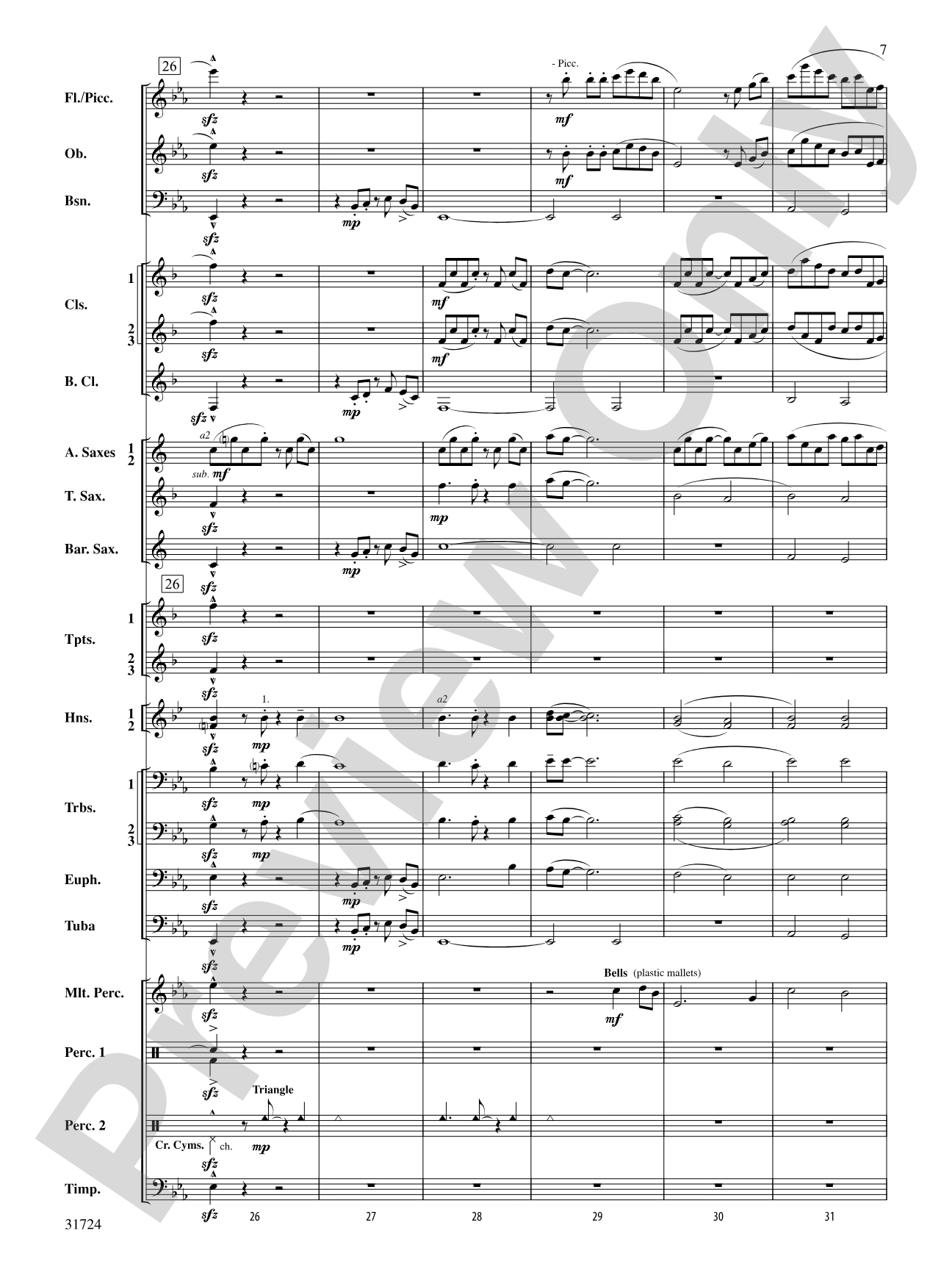
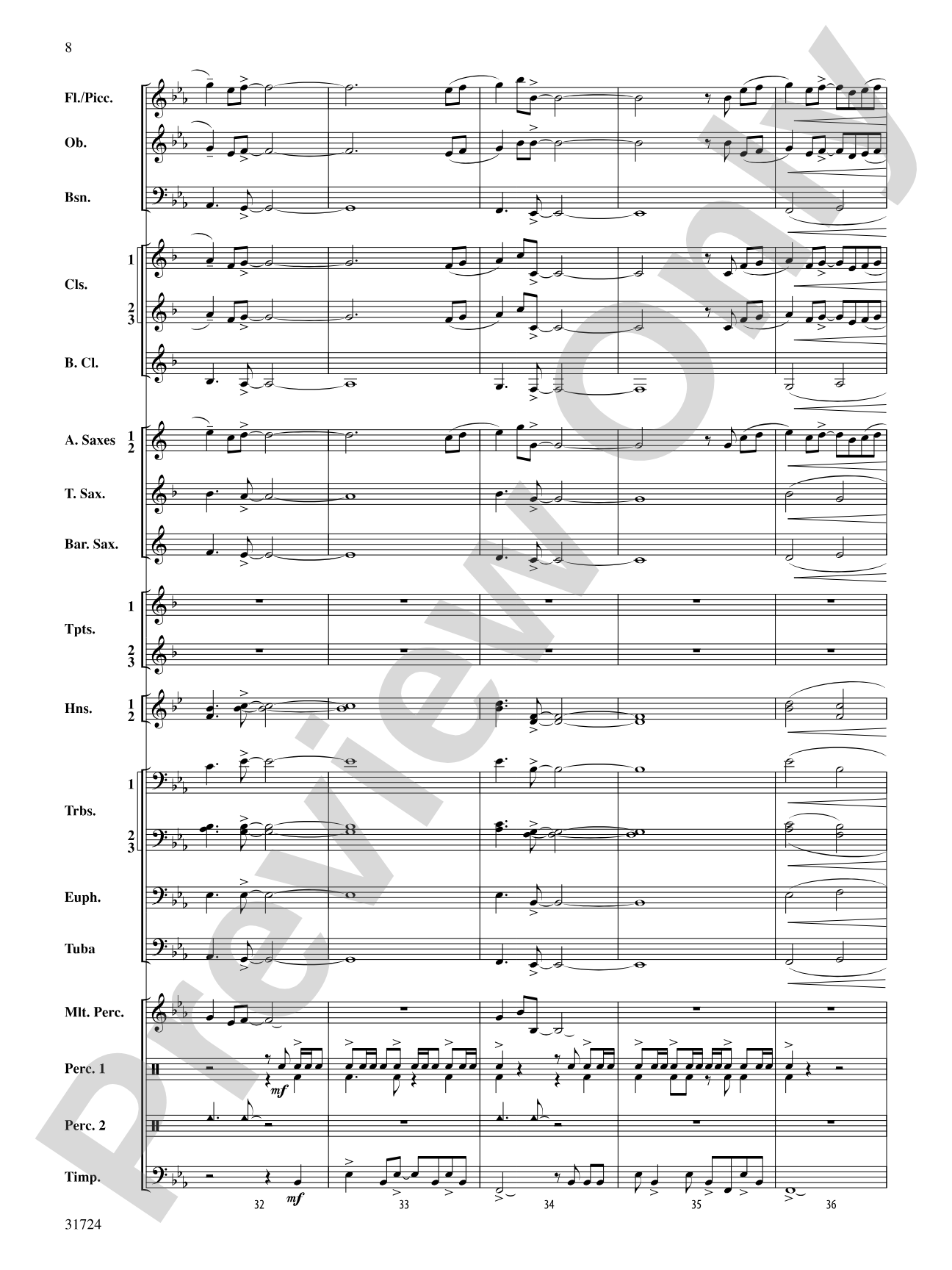
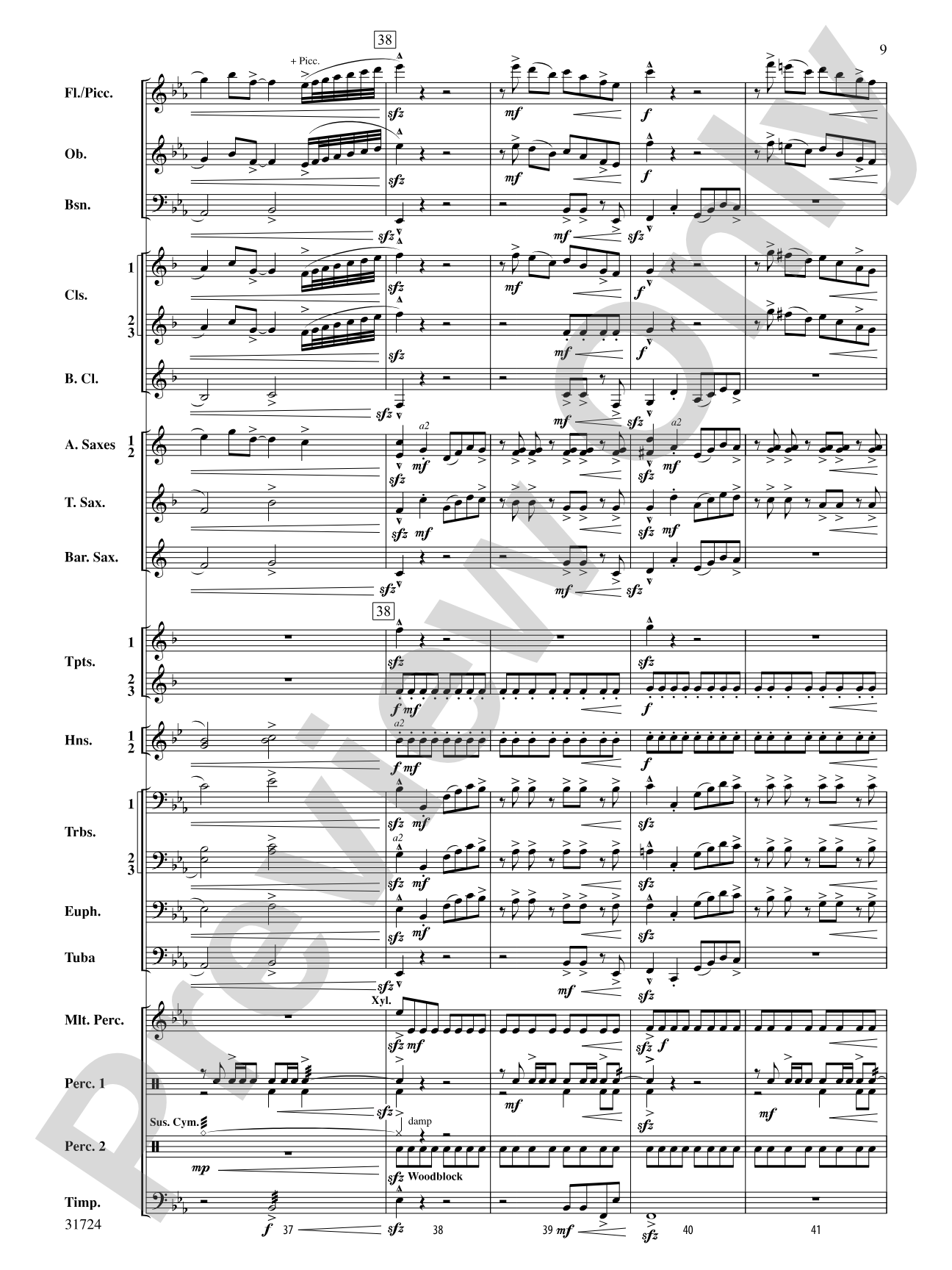
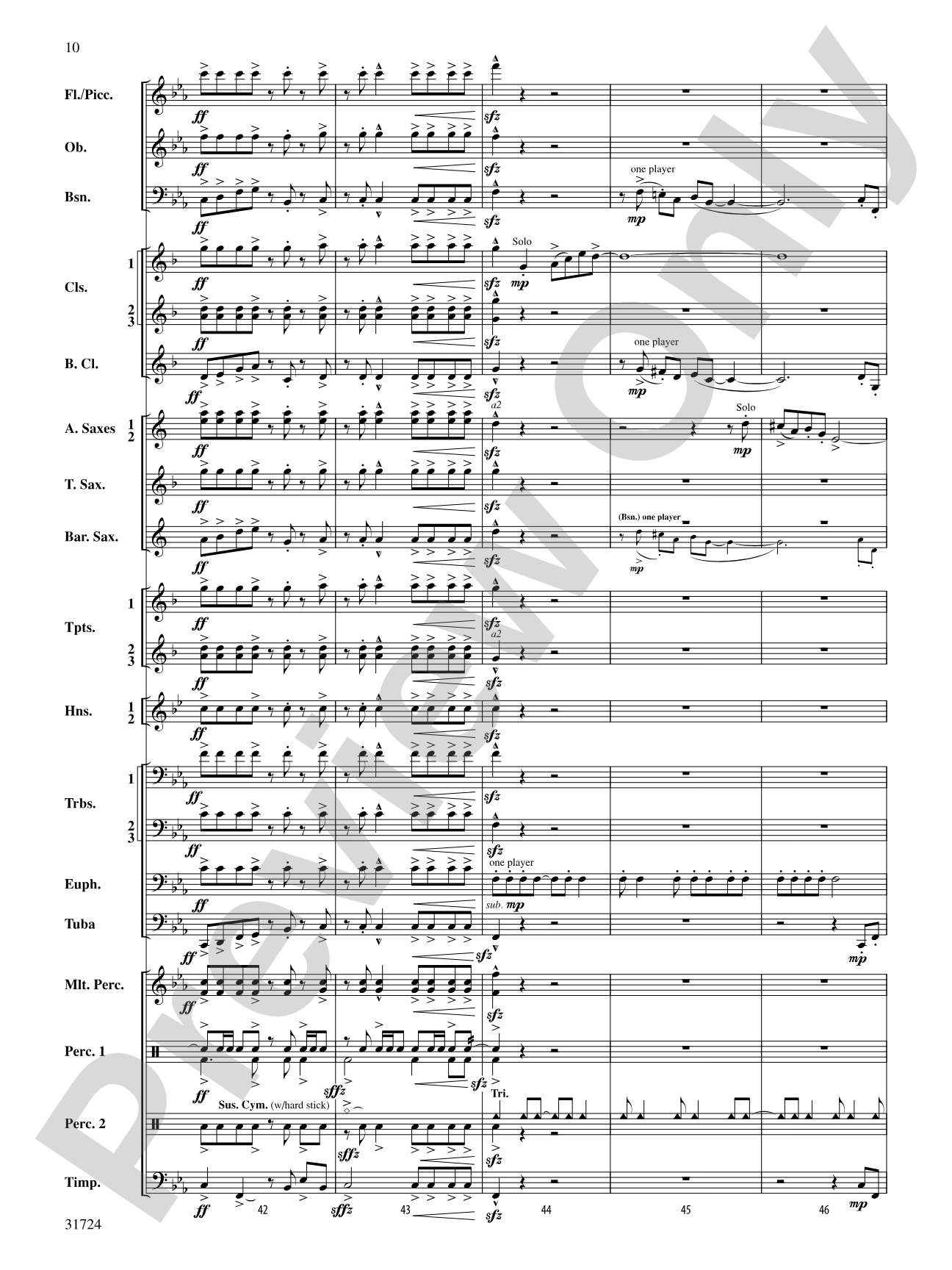
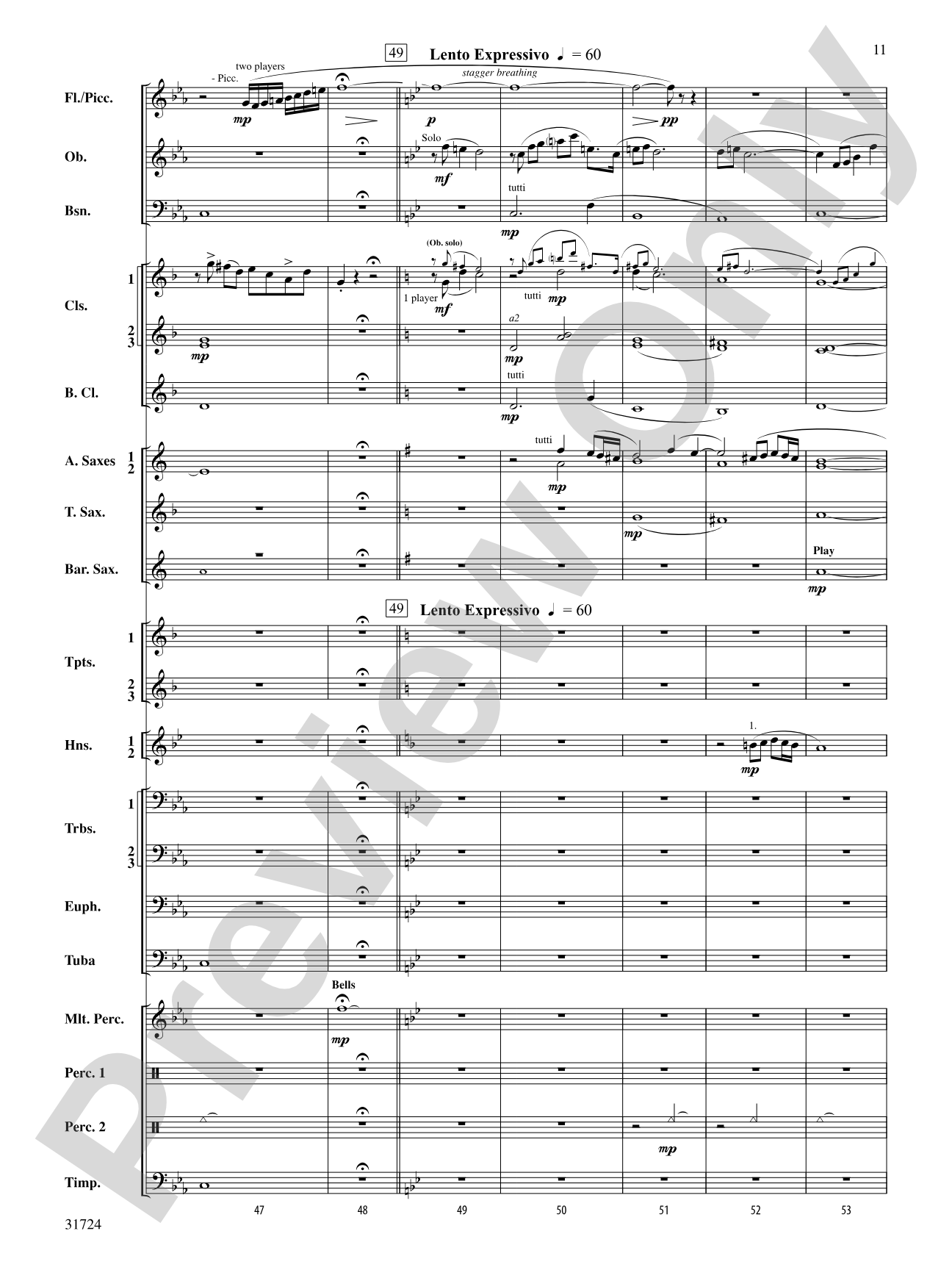
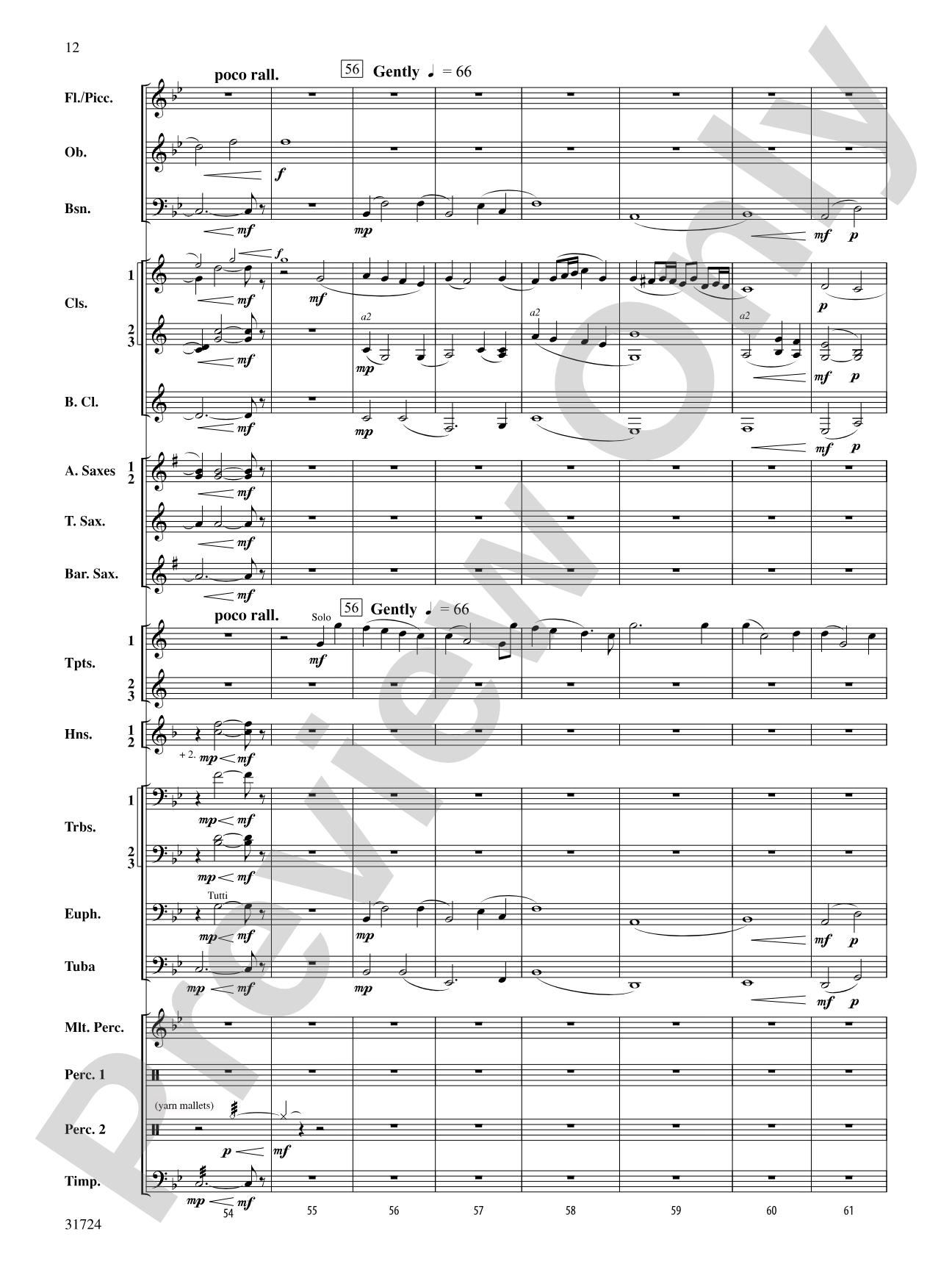
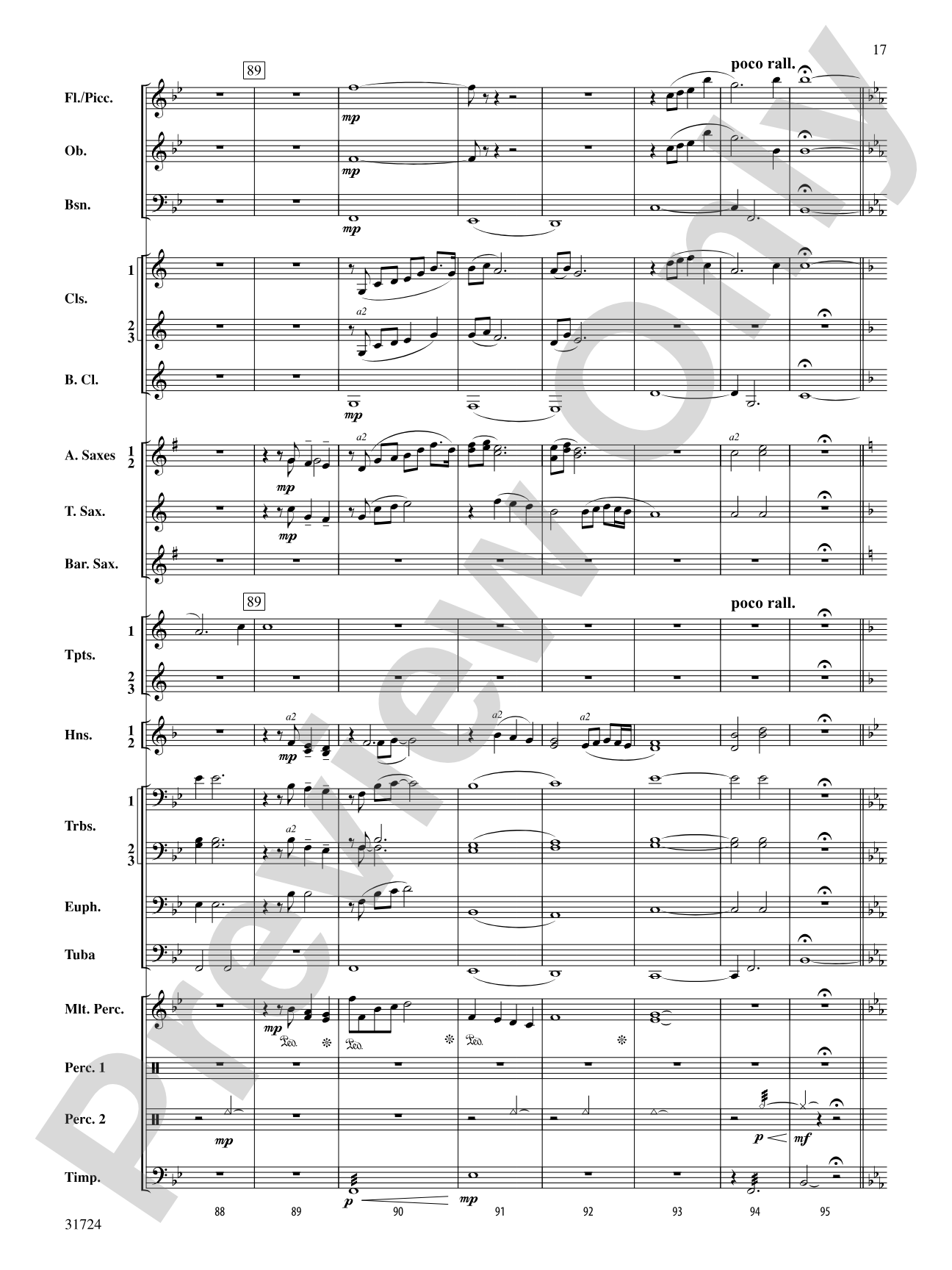
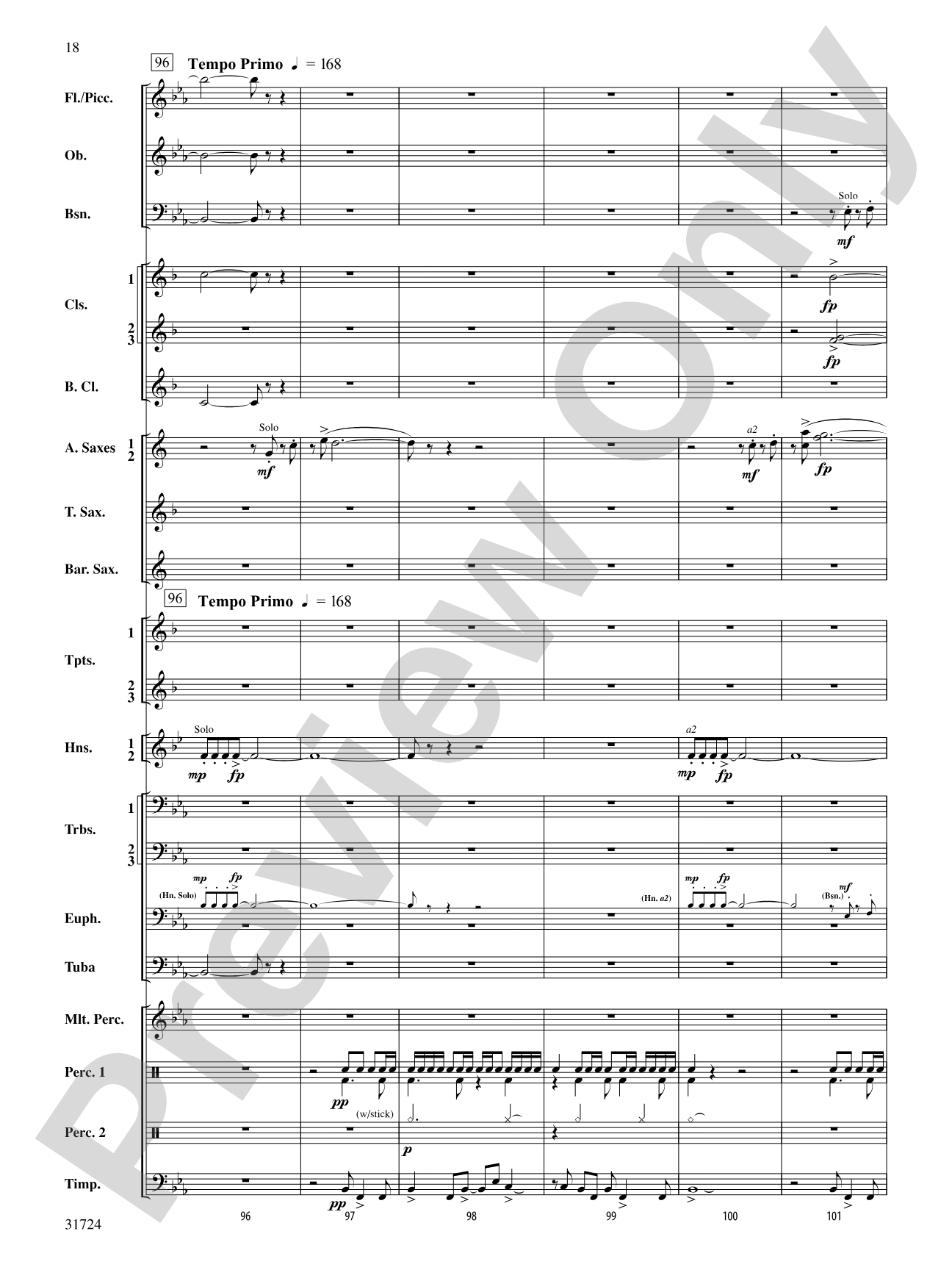
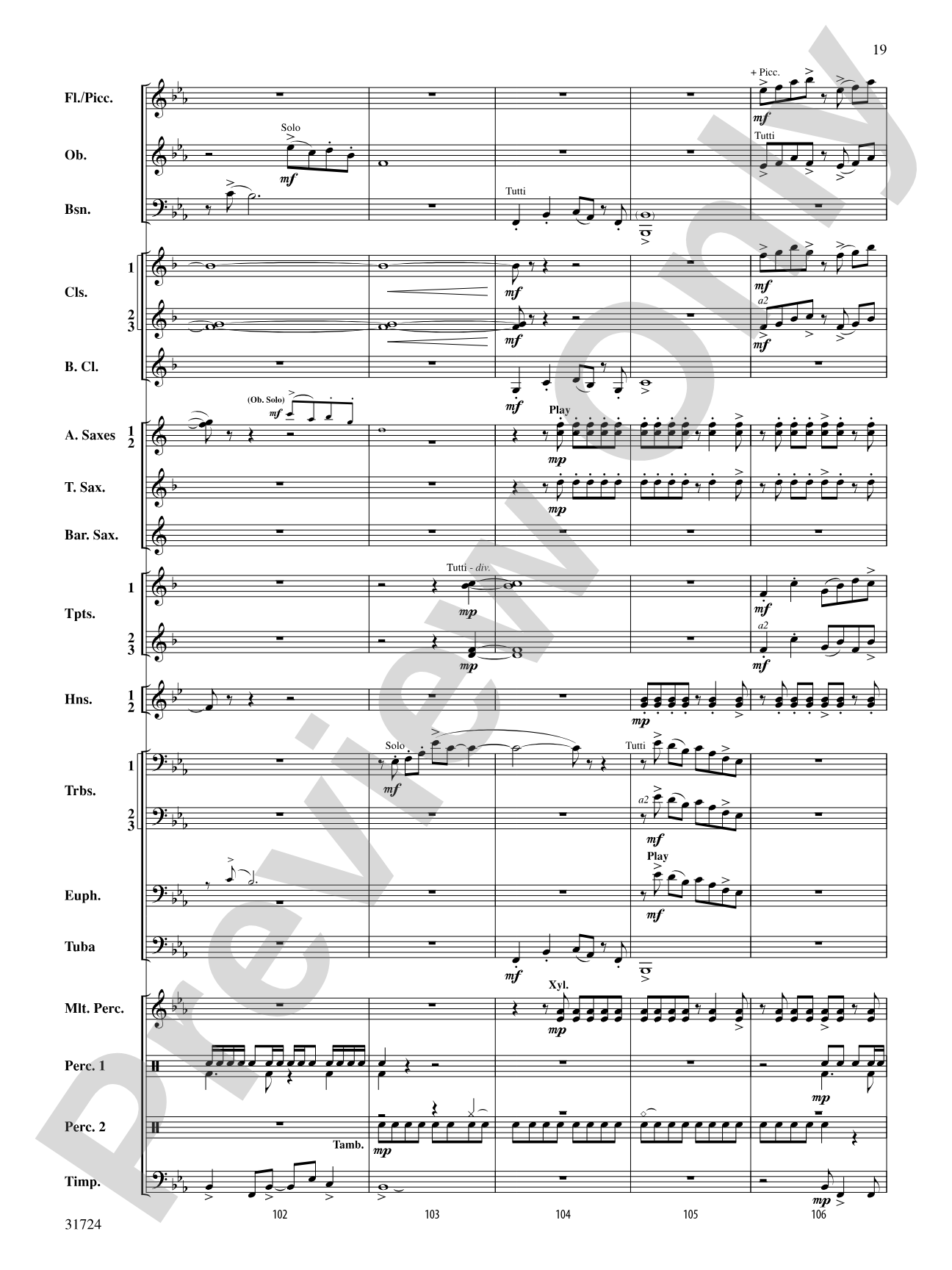
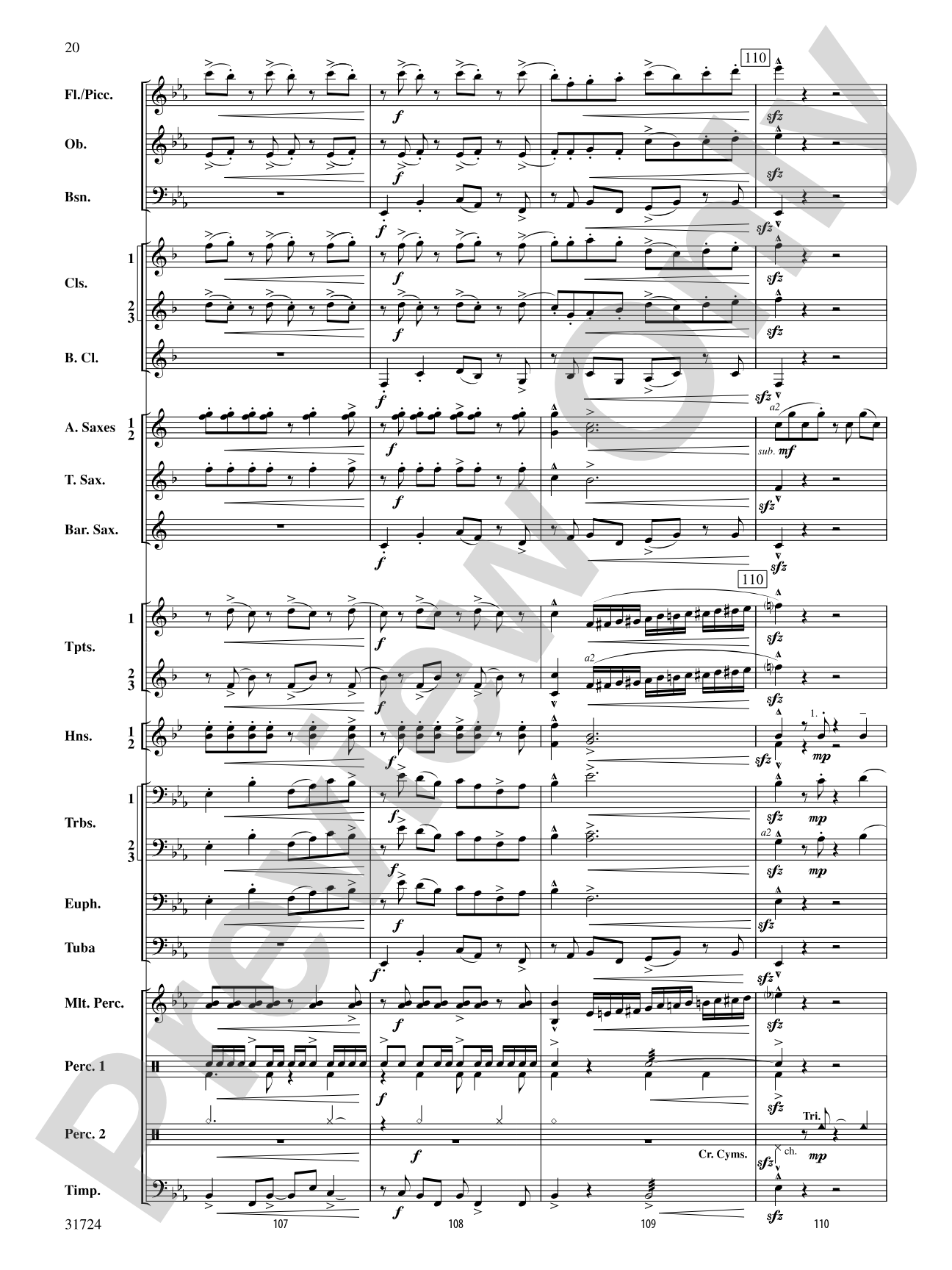
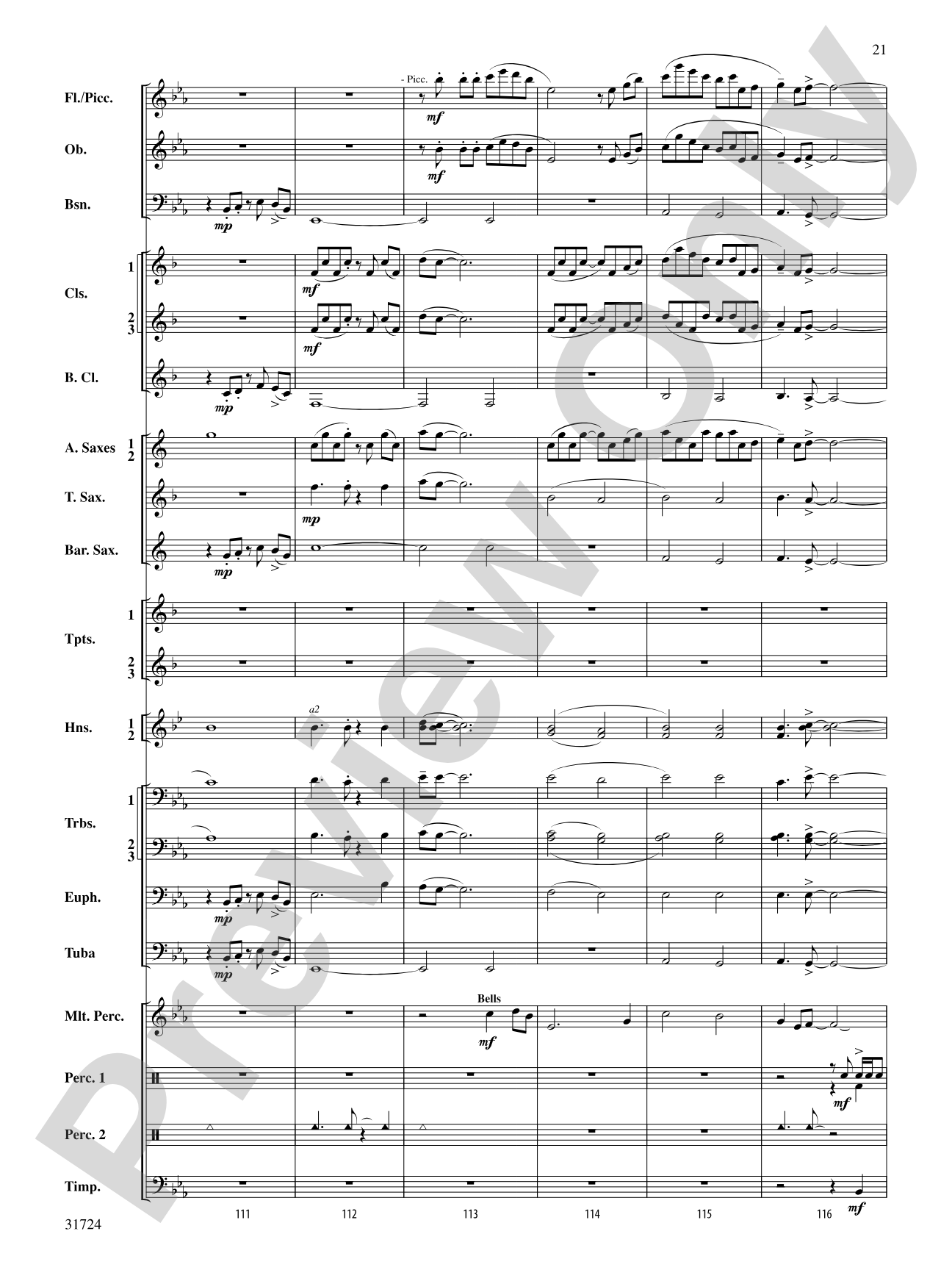
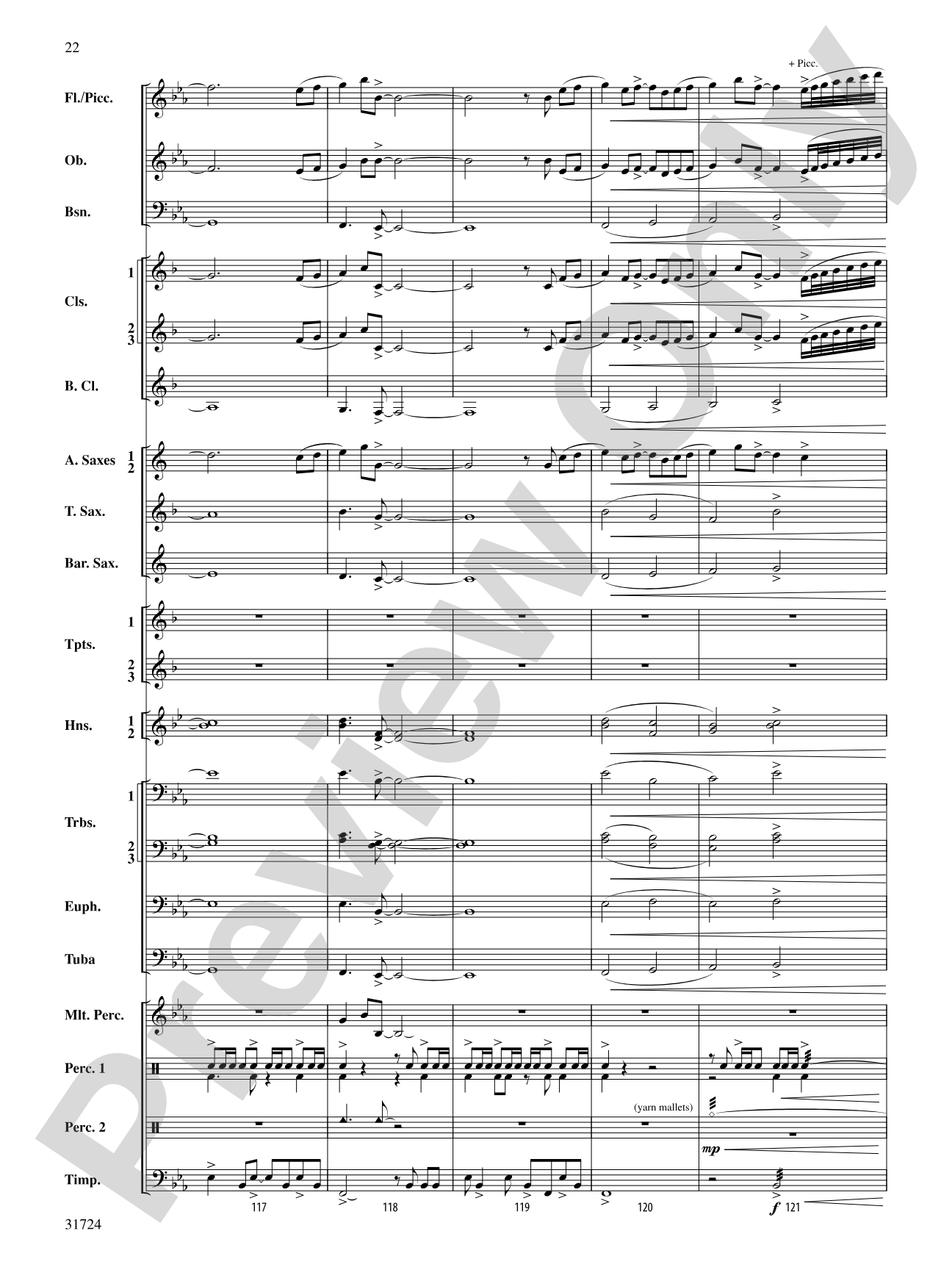
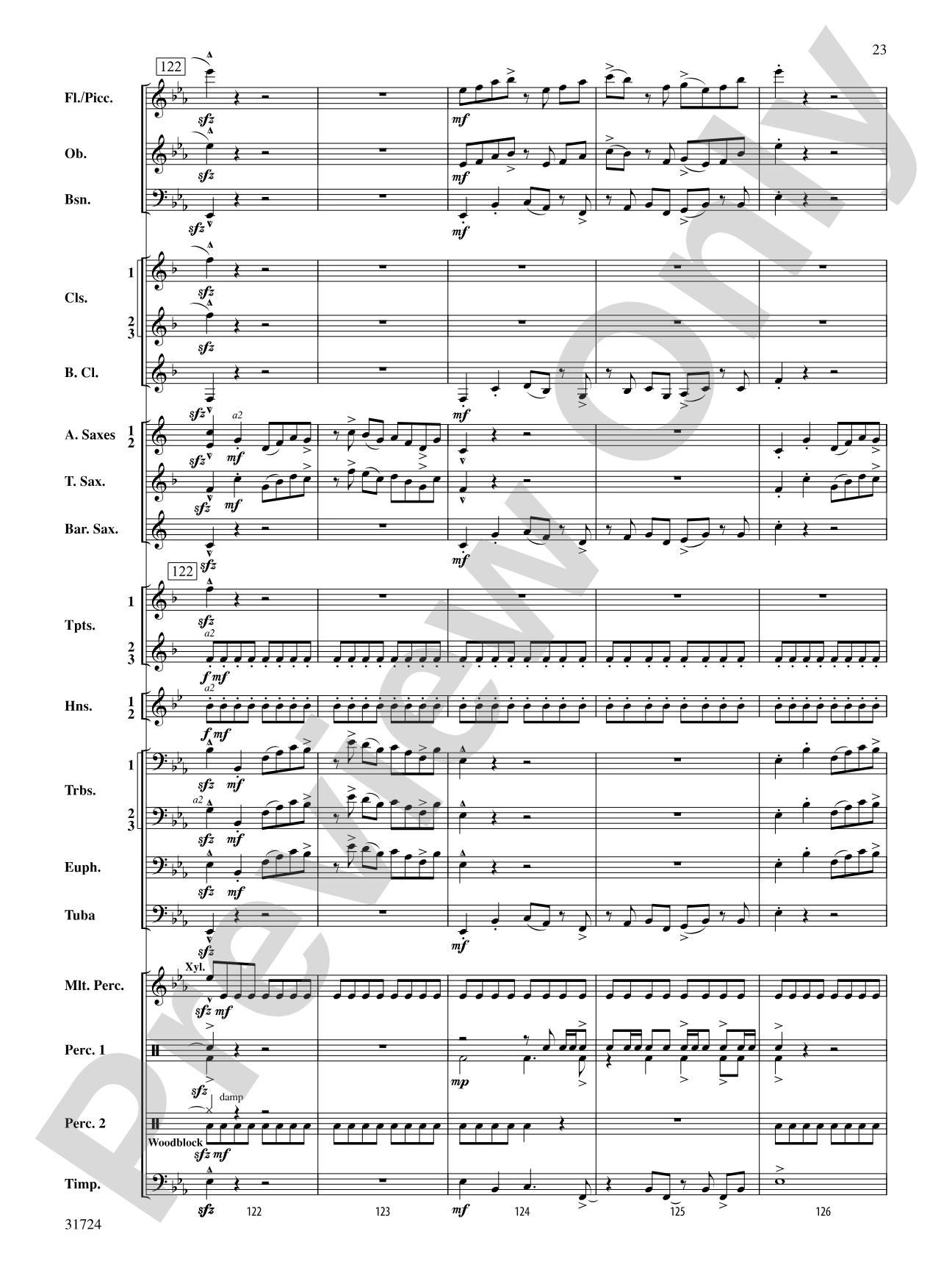
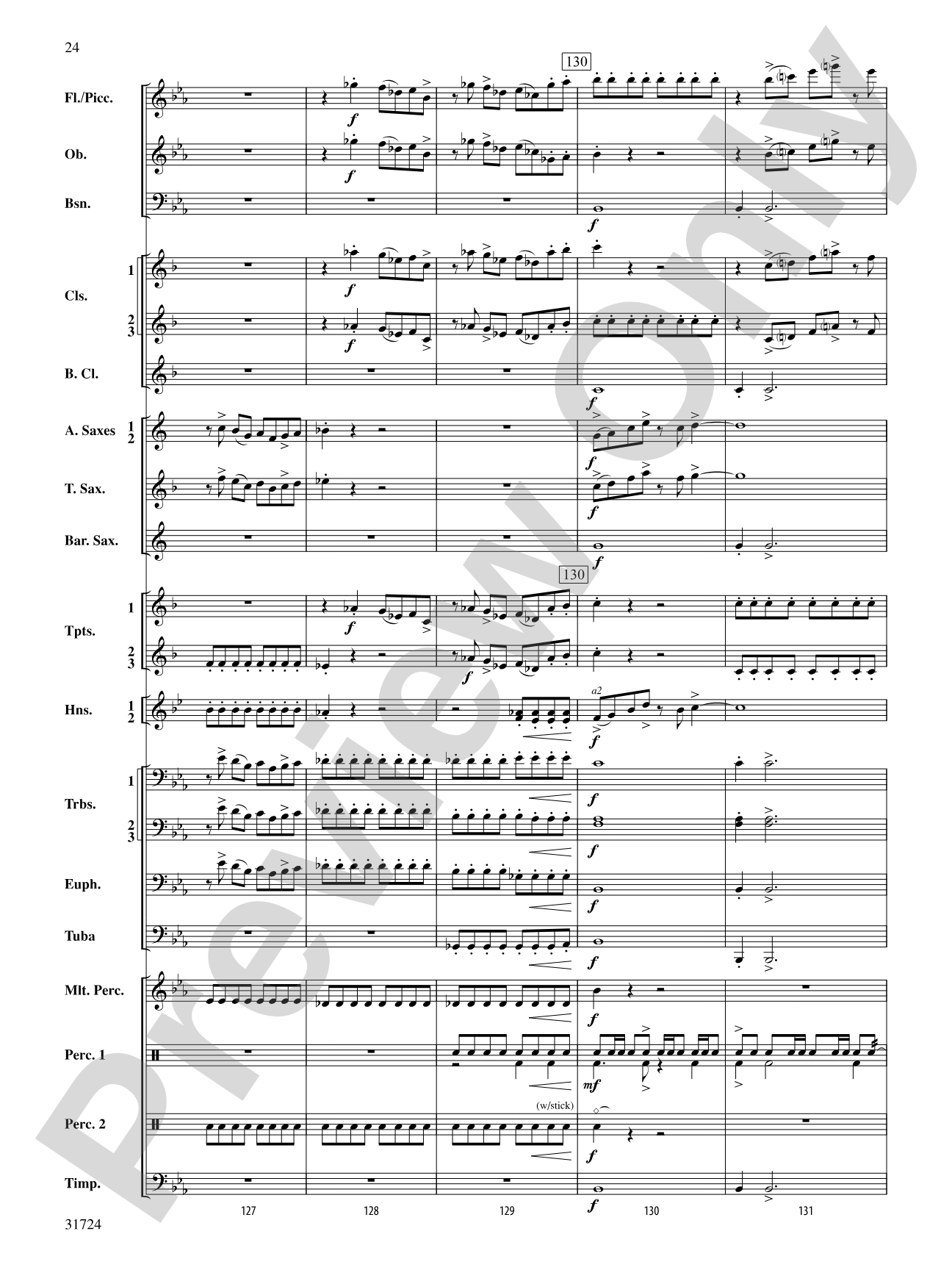


Choreography: Concert Band Conductor Score & Parts
By Robert Sheldon
Grade: 3.5 (Medium)
Item: 00-PK-0001822

$80.00
Pickup currently not available
Buy Extra Parts (Digital PDF Download)
Parts Added to Cart!
Description
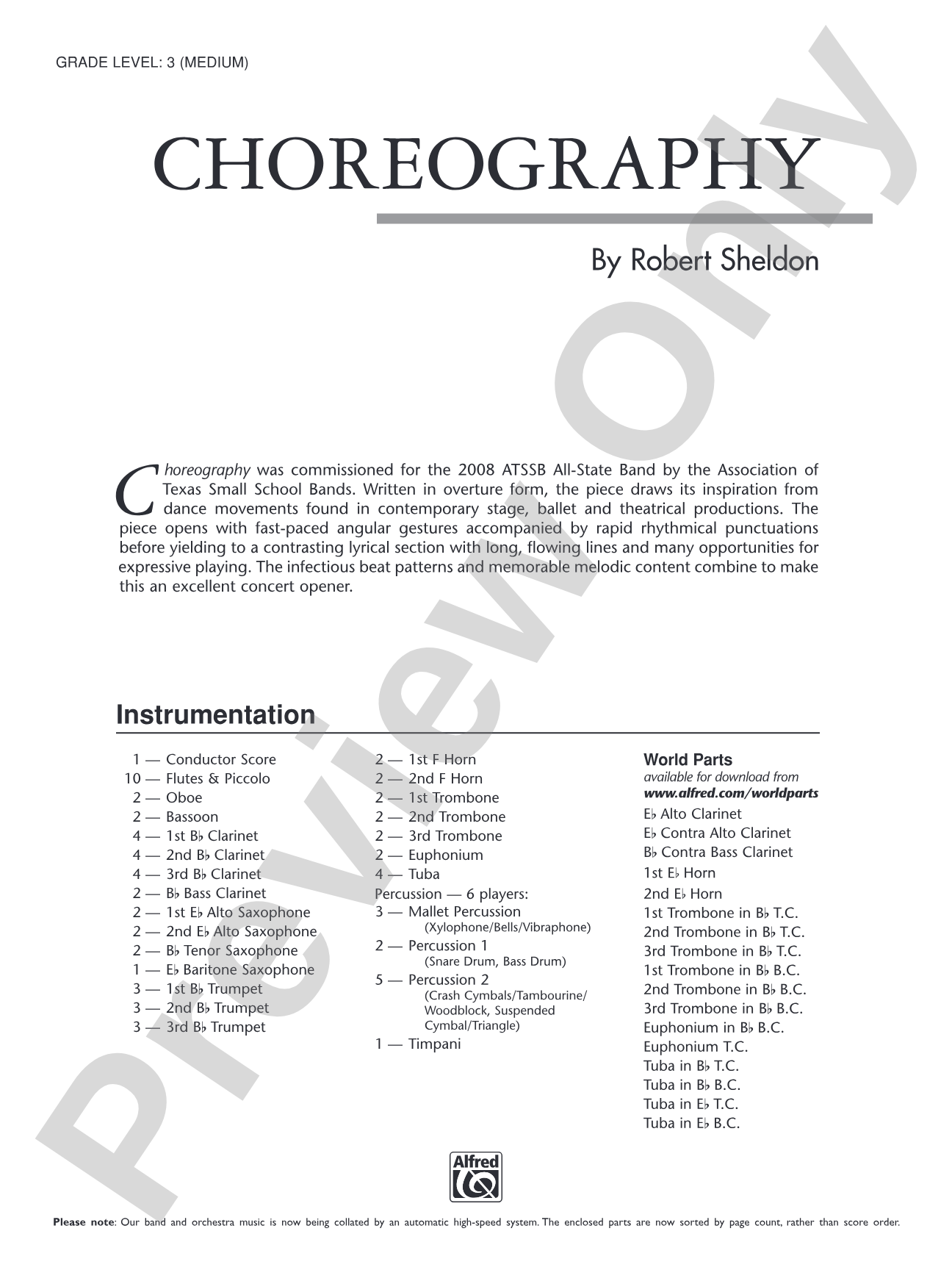
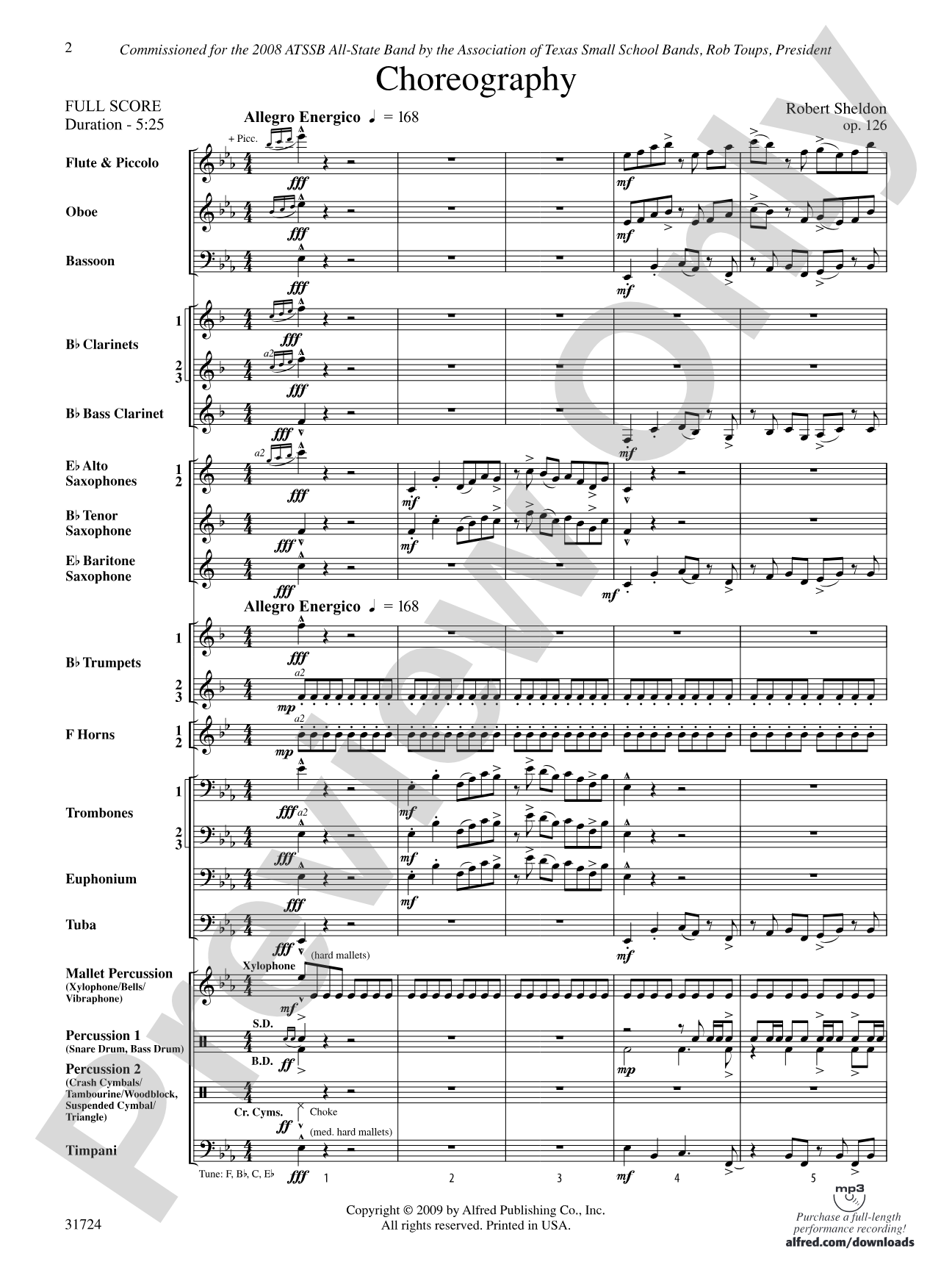
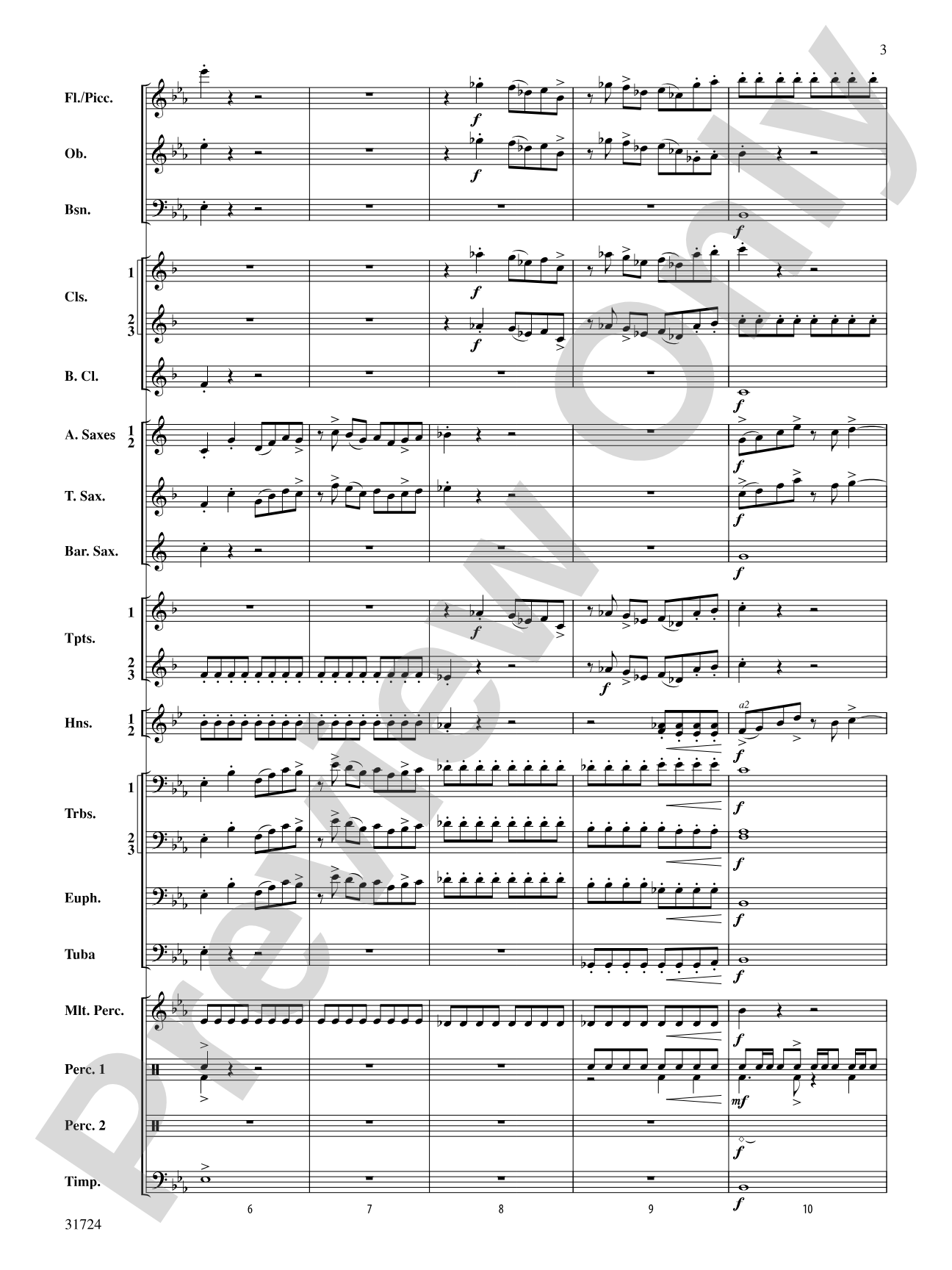
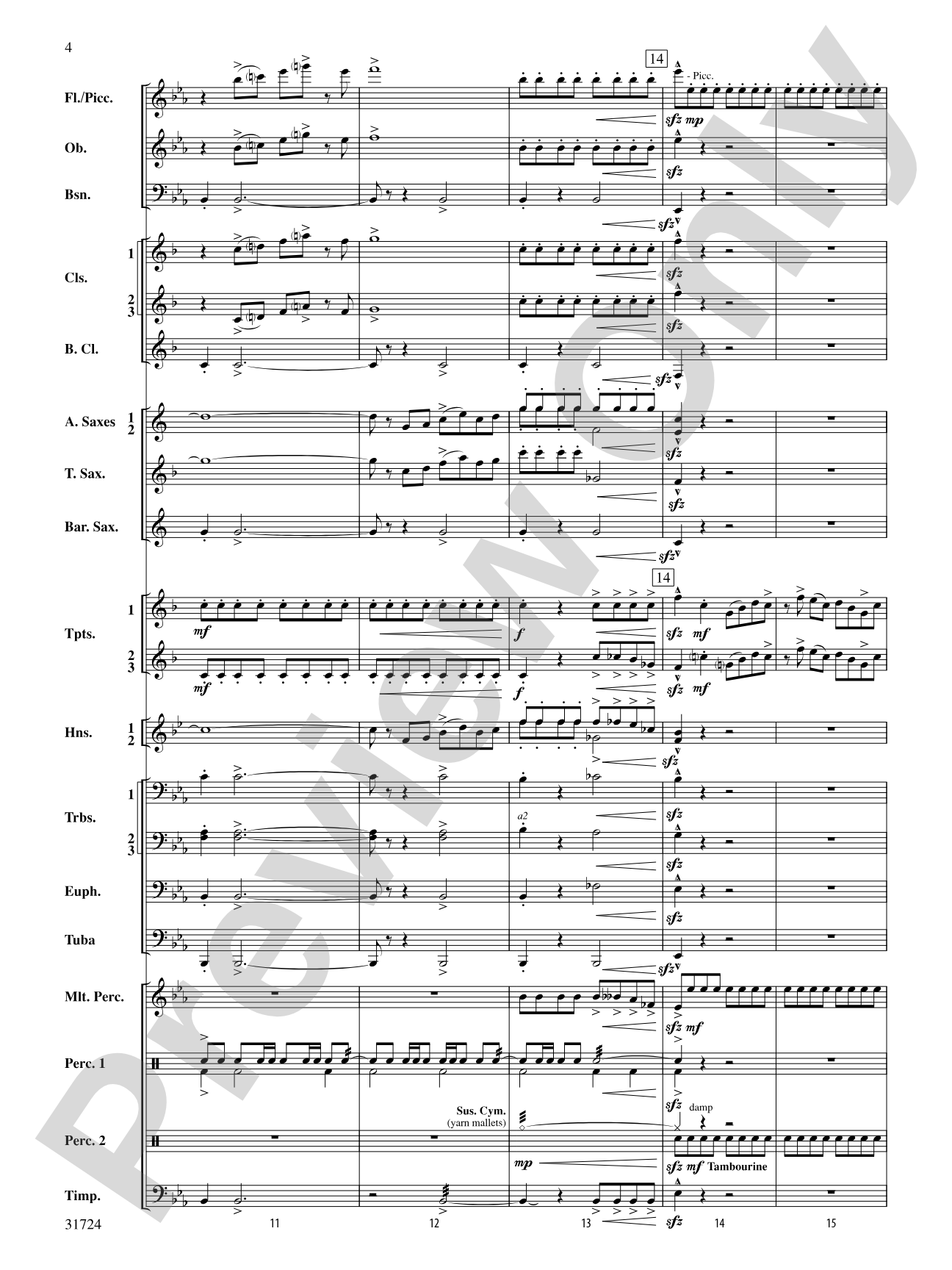
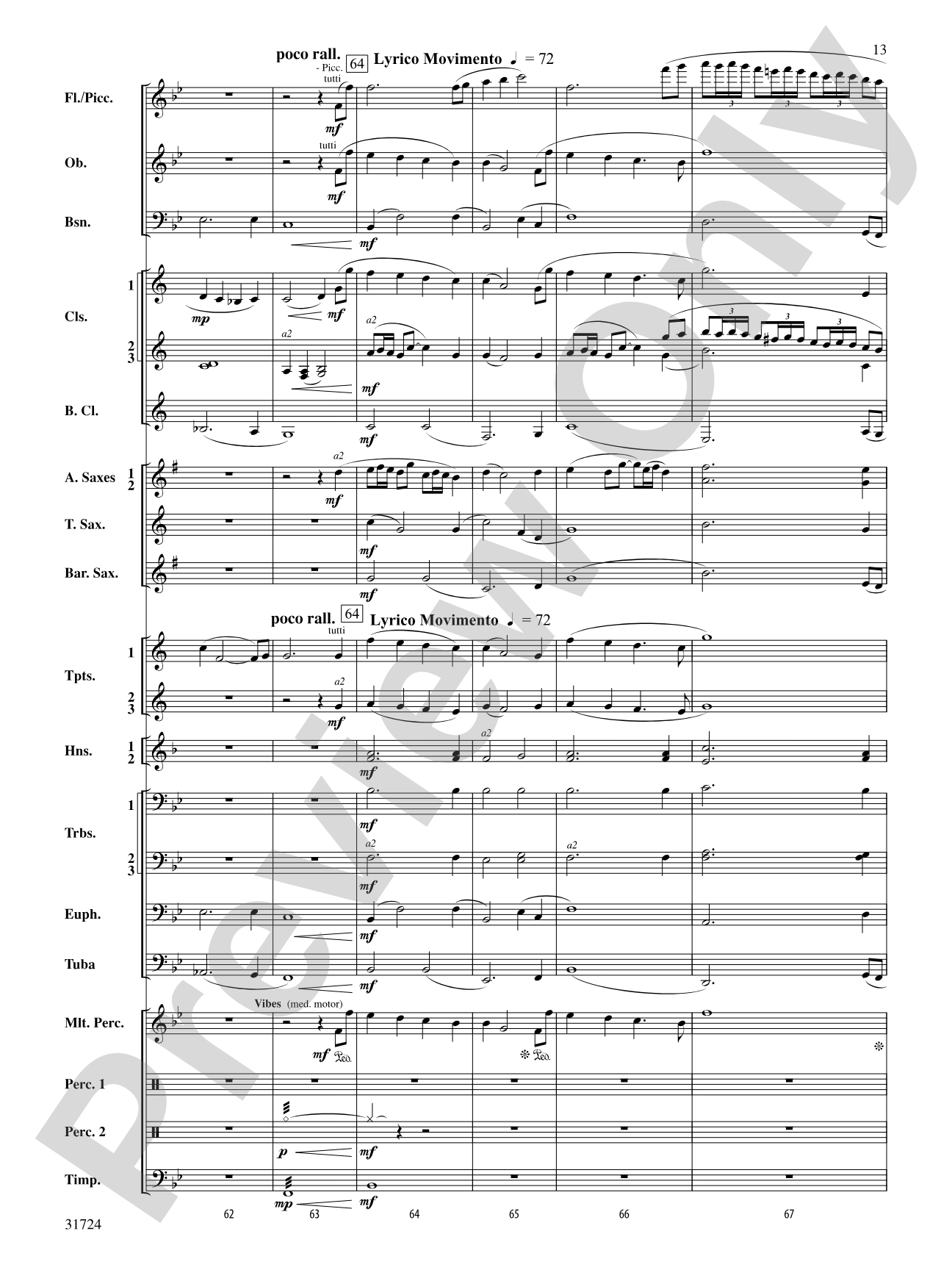
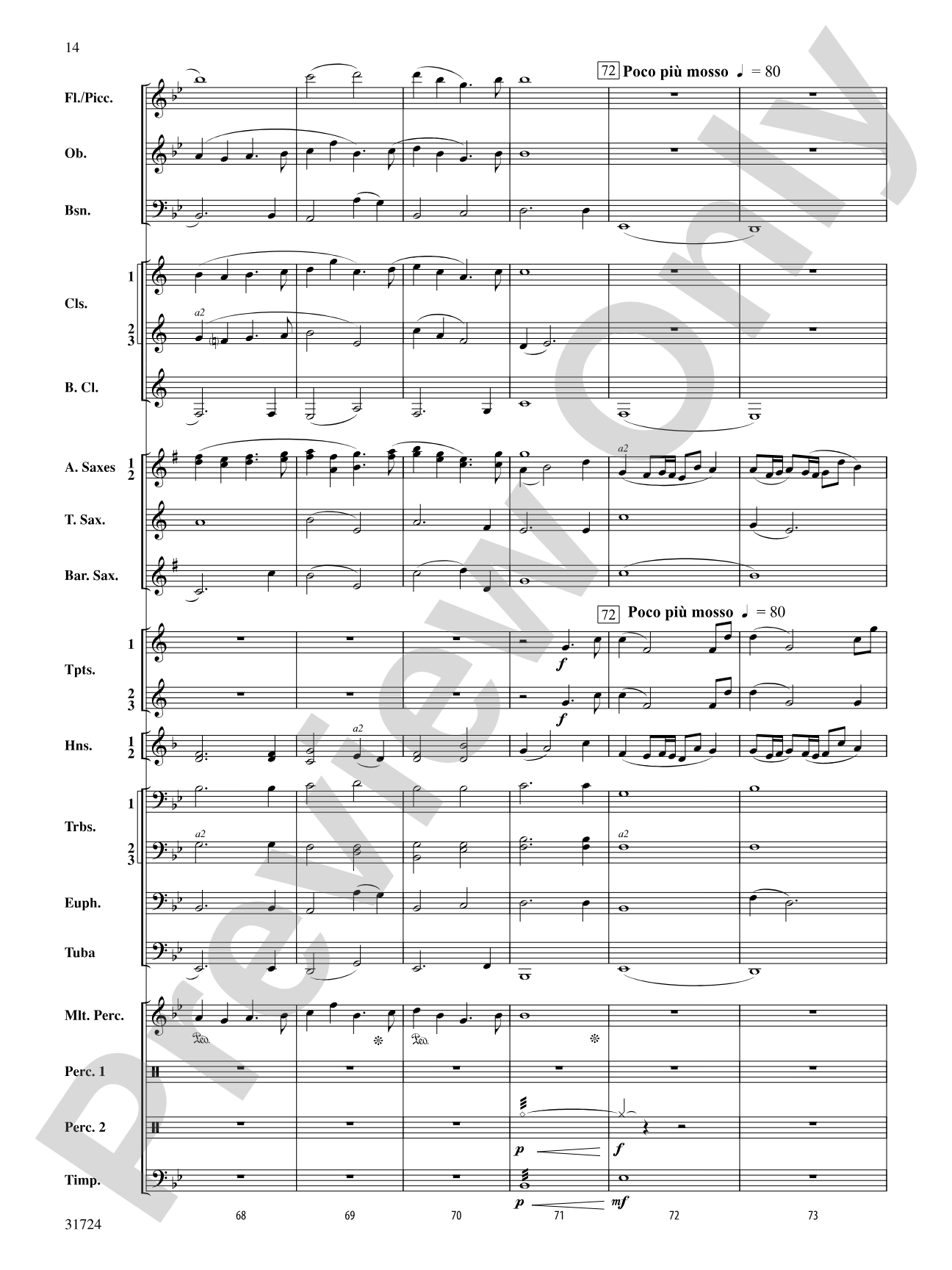
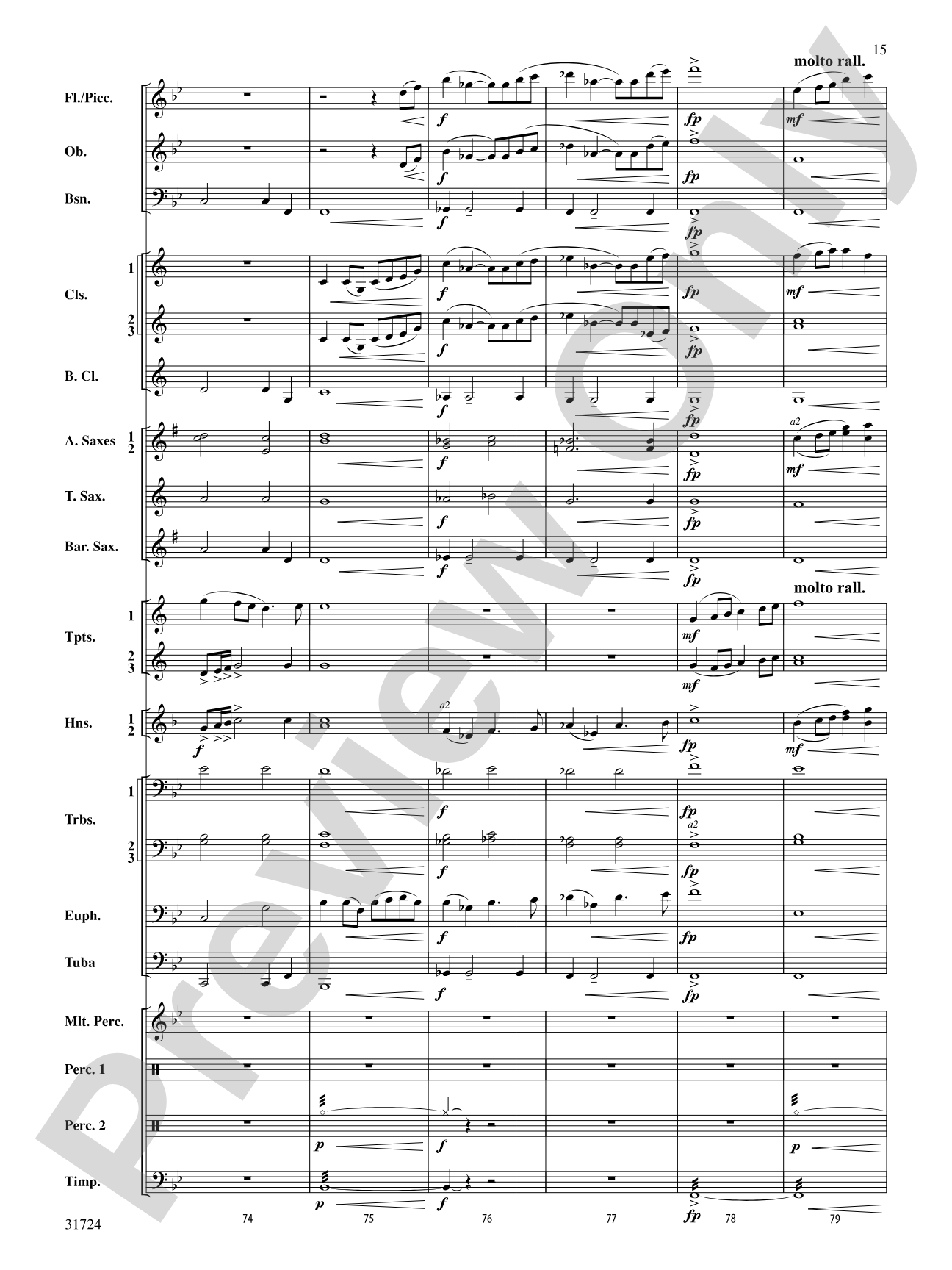
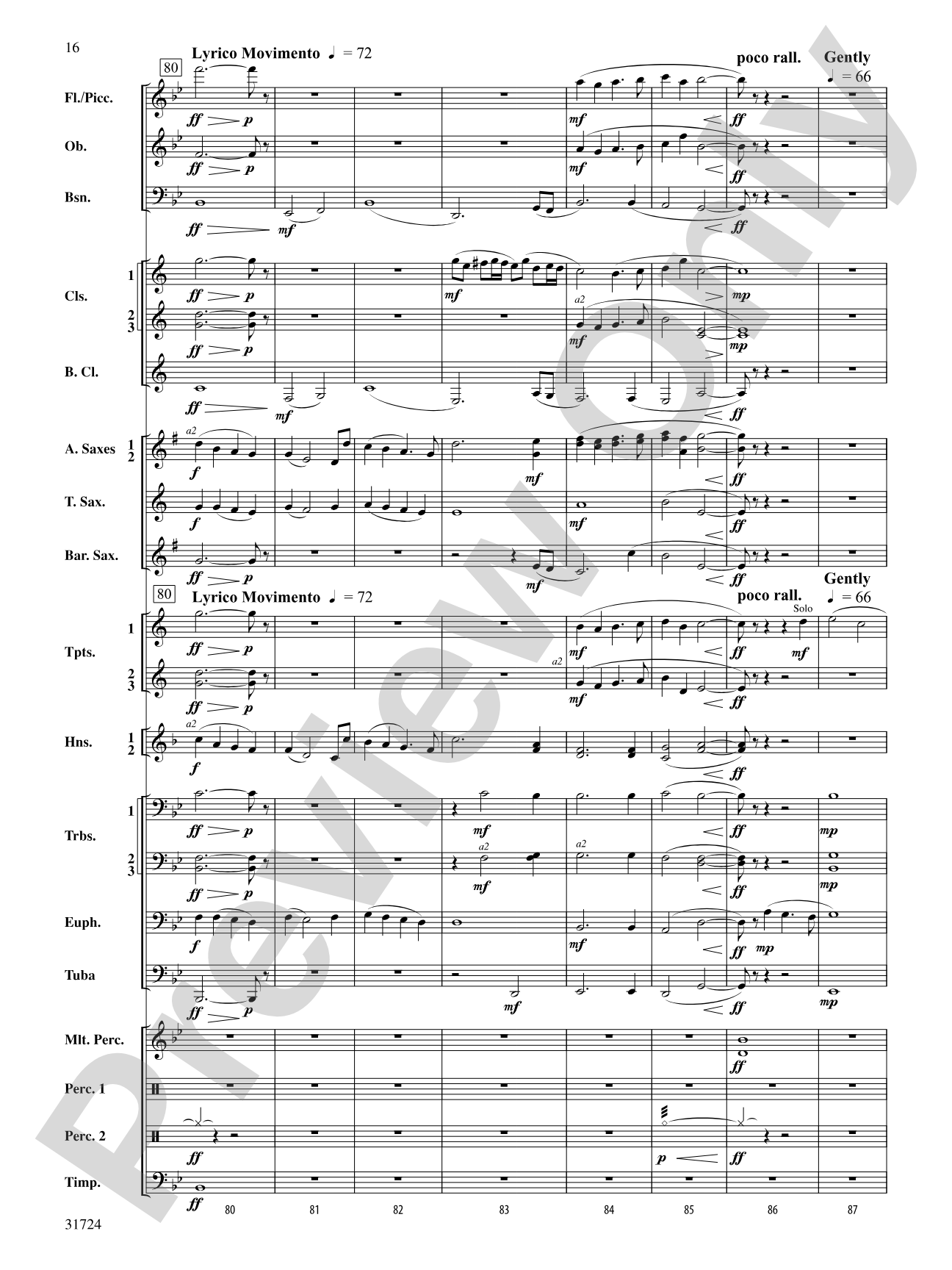
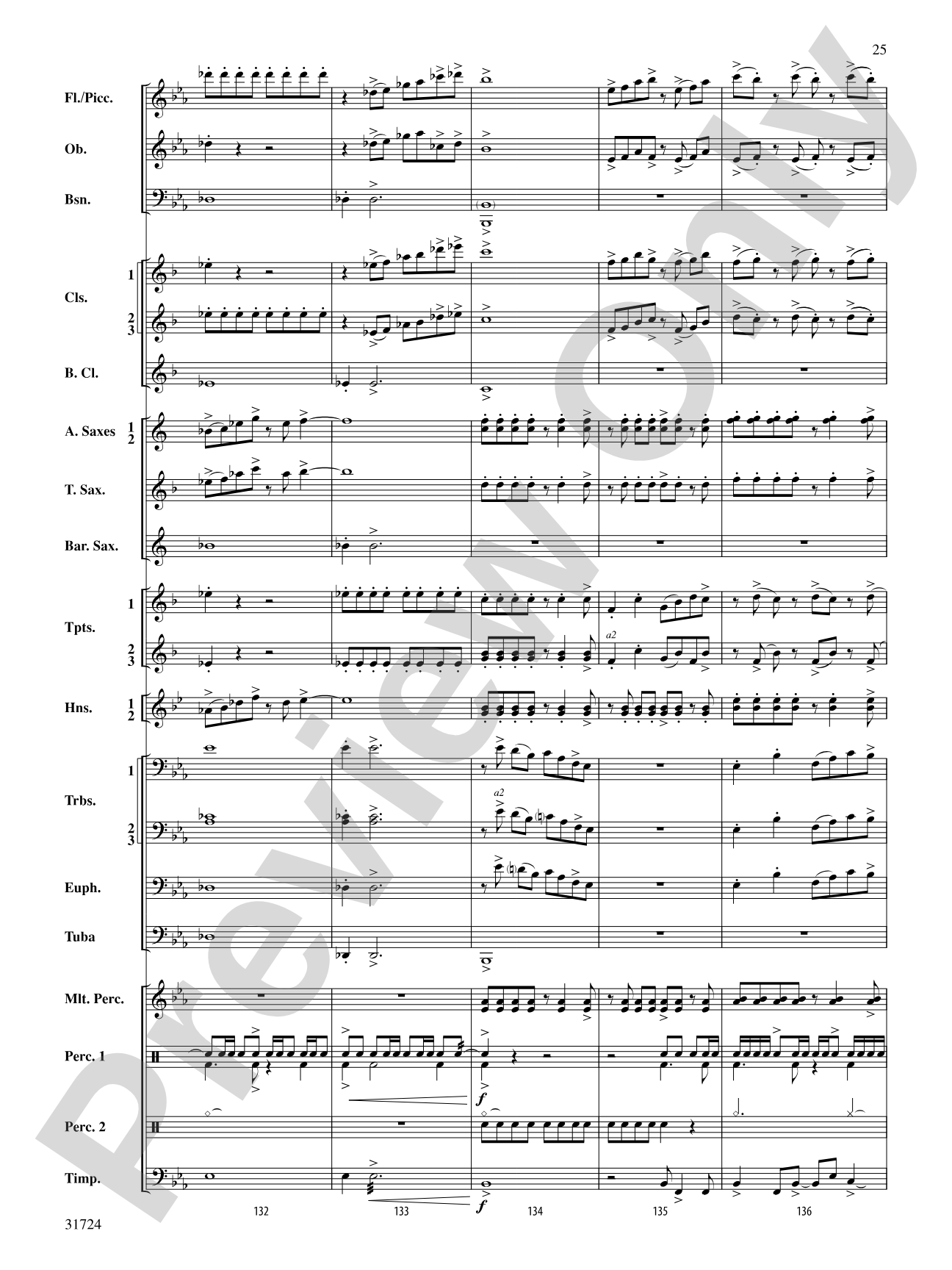
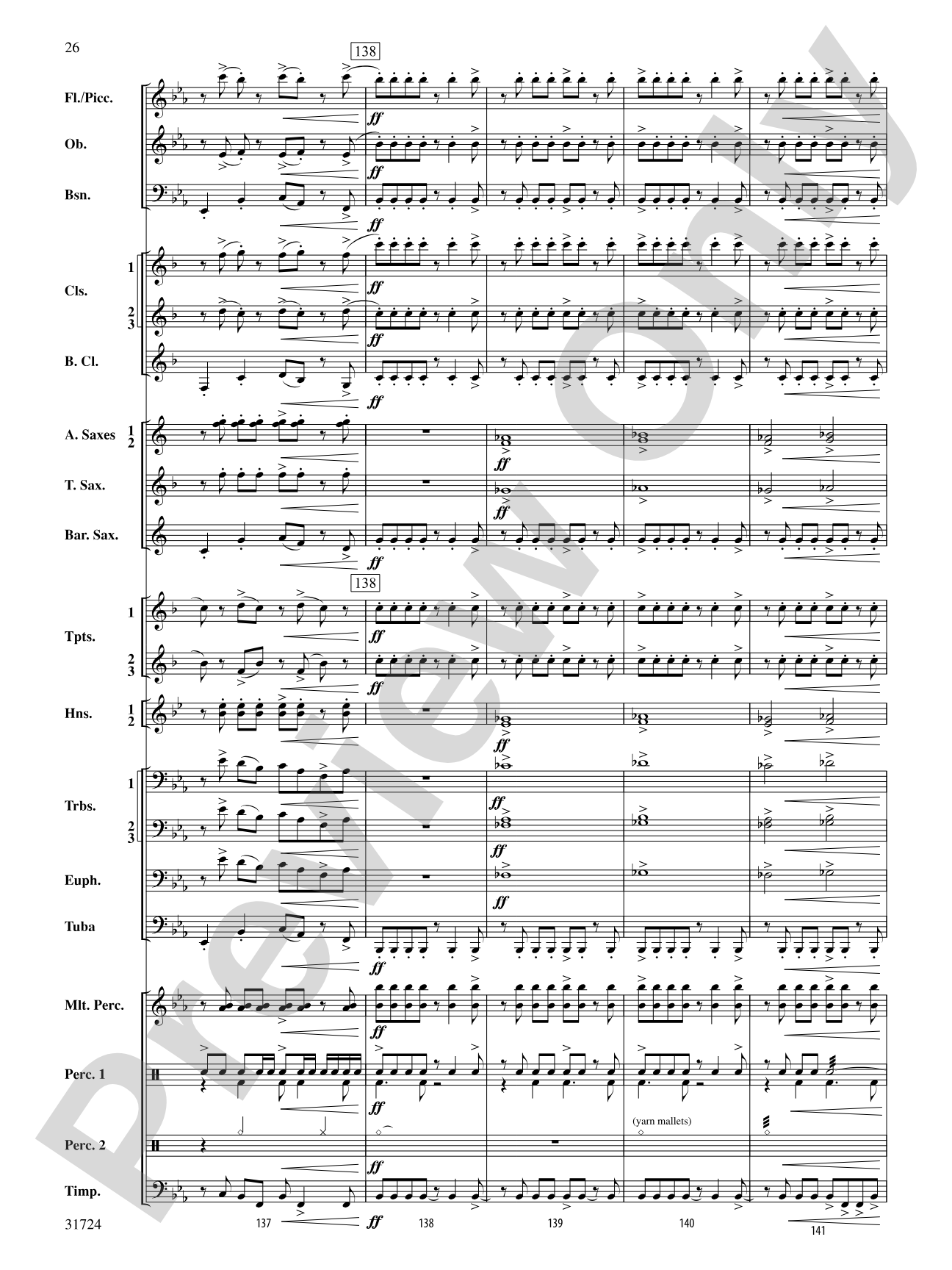
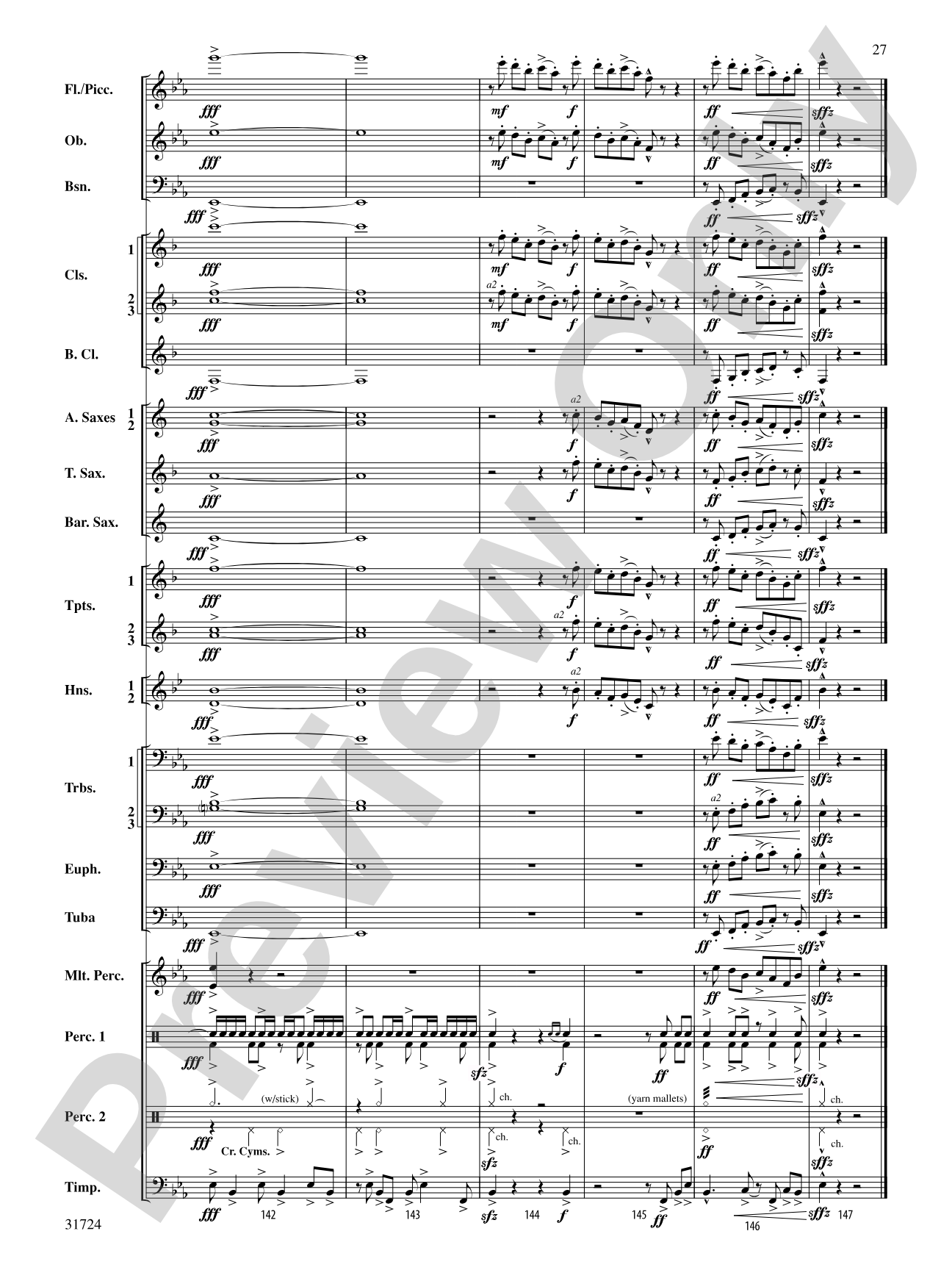
Choreography was commissioned by the 2008 ATSSB All-State Band by the Association of Texas Small School Bands. Written in overture form, the piece draws its inspiration from dance movements found in contemporary stage, ballet and theatrical productions. The piece opens with fast-paced angular gestures accompanied by rapid rhythmical punctuations before yielding to a contrasting lyrical section with long, flowing lines and many opportunities for expressive playing. The infectious beat patterns and memorable melodic content combine to make this an excellent concert opener. (5:33) This title is available in MakeMusic Cloud.


Don't just read it, hear it, play along with it, and watch your students grow with it. In MakeMusic Cloud, Choreography: Concert Band Conductor Score & Parts comes alive with professional accompaniment, adjustable tempo, and built-in practice tools that turn solo practice into real progress.
Open in the Player
Jump straight in and assign it today.
Start Your Free Trial
Open this title and explore the full library in minutes.
Sample Audio
1
Audio File
--:--
0:00
0:00
Sample Video
Additional Details
Series:
Alfred Concert Band
Publisher:
Alfred Music
Page Count:
284
SKU:
00-PK-0001822
More about this title
About the Composer: Robert Sheldon

Robert Sheldon stands among the most frequently performed composers writing for wind band today. His work as lead author of Sound Innovations for Concert Band and his steady stream of commissions demonstrate his deep engagement with the needs of school music programs. Recognition from the American School Band Directors Association, Phi Beta Mu, and ASCAP reflects both the quality and accessibility of his writing.
Sheldon's conducting and teaching work spans the globe. He has served as guest conductor for All-State and Regional Honor Bands, presented clinician sessions at universities and state music education conferences across the United States, and traveled to Japan, Canada, Italy, Germany, Australia, and China in conducting and educational roles. His compositions have appeared at Carnegie Hall, Orchestra Hall, Boston Symphony Hall, the Sydney Opera House, and the Kennedy Center. VanderCook College of Music awarded him an honorary doctorate in 2020.
Why we love this
Sheldon designed Choreography specifically for All-State performance, which means every measure reflects what works on the stage in front of an audience. The overture form gives you a clear structural arc (angular opening, lyrical center, return to energy), making this piece teach itself without requiring extensive rehearsal time to land the architecture. That combination of immediate impact and genuine musical substance makes it a rare opener that feels both confident and substantive.
What to expect
Choreography opens with sharp, angular energy that suggests movement and intention, almost like watching a dancer lock into precise positions. The contrast deepens when those angular lines give way to long, singing phrases that let your best musicians breathe and express themselves. The combination creates a piece that feels both modern and theatrical, with enough rhythmic momentum to hold an audience's attention without ever becoming superficial.
Who it's for
This is ideal for bands at the Grade 3.5 level with secure fundamentals in rhythm and intonation. The piece works equally well for community and school ensembles seeking a concert opener that demonstrates musicianship without requiring exceptional technical facility. Directors programming All-State level festivals or looking for pieces with real compositional substance will find this delivers on both fronts.
How to get the most out of it
- Shape the opening angular figures as if they are deliberate gestural statements rather than rhythmic filler; clarity and intentionality matter more than speed.
- Bring out the memorable melodic lines during the lyrical section by ensuring accompaniment voices stay supportive and don't crowd the foreground.
- Lock the meter and harmonic rhythm in your section leaders before ensemble rehearsals, since the "infectious beat patterns" depend on precise internal consensus about where the pulse lives.
- Use the recorded accompaniment or your own conducting clarity to establish the tempo relationship between the fast opening and the slower middle section so the transition feels inevitable, not arbitrary.
How to use it
Program this as your opener when you want to establish energy and sophistication from the first note. Its theatrical origins make it particularly effective on concerts that pair classical and contemporary works, or as the gateway piece before moving into a more introspective program. The 5:33 duration and clear sectional architecture also make it valuable for festival performances where you need impact within a tight timeframe.
Skills your students will build
- Executing rhythmic precision in contemporary meters and syncopated patterns
- Balancing angular, articulated lines with sustained, legato phrasing
- Responding to gestural conducting in both fast and slow tempi
- Supporting melodic lines through subsidiary harmonic and rhythmic parts
- Understanding overture form and musical architecture
- Recognizing and maintaining meter changes and tempo relationships