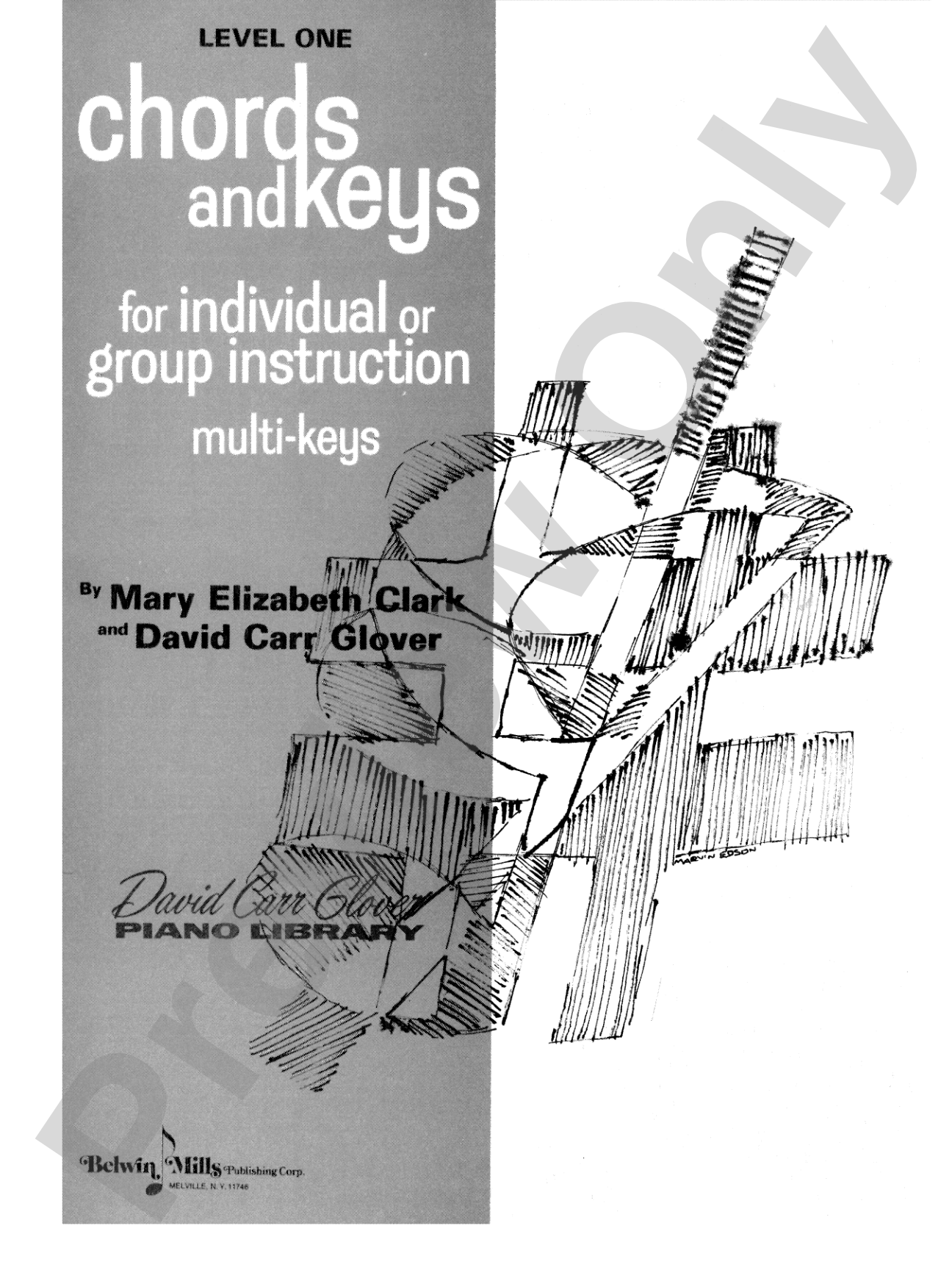
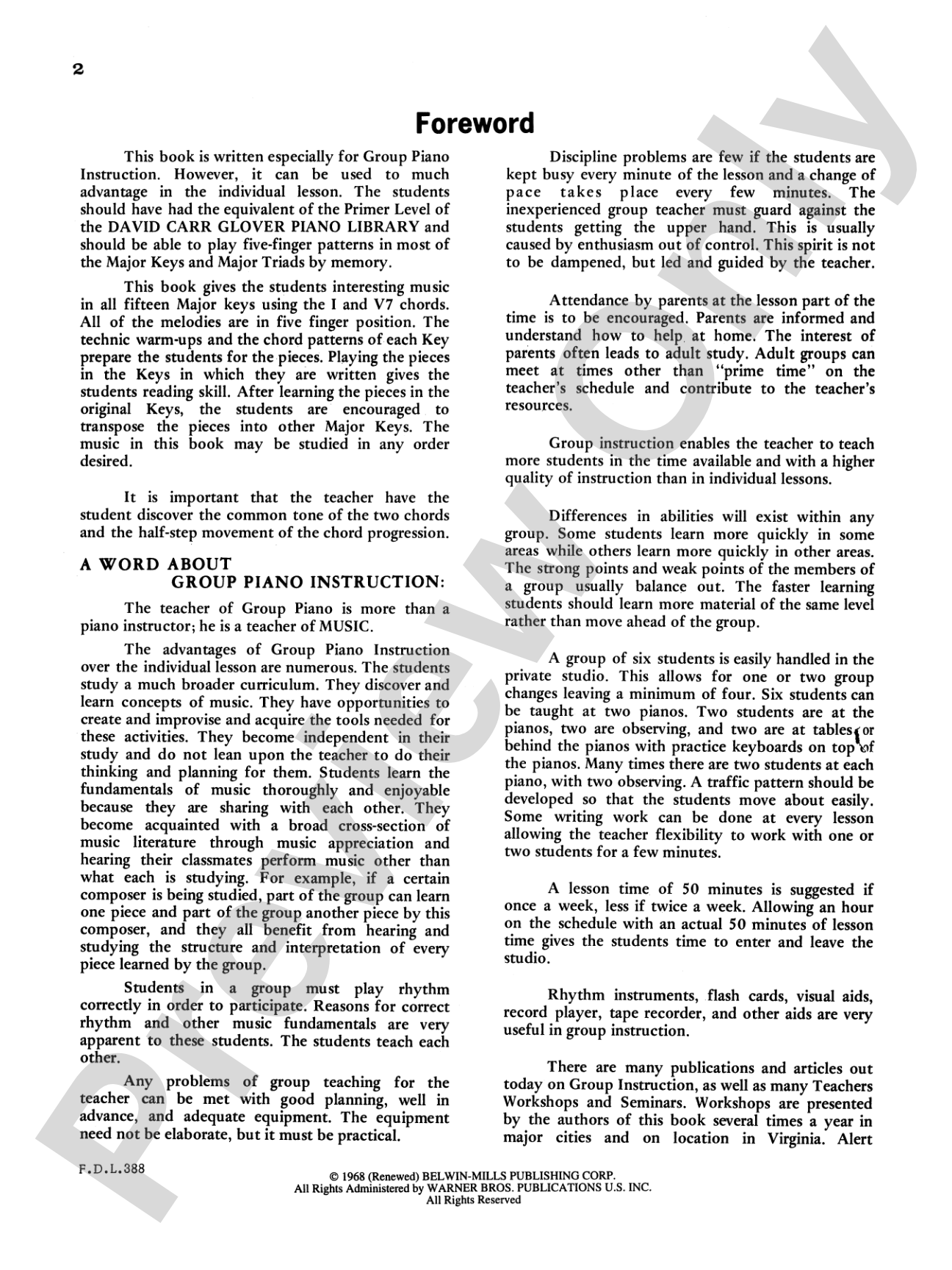
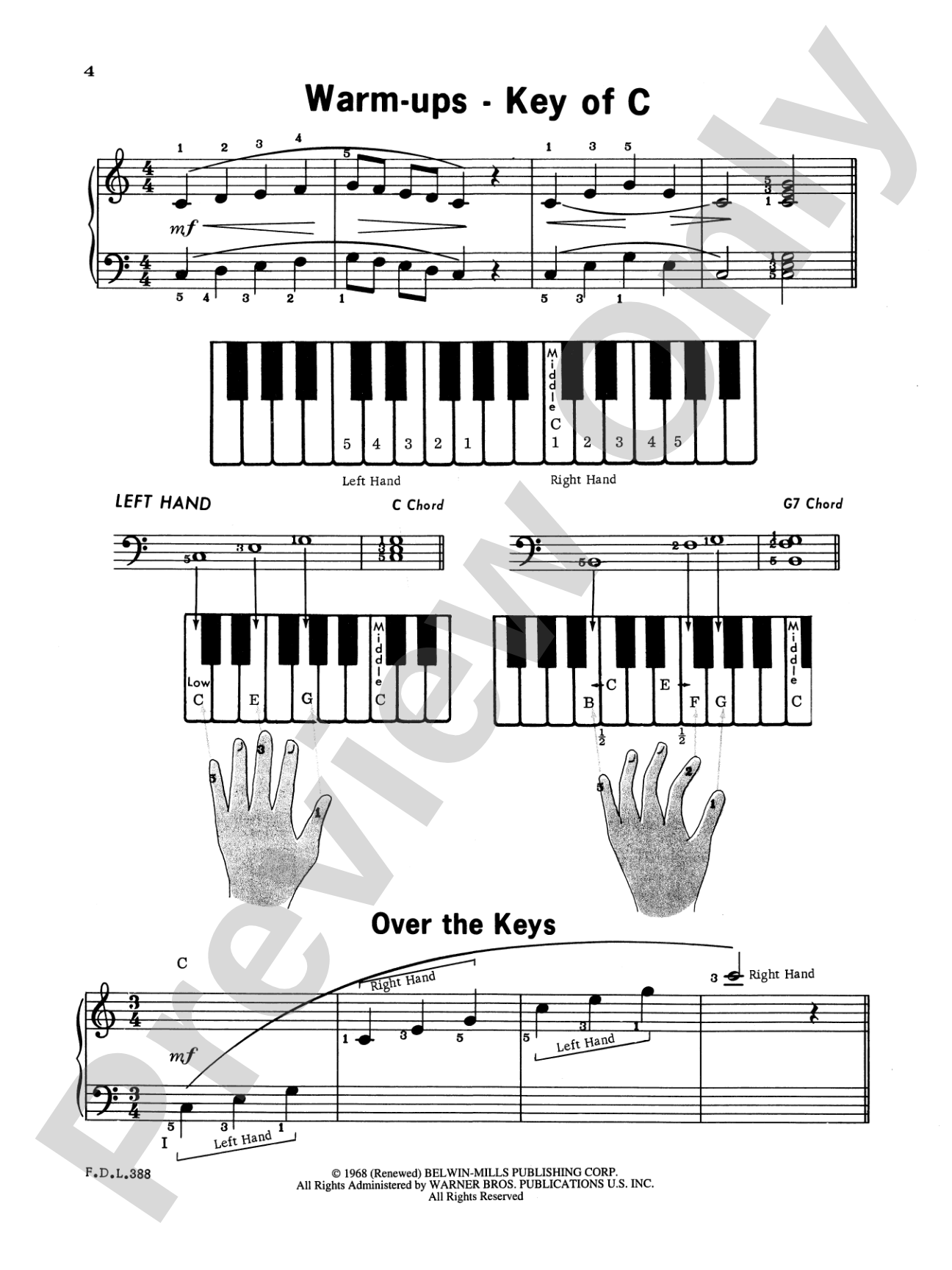
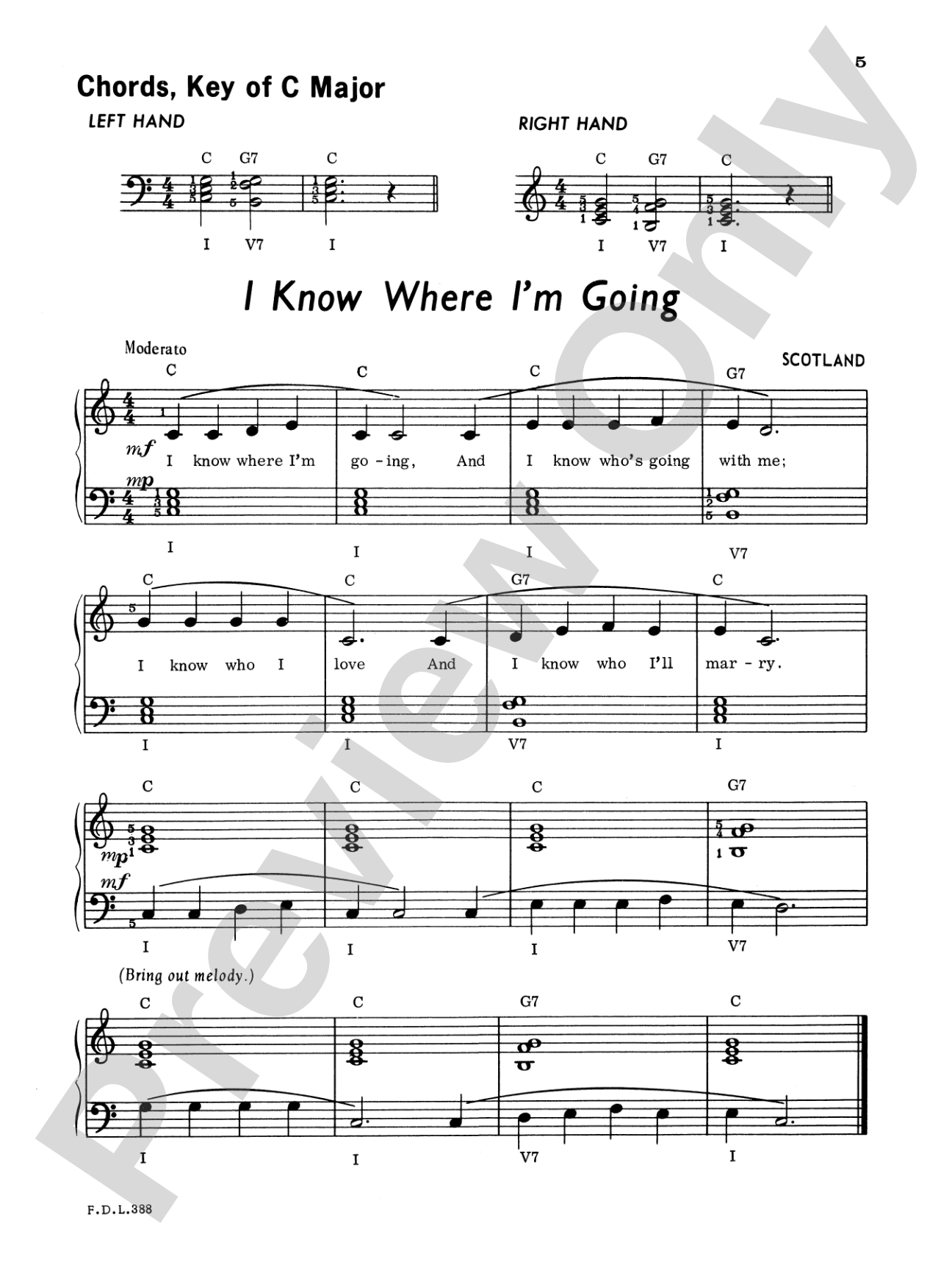
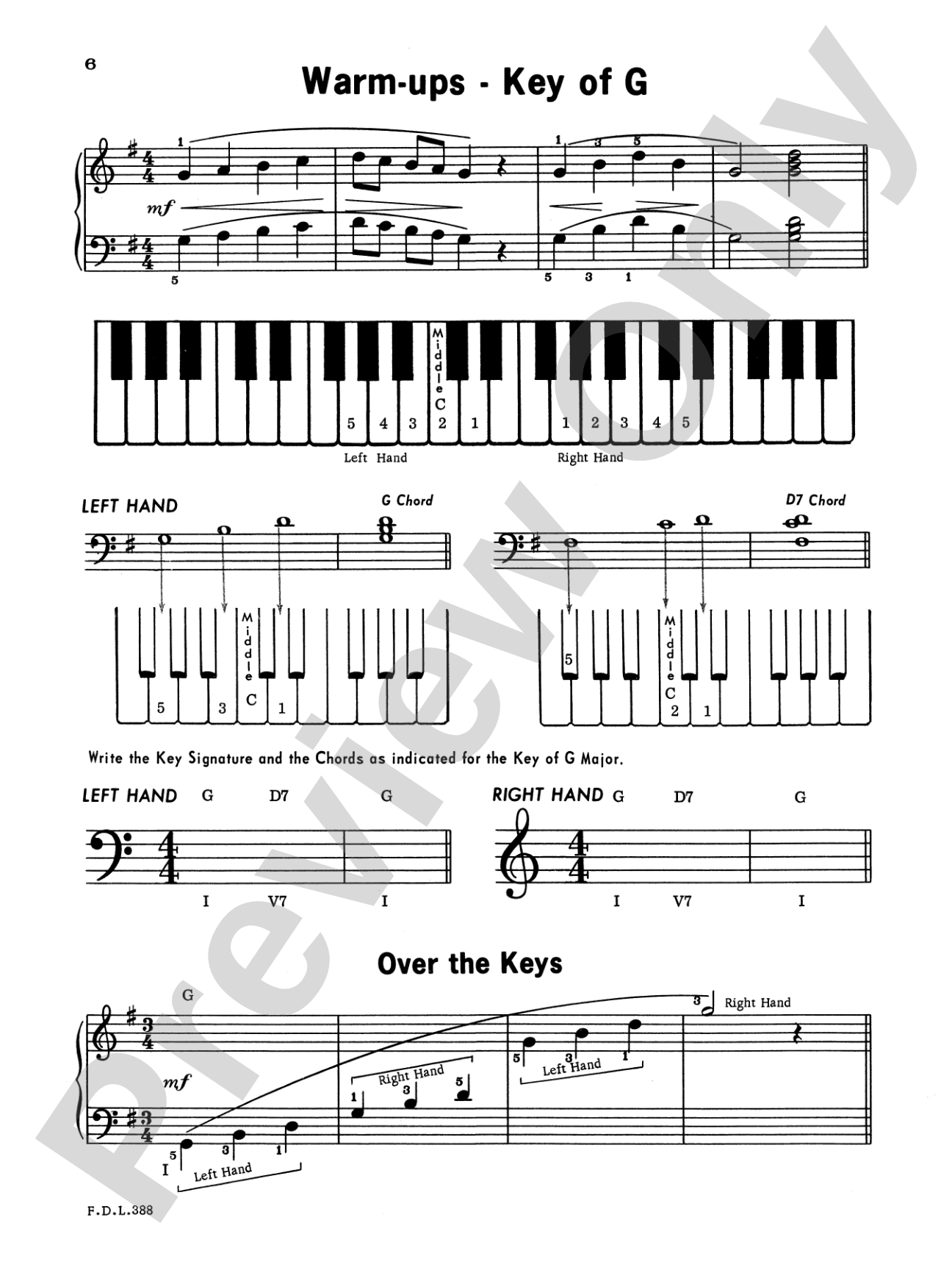
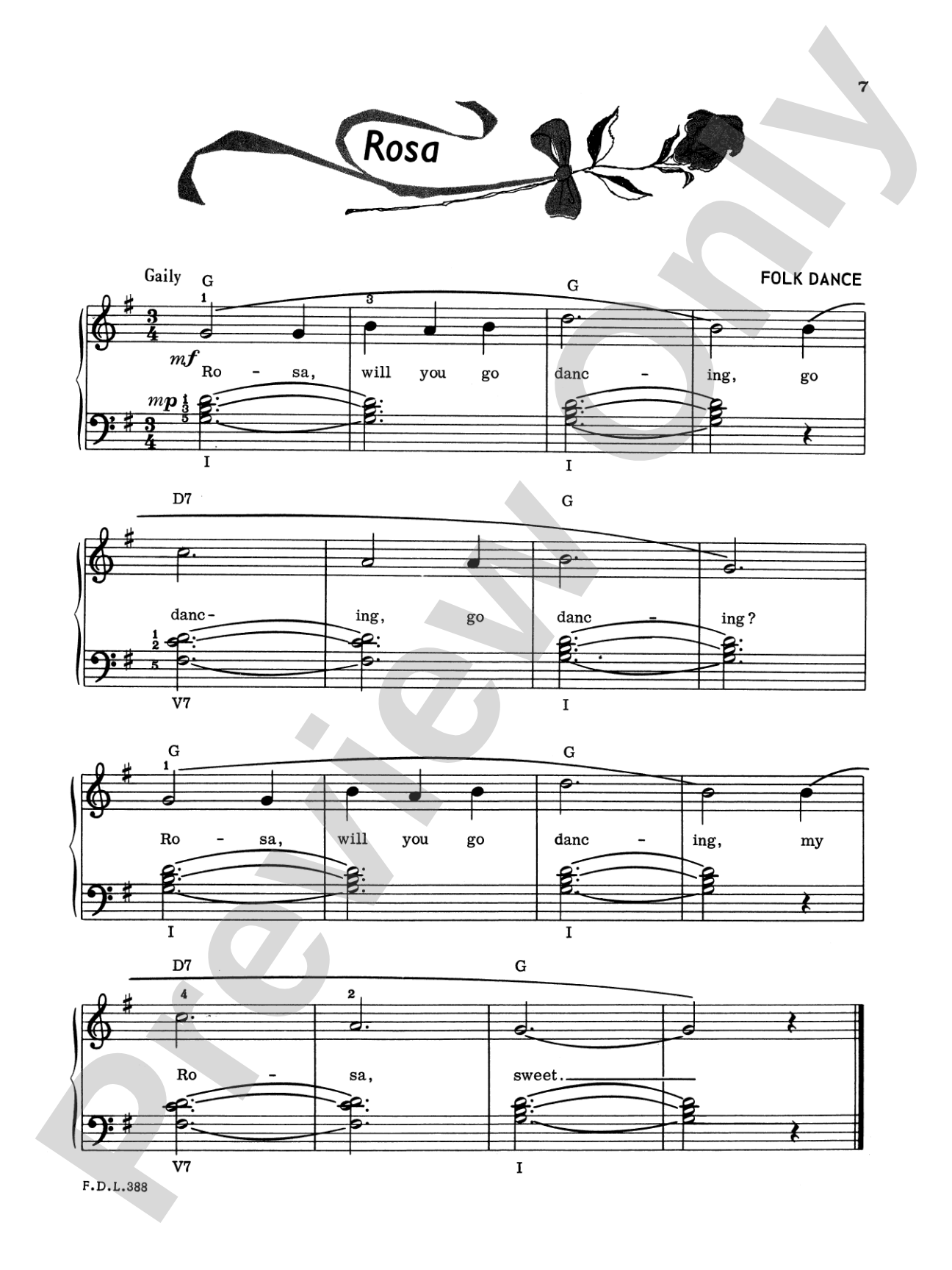
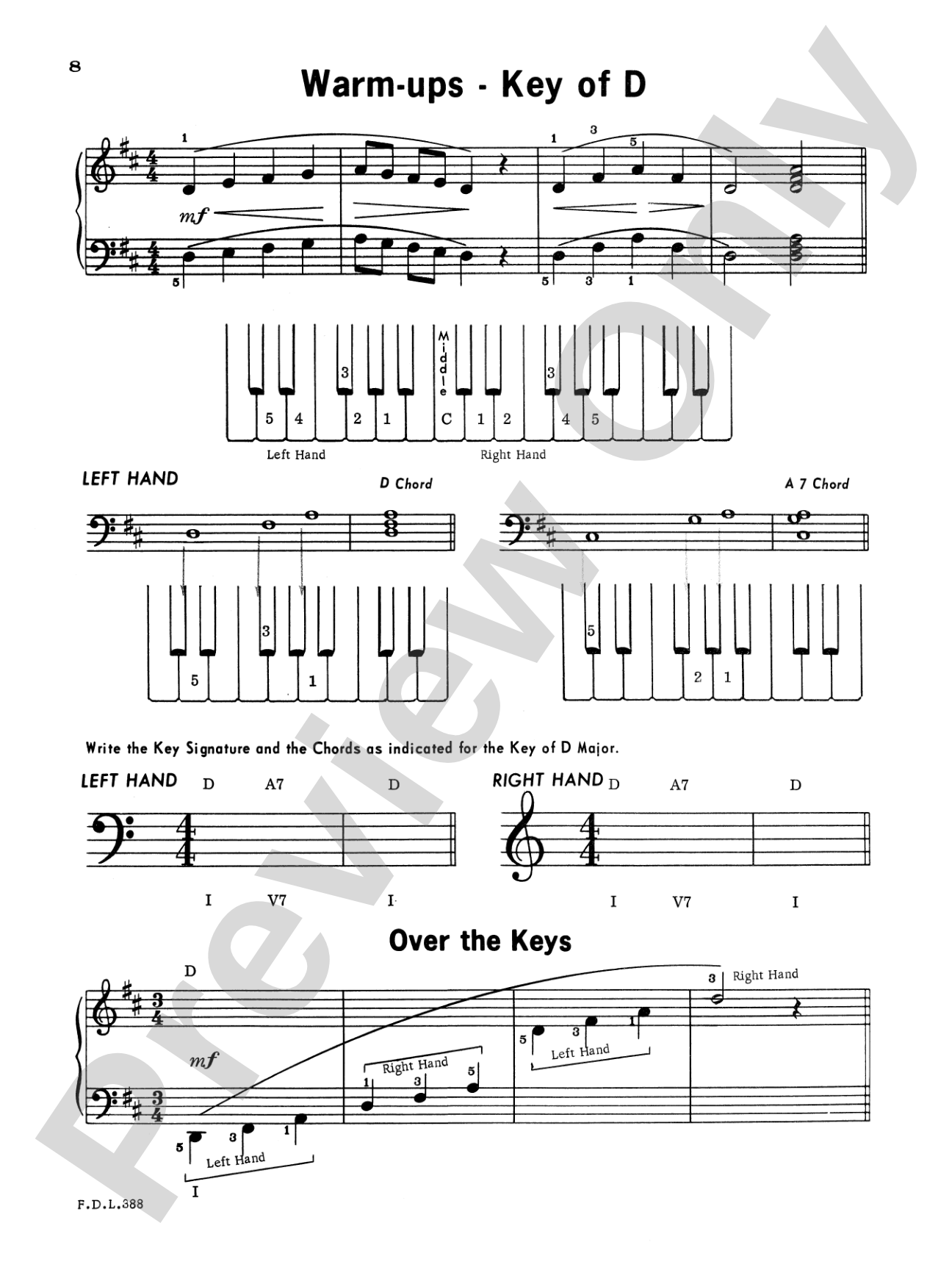
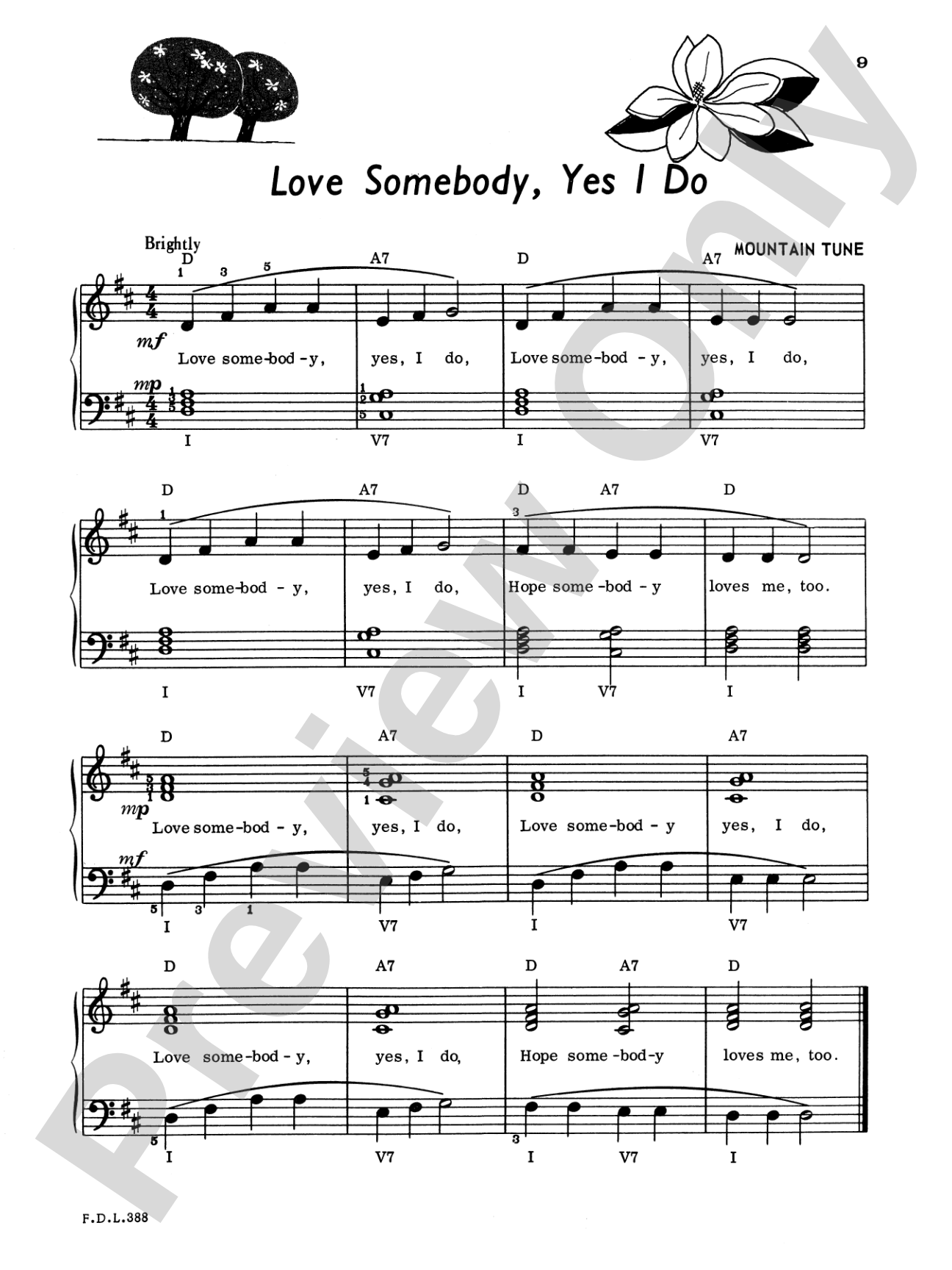
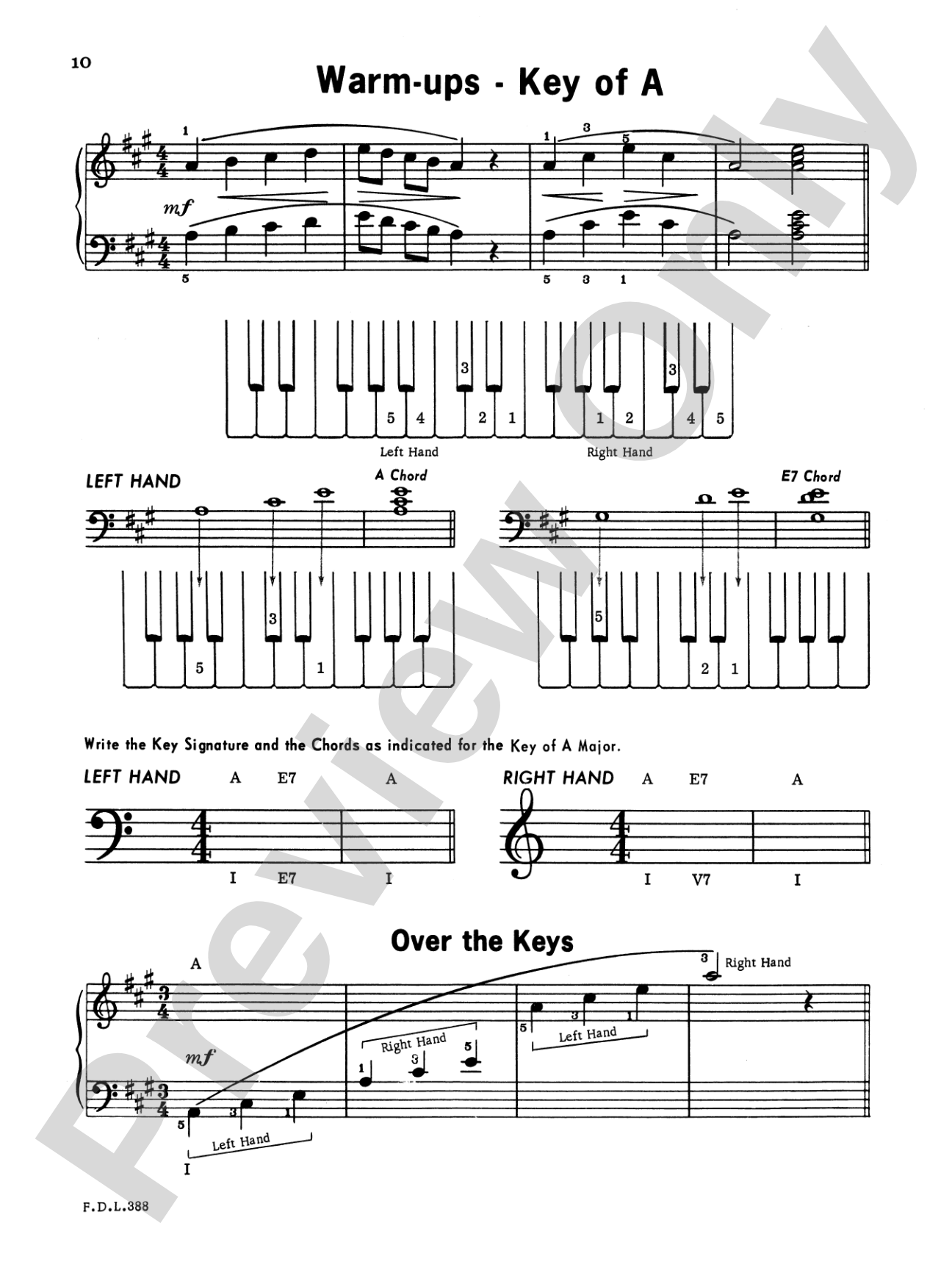
Chords and Keys is written especially for group piano instruction. However, it can be used to much advantage in the individual lesson. The students should have had the equivalent of the Primer Level of the David Carr Glover Piano Library and should be able to play five-finger patterns in most of the Major Keys and Major Triads by memory.
Discover MakeMusic Cloud: thousands of interactive titles your students can play along with today.
Mary Elizabeth Clark collaborated with David Carr Glover on foundational piano materials that shaped American group piano pedagogy in the mid-twentieth century. Her work emphasized sequential skill-building and accessibility, making her a trusted voice in classrooms where teachers needed reliable, well-paced instruction across multiple students simultaneously.
Why we love this
This book understands what group piano teachers actually need: systematic chord work that sticks without feeling tedious. Clark builds triads and progressions in keys students already know from primer work, so the cognitive leap stays manageable while independence deepens considerably.
What to expect
Orderly and direct. These pages prioritize clarity over flourish, building confidence through incremental progress. Chord work unfolds logically, giving students the satisfaction of recognizing patterns they can apply immediately.
Who it's for
Piano teachers running group classes or supplementing individual lessons with systematic harmony work. Students should enter this book comfortable with five-finger patterns and major triads from primer materials; Level 1 assumes that foundation is solid.
How to get the most out of it
Isolate triad inversions in one hand while the other sustains the root position form. This builds muscle memory for voice leading before mixing both hands together.
Transpose every exercise into at least three keys before moving forward. The goal is genuine facility, not just reading the page once.
Encourage students to improvise a simple melody over the chord progressions they're learning. This connection between harmony and melody prevents chord work from feeling mechanical.
How to use it
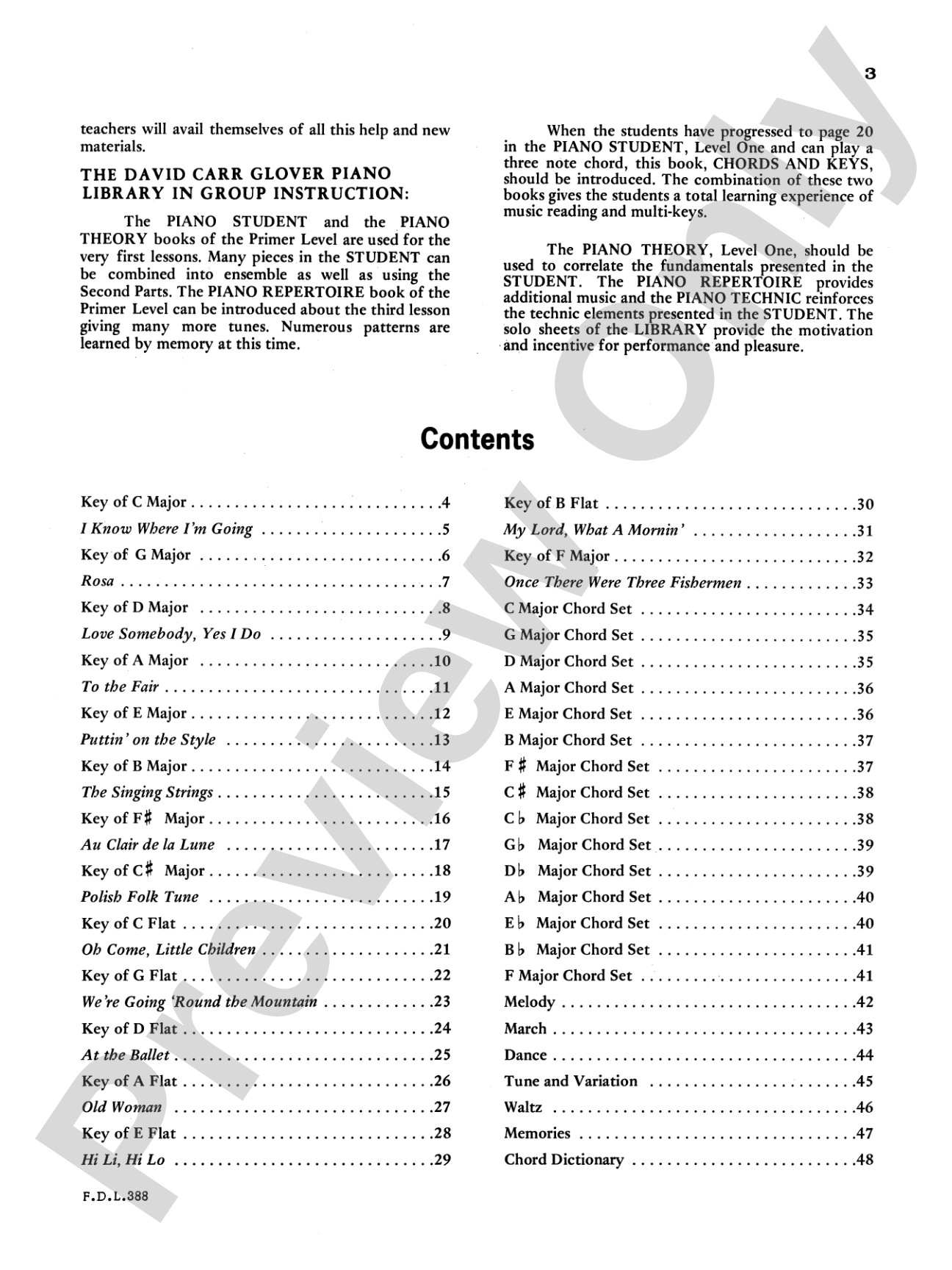
Integrate this into your curriculum between technique books and repertoire during the first or second year of study. The 48 pages support a full semester of group instruction, or can stretch across a year as supplementary material in private lessons for students who need stronger harmonic foundations.
Skills your students will build
Major and minor triad identification and construction
Chord progressions in multiple keys
Voice leading in four-part harmony
Transposition across keys
Left-hand accompaniment patterns using chord shapes
Reading chord symbols and Roman numeral analysis
You May Also Like
Scan to Complete Your Purchase
Use your phone's camera to scan the code below
You'll log in on your phone and the order will be added to your account